Xactimate & Estimating Deep Dives - Tygart Media

Category: Xactimate & Estimating Deep Dives

  • The Xactimate Supplement Audit Your Estimator Probably Isn’t Running

    The Xactimate Supplement Audit Your Estimator Probably Isn’t Running

    Most water mitigation supplements get killed not because the work wasn’t done, but because the line items were never written down. If you’re running a restoration company and watching your margin bleed out on Category 2 and Category 3 jobs, there is a near-certainty that your initial Xactimate sketch is missing four to seven line items that your crews actually performed. The desk adjuster never saw them. So they never approved them. And your gross margin took the hit.

    This is the Xactimate supplement audit your estimator probably isn’t running. Walk through it before you submit your next water loss, and then walk through it again before you accept a partial denial.

    Why supplements get killed
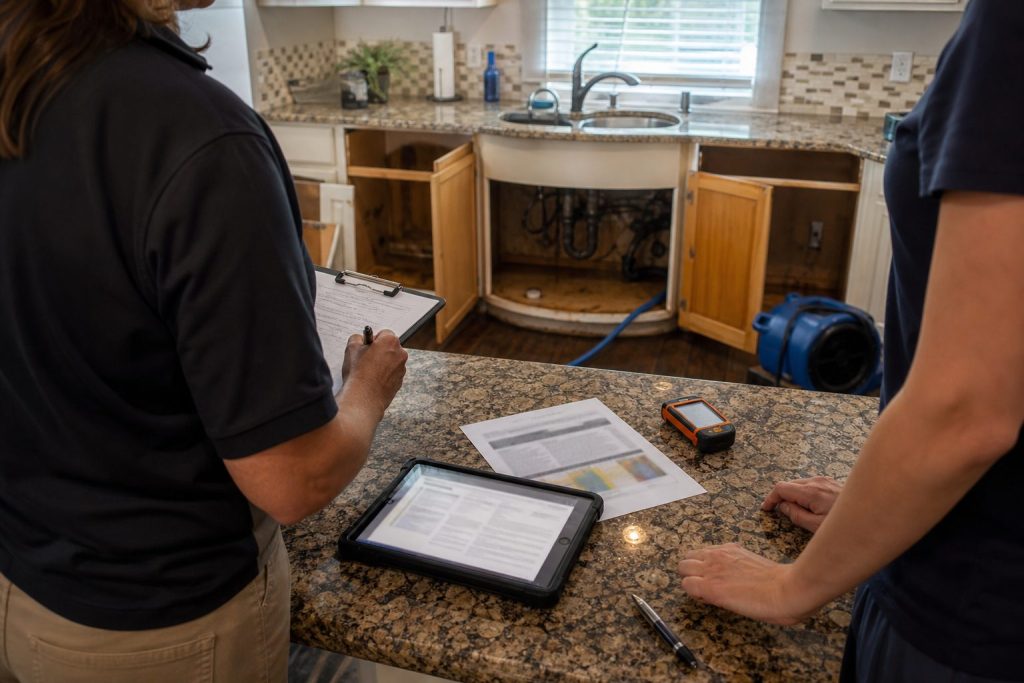
    The honest reason most supplements come back partially approved or denied is that they arrive looking like an afterthought. A clean Xactimate file that uses the carrier’s current price list, includes photo documentation tied to each line item, and matches the scope to the loss category gets reviewed apples-to-apples. A supplement that arrives as a PDF list with no photos and no sketch revision gets reviewed as a request for more money. Those are two very different conversations.

    If you want approvals to move faster, every supplement needs three things: a revised sketch with new room tags or affected areas marked, photographs that directly correspond to each added line item, and pricing pulled from the same Xactimate price list the carrier is using. Verbal approvals over the phone do not create a paper trail. Email or carrier portal submissions do.

    The line items most crews actually perform but never bill
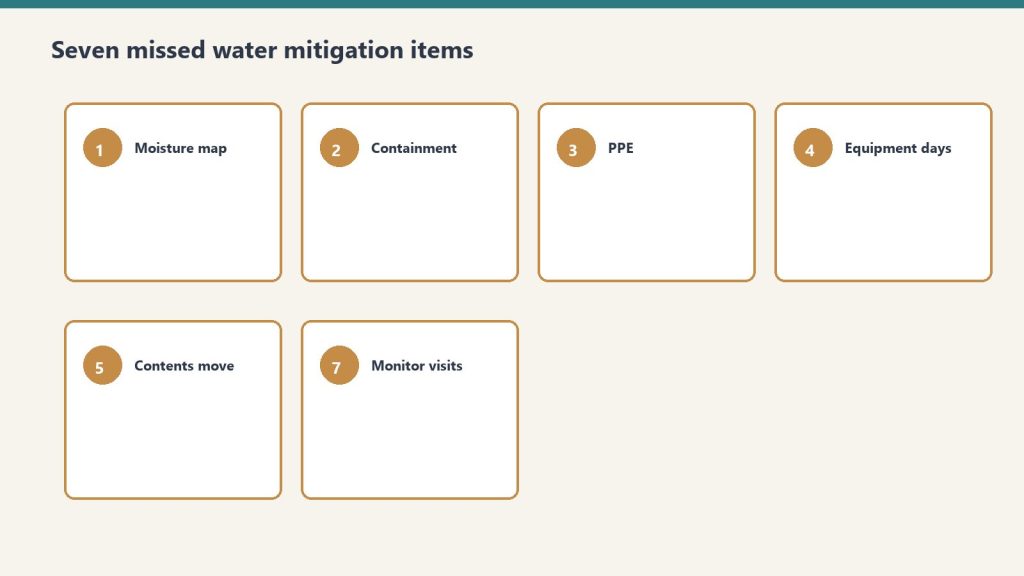
    These are the WTR category items that show up in real water loss workflows and get left off the initial estimate. None of these are exotic. All of them are billable when the work was performed and documented.

    Equipment decontamination on Category 3 losses. Every air mover, dehu, HEPA, and hose that entered a Category 3 environment requires decontamination before the next job. This is a line item, not a cost of doing business absorbed by your overhead. If your crew is bagging hoses and wiping down equipment with a quaternary cleaner, that is a billable task.

    Antimicrobial application to affected surfaces. Plant-based or quaternary antimicrobial application on framing, subfloor, and the bottom plates is a separate line item from the cleaning. On Category 2 and Category 3 work the IICRC S500 protocol calls for antimicrobial treatment of affected materials. If you applied it, bill for it.

    Containment and drying chamber setup. Plastic sheeting, zipper doors, and the labor to build a containment that isolates the drying chamber from unaffected areas is its own line item. The chamber itself is the reason your equipment count is justified — a smaller controlled volume dries faster, runs fewer days, and uses fewer air movers than an open room. If the adjuster is questioning your equipment count, the containment line item is the answer.

    Detach and reset of contents. Moving the homeowner’s furniture, boxing contents, blocking the legs of upholstered pieces, and putting it back at the end of the job is not free. Contents manipulation has its own line items in Xactimate and is one of the most consistently missed billable activities in mitigation work.

    Multi-member baseboard removal. If the baseboard had quarter round or a separate cap, the WTRBASEB> line item covers the additional labor to remove and dispose of each layer. Estimators trained on the older single-member baseboard removal habitually leave the extra members off the estimate.

    HEPA vacuum of demolition area. After a flood cut and material removal on a Cat 2 or Cat 3 loss, HEPA vacuuming the cavity before reconstruction begins is a billable task. It is also a defensible task if the homeowner ever questions whether the area was properly cleaned.

    Disposal of contaminated water and materials. Extracting Category 3 water and disposing of it is different from extracting Category 1. There are separate line items for contaminated water extraction, contaminated material disposal, and the dump fees. If your crew hauled six contractor bags of sewage-soaked drywall to the landfill, that is documentable and billable.

    The documentation that makes a supplement get approved
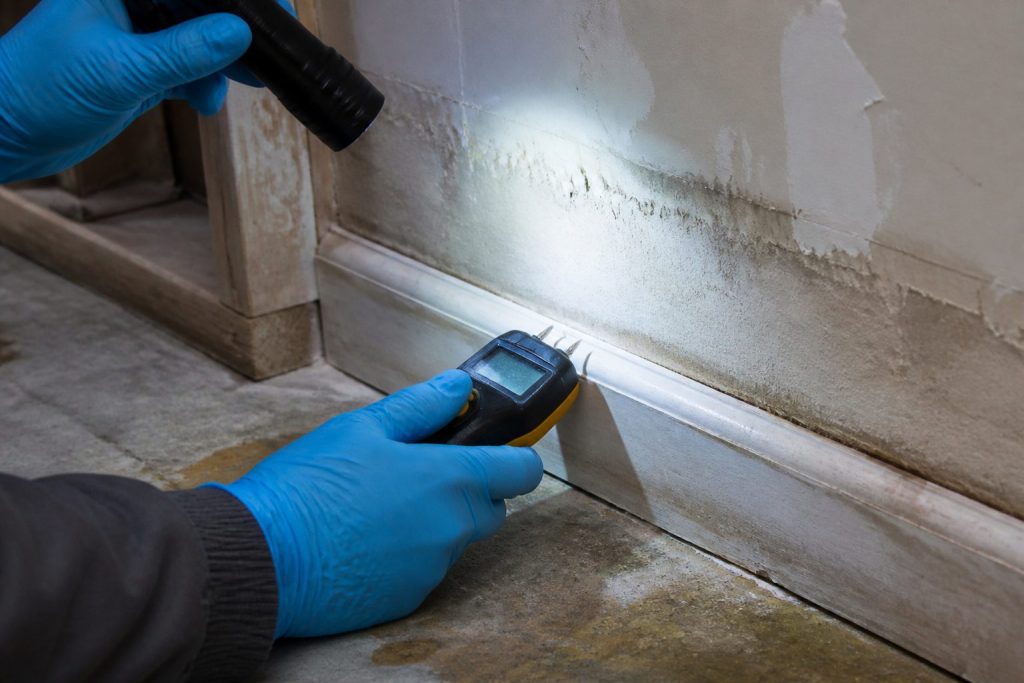
    Pricing arguments are losing arguments. Scope arguments are winning arguments. When you submit a supplement, do not lead with cost. Lead with scope, and let the Xactimate price list speak for itself.

    The fastest path to approval is to use Room ID tags in the Xactimate sketch so every space is clearly labeled, attach a photograph for every added line item that shows the affected area and condition, reference the loss category and IICRC standard where applicable, and submit the revised estimate as an attachment in the carrier portal rather than as a phone call or text.

    When a line item is denied, the response should not be a longer email. It should be a request for the specific reason for the denial, in writing, tied to the carrier’s policy language or pricing logic. Most contractors give up at the first denial. Most adjusters expect that. The ones who push back with documentation get a measurable percentage of denied items approved on second submission.

    The bottom line

    Restoration owners obsess over labor cost and equipment utilization, but the single biggest lever on water mitigation gross margin is the completeness of the initial Xactimate scope and the discipline of the supplement process. Every line item your crew performs that does not make it onto the estimate is pure margin loss — the cost was already incurred. Building a checklist of the seven items above and running it as a pre-submission audit on every Cat 2 and Cat 3 loss is a one-week implementation that will pay for itself on the first job.

    If your average water mitigation ticket is in the $4,000 to $6,000 range and a complete supplement audit recovers an additional $400 to $900 per job through previously uncaptured line items, the math at any meaningful job volume is the kind of margin recovery most owners spend years trying to find in payroll, fleet, or marketing instead.

  • Xactimate Sketch Workflows Compared: Manual vs Encircle vs DocuSketch for Restoration Contractors

    Xactimate Sketch Workflows Compared: Manual vs Encircle vs DocuSketch for Restoration Contractors

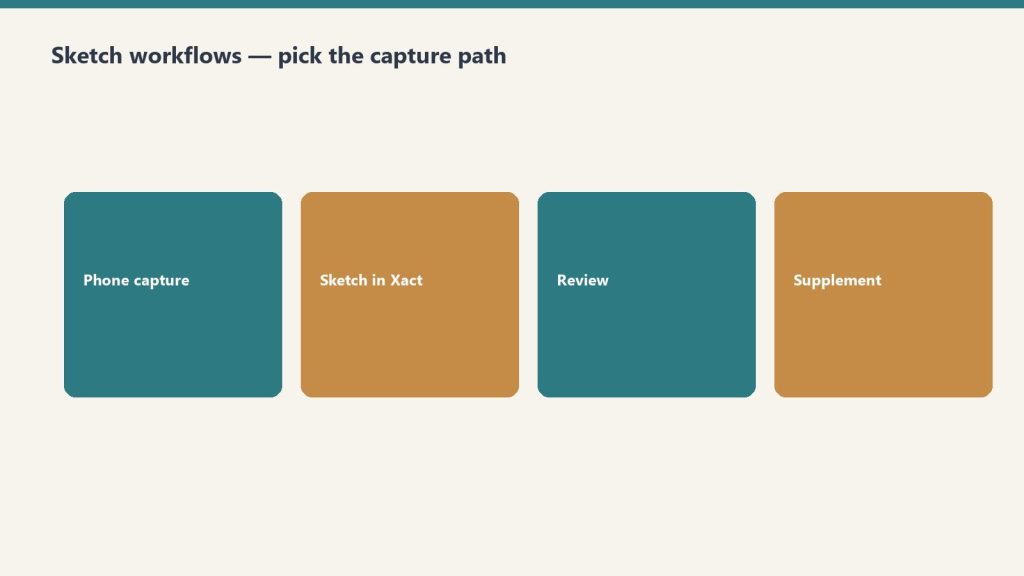
    Most restoration owners I know underestimate what their sketch workflow actually costs them. Not the per-claim app fee — the labor hour buried in every job where a tech spends 90 minutes measuring a flooded basement with a laser distance meter, then another 45 minutes back at the office rebuilding it in Xactimate Sketch. At a loaded labor rate of $45 an hour and ten water jobs a week, those 135 minutes per job add up to roughly $52,000 a year in tech hours tied up in measurement and sketch rebuild — a meaningful chunk of which is not directly billable. The sketch is the foundation of every line item Xactimate calculates — walls, floors, ceilings, missing wall openings, ceiling height multipliers — and if it’s wrong, the entire estimate inherits the error. So the question is not whether to invest in a sketch workflow. It’s which one.

    Why the sketch is the most expensive five minutes in restoration

    Xactimate utilizes the sketch to drive line item quantities — square footage of drywall, linear feet of base trim, square footage of ceiling, paint surfaces, area for antimicrobial application. Get the ceiling height wrong by six inches in a 200-square-foot room and you’ve quietly undercut your paint and wall labor by roughly 100 surface square feet. Forget to draw a missing wall between a kitchen and a dining room and Xactimate treats them as two separate sealed rooms — doubling perimeter trim, ignoring shared dry-out airflow, and producing a scope that any seasoned adjuster will flag and ask you to redo.

    Common sketch errors compound: rushing through measurements without verification, failing to account for wall thickness, overlooking irregular features like soffits or knee walls, and using incorrect roof pitch on exterior sketches. The result is either lost revenue on your end (you underbilled) or a denial cycle on the carrier side (the adjuster sends it back and your cash conversion stretches). Either way, the sketch is where the money leaks out.

    The three sketch workflows actually used in the field

    Despite a dozen marketing pitches, restoration contractors use one of three approaches. Each has a real cost and a real time profile.

    1. Manual Xactimate Sketch (laser distance meter + on-screen drawing)

    The default. A tech walks the loss with a Bosch or Leica laser, writes measurements on a clipboard or phone notes app, then either sketches on-site in the X1 mobile app or rebuilds it at the office. Cost is whatever you already pay for Xactimate (Professional runs around $185/month per user on subscription pricing as of early 2026, per Verisk’s published rates — verify on your own contract because Verisk negotiates).

    Realistic time for a competent tech on a 1,500-square-foot residential water loss: 45–60 minutes on-site for measurements and photos, plus 30–45 minutes back at the office to build the sketch in Xactimate. Call it 90 minutes total. The advantage: no extra software cost, full control. The disadvantage: every minute of that 90 is a minute a tech is not on another job, and your sketch accuracy depends entirely on how disciplined your tech is with a laser.

    2. Encircle Floor Plan

    Encircle’s floor plan product converts a smartphone video walkthrough into a Xactimate-ready ESX or FML import. Their published per-claim pricing is around $25 per claim as of 2026, with subscription bundles available — confirm current pricing with Encircle directly, as restoration software vendors revise tiered pricing frequently. Encircle’s marketing claims floor plans are delivered in under 6 hours, but in practice most users report same-day to next-morning turnaround.

    The actual workflow advantage is not the speed of delivery — it’s that your tech leaves the loss with a video, not a sketch. On-site time drops to roughly 15–25 minutes. The office labor for sketch rebuild drops to near zero because Encircle delivers an importable file. If you’re running 40 claims a month and trimming 60 minutes per claim, that’s 40 hours of tech labor recaptured — roughly $1,800 a month in labor against $1,000 in Encircle fees. The math works above about 25–30 claims a month.

    3. DocuSketch

    DocuSketch uses a 360 camera kit instead of a smartphone video. The contractor captures spherical photos at each room, uploads, and DocuSketch returns an ESX file. Per their public materials, ESX and FML files are typically delivered 1 to 3 days after capture. Per-claim cost at scale runs around $70 when amortizing the Express plan ($1,095/month), the $795 camera kit, and overnight delivery fees against 20 projects a month — based on DocuSketch’s published comparison materials.

    DocuSketch’s appeal is the 360 photo documentation that comes with the sketch — useful for supplement defense and for adjuster file packages. The disadvantage versus Encircle: slower turnaround (days, not hours), higher per-claim cost, and a camera kit your techs have to actually carry and use. For high-volume shops doing large losses and commercial work where 360 documentation has independent value, DocuSketch can earn its keep. For a typical residential water mitigation shop, the price-per-claim is hard to justify against Encircle.

    The bottom line for restoration owners

    If you’re under 20 claims a month, manual sketching is fine. Buy your techs better lasers and train them on Xactimate Sketch keyboard shortcuts (CTRL+click and drag to pull new rooms from existing ones is the single highest-leverage shortcut Xactimate ships). Sending a tech to one of the regular Xactimate fundamentals classes pays for itself the first month — it’s the cheapest sketch optimization you can buy.

    If you’re between 20 and 60 claims a month and most of your volume is residential water, Encircle Floor Plan is the obvious move. The labor recapture pays for the subscription several times over, and your techs spend less time at the office rebuilding sketches and more time at the next loss. Make sure your techs actually shoot the video correctly — Encircle’s output quality depends on input quality.

    If you’re north of 60 claims a month, running commercial losses, or losing supplements because your documentation packages are thin, evaluate DocuSketch alongside Encircle. The 360 documentation is a real defensible asset when you’re supplementing six months after the original scope. Some shops run both — Encircle for residential water mitigation, DocuSketch for commercial and large-loss reconstruction.

    One workflow truth nobody likes to say out loud: the sketch tool only matters if your techs use it consistently. The shops that get the most out of Encircle or DocuSketch are the ones where the office manager refuses to accept a claim file without a video or 360 capture. Without that enforcement, you’re paying for software and still rebuilding sketches at the office because half your techs forgot to use it.

    Pick the workflow that fits your claim volume, then enforce it. The sketch is the foundation of every line item Xactimate calculates. It’s worth more attention than most owners give it.

  • The Water Damage Supplement Playbook: 8 Xactimate Line Items Adjusters Routinely Miss

    The Water Damage Supplement Playbook: 8 Xactimate Line Items Adjusters Routinely Miss

    Every adjuster who writes a water damage scope knows they’re leaving money out. This isn’t incompetence — it’s strategy. Carriers train adjusters to write lean estimates with the expectation that contractors who know what they’re doing will supplement back. If you’re accepting first-offer scopes without supplementing, you’re subsidizing their process.

    Here’s what you’re leaving on the table — and how to get it back.

    What Adjusters Leave Out (And Why)

    Eight line items show up missing on water damage estimates so often they should be considered structural omissions, not oversights.

    1. Equipment Monitoring Time (EQ Hours)

    Every piece of drying equipment you deploy needs to be set up, monitored daily, and removed. This is billed under EQ (equipment) hours in Xactimate — distinct from the equipment daily rental rate itself. Adjusters routinely include the air mover or dehumidifier line but strip the EQ monitoring hours. On a standard 3-day residential water loss with 6 pieces of equipment, this can represent $800–$1,200 in omitted labor (approximate, varies by region and Xactimate price list). It’s legitimate labor time. Submit it every job.

    2. Contents Manipulation (FCC)

    If you moved furniture to set equipment or protect contents — and you did, because wet carpet under a couch is a mold claim waiting to happen — you can bill for it. The FCC line item covers furniture manipulation. Adjusters frequently zero it out claiming “no significant contents.” Document with photos. Bill it anyway. The IICRC S500 supports moving contents as part of professional mitigation protocol.

    3. Antimicrobial Treatment

    Antimicrobial application is standard protocol on Category 2 or Category 3 losses. Some adjusters skip it on Cat 2 jobs claiming the loss “wasn’t contaminated enough.” That’s not a defensible position under your standard of care. Cite your IICRC S500 obligation. Your standard of care requires it. Your estimate should reflect it, every time.

    4. Structural Drying Labor (WTR STRC)

    This is separate from equipment rental. Structural drying labor — the time spent monitoring moisture readings, adjusting equipment placement, logging psychrometric data — is billable under the WTR STRC line in Xactimate. It gets omitted constantly. If you’re running a 4-day dry with daily monitoring visits, that’s real labor time that belongs in the scope. Don’t bundle it into your equipment rate. Break it out.

    5. Controlled Demolition — Broken Out by Material

    Any time you remove material to facilitate drying — baseboard, drywall, flooring — document each demolition activity with its own line item. Adjusters often bundle multiple demolition activities under a single generic line at the lower rate. Don’t let them. Break it out: WTR DWL for drywall removal, WTRFC variants for flooring type (C for carpet, T for tile, W for wood). Each code carries its own unit rate. Bundled scopes always favor the carrier’s math, not yours.

    6. Overhead & Profit (O&P)

    The single most fought-over line item in all of Xactimate. O&P is the 10% overhead + 10% profit markup that general contractors are entitled to charge when coordinating multiple subcontractors. Carriers deny it by claiming the job “doesn’t involve three or more trades” — a threshold they invented. It does not appear in Xactimate’s published pricing guide documentation.

    The counter: build a trades list into your scope narrative. List every trade involved — mitigation crew, licensed plumber, drywall contractor, flooring installer, painter. Four trades is four trades. Include a one-page scope narrative that names them. This prevents the denial before it starts. And if your overhead is genuinely higher than 10%, carry your overhead calculation to the negotiation. The “10 and 10” standard is an industry habit, not a contractual ceiling.

    7. Drying Documentation & Psychrometric Reporting

    Daily moisture logs, psychrometric readings, equipment placement diagrams — this is billable work that simultaneously protects you legally and demonstrates professional standard of care. Some carriers will pay for drying documentation as a discrete line item. Others will fight it. Submit it regardless. The documentation cost is real whether they pay it or not, and if you ever face a bad-faith claim, that paper trail is worth far more than the line item rate.

    8. Code Upgrade Items

    If your jurisdiction requires anything beyond like-for-like replacement — updated electrical to code, fire blocking on structural penetrations, cement board substrate under tile in wet areas — those upgrades are billable line items. They’re also frequently omitted from adjuster scopes. Pull your local code requirements for every material type you’re replacing and include the upgrade lines with code citations in your narrative. “Local code requires X per section Y” is a hard argument to deny.

    How to Win the O&P Fight

    When an adjuster denies O&P citing insufficient trades: don’t argue the threshold. Argue the standard.

    Send back a scope narrative page that lists explicitly: mitigation contractor, structural drying crew, licensed plumber, licensed electrician (if any wiring was involved), drywall contractor, flooring contractor, painter. That’s five to seven trades on a typical Category 2 bathroom loss. Documented. Named. The general contractor coordinating them is entitled to O&P.

    If they push back a second time, pull the insured’s policy language. General contractor services — scheduling, coordination, quality control, project warranty — exist whether the carrier likes it or not. If you’re managing subcontractors, you’re performing GC functions. GCs charge O&P. That’s what it’s for.

    The Supplement Submission Process That Actually Gets Paid

    Fast-tracked supplements share one trait: they’re submitted in Xactimate format, not PDF invoices. A clean Xactimate supplement typically gets reviewed in 2–3 weeks. A PDF invoice can sit 6–8 weeks — and gets denied at a higher rate because adjusters can’t reconcile it against their own scope line by line.

    When submitting a supplement, include a clear cover narrative: what changed from the original scope, why, and what code or standard supports it. Mark every supplemental line item clearly — “Supplemental Item — Not in OA Scope” — so the reviewer can locate additions instantly. Attach photo documentation for any line item likely to be disputed. Submit through the carrier’s supplement portal if one exists.

    One more thing: track your supplement approval rates by carrier. If one carrier denies your antimicrobial supplements at 60% and another approves 90%, adjust your initial scope narrative accordingly for that carrier. They’re not all operating from the same playbook.

    Bottom Line

    Carriers write lean because they can. Most contractors either don’t supplement or supplement poorly — PDF invoices, vague narratives, no photo documentation. That’s why the strategy works for them.

    If you’re running water damage jobs at $8,000–$15,000 in average ticket size and not supplementing, you’re leaving somewhere between $1,200 and $4,000 per job on the table — a rough estimate based on common first-offer gap percentages in the industry. Across 50 jobs a year, that’s real revenue. Not found money. Your money.

    The line items are in Xactimate. The standard of care is established by IICRC. The adjuster expects you to push back. The only question is whether your scope is specific enough to win.