Belfair - Tygart Media

Category: Belfair

Hyper-local coverage of Belfair, Washington — the North Mason community, PSNS commuter life, Hood Canal access, and neighborhood news.

  • North Mason School Levy Leading at 53.5% — Certification Set for May 8

    North Mason School Levy Leading at 53.5% — Certification Set for May 8

    The North Mason School District levy is leading in early returns from the April 28 special election — a stark reversal after two consecutive defeats and more than a year of program cuts that reshaped what students in Belfair and the Hood Canal corridor get from their schools.

    According to the Mason County Auditor, the four-year replacement levy received 2,130 yes votes (53.50%) and 1,851 no votes (46.50%) in the combined Mason and Kitsap county tally as of election night. In Mason County alone — which casts the overwhelming majority of North Mason ballots — the measure leads 2,089 to 1,808 (53.61% yes). In the small Kitsap County portion of the district, the early count showed 41 yes to 43 no.

    These are preliminary numbers. Washington is a vote-by-mail state, ballots arrive for days after election day, and nothing is final until certification. The Mason County Canvassing Board has a challenged-ballot review meeting scheduled for May 7 at 2:00 PM and the formal certification meeting on May 8 at 2:00 PM. Track the running total at results.vote.wa.gov.

    What changed this time

    The district lowered the ask. The April measure requests $18.9 million over four years at a rate of $1.01 per $1,000 of assessed value — down from the $1.28 rate that voters rejected twice in 2025. On a $400,000 North Mason home, that is roughly $33 per month, compared with about $43 per month at the prior rate.

    The district also eliminated two administrative positions and cut another $1.3 million from the operating budget before the vote — a direct response to community feedback that earlier campaigns had not gone far enough on the spending side. Combined with roughly $4.5 million in cuts that followed the second 2025 defeat, North Mason has trimmed substantially more than $5 million from its operations in less than 18 months.

    “We are very pleased and encouraged by these preliminary results, and we will be monitoring closely as ballots continue to be counted and certified,” Superintendent Dr. Kristine Michael said on election night. “If this outcome holds, it reflects the trust this community is placing in our schools and our students.”

    What the levy actually pays for

    Replacement levies in Washington fund the things state basic-education dollars do not cover: school nurses, counselors, safety officers, athletics, music, Advanced Placement courses, custodians, after-school programs, and curriculum materials. North Mason has been operating without levy funding in 2026 — a situation almost no comparably sized district in the Puget Sound region has had to navigate.

    The day-to-day evidence has been visible at North Mason High School and the middle school all year: thinner athletic schedules, reduced extracurriculars, fewer support staff in the buildings, and curriculum decisions made under tight constraints. The Bulldogs’ spring sports season has continued, but families have absorbed more of the cost.

    The catch: passage doesn’t reverse 2026

    Even if certification holds, the money does not arrive immediately. The first levy revenue would not flow to the district until April 2027 at the earliest. That timing means programs already cut — including the two administrative positions and the $1.3 million in operating reductions — will not be restored for the 2026-27 school year.

    “Those funds would allow us to avoid making additional reductions, but because we are operating with only a partial year of levy revenue even in a passage scenario, we would not be in a position to restore programs or positions already reduced,” Michael said in a statement issued before the vote.

    That nuance matters for families who voted yes expecting a quick rebound. The realistic frame is: passage stabilizes the floor and prevents another round of cuts. Restoration of what was lost is a longer conversation that depends on enrollment, state funding formulas, and the district’s reserve position by the time levy money lands.

    Why this vote was different

    North Mason had not just lost a levy — it had lost two. The February 2025 measure missed the threshold. The fall 2025 attempt failed again. Each defeat tightened the district’s operating posture, and each round of cuts changed the conversation. By April 2026, the choice in front of voters was no longer abstract; it was a referendum on a school district that had been visibly bleeding.

    The district responded by listening. Lower rate. Fewer administrators. More transparent reporting on where the money goes. Whether that read as humility or as accountability depended on the voter — but the ballots suggest a meaningful share of the electorate that voted no in 2025 was willing to vote yes in 2026 once the ask was reframed.

    What to watch this week

    Three things will determine whether the 53.5% lead holds. First, the late-arriving ballots: in Mason County’s recent history, late-counted votes tend to drift slightly more progressive on tax measures, which would help — but the margin in this race is narrow enough that a swing is possible. Second, the challenged-ballot review on May 7. Third, certification on May 8, after which the result is final.

    School board members Arla Shephard Bull, Leanna Krotzer, Erik Youngberg, Nicole González Timmons, and Nicholas Thomas will be working through what passage means for the 2026-27 budget cycle. Their next meetings — held at the district office at 250 E. Campus Drive in Belfair — will be the first public window into what stabilization looks like.

    For now: results are leading, not certified. The community that just put two defeats behind it has reason to be cautiously optimistic and every reason to keep watching.

    Frequently Asked Questions

    Did the North Mason School District levy pass on April 28, 2026?

    The levy is leading with 53.50% yes votes (2,130 to 1,851) in early returns from the Mason and Kitsap county auditors. Results are not certified. The Mason County Canvassing Board will certify on May 8, 2026, after a challenged-ballot review on May 7.

    How much will the North Mason levy cost a homeowner?

    The April 2026 levy is set at $1.01 per $1,000 of assessed value — about $33 per month on a $400,000 North Mason home. That is lower than the $1.28 rate attached to the two failed 2025 measures.

    When will levy money actually reach North Mason schools if the result is certified?

    The first revenue would arrive no earlier than April 2027. That means programs already cut — including two administrative positions and $1.3 million in other reductions made before the April 2026 vote — will not be restored for the 2026-27 school year.

    What programs does the North Mason levy fund?

    Replacement levies fund items state basic-education dollars do not cover: school nurses, counselors, safety officers, athletics, music, Advanced Placement courses, custodians, after-school programs, and curriculum materials.

    Where can I track the official North Mason levy results?

    The official source is the Washington Secretary of State results portal at results.vote.wa.gov/results/20260428/mason/. The Mason County Auditor’s elections page at masoncountywa.gov mirrors the certified totals.

    What happens if the lead doesn’t hold through certification?

    If the levy fails certification, North Mason would face a third consecutive defeat and would continue operating without levy funding through 2026 and beyond, almost certainly triggering another round of program cuts heading into 2026-27.

    Related coverage on Tygart Media: North Mason’s Third Levy Vote Is April 28 — Here’s Everything Belfair Needs to Know · The Levy in Initial Counts: What a Third Defeat Would Trigger · North Mason Schools: Ratings & Programs
  • North Mason School Levy Leading in Early Returns — Results Not Yet Certified

    North Mason School Levy Leading in Early Returns — Results Not Yet Certified

    After two consecutive defeats and more than a year of painful budget cuts, the North Mason School District’s levy is leading in early returns — but results are not yet certified.

    According to the Mason County Auditor’s Office, the April 28 special election produced 2,130 yes votes (53.50%) and 1,851 no votes (46.50%) in combined Mason and Kitsap county totals as of election night. The Mason County Auditor’s website notes that ballot processing continues through May 7, 2026. These are preliminary results. Final certified totals are available at results.vote.wa.gov.

    Superintendent Kristine Michael responded cautiously. “We are very pleased and encouraged by these preliminary results, and we will be monitoring closely as ballots continue to be counted and certified,” Michael told local media on election night. “If this outcome holds, it reflects the trust this community is placing in our schools and our students.”

    The district lowered its ask substantially heading into this vote. The April levy requests $18.9 million over four years at a rate of $1.01 per $1,000 of assessed property value — down from the $1.28 rate attached to the two 2025 proposals that both failed. Before the election, the district also made $1.3 million in additional cuts and eliminated two administrative positions as a concession to community feedback.

    The levy funds programs that state basic education dollars don’t cover: safety officers, school nurses, counselors, athletics, music, Advanced Placement courses, custodians, and curriculum materials. North Mason has been operating without levy funding in 2026 following back-to-back 2025 failures, which forced the district to cut roughly $4.5 million from its budget.

    Even if the levy is certified, funds won’t arrive until April 2027 at the earliest — meaning the programs already cut will not be immediately restored. “Those funds would allow us to avoid making additional reductions, but because we are operating with only a partial year of levy revenue even in a passage scenario, we would not be in a position to restore programs or positions already reduced,” Michael said in a prior statement.

    The school board is composed of Arla Shephard Bull, Leanna Krotzer, Erik Youngberg, Nicole González Timmons, and Nicholas Thomas, with Superintendent Dr. Kristine Michael leading the district from its Belfair campus at 250 E. Campus Drive, Belfair, WA 98528, (360) 277-2300.

    This story will be updated when results are certified by the Mason County Auditor. Track live results at results.vote.wa.gov.


  • New to North Mason? What the Tahuya River Preserve Tells You About Hood Canal — and This Community

    New to North Mason? What the Tahuya River Preserve Tells You About Hood Canal — and This Community

    If you’ve recently moved to North Mason — or you’re considering it — one of the first things you’ll notice is that people here talk about the river. Not metaphorically. The Tahuya River, which drains eastern Mason County and empties into Hood Canal just east of Belfair, is part of the local identity in a way that takes newcomers a minute to fully absorb. This week, 190 acres along the lower Tahuya became permanently protected conservation land. Here’s what that means, and why it matters to you.

    What Is the Tahuya River?

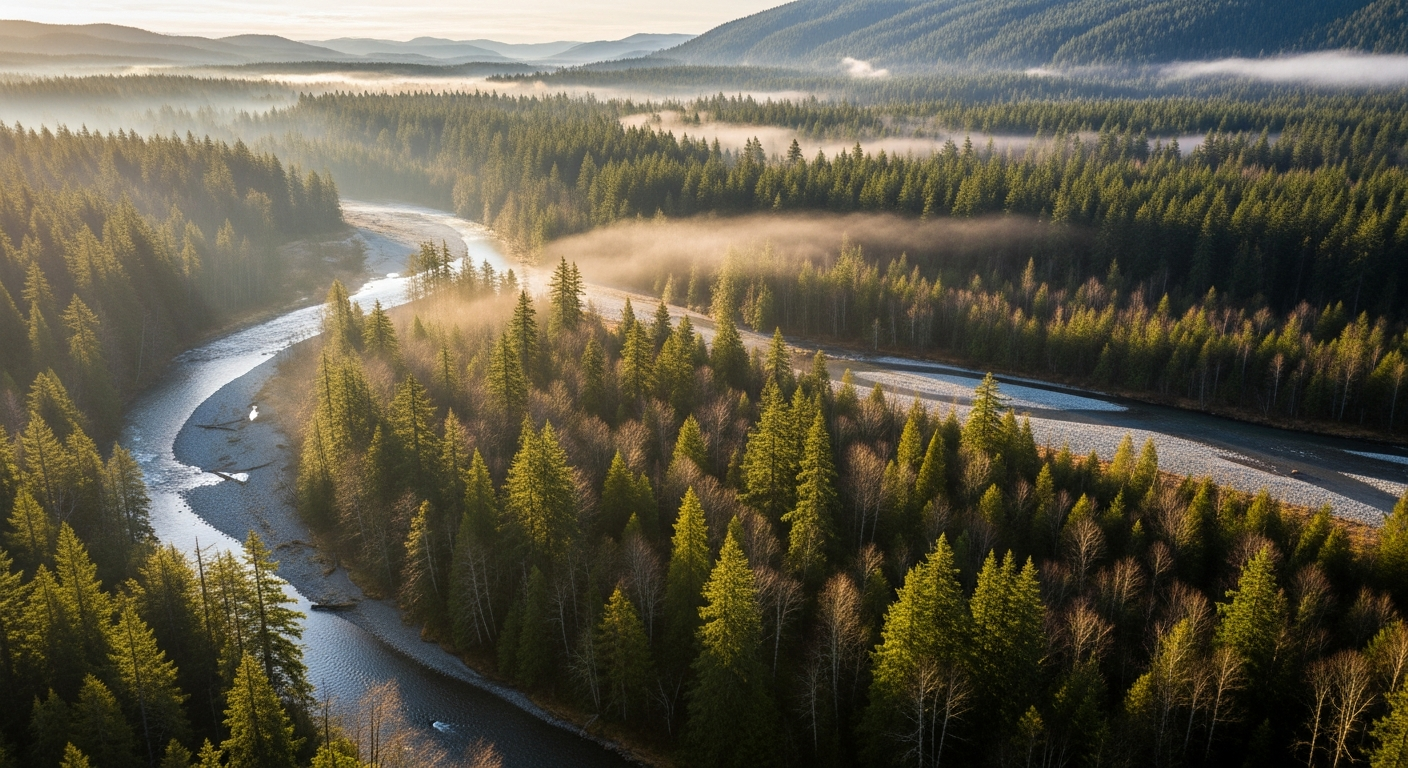
    The Tahuya River rises in the Tahuya State Forest and flows generally west and north through the Tahuya Peninsula before joining Hood Canal south of Belfair. The lower river corridor — the stretch that Great Peninsula Conservancy has been protecting — runs through floodplain forest and wetlands in eastern Mason County, a landscape of big cottonwoods, alder, and towering Douglas firs that overlook the valley.

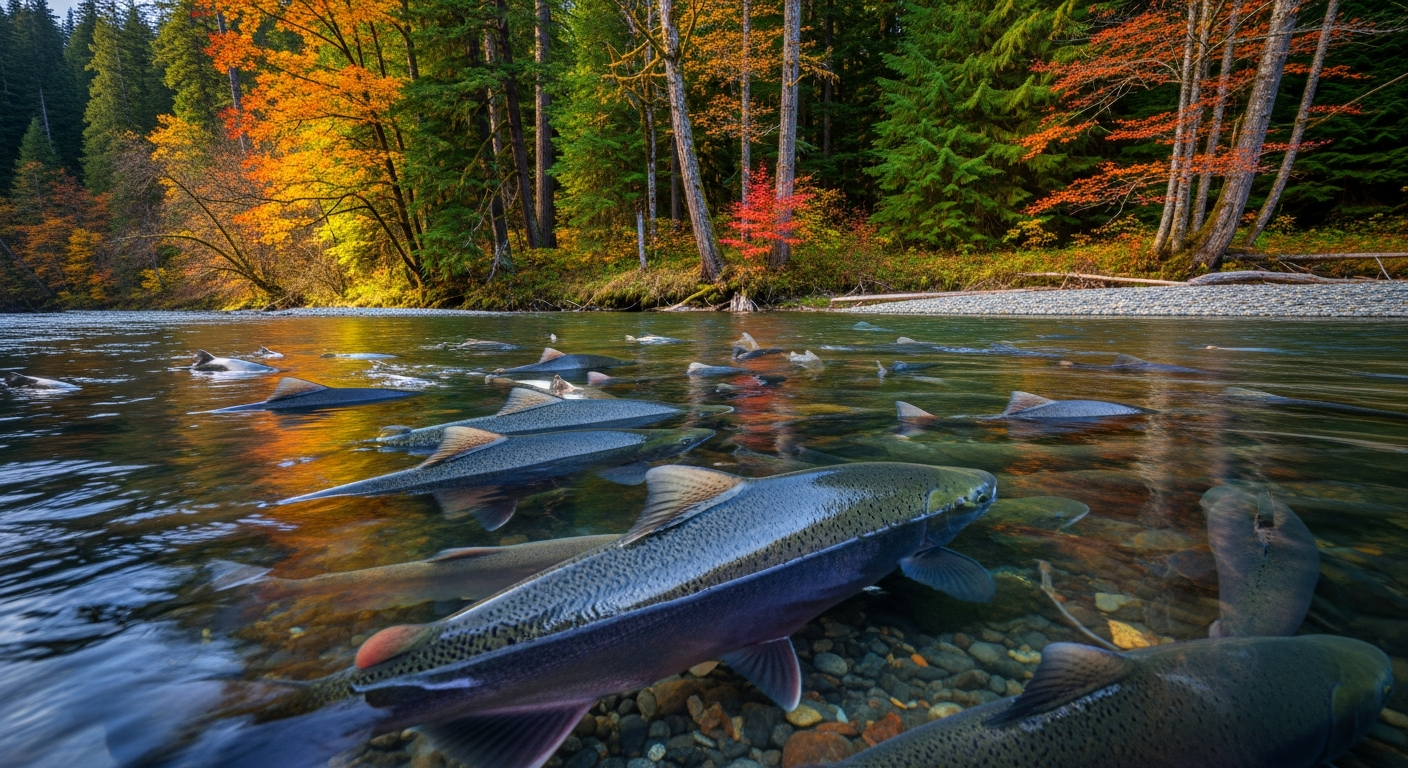
    Each fall, bear tracks and salmon carcasses appear on the lower Tahuya’s banks. That’s not folklore — it’s ecology. Hood Canal summer chum and Chinook salmon both return to the Tahuya to spawn. Both species are listed under the federal Endangered Species Act. The summer chum were actually considered locally extinct here in the late 1990s before a restoration effort by the Hood Canal Salmon Enhancement Group (HCSEG) rebuilt the run using donor fish from the Union River. Since 2006, 200 to 1,000 summer chum return to the Tahuya every year on their own.

    Who Is HCSEG and Where Are They?

    The Hood Canal Salmon Enhancement Group is headquartered right in Belfair, at 600 NE Roessel Road — the same address as the Salmon Center, where the Hood Canal Salmon Run 5K is held each June. HCSEG has been doing salmon research, habitat restoration, and community education in the Hood Canal watershed since the 1990s. They run rotary screw traps on the Tahuya, Dewatto, and Little Quilcene Rivers each spring to count juvenile salmon — it’s one of the primary data sets used to assess whether salmon populations are recovering.

    If you’re new to North Mason and want a fast, credible education in why Hood Canal is the way it is — environmentally, ecologically, culturally — HCSEG is the organization to know. They welcome volunteers, host community events, and their staff are genuinely approachable. Phone: (360) 275-9284. Website: pnwsalmoncenter.org.

    What Is the Tahuya River Preserve?

    Great Peninsula Conservancy assembled the preserve in stages starting in July 2023: 145 acres acquired with Washington Department of Ecology and state Salmon Recovery Funding Board support, then 38 more acres that December, then two small parcels in 2025. The total is now 190 acres, permanently protecting roughly 450 feet of Tahuya River mainstem and anchoring a longer-term plan to conserve the lower four miles of the river.

    The land is held by GPC, based at 6536 Kitsap Way in Bremerton. It is not open to the public for recreation — it’s managed as a working conservation site. But its existence changes what is possible along the lower Tahuya for decades to come.

    What’s Actually Happening Next: The Gabion Wall

    The most concrete near-term project is the planned removal of a Gabion wall from the Tahuya River corridor. A Gabion wall is a wire-cage rock structure — you’ve probably seen them along highways or near bridges, used for erosion control. They work fine for holding a bank in place, but they disrupt the natural flow dynamics that salmon spawning habitat requires: the shifting gravel beds, the cool deep pools, the wood debris accumulations where juvenile fish shelter and feed.

    GPC and HCSEG are working through permitting and hydrology studies to plan the removal. After the wall comes out, engineered log jam structures may be installed upstream to rebuild the natural channel complexity the river has lost. The project is still in planning phase as of May 2026 — but the land protection that makes it possible is locked in.

    Why This Is Part of What Makes North Mason Different

    A lot of communities talk about caring about their environment. North Mason is one of the few places where you can stand at a boat launch on Hood Canal, watch a salmon jump, and trace that fish’s story back to a specific river, a specific restoration project, and a specific group of people who have been working on it for 30 years — and who are headquartered two miles from the Belfair Fred Meyer.

    The Tahuya River Preserve is part of that story. If you’re going to be here long-term, it’s worth knowing it.

    Also see: Tahuya River Preserve: Full Story | Hood Canal from Belfair: Fishing, Kayaking and Beaches

    Frequently Asked Questions

    What is the Tahuya River and where does it flow?

    The Tahuya River drains the Tahuya Peninsula in Mason County, flowing west and north before emptying into Hood Canal south of Belfair. The lower river corridor runs through floodplain forest in eastern Mason County. The river supports ESA-listed summer chum and Chinook salmon runs.

    What is the Hood Canal Salmon Enhancement Group and how can I get involved?

    HCSEG is a Belfair-based nonprofit that has led salmon research, habitat restoration, and education in the Hood Canal watershed since the 1990s. They welcome volunteers for rotary screw trap operations, restoration plantings, and community events. Find them at 600 NE Roessel Road, Belfair, (360) 275-9284, or pnwsalmoncenter.org.

    Can I visit the Tahuya River Preserve?

    The preserve is not currently open to the public for recreation. It is managed as a conservation area by Great Peninsula Conservancy. The nearby Tahuya State Forest and the lower Hood Canal shoreline offer public outdoor access in the same general area.

    What is a Gabion wall and why is removing it good for salmon?

    A Gabion wall is a wire-cage rock structure used for stream bank stabilization. While effective at holding banks in place, they alter natural stream flow, disrupt the gravel beds salmon use for spawning, and prevent wood debris from moving downstream — wood that creates the deep pools and feeding habitat juvenile salmon depend on. Removal allows the stream to recover more natural dynamics.

    Are salmon actually recovering in Hood Canal?

    Yes. Hood Canal summer chum — which were locally extinct in the Tahuya River in the 1990s — have sustained themselves without supplementation since 2015. NOAA Fisheries has indicated the population may meet ESA delisting criteria, which would be the first successful salmon delisting in U.S. history. The Tahuya River is part of that recovery story.

  • Hood Canal Property Owners: What the Tahuya River Preserve Means for Water Quality, Shellfish, and Your Shoreline

    Hood Canal Property Owners: What the Tahuya River Preserve Means for Water Quality, Shellfish, and Your Shoreline

    If you own property on Hood Canal — tidelands, a waterfront parcel, or even a lot a mile back from the water — the long-term health of the canal directly affects what you own. That’s why the permanent protection of 190 acres along the lower Tahuya River is worth understanding, not just as an environmental story, but as a water-quality and property-value story.

    What the Tahuya River Does to Hood Canal

    The Tahuya River drains eastern Mason County and empties into Hood Canal near Belfair. What happens in that watershed — how much sediment runs off after a rain event, how much nutrient load enters the canal, how warm the water is by July — directly affects conditions in Hood Canal itself.

    Hood Canal is a semi-enclosed fjord. It doesn’t flush as quickly as open Puget Sound. Dissolved oxygen levels, water temperature, and nutrient loading matter here in ways that are measurable and consequential. When those factors tip the wrong direction, shellfish beds close. When they hold steady, the canal supports the ecosystem — and the way of life — that Hood Canal property values are built on.

    Great Peninsula Conservancy’s Tahuya River Preserve permanently protects 190 acres of floodplain forest and wetlands along the lower Tahuya corridor. Floodplain forest is not passive. It filters runoff before it reaches the river, moderates water temperatures through canopy shading, and traps sediment that would otherwise flow downstream and into the canal.

    The Gabion Wall Removal: A Direct Water Quality Improvement

    The most significant near-term project connected to the preserve is the planned removal of a Gabion wall from the Tahuya River corridor. Gabion walls — wire-cage rock structures installed for bank stabilization — alter natural stream flow patterns, trap fine sediment in ways that degrade spawning gravel, and prevent the natural movement of large wood debris downstream.

    When the wall comes out, the river will begin recovering a more natural channel dynamic. Engineers are also evaluating engineered log jam structures upstream to rebuild holding pools and feeding lanes for juvenile salmon. Healthier salmon habitat upstream means more adult salmon returning — and salmon carcasses are one of the primary marine-derived nutrient inputs that forest and riparian systems depend on. It’s a closed loop that connects the mountains to the canal.

    The project is in the permitting and planning phase as of May 2026. No construction timeline has been announced, but the land protection necessary to make it happen is complete.

    What This Means for Shellfish Bed Status on Hood Canal

    If you harvest shellfish from Hood Canal tidelands, or if your property value is tied to an open shellfish beach, you already know that closures happen — and that the reasons are usually tied to water quality upstream. Fecal coliform from stormwater, agricultural runoff, and failing septic systems are the primary drivers of WDFW closure events on Hood Canal.

    Protecting floodplain forest along the Tahuya doesn’t fix septic systems — that’s a different problem. But it does reduce one of the diffuse-source inputs: unfiltered runoff from cleared or developed land adjacent to salmon-bearing streams. Every acre of permanently protected floodplain is one less acre that could be cleared, graded, or made impervious in the future.

    For Hood Canal property owners, the preserve is a long-term investment in the upstream conditions that determine what the canal looks like in 20 years.

    The ESA Connection and What It Means for the Canal

    Hood Canal summer chum salmon may become the first ESA-listed salmon population ever removed from the federal endangered species list. That’s not a distant possibility — NOAA Fisheries has signaled the population meets recovery criteria, with Tahuya River runs holding between 200 and 1,000 fish annually since 2006 without supplementation. If delisting proceeds, it would represent a significant reduction in regulatory burden on Hood Canal development and land use — something that directly affects property owners navigating shoreline development permits.

    The Hood Canal Salmon Enhancement Group monitors juvenile salmon on the Tahuya, Dewatto, and Little Quilcene Rivers each spring from their facility at 600 NE Roessel Road in Belfair, (360) 275-9284. Their data is what drives the federal recovery assessment.

    Also see: Tahuya River Preserve: 190 Acres Permanently Protected — Full Story | Hood Canal Property Owners: What the 2026 Shellfish Rule Changes Mean for Your Beach

    Frequently Asked Questions

    Does the Tahuya River Preserve affect Hood Canal shellfish bed closures?

    Indirectly, yes. Protecting 190 acres of floodplain forest along the Tahuya reduces diffuse stormwater runoff into the river and ultimately into Hood Canal. Shellfish closures are driven by fecal coliform levels, and reducing upstream runoff inputs is one piece of the water quality picture. It won’t fix point-source pollution, but it removes a future risk from the equation.

    How does the Gabion wall removal affect Hood Canal water quality?

    Removing the Gabion wall allows the Tahuya River to recover a more natural channel shape — distributing flow across the floodplain, reducing fine sediment export, and allowing wood debris to move naturally downstream. These changes improve water clarity and temperature downstream, benefiting Hood Canal conditions near the river mouth.

    What is the current ESA status of Hood Canal salmon and what does it mean for property owners?

    Hood Canal summer chum and Chinook salmon are both listed as threatened under the ESA. Hood Canal summer chum may be the first ESA-listed salmon ever delisted — a development that would reduce certain regulatory constraints on Hood Canal shoreline and development activities. Continued habitat restoration, including the Tahuya River work, supports the recovery data driving that potential delisting.

    Who is responsible for salmon restoration on the Tahuya River?

    Great Peninsula Conservancy holds and manages the land. The Hood Canal Salmon Enhancement Group (HCSEG), based at 600 NE Roessel Road in Belfair, leads habitat restoration work, juvenile salmon monitoring, and the Gabion wall removal planning in partnership with GPC.

    Does the preserve affect future development near the Tahuya River?

    Yes. The 190 acres are permanently protected by a conservation easement — they cannot be sold for development, cleared, or subdivided. This is the intended outcome: locking in floodplain function in perpetuity so future land use decisions upstream don’t erode what restoration work achieves downstream.

  • Tahuya River Preserve Reaches 190 Acres: What North Mason Needs to Know About Salmon Restoration on Hood Canal

    Tahuya River Preserve Reaches 190 Acres: What North Mason Needs to Know About Salmon Restoration on Hood Canal

    For more than two years, Great Peninsula Conservancy has been quietly assembling one of the most ecologically significant land protection projects on Hood Canal. The result is the Tahuya River Preserve — 190 acres of floodplain forest, wetlands, and riverfront corridor in eastern Mason County, permanently protected and now the anchor for a phased restoration effort targeting the lower four miles of the Tahuya River.

    For North Mason residents who know the lower Tahuya — the bear tracks in the mud, the salmon carcasses that fertilize the cottonwood flats each fall — this is the moment when “protected” stops meaning paperwork and starts meaning something permanent.

    How the Preserve Came Together

    Great Peninsula Conservancy (GPC) built the preserve in stages. In July 2023, the organization acquired 145 acres along the lower Tahuya mainstem, funded through a Washington Department of Ecology Streamflow Restoration grant and the state Salmon Recovery Funding Board. That December, GPC added an adjacent 38-acre parcel. In 2025, two smaller parcels totaling approximately five acres completed the assemblage — including roughly 450 feet of Tahuya River mainstem — bringing the total to 190 acres.

    The preserve sits where the Tahuya River watershed drains into Hood Canal, just east of Belfair. It’s a strategic location: protecting floodplain here controls what enters the canal at one of the most salmon-critical junctions in Mason County.

    Why the Tahuya River Matters for Salmon

    Two salmon species listed under the federal Endangered Species Act use the Tahuya River: Hood Canal summer chum and Chinook salmon. The summer chum story here is one of the most remarkable conservation recoveries in the Pacific Northwest. Summer chum were classified as “recently extinct” in the Tahuya River before a reintroduction effort beginning in the early 2000s. Using Union River summer chum as donor stock, HCSEG rebuilt the run — 750 fish returned in the first year. Since 2006, annual Tahuya summer chum returns have held between 200 and 1,000 fish. The final supplementation release was in 2015; the population has sustained itself since.

    NOAA Fisheries has signaled that Hood Canal summer chum may be the first ESA-listed salmon population ever removed from the endangered species list — a milestone no Pacific salmon population has achieved in the history of the Act. The Tahuya River is part of that recovery story.

    The Hood Canal Salmon Enhancement Group (HCSEG), headquartered at 600 NE Roessel Road in Belfair, monitors juvenile salmon using rotary screw traps on the Tahuya, Dewatto, and Little Quilcene Rivers each spring. Their data drives decisions about where restoration dollars go next — and the Tahuya is currently near the top of that list.

    The Gabion Wall Removal: What Comes Next

    The most significant near-term restoration project is the planned removal of a Gabion wall — a wire-cage rock structure — from the Tahuya River corridor. Gabion walls were widely used in mid-20th century stream engineering to control erosion, but they alter natural stream flows, disrupt gravel substrate that salmon need for spawning redds, and interrupt the natural wood and debris movement that juvenile salmon depend on for cover and food.

    GPC is working with HCSEG on removal plans. Once the wall is out, engineers are also evaluating the installation of engineered log jam structures upstream — designed to mimic the natural wood accumulation that builds holding pools and feeding lanes for juvenile salmon.

    These projects are still in the permitting and hydrology study phase. Salmon habitat work at this scale requires state and federal coordination, contractor mobilization, and hydrological modeling — it moves carefully. But the land protection that makes any of it legally and practically possible is done.

    What This Means for North Mason

    The Tahuya River Preserve represents one piece of a larger conservation strategy for the lower Hood Canal watershed. Every acre of floodplain protected upstream means less sediment loading, cooler water temperatures, and better dissolved oxygen in Hood Canal itself — the same water that determines whether shellfish beds stay open and whether salmon return each fall to the beaches and rivers that define this community.

    For North Mason residents, it’s also a statement about what this corner of Washington is choosing to be. Development pressure on the SR-3 corridor is real. The Tahuya River Preserve locks in a counter-weight: 190 acres that will never be a subdivision, a gravel pit, or a parking lot.

    Residents interested in the restoration work — or in volunteering for HCSEG’s 2026 rotary screw trap season — can contact the Hood Canal Salmon Enhancement Group at 600 NE Roessel Road, Belfair, (360) 275-9284, or at pnwsalmoncenter.org. Great Peninsula Conservancy is based at 6536 Kitsap Way, Bremerton, (360) 373-3500, or greatpeninsula.org.

    Also see: Hood Canal Shellfish Season 2026: What North Mason Harvesters Need to Know

    Frequently Asked Questions

    Where exactly is the Tahuya River Preserve?

    The preserve is in eastern Mason County, along the lower Tahuya River corridor where it drains into Hood Canal. It is located just east of Belfair and is not currently open to the general public for recreation — it is managed as a conservation area by Great Peninsula Conservancy.

    What salmon species use the Tahuya River?

    Hood Canal summer chum salmon and Chinook salmon both use the Tahuya River watershed. Both are listed as threatened under the federal Endangered Species Act. Summer chum were successfully reintroduced to the Tahuya after being classified as locally extinct, and the population has sustained itself without supplementation since 2015.

    What is a Gabion wall and why is it being removed?

    A Gabion wall is a wire-cage rock structure used historically for stream bank stabilization. While effective at controlling erosion, they alter natural water flow, disrupt gravel spawning beds, and impede the movement of large wood debris that salmon depend on. Removal restores more natural stream dynamics.

    When will the Gabion wall removal happen?

    The project is currently in the planning and permitting phase. Great Peninsula Conservancy and HCSEG are working through hydrology studies and regulatory coordination. No construction timeline has been publicly announced as of May 2026.

    How can North Mason residents get involved with salmon restoration on the Tahuya?

    The Hood Canal Salmon Enhancement Group welcomes volunteers for its 2026 rotary screw trap season and other restoration projects. Contact HCSEG at 600 NE Roessel Road, Belfair, (360) 275-9284, or visit pnwsalmoncenter.org.

    Does the Tahuya River Preserve affect Hood Canal water quality?

    Yes. Protecting floodplain forest along the Tahuya River reduces sediment and nutrient runoff into Hood Canal, helps maintain cooler water temperatures, and supports dissolved oxygen levels — all factors that affect shellfish bed status and salmon habitat quality in the canal itself.

  • Bulldogs Sports Roundup — Week of May 1, 2026

    Bulldogs Sports Roundup — Week of May 1, 2026

    The North Mason Bulldogs are rolling into May with momentum across multiple spring sports. Softball has caught fire with three straight wins, boys track is putting up league-winning performances, and baseball continues to grind through a competitive Olympic League slate.

    Softball — Hot Streak in Full Effect

    The Lady Bulldogs have turned a corner. After dropping a close 2-1 game to Port Angeles on April 23, North Mason went on a tear — beating Bremerton 11-5 on April 24, then sweeping Sequim in a doubleheader on April 28, winning 11-2 and 13-3. The Bulldogs also swept the Port Angeles Wolves in a doubleheader per reports from the Peninsula Daily News. North Mason sits at 10-7 overall (5-5 league) heading into the final stretch of the regular season.

    Up next for the Lady Bulldogs: home vs. Orting at noon on Saturday, May 2, followed by road games against Olympic (May 4) and North Kitsap (May 5) before a key matchup at Kingston on May 8.

    Baseball — Fighting Through the League

    Bulldog baseball has been battling through a tough Olympic League schedule. The squad picked up a 5-2 road win over Bremerton on April 22, showing they can compete with the league's upper tier. The team had games scheduled at Bainbridge on April 30 and hosts a home contest on Saturday, May 2, with more league play to follow through the first week of May.

    Track & Field — Boys Dominate Kingston Dual

    The North Mason boys track team rolled to a decisive win in a 2A Olympic League dual meet at Kingston on April 23, with individual champions across the board:

    • Garrett Murphy Jr. — 100m (12.04 seconds)
    • Derek Dunham — 200m (23.64s) and shot put (44 ft, 2 in)
    • Christian Roberts-McRae — 800m (2:16.27)
    • Owen Dukeshier — Discus (117 ft, 4 in) and javelin (138 ft, 9 in)
    • Cameron Revelez — Long jump (18 ft, 3 in) and triple jump (39 ft, 3 in)
    • 4×100 relay (McFarlane, Dunham, Butler, Murphy Jr.) — 45.10 seconds
    • 4×400 relay (Orlando, Butler, Porter, Dunham) — 3:57.83

    On the girls side, the Lady Bulldogs finished 8th out of 30 teams at the prestigious 65th annual Shelton Invitational — Washington's longest-running track and field meet — held at Highclimber Stadium. The Bulldogs competed well against the largest field of the season.

    Across the Bridge — Highclimbers Update

    Over in Shelton, the Highclimbers baseball team (9-6 overall, 4-6 Evergreen Conference) hit a rough patch, dropping games to Tumwater (14-2 and 3-0) and Aberdeen (14-5) last week. Shelton faces Olympic on Friday, May 1, and hosts Black Hills on May 4. Boys soccer dropped close contests to Tumwater (1-0) and Aberdeen (2-1). The Shelton Invitational track meet on Saturday drew 31 boys and 30 girls teams — Tumwater boys and Bishop Blanchet girls claimed team titles.

    At the Track — Ridge Motorsports Park

    Speed fans: Ridge Motorsports Park in Shelton hosts a Hooked On Driving (HOD) track day weekend May 1–2. Later this month, Track Time Track Days return May 24–25. The big one is still ahead — MotoAmerica Superbikes rolls into the Ridge on June 26–28. Get your tickets early.

  • Tahuya River Preserve Grows to 190 Acres — Salmon Restoration Eyes Gabion Wall Removal

    Tahuya River Preserve Grows to 190 Acres — Salmon Restoration Eyes Gabion Wall Removal

    If you’ve walked the lower Tahuya River corridor lately, you’ve probably noticed the bear tracks and salmon carcasses that line the banks each fall — signs that something worth protecting is still alive here. Thanks to a multi-year land conservation push by Great Peninsula Conservancy, 190 acres along the lower Tahuya River are now permanently protected, and the harder work of actual habitat restoration is moving into its next phase.

    The Tahuya River Preserve sits in eastern Mason County, straddling the watershed that drains into Hood Canal near Belfair. Great Peninsula Conservancy assembled the preserve in stages — 145 acres acquired in July 2023 with support from the Washington Department of Ecology Streamflow Restoration grant and the state Salmon Recovery Funding Board, followed by an adjacent 38 acres in December of that year, and two smaller parcels totaling about five acres in 2025. Taken together, the preserve now protects roughly 450 feet of Tahuya River mainstem and is designed as the anchor point for a larger phased effort to conserve the lower four miles of the river.

    Why does this stretch matter? Both Hood Canal summer chum salmon and Chinook salmon use the Tahuya River watershed — and both are listed under the federal Endangered Species Act. The Hood Canal Salmon Enhancement Group, headquartered at 600 NE Roessel Road in Belfair, has been monitoring juvenile salmon using rotary screw traps on the Tahuya, Dewatto, and Little Quilcene Rivers each spring. Their data guides where restoration dollars go next.

    The most anticipated near-term project is the removal of a Gabion wall — a wire-cage rock structure that alters natural stream flows — from the Tahuya River corridor. Great Peninsula Conservancy is working with the Hood Canal Salmon Enhancement Group on removal plans. Once the wall comes out, engineers are also weighing the installation of log jam structures upstream to mimic natural wood accumulation that juvenile salmon depend on for cover and food.

    These aren’t quick projects. Permitting, hydrology studies, and contractor coordination mean the removal is still in planning rather than construction phase — but the land protection piece that makes any of it possible is done. Our river isn’t going anywhere.

    For anyone who wants to learn more or get involved, Great Peninsula Conservancy is based at 6536 Kitsap Way in Bremerton and can be reached at (360) 373-3500 or greatpeninsula.org. The Hood Canal Salmon Enhancement Group is at 600 NE Roessel Road, Belfair; (360) 275-9284.

    Related Coverage: Tahuya River Deep Dives

  • Belfair Commute Briefing — Thursday, April 30, 2026

    Belfair Commute Briefing — Thursday, April 30, 2026

    Ferry Update

    The Bremerton–Seattle ferry is operating on schedule this morning with no cancellations. Today’s disruptions are on other routes: Port Townsend/Coupeville sailings are affected by tidal conditions, and the Anacortes/San Juan Islands vessel is cancelled due to crew shortage — neither impacts the Bremerton corridor.

    Colman Dock access note: Elevators 1 and 2 at Colman Dock remain out of service. The Alaskan Way #4 elevator and Pier 50 elevator are in service and available for ADA access.

    ⚠️ FARE ALERT — Last day before increase: WSF fares increase tomorrow, Friday May 1. The average fare rises roughly 3%, plus a 35% peak-season surcharge applies to single-ride vehicle and motorcycle fares through September 30. Multi-ride passes are exempt. If you’re buying passes or stocking up, today is the day.

    SR-3 & Gorst

    No daytime impacts on the SR-3 corridor this morning. The ongoing fish barrier removal project near Sunnyslope Road SW continues nighttime-only work — no lane closures during the AM commute. The 16-day around-the-clock closure for box culvert installation remains scheduled for late spring/early summer 2026; WSDOT will announce that window in advance.

    WSDOT is hosting an online open house today (April 30) on a planned single-lane roundabout at SR-3 and Division Avenue in Gorst — part of the broader Gorst corridor improvement plan.

    Hood Canal Bridge

    No scheduled closures today. The two-week daytime inspection schedule wrapped April 24 and has not been renewed. Normal operations.

    PSNS / Bangor Gates

    No public alerts or gate advisories from Naval Base Kitsap-Bangor or PSNS this morning. Standard gate hours in effect: Trident Gate open 24 hours; Trigger Gate open Monday–Friday 0500–1930.

    Weather

    A nice one. Mostly sunny today with highs in the upper 60s to mid 70s across Mason and Kitsap counties. Light morning winds becoming north to 10 mph in the afternoon. No weather advisories in effect. Current temp at 5 AM: 48°F in the Silverdale area.

    Fuel Prices

    Belfair-area gas prices holding steady. Safeway on SR-3 NE is leading at approximately $4.99/gal regular. The range across Belfair and Gorst stations runs $4.99–$5.59/gal. Washington statewide average is $5.38/gal — Belfair remains below average.

    Briefing current as of 5:15 AM PT, Thursday, April 30, 2026. Safe travels, North Mason.

  • New to North Mason? Three Infrastructure Projects Tell You Where Belfair Is Headed

    New to North Mason? Three Infrastructure Projects Tell You Where Belfair Is Headed

    If you’ve recently moved to Belfair or North Mason — or you’re weighing a move to the area — three infrastructure projects in progress right now give you a clearer picture of where this community is headed than any real estate listing will.

    A New Fire Station — What It Tells You About This Community

    North Mason voters approved a bond in 2019 to build a new headquarters fire station for North Mason Regional Fire Authority. That station — a $9 million facility at 490 NE Old Belfair Highway in Belfair — is on track to open in September 2026.

    The new headquarters replaces a facility that was built for a smaller community. It includes an eight-vehicle bay, a dedicated training center, administrative offices, and living quarters for up to ten on-call firefighters. TRICO Companies is the contractor.

    For a newcomer evaluating safety and services: North Mason RFA covers a large geographic area — Belfair, Allyn, Tahuya, much of the Hood Canal shoreline. The upgraded headquarters means faster, better-equipped emergency response across that entire service area. The existing station building will be leased to Mason County for the north precinct of the Sheriff’s Office — adding a law enforcement presence to the same site.

    Communities that invest in public safety infrastructure at this scale are communities with a plan. This isn’t a patch — it’s a foundation.

    The Electrical Upgrade: Why It Matters for Where You Live

    Mason County PUD No. 3 completed the first major component of its Belfair Electrical Capacity Infrastructure Project last fall: a new, high-capacity transformer at the Belfair substation, replacing a 1967-era unit that had been limiting what the grid could deliver to the Belfair Urban Growth Area. The new transformer was energized in October 2025. A second component — a new switching station at the former Belfair Warehouse site — is underway.

    For a newcomer, here’s why this matters: the electrical capacity constraint was the primary reason Mason EDC couldn’t recruit commercial and light industrial businesses to Belfair’s SR-3 corridor. Solving it means more local employers, more local tax base, and a commercial corridor that has room to grow. That’s the economic foundation of a community that attracts people rather than losing them.

    Total public investment in this upgrade: over $5.5 million, including $3 million in federal funding secured by Rep. Derek Kilmer. It’s the kind of infrastructure investment that doesn’t get its own ribbon-cutting ceremony but determines what Belfair looks like in ten years.

    Allyn’s Waterfront: History Being Made Permanent

    About twelve miles north of Belfair, on North Bay at the end of Hood Canal, the Port of Allyn is restoring two long-standing waterfront projects with fresh state funding signed by Governor Bob Ferguson. The pier repair contract is already awarded to Lakeshore Construction ($142,569.20). The Sargent Oyster House restoration — approximately $411,044 in state grant funds — will see the historic building relocated to an overwater position at Allyn’s Waterfront Park, where it will become a museum about the shellfish industry that defined this part of Mason County.

    Allyn is the kind of waterfront town that new North Mason residents often discover after they move here — a short drive up SR-3, a marina, a park, and a waterfront that’s actively being invested in. If you haven’t been, go.

    For the Newcomer: What to Know About North Mason Infrastructure

    North Mason is not a bedroom community — it’s a community building its own infrastructure. The fire station, the electrical grid, the waterfront in Allyn are all signals of a place investing in its own future. The SR-3 corridor is the spine of all of it — for context on what’s happening with that road and the Belfair Bypass, see our North Mason commuter infrastructure guide.

    For the full infrastructure story, read the Belfair infrastructure overview. For what newcomers need to know about housing in North Mason, see Belfair real estate in 2026.

    Frequently Asked Questions for New North Mason Residents

    What fire station covers Belfair and North Mason?

    North Mason Regional Fire Authority covers Belfair, Allyn, Tahuya, and much of the surrounding area. Their new headquarters at 490 NE Old Belfair Highway in Belfair opens September 2026 — an eight-bay facility with resident on-call firefighters replacing an older, smaller station.

    Who provides electricity in Belfair and North Mason?

    Mason County PUD No. 3 (PUD 3) provides electricity to Belfair, Allyn, and surrounding North Mason communities. They are currently completing a major infrastructure upgrade to the Belfair substation and adding a new switching station — the first major capacity expansion in decades.

    What is there to do in Allyn, WA?

    Allyn is a small waterfront community on North Bay at the southern end of Hood Canal, about 12 miles north of Belfair on SR-3. It has a marina, Waterfront Park, and a small commercial area. The Port of Allyn is currently restoring the historic Sargent Oyster House to serve as a waterfront museum — part of an ongoing investment in the Allyn waterfront as a community destination.

    Is Belfair growing? Is it a good place to settle?

    Belfair’s Urban Growth Area on the SR-3 corridor is actively developing — commercial, light industrial, and residential. The PUD electrical upgrade, new fire station, and ongoing WSDOT SR-3 work are all indicators of infrastructure investment ahead of growth. It’s a community building deliberately, not just expanding.

  • Belfair Small Business Owners: What the PUD Electrical Upgrade and New Fire Station Mean for the SR-3 Corridor

    Belfair Small Business Owners: What the PUD Electrical Upgrade and New Fire Station Mean for the SR-3 Corridor

    If you run a business in Belfair or are considering locating to the SR-3 corridor, two of the three major infrastructure projects underway in North Mason right now speak directly to your situation — one removes the single biggest constraint on commercial growth that Mason EDC has been fighting for years, and the other changes emergency response for every business and employee in the area.

    The Electrical Constraint Is Finally Being Solved

    Ask anyone at Mason EDC what’s been blocking commercial recruitment to Belfair’s Urban Growth Area, and they’ll tell you the same thing: power. Limited electrical capacity at the Belfair substation meant PUD 3 couldn’t reliably say yes to businesses with significant power requirements. That’s not a minor operational detail — it’s the reason companies evaluating the SR-3 corridor for light industrial or commercial operations walked away.

    Mason County PUD No. 3’s Belfair Electrical Capacity Infrastructure Project is directly fixing that. The project’s two components are both in motion:

    • The Belfair substation’s 1967-era transformer was replaced with a modern, higher-capacity unit — placed in July 2025, energized in October 2025. It’s running now.
    • A new switching station at the former Belfair Warehouse site is upgrading PUD 3’s connection to BPA’s transmission lines — expanding the total power available to the Belfair UGA.

    Total investment: over $5.5 million — $3 million federal (secured by Rep. Derek Kilmer), $1.5 million ARPA funds through Mason County, $1 million in state funds from 35th District legislators. That’s a public investment in North Mason’s commercial infrastructure specifically designed to make your business address more competitive.

    For existing businesses on the SR-3 corridor, this means more reliable power and headroom for growth. For businesses considering the area: the “we can’t provide the power” conversation is ending.

    The New Fire Station and What It Means for Your Business

    North Mason Regional Fire Authority’s new $9 million headquarters at 490 NE Old Belfair Highway is on track for a September 2026 opening. For a small business owner, the direct relevance is response time and insurance.

    The new station’s eight-vehicle bay and resident on-call capacity (up to ten firefighters on-site) represent a meaningful upgrade from the current headquarters. Faster response times and greater apparatus capacity affect Insurance Services Office (ISO) ratings, which directly influence commercial property insurance premiums in the area.

    Additionally, the existing station building is slated to be leased to Mason County for the north precinct of the Mason County Sheriff’s Office — meaning a law enforcement presence co-located on the same Old Belfair Highway site. For a commercial district, that’s a safety anchor that matters.

    The Bigger Business Picture in Belfair

    The North Mason Chamber helped connect local employers including Hood Canal Communications with North Mason High School students at a College and Career Fair on April 23. Grocery Outlet Belfair — the independent operator store at 23960 NE SR-3 — is now six months in and keeping grocery dollars local. The Chamber’s Business After Hours series continues at northmasonchamber.com.

    For the full development picture, read the Belfair infrastructure overview and the April 29 Business Pulse. For context on the SR-3 corridor’s traffic future, see the Belfair Bypass and SR-3 commuter guide.

    Frequently Asked Questions for Belfair Small Business Owners

    Does the PUD 3 electrical upgrade affect existing businesses on SR-3?

    Yes. The upgraded Belfair substation transformer (energized October 2025) and new switching station increase total electrical capacity for the Belfair Urban Growth Area. Existing businesses benefit from improved grid reliability; businesses that previously couldn’t get adequate power commitments from PUD 3 may now be able to.

    Will the new North Mason fire station affect commercial insurance rates?

    Improved fire station capacity and response times affect ISO Public Protection Classifications, which insurers use to set commercial property premiums. The new eight-bay headquarters with resident firefighters represents a material upgrade in North Mason RFA’s capabilities — businesses should check with their commercial insurance carriers after the station opens in September 2026.

    Is there space for new commercial tenants on the Belfair SR-3 corridor?

    The Belfair Urban Growth Area has available commercial and light industrial capacity. With the electrical constraint being resolved and the Belfair Bypass eventually reshaping traffic flow on SR-3, this is an active development area. Contact Mason EDC for site availability and recruitment support.