Tag: Shellfish Season

  • WDFW Closes Two Northern Hood Canal Beaches Over Harvest Pressure — What It Signals for Belfair-Area Shellfish in 2026

    WDFW Closes Two Northern Hood Canal Beaches Over Harvest Pressure — What It Signals for Belfair-Area Shellfish in 2026

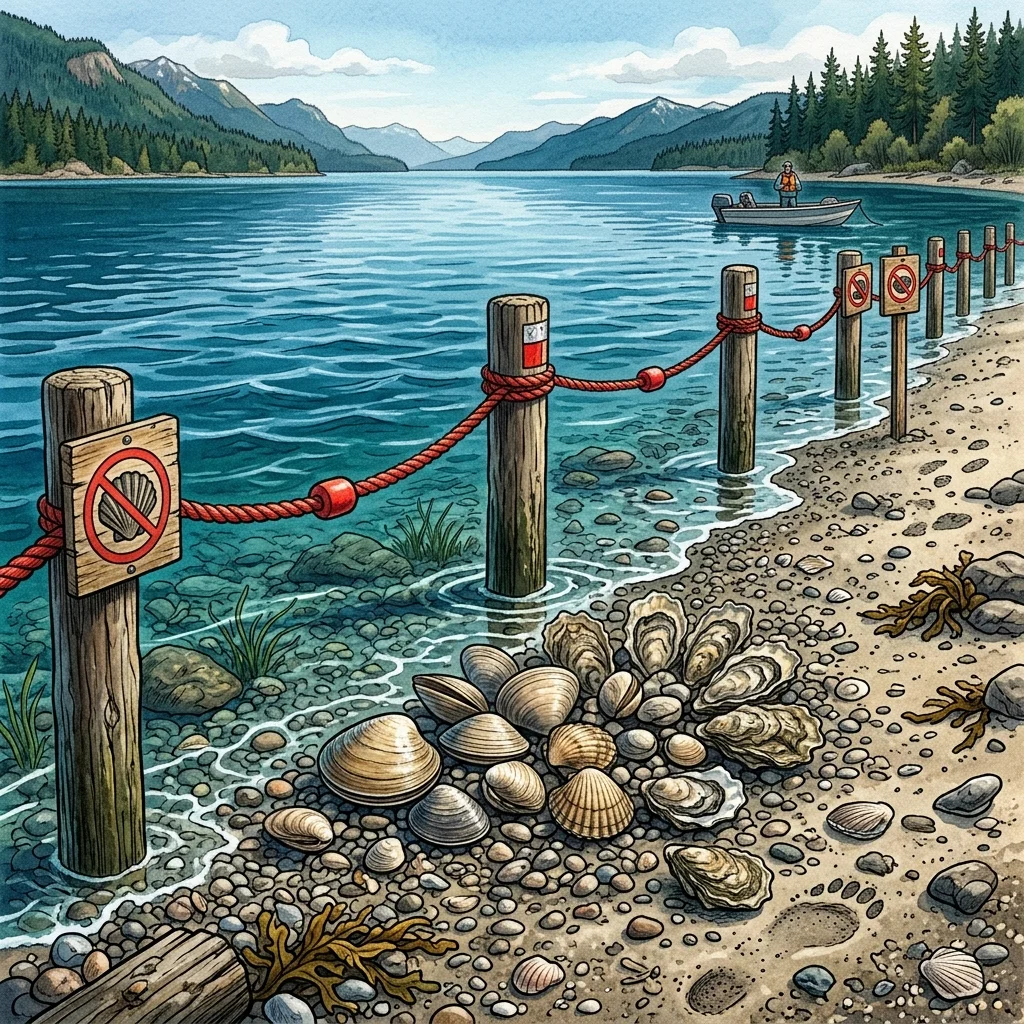
    BELFAIR, Wash. — The Washington Department of Fish and Wildlife (WDFW) closed two of the most popular shellfish beaches on northern Hood Canal effective May 3, 2026, citing unsustainable harvest pressure and widespread rule-breaking — and the conservation action 50 miles north of the Great Bend has direct consequences for the Belfair-area beaches that North Mason families, Hood Canal property owners, and Mason County visitors use most.

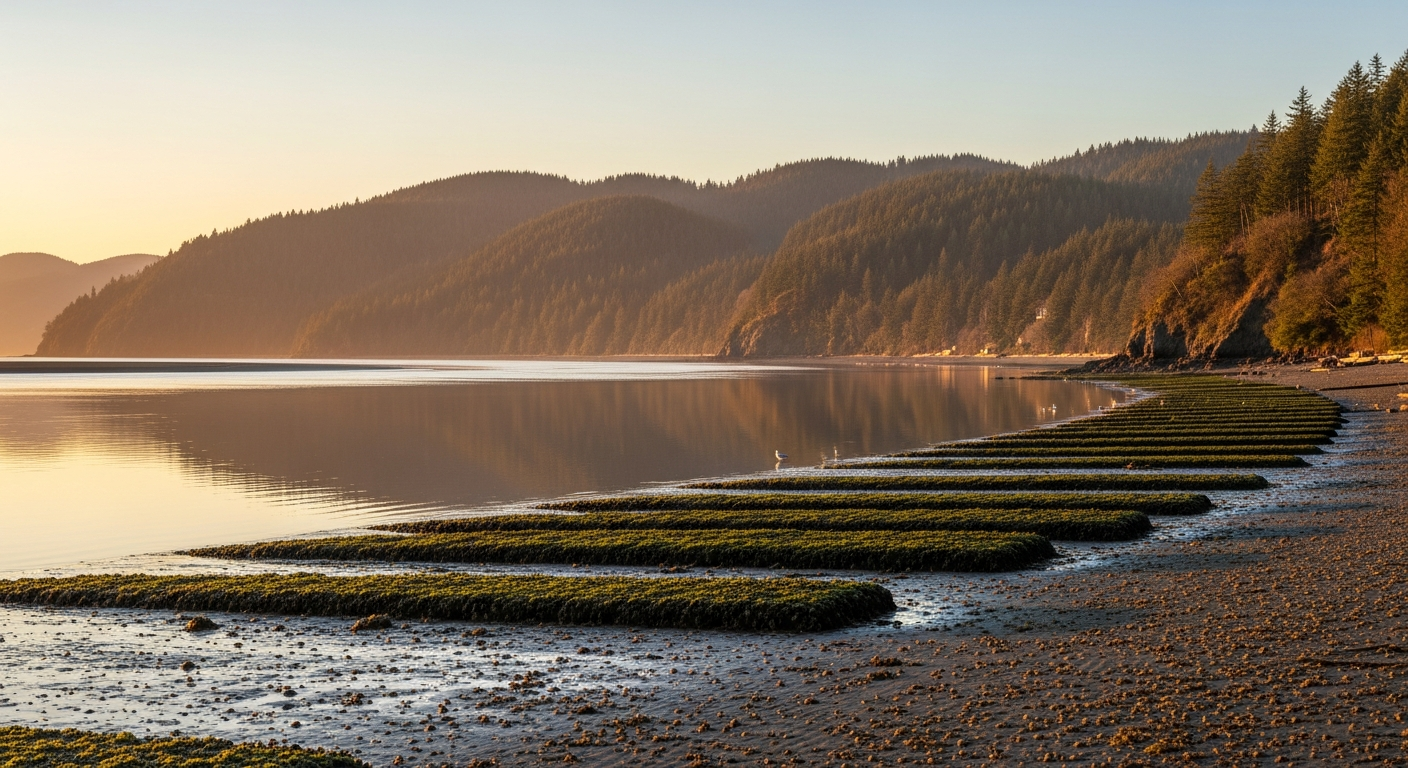
    The closure of Shine Tidelands State Park and Wolfe Property State Park, both in Jefferson County near the Hood Canal Bridge, ends the 2026 recreational clam, mussel, and oyster season at those sites earlier than scheduled. WDFW biologists and Fish and Wildlife Police said low tides this spring drew hundreds of harvesters at a time, many directed by social-media gathering groups, and compliance with limits, hole-filling, parking, and species-identification rules collapsed under that volume.

    What WDFW closed — and why it matters in North Mason

    The 2026 season at Shine Tidelands and Wolfe Property had already been reduced under a statewide rule package adopted in late 2025 that targeted ten Puget Sound beaches showing harvest stress. The May 3 action closed the season early on top of that reduction.

    For North Mason, the news is not just about two parks an hour north. Hood Canal harvesters are mobile, and any closure on the canal’s north end displaces effort. The same 2026 statewide rule package also shifted the dates at Twanoh State Park — Mason County’s most heavily-used Hood Canal shellfish beach, sitting on SR-106 between Belfair and Union. When fewer beaches are open at the same time, the ones that remain open absorb the displaced demand.

    The Twanoh squeeze: shifted season + summer shoreline closure

    Twanoh State Park is staring down two compounding closures of its own in 2026. The first is the WDFW season shift — harvest windows have moved to different months than locals are used to, and harvesters who show up on the wrong tide will find the beach legally closed. The second is a Washington State Parks shoreline restoration project: campsite reservations at Twanoh are closed from June 1, 2026 through spring 2027, and beach access is scheduled to close after the 2026 clam season for restoration construction.

    Stacked together, those two closures mean Twanoh’s window of legal, accessible shellfish harvest in 2026 is narrower than it has been in years. Mason County harvesters who miss it will be looking for alternatives. Belfair State Park, Potlatch State Park, and Mason County’s private tidelands will see the spillover.

    Why Belfair-area beaches are the next pressure point

    The Mason County stretch of Hood Canal — from the head of the Great Bend at Belfair down through Tahuya, Union, Hoodsport, and Lilliwaup — holds some of the most productive recreational shellfish ground in Washington. Belfair State Park, at the very tip of the Great Bend, has seasonal openings tied to the Mary E. Theler Wetlands and the Union River estuary. Twanoh has historically been the workhorse beach for residents driving SR-3 and SR-106.

    WDFW’s enforcement note on the May 3 closure was unusually pointed: gatherers exceeding daily limits, abandoning open digging holes, parking unsafely or illegally, and misidentifying clam species. None of those behaviors are unique to Shine Tidelands or Wolfe Property — the same patterns show up at North Mason beaches during peak low-tide weekends. For planning context, the Bugle’s Hood Canal Shellfish Season summer planner for Belfair and the 2026 shellfish and crab calendar for Hood Canal property owners remain the working baseline, both cross-checked against the WDFW Shellfish Safety Map before any harvest day.

    How Hood Canal shellfish management works

    Two state agencies share authority. WDFW sets seasons, daily limits, and species rules. The Washington State Department of Health (WA DOH) handles biotoxin and pollution closures through its Shellfish Safety Map and the Biotoxin Hotline at 1-800-562-5632. A beach can be open under WDFW and simultaneously closed under DOH for paralytic shellfish poison or vibrio risk — both have to be checked. Coverage of how shoreline land use affects water quality on the canal is in the Bugle’s water quality and shellfish reporting on the Tahuya River Preserve.

    What this means going forward

    WDFW signaled the May 3 action was a conservation tool the agency intends to keep using. If harvest pressure at any Hood Canal beach outruns sustainability, early closures should be expected rather than viewed as a surprise. The practical takeaway for Belfair, North Mason, and Hood Canal property-owner audiences: check the WDFW beach page and DOH Shellfish Safety Map the morning of harvest, not the night before. The Belfair Bugle will track the Twanoh State Park shoreline restoration timeline, the post-shift Twanoh harvest dates, and any further early closures on the Mason County side of the canal as they’re announced.

    Frequently Asked Questions

    Are Shine Tidelands and Wolfe Property the only Hood Canal beaches closed right now?

    Those are the two WDFW closed early on May 3, 2026. Other Hood Canal beaches run on their own published 2026 seasons and may be open, closed, or under biotoxin advisory. Always check the WDFW shellfish-beach page for the specific beach plus the WA DOH Shellfish Safety Map before harvesting.

    Is Belfair State Park open for recreational shellfish harvest right now?

    Belfair State Park’s status is governed by WDFW’s published 2026 season plus any active DOH biotoxin closure. The 2026 opener has been described in local coverage as unconfirmed pending WDFW confirmation; check the Belfair State Park beach page on wdfw.wa.gov before planning a harvest trip.

    Will Twanoh State Park be open for camping this summer?

    No. Washington State Parks has closed Twanoh State Park campsite reservations from June 1, 2026 through spring 2027 for a shoreline restoration project. Beach access is scheduled to close after the 2026 clam season ends.

    What changed at Twanoh State Park for shellfish in 2026?

    The 2026 statewide rule package WDFW adopted in late 2025 shifted Twanoh State Park’s recreational harvest dates to different months than the historical pattern. Harvesters who relied on prior-year calendars need to re-check the WDFW Twanoh page for the new 2026 windows.

    What can North Mason residents do to keep their Hood Canal beaches open?

    WDFW listed four behaviors that triggered the May 3 closure to the north: exceeding daily limits, leaving open digging holes, illegal or unsafe parking, and misidentifying clam species. Avoiding all four — and reporting violations to WDFW — is the single biggest thing local recreators can do to keep beaches like Belfair State Park and Potlatch State Park from following Shine Tidelands and Wolfe Property into early closure.

    Where do I report a violation or get a current closure status?

    For violations: WDFW Enforcement at 360-902-2936. For biotoxin closures: WA DOH Biotoxin Hotline at 1-800-562-5632 or the Shellfish Safety Map at doh.wa.gov/ShellfishSafety. The map updates as test results come in and is the authoritative source for whether a beach is safe on a given day.


    Related Expansion Coverage

    This story has been expanded into a full knowledge cluster for Mason County audiences:

  • Visiting Hood Canal This Summer? Here’s What’s Confirmed for Belfair State Park and Marine Area 12

    Visiting Hood Canal This Summer? Here’s What’s Confirmed for Belfair State Park and Marine Area 12

    Belfair, WA — If you’re planning a Hood Canal trip to Belfair this summer — whether it’s a Seattle weekend, a Tacoma family run, or a longer Pacific Northwest itinerary — here’s the cleanest read on what’s confirmed and what’s still pending as of May 3, 2026. The headline: lock in crab and camping now; treat the Belfair State Park shellfish opener as “watch the WDFW page” until officially posted.

    What’s Confirmed

    Marine Area 12 Dungeness crab opens 6 a.m. June 16, 2026, runs through September 5, harvest Thursdays through Mondays. Daily limit: five male, hard-shell, 6¼-inch minimum carapace, recorded on your Puget Sound catch record card. You’ll need a Washington Department of Fish and Wildlife (WDFW) shellfish/seaweed license and the Puget Sound crab catch record card. Visitor licenses are sold online at wdfw.wa.gov.

    Belfair State Park camping reservations are open for all three loops — Main, Beach, and Tree — through washington.goingtocamp.com or (888) 226-7688. The park has 90 standard sites, 41 full-hookup sites, two primitive sites, and one marine trail site on 3,720 feet of Hood Canal shoreline at 1002 NE Beck Road. Beach Loop is the closest to the water and accommodates RVs up to 60 feet. Tree Loop (May-Sept only) is the cheapest but limited to vehicles 18 feet and under. Memorial Day, July 4, and Labor Day are essentially gone; book August now if it’s on your list.

    Theler Wetlands is open today. Mary E. Theler Wetlands Nature Preserve at 600 NE Roessel Road in Belfair offers more than three miles of accessible trails through 139 acres of salt marsh and Union River estuary. Free, dawn to dusk, ADA-accessible boardwalk. May is peak shorebird migration on Hood Canal — if your visit is May or early June, this is the highest-value low-effort stop.

    What’s Pending

    The 2026 Belfair State Park clam, mussel, and oyster opener has not yet been published to the official WDFW Belfair beach page (wdfw.wa.gov/places-to-go/shellfish-beaches/270470). The page still shows Aug 1 – Sept 30, 2025 as the most recent posted season. If you’re booking a trip specifically for shellfish, build a flexible window (late July through September is the historical pattern at Belfair) and watch the WDFW page in May and June for the official 2026 announcement.

    The Visitor Rule You Must Know: WDFW + DOH

    Two parallel approvals govern every Hood Canal harvest. The WDFW season must be open, and the Washington Department of Health (DOH) health approval for the beach must be active. Either can be closed with little notice for biotoxin, vibrio, or water-quality reasons. The DOH Shellfish Safety hotline is 1-800-562-5632 and the DOH interactive map updates in real time. Run both checks within 24 hours of any planned harvest. Visitors who skip this step get tickets — or worse, get sick.

    Practical Logistics for the Belfair Trip

    Belfair sits at the south end of Hood Canal, roughly two hours from Seattle via SR-3 through Gorst, or about 75 minutes from Tacoma via SR-16 and SR-3. The town center has gas, groceries, and a handful of restaurants; expect basic services, not a tourism strip. The Belfair State Park beach is mostly soft mud at the tideline — waterproof boots are non-negotiable for any harvest trip. Standard Puget Sound daily shellfish limits when the beach is open are 18 oysters, 10 clams, and 10 mussels per harvester, with kids 15 and under harvesting free without a license.

    Frequently Asked Questions

    Do I need a Washington fishing license to crab on Hood Canal?

    Yes. You need a WDFW shellfish/seaweed license plus the Puget Sound crab catch record card. Both are sold online at wdfw.wa.gov. Daily limit in Marine Area 12 is five male Dungeness, hard-shell, 6¼-inch minimum carapace.

    How do I book a Belfair State Park campsite?

    Reserve at washington.goingtocamp.com or call (888) 226-7688. Three loops: Main (year-round, mix of hookup and standard), Beach (year-round, full hookups, up to 60 ft RVs), Tree (May-Sept, vehicles 18 ft and under, no hookups).

    Is Belfair State Park shellfish season definitely open in summer 2026?

    The 2026 opener has not yet been posted to the official WDFW Belfair beach page as of May 3, 2026. Build a flexible visit window (late July through September is the historical pattern) and check wdfw.wa.gov/places-to-go/shellfish-beaches/270470 weekly through May and June for the official date.

    How far is Belfair State Park from Seattle?

    Roughly two hours via I-5 south, SR-16 across the Tacoma Narrows Bridge, then SR-3 through Gorst to Belfair. The park is at 1002 NE Beck Road, about three miles west of the Belfair town center.

    Related coverage: Tahuya River Preserve Reaches 190 Acres · Original Hood Canal summer planner

  • North Mason Families: How to Plan Around an Unconfirmed Belfair State Park Shellfish Opener

    North Mason Families: How to Plan Around an Unconfirmed Belfair State Park Shellfish Opener

    Belfair, WA — If you’re a North Mason parent or grandparent, summer planning runs on shellfish dates the way it runs on school calendars. As of May 3, 2026, here’s the part nobody is saying out loud: the Washington Department of Fish and Wildlife (WDFW) has not yet posted the Belfair State Park 2026 clam, mussel, and oyster opener on its official beach page. The most recent published season on wdfw.wa.gov/places-to-go/shellfish-beaches/270470 is still Aug 1 – Sept 30, 2025.

    That’s not a reason to skip planning. It’s a reason to plan smarter.

    What You Can Lock In Today

    Marine Area 12 Dungeness crab is confirmed. The recreational opener is 6 a.m. on June 16, 2026, running through September 5, with harvest allowed Thursdays through Mondays each week. Five male Dungeness daily, hard-shell, 6¼-inch minimum carapace. The south end of the Canal near Belfair, Union, and Tahuya tends to fish well early in the season — that first Father’s Day weekend is on the table this year.

    Belfair State Park camping is reservable now. Three loops, 90 standard sites, 41 full-hookup sites, plus the seasonal Tree Loop (May-Sept, vehicles 18 ft and under, no hookups). Book at washington.goingtocamp.com or (888) 226-7688. Memorial Day weekend is essentially gone already; July 4 weekend is going fast. If grandparents are visiting in August, treat the booking as urgent this week.

    Theler Wetlands is open right now. 600 NE Roessel Road, dawn to dusk, free, 139 acres, more than three miles of trails, ADA-accessible boardwalk, peak spring migration in May. For families with younger kids, this is the cheapest and lowest-friction Hood Canal day in your toolkit.

    What to Do About the Unposted Shellfish Date

    Two practical moves. First, bookmark the WDFW “Find a Beach” tool and the Belfair beach page directly. WDFW typically updates beach pages a few weeks before openers. The 2025 season opened August 1 — planning a soft window of late July through September keeps you flexible without committing to specific dates. Second, learn the dual-check habit before opening day arrives: WDFW season status PLUS Washington Department of Health beach approval. The DOH Shellfish Safety hotline is 1-800-562-5632, and the DOH interactive map shows real-time health status. Both have to be green for the trip to count.

    Family-Specific Reminders

    Kids 15 and under harvest free without a WDFW license — bring them. The Belfair flats are mostly soft mud at the tideline, so waterproof boots are non-negotiable for everyone. Standard Puget Sound daily limits when the beach is open: 18 oysters, 10 clams, 10 mussels per harvester. The Belfair beach is best known for oysters specifically. If you’re building a multigenerational summer plan, the realistic anchor right now is: confirmed crab June 16, confirmed camping (book now), Theler today, and shellfish “watch the WDFW page weekly starting in mid-June.”

    Frequently Asked Questions

    Has WDFW announced the Belfair State Park 2026 shellfish opener?

    Not as of May 3, 2026. The official Belfair beach page on wdfw.wa.gov shows the 2025 season (Aug 1 – Sept 30, 2025) as the most recent published season. Check the page weekly through May and June for the 2026 announcement.

    Can my kids harvest at Belfair State Park without a license?

    Yes — children 15 and under harvest shellfish free without a WDFW license, when the beach is open under both WDFW season and DOH health approval. They count toward the family limit only on their own catch, not the adult bag.

    Which Belfair State Park camping loop is best for families?

    The Beach Loop has full hookups and immediate beach access for kids. The Main Loop is open year-round and offers a mix of hookup and standard sites. The Tree Loop is the cheapest but limited to vehicles 18 feet and under with no hookups, and is May-September only.

    Where can we go on Hood Canal today, before shellfish season opens?

    Theler Wetlands at 600 NE Roessel Road in Belfair is open dawn to dusk, free, with three-plus miles of trails through 139 acres of salt marsh and the Union River estuary. May is peak migration. The Tahuya River Preserve and Belfair State Park’s day-use shoreline are also open for hiking and beach-walking outside harvest seasons.

    More from Belfair Bugle: Tahuya River Preserve Reaches 190 Acres · Original Hood Canal summer planner

  • Hood Canal Property Owners: What the 2026 Shellfish and Crab Calendar Means for Your Beach

    Hood Canal Property Owners: What the 2026 Shellfish and Crab Calendar Means for Your Beach

    Hood Canal, WA — For property owners between Belfair, Union, and Tahuya, the summer harvest calendar isn’t entertainment — it’s the schedule your guest list, your dock traffic, and your shoreline read of the Canal all run on. As of May 3, 2026, the Washington Department of Fish and Wildlife (WDFW) has confirmed the Marine Area 12 Dungeness crab opener but has not yet published the 2026 Belfair State Park shellfish dates. Here’s the clean read for property owners.

    The Confirmed Anchor: Marine Area 12 Crab, June 16 – Sept 5

    Marine Area 12 (Hood Canal) recreational Dungeness opens at 6 a.m. on June 16, 2026, and runs through September 5, with harvest allowed Thursdays through Mondays each week. Five male Dungeness daily, hard-shell, 6¼-inch minimum carapace, recorded immediately on your Puget Sound catch record card. Two important nuances for shoreline owners: the area north of Ayock Point operates on a different season schedule, and the area south of Ayock Point has had recent winter closures driven by abundance concerns. Pull the WDFW Hood Canal page before you set pots off your own dock so you’re running under the right rule for your stretch of the Canal.

    For owners hosting guests in late June or early July, the practical move is to plan crab the first Thursday-Friday of any guest visit. Public Marine Area 12 pots cluster heaviest on opening weekend; the Father’s Day window after the June 16 opener tends to thin out by week two.

    Belfair State Park Shellfish: Unposted as of Today

    The Belfair State Park clam, mussel, and oyster opener for 2026 has not yet been published to the official WDFW Belfair beach page (wdfw.wa.gov/places-to-go/shellfish-beaches/270470). The page still shows Aug 1 – Sept 30, 2025 as the most recent published season. If you’ve seen earlier dates circulating, treat them as preliminary until WDFW posts to the beach page or issues a press release.

    For waterfront owners, this matters in two specific ways. First, your guests asking “when’s the oyster trip?” need a calendar window, not a date — the honest answer right now is “late July through September, watch the WDFW page.” Second, if your own beach is DOH-approved for harvest, your dual-check rule still applies: WDFW season open AND DOH health status active. Health closures driven by biotoxins, vibrio, or seasonal water quality can shut your beach with little notice.

    The Water-Quality Read That Matters for Your Beach

    Hood Canal water quality is the upstream variable behind every harvest decision. The DOH Shellfish Safety interactive map shows real-time health status for every approved beach on the Canal, and the DOH Shellfish Safety hotline is 1-800-562-5632. South Hood Canal beaches in particular have had health-driven closures in recent years — the long arc of nutrient loading, summer hypoxia, and stormwater runoff from the SR-3 corridor and shoreline development all feed into beach health calls. The Tahuya River Preserve restoration work is one of several efforts directly aimed at the freshwater inputs that drive beach health on the south Canal.

    The Property-Value Angle Most Owner Conversations Skip

    Hood Canal beach health and shellfish-season reliability are now meaningful inputs to waterfront property valuations. Buyers comparing south Hood Canal to Bremerton or Central Kitsap shoreline are reading WDFW season pages and DOH closure histories the same way they read school ratings. A clean shellfish year — predictable opener, no biotoxin closures, low vibrio risk — quietly supports comparable values; a year of repeated closures quietly pressures them. The community-level work on water quality (HCSEG restoration, Mason County stormwater, septic upgrades) is the long lever on that valuation signal.

    Frequently Asked Questions

    When does Marine Area 12 crab open in summer 2026?

    6 a.m. on June 16, 2026, through September 5, 2026, Thursdays through Mondays. Five male Dungeness daily, hard-shell, 6¼-inch minimum carapace. Confirm the rule for your specific stretch — north or south of Ayock Point — on the WDFW Hood Canal crab page.

    Is my Hood Canal beach approved for shellfish harvest?

    Approval is set by the Washington Department of Health, not WDFW. Use the DOH Shellfish Safety interactive map to check approval status for your specific tideland, or call 1-800-562-5632. Private tideland approval status changes; check seasonally.

    Why hasn’t WDFW posted the 2026 Belfair State Park shellfish dates?

    WDFW typically publishes annual public-beach seasons through its rule-making cycle and updates beach pages a few weeks before openers. As of May 3, 2026, the Belfair page still reflects 2025. Bookmark wdfw.wa.gov/places-to-go/shellfish-beaches/270470 and check weekly through May and June.

    Can a DOH closure shut my beach even when WDFW season is open?

    Yes. WDFW and DOH operate independent approvals; both must be active for legal harvest. Biotoxin and vibrio closures can happen with little notice during the season. Always run the dual-check within 24 hours of harvest.

    Related coverage: Hood Canal Property Owners: Tahuya River Preserve and Water Quality · Original Hood Canal summer planner

    Related Coverage

    WDFW Closes Two Northern Hood Canal Beaches Over Harvest Pressure — What It Signals for Belfair-Area Shellfish in 2026 — the May 3, 2026 closure at Shine Tidelands and Wolfe Property and what it means for Twanoh and Belfair State Park.

  • Hood Canal Summer 2026 in Belfair: What’s Verified, What’s Pending, and How to Plan Smart

    Hood Canal Summer 2026 in Belfair: What’s Verified, What’s Pending, and How to Plan Smart

    Belfair, WA — Summer 2026 is taking shape on Hood Canal, and the picture for North Mason families and Hood Canal property owners is sharper in some places than others. As of May 3, 2026, the Washington Department of Fish and Wildlife (WDFW) has formally announced the Marine Area 12 Dungeness crab opener, but the Belfair State Park clam, mussel, and oyster opener has not yet been published to the WDFW Belfair beach page. Here’s what you can put on your calendar today — and what to keep watching.

    Marine Area 12 Crab: Confirmed for June 16 – Sept 5, 2026

    The verified anchor of the summer is crab. WDFW has confirmed the Hood Canal recreational Dungeness season for Marine Area 12 (which covers the Hood Canal stretch our community fishes most) opens at 6 a.m. on Tuesday, June 16, 2026, and runs through Saturday, September 5, 2026. As in prior years, harvest is allowed Thursdays through Mondays each week — closed Tuesdays and Wednesdays. The daily limit remains five male Dungeness in hard-shell condition, with a minimum carapace width of 6¼ inches, recorded immediately on your Puget Sound catch record card.

    One important nuance specific to Hood Canal: the area north of Ayock Point follows a different schedule, and the area south of Ayock Point has had abundance issues that have driven recent winter closures. The summer recreational opener applies to Marine Area 12 broadly, but check the WDFW Hood Canal crab page before you set pots near Belfair, Union, or Tahuya so you’re fishing the right stretch under the right rule.

    Belfair State Park Shellfish: 2026 Dates Not Yet Posted

    Belfair State Park’s clam, mussel, and oyster harvest is the centerpiece of the south Hood Canal shellfish year for most North Mason families — 3,720 feet of shoreline at 1002 NE Beck Road, mostly known for oysters, with some of the most productive south-end mud flats on the Canal. As of this morning, however, the WDFW Belfair State Park beach page (wdfw.wa.gov/places-to-go/shellfish-beaches/270470) still shows the most recent published season as Aug 1 – Sept 30, 2025 only. The 2026 opener date has not yet been posted to that official page.

    If you’ve seen earlier dates circulating, treat them as preliminary until WDFW updates the Belfair beach page or issues a press release. The honest framing for now: the 2026 Belfair State Park shellfish opener is expected this summer, exact date pending. Add the WDFW “Find a Beach” tool to your bookmarks and check it the week you plan to harvest. Standard Puget Sound daily limits when the beach does open are 18 oysters, 10 clams, and 10 mussels per harvester, with kids 15 and under harvesting free without a license.

    The WDFW + DOH Dual-Check Rule (This One Is Non-Negotiable)

    Hood Canal’s shellfish year runs on two parallel approvals: the WDFW season must be open, AND the Washington Department of Health (DOH) health approval for that beach must be active. Either one can close a beach with little notice. Biotoxin closures, vibrio advisories, and seasonal water-quality flags can shut harvest down even when the WDFW calendar says open. The DOH Shellfish Safety hotline is 1-800-562-5632, and the DOH interactive map shows real-time beach health status for every approved beach on Hood Canal. Check both sources within 24 hours of any harvest trip — this is the rule every Belfair-area harvester learns once and never forgets.

    Belfair State Park Camping: All Three Loops in Play This Summer

    For families combining a beach day with a weekend on the water, Belfair State Park’s campground is the closest in. The park runs three loops totaling 90 standard sites, 41 full-hookup sites, two primitive sites, and one marine trail site:

    • Main Loop — year-round reservable: 15 full-hookup sites, 34 standard sites, three primitive sites.
    • Beach Loop — year-round reservable, full hookups, fits RVs/trailers up to 60 feet, immediate beach access.
    • Tree Loop — May through September only, vehicles 18 feet and under, no hookups.

    Reservations through washington.goingtocamp.com or (888) 226-7688. Summer weekends — especially Memorial Day, July 4, and Labor Day — fill months out. If your trip is August or later, book this week.

    The Free Option Right Now: Theler Wetlands

    You don’t have to wait for shellfish dates to use Hood Canal in May. The Mary E. Theler Wetlands Nature Preserve at 600 NE Roessel Road off SR-3 in Belfair offers more than three miles of accessible trails through 139 acres of salt marsh and Union River estuary. May is peak migration on the Canal — shorebirds, herons, songbirds, and the start of summer waterfowl. Trails are free, open dawn to dusk, and the main boardwalk is ADA accessible. The Hood Canal Salmon Enhancement Group (HCSEG), which manages the Theler Nature Center, is in the middle of a longer restoration of the facility — check pnwsalmoncenter.org for community program announcements.

    Why This Matters for North Mason

    Hood Canal’s summer recreation calendar isn’t a tourism brochure for North Mason — it’s the working schedule that families plan dinners around, that grandparents drive in for, that property owners build their summer guest list against. When the WDFW page hasn’t posted the Belfair opener yet, the right move isn’t to guess; it’s to lock down what’s confirmed (crab June 16, camping reservations now, Theler today) and stay ready for the rest. We’ll update this page the moment WDFW publishes the Belfair State Park 2026 dates.

    Frequently Asked Questions

    When does Marine Area 12 Dungeness crab open in summer 2026?

    Marine Area 12 (Hood Canal) recreational Dungeness opens at 6 a.m. on June 16, 2026, and runs through September 5, 2026, with harvest allowed Thursdays through Mondays each week. Daily limit: five male, hard-shell, 6¼-inch minimum carapace.

    When does Belfair State Park shellfish season open in 2026?

    The 2026 opener has not yet been published to the official WDFW Belfair State Park beach page as of May 3, 2026. The 2025 season ran August 1 through September 30. Check the WDFW “Find a Beach” tool and the WDFW Belfair page (wdfw.wa.gov/places-to-go/shellfish-beaches/270470) for the official 2026 announcement.

    Do I need both a WDFW license and a DOH health approval to harvest at Belfair State Park?

    Yes. The WDFW shellfish/seaweed season must be open AND the DOH health status must be approved for the beach you’re harvesting. Either can close a beach with little notice. The DOH Shellfish Safety hotline is 1-800-562-5632 and the DOH interactive map updates in real time.

    How do I reserve a campsite at Belfair State Park?

    Reserve at washington.goingtocamp.com or call (888) 226-7688. Belfair State Park has three loops (Main, Beach, Tree) totaling 90 standard sites, 41 full-hookup sites, two primitive sites, and one marine trail site. Tree Loop is May-September only and limited to vehicles 18 feet and under.

    Where is Belfair State Park?

    Belfair State Park sits on 3,720 feet of Hood Canal shoreline at 1002 NE Beck Road, Belfair, WA 98528, at the south end of the Canal. The park is roughly three miles west of the Belfair town center off SR-300.

    Is the Theler Wetlands open right now?

    Yes. Mary E. Theler Wetlands Nature Preserve at 600 NE Roessel Road in Belfair is open dawn to dusk year-round. Trails are free, more than three miles total, and the main boardwalk is ADA accessible. May is peak spring migration on Hood Canal.

    Related coverage: Tahuya River Preserve Reaches 190 Acres · Hood Canal Property Owners: Tahuya River Preserve and Water Quality · Original Belfair Bugle Hood Canal summer planner

  • First Time Spot Shrimping on Hood Canal? A Mason County Resident’s Guide to the May 10 Opener

    First Time Spot Shrimping on Hood Canal? A Mason County Resident’s Guide to the May 10 Opener


    You don’t need to be a lifelong shrimper to fish the May 10 opener on Hood Canal. You do need a Washington recreational fishing license, the right gear in the boat the night before, and a clear understanding of one rule that catches first-timers every year: nothing in the water before 9 a.m.

    This is the practical, household-level guide for Mason County residents who want to take part in the 2026 spot shrimp season for the first time.

    Step 1: Get Your License

    Every adult on the boat who plans to keep shrimp needs a valid Washington recreational fishing license with a shellfish/seaweed endorsement. They are sold online at WDFW, at sporting goods stores, and at many gas stations and bait shops in Mason County. Buy it before May 10 — the morning-of license rush at local vendors is real.

    Children 15 and under do not need a license, but their shrimp count toward your boat’s totals and they have to follow the same daily limits.

    Step 2: Know the May 10 Window

    Marine Area 12 — Hood Canal — opens for spot shrimp from 9 a.m. to 1 p.m. on Saturday, May 10, 2026. That is the entire window. You cannot set traps before 9 a.m. and you cannot leave them in the water past 1 p.m. WDFW enforcement does run patrols during the opener, and tickets are common for traps set early.

    The full 2026 Marine Area 12 schedule: May 10, May 24, May 26, June 7, and June 21. Same 9 a.m. to 1 p.m. window each day. Additional dates may be announced based on how the fishery is performing.

    Step 3: Know the Limits

    Each licensed fisher gets 80 spot shrimp per day. The combined daily weight limit for all shrimp species (spot, pink, coonstripe, etc.) is 10 pounds, whole shrimp. Most shrimpers max out on spot well before they hit the weight cap.

    If your day’s catch is spot shrimp only, you can remove and discard the heads on the water — many veterans do, because shrimp keep better and pack tighter when iced down without heads. If you retain any other shrimp species, all heads stay attached until you’re back on shore so officers can verify the weight limit.

    Step 4: Gear and Bait

    You need shrimp pots rated for the depth — Hood Canal spot shrimp typically sit at 200 to 300 feet, so plan for at least 350 feet of line per pot, weighted enough to sink fast against any current. Spot shrimp are scavengers; canned cat food (especially fish-based varieties), fish frames, and prepared shrimp bait pucks all work. Most shrimpers bring two to four pots per boat.

    Mark your buoy clearly with your WDFW number. Unmarked or poorly marked gear gets confiscated.

    Step 5: Where to Launch

    From the Mason County side, the most-used Marine Area 12 launches are around Hoodsport, Union, and the south end near Belfair. Hood Canal narrows considerably at the south end, so most boats fishing from Belfair-area ramps will run north toward deeper water before setting pots. Plan launch time accordingly — 6 a.m. is not too early to be at the ramp on opening day.

    Step 6: After You Catch

    Get the shrimp on ice immediately. Spot shrimp are delicate and degrade fast in warm conditions. Freshly caught spot shrimp poached for two minutes in salted water with a squeeze of lemon is one of the best meals Hood Canal produces, and it is the reason Mason County families plan their May Saturdays around these openers.

    Frequently Asked Questions

    What time does Hood Canal spot shrimp season open on May 10?

    9 a.m. exactly. The fishing window runs from 9 a.m. to 1 p.m. Pots cannot be set in the water before 9 a.m. and must be out of the water by 1 p.m. Marine Area 12 enforcement does ticket early-set gear.

    Do I need a special license for spot shrimp in Washington?

    You need a Washington recreational fishing license with a shellfish/seaweed endorsement. They are available online from WDFW, at sporting goods stores, and at many local vendors throughout Mason County.

    What is the daily limit for spot shrimp on Hood Canal?

    80 spot shrimp per licensed fisher, with a combined 10-pound daily weight limit for all shrimp species. If you keep only spot shrimp, you may remove the heads on the water.

    Can I take my kids spot shrimping?

    Yes. Children 15 and under do not need a license. They are still subject to the same daily limits, and any shrimp they catch count toward the boat’s total.

    What gear do I need for first-time spot shrimping?

    Shrimp pots rated for 200-300 foot depth, at least 350 feet of weighted line per pot, a clearly marked buoy with your WDFW number, and bait — canned fish-based cat food, fish frames, or prepared shrimp pucks all work. Most boats run two to four pots.

    More from tygartmedia.com Mason County coverage: First Time Shellfish Harvesting at Potlatch? A Beginner’s Guide, Hood Canal Shellfish Season Open Through May 31: Potlatch Beach Guide.

  • Hood Canal in May 2026: How a Spot Shrimp Opener and a Belfair Boardwalk Tell the Same Story

    Hood Canal in May 2026: How a Spot Shrimp Opener and a Belfair Boardwalk Tell the Same Story


    Hood Canal’s shoreline is doing two things at once this May. On Saturday, May 10, Marine Area 12 will open for spot shrimp at 9 a.m. — the only piece of Puget Sound with an opener two weeks before the rest of the region. A few miles up the highway in Belfair, the Mary E. Theler Wetlands Nature Preserve is heading into the most visible phase of a multi-year salmon restoration: a 1,200-foot elevated boardwalk through a salt marsh that, until recently, sat behind a failing levee.

    The two stories are not separate. The shrimp fishery exists because the canal still has functioning estuaries. The estuary at Theler is being rebuilt because Hood Canal’s summer chum — federally listed as threatened — need it to survive. For Mason County families, this May is a window into both halves of the same coastline.

    Marine Area 12 Opens May 10 — Two Weeks Ahead of the Rest of Puget Sound

    The Washington Department of Fish and Wildlife (WDFW) has set Hood Canal’s 2026 spot shrimp schedule with five confirmed openings in Marine Area 12: May 10, May 24, May 26, June 7, and June 21. Each window runs from 9 a.m. to 1 p.m. only. WDFW has flagged that additional dates may be added later in the season depending on stock assessments — the agency’s Medium account and the Marine Area 12 regulations page are the definitive sources for any mid-season changes.

    The daily limit across Puget Sound is 80 spot shrimp per licensed fisher, and the combined daily weight limit for all shrimp species is 10 pounds (whole shrimp). If a shrimper retains only spot shrimp, they may remove and discard the heads on the water; if they retain any other shrimp species, heads must stay attached until they are back on shore so officers can verify the weight limit on the dock.

    The May 10 opener carries unusual weight on Hood Canal because it is the only early opportunity in the region. Most of Puget Sound waits until May 24. That two-week head start is why launch ramps from Hoodsport up through Union toward Belfair are likely to be at capacity before the 9 a.m. window opens. Experienced shrimpers tend to be on the water before sunrise, traps rigged, ready to drop the moment the season starts.

    Theler Wetlands: The Levee Is Gone, the Boardwalk Is Coming

    While shrimpers fish the deeper waters of the canal, the south end of Hood Canal is in the middle of a quieter transformation. The Mary E. Theler Wetlands Nature Preserve sits at the mouth of the Union River in Belfair — 22871 NE SR-3, just before the town center on Highway 3. For decades, a levee separated roughly seven acres of wetland from the tidal processes that built the marsh in the first place. As of fall 2025, that levee is gone.

    The Hood Canal Salmon Enhancement Group (HCSEG) and WDFW completed the major earthwork phase last year: a failing 12-inch metal culvert was replaced with a 15-foot-wide concrete box culvert; a sinuous tidal channel was excavated through the new estuary; and a section of Northeast Roessel Road was raised to function as a set-back levee. Summer 2026 brings the most visible piece of the project — construction of a 1,200-foot elevated, piling-supported boardwalk through the restored marsh, built on the footprint where the old levee used to be.

    For Mason County visitors, the practical effect is that the Theler trail loop, currently fragmented by construction, will reconnect. The preserve already draws birders, school groups, and weekend walkers; the new boardwalk turns the wetlands into a fully accessible loop through restored salt marsh — the kind of walk that, in much of Puget Sound, no longer exists.

    Why the Two Stories Belong Together

    Hood Canal summer chum salmon are listed as threatened under the federal Endangered Species Act. The Union River, which empties into the canal at Theler, is one of the last spawning runs left for the species. Juvenile summer chum need shallow, low-salinity, food-rich estuarine water to grow before they head out into the canal. That is exactly what the Theler restoration is rebuilding.

    And juvenile salmon are not the only species that depend on a healthy canal. Spot shrimp, the prize of every May opener, live in deeper waters but rely on the broader ecological function of Hood Canal — water quality, dissolved oxygen, nutrient flow — that estuaries help maintain. When residents pull a trap full of spot shrimp on May 10 and walk a restored boardwalk in August, they are seeing two different parts of the same system.

    What Mason County Residents Should Do This May

    For shrimpers: confirm your Washington recreational fishing license before May 10, check the WDFW Marine Area 12 regulations page for any last-minute rule changes, and arrive early. The 9 a.m. start is hard — traps cannot be set in the water before then.

    For everyone else: the Theler preserve is open during daylight hours, and HCSEG posts trail-access status at pnwsalmoncenter.org. The current spring window is a chance to see the wetlands mid-restoration, before the boardwalk goes in. By late summer 2026, the loop should be walkable end to end for the first time in years.

    Frequently Asked Questions

    When does Hood Canal spot shrimp season open in 2026?

    Marine Area 12 opens for spot shrimp on May 10, 2026, from 9 a.m. to 1 p.m., with additional confirmed openings on May 24, May 26, June 7, and June 21. WDFW may announce more dates later in the season. Hood Canal is the only Puget Sound area with an opening before May 24.

    What are the daily limits for spot shrimp in Hood Canal?

    Each licensed shrimp fisher may keep up to 80 spot shrimp per day, with a combined daily weight limit of 10 pounds (whole shrimp) for all shrimp species. Spot-shrimp-only retainers may remove the heads on the water; mixed-species retainers must keep heads attached until back on shore.

    Where is the Mary E. Theler Wetlands Nature Preserve?

    The preserve is located at 22871 NE SR-3 in Belfair, just off Highway 3 before the town center. It is open during daylight hours. Trail access is partially affected by ongoing restoration work; current status is posted at pnwsalmoncenter.org.

    When will the Theler Wetlands boardwalk be finished?

    WDFW and the Hood Canal Salmon Enhancement Group plan to construct the 1,200-foot elevated boardwalk in summer 2026. The structure runs through the newly restored estuary on the footprint of the removed levee and will reconnect the preserve’s currently fragmented trail loop.

    Why does the Theler restoration matter for Hood Canal salmon?

    Hood Canal summer chum are federally listed as threatened. Juvenile chum from the Union River need shallow, low-salinity estuarine habitat to grow before entering the canal. The Theler project removed a levee, replaced an undersized culvert, and dug a new tidal channel to restore that nursery habitat across roughly seven acres.

    Do I need a license to harvest spot shrimp in Washington?

    Yes. A valid Washington recreational fishing license is required for spot shrimp harvest. Licenses can be purchased online from WDFW or at license vendors statewide. Children 15 and under do not need a license but are still subject to daily limits.

    Is the Theler Wetlands trail accessible during construction?

    Sections of the trail loop are currently fragmented because of restoration work. Walking access is available during daylight hours, but the full loop is not yet reconnected. The 2026 boardwalk construction is the final phase that will restore continuous loop access.

    Related Mason County coverage on tygartmedia.com: Hood Canal Property Owner’s Guide to Shellfish Access at Potlatch, First Time Shellfish Harvesting at Potlatch? A Beginner’s Guide, Tahuya River Preserve Reaches 190 Acres.

  • New to North Mason? What the Tahuya River Preserve Tells You About Hood Canal — and This Community

    New to North Mason? What the Tahuya River Preserve Tells You About Hood Canal — and This Community

    If you’ve recently moved to North Mason — or you’re considering it — one of the first things you’ll notice is that people here talk about the river. Not metaphorically. The Tahuya River, which drains eastern Mason County and empties into Hood Canal just east of Belfair, is part of the local identity in a way that takes newcomers a minute to fully absorb. This week, 190 acres along the lower Tahuya became permanently protected conservation land. Here’s what that means, and why it matters to you.

    What Is the Tahuya River?

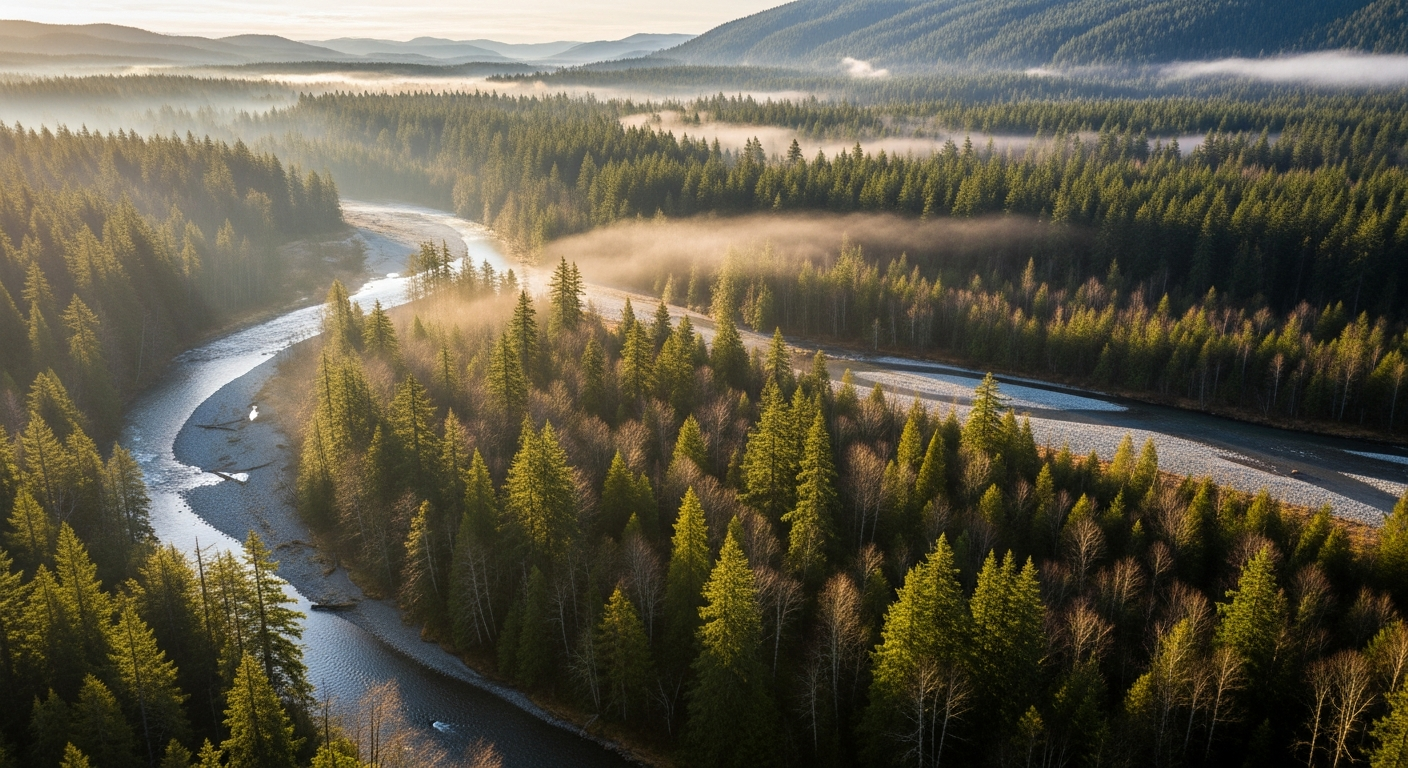
    The Tahuya River rises in the Tahuya State Forest and flows generally west and north through the Tahuya Peninsula before joining Hood Canal south of Belfair. The lower river corridor — the stretch that Great Peninsula Conservancy has been protecting — runs through floodplain forest and wetlands in eastern Mason County, a landscape of big cottonwoods, alder, and towering Douglas firs that overlook the valley.

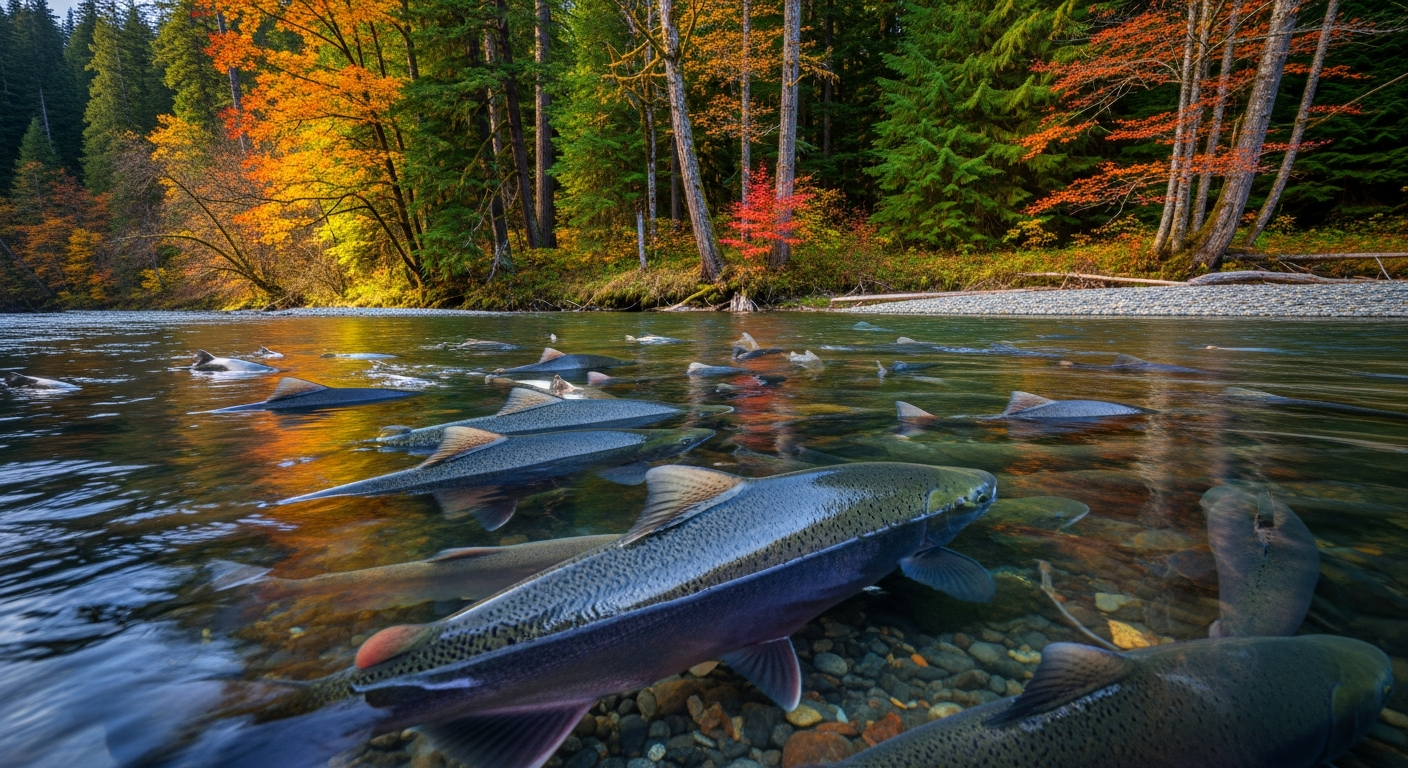
    Each fall, bear tracks and salmon carcasses appear on the lower Tahuya’s banks. That’s not folklore — it’s ecology. Hood Canal summer chum and Chinook salmon both return to the Tahuya to spawn. Both species are listed under the federal Endangered Species Act. The summer chum were actually considered locally extinct here in the late 1990s before a restoration effort by the Hood Canal Salmon Enhancement Group (HCSEG) rebuilt the run using donor fish from the Union River. Since 2006, 200 to 1,000 summer chum return to the Tahuya every year on their own.

    Who Is HCSEG and Where Are They?

    The Hood Canal Salmon Enhancement Group is headquartered right in Belfair, at 600 NE Roessel Road — the same address as the Salmon Center, where the Hood Canal Salmon Run 5K is held each June. HCSEG has been doing salmon research, habitat restoration, and community education in the Hood Canal watershed since the 1990s. They run rotary screw traps on the Tahuya, Dewatto, and Little Quilcene Rivers each spring to count juvenile salmon — it’s one of the primary data sets used to assess whether salmon populations are recovering.

    If you’re new to North Mason and want a fast, credible education in why Hood Canal is the way it is — environmentally, ecologically, culturally — HCSEG is the organization to know. They welcome volunteers, host community events, and their staff are genuinely approachable. Phone: (360) 275-9284. Website: pnwsalmoncenter.org.

    What Is the Tahuya River Preserve?

    Great Peninsula Conservancy assembled the preserve in stages starting in July 2023: 145 acres acquired with Washington Department of Ecology and state Salmon Recovery Funding Board support, then 38 more acres that December, then two small parcels in 2025. The total is now 190 acres, permanently protecting roughly 450 feet of Tahuya River mainstem and anchoring a longer-term plan to conserve the lower four miles of the river.

    The land is held by GPC, based at 6536 Kitsap Way in Bremerton. It is not open to the public for recreation — it’s managed as a working conservation site. But its existence changes what is possible along the lower Tahuya for decades to come.

    What’s Actually Happening Next: The Gabion Wall

    The most concrete near-term project is the planned removal of a Gabion wall from the Tahuya River corridor. A Gabion wall is a wire-cage rock structure — you’ve probably seen them along highways or near bridges, used for erosion control. They work fine for holding a bank in place, but they disrupt the natural flow dynamics that salmon spawning habitat requires: the shifting gravel beds, the cool deep pools, the wood debris accumulations where juvenile fish shelter and feed.

    GPC and HCSEG are working through permitting and hydrology studies to plan the removal. After the wall comes out, engineered log jam structures may be installed upstream to rebuild the natural channel complexity the river has lost. The project is still in planning phase as of May 2026 — but the land protection that makes it possible is locked in.

    Why This Is Part of What Makes North Mason Different

    A lot of communities talk about caring about their environment. North Mason is one of the few places where you can stand at a boat launch on Hood Canal, watch a salmon jump, and trace that fish’s story back to a specific river, a specific restoration project, and a specific group of people who have been working on it for 30 years — and who are headquartered two miles from the Belfair Fred Meyer.

    The Tahuya River Preserve is part of that story. If you’re going to be here long-term, it’s worth knowing it.

    Also see: Tahuya River Preserve: Full Story | Hood Canal from Belfair: Fishing, Kayaking and Beaches

    Frequently Asked Questions

    What is the Tahuya River and where does it flow?

    The Tahuya River drains the Tahuya Peninsula in Mason County, flowing west and north before emptying into Hood Canal south of Belfair. The lower river corridor runs through floodplain forest in eastern Mason County. The river supports ESA-listed summer chum and Chinook salmon runs.

    What is the Hood Canal Salmon Enhancement Group and how can I get involved?

    HCSEG is a Belfair-based nonprofit that has led salmon research, habitat restoration, and education in the Hood Canal watershed since the 1990s. They welcome volunteers for rotary screw trap operations, restoration plantings, and community events. Find them at 600 NE Roessel Road, Belfair, (360) 275-9284, or pnwsalmoncenter.org.

    Can I visit the Tahuya River Preserve?

    The preserve is not currently open to the public for recreation. It is managed as a conservation area by Great Peninsula Conservancy. The nearby Tahuya State Forest and the lower Hood Canal shoreline offer public outdoor access in the same general area.

    What is a Gabion wall and why is removing it good for salmon?

    A Gabion wall is a wire-cage rock structure used for stream bank stabilization. While effective at holding banks in place, they alter natural stream flow, disrupt the gravel beds salmon use for spawning, and prevent wood debris from moving downstream — wood that creates the deep pools and feeding habitat juvenile salmon depend on. Removal allows the stream to recover more natural dynamics.

    Are salmon actually recovering in Hood Canal?

    Yes. Hood Canal summer chum — which were locally extinct in the Tahuya River in the 1990s — have sustained themselves without supplementation since 2015. NOAA Fisheries has indicated the population may meet ESA delisting criteria, which would be the first successful salmon delisting in U.S. history. The Tahuya River is part of that recovery story.

  • Hood Canal Property Owners: What the Tahuya River Preserve Means for Water Quality, Shellfish, and Your Shoreline

    Hood Canal Property Owners: What the Tahuya River Preserve Means for Water Quality, Shellfish, and Your Shoreline

    If you own property on Hood Canal — tidelands, a waterfront parcel, or even a lot a mile back from the water — the long-term health of the canal directly affects what you own. That’s why the permanent protection of 190 acres along the lower Tahuya River is worth understanding, not just as an environmental story, but as a water-quality and property-value story.

    What the Tahuya River Does to Hood Canal

    The Tahuya River drains eastern Mason County and empties into Hood Canal near Belfair. What happens in that watershed — how much sediment runs off after a rain event, how much nutrient load enters the canal, how warm the water is by July — directly affects conditions in Hood Canal itself.

    Hood Canal is a semi-enclosed fjord. It doesn’t flush as quickly as open Puget Sound. Dissolved oxygen levels, water temperature, and nutrient loading matter here in ways that are measurable and consequential. When those factors tip the wrong direction, shellfish beds close. When they hold steady, the canal supports the ecosystem — and the way of life — that Hood Canal property values are built on.

    Great Peninsula Conservancy’s Tahuya River Preserve permanently protects 190 acres of floodplain forest and wetlands along the lower Tahuya corridor. Floodplain forest is not passive. It filters runoff before it reaches the river, moderates water temperatures through canopy shading, and traps sediment that would otherwise flow downstream and into the canal.

    The Gabion Wall Removal: A Direct Water Quality Improvement

    The most significant near-term project connected to the preserve is the planned removal of a Gabion wall from the Tahuya River corridor. Gabion walls — wire-cage rock structures installed for bank stabilization — alter natural stream flow patterns, trap fine sediment in ways that degrade spawning gravel, and prevent the natural movement of large wood debris downstream.

    When the wall comes out, the river will begin recovering a more natural channel dynamic. Engineers are also evaluating engineered log jam structures upstream to rebuild holding pools and feeding lanes for juvenile salmon. Healthier salmon habitat upstream means more adult salmon returning — and salmon carcasses are one of the primary marine-derived nutrient inputs that forest and riparian systems depend on. It’s a closed loop that connects the mountains to the canal.

    The project is in the permitting and planning phase as of May 2026. No construction timeline has been announced, but the land protection necessary to make it happen is complete.

    What This Means for Shellfish Bed Status on Hood Canal

    If you harvest shellfish from Hood Canal tidelands, or if your property value is tied to an open shellfish beach, you already know that closures happen — and that the reasons are usually tied to water quality upstream. Fecal coliform from stormwater, agricultural runoff, and failing septic systems are the primary drivers of WDFW closure events on Hood Canal.

    Protecting floodplain forest along the Tahuya doesn’t fix septic systems — that’s a different problem. But it does reduce one of the diffuse-source inputs: unfiltered runoff from cleared or developed land adjacent to salmon-bearing streams. Every acre of permanently protected floodplain is one less acre that could be cleared, graded, or made impervious in the future.

    For Hood Canal property owners, the preserve is a long-term investment in the upstream conditions that determine what the canal looks like in 20 years.

    The ESA Connection and What It Means for the Canal

    Hood Canal summer chum salmon may become the first ESA-listed salmon population ever removed from the federal endangered species list. That’s not a distant possibility — NOAA Fisheries has signaled the population meets recovery criteria, with Tahuya River runs holding between 200 and 1,000 fish annually since 2006 without supplementation. If delisting proceeds, it would represent a significant reduction in regulatory burden on Hood Canal development and land use — something that directly affects property owners navigating shoreline development permits.

    The Hood Canal Salmon Enhancement Group monitors juvenile salmon on the Tahuya, Dewatto, and Little Quilcene Rivers each spring from their facility at 600 NE Roessel Road in Belfair, (360) 275-9284. Their data is what drives the federal recovery assessment.

    Also see: Tahuya River Preserve: 190 Acres Permanently Protected — Full Story | Hood Canal Property Owners: What the 2026 Shellfish Rule Changes Mean for Your Beach

    Frequently Asked Questions

    Does the Tahuya River Preserve affect Hood Canal shellfish bed closures?

    Indirectly, yes. Protecting 190 acres of floodplain forest along the Tahuya reduces diffuse stormwater runoff into the river and ultimately into Hood Canal. Shellfish closures are driven by fecal coliform levels, and reducing upstream runoff inputs is one piece of the water quality picture. It won’t fix point-source pollution, but it removes a future risk from the equation.

    How does the Gabion wall removal affect Hood Canal water quality?

    Removing the Gabion wall allows the Tahuya River to recover a more natural channel shape — distributing flow across the floodplain, reducing fine sediment export, and allowing wood debris to move naturally downstream. These changes improve water clarity and temperature downstream, benefiting Hood Canal conditions near the river mouth.

    What is the current ESA status of Hood Canal salmon and what does it mean for property owners?

    Hood Canal summer chum and Chinook salmon are both listed as threatened under the ESA. Hood Canal summer chum may be the first ESA-listed salmon ever delisted — a development that would reduce certain regulatory constraints on Hood Canal shoreline and development activities. Continued habitat restoration, including the Tahuya River work, supports the recovery data driving that potential delisting.

    Who is responsible for salmon restoration on the Tahuya River?

    Great Peninsula Conservancy holds and manages the land. The Hood Canal Salmon Enhancement Group (HCSEG), based at 600 NE Roessel Road in Belfair, leads habitat restoration work, juvenile salmon monitoring, and the Gabion wall removal planning in partnership with GPC.

    Does the preserve affect future development near the Tahuya River?

    Yes. The 190 acres are permanently protected by a conservation easement — they cannot be sold for development, cleared, or subdivided. This is the intended outcome: locking in floodplain function in perpetuity so future land use decisions upstream don’t erode what restoration work achieves downstream.

  • Tahuya River Preserve Reaches 190 Acres: What North Mason Needs to Know About Salmon Restoration on Hood Canal

    Tahuya River Preserve Reaches 190 Acres: What North Mason Needs to Know About Salmon Restoration on Hood Canal

    For more than two years, Great Peninsula Conservancy has been quietly assembling one of the most ecologically significant land protection projects on Hood Canal. The result is the Tahuya River Preserve — 190 acres of floodplain forest, wetlands, and riverfront corridor in eastern Mason County, permanently protected and now the anchor for a phased restoration effort targeting the lower four miles of the Tahuya River.

    For North Mason residents who know the lower Tahuya — the bear tracks in the mud, the salmon carcasses that fertilize the cottonwood flats each fall — this is the moment when “protected” stops meaning paperwork and starts meaning something permanent.

    How the Preserve Came Together

    Great Peninsula Conservancy (GPC) built the preserve in stages. In July 2023, the organization acquired 145 acres along the lower Tahuya mainstem, funded through a Washington Department of Ecology Streamflow Restoration grant and the state Salmon Recovery Funding Board. That December, GPC added an adjacent 38-acre parcel. In 2025, two smaller parcels totaling approximately five acres completed the assemblage — including roughly 450 feet of Tahuya River mainstem — bringing the total to 190 acres.

    The preserve sits where the Tahuya River watershed drains into Hood Canal, just east of Belfair. It’s a strategic location: protecting floodplain here controls what enters the canal at one of the most salmon-critical junctions in Mason County.

    Why the Tahuya River Matters for Salmon

    Two salmon species listed under the federal Endangered Species Act use the Tahuya River: Hood Canal summer chum and Chinook salmon. The summer chum story here is one of the most remarkable conservation recoveries in the Pacific Northwest. Summer chum were classified as “recently extinct” in the Tahuya River before a reintroduction effort beginning in the early 2000s. Using Union River summer chum as donor stock, HCSEG rebuilt the run — 750 fish returned in the first year. Since 2006, annual Tahuya summer chum returns have held between 200 and 1,000 fish. The final supplementation release was in 2015; the population has sustained itself since.

    NOAA Fisheries has signaled that Hood Canal summer chum may be the first ESA-listed salmon population ever removed from the endangered species list — a milestone no Pacific salmon population has achieved in the history of the Act. The Tahuya River is part of that recovery story.

    The Hood Canal Salmon Enhancement Group (HCSEG), headquartered at 600 NE Roessel Road in Belfair, monitors juvenile salmon using rotary screw traps on the Tahuya, Dewatto, and Little Quilcene Rivers each spring. Their data drives decisions about where restoration dollars go next — and the Tahuya is currently near the top of that list.

    The Gabion Wall Removal: What Comes Next

    The most significant near-term restoration project is the planned removal of a Gabion wall — a wire-cage rock structure — from the Tahuya River corridor. Gabion walls were widely used in mid-20th century stream engineering to control erosion, but they alter natural stream flows, disrupt gravel substrate that salmon need for spawning redds, and interrupt the natural wood and debris movement that juvenile salmon depend on for cover and food.

    GPC is working with HCSEG on removal plans. Once the wall is out, engineers are also evaluating the installation of engineered log jam structures upstream — designed to mimic the natural wood accumulation that builds holding pools and feeding lanes for juvenile salmon.

    These projects are still in the permitting and hydrology study phase. Salmon habitat work at this scale requires state and federal coordination, contractor mobilization, and hydrological modeling — it moves carefully. But the land protection that makes any of it legally and practically possible is done.

    What This Means for North Mason

    The Tahuya River Preserve represents one piece of a larger conservation strategy for the lower Hood Canal watershed. Every acre of floodplain protected upstream means less sediment loading, cooler water temperatures, and better dissolved oxygen in Hood Canal itself — the same water that determines whether shellfish beds stay open and whether salmon return each fall to the beaches and rivers that define this community.

    For North Mason residents, it’s also a statement about what this corner of Washington is choosing to be. Development pressure on the SR-3 corridor is real. The Tahuya River Preserve locks in a counter-weight: 190 acres that will never be a subdivision, a gravel pit, or a parking lot.

    Residents interested in the restoration work — or in volunteering for HCSEG’s 2026 rotary screw trap season — can contact the Hood Canal Salmon Enhancement Group at 600 NE Roessel Road, Belfair, (360) 275-9284, or at pnwsalmoncenter.org. Great Peninsula Conservancy is based at 6536 Kitsap Way, Bremerton, (360) 373-3500, or greatpeninsula.org.

    Also see: Hood Canal Shellfish Season 2026: What North Mason Harvesters Need to Know

    Frequently Asked Questions

    Where exactly is the Tahuya River Preserve?

    The preserve is in eastern Mason County, along the lower Tahuya River corridor where it drains into Hood Canal. It is located just east of Belfair and is not currently open to the general public for recreation — it is managed as a conservation area by Great Peninsula Conservancy.

    What salmon species use the Tahuya River?

    Hood Canal summer chum salmon and Chinook salmon both use the Tahuya River watershed. Both are listed as threatened under the federal Endangered Species Act. Summer chum were successfully reintroduced to the Tahuya after being classified as locally extinct, and the population has sustained itself without supplementation since 2015.

    What is a Gabion wall and why is it being removed?

    A Gabion wall is a wire-cage rock structure used historically for stream bank stabilization. While effective at controlling erosion, they alter natural water flow, disrupt gravel spawning beds, and impede the movement of large wood debris that salmon depend on. Removal restores more natural stream dynamics.

    When will the Gabion wall removal happen?

    The project is currently in the planning and permitting phase. Great Peninsula Conservancy and HCSEG are working through hydrology studies and regulatory coordination. No construction timeline has been publicly announced as of May 2026.

    How can North Mason residents get involved with salmon restoration on the Tahuya?

    The Hood Canal Salmon Enhancement Group welcomes volunteers for its 2026 rotary screw trap season and other restoration projects. Contact HCSEG at 600 NE Roessel Road, Belfair, (360) 275-9284, or visit pnwsalmoncenter.org.

    Does the Tahuya River Preserve affect Hood Canal water quality?

    Yes. Protecting floodplain forest along the Tahuya River reduces sediment and nutrient runoff into Hood Canal, helps maintain cooler water temperatures, and supports dissolved oxygen levels — all factors that affect shellfish bed status and salmon habitat quality in the canal itself.