Belfair Living - Tygart Media

Category: Belfair Living

Day-to-day life, neighborhoods, what it is like to live in Belfair

  • New to North Mason? The HUB in Belfair Is the Senior and Community Support Infrastructure You Should Know

    When people move to Belfair or North Mason from somewhere with a larger city infrastructure, one of the first practical questions is: where is the support system here? What happens when someone needs a senior center, a community organization, a place to borrow a wheelchair, or a volunteer who will drive your parent to a Bremerton appointment?

    The answer, for 25 years, has been The HUB Center for Seniors at 111 NE Old Belfair Highway.

    What The HUB Is — and Why It Works Differently Here

    The HUB is a 501(c)(3) nonprofit that exists specifically to support independent living for seniors and people with disabilities in North Mason. It was incorporated in 2001, ran entirely on volunteers for its first 15 years, and built its permanent home on Old Belfair Highway in 2016 after Belfair community members — including lead donors Les and Betty Krueger — raised the funds to make it happen.

    That origin story matters if you’re new here. The HUB wasn’t built by a county program or a state grant. It was built by neighbors who recognized that North Mason doesn’t have a large hospital, doesn’t have the density of senior services you’d find in Bremerton or Tacoma, and that the SR-3 corridor is a real logistical barrier for people who can no longer drive it alone. The community built the solution it needed.

    Today The HUB employs 32 people, holds $2.49 million in assets, and operates a calendar that runs six to seven days a week depending on the program.

    The Services: What You Actually Get

    For newcomers trying to understand what The HUB provides, the clearest way to think about it is in three layers:

    Neighbors Helping Neighbors is the volunteer service network — the original 2001 mission, still running. Rides to appointments, grocery help, caregiver referrals, utility bill assistance, home heating support. The program has served more than 900 people in North Mason. If you or someone you know needs this kind of support, call (360) 275-0535.

    The Medical Lending Library is free, open to anyone of any age, and requires no membership. Wheelchairs, walkers, shower chairs, crutches — you walk in during center hours and borrow what you need. If you recently moved here and have a family member recovering from surgery or managing a new mobility limitation, this is a resource most newcomers don’t know exists until they’re standing in a Bremerton medical supply store paying rental fees.

    The Center Calendar runs Monday through Thursday, 10 a.m. to 4 p.m. Monday and Tuesday mornings bring free live music open to the whole community. Family BINGO falls on the first Friday of the month. Fitness, painting, writing, cooking, and health events fill the rest of the week. The Great Room and commercial kitchen can be rented for community events and private fundraisers.

    The HUB SHOP: The Thrift Store That Funds Everything

    At 111 NE Old Belfair Highway Suite A, The HUB SHOP — Sales Helping Other People — runs Monday through Saturday, 9:30 a.m. to 5:30 p.m. It’s a full-service thrift store where proceeds fund HUB programs. For newcomers setting up a household in North Mason on a budget, it is one of the better-stocked thrift options in the area, and every purchase directly supports a local nonprofit.

    North Mason’s Support Infrastructure: How It All Fits

    Getting oriented to North Mason means learning which institutions hold the community together. The HUB is one of the most important. Mason County’s median age is among the highest in Washington state, which means the pressure on senior and disability services here is real and growing. The HUB has been the community’s primary response to that pressure for 25 years.

    If you’re new to the area and want to understand the community you’ve moved into, walking through The HUB’s doors on a Monday morning — when the live music is playing and the coffee is on — is one of the better starting points. The full 25-year history of The HUB in Belfair is worth reading. For more on getting oriented in North Mason, the newcomer’s guide to Tahuya State Forest is another entry point into the outdoor and recreation infrastructure that defines life here.

    Frequently Asked Questions for North Mason Newcomers

    Is there a senior center in Belfair?
    Yes. The HUB Center for Seniors at 111 NE Old Belfair Highway has served North Mason since 2001. It offers social programming, a free medical lending library, volunteer services including transportation, and caregiver referrals.

    Do you have to be a senior to use The HUB?
    No. Many services, including the medical lending library and community events like live music and BINGO, are open to anyone. The Neighbors Helping Neighbors program serves adults with disabilities of any age, not just seniors.

    Where is The HUB in relation to downtown Belfair?
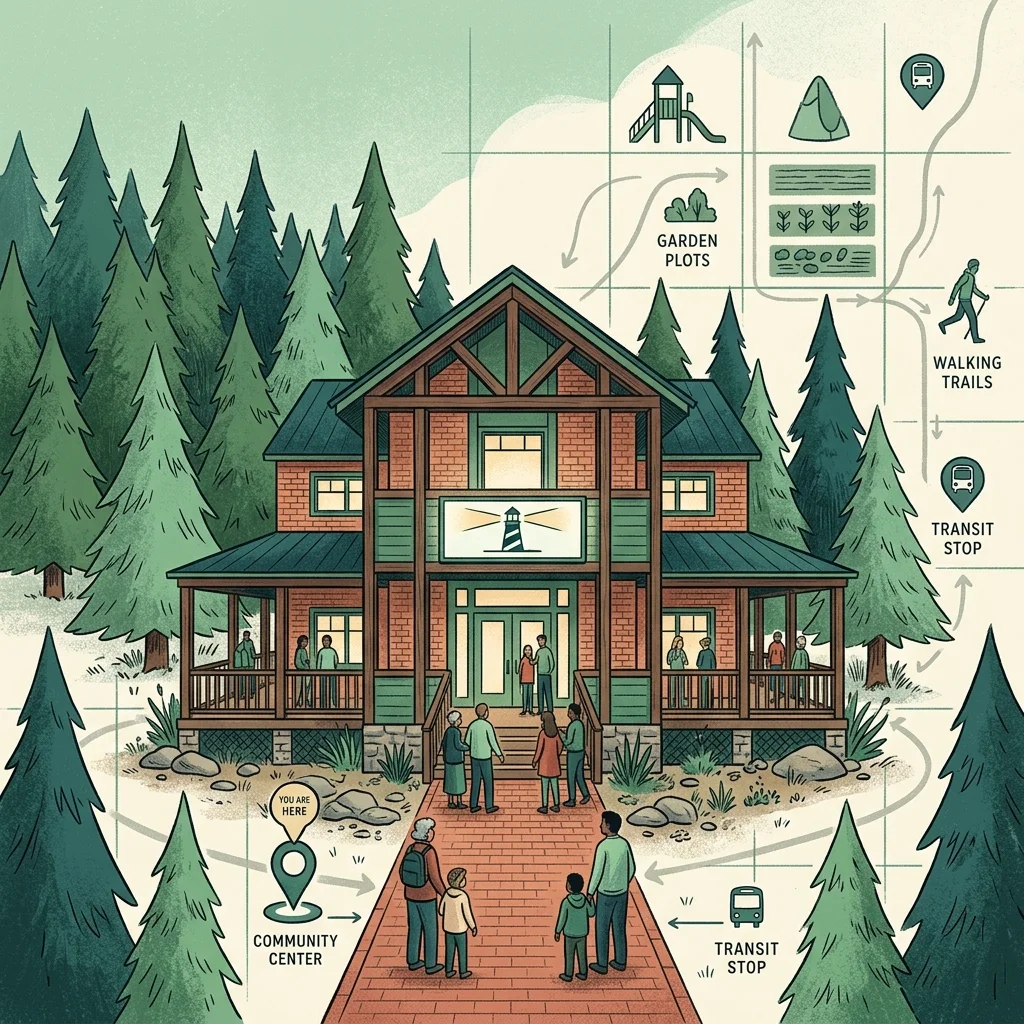
    It’s on Old Belfair Highway, just off SR-3, on the left side heading away from the Belfair Town Center. It’s easy to miss if you’re not looking for it — but it’s been there since 2016.

    How far is The HUB from the Belfair Town Center?
    Less than a mile. It’s on Old Belfair Highway, a short drive from the SR-3/SR-300 intersection in Belfair.

    How do I get involved with The HUB as a newcomer?
    Call (360) 275-0535 or stop in during center hours (Monday–Thursday, 10 a.m.–4 p.m.). Volunteer opportunities, program participation, and community rentals are all available. Website: hubhappenings.org.


  • North Mason Families: The HUB in Belfair Is the Senior Support System You May Not Know You Need

    If you have a parent, grandparent, or disabled family member living in Belfair or the North Mason area, there is a resource at 111 NE Old Belfair Highway that most families in your position eventually discover — usually when they need it urgently. Better to know it now.

    The HUB Center for Seniors has operated in North Mason for 25 years. It began in 2001 as a purely volunteer-driven network called Neighbors Helping Neighbors, providing rides to appointments and help with errands for seniors who had no other option. In 2016, the community raised enough — with matching funds from Belfair residents Les and Betty Krueger — to build a permanent home on Old Belfair Highway. Today it employs 32 people and carries $2.49 million in assets. But its core function is still the same one it launched with: helping North Mason’s older and disabled residents stay in their homes.

    What the Neighbors Helping Neighbors Program Actually Does

    For families supporting an aging parent in Belfair, the Neighbors Helping Neighbors program is the piece to know first. This is The HUB’s free volunteer service network, and it has served more than 900 people in North Mason.

    Services include: rides to medical appointments, grocery runs, help connecting with reliable caregivers, assistance navigating utility bill support, and practical resources like firewood for heating in winter. These are not things that show up on a county services list — they are neighbor-to-neighbor logistics run through The HUB’s volunteer network.

    If your family member can no longer drive the SR-3 corridor to Bremerton for a specialist appointment, this program is one of the most direct solutions in North Mason. Call (360) 275-0535 to connect.

    The Free Medical Lending Library

    The HUB operates a free medical lending library — wheelchairs, walkers, shower chairs, crutches, and similar equipment — open to anyone, of any age. You do not have to be a senior, a member, or a Belfair resident. Walk in during center hours (Monday through Thursday, 10 a.m. to 4 p.m.) and borrow what you need.

    For families managing a post-surgery recovery or a newly diagnosed mobility condition, this is the kind of resource that can make the difference between a hospital-grade recovery at home and an expensive equipment purchase or rental from a medical supply store in Bremerton or Shelton.

    Programming That Gets Older Adults Out of the House

    Social isolation is one of the primary accelerants of cognitive and physical decline in older adults. The HUB’s weekly calendar addresses this directly. Monday and Tuesday mornings bring free live music open to the whole community. Family BINGO runs the first Friday of every month. Fitness classes, painting workshops, writing groups, cooking classes, and health education events run throughout the week.

    These are not programs that require your family member to identify as a “senior in need.” They are community events at a community center. Many North Mason families report that The HUB became their parent’s primary social anchor — the place they went regularly, the people they knew by name.

    The Context: Why North Mason Families Face a Unique Challenge

    North Mason doesn’t have a large hospital. The nearest assisted living cluster is concentrated in Shelton. Specialist care means crossing the water to Bremerton or Tacoma. For a family trying to keep an aging parent in Belfair — near the community they’ve lived in for decades, near family — the logistics are real.

    The HUB is not a medical provider. But it is the connective tissue that makes aging in place in North Mason viable for people who would otherwise fall through the gap between full independence and full institutional care. It has been doing this work for 25 years, and it knows this community.

    The full guide to The HUB’s programs and history covers the organization’s 25-year story, financial standing, and the complete list of services. For North Mason parents navigating school programs and community resources, the North Mason school and community infrastructure is worth knowing end to end.

    Frequently Asked Questions for North Mason Caregiving Families

    Does The HUB provide transportation for seniors in North Mason?
    Yes. The Neighbors Helping Neighbors program provides volunteer-driven rides to medical appointments and errands for seniors and people with disabilities in North Mason. Call (360) 275-0535 to request help or get connected.

    Is the medical lending library at The HUB free?
    Yes. Wheelchairs, walkers, shower chairs, and other equipment are available at no cost to anyone of any age. No membership required.

    Can my parent go to The HUB if they’re not yet a senior?
    Yes. The HUB serves adults of all ages who have disabilities or support needs, and many programs are open to the broader community regardless of age.

    What if my family member needs a caregiver referral?
    The Neighbors Helping Neighbors program includes caregiver referral and advocacy services. Call The HUB at (360) 275-0535 for a referral and guidance on next steps.

    How do I reach The HUB in Belfair?
    111 NE Old Belfair Highway, Belfair, WA 98528. Phone: (360) 275-0535. Hours: Monday–Thursday, 10 a.m.–4 p.m. Website: hubhappenings.org.

  • The HUB Turns 25: Belfair’s Community Senior Center and What It Actually Does for North Mason

    The HUB Center for Seniors at 111 NE Old Belfair Highway is celebrating 25 years of service to North Mason County in 2026 — and if you haven’t been inside lately, the calendar it’s running would surprise you.

    The organization was incorporated as a 501(c)(3) in 2001 under a mission that has never changed: support independent living for seniors and people with disabilities in North Mason. For the first 15 years, that mission ran entirely on volunteers. No building, no commercial kitchen, no thrift store — just neighbors driving neighbors to appointments, stocking a free medical lending library, and running a senior food commodities program out of whatever space was available.

    In 2016, The HUB got its building. Belfair residents Les and Betty Krueger offered matching funds to help purchase the land on Old Belfair Highway, and the community raised the rest to fund Phase 1 of a purpose-built senior center. The name — Hospitality, Unity, and Belonging — was already in use, but the building made it real. There was now an actual hub.

    Twenty-five years in, the organization employs 32 people and reported 54,222 in total revenues in 2024, with ,492,181 in assets — a reflection of what community fundraising, grant support, and the HUB SHOP thrift store have built since those volunteer-only days.

    What’s Actually Happening Inside

    The week-in, week-out calendar at The HUB is what sets it apart from a social-services office. Monday and Tuesday mornings bring free live music, open to everyone in the community — not just seniors. Family BINGO runs on the first Friday of every month. Fitness classes, painting workshops, writing groups, cooking classes, and health education events fill out the rest of the week. The Great Room and commercial kitchen are available for community rentals and private fundraisers.

    The HUB SHOP — S.H.O.P. stands for Sales Helping Other People — operates its own schedule, Monday through Saturday, 9:30 a.m. to 5:30 p.m., six days a week. Proceeds cycle back into HUB programs. It’s one of the more reliable ways to both furnish a house and support a Belfair institution at the same time.

    The center itself is open Monday through Thursday, 10 a.m. to 4 p.m.

    The Backbone: Neighbors Helping Neighbors

    Underneath the visible programming is the service that started it all. The Neighbors Helping Neighbors program doesn’t get the attention the live music mornings get, but it is the reason The HUB exists. It has served more than 900 people with needs that range from rides to medical appointments and help with grocery runs to connecting people with caregivers, utility bill assistance, and wood for heating homes through the winter.

    The free medical lending library — wheelchairs, walkers, shower chairs, crutches — is open to anyone, of any age, anywhere in the area. You don’t have to be a senior. You don’t have to be a HUB member. You walk in, you borrow what you need.

    For a community where the nearest major medical center is across the water in Bremerton or down US-101 toward Shelton, that kind of infrastructure matters in ways that don’t make the news. The economic and workforce stability of North Mason depends in part on the support systems that let people age in place here rather than move away — and The HUB is a core piece of that ecosystem.

    Why 25 Years in Belfair Is Significant

    Mason County has one of the older median age profiles in Washington state — and the Belfair area anchors the northern end of the county’s service gap. There is no large hospital in North Mason. The nearest assisted living cluster is primarily in Shelton. The SR-3 corridor into Bremerton is the lifeline for most medical travel.

    The HUB has filled that gap from the community side for a quarter century. Its .49 million asset base and 32-person staff aren’t just organizational metrics — they’re the physical and human infrastructure behind hundreds of North Mason families’ ability to have an aging parent stay in their home rather than leave the community entirely.

    New residents to the area often ask what North Mason’s support infrastructure looks like for older adults. The answer starts here: getting oriented to North Mason means knowing where the quiet infrastructure is, and The HUB is one of its most durable pieces. If you want to get involved — as a volunteer, a donor, or someone who uses the services — start at 111 NE Old Belfair Highway or call (360) 275-0535.

    Frequently Asked Questions About The HUB in Belfair

    What is The HUB Center for Seniors in Belfair?
    The HUB is a 501(c)(3) nonprofit senior and community center at 111 NE Old Belfair Highway in Belfair. Founded in 2001, it supports independent living for seniors and people with disabilities through free services, programming, and its Neighbors Helping Neighbors volunteer network.

    What are The HUB’s hours in Belfair?
    The center is open Monday through Thursday, 10 a.m. to 4 p.m. The HUB SHOP thrift store is open Monday through Saturday, 9:30 a.m. to 5:30 p.m.

    What is the Neighbors Helping Neighbors program?
    It’s The HUB’s free volunteer-driven service program that provides rides to appointments, grocery help, caregiver referrals, utility bill assistance, and connection to resources for seniors and people with disabilities in North Mason. The program has served more than 900 people.

    Does The HUB’s medical lending library cost anything?
    No. The medical lending library — wheelchairs, walkers, shower chairs, crutches, and similar items — is completely free and open to anyone of any age, not just seniors or HUB members.

    Can the public attend The HUB’s live music mornings?
    Yes. Monday and Tuesday morning live music events at The HUB are open to the entire community, not limited to seniors or members.

    How do I contact The HUB in Belfair?
    Call (360) 275-0535 or visit in person at 111 NE Old Belfair Highway, Belfair, WA 98528. The website is hubhappenings.org.

  • WDFW’s Early Closure Authority Is Now a Policy Tool — What It Means for Mason County Shellfish Management

    WDFW’s Early Closure Authority Is Now a Policy Tool — What It Means for Mason County Shellfish Management

    When WDFW closed Shine Tidelands and Wolfe Property on May 3, 2026, the agency didn’t frame it as a one-time enforcement response. It framed it as a policy tool.

    The distinction matters for anyone tracking Hood Canal’s long-term shellfish management trajectory. WDFW’s post-closure statement said the agency intends to use early-season closure authority “whenever harvest pressure outruns sustainability.” That’s a shift from a reactive model — act after a population collapses — to a proactive one: close before the damage is done, even mid-season, even when the season was already shortened.

    How the 2026 season got to this point

    The closures at Shine Tidelands and Wolfe Property didn’t come from nowhere. WDFW entered 2026 having already implemented a statewide rule package targeting ten Puget Sound beaches showing harvest stress. At Shine and Wolfe, that meant cutting the season from New Year’s Day–May 15 to January 15–April 15 — removing six weeks of harvest opportunity before the season even opened. The May 3 action added an enforcement closure on top of an already-shortened season.

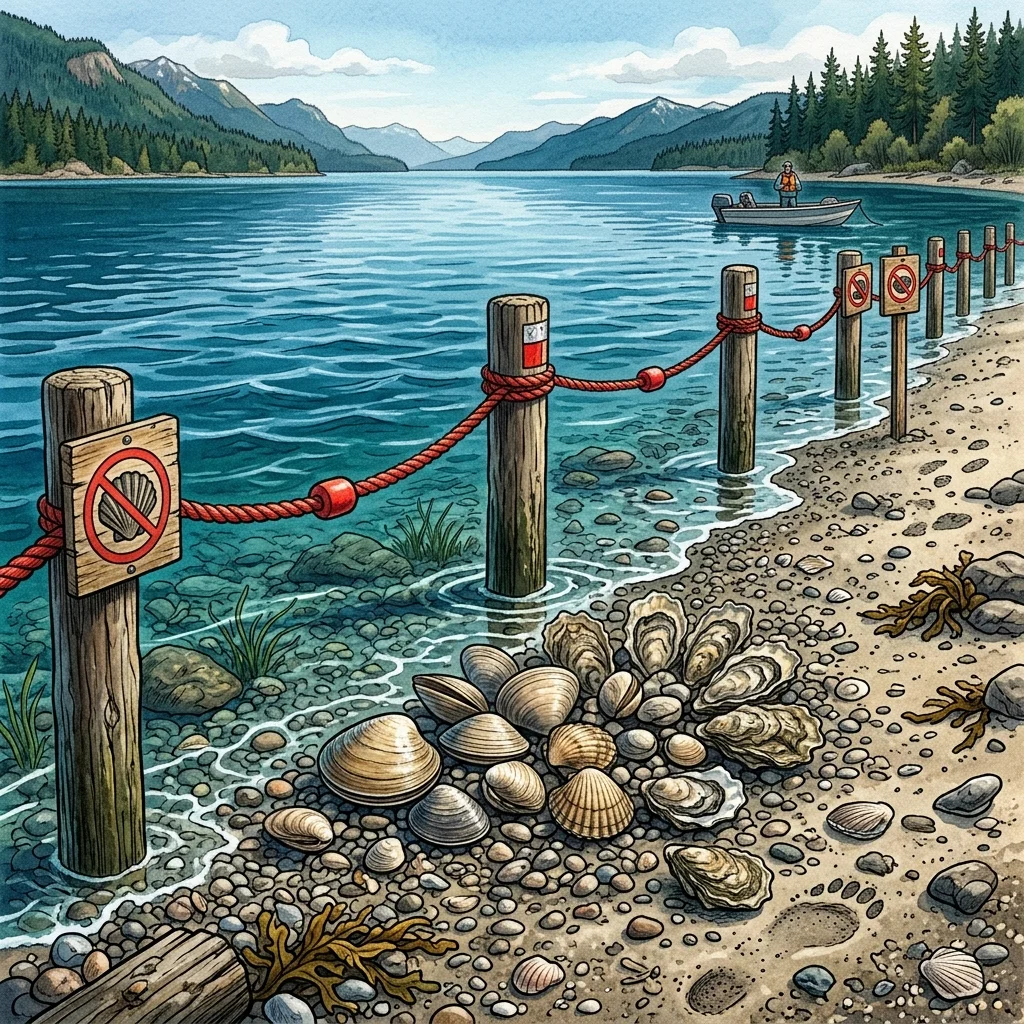
    The compliance failures WDFW documented weren’t obscure technicalities. Harvesters exceeded daily limits. They left open dig holes — damaging habitat for subsequent harvests. They parked illegally and in ways that endangered other visitors. They misidentified species, harvesting protected or over-limit shellfish. WDFW’s Fish and Wildlife Police attributed the compliance collapse partly to social-media-organized gathering groups that drew hundreds of harvesters simultaneously to single beaches — a coordination mechanism that recreational management frameworks weren’t built to handle.

    The dual-authority structure of Hood Canal shellfish oversight

    Hood Canal shellfish management operates under two state agencies with independent authority. WDFW sets seasons, daily limits, and species rules. The Washington State Department of Health controls biotoxin and pollution closures through the Shellfish Safety Map and Biotoxin Hotline (1-800-562-5632). A beach can be open under WDFW and closed under DOH simultaneously — neither agency’s determination overrides the other.

    Layered on top is tribal co-management. The Skokomish Tribe holds treaty-reserved shellfish harvest rights on Hood Canal under the U.S. v. Washington Boldt Decision framework. Tribal harvest occurs on state and private tidelands throughout the canal under a co-management arrangement with the state. WDFW’s conservation decisions — including season lengths and early closure authority — are made with tribal co-managers at the table. Decisions that contract the harvest available to recreational harvesters also carry implications for tribal harvest rights, which adds a legal and political dimension to the regulatory picture that extends beyond simple recreational management.

    What Twanoh’s 2026 situation illustrates

    Twanoh State Park’s 2026 configuration is a case study in stacked pressures. WDFW’s season shift moved the clam harvest window to May 15–June 15 — a six-week window instead of a longer one. Washington State Parks then scheduled a shoreline restoration project that will close beach access after the clam season ends, running through spring 2027. The campsite closure runs from June 1.

    The restoration at Twanoh isn’t just a construction inconvenience. Shoreline restoration projects on Hood Canal typically target removing legacy fill, rip-rap, and channelization that degraded the nearshore habitat — the same kinds of projects that have been underway at the Mary E. Theler Wetlands at Belfair’s Union River estuary and at other points on the Great Bend. These restorations are intended to improve long-term habitat quality for shellfish and salmon. The short-term cost is access.

    For the civic dimension: Twanoh’s restoration is a Washington State Parks capital project. Its timeline, scope, and funding aren’t widely covered in Mason County media. The Belfair Bugle will track the Twanoh restoration project’s milestones, the post-restoration shellfish habitat assessment when it’s available, and any further WDFW season adjustments on the Mason County stretch of Hood Canal.

    Frequently Asked Questions

    What is WDFW’s stated policy on mid-season shellfish closures after May 2026?

    WDFW stated after the May 3 closures at Shine Tidelands and Wolfe Property that it intends to use early closure authority as a conservation tool whenever harvest pressure outruns sustainability. This is a proactive posture — the agency is signaling willingness to close beaches mid-season, not just at the end of a preset season window, if compliance and harvest rates indicate a problem.

    How does tribal co-management affect WDFW’s Hood Canal shellfish decisions?

    The Skokomish Tribe holds treaty-reserved shellfish harvest rights on Hood Canal under the Boldt Decision framework. WDFW makes season-length and conservation decisions in co-management with tribal fisheries managers. Changes that constrain recreational harvest also carry implications for tribal harvest allocations, giving these regulatory decisions a legal and intergovernmental dimension beyond simple recreational management.

    What is the Twanoh State Park shoreline restoration project?

    Washington State Parks is conducting a shoreline restoration project at Twanoh that will close beach access after the 2026 clam season ends on June 15. Campsite reservations are closed from June 1, 2026 through spring 2027. The restoration is intended to improve nearshore shellfish and salmon habitat by removing or remediating legacy shoreline alterations — a pattern seen at other Hood Canal restoration sites including the Theler Wetlands at Belfair.

    What is the role of Washington DOH in Hood Canal shellfish management?

    The Washington State Department of Health independently controls shellfish safety closures for biotoxins and pollution. DOH closures are separate from and independent of WDFW season decisions — a beach can be open under WDFW and closed under DOH simultaneously. DOH uses the Biotoxin Hotline (1-800-562-5632) and the DOH Shellfish Safety Map to communicate current closure status. Both must be checked before any harvest day.

  • Mason County Shellfish Harvest 2026: Twanoh Is Open May 15–June 15 — Here’s How to Plan Your Season

    Mason County Shellfish Harvest 2026: Twanoh Is Open May 15–June 15 — Here’s How to Plan Your Season

    If you’ve been planning your Hood Canal shellfish harvest for this spring, there are two things you need to know before you load the truck: the north end of the canal is closed, and Twanoh has a six-week window before construction shuts the beach.

    WDFW closed Shine Tidelands State Park and Wolfe Property State Park in Jefferson County on May 3, 2026, for the remainder of the 2026 season. Both sites saw harvest violations at scale — crowded beaches, exceeded daily limits, abandoned dig holes, parking violations, and species misidentification — and WDFW ended the season early. That closure affects harvesters from across the Puget Sound region, many of whom will drive south to Mason County’s beaches instead.

    The Twanoh window: May 15 through June 15

    Twanoh State Park on SR-106 between Belfair and Union is the main Mason County shellfish destination. In 2026, the clam season runs May 15 through June 15 only. That’s a one-month window. Miss it and the clam season is over.

    After June 15, Washington State Parks begins a shoreline restoration project at Twanoh. Beach access closes for construction. Campsite reservations are already closed from June 1, 2026 through spring 2027. Oysters are open through September 30, but the beach access restrictions for the restoration will affect when and how you can reach them — check Washington State Parks alerts at parks.wa.gov before heading out after June 15.

    On harvest day: bring your Discover Pass ($10 day-use, $30 annual). Oyster shells stay on the beach — this is both state law and essential habitat practice. Fill every dig hole before you leave. WDFW’s enforcement notes on the May 3 north canal closures called out hole-filling as a documented statewide compliance problem. Rangers will be watching this season.

    After June 15: your alternatives

    Potlatch State Park, further south on Hood Canal near Hoodsport, has its own season dates that differ from Twanoh — check the WDFW beach page at wdfw.wa.gov/places-to-go/shellfish-beaches for current status. Our Potlatch beginner guide covers the layout, rules, and what to bring.

    Belfair State Park’s shellfish access is tied to the Union River estuary and Great Bend seasons — smaller harvest opportunity than Twanoh but worth checking if you’re already at Belfair. See our full WDFW enforcement and 2026 season overview for the complete picture.

    Two checks you must make every harvest morning

    The WDFW beach page tells you the season. The Washington State Department of Health tells you whether the beach is safe that specific day. A beach that’s open under WDFW can be simultaneously closed under DOH for paralytic shellfish poison (PSP) or vibrio contamination. Neither check replaces the other.

    DOH Biotoxin Hotline: 1-800-562-5632. Check it on the morning of harvest. Also check the DOH Shellfish Safety Map online for real-time closure status on your specific beach.

    2026 rule changes to know

    The geoduck daily limit has dropped from three per person per day to one in 2026. WDFW also made season date shifts at multiple Hood Canal beaches as part of a statewide conservation package targeting beaches showing harvest stress. The 2026 annual beach seasons bar chart PDF at wdfw.wa.gov has the full comparison — look up your planned beach before you go, every year, because dates shift.

    Frequently Asked Questions

    When is Twanoh State Park open for shellfish in 2026?

    Twanoh’s clam season runs May 15 through June 15, 2026. Oysters are open through September 30. After the clam season closes on June 15, Washington State Parks begins a shoreline restoration project and beach access closes for construction through spring 2027. Campsite reservations are already closed starting June 1, 2026.

    What do I need to bring to Twanoh for shellfish harvest?

    Bring a valid Discover Pass for parking ($10 day-use or $30 annual), containers for your shellfish, and a shovel for filling dig holes. Oyster shells must stay on the beach — removing them is illegal. Know your daily limits before you go: clams are typically 40 littlenecks or 40 butter clams per person per day (verify current limits on WDFW’s beach page). Geoduck limit dropped to 1 per person per day in 2026.

    Are the north Hood Canal beaches still open in May 2026?

    No. WDFW closed Shine Tidelands State Park and Wolfe Property State Park in Jefferson County on May 3, 2026, for the remainder of the season. The 2026 season at both sites was already shortened from January 15–April 15 (down from January 1–May 15). The May 3 action was an additional enforcement closure due to harvest violations at scale.

    What happens if I harvest shellfish on a DOH-closed beach?

    Harvesting shellfish from a DOH-closed beach is illegal and a public health risk. Paralytic shellfish poison (PSP) is a neurotoxin that cannot be detected by taste, smell, or appearance. It is not destroyed by cooking. Symptoms range from tingling to paralysis and can be fatal at high doses. The DOH Biotoxin Hotline (1-800-562-5632) and DOH Shellfish Safety Map provide current closure status — check both on the morning of every harvest day.

  • Hood Canal Tidelands Owner’s Alert: What the WDFW Enforcement Closures Mean for Your Beach in 2026

    Hood Canal Tidelands Owner’s Alert: What the WDFW Enforcement Closures Mean for Your Beach in 2026

    If you own tidelands on Mason County’s stretch of Hood Canal, the WDFW enforcement closures at Shine Tidelands and Wolfe Property on May 3, 2026 aren’t just news about beaches in Jefferson County. They’re a displacement notice aimed at your shoreline.

    When public recreational shellfish beaches close — whether from enforcement action, season compression, or restoration construction — harvesters don’t stop harvesting. They move. The most common direction is south along SR-101 and SR-3, toward Mason County’s Hood Canal coastline. And in 2026, the public options in Mason County are themselves narrower than usual.

    What public options are left — and why they’re compressed

    Twanoh State Park, the primary public shellfish beach for Mason County, is operating on a six-week clam window this year: May 15 through June 15. After that, Washington State Parks begins shoreline restoration construction and beach access closes through spring 2027. Oysters remain open through September 30, but the clam harvest — the primary draw for most visiting harvesters — ends June 15.

    Potlatch State Park and Belfair State Park are the other public options. Both have season dates and limits set by WDFW that can differ from Twanoh’s — check the current beach pages at wdfw.wa.gov/places-to-go/shellfish-beaches before assuming they’re open. Our Potlatch beginner guide and tidelands property owner guide have the current baseline.

    Private tidelands: your rights and your responsibilities

    Washington tidelands law is not intuitive. In most of Mason County’s Hood Canal shoreline, tidelands are privately owned — meaning the land below the ordinary high water mark may belong to you, not the state. That private ownership gives you the right to harvest shellfish on your own tidelands, but it does not exempt you from WDFW season rules or DOH biotoxin closures. Both apply equally to private and public tidelands.

    What private ownership does mean: you can post your tidelands to prevent public access. Washington law does not grant the public a right to cross private tidelands even to reach navigable water, unless a public access easement exists. If you have displacement pressure from overcrowded public beaches pushing visitors onto your shoreline, you have legal standing to exclude them — and posting your tidelands with signage is the practical mechanism.

    If you’re uncertain whether your tidelands are privately owned, the Mason County Assessor’s parcel records and your deed description (which typically references the “ordinary high water mark” or “mean high tide line”) are the starting point. The Hood Canal Property Owner’s Guide to Shellfish Access, Tribal Boundaries, and the 2026 Season at Potlatch covers the tribal co-management dimension as well — Skokomish Tribal shellfish harvest rights on Hood Canal are a separate regulatory layer that affects what happens at the water’s edge.

    The two checks every harvest day requires

    Whether you’re harvesting on your own tidelands or at a public beach, the check protocol is the same. WDFW controls season dates and daily limits. The Washington State Department of Health controls biotoxin closures independently — a beach that’s open under WDFW can be closed under DOH for paralytic shellfish poison. The DOH Biotoxin Hotline is 1-800-562-5632. Check both on the morning of harvest, not the day before.

    Frequently Asked Questions

    Can visiting harvesters legally access my private tidelands on Hood Canal?

    Generally no. Washington state law does not grant the public a right to cross privately owned tidelands. If your tidelands are posted with no-trespassing signage, visiting harvesters are not permitted on them. Check your deed and Mason County Assessor records to confirm your tidelands ownership boundary. If you have an existing public access easement, that would be noted in your title documents.

    Do WDFW season rules apply to shellfish I harvest on my own tidelands?

    Yes. WDFW season dates, daily limits, and species rules apply to all recreational shellfish harvest in Washington, including on private tidelands. DOH biotoxin closures also apply. Private ownership determines access rights — it does not create an exemption from harvest regulations.

    Why are Mason County beaches likely to see more harvester pressure in 2026?

    WDFW closed Shine Tidelands and Wolfe Property in Jefferson County on May 3, 2026, for the remainder of the season. Twanoh State Park’s clam window is only May 15–June 15 before restoration construction closes the beach. Both conditions displace harvesters southward toward Mason County’s remaining public and private tidelands during the peak spring harvest period.

    How does tribal co-management affect Hood Canal shellfish on Mason County tidelands?

    The Skokomish Tribe holds treaty-reserved shellfish harvest rights on Hood Canal under the U.S. v. Washington (Boldt Decision) framework. Tribal harvest occurs on state and private tidelands throughout the canal. This does not affect your recreational harvest rights, but it is part of the regulatory context for why WDFW manages Mason County’s Hood Canal stocks conservatively. See our full guide for details on how tribal boundaries and co-management work in the Mason County context.

  • Twanoh’s Window Is Closing: What the WDFW Hood Canal Shellfish Enforcement Action Means for Mason County Harvesters

    Twanoh’s Window Is Closing: What the WDFW Hood Canal Shellfish Enforcement Action Means for Mason County Harvesters

    When the Washington Department of Fish and Wildlife closed Shine Tidelands State Park and Wolfe Property State Park on May 3, 2026, the action was directed at two beaches an hour north of Mason County — but the consequence lands squarely on Hood Canal’s Great Bend.

    WDFW cited unsustainable harvest pressure and widespread rule violations: harvesters exceeding daily limits, abandoning open dig holes, parking illegally, and misidentifying clam species. The closures ended recreational clam, mussel, and oyster gathering at both Jefferson County sites for the remainder of 2026. Combined with a season already shortened from January 1–May 15 down to January 15–April 15, the north end of the canal is now effectively closed to recreational shellfish harvest for the season.

    Displaced harvesters don’t disappear. They drive south on SR-101 and SR-3 to Mason County’s beaches — and they’re arriving in a year when Twanoh State Park, the most heavily-used Hood Canal shellfish site in Mason County, is already operating under a compressed window and a scheduled restoration closure.

    What closed, and what the 2026 regulation picture looks like

    The 2026 clam, mussel, and oyster season on Hood Canal entered the year with WDFW already having tightened rules across ten Puget Sound beaches showing harvest stress. At Shine Tidelands and Wolfe Property, the season was shortened by six weeks — opening January 15 instead of January 1, closing April 15 instead of May 15. The May 3 enforcement action was an additional layer: WDFW Fish and Wildlife Police observed compliance breakdowns at scale, with social-media-organized gathering groups drawing hundreds of harvesters simultaneously and rules failing at volume.

    WDFW’s post-closure statement was pointed: the agency said early-season closure authority is a conservation tool it intends to use whenever harvest pressure outruns sustainability. That’s a policy signal, not just a one-time enforcement moment.

    Other 2026 rule changes affecting Hood Canal harvesters: the geoduck daily limit has dropped from three per person per day to one. WDFW’s 2026 public beach season guide, available at wdfw.wa.gov/places-to-go/shellfish-beaches, is the authoritative current reference — season dates and limits can shift mid-year, and the bar chart PDF linked there shows the full picture by beach.

    Twanoh’s compressed window: May 15–June 15, then restoration closes the beach

    Twanoh State Park on SR-106 between Belfair and Union is the default Mason County shellfish beach for most North Mason households — easy SR-3 access, reliable stocks, and a well-known layout. In 2026, that familiarity requires an update.

    WDFW’s 2026 season shift moved Twanoh’s clam harvest dates to May 15 through June 15. Oysters are open through September 30. Harvesters who show up outside those windows — or who rely on memory of prior years’ dates — will find the beach legally closed.

    After the clam season closes June 15, Washington State Parks begins a shoreline restoration project at Twanoh that will shut beach access for construction. Campsite reservations are already closed from June 1, 2026 through spring 2027. The restoration timeline means Twanoh’s clam season and public beach access are effectively done for 2026 once June 15 passes.

    Stack the two developments: north Hood Canal closures driving displaced harvesters south, and Twanoh operating on a narrow six-week window before construction closes the beach. Belfair State Park, Potlatch State Park, and private tidelands on Mason County’s stretch of the canal will absorb what Twanoh cannot hold after June 15.

    The check you have to make every time

    Two state agencies share authority over Hood Canal shellfish, and both have to be checked on the day of harvest — not the night before.

    WDFW controls season dates, daily limits, and species rules. A beach can be within season and still have specific restrictions you’d only catch by checking the beach’s page directly at wdfw.wa.gov.

    Washington State Department of Health (WA DOH) controls biotoxin and pollution closures independently of WDFW. A beach that is open under WDFW can be simultaneously closed under DOH for paralytic shellfish poison (PSP) or vibrio risk. The DOH Biotoxin Hotline is 1-800-562-5632. The DOH Shellfish Safety Map at fortress.wa.gov/doh/biotoxin shows current closure status in real time.

    Both checks are required. Neither substitutes for the other.

    What Mason County harvesters should do now

    If Twanoh is your regular destination, May 15–June 15 is your window. Arrive prepared: Discover Pass for parking ($10 day-use, $30 annual), a container for shells (oyster shells stay on the beach — do not remove them), and equipment for filling dig holes. WDFW’s enforcement note on the Shine/Wolfe closures was explicit that hole-filling failures are a documented compliance problem statewide — it’s both a regulation and a courtesy to harvesters who come after you.

    After June 15, the realistic Mason County alternatives are Potlatch State Park (check current WDFW season dates — see our Hood Canal property owner shellfish guide and Potlatch beginner guide) and private tidelands where you have access rights. Belfair State Park’s shellfish access is tied to the Union River estuary seasons — check the WDFW beach page for current status before driving.

    For the full 2026 shellfish and crab calendar for Hood Canal property owners, see our earlier guide: Hood Canal Property Owners: What the 2026 Shellfish and Crab Calendar Means for Your Beach.

    Frequently Asked Questions

    Why did WDFW close Shine Tidelands and Wolfe Property in May 2026?

    WDFW cited unsustainable harvest pressure and widespread rule violations: harvesters exceeding daily limits, abandoning open dig holes, parking illegally, and misidentifying species. Social-media-organized gathering groups drew hundreds of harvesters simultaneously, and compliance collapsed at that volume. WDFW stated it will use early closure authority as a conservation tool going forward whenever harvest pressure exceeds sustainability.

    What are Twanoh State Park’s shellfish season dates in 2026?

    Twanoh’s 2026 clam season runs May 15 through June 15. Oysters are open through September 30. After the clam season closes, Washington State Parks begins a shoreline restoration project that will shut beach access through spring 2027. Campsite reservations are already closed from June 1, 2026 onward for the restoration.

    Do I need to check both WDFW and DOH before harvesting shellfish on Hood Canal?

    Yes, both are required. WDFW controls season dates and daily limits. The Washington State Department of Health controls biotoxin and pollution closures independently — a beach can be open under WDFW and simultaneously closed under DOH for paralytic shellfish poison or vibrio risk. Call the DOH Biotoxin Hotline at 1-800-562-5632 or check the DOH Shellfish Safety Map on the morning of harvest.

    How does the north Hood Canal closure affect Mason County beaches?

    Hood Canal harvesters are mobile. Closures at Shine Tidelands and Wolfe Property displace effort southward toward Mason County’s beaches — Twanoh, Potlatch, Belfair State Park, and private tidelands. In 2026, Twanoh is already operating under a compressed window (May 15–June 15) before restoration construction closes beach access. The combination increases pressure on the remaining open Mason County beaches during the peak spring harvest period.

    What changed about the geoduck daily limit in 2026?

    WDFW reduced the geoduck daily limit from three per person per day to one per person per day in 2026. The change was made to support shellfish conservation, as geoduck beds are slow to recover, particularly in vulnerable intertidal zone populations.

    Where can I find current Hood Canal shellfish season information?

    The authoritative source is WDFW’s shellfish beaches page at wdfw.wa.gov/places-to-go/shellfish-beaches. Each beach has its own page with current season dates and rules. The 2026 annual beach seasons bar chart PDF (linked from the WDFW page) shows all beaches side by side. For biotoxin status, use the DOH Shellfish Safety Map or call 1-800-562-5632.

  • The HUB Turns 25: Belfair’s Home Base for Seniors Keeps Getting Busier

    The HUB Turns 25: Belfair’s Home Base for Seniors Keeps Getting Busier

    There is a building on Old Belfair Highway that most of us have driven past a hundred times — tucked just off Highway 3, easy to miss if you’re rushing toward the Belfair Town Center. But if you stop and walk in on a Monday or Tuesday morning between 10 and noon, you’ll find live music already playing and a salad bar set up on a pay-what-you-can basis. That’s The HUB, and it has been the unofficial living room of North Mason County for 25 years.

    The organization was founded in 2001 as a 501(c)(3) under a simple mission: support independent living for our senior and disabled neighbors. For the first 15 years, The HUB operated as a mobile, volunteer-driven service network — rides to appointments, help with errands, a free medical lending library, and a food commodities program for seniors. All of it run by neighbors helping neighbors.

    In 2016, the dream got a building. Les and Betty Krueger offered matching funds to help purchase land on Old Belfair Highway, and our community rallied to raise the rest, funding the first phase of a purpose-built senior center. The name is an acronym — Hospitality, Unity, and Belonging — but it has also just become the plain-English word for what happens there. The HUB is where people gather.

    Today, the center at 111 NE Old Belfair Hwy runs a packed calendar any given week. Monday and Tuesday mornings bring free live music open to the whole community — not just seniors. Family BINGO lands on the first Friday of every month. Fitness classes, painting, writing workshops, cooking classes, and health events fill out the rest. The Great Room and commercial kitchen are available for community rentals and private fundraisers.

    The HUB Shop — or as the staff calls it, Sales Helping Other People — operates its own full schedule: Monday through Saturday, 9:30 a.m. to 5:30 p.m. It’s a thrift store where proceeds cycle back into HUB programs. Generations of Belfair families have donated furniture, clothes, and household goods here, and picked up unexpected finds in return.

    The Neighbors Helping Neighbors program remains the quiet backbone of the whole operation. It’s not glamorous: rides to doctors, help with grocery runs, a borrowed wheelchair or walker when you need one. But it is how The HUB’s original 2001 mission still shows up in real, daily form for people who would otherwise navigate North Mason without much support.

    If you have never been inside — or if it’s been a while — the center is open Monday through Thursday, 10 a.m. to 4 p.m. The phone is (360) 275-0535. Find The HUB at 111 NE Old Belfair Hwy, on the left-hand side of Old Belfair Highway coming from downtown Belfair, just past where the road bends away from Highway 3.

  • WDFW Closes Two Northern Hood Canal Beaches Over Harvest Pressure — What It Signals for Belfair-Area Shellfish in 2026

    BELFAIR, Wash. — The Washington Department of Fish and Wildlife (WDFW) closed two of the most popular shellfish beaches on northern Hood Canal effective May 3, 2026, citing unsustainable harvest pressure and widespread rule-breaking — and the conservation action 50 miles north of the Great Bend has direct consequences for the Belfair-area beaches that North Mason families, Hood Canal property owners, and Mason County visitors use most.

    The closure of Shine Tidelands State Park and Wolfe Property State Park, both in Jefferson County near the Hood Canal Bridge, ends the 2026 recreational clam, mussel, and oyster season at those sites earlier than scheduled. WDFW biologists and Fish and Wildlife Police said low tides this spring drew hundreds of harvesters at a time, many directed by social-media gathering groups, and compliance with limits, hole-filling, parking, and species-identification rules collapsed under that volume.

    What WDFW closed — and why it matters in North Mason

    The 2026 season at Shine Tidelands and Wolfe Property had already been reduced under a statewide rule package adopted in late 2025 that targeted ten Puget Sound beaches showing harvest stress. The May 3 action closed the season early on top of that reduction.

    For North Mason, the news is not just about two parks an hour north. Hood Canal harvesters are mobile, and any closure on the canal’s north end displaces effort. The same 2026 statewide rule package also shifted the dates at Twanoh State Park — Mason County’s most heavily-used Hood Canal shellfish beach, sitting on SR-106 between Belfair and Union. When fewer beaches are open at the same time, the ones that remain open absorb the displaced demand.

    The Twanoh squeeze: shifted season + summer shoreline closure

    Twanoh State Park is staring down two compounding closures of its own in 2026. The first is the WDFW season shift — harvest windows have moved to different months than locals are used to, and harvesters who show up on the wrong tide will find the beach legally closed. The second is a Washington State Parks shoreline restoration project: campsite reservations at Twanoh are closed from June 1, 2026 through spring 2027, and beach access is scheduled to close after the 2026 clam season for restoration construction.

    Stacked together, those two closures mean Twanoh’s window of legal, accessible shellfish harvest in 2026 is narrower than it has been in years. Mason County harvesters who miss it will be looking for alternatives. Belfair State Park, Potlatch State Park, and Mason County’s private tidelands will see the spillover.

    Why Belfair-area beaches are the next pressure point

    The Mason County stretch of Hood Canal — from the head of the Great Bend at Belfair down through Tahuya, Union, Hoodsport, and Lilliwaup — holds some of the most productive recreational shellfish ground in Washington. Belfair State Park, at the very tip of the Great Bend, has seasonal openings tied to the Mary E. Theler Wetlands and the Union River estuary. Twanoh has historically been the workhorse beach for residents driving SR-3 and SR-106.

    WDFW’s enforcement note on the May 3 closure was unusually pointed: gatherers exceeding daily limits, abandoning open digging holes, parking unsafely or illegally, and misidentifying clam species. None of those behaviors are unique to Shine Tidelands or Wolfe Property — the same patterns show up at North Mason beaches during peak low-tide weekends. For planning context, the Bugle’s Hood Canal Shellfish Season summer planner for Belfair and the 2026 shellfish and crab calendar for Hood Canal property owners remain the working baseline, both cross-checked against the WDFW Shellfish Safety Map before any harvest day.

    How Hood Canal shellfish management works

    Two state agencies share authority. WDFW sets seasons, daily limits, and species rules. The Washington State Department of Health (WA DOH) handles biotoxin and pollution closures through its Shellfish Safety Map and the Biotoxin Hotline at 1-800-562-5632. A beach can be open under WDFW and simultaneously closed under DOH for paralytic shellfish poison or vibrio risk — both have to be checked. Coverage of how shoreline land use affects water quality on the canal is in the Bugle’s water quality and shellfish reporting on the Tahuya River Preserve.

    What this means going forward

    WDFW signaled the May 3 action was a conservation tool the agency intends to keep using. If harvest pressure at any Hood Canal beach outruns sustainability, early closures should be expected rather than viewed as a surprise. The practical takeaway for Belfair, North Mason, and Hood Canal property-owner audiences: check the WDFW beach page and DOH Shellfish Safety Map the morning of harvest, not the night before. The Belfair Bugle will track the Twanoh State Park shoreline restoration timeline, the post-shift Twanoh harvest dates, and any further early closures on the Mason County side of the canal as they’re announced.

    Frequently Asked Questions

    Are Shine Tidelands and Wolfe Property the only Hood Canal beaches closed right now?

    Those are the two WDFW closed early on May 3, 2026. Other Hood Canal beaches run on their own published 2026 seasons and may be open, closed, or under biotoxin advisory. Always check the WDFW shellfish-beach page for the specific beach plus the WA DOH Shellfish Safety Map before harvesting.

    Is Belfair State Park open for recreational shellfish harvest right now?

    Belfair State Park’s status is governed by WDFW’s published 2026 season plus any active DOH biotoxin closure. The 2026 opener has been described in local coverage as unconfirmed pending WDFW confirmation; check the Belfair State Park beach page on wdfw.wa.gov before planning a harvest trip.

    Will Twanoh State Park be open for camping this summer?

    No. Washington State Parks has closed Twanoh State Park campsite reservations from June 1, 2026 through spring 2027 for a shoreline restoration project. Beach access is scheduled to close after the 2026 clam season ends.

    What changed at Twanoh State Park for shellfish in 2026?

    The 2026 statewide rule package WDFW adopted in late 2025 shifted Twanoh State Park’s recreational harvest dates to different months than the historical pattern. Harvesters who relied on prior-year calendars need to re-check the WDFW Twanoh page for the new 2026 windows.

    What can North Mason residents do to keep their Hood Canal beaches open?

    WDFW listed four behaviors that triggered the May 3 closure to the north: exceeding daily limits, leaving open digging holes, illegal or unsafe parking, and misidentifying clam species. Avoiding all four — and reporting violations to WDFW — is the single biggest thing local recreators can do to keep beaches like Belfair State Park and Potlatch State Park from following Shine Tidelands and Wolfe Property into early closure.

    Where do I report a violation or get a current closure status?

    For violations: WDFW Enforcement at 360-902-2936. For biotoxin closures: WA DOH Biotoxin Hotline at 1-800-562-5632 or the Shellfish Safety Map at doh.wa.gov/ShellfishSafety. The map updates as test results come in and is the authoritative source for whether a beach is safe on a given day.


    Related Expansion Coverage

    This story has been expanded into a full knowledge cluster for Mason County audiences:

  • What PSNS Stability Under the FY2026 NDAA Means for Belfair’s Local Economy and North Mason Residents

    What PSNS Stability Under the FY2026 NDAA Means for Belfair’s Local Economy and North Mason Residents

    You might not work at Puget Sound Naval Shipyard. You might not know anyone who does — or you might have half a dozen neighbors who do, without fully thinking about it. Either way, the news that PSNS & IMF is legally protected from the federal workforce cuts affecting other government installations matters to Belfair, Allyn, Tahuya, and the North Mason corridor in ways that go well beyond the people clocking in at the Bremerton facility.

    PSNS is the single largest employment anchor in the Kitsap-Mason regional economy. What happens to that workforce is felt at the coffee shop on SR-3, at the hardware store in Belfair Town Center, at the real estate offices watching the Hood Canal waterfront market, and at North Mason High School where families make decisions about staying or leaving based on employment stability. Federal workforce cuts that skip PSNS are therefore not just good news for shipyard workers — they are good news for North Mason’s economic baseline.

    What the NDAA Protection Actually Is

    Section 1108 of the FY2026 National Defense Authorization Act, signed December 18, 2025, bars the use of federal funds for any hiring freeze, reduction-in-force, or hiring delay at America’s four public naval shipyards. Puget Sound Naval Shipyard & Intermediate Maintenance Facility is one of the four. The protection is an appropriations restriction — it cannot be overridden by executive order and runs through September 30, 2026.

    The broader DoD context: the Navy ordered all commands to model civilian workforce reductions of 10%, 15%, and 20% by a September 30, 2026 deadline. That modeling is underway at many naval installations. PSNS’s 14,000-plus-worker workforce is explicitly exempt from that process. Congress built the carve-out on the argument that the skilled tradespeople — welders, pipefitters, nuclear technicians — who maintain the Pacific Fleet’s submarines and carriers are not administrative overhead. They are irreplaceable capacity, and cutting them creates backlogs that take years to recover.

    Why 14,000 Stable Jobs Matter to Belfair Specifically

    PSNS & IMF is the largest public shipyard in the United States by workforce. Its employees commute from across Kitsap and Mason counties — and the SR-3 corridor from Belfair to Bremerton is one of the primary arteries for that commute. Mason Transit’s Route 3 was designed specifically for the Belfair-to-Bremerton shipyard worker flow, running six weekday trips from the Belfair Park & Ride on NE Log Yard Road to the Bremerton Ferry Terminal.

    This workforce — stable, well-compensated, union-represented trades — creates consumer demand that flows directly into North Mason’s retail and service economy. Grocery runs in Belfair. Lunch stops on SR-3. Home repair and improvement projects in Allyn and Tahuya. School enrollment and sports participation in the North Mason School District. When PSNS employment is stable, that baseline demand is stable. When it contracts — as it has in previous federal austerity cycles — North Mason feels it in small but compounding ways.

    The Housing Connection

    PSNS employment stability is also a factor in Belfair’s real estate picture. Workers who can afford to buy in a lower-cost market — which North Mason is, relative to Kitsap County — tend to look at Belfair, Allyn, and the Hood Canal waterfront. When federal employment uncertainty rises, that buyer pool pulls back. The FY2026 NDAA protection removes one source of uncertainty for a meaningful subset of North Mason’s potential homebuyers and current homeowners.

    For a more complete look at how PSNS employment intersects with Belfair’s housing market, see our earlier coverage on military families at PSNS and Belfair’s 2026 housing picture.

    The Apprenticeship as a North Mason Economic On-Ramp

    Section 1108 explicitly protects the PSNS apprenticeship pipeline. The program — operating since 1901, graduating roughly 200 workers per year, with academics through Olympic College — is one of the better skilled-trades career pathways available to North Mason residents. It is open to Mason County applicants, and the Belfair-to-Bremerton commute on Route 3 or SR-3 is viable for workers in that program.

    For a community where the question of where young people can build careers locally is always present, a protected and actively hiring skilled-trades apprenticeship within commuting distance of Belfair is a real answer to that question. Openings post at usajobs.gov.

    What to Watch After September 30, 2026

    The current protection runs through the end of FY2026. Renewal requires action in the FY2027 NDAA or through the Protecting Public Naval Shipyards Act as standalone legislation (S. 2648, introduced in the 119th Congress). From North Mason’s perspective, this is worth tracking — a large portion of our community’s economic baseline is tied to PSNS employment, and the stability that exists in FY2026 needs to be renewed for FY2027 through the same congressional process. For the full legislative picture, see: How NDAA Section 1108 Shields PSNS From the DoD Cuts Wave.

    Frequently Asked Questions: PSNS Stability and North Mason’s Economy

    How many people from Mason County work at PSNS?

    An exact Mason County-specific figure is not publicly reported by PSNS. However, Mason Transit’s Route 3 — the Belfair-to-Bremerton line running from the Belfair Park & Ride — was designed for the shipyard commute corridor, reflecting that a significant share of PSNS’s 14,000-plus workforce lives in Mason County communities including Belfair, Allyn, and Tahuya.

    Does PSNS protection mean the North Mason economy is immune to federal workforce changes?

    No. Section 1108 protects the PSNS skilled-trades workforce from hiring freezes and RIFs for FY2026. It does not protect other federal civilian positions held by North Mason residents (at Bangor, NAS Whidbey, or other installations), nor does it affect private-sector jobs that depend on federal contracting. The PSNS protection is a significant anchor, but it is not a full economic shield for the region.

    Is the North Mason housing market directly tied to PSNS employment?

    There is a meaningful indirect relationship. PSNS workers represent a buyer pool for North Mason real estate — Belfair offers lower price points than Silverdale or Bremerton, which makes it attractive to workers seeking homeownership. Federal workforce uncertainty tends to suppress that buyer pool; PSNS stability in FY2026 removes one source of uncertainty for prospective buyers in that category.

    Can North Mason residents apply for PSNS jobs without prior shipyard experience?

    Yes, through the PSNS & IMF apprenticeship program, which is open to applicants from Mason County and does not require prior shipyard experience. The program runs four years and graduates about 200 workers annually. Academic instruction is through Olympic College in Bremerton. Applications are posted at usajobs.gov when positions are open.

    What is the FY2026 timeline for the NDAA protection?

    FY2026 runs October 1, 2025 through September 30, 2026. Section 1108’s protection is in effect for that entire window. Renewal for FY2027 requires action in the FY2027 NDAA or passage of standalone legislation (S. 2648).