Every adjuster who writes a water damage scope knows they’re leaving money out. This isn’t incompetence — it’s strategy. Carriers train adjusters to write lean estimates with the expectation that contractors who know what they’re doing will supplement back. If you’re accepting first-offer scopes without supplementing, you’re subsidizing their process.
Here’s what you’re leaving on the table — and how to get it back.
🎧 Listen to this article
Narrated by Glint · 8:14
What Adjusters Leave Out (And Why)
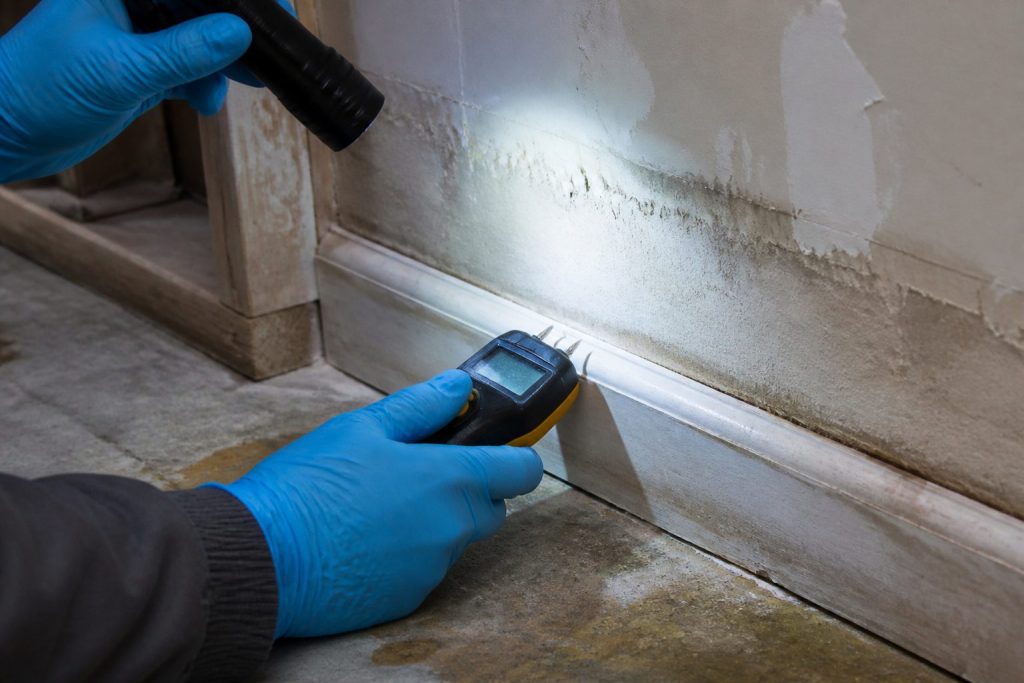
Eight line items show up missing on water damage estimates so often they should be considered structural omissions, not oversights.
1. Equipment Monitoring Time (EQ Hours)
Every piece of drying equipment you deploy needs to be set up, monitored daily, and removed. This is billed under EQ (equipment) hours in Xactimate — distinct from the equipment daily rental rate itself. Adjusters routinely include the air mover or dehumidifier line but strip the EQ monitoring hours. On a standard 3-day residential water loss with 6 pieces of equipment, this can represent $800–$1,200 in omitted labor (approximate, varies by region and Xactimate price list). It’s legitimate labor time. Submit it every job.
Get The Signal
What we actually ran, what it measured, and what it means for a restoration shop — every week, including the flops.
2. Contents Manipulation (FCC)
If you moved furniture to set equipment or protect contents — and you did, because wet carpet under a couch is a mold claim waiting to happen — you can bill for it. The FCC line item covers furniture manipulation. Adjusters frequently zero it out claiming “no significant contents.” Document with photos. Bill it anyway. The IICRC S500 supports moving contents as part of professional mitigation protocol.
3. Antimicrobial Treatment
Antimicrobial application is standard protocol on Category 2 or Category 3 losses. Some adjusters skip it on Cat 2 jobs claiming the loss “wasn’t contaminated enough.” That’s not a defensible position under your standard of care. Cite your IICRC S500 obligation. Your standard of care requires it. Your estimate should reflect it, every time.
4. Structural Drying Labor (WTR STRC)
This is separate from equipment rental. Structural drying labor — the time spent monitoring moisture readings, adjusting equipment placement, logging psychrometric data — is billable under the WTR STRC line in Xactimate. It gets omitted constantly. If you’re running a 4-day dry with daily monitoring visits, that’s real labor time that belongs in the scope. Don’t bundle it into your equipment rate. Break it out.
5. Controlled Demolition — Broken Out by Material
Any time you remove material to facilitate drying — baseboard, drywall, flooring — document each demolition activity with its own line item. Adjusters often bundle multiple demolition activities under a single generic line at the lower rate. Don’t let them. Break it out: WTR DWL for drywall removal, WTRFC variants for flooring type (C for carpet, T for tile, W for wood). Each code carries its own unit rate. Bundled scopes always favor the carrier’s math, not yours.
6. Overhead & Profit (O&P)
The single most fought-over line item in all of Xactimate. O&P is the 10% overhead + 10% profit markup that general contractors are entitled to charge when coordinating multiple subcontractors. Carriers deny it by claiming the job “doesn’t involve three or more trades” — a threshold they invented. It does not appear in Xactimate’s published pricing guide documentation.
The counter: build a trades list into your scope narrative. List every trade involved — mitigation crew, licensed plumber, drywall contractor, flooring installer, painter. Four trades is four trades. Include a one-page scope narrative that names them. This prevents the denial before it starts. And if your overhead is genuinely higher than 10%, carry your overhead calculation to the negotiation. The “10 and 10” standard is an industry habit, not a contractual ceiling.
7. Drying Documentation & Psychrometric Reporting
Daily moisture logs, psychrometric readings, equipment placement diagrams — this is billable work that simultaneously protects you legally and demonstrates professional standard of care. Some carriers will pay for drying documentation as a discrete line item. Others will fight it. Submit it regardless. The documentation cost is real whether they pay it or not, and if you ever face a bad-faith claim, that paper trail is worth far more than the line item rate.
8. Code Upgrade Items
If your jurisdiction requires anything beyond like-for-like replacement — updated electrical to code, fire blocking on structural penetrations, cement board substrate under tile in wet areas — those upgrades are billable line items. They’re also frequently omitted from adjuster scopes. Pull your local code requirements for every material type you’re replacing and include the upgrade lines with code citations in your narrative. “Local code requires X per section Y” is a hard argument to deny.
How to Win the O&P Fight
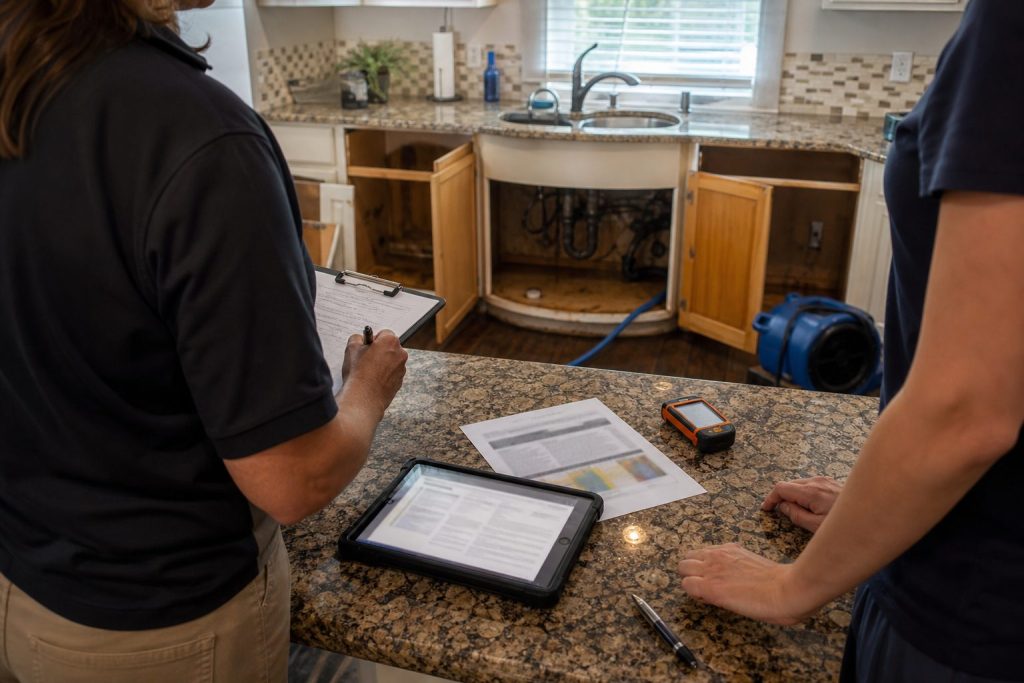
When an adjuster denies O&P citing insufficient trades: don’t argue the threshold. Argue the standard.
Send back a scope narrative page that lists explicitly: mitigation contractor, structural drying crew, licensed plumber, licensed electrician (if any wiring was involved), drywall contractor, flooring contractor, painter. That’s five to seven trades on a typical Category 2 bathroom loss. Documented. Named. The general contractor coordinating them is entitled to O&P.
If they push back a second time, pull the insured’s policy language. General contractor services — scheduling, coordination, quality control, project warranty — exist whether the carrier likes it or not. If you’re managing subcontractors, you’re performing GC functions. GCs charge O&P. That’s what it’s for.
The Supplement Submission Process That Actually Gets Paid
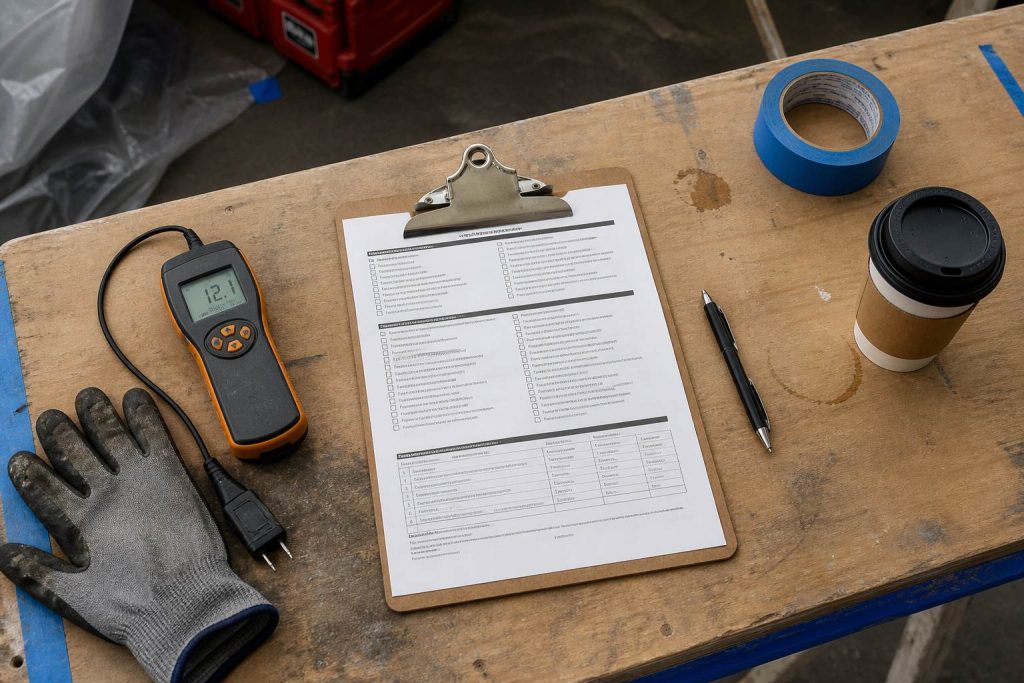
Fast-tracked supplements share one trait: they’re submitted in Xactimate format, not PDF invoices. A clean Xactimate supplement typically gets reviewed in 2–3 weeks. A PDF invoice can sit 6–8 weeks — and gets denied at a higher rate because adjusters can’t reconcile it against their own scope line by line.
When submitting a supplement, include a clear cover narrative: what changed from the original scope, why, and what code or standard supports it. Mark every supplemental line item clearly — “Supplemental Item — Not in OA Scope” — so the reviewer can locate additions instantly. Attach photo documentation for any line item likely to be disputed. Submit through the carrier’s supplement portal if one exists.
One more thing: track your supplement approval rates by carrier. If one carrier denies your antimicrobial supplements at 60% and another approves 90%, adjust your initial scope narrative accordingly for that carrier. They’re not all operating from the same playbook.
Bottom Line
Carriers write lean because they can. Most contractors either don’t supplement or supplement poorly — PDF invoices, vague narratives, no photo documentation. That’s why the strategy works for them.
If you’re running water damage jobs at $8,000–$15,000 in average ticket size and not supplementing, you’re leaving somewhere between $1,200 and $4,000 per job on the table — a rough estimate based on common first-offer gap percentages in the industry. Across 50 jobs a year, that’s real revenue. Not found money. Your money.
The line items are in Xactimate. The standard of care is established by IICRC. The adjuster expects you to push back. The only question is whether your scope is specific enough to win.
📖 Recommended Reading in Restoration Intelligence
The Missed Line Items Pack — $19
The line items in this article are the start. The pack is the full set: Xactimate missed-line-item and supplement cheat sheets you can work straight from on your next water loss.
Get The Signal
What we actually ran, what it measured, and what it means for a restoration shop — every week, including the flops.
Leave a Reply