
The most profitable lead source for almost every successful restoration company is also the cheapest: referrals from plumbers, adjusters, property managers, and real estate agents. A single deeply embedded referral relationship can produce more revenue than a full year of paid search, with no cost per lead and a close rate that approaches 100%. And yet most restoration companies invest almost nothing in this channel because it is harder, slower, and less measurable than buying leads.
This article is part of our restoration lead generation master guide, which sits above this piece in the cluster architecture.
Why Referrals Work
Referral leads carry pre-built trust. The customer has already been told “use these guys, they are good” by someone they trust. Close rates are extraordinarily high. Price sensitivity is lower. The relationship is repeat — a plumber who refers one job will refer many more if the experience is good.
The economics are also dramatically better than paid channels. A plumber referral relationship that produces 10 jobs per year at an average revenue of $8,000 is worth $80,000 in revenue with essentially zero variable acquisition cost.
The Four Referral Sources That Matter Most
1. Plumbers
Plumbers see water losses before anyone else. They are often the first call on a burst pipe, slab leak, or sewer backup, and they are typically asked by the homeowner “who do I call for the cleanup?” Building deep relationships with the plumbing community in your service area is the single highest-leverage offline lead-gen activity in restoration.
What works: regular in-person visits to plumbing shops, lunch deliveries to plumbing teams, ride-alongs with key plumbers to job sites, joint marketing materials, and clear referral processes that make it easy for the plumber to hand off the customer.
2. Insurance Adjusters
Independent adjusters and staff carrier adjusters often have informal vendor preferences they recommend to insureds. Building adjuster relationships is slower and more nuanced than plumber relationships because of regulatory sensitivities around steering, but the volume from a strong adjuster network is substantial.
What works: continuing education events, IICRC class hosting, professional respect on every shared job, fast and clean documentation, and zero tolerance for any practice that could be perceived as kickbacks or steering.
3. Property Managers
Both residential and commercial property managers control vendor decisions for properties under management. A single multi-family property management company can produce dozens of jobs per year. These relationships are built through reliability, response time, transparent pricing, and clean documentation.
4. Real Estate Agents
Real estate agents encounter water damage and mold during inspections regularly. Agents who refer a trusted restoration company to clients facing pre-sale or pre-purchase remediation can produce a steady, low-volume but high-margin lead flow.
The Mechanics of a Referral Program
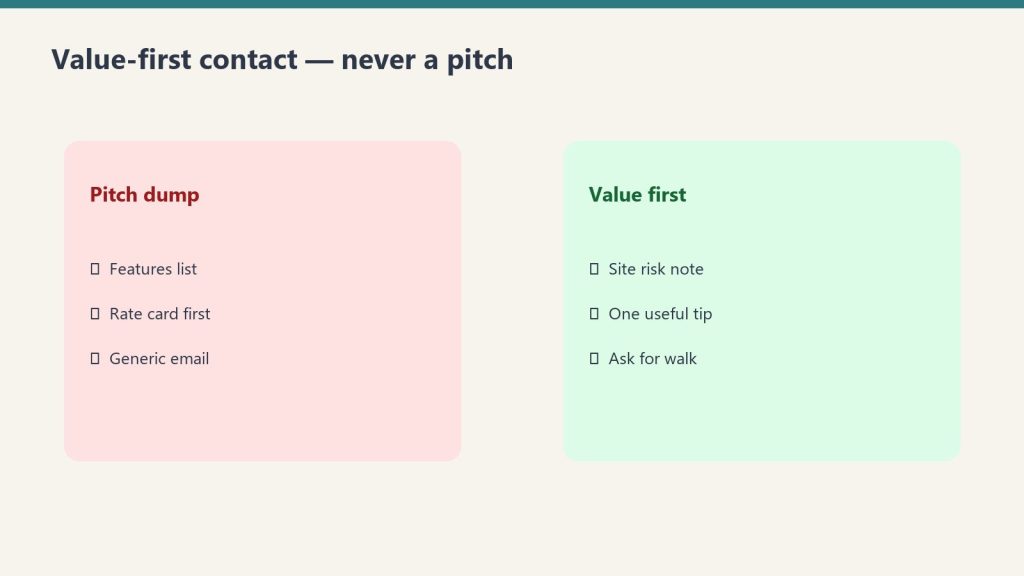
Most restoration companies “do referrals” by hoping plumbers will remember them. Mature operations build structured referral programs with named relationship owners, regular cadence of visits and check-ins, joint co-marketing assets, and clean tracking of referral source in the CRM.
The cadence that works is roughly weekly touch with top-tier referral partners — coffee, donuts, lunch, ride-alongs, or job-site visits — and monthly or quarterly check-ins with second-tier partners.
Compensation and Compliance
Direct cash kickbacks for referrals are illegal in most jurisdictions for insurance-related work and ethically problematic everywhere. The legitimate ways to build referral relationships include reciprocal referrals (sending plumbing work back to plumbing partners), co-branded marketing, jointly hosted events, and reliable professionalism that makes the referrer look good to their customer.
Tracking and Measurement
Referral lead tracking should be table stakes in the CRM. Every job needs a referral source field. Top referrers should be reviewed monthly and recognized publicly through thank-you notes, holiday gifts, and small reciprocal gestures. Companies that track referrals carefully consistently grow them; companies that do not see them quietly atrophy.
Related on Tygart Media: lead nurture · residential lead gen.
Frequently Asked Questions
How do I get plumbers to refer water damage jobs?
Show up consistently in person, build genuine professional relationships, make their lives easier (fast response when they call, clean handoffs, no over-promising), and reciprocate when possible by referring plumbing work back to them. Most plumber referral relationships are built over months, not in a single sales meeting.
Is it legal to pay referral fees in restoration?
The answer depends on jurisdiction and whether the referred work involves insurance claims. Cash referral fees on insurance-related work are illegal in most states. Marketing co-op arrangements, reciprocal referral structures, and gifts within reasonable thresholds are typically allowed. Always verify with local counsel.
How long does it take to build a productive plumber referral network?
Productive referral relationships with individual plumbers typically take 6-18 months of consistent presence to mature. Building a network of 10-20 active referring plumbers across a service area usually takes 2-3 years of sustained relationship work.
What about online review platforms — do they replace traditional referrals?
Reviews and offline referrals serve different functions. Reviews influence cold prospects who find you through search; referrals deliver warm prospects who already trust the recommender. Both matter, but the close rate and lifetime value of a referral lead is typically much higher than a review-driven lead.
Should I have a dedicated business development person for referral relationships?
Companies above roughly $3M in revenue typically benefit from a dedicated business development hire whose entire job is referral relationship building. Below that, the owner usually owns this work — and ironically, owner-driven referral building often outperforms agency or hired representation because the relationships are with the actual decision-maker.
Leave a Reply