
• Tacoma, WA
• Industry Bulletin
The Window Is Closing
Right now, GEO is a competitive advantage. By 2027, it will be table stakes. The brands that invest in Generative Engine Optimization today will be the sources AI systems default to for their industries. The brands that wait will find themselves absent from the AI-mediated discovery channel that is growing faster than any other search modality.
The evidence is clear and accelerating. Perplexity reported over 100 million monthly active users by early 2026. Google AI Overviews now appear for roughly 25 to 30 percent of informational queries in the United States. ChatGPT with browsing is used by over 200 million users, many of whom treat it as their primary research tool. Claude, Gemini, and a growing ecosystem of AI assistants all retrieve and cite web content when answering questions. The aggregate impact is that a significant and growing percentage of information discovery now flows through AI intermediaries that make editorial decisions about which sources to cite.
This is not a future scenario. It is happening now. The question is not whether AI-mediated search will matter for your brand. The question is whether your content will be the content AI systems choose to cite when users ask about your industry.
Why First-Mover Advantage Compounds in GEO
GEO has a compounding dynamic that rewards early investment disproportionately. AI systems build associations between entities and topics. Once your brand becomes an established source for a topic area — cited consistently across multiple AI platforms — that association is difficult for competitors to displace. The AI has learned to reach for your content because it has been a reliable, factually dense, well-structured source in the past.
This is analogous to the early days of SEO, when the first brands to invest in search optimization captured domain authority that took competitors years to match. The GEO equivalent is entity authority — the AI system’s learned association between your brand and authoritative expertise in your domain. Building that association takes time. Maintaining it takes less effort than building it from scratch. And displacing an incumbent requires dramatically superior content, not just marginally better optimization.
The brands investing in GEO now — increasing factual density, optimizing entity signals, implementing LLMS.txt, publishing unique research, strengthening AI crawlability — are building compound interest that will pay returns for years. The brands that start in 2028 will be competing against established AI authority signals that they cannot quickly replicate.
The Factual Density Arms Race
The central GEO metric — factual density — creates a quality ratchet that elevates the entire content ecosystem. When the content that gets cited by AI is the content with the most verifiable facts per word, the competitive pressure pushes all content toward greater specificity, better sourcing, and higher informational value.
This is good for users and good for brands that invest in quality. It is bad for brands that rely on vague marketing copy, unsourced claims, and content-mill output. AI systems do not cite fluff. They cite facts. The gap between content that AI cites and content that AI ignores will widen every year as AI systems become better at evaluating source quality.
What Happens to Brands That Ignore GEO
A brand that is absent from AI-generated answers is not just missing one channel. It is missing the channel that increasingly mediates all other channels. When a buyer asks an AI system for recommendations and your brand is not mentioned, that buyer’s organic search, their comparison shopping, and their vendor evaluation all proceed without you in the consideration set. The AI recommendation has effectively filtered you out before the traditional search journey even begins.
For B2B brands, this dynamic is especially acute. Enterprise buyers already use AI tools to compile research briefings for purchasing committees. If your product is not in the AI-generated brief, it may not make the shortlist regardless of your organic search rankings or advertising spend.
For consumer brands, AI recommendations influence purchase decisions at the exact moment of research intent. When someone asks “what is the best [product] for [use case]” and receives a list that does not include you, recovery requires intercepting the buyer at a later stage with a more expensive touchpoint.
The Three-Phase GEO Implementation Plan

Phase one — foundation, months one through three: Audit your existing content for factual density. Replace vague claims with specific, cited facts across your top 50 pages by traffic. Implement Organization and Person schema markup. Set up LLMS.txt at your domain root. Ensure AI crawlers are not blocked in robots.txt. This phase requires no new content — just optimization of what exists.
Phase two — authority building, months three through six: Publish original research with proprietary data. Create comprehensive pillar pages for your three to five core topics. Build content clusters with strong internal linking. Strengthen entity signals through consistent profiles on authoritative platforms. Begin monitoring AI citation frequency by regularly querying AI systems with your target questions.
Phase three — competitive defense, month six onward: Maintain freshness across all content clusters with regular updates. Expand into adjacent topic areas where your expertise provides authority. Monitor competitor GEO activity and respond to emerging citation gaps. Develop relationships with third-party sources — journalists, analysts, review platforms — that strengthen your entity signals through external validation.
Measuring GEO: The Metrics That Matter
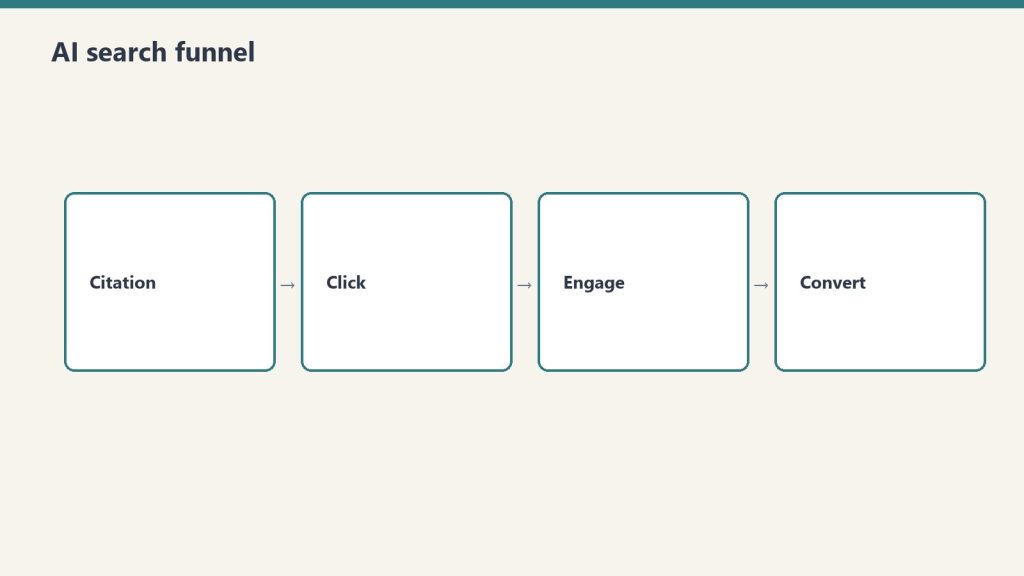
GEO measurement is less mature than SEO measurement, but the key metrics are trackable. AI citation frequency — how often your content is cited when AI systems answer questions about your industry. AI Overview appearances — tracked in Google Search Console for queries where your content is cited in AI Overviews. AI platform referral traffic — visits from Perplexity, ChatGPT, and other AI search platforms tracked in analytics. Brand mention monitoring — frequency and context of your brand appearing in AI-generated content.
The measurement cadence should be monthly at minimum. Track trends over time rather than obsessing over individual data points. GEO signals compound slowly and erode slowly — the trajectory matters more than any single snapshot.
FAQ
Is GEO worth investing in for small businesses?
Yes. Small businesses in niche industries have an outsized GEO opportunity because they can establish topical authority in spaces where large competitors have thin content. A small business with deep expertise and high factual density can be cited by AI systems ahead of much larger brands.
How much should companies budget for GEO?
GEO is not a separate budget item. It is a quality standard applied to all content production. The incremental cost is the editorial effort to increase factual density, add citations, and structure content for AI extraction. Most companies can implement GEO within existing content budgets by raising quality standards.
Will GEO become more or less important over time?
More important. Every trend in search — AI Overviews expanding, AI assistant adoption growing, voice search increasing — amplifies the importance of being the source AI systems trust and cite.
{
“@context”: “https://schema.org”,
“@type”: “Article”,
“headline”: “Why GEO Will Make or Break Your Brand by 2027: The Case for Optimizing for AI Now”,
“description”: “Generative Engine Optimization is not optional for 2027. Here is the evidence, the timeline, and exactly what to do about it before your competitors do.”,
“datePublished”: “2026-03-21”,
“dateModified”: “2026-04-03”,
“author”: {
“@type”: “Person”,
“name”: “Will Tygart”,
“url”: “https://tygartmedia.com/about”
},
“publisher”: {
“@type”: “Organization”,
“name”: “Tygart Media”,
“url”: “https://tygartmedia.com”,
“logo”: {
“@type”: “ImageObject”,
“url”: “https://tygartmedia.com/wp-content/uploads/tygart-media-logo.png”
}
},
“mainEntityOfPage”: {
“@type”: “WebPage”,
“@id”: “https://tygartmedia.com/why-geo-will-make-or-break-your-brand-by-2027-the-case-for-optimizing-for-ai-now/”
}
}
📖 Recommended Reading in The Signal

Leave a Reply