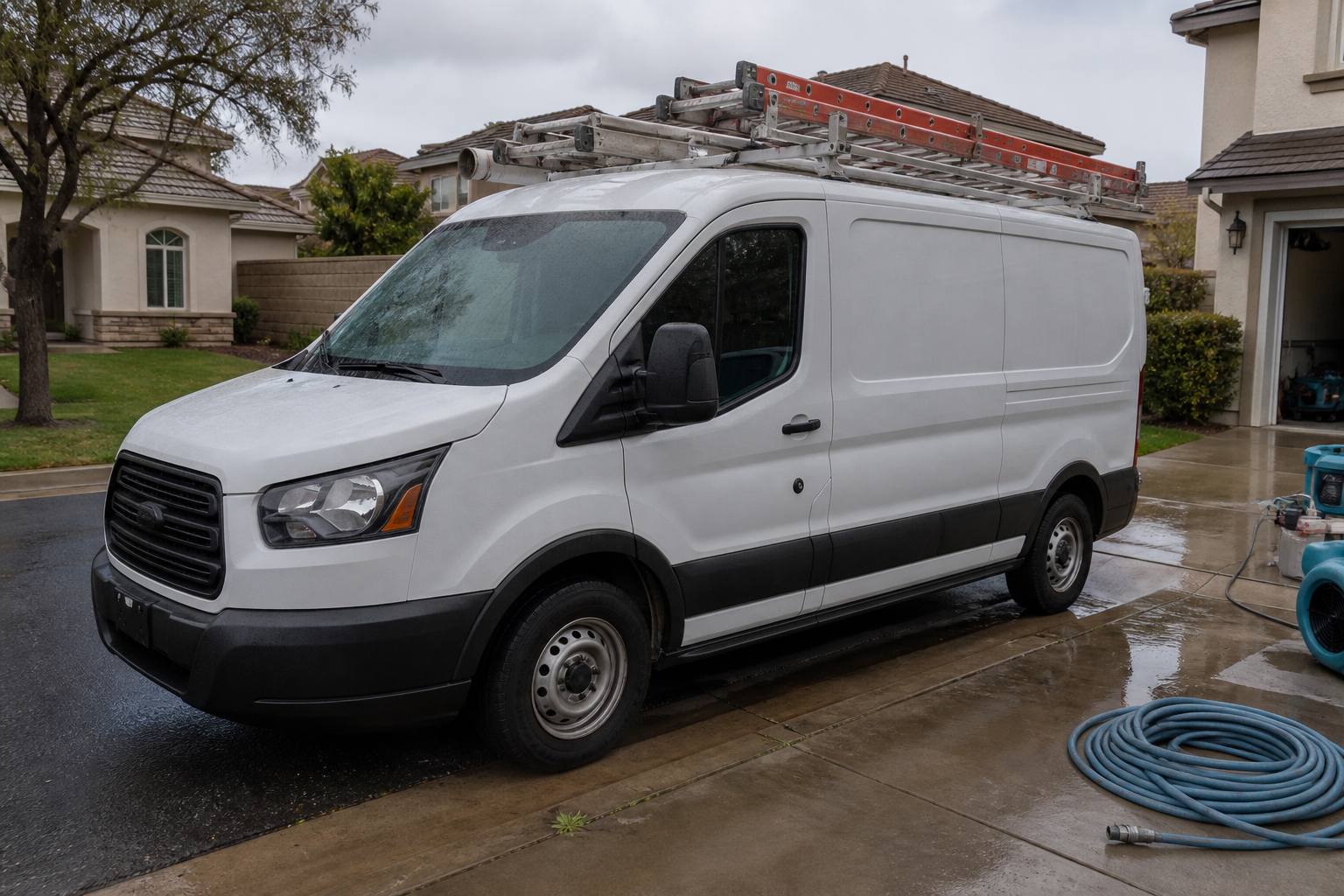
The magazine piece tells the facility manager why the gap exists. This is the shop version. Same week. Different door.
A water job ends when the last air mover comes off the truck, not when the invoice hits QuickBooks. After that, the only carbon record most shops have is a line item and a memory. The FM who hired you will get asked for Category 1 and Category 5 numbers. They will call you. You will not have them.
What actually has to leave with the crew
Not a sustainability essay. A dozen fields, written while the floor is still wet:
- Equipment and generator runtime, with fuel type
- Crew and haul trips, approximate miles
- Debris volume by stream — wet drywall, carpet, contents, mixed C&D
- Disposal method and receiving facility
- What came out versus what went back in
- Job class and duration
- Primary or estimated, on every number
If a tech cannot fill it in five minutes, the form is wrong. If it waits for the office on Monday, it will be invented.
Put it on the invoice trigger
Nobody fills a questionnaire after the trucks have gone. They fill what stands between them and getting paid.
One clause in the work auth or the master: the per-job record is a condition of final invoice. Same shape as a moisture log. Same habit as photos. The Restoration Carbon Protocol is the open mapping if you do not want to invent the buckets. Use it, rename it, or steal the twelve fields. The standard is not the point. The timestamp is.
Who this is for
Commercial water, fire, mold, and the one-off mechanical swap. The FM inside the building is the only person who can demand the data at the door. You are the only person who can produce it at the job.
IFMA just ran the occupier-side argument. Closing the Scope 3 Data Gap is theirs. This is the field note that makes that article usable when the next pipe opens.
The sentence that pays
“We capture the job record before we leave. You can hand it to whoever asks.”
Only say it if the clipboard is on the truck.
Related: the IFMA companion · the leftover pile · Starlink on a water job · pipe, pile, two seats
Leave a Reply