Category: PSNS and Military Life

Shipyard commuter info, PSNS news, military family resources, Bangor

  • What PSNS Stability Under the FY2026 NDAA Means for Belfair’s Local Economy and North Mason Residents

    What PSNS Stability Under the FY2026 NDAA Means for Belfair’s Local Economy and North Mason Residents

    You might not work at Puget Sound Naval Shipyard. You might not know anyone who does — or you might have half a dozen neighbors who do, without fully thinking about it. Either way, the news that PSNS & IMF is legally protected from the federal workforce cuts affecting other government installations matters to Belfair, Allyn, Tahuya, and the North Mason corridor in ways that go well beyond the people clocking in at the Bremerton facility.

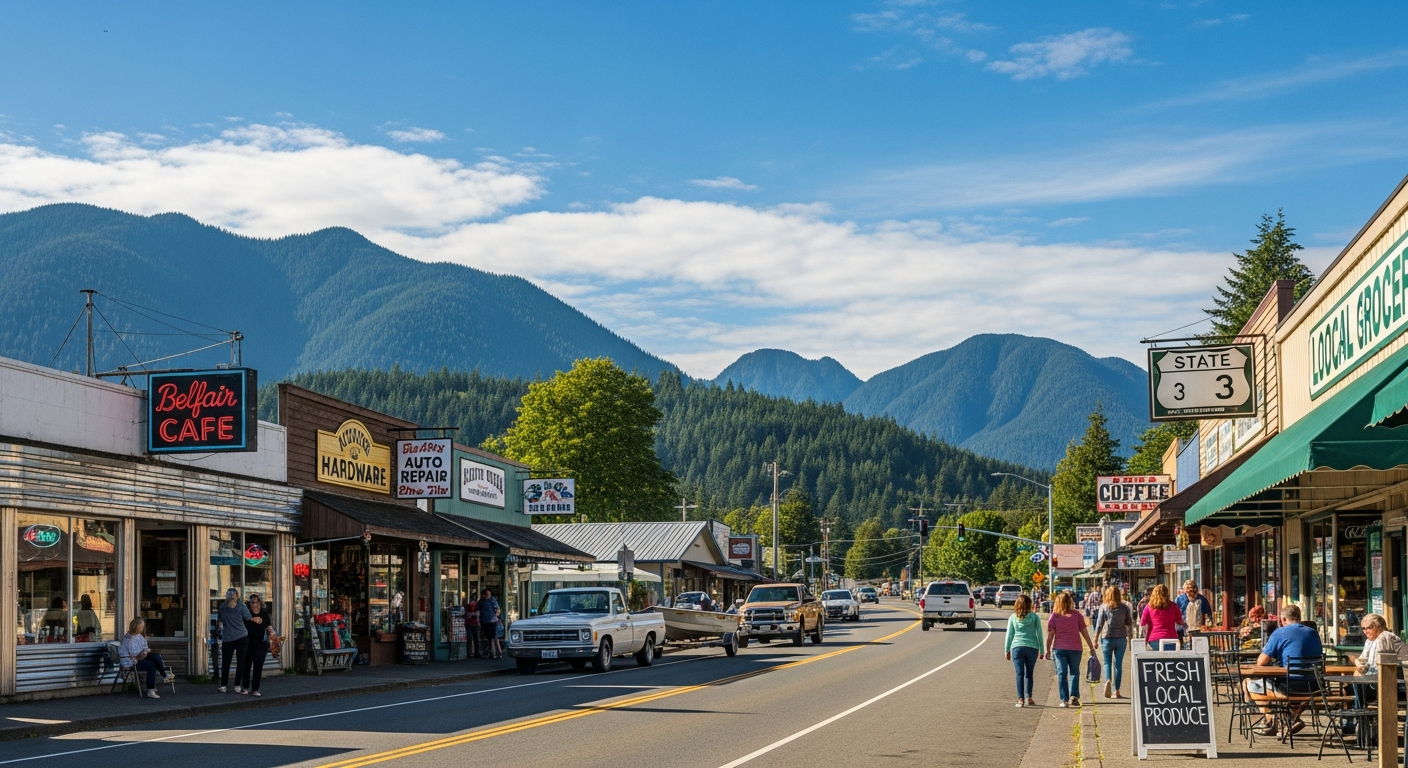
    PSNS is the single largest employment anchor in the Kitsap-Mason regional economy. What happens to that workforce is felt at the coffee shop on SR-3, at the hardware store in Belfair Town Center, at the real estate offices watching the Hood Canal waterfront market, and at North Mason High School where families make decisions about staying or leaving based on employment stability. Federal workforce cuts that skip PSNS are therefore not just good news for shipyard workers — they are good news for North Mason’s economic baseline.

    What the NDAA Protection Actually Is

    Section 1108 of the FY2026 National Defense Authorization Act, signed December 18, 2025, bars the use of federal funds for any hiring freeze, reduction-in-force, or hiring delay at America’s four public naval shipyards. Puget Sound Naval Shipyard & Intermediate Maintenance Facility is one of the four. The protection is an appropriations restriction — it cannot be overridden by executive order and runs through September 30, 2026.

    The broader DoD context: the Navy ordered all commands to model civilian workforce reductions of 10%, 15%, and 20% by a September 30, 2026 deadline. That modeling is underway at many naval installations. PSNS’s 14,000-plus-worker workforce is explicitly exempt from that process. Congress built the carve-out on the argument that the skilled tradespeople — welders, pipefitters, nuclear technicians — who maintain the Pacific Fleet’s submarines and carriers are not administrative overhead. They are irreplaceable capacity, and cutting them creates backlogs that take years to recover.

    Why 14,000 Stable Jobs Matter to Belfair Specifically

    PSNS & IMF is the largest public shipyard in the United States by workforce. Its employees commute from across Kitsap and Mason counties — and the SR-3 corridor from Belfair to Bremerton is one of the primary arteries for that commute. Mason Transit’s Route 3 was designed specifically for the Belfair-to-Bremerton shipyard worker flow, running six weekday trips from the Belfair Park & Ride on NE Log Yard Road to the Bremerton Ferry Terminal.

    This workforce — stable, well-compensated, union-represented trades — creates consumer demand that flows directly into North Mason’s retail and service economy. Grocery runs in Belfair. Lunch stops on SR-3. Home repair and improvement projects in Allyn and Tahuya. School enrollment and sports participation in the North Mason School District. When PSNS employment is stable, that baseline demand is stable. When it contracts — as it has in previous federal austerity cycles — North Mason feels it in small but compounding ways.

    The Housing Connection

    PSNS employment stability is also a factor in Belfair’s real estate picture. Workers who can afford to buy in a lower-cost market — which North Mason is, relative to Kitsap County — tend to look at Belfair, Allyn, and the Hood Canal waterfront. When federal employment uncertainty rises, that buyer pool pulls back. The FY2026 NDAA protection removes one source of uncertainty for a meaningful subset of North Mason’s potential homebuyers and current homeowners.

    For a more complete look at how PSNS employment intersects with Belfair’s housing market, see our earlier coverage on military families at PSNS and Belfair’s 2026 housing picture.

    The Apprenticeship as a North Mason Economic On-Ramp

    Section 1108 explicitly protects the PSNS apprenticeship pipeline. The program — operating since 1901, graduating roughly 200 workers per year, with academics through Olympic College — is one of the better skilled-trades career pathways available to North Mason residents. It is open to Mason County applicants, and the Belfair-to-Bremerton commute on Route 3 or SR-3 is viable for workers in that program.

    For a community where the question of where young people can build careers locally is always present, a protected and actively hiring skilled-trades apprenticeship within commuting distance of Belfair is a real answer to that question. Openings post at usajobs.gov.

    What to Watch After September 30, 2026

    The current protection runs through the end of FY2026. Renewal requires action in the FY2027 NDAA or through the Protecting Public Naval Shipyards Act as standalone legislation (S. 2648, introduced in the 119th Congress). From North Mason’s perspective, this is worth tracking — a large portion of our community’s economic baseline is tied to PSNS employment, and the stability that exists in FY2026 needs to be renewed for FY2027 through the same congressional process. For the full legislative picture, see: How NDAA Section 1108 Shields PSNS From the DoD Cuts Wave.

    Frequently Asked Questions: PSNS Stability and North Mason’s Economy

    How many people from Mason County work at PSNS?

    An exact Mason County-specific figure is not publicly reported by PSNS. However, Mason Transit’s Route 3 — the Belfair-to-Bremerton line running from the Belfair Park & Ride — was designed for the shipyard commute corridor, reflecting that a significant share of PSNS’s 14,000-plus workforce lives in Mason County communities including Belfair, Allyn, and Tahuya.

    Does PSNS protection mean the North Mason economy is immune to federal workforce changes?

    No. Section 1108 protects the PSNS skilled-trades workforce from hiring freezes and RIFs for FY2026. It does not protect other federal civilian positions held by North Mason residents (at Bangor, NAS Whidbey, or other installations), nor does it affect private-sector jobs that depend on federal contracting. The PSNS protection is a significant anchor, but it is not a full economic shield for the region.

    Is the North Mason housing market directly tied to PSNS employment?

    There is a meaningful indirect relationship. PSNS workers represent a buyer pool for North Mason real estate — Belfair offers lower price points than Silverdale or Bremerton, which makes it attractive to workers seeking homeownership. Federal workforce uncertainty tends to suppress that buyer pool; PSNS stability in FY2026 removes one source of uncertainty for prospective buyers in that category.

    Can North Mason residents apply for PSNS jobs without prior shipyard experience?

    Yes, through the PSNS & IMF apprenticeship program, which is open to applicants from Mason County and does not require prior shipyard experience. The program runs four years and graduates about 200 workers annually. Academic instruction is through Olympic College in Bremerton. Applications are posted at usajobs.gov when positions are open.

    What is the FY2026 timeline for the NDAA protection?

    FY2026 runs October 1, 2025 through September 30, 2026. Section 1108’s protection is in effect for that entire window. Renewal for FY2027 requires action in the FY2027 NDAA or passage of standalone legislation (S. 2648).

  • PSNS Workers From Belfair: Your FY2026 Job Protection Under Section 1108, Explained Trade by Trade

    PSNS Workers From Belfair: Your FY2026 Job Protection Under Section 1108, Explained Trade by Trade

    If you’re one of the workers who clocks in at Puget Sound Naval Shipyard every day after a drive down SR-3 or a hop on Mason Transit Route 3 from the Belfair Park & Ride — the last several months had an uncomfortable background noise to them. Federal workforce cuts. DOGE. Hiring freezes. The headlines applied to federal workers, and you are a federal worker.

    Here is what you need to know: your position at PSNS is protected by a specific provision of federal law that does not apply to most other federal civilian jobs. This is not a general reassurance — it is a named, trade-specific legal protection that was enacted in December 2025 and runs through September 30, 2026.

    Is Your Trade Specifically Named in the Law?

    Section 1108 of the FY2026 National Defense Authorization Act bars the use of federal funds for any hiring freeze, reduction-in-force, or hiring delay at America’s four public naval shipyards. PSNS & IMF in Bremerton is one of the four. And the law doesn’t just protect the shipyard generally — it names specific trades:

    • Welders
    • Pipefitters and shipfitters
    • Mechanics
    • Painters and blasters
    • Radiological technicians and engineers
    • Nuclear maintenance and refueling personnel
    • Apprentices in the PSNS workforce development pipeline
    • Infrastructure support workers under the Shipyard Infrastructure Optimization Program

    If your job title maps to any of the above, your position is explicitly covered by an appropriations restriction that Congress built into the FY2026 spending law. An executive order or agency directive cannot override it — Congress prohibited the use of funds for hiring freezes at these four shipyards, and that prohibition cannot be worked around.

    The Broader DoD Environment Your Coworkers at Other Installations Are In

    To understand why this matters, consider what your counterparts at non-shipyard naval installations are facing. The Navy issued instructions to all commands to model civilian workforce reductions of 10%, 15%, and 20% — due by September 30, 2026. That modeling is underway. For civilian workers at many naval facilities, the planning process is live.

    You are in a different legal category. PSNS is one of four facilities that Congress explicitly carved out. The argument Congress made was the one that matters most for our community: the welders, pipefitters, and nuclear technicians at PSNS do work that cannot be outsourced or deferred without degrading Pacific Fleet readiness. Protecting them was framed as a national security necessity, not a labor benefit.

    The Apprenticeship Pipeline Is Also Protected

    Section 1108 explicitly names apprentices as a protected category. This matters for the PSNS & IMF apprenticeship program — one of the oldest in the Pacific Northwest, operating since 1901 — which feeds roughly 200 new workers per year into the shipyard’s skilled-trades workforce. The academic component runs through Olympic College in Bremerton.

    If you have a family member or neighbor in North Mason who is considering the apprenticeship path into PSNS, the protection in FY2026 means the program is operating normally. Openings are listed at usajobs.gov. The commute from Belfair to Bremerton is workable — Mason Transit’s Route 3 runs six trips a day in each direction on weekdays from the Park & Ride on NE Log Yard Road.

    Your Commute — And the One Thing That’s Still a Variable

    The job protection is stable. The commute has its own issues this summer. SR-3 construction in the Gorst area is going to affect drive times during the peak window, and WSDOT’s current construction schedule means commuters relying on SR-3 should have a backup plan before the worst of it hits. We’ve covered the full routing picture in our earlier piece on what SR-3 construction means for your Belfair commute.

    If you haven’t looked at Mason Transit Route 3 or 3X as a backup for heavy-construction days, it’s worth a check. The Park & Ride on NE Log Yard Road is the starting point; schedules are at masontransit.org/route-3/.

    For the full legislative picture on NDAA Section 1108, including the FY2026 expiration date and what happens after September 30, see our deeper coverage: How NDAA Section 1108 Shields PSNS From the DoD Cuts Wave.

    Frequently Asked Questions for PSNS Workers From Belfair

    Does Section 1108 cover my supervisor position or only trade workers?

    Section 1108 names specific trades: welders, pipefitters, shipfitters, mechanics, painters, blasters, radiological technicians, nuclear maintenance personnel, and apprentices. It also covers Shipyard Infrastructure Optimization Program support roles. Administrative and management positions not directly tied to shipyard operations are not covered by the same explicit statutory language — those workers may be subject to broader DoD workforce planning.

    My job involves both shipyard work and administrative duties — am I protected?

    The protection applies to the named trade categories. If your primary classification is one of the protected trades, Section 1108 applies. For hybrid or ambiguous classifications, your human resources office at PSNS is the authoritative source on how the protection applies to your specific job series.

    The law expires September 30, 2026. What should I watch for?

    Watch the FY2027 NDAA process. The Protecting Public Naval Shipyards Act (S. 2648 in the 119th Congress) was introduced as standalone legislation that would make the protection permanent. If it does not pass as standalone law, the renewal will need to be included in the FY2027 defense authorization bill. Congressional action on this should be visible by summer 2026.

    Are Bangor Naval Base workers also protected under Section 1108?

    Section 1108 covers the four public naval shipyards specifically — PSNS & IMF, Portsmouth, Norfolk, and Pearl Harbor. Bangor Naval Base (Naval Base Kitsap-Bangor) is a separate installation and its civilian workforce is not covered by Section 1108’s shipyard-specific language. Bangor workers should consult their HR office for information on their workforce status under current DoD directives.

    Route 3 morning departures from Belfair — what are the times?

    Weekday morning departures from the Belfair Park & Ride (NE Log Yard Road): 5:25 a.m., 6:25 a.m., and 7:45 a.m. Additional mid-morning and afternoon trips run throughout the day. No weekend service. Full schedule: masontransit.org/route-3/. Route 3X provides express trips on select runs.

  • How NDAA Section 1108 Shields Puget Sound Naval Shipyard From the DoD Cuts Wave — And What It Means for Belfair

    How NDAA Section 1108 Shields Puget Sound Naval Shipyard From the DoD Cuts Wave — And What It Means for Belfair

    The headlines about Department of Defense civilian workforce reductions have been consistent for months: the Navy has ordered commands to model 10%, 15%, and 20% cuts to their civilian workforces, with a planning deadline of September 30, 2026. For federal workers across the country, the uncertainty has been real.

    For the workers who board Mason Transit Route 3 at the Belfair Park & Ride on NE Log Yard Road every morning and cross into Bremerton — that cloud has a different shape than it does for workers at other federal installations. Puget Sound Naval Shipyard & Intermediate Maintenance Facility is not subject to those reduction orders. That protection is written into federal law.

    Here is what that law actually says, why it matters specifically for North Mason, and what it means for anyone on the SR-3 commuter corridor who depends on a PSNS paycheck.

    What Section 1108 of the FY2026 NDAA Actually Says

    Section 1108 of the Fiscal Year 2026 National Defense Authorization Act — signed into law on December 18, 2025 — codifies the Protecting Public Naval Shipyards Act. The provision bars the use of any federal funds to carry out a hiring freeze, reduction-in-force, or hiring delay at America’s four public naval shipyards: Puget Sound Naval Shipyard & Intermediate Maintenance Facility in Bremerton, Portsmouth Naval Shipyard in New Hampshire, Norfolk Naval Shipyard in Virginia, and Pearl Harbor Naval Shipyard in Hawaii.

    The protection is an appropriations restriction. That is a meaningful legal distinction: Congress has prohibited federal funds from being used for hiring freezes or RIFs at these four facilities, and an executive order or agency directive cannot redirect appropriated funds for a purpose Congress has explicitly barred. For the duration of FY2026 — October 1, 2025 through September 30, 2026 — PSNS & IMF cannot be subjected to the workforce reduction modeling that other DoD commands are currently working through.

    The legislation was championed by a bipartisan coalition: Representatives Chris Pappas (NH) and Elaine Luria Kiggans (VA) in the House, and Senators Maggie Hassan, Jeanne Shaheen, Susan Collins, and Angus King in the Senate. The core argument was fleet readiness — the public shipyard workforce is not administrative overhead, and cutting it creates maintenance backlogs that degrade submarine and carrier availability.

    Which Trades Are Specifically Protected

    Section 1108 does not simply protect the shipyard in the abstract — it names specific roles. The following trades and functions are explicitly identified in the law as protected from hiring freezes and workforce reductions at the four public shipyards:

    • Welders, pipefitters, and shipfitters
    • Radiological technicians and engineers
    • Mechanics, painters, and blasters
    • Apprentices in the workforce development pipeline
    • Nuclear maintenance and refueling personnel
    • Workers supporting shipyard infrastructure operations under the Shipyard Infrastructure Optimization Program

    PSNS & IMF employs more than 14,000 workers — the largest public shipyard workforce in the United States — and the majority of that workforce falls into these protected trade categories. The nation’s aircraft carriers and nuclear submarines are maintained here, and Congress determined that protecting that pipeline was a national security imperative, not a budget line to optimize.

    The Broader DoD Cuts Context That Makes This Significant

    To understand why Section 1108 matters, it helps to know what PSNS is protected against. The Navy issued instructions to commands to model civilian workforce reductions of 10%, 15%, and 20% by a September 30, 2026 planning deadline. Federal civilian workers at many naval installations — people in administrative, logistics, and support roles — are inside that reduction planning process.

    PSNS’s skilled-trades workforce is explicitly outside it. The shipyard is still subject to normal management decisions, but it cannot be subjected to a programmatic hiring freeze or RIF under the current appropriations law. For commuters from Belfair, Allyn, and Tahuya who drive or bus to Bremerton each morning, that distinction matters in a practical way: the jobs that anchor our end of Mason County are on solid legal footing for the current fiscal year.

    The PSNS Apprenticeship: A Door That Stays Open

    One direct consequence of Section 1108’s protection is that the PSNS & IMF apprenticeship program can continue its normal hiring cadence. The program dates to 1901 — one of the oldest in the Pacific Northwest — and graduates approximately 200 workers per year into the shipyard’s skilled-trades pipeline. The academic portion is taught through Olympic College in Bremerton.

    The apprenticeship draws applicants from both Kitsap and Mason counties. For North Mason residents considering a skilled-trades career, the PSNS program is one of the more stable and well-compensated pathways available in the region. Openings for both apprenticeships and journey-level positions are posted at usajobs.gov.

    Getting There: Route 3 and the SR-3 Corridor

    Mason Transit’s Route 3 connects the Belfair Park & Ride on NE Log Yard Road to the Bremerton Ferry Terminal with weekday service — morning departures from Belfair at 5:25 a.m., 6:25 a.m., and 7:45 a.m. cover the early-shift window, with additional mid-morning and afternoon runs. Route 3X provides an express option on select trips. No weekend service operates. Current schedules are at masontransit.org/route-3/.

    Drivers on SR-3 face a different planning challenge this summer. The ongoing construction work in the Gorst corridor is set to affect commute times, and commuters should have an alternate routing strategy ready before the peak construction window. Our earlier coverage walks through what the SR-3 construction means for PSNS workers and the Gorst roundabout and Belfair Bypass timeline.

    After September 30, 2026: What to Watch

    Section 1108’s protection is tied to FY2026. After September 30, renewal requires action in the FY2027 NDAA or through standalone legislation. The Protecting Public Naval Shipyards Act (S. 2648 in the 119th Congress) was introduced to make this protection permanent — but as of publication it has not been enacted as standalone law. If the broader DoD workforce reduction conversation continues into FY2027, the question of whether PSNS retains its carve-out returns. That is a budget and defense policy story worth watching from North Mason’s perspective — a large share of our local economy follows the shipyard’s employment trajectory.

    Frequently Asked Questions About NDAA Section 1108 and PSNS

    Does Section 1108 protect all PSNS employees or only specific trades?

    Section 1108 specifically names welders, pipefitters, shipfitters, radiological technicians, engineers, apprentices, mechanics, painters, blasters, and nuclear maintenance personnel. Workers in those roles are explicitly protected from hiring freezes and workforce reductions under the FY2026 appropriations restriction. Administrative positions not directly tied to shipyard operations are not covered by the same explicit language.

    Can a presidential executive order override Section 1108?

    No. Section 1108 is an appropriations restriction — it bars the use of federal funds for hiring freezes or RIFs at the four named shipyards. An executive order cannot redirect funds that Congress has prohibited from being used for a specific purpose. This legal distinction is what makes the protection meaningful in the current federal workforce environment.

    When does FY2026 end and what happens to the protection after that?

    FY2026 ends September 30, 2026. After that date, the Section 1108 protection expires unless renewed through the FY2027 NDAA or standalone legislation. The Protecting Public Naval Shipyards Act (S. 2648) was introduced to make the protection permanent, but that bill has not yet been enacted as a standalone law.

    Is the PSNS apprenticeship program open to Mason County residents?

    Yes. The PSNS & IMF apprenticeship program accepts applicants from both Kitsap and Mason counties. The program has operated since 1901 and graduates approximately 200 workers per year, with academic instruction delivered through Olympic College in Bremerton. Openings are posted at usajobs.gov.

    How many people does PSNS & IMF employ?

    PSNS & IMF employs more than 14,000 workers, making it the largest public naval shipyard in the United States by workforce. It handles maintenance and overhaul for the Navy’s aircraft carriers and nuclear submarines operating in the Pacific Fleet.

    What bus connects Belfair to PSNS in Bremerton?

    Mason Transit’s Route 3 (Belfair/Bremerton) connects the Belfair Park & Ride on NE Log Yard Road to the Bremerton Ferry Terminal on weekdays. Morning departures from Belfair are at 5:25 a.m., 6:25 a.m., and 7:45 a.m. Route 3X is an express option. No weekend service. Full schedule at masontransit.org/route-3/.

    Which four shipyards are protected by Section 1108?

    Puget Sound Naval Shipyard & Intermediate Maintenance Facility (Bremerton, WA), Portsmouth Naval Shipyard (Kittery, ME), Norfolk Naval Shipyard (Portsmouth, VA), and Pearl Harbor Naval Shipyard & Intermediate Maintenance Facility (Pearl Harbor, HI).

  • Military Families at PSNS: How Belfair’s 2026 Housing Market Stretches Your BAH Further Than Silverdale

    Military Families at PSNS: How Belfair’s 2026 Housing Market Stretches Your BAH Further Than Silverdale

    If you’re a military family stationed at Naval Base Kitsap — PSNS Bremerton or Bangor — and you’re comparing Belfair to Silverdale or Bremerton for your next home, the 2026 numbers tell a clear story. Belfair’s median home price of $405,000 sits well below Kitsap County equivalents, and for families stretching BAH, that gap means the difference between renting and owning.

    The BAH Math: Mason County vs. Kitsap County

    Belfair falls under Mason County BAH rates, which are lower than Kitsap County rates. On paper, this looks like a disadvantage. In practice, it often isn’t — because Belfair housing costs are proportionally even lower than the BAH difference.

    A junior enlisted family (E-4 with dependents) receiving Mason County BAH can rent a 3-bedroom home in Belfair and pocket the difference, or use the savings toward a purchase. The same family in Silverdale would need to supplement BAH from base pay to cover equivalent housing. For E-5 through E-7 families, the gap is even more pronounced — Belfair ownership becomes realistic where Silverdale ownership requires significant out-of-pocket.

    What $350,000-$450,000 Gets a Military Family in Belfair

    In the sweet spot for military families — $350,000-$450,000 — Belfair delivers:

    • 3-4 bedroom single-family homes on 0.5-1.5 acres
    • Space for vehicles, boats, and outdoor equipment that base housing doesn’t allow
    • Yards large enough for kids and pets
    • Privacy and quiet that Silverdale apartments and townhomes can’t match

    The same budget in Silverdale gets you a 2-bedroom condo or a dated townhome. In Bremerton, a smaller house on a fraction of the lot.

    The Commute Tradeoff — And the 2026 Wrinkle

    The savings come with SR-3. From Belfair to PSNS: 30-50 minutes under normal conditions. From Belfair to Bangor: 45-60 minutes. This is real drive time on a two-lane highway that doesn’t have a backup route.

    In summer 2026 specifically, SR-3 will be fully closed for up to 16 days near Gorst for a fish barrier removal project. The detour adds 15-40 minutes. If you’re PCSing to the area mid-2026, factor this into your transition timeline. See the full SR-3 closure breakdown.

    Schools and Family Life

    North Mason School District serves about 2,800 students. North Mason High School has strong athletics and AP offerings. The district is smaller than Central Kitsap or South Kitsap, which means smaller class sizes but fewer specialized programs. Military kids integrate well — North Mason has a steady population of PSNS and Bangor families, so your kids won’t be the only ones who moved from out of state.

    Youth activities center around North Mason community organizations, the Theler Wetlands environmental programs, and school-based sports. It’s not Silverdale’s strip-mall convenience, but families who prefer outdoor-oriented communities often prefer it.

    VA Loans and Well/Septic

    VA loans work in Belfair, but the well and septic requirement adds a step. VA appraisers require satisfactory well water testing and septic inspection. Budget extra time in your closing timeline — Mason County inspections can take 2-4 weeks. If the septic fails VA requirements, the seller typically negotiates repair or replacement before closing.

    Related Coverage

    Read our full 2026 Belfair real estate analysis and the military families in Belfair guide for more on base proximity, BAH specifics, and family life in North Mason.

    Frequently Asked Questions

    Is Belfair cheaper than Silverdale for military families?

    Yes. Belfair’s median home price of $405,000 is significantly below comparable Silverdale properties. A 3-bedroom home on an acre in Belfair costs what a 2-bedroom condo costs in Silverdale. Military families consistently report that BAH stretches further in Belfair despite the lower Mason County rate.

    Can I use a VA loan to buy in Belfair?

    Yes. VA loans work in Belfair, but most properties use well water and septic systems, which require additional VA appraisal steps — well water testing and septic inspection. Budget 2-4 extra weeks in your closing timeline for Mason County inspections.

    How far is Belfair from PSNS and Bangor?

    PSNS Bremerton is 30-50 minutes from Belfair via SR-3 under normal conditions. Naval Submarine Base Bangor near Silverdale is 45-60 minutes. Both commutes use SR-3, which will face a 16-day closure in summer 2026.

    Are North Mason schools good for military kids?

    North Mason School District is smaller than Central Kitsap or South Kitsap (about 2,800 students), offering smaller class sizes and a community feel. The district has a steady military family population from PSNS and Bangor, so transition support for incoming families is routine.


  • Moving to Belfair for PSNS? What the 2026 SR-3 Construction Means Before You Sign a Lease

    Moving to Belfair for PSNS? What the 2026 SR-3 Construction Means Before You Sign a Lease

    If you’re PCSing to Naval Base Kitsap or starting a civilian job at PSNS and considering Belfair as your home base, the 2026 road construction picture is something you need to understand before signing a lease or making an offer. Belfair’s affordability is real — but so is the SR-3 commute reality.

    Why People Choose Belfair Despite the Commute

    Belfair sits at the southern tip of Hood Canal in Mason County, about 30-40 minutes from PSNS under normal conditions via SR-3. The draw is straightforward: homes in Belfair cost significantly less than Bremerton or Silverdale. A family can rent a 3-bedroom house in Belfair for what a 2-bedroom apartment costs in Silverdale. If you’re stretching BAH or a civilian salary, that math matters.

    The tradeoff is a single-road commute. SR-3 is the only practical route between Belfair and Bremerton. There is no highway alternative, no parallel interstate, no backup route. When SR-3 has problems, every Belfair commuter feels them.

    What’s Happening to SR-3 in 2026

    Three things are converging this year:

    • A 16-day full closure near Gorst for fish barrier removal. No through traffic. Detour through rural roads adds 15-40 minutes depending on time of day.
    • A new roundabout at the SR-3/SR-16 Spur intersection in Gorst, with months of construction-related lane restrictions.
    • The Belfair Bypass has been delayed. The 6-mile alternate route that was supposed to start construction in 2026 has been pushed to the 2031-33 funding cycle by the Governor’s budget.

    What This Means If You’re Deciding Now

    Belfair is still a strong choice for many PSNS and Bangor families. The housing savings are substantial — potentially $500-$800/month less than comparable homes in Silverdale. But go in with your eyes open:

    • Your commute will be disrupted during the summer 2026 closure. If you’re arriving mid-year, you’ll hit it immediately.
    • The Belfair Bypass isn’t coming until at least 2033. Don’t factor it into your housing decision.
    • Winter commutes on SR-3 are the real test. Ice near Gorst, limited visibility, and accident-prone stretches mean 40-minute drives can become 90-minute ordeals from November through March.

    If you’re on day shift at PSNS and your partner works in Silverdale or Poulsbo, Belfair may add too much combined commute time. If one spouse works from home or you’re on a flexible schedule, the savings work.

    Getting Oriented in North Mason

    Before you commit, drive the route yourself during a weekday morning — not a weekend. See what 6:30 AM SR-3 through Gorst actually feels like. Check out our complete guide to living in Belfair and the full SR-3 construction breakdown for detailed timing and detour routes.

    Frequently Asked Questions

    How long is the commute from Belfair to PSNS Bremerton?

    Under normal conditions, 30-50 minutes via SR-3 depending on your neighborhood and time of day. During the summer 2026 SR-3 closure, add 15-40 minutes via detour routes. Winter conditions can add 20-30 minutes on bad days.

    Is Belfair worth the commute for PSNS workers?

    For families prioritizing affordable housing, space, and a quieter community, yes. A typical Belfair home costs $405,000-$475,000 — significantly less than Silverdale or Bremerton. The tradeoff is a single-road commute with seasonal and construction-related delays.

    When will the Belfair Bypass reduce commute times?

    The SR-3 Freight Corridor (Belfair Bypass) received federal environmental approval in 2024 but funding has been delayed to the 2031-33 biennium. Realistically, don’t expect it before 2033-2035.

    What’s the BAH situation for military families in Belfair?

    Belfair falls under Mason County BAH rates, which are lower than Kitsap County. However, housing costs in Belfair are proportionally lower, so many military families find their BAH stretches further here than in Silverdale or Bremerton despite the lower rate.


  • PSNS Workers: How the Summer 2026 SR-3 Closure Affects Your Belfair Commute and What to Do About It

    PSNS Workers: How the Summer 2026 SR-3 Closure Affects Your Belfair Commute and What to Do About It

    If you work at Puget Sound Naval Shipyard and live in Belfair or anywhere along the SR-3 corridor, the summer 2026 road closure is going to hit your commute hard. Here’s what PSNS-specific workers need to plan for — shift by shift, gate by gate.

    The Closure: What PSNS Workers Specifically Face

    SR-3 near Gorst will be completely closed for up to 16 consecutive days this summer for fish barrier removal. For the roughly 14,000 civilian and military employees who pass through PSNS gates daily, thousands of whom live in North Mason, this is not a minor inconvenience — it’s a commute overhaul.

    The detour route through Sunnyslope Road Southwest to Lake Flora Road was designed for rural traffic, not shift-change surges. If 500+ PSNS commuters from Belfair and points south hit this detour simultaneously at 6:15 AM, the road will bottleneck.

    Shift-by-Shift Impact Assessment

    Day shift (6-7 AM departure from Belfair): Heaviest impact. The detour adds 15-25 minutes under light conditions, but during the closure, expect 30-40 minutes additional as the narrow detour road handles concentrated volume. Leave by 5:30 AM to maintain your gate arrival time.

    Swing shift (2-3 PM departure): Moderate impact. You’ll hit the detour with fewer vehicles, but returning home after 11 PM means driving unfamiliar rural roads in the dark. Sunnyslope Road has limited lighting.

    Graveyard shift (10-11 PM departure): Lightest traffic impact, but the same dark-road concern applies. The detour route has no streetlights for most of its length.

    Gate Access During Construction

    PSNS gate procedures won’t change during the SR-3 closure — the closure is south of Bremerton, not at the base. But if thousands of workers arrive late simultaneously, expect longer gate queues as security processes the backlog. Contact your supervisor about flexible arrival windows if your role allows it.

    Carpooling and Alternative Strategies

    The Navy Region Northwest rideshare board has historically connected Belfair-area PSNS commuters. During the closure, carpooling isn’t just convenient — it directly reduces the number of vehicles on a detour road that can’t handle full volume. Three workers in one vehicle means two fewer cars on Lake Flora Road.

    Some PSNS workers from North Mason have historically used the Bremerton ferry as an alternative, but this only works if you live closer to the Hood Canal Bridge corridor. For Belfair residents, the detour is your reality.

    Related Coverage

    Read the full SR-3 closure breakdown for all detour routes, roundabout construction details, and the Belfair Bypass delay. Also see our complete Belfair-to-PSNS commute guide.

    Frequently Asked Questions

    How much longer will my Belfair-to-PSNS commute be during the SR-3 closure?

    Under normal detour conditions, add 15-25 minutes. During the 6-7 AM PSNS shift change surge, expect 30-40 minutes additional as Sunnyslope Road and Lake Flora Road handle concentrated commuter volume not designed for those roads.

    Should I change my PSNS shift during the SR-3 closure?

    If your role allows shift flexibility, swing or graveyard shifts face lighter detour traffic. Discuss options with your supervisor before the closure begins. Day shift workers from Belfair will bear the heaviest impact.

    Is there a way to avoid the SR-3 detour from Belfair to PSNS?

    For Belfair residents, the Sunnyslope/Lake Flora detour is the primary route. There is no practical alternative that avoids the closure area entirely without adding 45+ minutes via SR-302 and SR-16.

    Will PSNS adjust gate procedures during the SR-3 closure?

    PSNS gate security operates independently of road construction. However, concentrated late arrivals may create longer queues at primary gates. Plan to arrive earlier than usual to account for both the detour and potential gate delays.


  • SR-3 Closure, Gorst Roundabout, and the Belfair Bypass Delay: What Every North Mason Commuter Needs to Know in 2026

    SR-3 Closure, Gorst Roundabout, and the Belfair Bypass Delay: What Every North Mason Commuter Needs to Know in 2026

    If you drive SR-3 between Belfair and Bremerton, 2026 is going to test your patience. Three overlapping infrastructure projects — a 16-day full road closure near Gorst, a new roundabout at the SR-3/SR-16 Spur intersection, and the politically uncertain Belfair Bypass — will reshape how North Mason residents get to PSNS, Bangor, and everywhere south of Gorst. Here’s what’s actually happening, when, and what it means for your daily drive.

    The 16-Day SR-3 Closure: Fish Barrier Removal Near Gorst

    WSDOT’s fish barrier removal project on SR-3, SR-16, and SR-166 near Gorst will require a complete closure of SR-3 for up to 16 consecutive days during summer 2026. Crews will remove a section of the highway near Sunnyslope Road Southwest and install a new 150-foot-long box culvert to restore fish passage.

    This is not a lane restriction. This is a full road closure — no through traffic on SR-3 at that location for over two weeks.

    Early work starts in April 2026 with nighttime lane closures at two locations for utility relocations and limited vegetation removal. The 16-day closure itself is scheduled for summer, though WSDOT has not yet locked the exact dates.

    Detour Routes During the SR-3 Closure

    WSDOT has published three signed detour routes:

    • Passenger vehicles: Sunnyslope Road Southwest to Southwest Lake Flora Road
    • Pedestrians, cyclists, and those who roll: Northeast Old Belfair Highway to West Belfair Valley Road
    • Commercial vehicles: SR-16 to SR-302 (a significantly longer route)

    For PSNS commuters leaving Belfair at 6 AM, the Sunnyslope/Lake Flora detour adds approximately 15-25 minutes depending on traffic volume. During shift changes — particularly the 7 AM gate surge — expect these detour roads to carry far more traffic than they were designed for.

    The New Gorst Roundabout

    As part of the same project, WSDOT will construct a new roundabout at the intersection of SR-3, SR-16 Spur, and West Sam Christopherson Avenue. This intersection has been an accident cluster point for decades, and the roundabout is designed to reduce collision potential and improve traffic flow.

    For daily commuters, the roundabout should eventually smooth the stop-and-go pattern that defines Gorst. But during construction, expect lane shifts, temporary signals, and reduced speeds through the area.

    The Belfair Bypass: Delayed or Dead?

    The SR-3 Freight Corridor — commonly known as the Belfair Bypass — was a 6-mile new alignment designed to route regional through-traffic around Belfair’s commercial corridor rather than through it. The Federal Highway Administration issued a Finding of No Significant Impact (FONSI) in November 2024, and construction was originally planned to begin in spring 2026 with completion by 2028.

    Then Governor Bob Ferguson’s proposed transportation budget pushed the project’s funding to the 2031-33 biennium. As reported by the Mason County Journal in February 2026, this delay could push the bypass back by five years or more.

    For North Mason commuters, this means the Belfair commercial corridor — SR-3 through town — remains the only route. The 18,000+ daily vehicle count through Belfair’s main stretch will continue growing without relief.

    What This Means for Your Daily Drive

    If you commute from Belfair to PSNS or Bangor:

    • Plan now for the 16-day closure. If your shift schedule allows flexibility, consider adjusting during the closure window. Carpooling through the detour reduces vehicle volume on roads not built for this traffic.
    • The Sunnyslope/Lake Flora detour is narrow. These are rural roads. Two large trucks passing in opposite directions will slow everything down.
    • Gorst roundabout construction will overlap. Even after the 16-day closure ends, expect reduced capacity through Gorst for months as the roundabout is built.
    • The Belfair Bypass is not coming soon. Don’t make housing or commute decisions based on the bypass being operational by 2028. The current political reality suggests 2033 at the earliest.

    Related Belfair Bugle Coverage

    For more context on commuting from North Mason, see our complete guide to commuting from Belfair to PSNS, our military families in Belfair guide, and the latest commuter alert.

    Frequently Asked Questions

    When exactly will SR-3 be fully closed near Gorst in 2026?

    WSDOT has confirmed the closure will last up to 16 consecutive days during summer 2026. Early utility work begins in April 2026 with nighttime lane closures. The exact summer closure dates have not been finalized — check WSDOT’s SR-3 project page for updates.

    What is the best detour route from Belfair to PSNS during the SR-3 closure?

    For passenger vehicles, WSDOT’s signed detour uses Sunnyslope Road Southwest to Southwest Lake Flora Road. This adds approximately 15-25 minutes to a typical Belfair-to-Bremerton commute depending on traffic volume during the closure.

    Is the Belfair Bypass still being built in 2026?

    The SR-3 Freight Corridor (Belfair Bypass) received federal environmental approval in November 2024, but Governor Ferguson’s proposed transportation budget delays construction funding to the 2031-33 biennium. Construction originally planned for spring 2026 is now unlikely before 2033.

    Will the new Gorst roundabout help PSNS commuters from Belfair?

    Yes, long-term. The roundabout at SR-3, SR-16 Spur, and West Sam Christopherson Avenue replaces a collision-prone intersection. Once completed, it should reduce stop-and-go delays through Gorst. During construction, expect temporary lane shifts and reduced speeds.

    How many vehicles use SR-3 through Belfair daily?

    SR-3 through Belfair’s commercial corridor carries more than 18,000 vehicles per day. Without the Belfair Bypass, this volume will continue increasing as the North Mason population grows.

    What is the Gorst fish barrier removal project?

    WSDOT is removing fish passage barriers on SR-3, SR-16, and SR-166 near Gorst. The project includes installing a 150-foot-long box culvert on SR-3 near Sunnyslope Road Southwest, which requires the 16-day full road closure, plus building a new roundabout to improve safety.


  • Commuting from Belfair to PSNS: Routes, Times and Tips

    Commuting from Belfair to PSNS: Routes, Times and Tips

    The Daily Commute Reality: SR-3 to Bremerton

    If you’re considering Belfair as a PSNS commuter home, you need to understand SR-3 in your bones. This isn’t a theoretical route—it’s where you’ll spend 2+ hours of your week, every week, year-round. The reality is more nuanced than “40 minutes each way.”

    Timing Under Normal Conditions

    Door-to-gate at PSNS usually takes 40-50 minutes from most Belfair neighborhoods during off-peak travel. That assumes no accidents, moderate weather, and no shift-change bottlenecks. Early morning southbound traffic (6-7 AM) is lighter. Evening northbound return traffic (3-4 PM) heavier. If you work swing shift or graveyard, you’re bucking lighter traffic, but the route stays the same.

    Traffic Patterns: The Gorst Bottleneck

    Gorst is where SR-3 pinches and traffic hesitates. This area, roughly between Belfair and Bremerton, is where accidents cluster and delays originate. Single-vehicle incidents regularly back traffic to Shelton. During winter, Gorst becomes treacherous—wet roads, limited visibility, and merging heavy vehicles create the most accident-prone 5 miles of your commute.

    Summer traffic flows reasonably. Fall is fine. Winter and spring are when you earn your commuter stripes. Rain isn’t the problem; ice and hydroplaning are. Black ice patches appear seemingly from nowhere on SR-3 northbound near Gorst on clear winter mornings.

    Gate Access and Entry Procedures

    PSNS has multiple gates: the main gate on 6th Street (busiest), the East Gate near Trident Boulevard, and smaller secondary gates. Badge or credential access is standard. First-time entry requires paperwork and security clearance. If you’re a civilian contractor or dependent, processes vary. If you’re military, your military ID expedites things. The main gate can add 10-15 minutes during shift-change peaks (roughly 7-8 AM and 3-4 PM).

    Know your gate. Using the wrong one adds 10-20 minutes. East Gate is often faster in the morning if your work location is south-base.

    Shift Schedules and Commute Variance

    PSNS runs 24/7. Your shift determines everything. Day shift (6 AM-2:30 PM) means you’re leaving Belfair at 5 AM, arriving back home by 3:30 PM. Evening shift (2:30 PM-11 PM) means leaving at 1:30 PM, returning after midnight. Graveyard (11 PM-6 AM) flips the script entirely—you’re working the quietest roads but living the most disrupted sleep schedule.

    Day shift is hardest on personal time but easiest on traffic. Evening and graveyard workers find lighter roads but struggle with family rhythm.

    Winter Driving: The Honest Assessment

    Winter on SR-3 isn’t optional—you drive it regardless of weather. This isn’t ski-country white-powder snow; it’s the Pacific Northwest’s freezing drizzle, black ice, and hydroplane-inducing wet. Many accidents happen on seemingly clear mornings when black ice has formed overnight on shaded stretches.

    Essential winter gear: good winter tires (not all-season), an ice scraper, jumper cables, extra blanket, water. Bridges and overpasses freeze first. Know where they are on your route. Slow down. Leave early. If you hate winter driving, Belfair’s commute will age you.

    Carpool Options and Cost Sharing

    Carpools exist but aren’t as organized as you might expect. Check with your PSNS work center—many departments have informal carpools. Splitting gas with two people cuts commute cost roughly in half: at current gas prices and MPG, a solo commute costs $300-400/month. Carpool brings it to $150-200/month, plus you can nap, read, or decompress in the passenger seat.

    The tradeoff: schedule rigidity. If your carpool partner is sick or changes shifts, you’re stuck. Reliability matters more than flexibility in carpool arrangements.

    Alternative Routes: When SR-3 Fails

    If SR-3 is blocked (accident, weather closure), your fallback is limited. SR-106 east toward Shelton, then I-5 north is technically possible but adds 20-30 minutes even without congestion. Some drivers know backroads through Tahuya and Union, but these are slow and poorly maintained in winter. SR-3 is the artery—when it’s blocked, the whole system congests.

    Check traffic apps before leaving. If there’s a major incident, leaving 15 minutes earlier might save you 45 minutes by avoiding the peak backup.

    Gas Stations and Coffee Stops

    Belfair has two main gas stations on Belfair-Tahuya Road (Shell, Safeway fuel). Both are functional, prices moderate. If you’re commuting before 6 AM, fill up the night before—early-morning lines exist but are rarely bad.

    Coffee is the real find. Several drive-through or walk-up cafes have opened along Belfair-Tahuya Road and near the QFC. Getting coffee before hitting SR-3 is a ritual for many commuters. The Mary E. Theler Community Center area also has coffee options.

    What PSNS Workers Wish They’d Known

    Before Moving to Belfair

    • Winter commuting is real, not theoretical. If you hate winter driving, reconsider.
    • The “40-minute commute” is a best-case scenario. Budget 50-60 minutes and treat faster days as wins.
    • Childcare logistics are harder with an hour+ commute. Schools have extended care, but it costs and complicates mornings.
    • You’re choosing a trade: affordable housing and quiet living in exchange for significant commute time. Make sure that math works for your life.
    • Working night shift from a Belfair home is possible but isolating. Most of your social circle works day shift and sleeps when you’re awake.
    • The Gorst bottleneck is real and uncontrollable. Don’t overestimate your ability to beat traffic.
    • Your car will rack up 15,000+ annual miles on this commute alone. Maintenance costs, tire wear, and depreciation are real expenses beyond gas.
    • Many PSNS workers eventually move closer to Bremerton after a few years. The commute wears on you slower than you think but faster than you’d like.

    Why Belfair Still Works for PSNS Commuters

    Despite the challenges, PSNS workers choose Belfair intentionally. The payoff: you get a genuine house with land, good schools, low crime, and a tight community. You trade your commute time for quality of life in trade-off hours. For families with young kids, that’s often the right calculation. For single professionals in demanding roles, it can wear thin.

    The key is honesty: if you love a short commute, Belfair isn’t your town. If you value space, quiet, and community, the SR-3 grind becomes part of the package you accept.

    How long is the commute from Belfair to PSNS?

    The typical commute from Belfair to PSNS is 40-50 minutes under normal conditions, using SR-3 northbound. Winter weather, accidents, and shift-change traffic can extend this to 60-90 minutes. The evening return is often slower than the morning commute.

    What’s the Gorst bottleneck?

    Gorst is a section of SR-3 between Belfair and Bremerton where the road narrows and traffic frequently congests. It’s the most accident-prone part of the commute and the primary source of delays. Winter weather makes it particularly hazardous.

    Is carpool available for PSNS workers from Belfair?

    Informal carpools exist among PSNS workers living in Belfair, but they’re not centrally organized. Check with your work center or department for carpool arrangements. Carpooling cuts commute costs roughly in half but requires schedule flexibility.

    What’s the best time to leave Belfair for a day-shift commute to PSNS?

    For an 6 AM start time at PSNS, leave Belfair by 5 AM. This avoids the worst of the morning traffic and shift-change gate congestion. Earlier departure times offer lighter roads but earlier wake times.

    Is winter driving really that bad on SR-3?

    Yes. SR-3 experiences regular winter accidents, black ice formation, and hydroplaning. Winter tires are essential, not optional. The route doesn’t close often, but it becomes hazardous. If you dislike winter driving, this commute will be a source of stress.

  • Military Families in Belfair: PSNS & Bangor

    Military Families in Belfair: PSNS & Bangor

    If you’re a military family stationed at Naval Base Kitsap (PSNS Bremerton or Naval Submarine Base Bangor), you’ve likely heard about Belfair as a potential place to live. It’s close enough to the base for a reasonable commute, it’s more affordable than Bremerton or Silverdale, and it has a quieter, more family-friendly feel. Here’s what military families specifically need to know about living in North Mason.

    Why Military Families Choose Belfair

    Base Proximity & Commute: Naval Base Kitsap spans two main installations: PSNS (Puget Sound Naval Shipyard) in Bremerton and Naval Submarine Base Bangor near Silverdale/Poulsbo. From Belfair, PSNS is roughly 30-40 minutes (via SR-3 and then across the bridge or around Gorst). Bangor is about 45-60 minutes depending on your route. For BAH purposes, Belfair is within the acceptable commute range for both bases, though some families prefer to live even closer.

    Affordability: Real estate in Belfair is notably cheaper than in Silverdale (closer to Bangor) or Bremerton (PSNS). You can rent or buy a home in Belfair for significantly less than in surrounding communities, which stretches your military housing allowance (BAH) further. This is a major draw for young families and junior enlisted.

    BAH Rates: Belfair falls under the Mason County housing allowance rate, which is lower than Kitsap County rates. However, many military families find that even at lower BAH, their rent or mortgage in Belfair is comfortable. Always check current BAH rates at militaryfamily.org or with your housing officer—rates change annually.

    Community Feel: Belfair is small, quiet, and community-oriented. It’s not as dense or fast-paced as Bremerton or Silverdale. Many military families appreciate the small-town feel and the fact that their kids can ride bikes without worrying about urban traffic.

    Off-Base Housing Advantages

    Stability & Family Continuity: If you buy or establish a long-term lease in Belfair, your kids can attend North Mason schools consistently. Some military families choose off-base specifically to avoid the disruption of base family housing reassignments.

    School Choice for Military Kids: North Mason schools are known as safe, community-oriented schools. Many military families report good experiences with the district. Military-connected students are common, and the school district has experience supporting military families (including supporting students when a parent deploys).

    No Base Housing Wait: Base family housing can have long wait lists. Off-base housing in Belfair is available immediately through rental and purchase markets. Some families skip base housing entirely and go straight to off-base.

    Home Equity: If you buy in Belfair, you’re building equity. Over a 3-5 year assignment (typical), paying a mortgage can make financial sense. Work with a military-aware real estate agent and a VA lender to understand your options.

    Spouse Employment & Opportunities

    Job Market: Belfair itself is small, so local job options are limited. However, the North Mason/Mason County area is growing slightly, and there are opportunities in healthcare, education, and local business. Many military spouses work remotely, which is ideal.

    Military Spouse Employment Resources: MilSpouse.com, Military.com, and the Military Officers Association of America (MOAA) offer job boards and networking specifically for military spouses. The Naval Base Kitsap Family Readiness Group and the Commander’s Spouse’s Group also provide job leads and local networking.

    Nearby Job Markets: Bremerton (30 minutes), Olympia (40 minutes), and even Seattle (60+ minutes) offer more robust job markets. Many spouses commute or take positions that are hybrid-remote to offset a commute.

    Childcare: Belfair and North Mason have daycare options, though availability can be limited. Check with the Theler Wetlands Center (which runs after-school care) and ask your command’s Family Support Center for a list of local providers.

    Schools for Military Kids

    North Mason School District: As detailed in our schools guide, NMSD is a solid, community-focused district. Military kids integrate well. The district has experience supporting students with deployment separations and military-connected challenges. Teachers are generally aware of and accommodating to military family needs.

    Military Student Support: The school district coordinates with military support organizations. If a parent deploys, the school can provide counseling and support. Some teachers have military backgrounds themselves, which helps.

    School Stability: If you commit to staying in Belfair for 3-5 years (a typical duty station length), your kids can stay in the same school. This is valuable for military children who often experience frequent moves.

    Support Groups & Community Resources

    Family Readiness Group (FRG) / Command Spouse’s Group: Both PSNS and Bangor have active FRGs and spouse organizations. They provide social connections, resource sharing, and support during deployments. Meeting other military families quickly helps with the transition to a new area.

    Military Family Support Centers: Both bases operate military family support services, including relocation assistance, financial counseling, and childcare referral. New personnel arriving to the base should register with the Family Support Center.

    Veterans Service Organization Chapters: American Legion, VFW, and MOAA have chapters throughout Kitsap County. These groups provide fellowship, information, and sometimes emergency financial assistance.

    Commissary & Exchange: PSNS has a full commissary (grocery store at military discounts) and an exchange (retail store). Bangor also has commissary access. Shopping the commissary can save 10-30% on groceries and household goods. Many military families plan weekly commissary trips to stock up, making the longer drive worthwhile.

    Healthcare & Medical Services

    Military Medical Facilities: PSNS has a medical clinic; Bangor is near Naval Hospital Bremerton. As a military family, you have access to military medical care. Using military medical is usually less expensive (lower copays or free), but civilian medical is also an option under Tricare.

    Civilian Medical Options: Belfair has a small clinic (Harrison Medical Center urgent care). Larger medical facilities are in Bremerton and Olympia. Establish care with a civilian Tricare-in-network provider early so you have continuity if military medical is overbooked.

    PCS Preparation & Logistics

    Household Goods Moving: If the military is paying for a move (PCS move), the logistics are handled through the Transportation Office. If you’re buying or renting in Belfair, make sure your move-in date aligns with available housing. Having your housing locked down before the move date is critical.

    In-Transit Lodging (ITL): If you need a place to stay while your household goods are in transit, ITL per diem is available. You can use it for hotel stays. Plan ahead with the Family Support Center to maximize ITL benefits.

    Tax Benefits: Military BAH is tax-free. Keep housing documentation and BAH letters for your tax preparer. Some states offer additional military tax breaks—check Washington State requirements.

    Commissary vs. Local Shopping

    Commissary Savings: The PSNS commissary is your biggest money-saver. Groceries are 10-30% cheaper than civilian stores. If you live in Belfair but work at the base, a commissary shopping trip every other week makes financial sense despite the drive.

    Local Grocery: Safeway and Grocery Outlet in Belfair are convenient but pricier. Many military families do a mix: buy staples at the commissary, grab fresh items or convenience foods at Safeway.

    Quality of Life & Family Readiness

    Belfair offers military families a stable, affordable, quiet place to raise kids while maintaining reasonable access to the base. The school district is solid, the community is welcoming, and the cost of living is well below comparable areas. The trade-off is a longer commute and fewer local amenities. For families who prioritize stability, affordability, and a real community over urban convenience, Belfair is an excellent choice for a 3-5 year assignment.

    How far is Belfair from PSNS and Bangor?

    Belfair is roughly 30-40 minutes from PSNS (Bremerton) and 45-60 minutes from Naval Submarine Base Bangor depending on your route. Both commutes are within acceptable range for BAH purposes but require a daily drive.

    Is Belfair cheaper than Silverdale or Bremerton for military families?

    Yes. Belfair real estate is notably less expensive than Silverdale or Bremerton. Military BAH stretches further in Belfair, making it attractive for families building equity or on tighter budgets.

    Are North Mason schools good for military children?

    Yes. North Mason School District is solid and community-focused. The district has experience supporting military families and students, including during parental deployments. Military student integration is positive.

    What military support resources are available near Belfair?

    Family Readiness Groups (FRGs), Military Family Support Centers on both bases, and veterans service organizations (American Legion, VFW, MOAA) operate throughout Kitsap County. PSNS and Bangor both have full commissaries and exchanges.

    Should I use the commissary or shop locally in Belfair?

    The PSNS commissary offers 10-30% savings on groceries compared to civilian stores. Many military families do commissary shopping every other week for staples, then use local Safeway for convenience items and fresh goods.

  • New to North Mason? Why Belfair’s Community AI Layer Is Your Best Orientation Tool

    New to North Mason? Why Belfair’s Community AI Layer Is Your Best Orientation Tool

    If you’ve recently moved to Belfair or anywhere in the North Mason area — whether you came for a job at PSNS, a PCS assignment to Bangor Naval Base, a remote-work lifestyle change, or retirement near Hood Canal — you already know the feeling. Everyone around you seems to operate on a layer of local knowledge you don’t have yet. When does the bridge close? What does “SR-3 is backed up at Gorst” actually mean for your drive? Which beaches are open for shellfish right now? Which businesses are actually open when Google says they are?

    That gap between arriving in a place and knowing how it actually works is real, and it takes years to close through normal experience. Belfair’s community AI layer is being built to close it much faster.

    What You Don’t Know That Everyone Else Does

    North Mason has a deep layer of practical local knowledge that doesn’t exist on any national platform in accurate form. A few examples of what longtime residents know and what you’ll need to learn:

    The Hood Canal Bridge on SR-104 closes without public announcement for submarine transits from Bangor Naval Base. The closures aren’t on WSDOT’s real-time feed the way accidents are — they happen on operational military timelines that don’t get posted publicly. If you commute north and haven’t been caught by one yet, you will be. Locals know to check the WSDOT bridge alert system and to build buffer time on mornings when submarine movements are likely.

    SR-3 gets complicated near Gorst and the north end of Belfair after sustained rain. The Gorst bottleneck is notorious — 18,000 to 19,000 vehicles per day funnel through what is essentially a two-lane section at the intersection of SR-3 and SR-16. When it backs up, it backs up badly, and the alternatives require knowing the local road network. The Belfair Bypass (officially the SR-3 Freight Corridor New Alignment) begins construction in Spring 2026 and is projected to open in 2028 — but until then, the existing corridor is what you’ve got.

    Hood Canal shellfish harvesting is seasonal, regulated by WDFW, and subject to closures that can come without much warning when biotoxin testing or fecal coliform monitoring triggers a harvest suspension. The specific beaches near Belfair — Twanoh State Park, Potlatch State Park, Belfair State Park tidelands — each have their own status. Knowing the difference between a DOH closure and a WDFW emergency suspension matters if you’re planning a harvest trip.

    Local business hours on Google are frequently wrong. Small businesses in Belfair update their hours on the platforms whenever they get to it, which is sometimes never. Knowing which businesses are reliable, which ones have changed ownership, and what the current situation is at a specific shop requires either local knowledge or a resource that keeps up with it. The community AI is being built to be that resource.

    Why This Is Different from Googling It

    National AI systems have a fundamental problem with places like Belfair: the community is too small and too specific to be well-represented in training data. When you ask a national AI about Hood Canal shellfish closures or Gorst traffic conditions, you get either generic information about shellfish or generic information about traffic — not a current answer about the specific beaches and roads that affect your daily life in North Mason.

    The Belfair community AI is purpose-built for this place. Its knowledge base is populated not from national data aggregators but from local relationships — county employees, longtime residents, agency sources, and community contributors who know this specific place and maintain what the system carries about it. That’s a fundamentally different kind of knowledge than what any national platform can provide.

    What It Covers That Will Actually Help You Orient

    For someone new to North Mason, the highest-value knowledge categories are:

    Infrastructure and commute. SR-3, Gorst, the Hood Canal Bridge, and the Bremerton-Seattle ferry schedule (which changes seasonally). The SR-3 bypass construction timeline and what it means for daily commutes through 2028. The community AI tracks these in ways that are specific to North Mason commuters, not generic traffic data.

    Hood Canal seasonal rhythms. Shellfish seasons and closures. State park reservation windows. Tahuya trail conditions. The patterns that determine what’s accessible and when — seasonal knowledge that takes years to accumulate through experience but can be accessed immediately through the community layer.

    Civic and community institutions. The North Mason Timberland Library. The North Mason Chamber of Commerce. The Mary E. Theler Wetlands. Community events at the Belfair Community Center. The school district’s calendar and enrollment processes. For a sense of what’s currently happening in Belfair’s business and civic landscape, the Belfair Business Pulse is a useful ongoing resource.

    Military family specifics. For those arriving on PCS orders to PSNS or Bangor, the community AI is being designed with incoming military families explicitly in mind — covering housing patterns in North Mason vs. Kitsap County, school enrollment for North Mason School District, and the commute realities from Belfair to the shipyard that don’t appear in any PCS guide.

    How to Use It Before It’s Fully Operational

    The community AI is under active development. Monthly workshops at the North Mason Timberland Library are planned once the knowledge base reaches minimum useful coverage. In the meantime, the Belfair Bugle’s ongoing coverage provides a current layer of local knowledge in editorial form — and the broader vision for the knowledge infrastructure is laid out in The Internet That Knows Your Town.

    North Mason is a place that takes a while to learn. The community AI is being built to shorten that curve significantly — for newcomers, for military families cycling through on PCS orders, and for anyone who moves to Belfair and wants to feel at home faster than the traditional “local knowledge by osmosis” approach allows.

    Frequently Asked Questions

    What does a newcomer to Belfair need to know about the Hood Canal Bridge?

    The Hood Canal Bridge on SR-104 connects the Kitsap and Olympic Peninsulas. It closes without public advance notice for submarine transits from Bangor Naval Base — these closures aren’t announced publicly due to military operational security. They can last 30 to 90 minutes. If you commute north across the bridge, subscribe to WSDOT bridge alerts and build buffer time on commute days. Maintenance closures are announced in advance; submarine transits are not.

    How does the SR-3 Belfair Bypass affect new residents?

    The SR-3 Freight Corridor New Alignment — the Belfair Bypass — begins construction in Spring 2026 and is projected to open in 2028. The 6-mile bypass will route regional traffic around Belfair rather than through it, expected to divert 25 to 30 percent of the current 18,000-plus daily vehicle count. Until it opens, SR-3 through Belfair remains the primary corridor and Gorst is the primary bottleneck for northbound commuters. New residents should budget extra commute time until the bypass is operational.

    How do I find out if Hood Canal shellfish beaches near Belfair are open?

    Hood Canal shellfish harvest areas near Belfair are regulated by the Washington Department of Fish and Wildlife (WDFW) and monitored by the Washington State Department of Health (DOH). Closures can be triggered by biotoxin (paralytic shellfish poisoning) testing or fecal coliform readings. For specific beach status near Belfair — including Belfair State Park tidelands, Twanoh State Park, and Potlatch State Park — check the WDFW shellfish safety site or the DOH shellfish safety map before any harvest trip. The Belfair community AI is being built to consolidate this information with local context.

    Are there resources specifically for military families arriving at PSNS Bremerton from the Belfair area?

    The Belfair community AI layer is being designed with incoming PSNS and Bangor military families explicitly in mind. Many families choose to live in North Mason for the affordability, outdoor access, and school options in the North Mason School District — but the commute from Belfair to the PSNS main gate in Bremerton takes 25 to 40 minutes depending on SR-3 and Gorst conditions. The community AI will carry current commute patterns, housing market conditions specific to North Mason, and school enrollment specifics that no PCS guide covers accurately.

    What North Mason community organizations should new residents know about?

    Key community organizations in Belfair and North Mason include: the North Mason Chamber of Commerce (business networking and community events), the Hood Canal Salmon Enhancement Group (environmental stewardship and the Sweetwater Creek Waterwheel Park), the North Mason Timberland Library (currently completing a remodel, expected to fully reopen mid-2026), and the Mary E. Theler Wetlands (natural area and community gathering space). The community AI will maintain current information on hours, programs, and contacts for each of these organizations.

    Read more: What Belfair’s Community AI Layer Actually Knows: A North Mason Resident’s Guide

    More from the Belfair Community AI Series