Tag: Local Jobs

  • For Boeing Engineers and Technical Workers at Everett: Your Personal Guide to the SPEEA 2026 Bargaining Season

    For Boeing Engineers and Technical Workers at Everett: Your Personal Guide to the SPEEA 2026 Bargaining Season

    Your Contract Expires October 6, 2026 — Here’s Where Things Stand Right Now

    If you’re an engineer or technical worker at Boeing’s Everett campus, Renton, or anywhere else in the Puget Sound aerospace corridor, your SPEEA contract has 153 days left from when this article publishes. That’s not a distant deadline. It’s a summer of negotiations, a ratification vote if a deal is reached, and a hard stop on October 6 if it isn’t.

    SPEEA held its Contract Action Team (CAT) kickoff in April 2026 — which means the mobilization infrastructure at your worksite is now active. The CAT is SPEEA’s signal to Boeing management that members are organized, watching the table, and prepared to respond if talks stall. If you haven’t heard from your CAT representative yet, you likely will.

    Here’s what to know now, before the summer’s negotiating heat arrives.

    The Four Issues That Directly Affect Your Paycheck and Life at Work

    PTO Consolidation: Vacation + Sick Leave → One Pool

    The current split between vacation and sick leave is the kind of thing that seems minor until you need it. Boeing’s current structure creates awkward situations: engineers who bank significant vacation time but feel they can’t use sick leave without “wasting” accruals, or the reverse. SPEEA is pushing to consolidate these into a unified PTO structure — something that’s become standard across Seattle’s tech sector (Amazon, Microsoft, Google all do this). If this succeeds, it means more flexibility over how you use your time away from work, without the structural pressure the split creates.

    Retirement: What’s Actually on the Table

    Boeing closed its defined-benefit pension to new hires years ago. If you joined the company after that cutoff, your retirement picture is your 401(k) and whatever Boeing contributes. SPEEA’s 2026 ask involves improving retirement contributions or adjusting benefit structures for the current workforce — particularly as Everett engineers face one of the most expensive regional housing markets in the Pacific Northwest. For an Everett engineer doing the math on whether to stay vs. leave for an Amazon or SpaceX offer, the retirement package is a real variable.

    Raise Pools: Keeping Pace With Seattle Tech

    This one is direct. Boeing competes for your labor against companies in the Seattle corridor that pay $150K+ for mid-level engineers without much negotiation. The annual raise pool controls how much Boeing puts into merit increases each year. SPEEA is pushing for a raise pool that reflects the current labor market — not 2020’s. Given that Boeing’s recovery is producing real numbers and the company is actively hiring for the Everett North Line ramp, the argument that “Boeing can’t afford it” is harder to make in 2026 than it was in 2020.

    On-Call Compensation: The Issue the North Line Makes Urgent

    The 737 North Line coming to Everett this summer means more engineering coordination across two campuses — Renton and Everett simultaneously running 737 production — which means more after-hours calls when something goes wrong on the floor. SPEEA is pushing for better compensation when your role requires on-call availability outside your scheduled hours. For engineers whose job descriptions include production support, this isn’t a theoretical issue. It’s a real cost of the job that isn’t currently reflected in your compensation.

    Why You Have More Leverage Than in 2020

    The 2020 SPEEA contract was negotiated while Boeing was cutting 16,000 jobs, the 737 MAX was grounded, and the pandemic had decimated aviation demand. The power dynamic at the table in 2020 was obvious. Boeing needed engineers to stay, but it also needed to cut costs fast.

    In 2026, the company at the table is in recovery. Boeing delivered 143 aircraft in Q1 2026. April 2026 deliveries continued the positive trend. The North Line is coming to Everett — an expansion decision, not a contraction. Spirit AeroSystems is being integrated. The $3B free cash flow target is being publicly tracked. A company in that position has more to lose from an engineer work action than a company in crisis mode.

    That doesn’t mean a deal is guaranteed, or that SPEEA will get everything it’s asking for. It means the leverage calculus is different — and your union knows it.

    What Happens If No Deal Is Reached by October 6

    If SPEEA and Boeing don’t reach an agreement by October 6, 2026, the union membership would vote on what to do — which could include working under the expired contract terms while negotiations continue, or authorizing a strike. SPEEA has struck before (most notably in 2000 and briefly in 2012), but those were different contexts. The more typical outcome in SPEEA negotiations is a negotiated settlement before expiration. That’s been the pattern across most recent cycles. But the CAT infrastructure exists precisely to make the other scenario credible if needed.

    For engineers considering their options — including whether Everett makes sense as a long-term base — the 2026 aerospace worker guide covers the wider program picture for Everett’s workforce.

    Frequently Asked Questions for Boeing Workers

    When does my SPEEA contract expire?

    October 6, 2026. Formal bargaining sessions with Boeing began in spring 2026 following the Contract Action Team kickoff in April.

    What are the four things SPEEA is asking for in 2026?

    PTO consolidation (combining vacation and sick leave into one pool), improved retirement benefits, larger annual raise pools, and better compensation for on-call work outside scheduled hours.

    How can I participate in the SPEEA bargaining process?

    Connect with your Contract Action Team representative at your worksite (they launched in April 2026). Attend member meetings when announced. Respond to SPEEA surveys. When a tentative agreement is reached, vote on ratification. Your participation in the CAT signal is what makes the union’s leverage real.

    Does the 737 North Line moving to Everett affect this negotiation?

    Yes, indirectly. The North Line’s summer 2026 arrival at Everett creates additional engineering coordination work — exactly when SPEEA is negotiating. Boeing has a strong interest in avoiding labor disruption during a major production ramp, which strengthens SPEEA’s position at the table.

    Am I covered by SPEEA if I work in a technical role at Boeing’s Everett campus?

    If you are in the Technical Unit (non-engineering technical roles), yes — that unit is covered under the same SPEEA contract as the Northwest Professional Unit (engineers), though the units negotiate their portions separately. Your bargaining unit council elected its negotiating team in February 2026.

  • SPEEA’s 2026 Contract Talks: The Complete Guide to What Boeing’s Puget Sound Engineers Are Bargaining For—and What It Means for Everett

    SPEEA’s 2026 Contract Talks: The Complete Guide to What Boeing’s Puget Sound Engineers Are Bargaining For—and What It Means for Everett

    Why 2026 Is Unlike Any Prior SPEEA Negotiation

    The last time SPEEA and Boeing sat down to bargain a major contract — in 2020 — the world looked very different. Boeing was bleeding. The 737 MAX had been grounded for 20 months. The pandemic had just shuttered aviation. The company cut 16,000 jobs. The power at the negotiating table was obvious.

    Six years later, the company across the table is structurally different. Boeing delivered 143 aircraft in Q1 2026. The company is on a documented path toward its $3 billion annual free cash flow target. CEO Kelly Ortberg’s turnaround thesis is generating real numbers — and real confidence. Most importantly for Everett: the 737 North Line is coming to Everett this summer, moving production from Renton and adding jobs, complexity, and strategic weight to the Everett campus.

    That context matters when reading SPEEA’s 2026 bargaining posture. Engineers and technicians are bargaining in a recovery — not a crisis. And SPEEA’s membership knows the difference.

    How the Bargaining Process Works

    SPEEA’s negotiation cycle for a contract of this scale starts months before formal sessions begin. The Negotiation Prep Committee (NPC) conducted four surveys of its membership to identify priorities. The final NPC survey, which closed in early spring 2026, narrowed focus to four specific areas: paid time off and vacation/sick leave consolidation, retirement, annual raise pools, and on-call work compensation.

    Those four issues are not picked arbitrarily. They reflect what SPEEA’s 17,000 Puget Sound members — engineers in the Northwest Professional Unit and technical workers in the Technical Unit — specifically flagged as most important to their working lives. The NPC process is designed to give the bargaining team a mandate grounded in actual member priorities, not leadership assumptions.

    In February 2026, both Bargaining Unit Councils elected their negotiating teams. In April, SPEEA held its Contract Action Team (CAT) kickoff — the worksite-level mobilization infrastructure that organizes engineers at their desks and on their floors to amplify pressure during formal negotiations. The CAT is the union’s signal to Boeing that members are engaged, watching, and prepared to act if talks break down.

    Formal bargaining sessions are now underway, with the October 6, 2026 expiration date as the hard deadline. The typical SPEEA negotiation runs through spring and summer, with resolution expected before the contract lapses.

    The Four Issues on the Table

    1. Paid Time Off and Vacation/Sick Leave Consolidation

    The current structure separates vacation and sick leave into distinct buckets, which SPEEA members have flagged as administratively complex and, in some cases, creating perverse incentives around illness. Consolidation into a unified PTO structure is a top-priority ask — one that Boeing has resisted in prior cycles but that has become nearly universal across the tech sector that Boeing competes with for engineering talent.

    2. Retirement

    Boeing closed its defined-benefit pension to new hires years ago, transitioning to 401(k)-based retirement benefits. For engineers who have been with the company for 10 to 20+ years, the retirement package is a material component of total compensation — and the current inflationary environment has made the adequacy of those benefits a live conversation. SPEEA is pushing for improved retirement contributions or benefit structures in 2026.

    3. Annual Raise Pools

    This is the most straightforward of the four priorities: how much Boeing puts into merit increase pools each year. SPEEA members have watched Boeing compete aggressively for engineering talent from Amazon, Microsoft, and the broader Seattle tech corridor. The raise pool question is about whether Boeing’s compensation keeps pace with a region where $150K+ for experienced software and mechanical engineers is increasingly baseline, not premium.

    4. On-Call Work Compensation

    As Boeing’s production has ramped — and as the 737 North Line’s summer 2026 Everett launch creates additional coordination complexity across two campuses — on-call demands on engineers have increased. SPEEA is seeking improved compensation for hours worked outside of scheduled shifts, particularly for technical workers whose roles require after-hours availability during production emergencies.

    What This Means for Everett Specifically

    Everett is not just a Boeing address. It’s the campus where the 777, 767, 747 (historical), and now the incoming 737 production lines have lived. The engineers and technicians covered by SPEEA’s contract are the people who design, analyze, and verify those aircraft. When SPEEA’s contract gets resolved — or if it doesn’t — the ripple effects land directly on the Everett campus, on hiring pipelines for Paine Field’s aerospace ecosystem, and on the families who live in Snohomish County because of these jobs.

    The North Line’s arrival in Everett this summer adds a layer of complexity to the 2026 bargaining that didn’t exist in 2020. Integrating 737 production at the Everett site — historically a widebody campus — requires engineering coordination work that SPEEA members will be doing while simultaneously negotiating their own contract. It’s a uniquely pressured negotiating environment, and both sides know it.

    For engineers and technical workers considering whether to join Boeing’s Everett campus, the SPEEA contract outcome will also shape the compensation package they’re offered. The 2026 contract sets the floor for the next several years. That makes the outcome of this particular bargaining season more consequential than usual for the Everett labor market. For more on what Boeing’s workforce picture looks like heading into 2026, the widebody transition guide covers the context.

    The Regional Stakes: SPEEA Compared to IAM

    SPEEA is frequently overshadowed by IAM District 751 — the machinists’ union that went on strike in September 2024 and whose contract negotiations have historically drawn more public attention. But SPEEA’s 17,000 engineers and technical workers represent a different segment of Boeing’s workforce: the people who certify designs, run stress analyses, manage FAA conformity demonstrations, and lead program engineering. The 2024 IAM strike shut down production lines. A 2026 SPEEA disruption would affect a different but equally critical layer of Boeing’s operation — the engineering and technical backbone that makes production possible in the first place.

    Boeing’s leadership is acutely aware of this. Q1 2026’s 143 deliveries represent a company fighting to hit its recovery numbers. A prolonged SPEEA negotiation that tips into a work action would set that recovery back. That dynamic shapes how seriously Boeing is treating the current bargaining sessions — and why SPEEA is in a stronger position in 2026 than it has been in years.

    Frequently Asked Questions

    When does SPEEA’s current Boeing contract expire?

    The contract expires on October 6, 2026. Formal bargaining sessions began in spring 2026 following the Contract Action Team kickoff in April.

    How many workers does SPEEA cover at Boeing?

    Approximately 17,000 engineers and technical workers in the Puget Sound region, covering Boeing’s Everett, Renton, and Seattle-area campuses. The contract covers both the Northwest Professional Unit (engineers) and the Technical Unit (technical workers).

    What are SPEEA’s top four priorities in the 2026 negotiation?

    The four issues identified through SPEEA’s member surveys are: (1) paid time off and vacation/sick leave consolidation; (2) retirement benefits; (3) annual raise pools; and (4) on-call work compensation. These were identified through the Negotiation Prep Committee’s four member surveys conducted in late 2025 and early 2026.

    Is SPEEA the same as the IAM machinists’ union at Boeing?

    No. SPEEA (Society of Professional Engineering Employees in Aerospace) represents engineers and technical workers. IAM District 751 represents production and maintenance workers. They negotiate separately, have separate contracts, and represent distinct workforces. IAM went on strike in September 2024; SPEEA’s last contract was signed in 2020.

    What happened in the 2020 SPEEA contract negotiation?

    The 2020 contract was negotiated during the height of the COVID-19 pandemic, while Boeing was also managing the aftermath of the 737 MAX grounding. Boeing cut 16,000 jobs that year. The environment heavily favored management. The 2026 negotiation takes place in very different conditions — Boeing is in recovery, delivering aircraft, and expanding the Everett campus.

    What is the Contract Action Team (CAT) and what does it do?

    The Contract Action Team is SPEEA’s worksite-level mobilization structure. It organizes union members at their desks and on the floor to demonstrate solidarity and amplify pressure during formal bargaining. The CAT kickoff in April 2026 signaled that SPEEA’s membership is engaged and prepared to respond if negotiations break down.

    How does the 737 North Line moving to Everett affect the 2026 SPEEA negotiations?

    The North Line’s summer 2026 arrival at Everett adds engineering coordination complexity — running two different airplane programs on one campus — exactly while SPEEA is bargaining. This means SPEEA members are doing significant new work precisely when they have the most leverage, and Boeing has the most incentive to avoid disruption. It’s an unusually pressured negotiating environment for both sides.

  • What PSNS Stability Under the FY2026 NDAA Means for Belfair’s Local Economy and North Mason Residents

    What PSNS Stability Under the FY2026 NDAA Means for Belfair’s Local Economy and North Mason Residents

    You might not work at Puget Sound Naval Shipyard. You might not know anyone who does — or you might have half a dozen neighbors who do, without fully thinking about it. Either way, the news that PSNS & IMF is legally protected from the federal workforce cuts affecting other government installations matters to Belfair, Allyn, Tahuya, and the North Mason corridor in ways that go well beyond the people clocking in at the Bremerton facility.

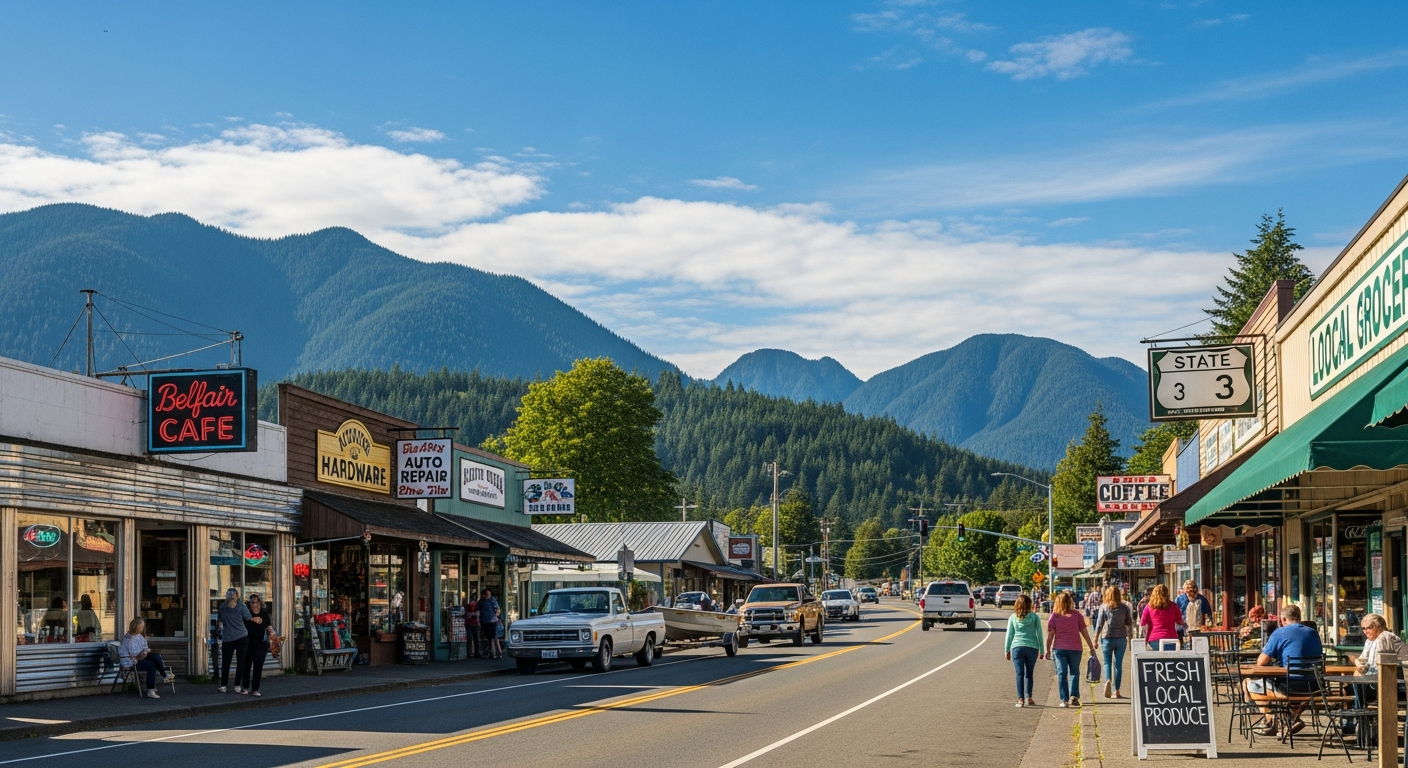
    PSNS is the single largest employment anchor in the Kitsap-Mason regional economy. What happens to that workforce is felt at the coffee shop on SR-3, at the hardware store in Belfair Town Center, at the real estate offices watching the Hood Canal waterfront market, and at North Mason High School where families make decisions about staying or leaving based on employment stability. Federal workforce cuts that skip PSNS are therefore not just good news for shipyard workers — they are good news for North Mason’s economic baseline.

    What the NDAA Protection Actually Is

    Section 1108 of the FY2026 National Defense Authorization Act, signed December 18, 2025, bars the use of federal funds for any hiring freeze, reduction-in-force, or hiring delay at America’s four public naval shipyards. Puget Sound Naval Shipyard & Intermediate Maintenance Facility is one of the four. The protection is an appropriations restriction — it cannot be overridden by executive order and runs through September 30, 2026.

    The broader DoD context: the Navy ordered all commands to model civilian workforce reductions of 10%, 15%, and 20% by a September 30, 2026 deadline. That modeling is underway at many naval installations. PSNS’s 14,000-plus-worker workforce is explicitly exempt from that process. Congress built the carve-out on the argument that the skilled tradespeople — welders, pipefitters, nuclear technicians — who maintain the Pacific Fleet’s submarines and carriers are not administrative overhead. They are irreplaceable capacity, and cutting them creates backlogs that take years to recover.

    Why 14,000 Stable Jobs Matter to Belfair Specifically

    PSNS & IMF is the largest public shipyard in the United States by workforce. Its employees commute from across Kitsap and Mason counties — and the SR-3 corridor from Belfair to Bremerton is one of the primary arteries for that commute. Mason Transit’s Route 3 was designed specifically for the Belfair-to-Bremerton shipyard worker flow, running six weekday trips from the Belfair Park & Ride on NE Log Yard Road to the Bremerton Ferry Terminal.

    This workforce — stable, well-compensated, union-represented trades — creates consumer demand that flows directly into North Mason’s retail and service economy. Grocery runs in Belfair. Lunch stops on SR-3. Home repair and improvement projects in Allyn and Tahuya. School enrollment and sports participation in the North Mason School District. When PSNS employment is stable, that baseline demand is stable. When it contracts — as it has in previous federal austerity cycles — North Mason feels it in small but compounding ways.

    The Housing Connection

    PSNS employment stability is also a factor in Belfair’s real estate picture. Workers who can afford to buy in a lower-cost market — which North Mason is, relative to Kitsap County — tend to look at Belfair, Allyn, and the Hood Canal waterfront. When federal employment uncertainty rises, that buyer pool pulls back. The FY2026 NDAA protection removes one source of uncertainty for a meaningful subset of North Mason’s potential homebuyers and current homeowners.

    For a more complete look at how PSNS employment intersects with Belfair’s housing market, see our earlier coverage on military families at PSNS and Belfair’s 2026 housing picture.

    The Apprenticeship as a North Mason Economic On-Ramp

    Section 1108 explicitly protects the PSNS apprenticeship pipeline. The program — operating since 1901, graduating roughly 200 workers per year, with academics through Olympic College — is one of the better skilled-trades career pathways available to North Mason residents. It is open to Mason County applicants, and the Belfair-to-Bremerton commute on Route 3 or SR-3 is viable for workers in that program.

    For a community where the question of where young people can build careers locally is always present, a protected and actively hiring skilled-trades apprenticeship within commuting distance of Belfair is a real answer to that question. Openings post at usajobs.gov.

    What to Watch After September 30, 2026

    The current protection runs through the end of FY2026. Renewal requires action in the FY2027 NDAA or through the Protecting Public Naval Shipyards Act as standalone legislation (S. 2648, introduced in the 119th Congress). From North Mason’s perspective, this is worth tracking — a large portion of our community’s economic baseline is tied to PSNS employment, and the stability that exists in FY2026 needs to be renewed for FY2027 through the same congressional process. For the full legislative picture, see: How NDAA Section 1108 Shields PSNS From the DoD Cuts Wave.

    Frequently Asked Questions: PSNS Stability and North Mason’s Economy

    How many people from Mason County work at PSNS?

    An exact Mason County-specific figure is not publicly reported by PSNS. However, Mason Transit’s Route 3 — the Belfair-to-Bremerton line running from the Belfair Park & Ride — was designed for the shipyard commute corridor, reflecting that a significant share of PSNS’s 14,000-plus workforce lives in Mason County communities including Belfair, Allyn, and Tahuya.

    Does PSNS protection mean the North Mason economy is immune to federal workforce changes?

    No. Section 1108 protects the PSNS skilled-trades workforce from hiring freezes and RIFs for FY2026. It does not protect other federal civilian positions held by North Mason residents (at Bangor, NAS Whidbey, or other installations), nor does it affect private-sector jobs that depend on federal contracting. The PSNS protection is a significant anchor, but it is not a full economic shield for the region.

    Is the North Mason housing market directly tied to PSNS employment?

    There is a meaningful indirect relationship. PSNS workers represent a buyer pool for North Mason real estate — Belfair offers lower price points than Silverdale or Bremerton, which makes it attractive to workers seeking homeownership. Federal workforce uncertainty tends to suppress that buyer pool; PSNS stability in FY2026 removes one source of uncertainty for prospective buyers in that category.

    Can North Mason residents apply for PSNS jobs without prior shipyard experience?

    Yes, through the PSNS & IMF apprenticeship program, which is open to applicants from Mason County and does not require prior shipyard experience. The program runs four years and graduates about 200 workers annually. Academic instruction is through Olympic College in Bremerton. Applications are posted at usajobs.gov when positions are open.

    What is the FY2026 timeline for the NDAA protection?

    FY2026 runs October 1, 2025 through September 30, 2026. Section 1108’s protection is in effect for that entire window. Renewal for FY2027 requires action in the FY2027 NDAA or passage of standalone legislation (S. 2648).

  • PSNS Workers From Belfair: Your FY2026 Job Protection Under Section 1108, Explained Trade by Trade

    PSNS Workers From Belfair: Your FY2026 Job Protection Under Section 1108, Explained Trade by Trade

    If you’re one of the workers who clocks in at Puget Sound Naval Shipyard every day after a drive down SR-3 or a hop on Mason Transit Route 3 from the Belfair Park & Ride — the last several months had an uncomfortable background noise to them. Federal workforce cuts. DOGE. Hiring freezes. The headlines applied to federal workers, and you are a federal worker.

    Here is what you need to know: your position at PSNS is protected by a specific provision of federal law that does not apply to most other federal civilian jobs. This is not a general reassurance — it is a named, trade-specific legal protection that was enacted in December 2025 and runs through September 30, 2026.

    Is Your Trade Specifically Named in the Law?

    Section 1108 of the FY2026 National Defense Authorization Act bars the use of federal funds for any hiring freeze, reduction-in-force, or hiring delay at America’s four public naval shipyards. PSNS & IMF in Bremerton is one of the four. And the law doesn’t just protect the shipyard generally — it names specific trades:

    • Welders
    • Pipefitters and shipfitters
    • Mechanics
    • Painters and blasters
    • Radiological technicians and engineers
    • Nuclear maintenance and refueling personnel
    • Apprentices in the PSNS workforce development pipeline
    • Infrastructure support workers under the Shipyard Infrastructure Optimization Program

    If your job title maps to any of the above, your position is explicitly covered by an appropriations restriction that Congress built into the FY2026 spending law. An executive order or agency directive cannot override it — Congress prohibited the use of funds for hiring freezes at these four shipyards, and that prohibition cannot be worked around.

    The Broader DoD Environment Your Coworkers at Other Installations Are In

    To understand why this matters, consider what your counterparts at non-shipyard naval installations are facing. The Navy issued instructions to all commands to model civilian workforce reductions of 10%, 15%, and 20% — due by September 30, 2026. That modeling is underway. For civilian workers at many naval facilities, the planning process is live.

    You are in a different legal category. PSNS is one of four facilities that Congress explicitly carved out. The argument Congress made was the one that matters most for our community: the welders, pipefitters, and nuclear technicians at PSNS do work that cannot be outsourced or deferred without degrading Pacific Fleet readiness. Protecting them was framed as a national security necessity, not a labor benefit.

    The Apprenticeship Pipeline Is Also Protected

    Section 1108 explicitly names apprentices as a protected category. This matters for the PSNS & IMF apprenticeship program — one of the oldest in the Pacific Northwest, operating since 1901 — which feeds roughly 200 new workers per year into the shipyard’s skilled-trades workforce. The academic component runs through Olympic College in Bremerton.

    If you have a family member or neighbor in North Mason who is considering the apprenticeship path into PSNS, the protection in FY2026 means the program is operating normally. Openings are listed at usajobs.gov. The commute from Belfair to Bremerton is workable — Mason Transit’s Route 3 runs six trips a day in each direction on weekdays from the Park & Ride on NE Log Yard Road.

    Your Commute — And the One Thing That’s Still a Variable

    The job protection is stable. The commute has its own issues this summer. SR-3 construction in the Gorst area is going to affect drive times during the peak window, and WSDOT’s current construction schedule means commuters relying on SR-3 should have a backup plan before the worst of it hits. We’ve covered the full routing picture in our earlier piece on what SR-3 construction means for your Belfair commute.

    If you haven’t looked at Mason Transit Route 3 or 3X as a backup for heavy-construction days, it’s worth a check. The Park & Ride on NE Log Yard Road is the starting point; schedules are at masontransit.org/route-3/.

    For the full legislative picture on NDAA Section 1108, including the FY2026 expiration date and what happens after September 30, see our deeper coverage: How NDAA Section 1108 Shields PSNS From the DoD Cuts Wave.

    Frequently Asked Questions for PSNS Workers From Belfair

    Does Section 1108 cover my supervisor position or only trade workers?

    Section 1108 names specific trades: welders, pipefitters, shipfitters, mechanics, painters, blasters, radiological technicians, nuclear maintenance personnel, and apprentices. It also covers Shipyard Infrastructure Optimization Program support roles. Administrative and management positions not directly tied to shipyard operations are not covered by the same explicit statutory language — those workers may be subject to broader DoD workforce planning.

    My job involves both shipyard work and administrative duties — am I protected?

    The protection applies to the named trade categories. If your primary classification is one of the protected trades, Section 1108 applies. For hybrid or ambiguous classifications, your human resources office at PSNS is the authoritative source on how the protection applies to your specific job series.

    The law expires September 30, 2026. What should I watch for?

    Watch the FY2027 NDAA process. The Protecting Public Naval Shipyards Act (S. 2648 in the 119th Congress) was introduced as standalone legislation that would make the protection permanent. If it does not pass as standalone law, the renewal will need to be included in the FY2027 defense authorization bill. Congressional action on this should be visible by summer 2026.

    Are Bangor Naval Base workers also protected under Section 1108?

    Section 1108 covers the four public naval shipyards specifically — PSNS & IMF, Portsmouth, Norfolk, and Pearl Harbor. Bangor Naval Base (Naval Base Kitsap-Bangor) is a separate installation and its civilian workforce is not covered by Section 1108’s shipyard-specific language. Bangor workers should consult their HR office for information on their workforce status under current DoD directives.

    Route 3 morning departures from Belfair — what are the times?

    Weekday morning departures from the Belfair Park & Ride (NE Log Yard Road): 5:25 a.m., 6:25 a.m., and 7:45 a.m. Additional mid-morning and afternoon trips run throughout the day. No weekend service. Full schedule: masontransit.org/route-3/. Route 3X provides express trips on select runs.

  • Boeing’s $3 Billion Free Cash Flow Math: A Complete 2026 Guide to How the Everett 737 North Line, Rate 47, and Q1 Results Connect

    Boeing’s $3 Billion Free Cash Flow Math: A Complete 2026 Guide to How the Everett 737 North Line, Rate 47, and Q1 Results Connect

    Quick answer: On Boeing’s April 22, 2026 Q1 earnings call, CEO Kelly Ortberg reaffirmed full-year free cash flow guidance of $1 billion to $3 billion and said the company is on track for the upper end of that range. Reaching the upper end depends on Boeing Commercial Airplanes ramping 737 production from a stabilized 42 per month today to 47 per month this summer, and ultimately to 52 per month — a rate Boeing has said publicly cannot be reached without activating the new 737 North Line in Everett. Q1 itself was a $1.5 billion free cash flow usage, in line with seasonal first-quarter patterns and ahead of Boeing’s own prior guidance.

    Why this matters specifically to Everett

    Most Boeing financial coverage skips the geography. The Q1 numbers are reported as a corporate aggregate — $22.2 billion in revenue, all three segments growing simultaneously, free cash flow recovery from the wiring rework. But the production math the company is committing to publicly only works if a specific factory in Snohomish County starts producing 737 MAX jets at a meaningful rate before the end of 2026.

    That factory is the 737 North Line, the second 737 final assembly line Boeing is standing up inside the Everett widebody factory — the same building that has historically built the 747, 767, 777, and 787. The North Line is not adding factory floor; it is repurposing capacity inside the existing building. And it is the structural piece that turns 47 jets per month (Renton’s current ceiling under the FAA cap, raising to 47 this summer) into 52 jets per month at the company level.

    The Q1 2026 numbers, in context

    According to Boeing’s April 22, 2026 first-quarter results release and the earnings call transcript:

    • Revenue: $22.2 billion, with growth across all three segments (Commercial Airplanes, Defense Space & Security, and Global Services).
    • Q1 free cash flow: A usage of approximately $1.5 billion, reflecting seasonal corporate expenditures and planned capital spending tied to growth investments at other Boeing sites. Ortberg called the cash result “notably better” than the company had communicated the prior month.
    • 737 deliveries momentum: 143 commercial deliveries in the quarter as 737 production ramps toward 47.
    • Full-year FCF guidance: Reaffirmed at $1 billion to $3 billion. CEO targets the upper end.

    The production rate ladder

    Boeing has been explicit on three rate steps:

    • 42 per month — today. Boeing Commercial Airplanes has been producing at this stabilized rate since the FAA-imposed cap that followed the January 2024 Alaska Airlines door plug incident.
    • 47 per month — this summer. Ortberg told analysts this rate moves up at Renton this summer.
    • 52 per month — enabled by Everett’s North Line. Boeing has said publicly that the move to 52 per month is enabled by activating the 737 North Line in Everett. The North Line will start later this year at a low initial rate to demonstrate conformity to the FAA under Boeing’s current production certificate, then ramp “when the entire production system is ready.”

    Translation: every dollar of incremental free cash flow above the $1 billion floor depends on rate progression. Every meaningful jump in the rate ladder above 47 per month depends on a building in Everett.

    How free cash flow actually gets generated on a 737

    The mechanism Boeing has explained on multiple earnings calls works roughly like this. A 737 takes cash to build — supplier payments, labor, components — starting roughly 12-18 months before delivery. Cash comes back at delivery, when the customer pays the bulk of the contract price. The company is also working through inventory of jets built during the prior production pause, which converts into cash as those jets are delivered without requiring new build expense.

    That is why production rate matters disproportionately for free cash flow rather than just revenue. Each additional jet delivered at a stable cost structure converts more directly to cash than the revenue line might suggest. The Everett North Line’s contribution to free cash flow shows up about 12-18 months after it produces its first jets at meaningful rate — which means the upper end of 2026 guidance is partially priced on Renton hitting 47 cleanly, while the second-half-2027 free cash flow run rate is what gets unlocked by Everett.

    Snohomish County’s stake in this number

    Boeing is the largest private employer in Snohomish County. The Everett factory is the largest building in the world by volume. Adding the 737 North Line to that footprint does not require a new building permit, but it does require staffing, training, supplier coordination, and what Boeing has called “production system readiness” across the wider Puget Sound aerospace ecosystem.

    The free cash flow target is the public-facing number that Wall Street tracks. The signal it sends to Everett is operational: ramp the North Line successfully and the city’s aerospace economy gets a structurally larger production base for the first time since the 787 program. Miss the ramp and the upper end of 2026 guidance slips, which puts pressure on capital spending and hiring decisions at every Boeing site — Everett included.

    What changes between now and the end of 2026

    Three milestones to watch from Everett’s vantage point. First, Renton hitting 47 per month this summer — the company has framed this as the precondition for the second-half cash inflection. Second, the North Line achieving its initial low-rate production demonstration to FAA standards under the existing production certificate. Third, the rate increase “when the entire production system is ready” — which is the language Ortberg used and is meaningfully softer than committing to 52 per month by a date.

    The Q2 earnings call in late July will be the next public update on whether Renton is at 47 yet and whether the North Line schedule still tracks to the year. That call is the next inflection point for the city’s most consequential employer.

    Frequently asked questions

    What is Boeing’s 2026 free cash flow guidance?

    Boeing reaffirmed full-year 2026 free cash flow guidance of $1 billion to $3 billion on its April 22 Q1 earnings call. CEO Kelly Ortberg said the company is on track for the upper end of that range.

    What was Boeing’s Q1 2026 free cash flow?

    A usage of approximately $1.5 billion, reflecting seasonal first-quarter patterns and capital spending. Ortberg said the cash result was “notably better” than the company had communicated the prior month.

    What is Boeing’s 737 production rate today?

    Stabilized at 42 per month, with a planned increase to 47 per month this summer at the Renton factory. The next step to 52 per month requires activating the new 737 North Line in Everett.

    When will the 737 North Line in Everett start producing?

    Boeing has said the North Line will start later in 2026 at a low initial rate to demonstrate conformity to the FAA under the current production certificate, with rate increases to follow when the production system is ready.

    How does the 737 North Line affect Boeing’s free cash flow?

    Free cash flow scales with delivery rate. The Renton ramp to 47 is what supports the upper end of 2026 guidance. The Everett North Line is what enables the next step to 52 per month and the structurally higher cash run rate that follows in 2027.

    Why is Boeing’s Everett factory important for the 737 program?

    The 737 North Line is being stood up inside the existing Everett widebody factory — the same building that has historically built the 747, 767, 777, and 787. It is repurposing existing factory capacity to add a second 737 final assembly line that the FAA-capped Renton site cannot itself accommodate.

    What’s the next public update on this?

    Boeing’s Q2 2026 earnings call in late July, which will provide the next public read on whether Renton is at 47 yet and whether the North Line schedule still tracks to the year.

    Related Exploring Everett coverage

  • For Everett Boeing Workers: What the Q1 2026 Free Cash Flow Number Actually Says About Your Job and the North Line Ramp

    For Everett Boeing Workers: What the Q1 2026 Free Cash Flow Number Actually Says About Your Job and the North Line Ramp

    If you work on the Boeing factory floor in Everett — whether that’s the 767/KC-46 line, the 777/777X line, the 787 returning legacy support work, or the new 737 North Line standing up inside the same building — the headline number from the April 22 Q1 earnings call is not the $22.2 billion in revenue. It is the $1 billion to $3 billion full-year free cash flow guidance, and CEO Kelly Ortberg’s statement that the company is on track for the upper end. That number is the financial language for what your factory floor is supposed to look like in the second half of 2026.

    Why the FCF number maps to your floor

    Free cash flow is what is left after Boeing pays its suppliers, its labor, its capital costs, and delivers airplanes that customers pay for. It scales with deliveries, not with hours billed or contracts signed. That means it scales directly with what you build. When Ortberg says “upper end,” he is pricing in three things that show up on the floor:

    • Renton getting from 42 to 47 per month this summer. The 737 program is currently producing at a stabilized 42 per month under the FAA cap that followed the January 2024 Alaska Airlines door plug incident. The summer step to 47 is what unlocks meaningful incremental cash inflection. If you have friends or family who work at Renton, this is the number to ask them about.
    • The Everett North Line achieving its initial low-rate production demonstration. The North Line is starting later this year at a deliberately low initial rate — the demonstration is to prove FAA conformity under Boeing’s current production certificate, not to put up volume. Volume comes later. But the demonstration is the gate.
    • Inventory of jets built during the prior pause converting into cash at delivery. Some of the cash you’ll see show up on the FCF number doesn’t require building new airframes — it requires getting completed airframes through customer acceptance and delivery, which is partly a Renton story but also a question of how clean the supply chain is.

    What this means for the North Line standing up inside your building

    Boeing has framed the 737 North Line in Everett as the structural piece that takes commercial production from 47 per month to 52 per month — a rate Renton cannot reach on its own. The phrasing the company has used is that the North Line will start at a low initial rate, then increase “when the entire production system is ready.”

    For the worker reading the Q1 release, three practical things are inside that phrase. First, the initial production-system demonstration is not a volume play — it is a paperwork-and-conformity play. Tooling, build packages, training records, and FAA inspectors all have to align before rate climbs. Second, the rate increase that comes after is what creates the staffing run-up and overtime patterns you’ll see in the second half of the year. Third, the timing is deliberately not committed to a date — the company is reserving the right to slow the ramp if any part of the production system is not ready, and the FCF guidance assumes a measured rather than aggressive climb.

    How the wiring rework story factors in

    The Q1 cash result was a usage of about $1.5 billion, but Ortberg called it “notably better” than the company had communicated the prior month — specifically citing recovery from a 737 wiring issue and favorable collections timing late in the quarter. The wiring rework is something Everett workers should already know in detail: it touched 25 jets that had to be reworked, and the Everett North Line scheduling held through it. That is the kind of operational story that does not always make the financial press but does make it into the quarterly cash number.

    What to watch through July’s Q2 call

    The next public update is the Q2 2026 earnings call in late July. From the floor, three signals matter most:

    • Whether Renton is at 47 by the end of June. The summer step has been telegraphed for months. If it slips, the upper end of 2026 guidance is harder to defend.
    • Whether the North Line has started. The first jet through final assembly on the Everett line is a date Boeing has not committed to publicly, but Q2 results will give the first detailed read on whether the schedule still tracks to the year.
    • Whether full-year guidance is reaffirmed. If the $1B-$3B range is left intact and Ortberg still says “upper end,” the second-half ramp on your floor is consistent with what the company is telling Wall Street.

    What you can do with this number

    For most line workers, the practical use of knowing the FCF guidance is to read shift schedule changes, overtime announcements, and contractor activity through the lens of what the company has publicly committed to. If overtime patterns drop while the company is still telling Wall Street it’s on track for the upper end of guidance, something is misaligned and worth asking your steward about. If you see significant new contractor presence in your area of the building, it is consistent with the North Line ramp.

    And the longer-term frame: every job posting Boeing puts up at Everett between now and Q3 is partly priced against the same $1B-$3B number. The hiring rate, the contractor mix, and the training pipeline are all functions of that financial commitment. The Q2 call in late July is when you’ll know whether the second half is being built to the plan you’re hearing about now.

    Frequently asked questions for Boeing Everett workers

    How does Boeing’s free cash flow guidance affect my job at Everett?

    Free cash flow scales with deliveries, which scales with production rate. The 2026 guidance commits Boeing to a delivery ramp the Everett North Line is structurally part of. Hiring, overtime, and contractor presence at Everett are all priced against that commitment.

    When does the Everett 737 North Line start producing?

    Boeing has said “later this year at a low initial rate.” The first jets through Everett final assembly will be a demonstration of FAA conformity rather than a volume push. Rate increases follow when the production system is ready.

    Will the North Line affect non-737 work in the Everett building?

    The North Line is being stood up inside the same widebody factory that hosts the 767/KC-46, 777/777X, and 787 support work. Boeing has not said publicly that any of that work moves out as a result. The factory is the largest building in the world by volume, and the North Line is repurposing capacity rather than displacing other lines.

    What does “production system ready” mean in practice?

    Tooling installed and qualified, build packages cleared, training records in place, suppliers ramped to support a higher rate, and FAA conformity demonstrated. Any one of those can be a constraint. Boeing is reserving the right to hold the rate if any constraint isn’t cleared.

    What’s the next milestone Boeing has committed to publicly?

    Renton ramping to 47 per month this summer. The Q2 2026 earnings call in late July is when the company will publicly confirm whether that step is taken and whether the North Line schedule still tracks to the year.

    Related Exploring Everett coverage for aerospace workers

  • For Navy Families at NAVSTA Everett: What the FF(X) Contract Means for the Homeport, Your PCS Plans, and Life at the Base

    For Navy Families at NAVSTA Everett: What the FF(X) Contract Means for the Homeport, Your PCS Plans, and Life at the Base

    If you’re stationed at Naval Station Everett, have orders inbound, or are weighing a PCS to the Pacific Northwest, the April 28 FF(X) frigate contract is news that matters to the base’s long-term footprint — and therefore to yours. Here is what the contract means in practical terms for the NAVSTA Everett community, what the homeport competition looks like from here, and what you can and cannot plan around right now.

    What the Contract Actually Does — and Doesn’t Do

    The Navy awarded HII’s Ingalls Shipbuilding in Pascagoula, Mississippi, a $282.9 million lead yard support contract on April 28, 2026. This contract authorizes Ingalls to begin cutting and shaping raw steel for the main structural foundation of the first FF(X) frigate, secure key materials, and finalize design details. It does not designate a homeport. It does not assign ships to Everett. It means the program is real and construction has started.

    The homeport decision — where the ships will be based once they’re commissioned — is a separate Navy determination that goes through the Environmental Impact Statement process, force structure reviews, and installation capacity assessments. That process has not begun, or if it has, it has not been made public as of April 2026.

    What NAVSTA Everett Lost and What It’s Fighting to Win Back

    In 2021, the Navy formally designated Naval Station Everett as the homeport for the initial 12 Constellation-class frigates. For the Everett community, that was a major commitment — more sailors, more families, more housing demand, more spending at local schools and businesses. The Economic Alliance Snohomish County estimated the frigate designation would add significantly to NAVSTA Everett’s existing $340 million annual economic footprint.

    When former Navy Secretary Phelan cancelled the Constellation program in 2025, that designation evaporated. Everett was back to competing. The December 2025 announcement of the FF(X) program reset the competition — same arguments, new ship program, new timeline.

    Snohomish County officials, the Everett delegation, and Rep. Rick Larsen’s office have been actively lobbying for a new homeport designation for the FF(X). The case for Everett is strong: existing frigate pier infrastructure, an established Navy community with the full support infrastructure already in place, and a Pacific Fleet posture that prioritizes the Indo-Pacific theater where Puget Sound is a primary hub.

    The Timeline That Matters for Planning

    The first FF(X) is targeted for delivery to the Navy by June 2030. Homeport decisions typically come well before commissioning — sailors need orders, families need to plan schools and housing, and installations need to prepare. A realistic window for a homeport announcement, if Everett is selected, is sometime between 2027 and 2029.

    That’s a long horizon for planning purposes. What it means practically: if you’re making a 2-3 year PCS decision today, the FF(X) homeport outcome will likely still be unknown when you arrive, serve your tour, and potentially rotate out. It should not drive your short-term planning.

    What should drive your planning: NAVSTA Everett is already a strong duty station with solid infrastructure. The ongoing Southern Seas deployment of USS Gridley — covered in earlier reporting on this site — is a reminder that the base is active and operationally relevant regardless of the frigate outcome. The earlier complete guide on FF(X) and PCS decisions covers the longer-term picture in detail.

    Housing and Schools: The Current Picture

    NAVSTA Everett’s housing market has been covered extensively on this site. The short version for incoming families: Snohomish County’s housing market is competitive, with median home prices in Everett running significantly below Seattle-side King County. The 2026 PCS housing guide for Navy families at NAVSTA Everett covers neighborhoods, school districts, and what the recent market shift means for buyers and renters. See the NAVSTA Everett PCS Housing Guide for 2026.

    The Bottom Line for NAVSTA Families

    The April 28 contract is the best news NAVSTA Everett’s homeport advocates have had since the Constellation cancellation. It proves the FF(X) program is real. It starts the clock toward a ship that will need a homeport. And it gives Everett’s congressional delegation and community advocates a concrete program to lobby around rather than a concept announcement.

    For families already at the base: nothing changes day-to-day. For families considering a PCS to Everett: the base’s trajectory is positive, and the FF(X) homeport — while not guaranteed — is a legitimate possibility that would grow the installation over the next decade.

    The full strategic picture is in the complete FF(X) contract guide for the Everett community.

    Frequently Asked Questions

    Does the FF(X) contract mean NAVSTA Everett will definitely get the frigates?
    No. The contract activates construction at Ingalls. The homeport decision is separate and has not been made.

    What happened to the Constellation-class frigates that were going to Everett?
    The Constellation program was cancelled in 2025. NAVSTA Everett’s 2021 homeport designation for 12 Constellation frigates became void. The FF(X) is a new program and the homeport competition restarts.

    If NAVSTA Everett wins the FF(X) homeport, how many more sailors would be based here?
    A frigate crew numbers around 200 sailors. Multiple frigates would bring several hundred additional personnel and dependents. No specific number has been announced.

    Should I factor the FF(X) homeport bid into my PCS decision to Everett?
    No. The homeport is not confirmed and the first ship doesn’t deliver until June 2030. Base your PCS decision on current orders and NAVSTA Everett’s existing, already-strong infrastructure.

    How does USS Gridley’s current deployment relate to FF(X)?
    USS Gridley is a destroyer currently on Southern Seas 2026. FF(X) is a separate new construction program — not a reassignment of existing ships.

    Where can I find more about NAVSTA Everett as a duty station?
    cnic.navy.mil/regions/cnrnw/installations/navsta_everett.html is the official source. Exploring Everett has PCS housing, VA claims, and military family resource guides linked throughout this article.

  • Belfair Small Business Owners: What the PUD Electrical Upgrade and New Fire Station Mean for the SR-3 Corridor

    Belfair Small Business Owners: What the PUD Electrical Upgrade and New Fire Station Mean for the SR-3 Corridor

    If you run a business in Belfair or are considering locating to the SR-3 corridor, two of the three major infrastructure projects underway in North Mason right now speak directly to your situation — one removes the single biggest constraint on commercial growth that Mason EDC has been fighting for years, and the other changes emergency response for every business and employee in the area.

    The Electrical Constraint Is Finally Being Solved

    Ask anyone at Mason EDC what’s been blocking commercial recruitment to Belfair’s Urban Growth Area, and they’ll tell you the same thing: power. Limited electrical capacity at the Belfair substation meant PUD 3 couldn’t reliably say yes to businesses with significant power requirements. That’s not a minor operational detail — it’s the reason companies evaluating the SR-3 corridor for light industrial or commercial operations walked away.

    Mason County PUD No. 3’s Belfair Electrical Capacity Infrastructure Project is directly fixing that. The project’s two components are both in motion:

    • The Belfair substation’s 1967-era transformer was replaced with a modern, higher-capacity unit — placed in July 2025, energized in October 2025. It’s running now.
    • A new switching station at the former Belfair Warehouse site is upgrading PUD 3’s connection to BPA’s transmission lines — expanding the total power available to the Belfair UGA.

    Total investment: over $5.5 million — $3 million federal (secured by Rep. Derek Kilmer), $1.5 million ARPA funds through Mason County, $1 million in state funds from 35th District legislators. That’s a public investment in North Mason’s commercial infrastructure specifically designed to make your business address more competitive.

    For existing businesses on the SR-3 corridor, this means more reliable power and headroom for growth. For businesses considering the area: the “we can’t provide the power” conversation is ending.

    The New Fire Station and What It Means for Your Business

    North Mason Regional Fire Authority’s new $9 million headquarters at 490 NE Old Belfair Highway is on track for a September 2026 opening. For a small business owner, the direct relevance is response time and insurance.

    The new station’s eight-vehicle bay and resident on-call capacity (up to ten firefighters on-site) represent a meaningful upgrade from the current headquarters. Faster response times and greater apparatus capacity affect Insurance Services Office (ISO) ratings, which directly influence commercial property insurance premiums in the area.

    Additionally, the existing station building is slated to be leased to Mason County for the north precinct of the Mason County Sheriff’s Office — meaning a law enforcement presence co-located on the same Old Belfair Highway site. For a commercial district, that’s a safety anchor that matters.

    The Bigger Business Picture in Belfair

    The North Mason Chamber helped connect local employers including Hood Canal Communications with North Mason High School students at a College and Career Fair on April 23. Grocery Outlet Belfair — the independent operator store at 23960 NE SR-3 — is now six months in and keeping grocery dollars local. The Chamber’s Business After Hours series continues at northmasonchamber.com.

    For the full development picture, read the Belfair infrastructure overview and the April 29 Business Pulse. For context on the SR-3 corridor’s traffic future, see the Belfair Bypass and SR-3 commuter guide.

    Frequently Asked Questions for Belfair Small Business Owners

    Does the PUD 3 electrical upgrade affect existing businesses on SR-3?

    Yes. The upgraded Belfair substation transformer (energized October 2025) and new switching station increase total electrical capacity for the Belfair Urban Growth Area. Existing businesses benefit from improved grid reliability; businesses that previously couldn’t get adequate power commitments from PUD 3 may now be able to.

    Will the new North Mason fire station affect commercial insurance rates?

    Improved fire station capacity and response times affect ISO Public Protection Classifications, which insurers use to set commercial property premiums. The new eight-bay headquarters with resident firefighters represents a material upgrade in North Mason RFA’s capabilities — businesses should check with their commercial insurance carriers after the station opens in September 2026.

    Is there space for new commercial tenants on the Belfair SR-3 corridor?

    The Belfair Urban Growth Area has available commercial and light industrial capacity. With the electrical constraint being resolved and the Belfair Bypass eventually reshaping traffic flow on SR-3, this is an active development area. Contact Mason EDC for site availability and recruitment support.

  • How Mason County Businesses Are Using Public-Private Tools to Grow: Lessons From the Port of Shelton and CERB

    How Mason County Businesses Are Using Public-Private Tools to Grow: Lessons From the Port of Shelton and CERB

    When Olympic Mountain Ice Cream outgrew its Skokomish Valley production facility, the company didn’t move out of Mason County. It moved to the Port of Shelton — four times the floor space, a loading dock, reliable power, and a location off Highway 101 that solved the flooding and outage risks that had periodically interrupted production. The move was funded in part by a $1.75 million low-interest loan through the Washington State Community Economic Revitalization Board. That combination — Port infrastructure plus state economic development capital — is available to other Mason County businesses, not just ice cream manufacturers.

    What the Port of Shelton Offers Local Businesses

    The Port of Shelton is a public port authority serving Mason County’s industrial and commercial development needs. Located off U.S. Highway 101 near Shelton’s industrial corridor, the Port owns and manages industrial warehouse space, commercial properties, and development parcels that it makes available for lease or partnership arrangements with businesses looking to expand, relocate, or establish operations in the county.

    Olympic Mountain Ice Cream’s new home is an 11,500-square-foot Port-owned warehouse at 130 W. Corporate Drive, renovated specifically for food production and retail operations under a formal Port Commission resolution approving the CERB partnership. The Port doesn’t simply provide space — it can act as the applicant and co-investor in public funding mechanisms, as it did here by taking on the CERB application on behalf of the ice cream company.

    For Mason County businesses in manufacturing, food production, light industrial, or distribution operations that have outgrown their current space, the Port of Shelton is worth a direct conversation. The Port can be reached through the Port Commission office or through the Shelton-Mason County Chamber of Commerce.

    How the CERB Loan Works

    The Community Economic Revitalization Board (CERB) is a Washington State program administered through the Department of Commerce. It provides low-interest loans and grants to support economic development projects in communities across the state — primarily infrastructure, facility improvements, and expansions that create or retain jobs.

    CERB funding is typically applied for by a public entity (in this case the Port of Shelton) on behalf of or in partnership with a private business. The $1.75 million award for the Olympic Mountain Ice Cream project was approved by the Port Commission by formal resolution, with a private investment commitment of at least $1 million from the company and a projected job creation of 17 permanent positions over five years.

    CERB loans are not grants — they are structured as low-interest loans to the public applicant, which then passes the terms to the private partner. The interest rates and repayment terms are significantly more favorable than conventional commercial financing, particularly for capital-intensive projects like facility construction or major equipment installation.

    For Mason County business owners considering expansion projects in the $500,000–$5 million range, CERB is a mechanism worth understanding. Washington State’s Department of Commerce publishes the application requirements and funding cycles; the Shelton-Mason County Chamber and the Port of Shelton can both provide guidance on whether a given project may qualify.

    The Business Succession Pattern Worth Watching

    The spring 2026 business news also included a smaller but equally instructive story: the sale of T’s Café & Espresso to Shelton City Council member Eric Onisko, who reopened it as Tollie’s Café on April 1 without closing a single day of service, retaining all three employees, and keeping much of the menu intact. The only thing that changed substantially was the name — and the name reached for local history rather than corporate branding.

    For Mason County’s small-business owners thinking about succession or exit, the Tollie’s Café model is useful. The seller (Theresa Landsiedel) ran T’s Café for six years; the buyer invested in community character rather than reinvention; the staff retained continuity and employment. That kind of transfer — a going concern passed intact rather than liquidated — is how small-town business ecosystems stay healthy. It also suggests there is a market in Mason County for well-run small businesses with established customer bases and good locations.

    The Bigger Picture: Mason County’s Business Infrastructure

    Both of this spring’s business stories point to the same underlying condition: Mason County has functional public-private infrastructure for business development that is often underutilized by the businesses it’s designed to serve. The Port of Shelton, CERB, the Chamber of Commerce, and county economic development resources don’t require you to be a large company to access. The Olympic Mountain Ice Cream expansion shows what’s possible when a local producer uses those tools deliberately — and the Tollie’s Café transition shows that smaller-scale successions are happening too.

    The county’s next major business calendar event is the 2026 Expo & Bite of Mason County, scheduled for Friday, July 17 on Railroad Avenue in Shelton — a good venue for connections across the local business community.

    Frequently Asked Questions — Mason County Business Expansion Tools

    What is the CERB program and how does it help Mason County businesses?

    CERB — the Community Economic Revitalization Board — is a Washington State program providing low-interest loans and grants for economic development projects. Mason County businesses typically access CERB through a partnership with a public entity like the Port of Shelton, which acts as the applicant. Olympic Mountain Ice Cream’s $1.75 million CERB loan, approved through the Port, is a recent example.

    What kind of space does the Port of Shelton have available?

    The Port of Shelton manages industrial and commercial properties in Shelton’s industrial corridor off Highway 101. Olympic Mountain Ice Cream’s new facility is an 11,500-square-foot warehouse at 130 W. Corporate Drive. Contact the Port Commission directly or through the Chamber of Commerce for current availability and lease terms.

    How many jobs is Olympic Mountain Ice Cream expected to create?

    The Olympic Mountain Ice Cream expansion at the Port of Shelton is projected to add 17 permanent jobs over five years, based on CERB application projections. Private investment in the project is at least $1 million in addition to the $1.75 million CERB loan.

    Is the Port of Shelton only for manufacturing businesses?

    The Port primarily focuses on industrial, manufacturing, and commercial development — the types of businesses that benefit from loading docks, warehouse space, and Highway 101 access. Retail and service businesses typically operate in downtown Shelton or other commercial corridors rather than the Port’s industrial area, though mixed-use development (like OMIC’s production + retail format) can work at Port-owned sites.

    Where can Mason County small businesses get help with expansion planning?

    The Shelton-Mason County Chamber of Commerce is a good first contact. The Port of Shelton Commission can discuss facility availability. Washington State’s Department of Commerce administers CERB and other economic development programs with published application guidance. The Mason County Economic Development Council also tracks business development resources.

    For the full spring 2026 business story, see New Ownership, New Digs: Mason County Businesses Make Spring Moves. For the earlier deep-dive on the CERB loan, see What Is CERB? How Washington State’s Economic Development Loan Program Helped Bring Olympic Mountain Ice Cream to the Port of Shelton. For the jobs angle, see Mason County Jobs and Employers: Economic Guide.

  • New Ownership, New Digs: Mason County Businesses Make Spring Moves

    New Ownership, New Digs: Mason County Businesses Make Spring Moves

    Two signs of a growing Mason County business scene emerged this spring: a downtown Shelton café changing hands under a new owner who wants to honor the town’s logging roots, and one of the county’s most beloved local brands preparing a major move to a facility four times the size of its current home. From a coffee counter named for a retired logging locomotive to an ice cream company backed by a state economic revitalization loan, the week’s business news points toward steady, locally rooted growth across the county.

    Tollie’s Café Carries Shelton’s Logging Legacy Forward

    The small café at 118 S. 3rd St. in downtown Shelton has a new name, a new owner, and a familiar heart. On April 1, Tollie’s Café opened its doors under the ownership of Eric Onisko, a Shelton City Council member who purchased the space from Theresa Landsiedel after she operated T’s Café & Espresso there for six years.

    Onisko kept the same three employees and much of the same menu — fresh pastries, handcrafted sandwiches, and Batdorf & Bronson coffee drinks — but he reached back into Shelton’s history for the name. Nearly across the street from the café sits the locomotive nicknamed “Tollie,” a retired engine of the Simpson Logging Company that once hauled timber through the county’s forests. The locomotive has long been one of downtown Shelton’s most photographed landmarks, a piece of industrial history frozen in place on a street that has seen generations of change.

    Tollie’s Café is open Monday through Friday from 7 a.m. to 3 p.m. and Saturday from 9 a.m. to 3 p.m. It joins a cluster of businesses that have recently reinvigorated that stretch of downtown, including Shelton Candy Shoppe, Mestizos Latin Food, and the Wilde Irish Pub — all of which opened on the 400 block of West Railroad Avenue in recent months.

    The transition reflects a pattern worth watching in Mason County’s small-business landscape: established spots changing hands rather than closing, with incoming owners choosing to invest in community character rather than reinvent from scratch. Onisko’s decision to retain staff and menu while rebranding around a piece of Shelton heritage suggests a philosophy that serves the neighborhood well. For residents from Belfair, Hoodsport, Union, and across the county who pass through Shelton for appointments, errands, or events, Tollie’s Café is exactly the kind of stop worth building into the routine.

    For more information, stop by the café at 118 S. 3rd St. in downtown Shelton during open hours.

    Olympic Mountain Ice Cream Eyes Major Growth at Port of Shelton

    One of Mason County’s most recognized local brands is on the verge of a major expansion. Olympic Mountain Ice Cream, which has produced its small-batch artisan flavors in the Skokomish Valley for years, is preparing a move to a new production and retail facility at the Port of Shelton — a building four times the size of its current operation.

    The new home is an 11,500-square-foot Port-owned warehouse at 130 W. Corporate Drive in Shelton, renovated to serve as Olympic Mountain Ice Cream’s expanded base. The project secured a $1.75 million low-interest loan through the Washington State Community Economic Revitalization Board (CERB), approved by the Port of Shelton Commission by formal resolution. Private investment in the project reaches a minimum of $1 million, and the company expects to add 17 permanent jobs over the next five years — a meaningful addition to Mason County’s employment base.

    The business case is clear. The Skokomish Valley location, while scenic, sits in territory prone to flooding and power outages that periodically interrupt production — operational risks that the Port of Shelton site eliminates entirely. The move also opens the door to scaling production, reaching new wholesale accounts, and operating a proper retail storefront for customers who want to buy directly.

    For Mason County residents who know Olympic Mountain Ice Cream from grocery shelves in Shelton, Belfair, and beyond, or from farmers markets and local restaurants that feature its products, the expansion means more of those flavors, produced more reliably, right here at home. The brand uses local dairy and Pacific Northwest ingredients, and its presence on store shelves from Matlock to Grapeview is a point of quiet county pride.

    The Port of Shelton, located off U.S. Highway 101 near Shelton’s industrial corridor, has been an active incubator for Mason County manufacturers and producers seeking room to grow. Olympic Mountain Ice Cream’s expansion adds another anchor to that corridor. The new facility was targeted for completion by spring 2026, with the retail storefront accessible at 130 W. Corporate Drive, Shelton, once fully operational. For product locations and updates, visit olympicmountainicecream.com.

    What to Watch This Spring

    Both of this week’s business stories share an underlying theme: Mason County institutions adapting, not just surviving. Tollie’s Café is a downtown fixture passing through ownership with its community connections intact. Olympic Mountain Ice Cream is a homegrown manufacturer using public-private partnership tools — state CERB funding, Port infrastructure — to break past the physical limitations holding it back.

    The county’s next major business calendar event is the 2026 Expo & Bite of Mason County, scheduled for Friday, July 17 on Railroad Avenue in Shelton — the largest business and restaurant event in Mason County, drawing vendors and visitors from across the region.

    Frequently Asked Questions

    Where is Tollie’s Café located?

    Tollie’s Café is at 118 S. 3rd St. in downtown Shelton. It is open Monday through Friday 7 a.m.–3 p.m. and Saturday 9 a.m.–3 p.m. The café was formerly known as T’s Café & Espresso and changed ownership on April 1, 2026.

    Why is the café named Tollie’s?

    The name honors the “Tollie” locomotive, a retired Simpson Logging Company engine displayed near the café in downtown Shelton. New owner Eric Onisko chose the name to connect the business to Shelton’s timber heritage.

    When will Olympic Mountain Ice Cream open its new Port of Shelton facility?

    The new 11,500-square-foot facility at 130 W. Corporate Drive, Shelton was targeted for completion in spring 2026. The expansion was funded in part by a $1.75 million CERB loan approved by the Port of Shelton Commission.

    How many jobs will the Olympic Mountain Ice Cream expansion create?

    The expansion is projected to add 17 permanent jobs over the next five years, based on CERB application projections submitted to the Port of Shelton Commission.

    What is the CERB loan program?

    The Community Economic Revitalization Board (CERB) is a Washington State program that provides low-interest loans to support economic development projects in communities across the state. The Port of Shelton applied on behalf of Olympic Mountain Ice Cream for the $1.75 million award.

    Related coverage: New to Mason County? See A New Resident’s Guide to Downtown Shelton Businesses. For business owners interested in expansion tools, see How Mason County Businesses Are Using Port of Shelton and CERB Funding.