Belfair - Tygart Media

Category: Belfair

Hyper-local coverage of Belfair, Washington — the North Mason community, PSNS commuter life, Hood Canal access, and neighborhood news.

  • Everett City Council Unanimously Adopts NR-MHC Zone: Seven Manufactured Home Parks Now Permanently Protected

    Everett City Council Unanimously Adopts NR-MHC Zone: Seven Manufactured Home Parks Now Permanently Protected

    Q: What did the Everett City Council just vote on?
    A: On May 7, 2026, the council unanimously adopted an ordinance creating the NR-MHC (Neighborhood Residential – Manufactured Housing Community) zone, permanently protecting seven named manufactured home parks from redevelopment for other uses.

    Seven manufactured home parks in Everett can’t be redeveloped for other uses under a new zoning ordinance the City Council unanimously adopted on May 7, 2026.

    The ordinance establishes a new land use zone called Neighborhood Residential – Manufactured Housing Community (NR-MHC) and immediately rezones seven named parks to that classification. It also repeals Title 17 of the Everett Municipal Code, a section of zoning law the city described as defunct and no longer administered.

    Mayor Cassie Franklin issued a statement following the vote: “Thank you to the Council for approving this important action to preserve an affordable housing option in Everett. Manufactured home parks provide one of the most affordable home ownership options. Potential redevelopment of these properties and rising rents are threats to the homeowners’ tenure. Residents don’t own the land under their homes and pay rent. It may not be possible to find a new site for their home if their current location is no longer an option due to redevelopment. This new ordinance offers new protections for the homeowners, preserving this housing option into the future.”

    The Seven Parks Now Under NR-MHC Protection

    The ordinance rezones these communities to NR-MHC effective upon adoption:

    1. Creekside Mobile Home Park — 5810 Fleming St.
    2. Fairway Estates Mobile Home Park — 1427 100th St.
    3. Lago De Plata Villa — 620 112th St.
    4. Loganberry Mobile Home Park — 9931 18th Ave. W
    5. Mobile Country Club — 1415 84th St.
    6. Silver Shores Senior Mobile Home Park — 11622 Silver Lake Road
    7. Westridge Mobile Home Park — 7701 Hardeson Rd.

    What the New Zone Actually Allows — and Doesn’t

    The NR-MHC zone limits land use to the continuation of a manufactured housing community. That means each property must keep operating as a manufactured home park under normal circumstances.

    The single exception: if circumstances beyond the control of the property owner change in a way that results in no reasonable economic use of the property, the owner could seek a different use. That’s a high bar — it’s not a backdoor to redevelopment based on rising land values or more profitable zoning alternatives.

    Permitted uses within NR-MHC include replacement or modification of manufactured homes or tiny homes, and accessory structures including community rooms and laundry facilities. The zone does not allow conversion to apartments, retail, commercial development, or other uses typical in residential or mixed-use zoning.

    Why This Matters for Manufactured Home Residents

    People who own a manufactured home typically own the home itself but not the land it sits on. They rent a pad — the lot — from the park owner. If a park is sold for redevelopment, residents often can’t simply move their homes. Relocation is typically cost-prohibitive, and many older manufactured homes can’t survive a move at all.

    That dynamic has displaced manufactured home communities in high-growth cities throughout the Puget Sound region over the past decade. The NR-MHC zone is Everett’s mechanism for preventing that outcome in the seven parks it covers.

    The ordinance implements two goals from Everett’s Comprehensive Plan: HO-10, which directs the city to protect existing affordable housing stock, and HO-19, which specifically addresses manufactured housing community preservation.

    What the Title 17 Repeal Means

    The ordinance also repeals Title 17 of the Everett Municipal Code. City staff described Title 17 as a section of zoning law that has not been actively used or administered in recent years and is considered defunct. The repeal is housekeeping — removing dormant code language — rather than a substantive change in how anything currently works.

    Context: Where This Fits in Everett’s Housing Picture

    Everett’s planning commission and city council worked on the NR-MHC ordinance as part of the city’s broader housing affordability effort. A public hearing was held May 6 at 6:30 PM in City Council Chambers at 3002 Wetmore Ave. The council voted unanimously to adopt the ordinance the following day, May 7.

    The vote comes as the city navigates a projected $14 million general fund deficit heading into the 2027 budget cycle and considers several revenue-side options including the utility tax increase currently working through council readings. The NR-MHC ordinance doesn’t cost the city anything to implement — the protection comes through the zoning map, not city expenditure.

    Snohomish County approved $23 million in housing funding across six projects on April 24, including three in Everett — a signal that housing preservation and production is a coordinated regional priority.

    What To Do Next

    If you live in one of the seven parks: The ordinance is now in effect. Your park cannot be rezoned for other uses without extraordinary circumstances that must be demonstrated to the city. If you receive any notice from your park owner about redevelopment or sale, contact the City of Everett Planning Division at 425-257-8731 or visit everettwa.gov.

    To review the ordinance: The ordinance and associated documents, including the rezoning map (Exhibit A) and staff memo, are available through the City of Everett Agenda Center at everettwa.gov/agendacenter under the May 7, 2026 City Council meeting materials.

    To stay current with Everett zoning changes: Sign up for news flash notifications at everettwa.gov to receive city announcements directly.

    Frequently Asked Questions

    Does this ordinance cap my rent?

    No. The NR-MHC zone controls what the land can be used for, not what a park owner can charge for pad rental. Rent is governed by lease terms and Washington landlord-tenant law — not this ordinance.

    Can the park owner sell the property?

    Yes. The NR-MHC zone follows the property, not the owner. If a park is sold, the new owner takes ownership of a parcel zoned NR-MHC and cannot redevelop it for other uses except under the narrow economic-use exception.

    What was Title 17 EMC?

    Title 17 was an older section of Everett’s zoning code that had not been actively used for some time. Its repeal is cleanup — removing defunct language — not a change to any active regulations.

    Are there other manufactured home parks in Everett not covered by this ordinance?

    The ordinance covers the seven parks identified in Exhibit A of the staff memo. The city did not publicly identify additional parks as being under active redevelopment threat. Parks not on the list are governed by their existing zoning designation.

    Where can I read the full ordinance?

    Visit everettwa.gov/agendacenter and search the May 7, 2026 City Council meeting materials. All ordinance exhibits are available as public documents.

  • Port Angeles to Lake Crescent and the Elwha: Two Olympic Peninsula Classics Worth Your Spring Weekend

    Port Angeles to Lake Crescent and the Elwha: Two Olympic Peninsula Classics Worth Your Spring Weekend

    There’s a stretch of US Highway 101 west of Port Angeles that I consider one of the finest drives in the Pacific Northwest — maybe the country. Within twenty minutes of leaving downtown, the highway curves along the southern shore of Lake Crescent, and the views just don’t quit. This spring, two of the Olympic Peninsula’s most iconic natural destinations are ready for visitors, and they pair beautifully into a single unforgettable day: the Marymere Falls Trail at Lake Crescent, and the Elwha River Valley, where one of the most remarkable ecological restoration stories in American history is playing out in real time.

    Marymere Falls and the Magic of Lake Crescent

    Lake Crescent is the kind of place that makes you understand why Olympic National Park exists. The lake sits at the base of Pyramid Mountain and Storm King, deep and cold and impossibly clear. The water has a blue-green quality that shifts with the light and the weather — on overcast spring mornings it goes almost silver, and on sunny afternoons it turns the color of glacial ice. The lake is one of the deepest in Washington State, and because of that depth and its unique chemistry, it’s home to two subspecies of trout — the Beardslee and the Crescenti — found nowhere else on the planet.

    The Marymere Falls Trail begins at the Storm King Ranger Station area, where the highway touches the lake’s eastern shore. The hike is 1.8 miles round trip, classified as easy to moderate, and leads through a dense cathedral of old-growth Douglas fir, western red cedar, and big-leaf maple. The understory in May is lush and green, with ferns and oxalis covering the forest floor. In spring, the falls carry full snowmelt volume and are genuinely spectacular — the creek drops about 90 feet over a basalt cliff into a mossy grotto that stays cool even on the warmest afternoons.

    This is a popular trail on weekends, and parking at the Storm King area fills up quickly — especially on sunny days. Arriving by 9:30 in the morning is the best strategy. If you want true solitude, a weekday visit is hard to beat. Bring layered clothing no matter the forecast; the old-growth canopy can be surprisingly cool, and weather on the peninsula changes quickly. The trail has some rooty and rocky sections but is manageable for most hikers, including families with older children. There are no fees beyond the standard Olympic National Park entry pass.

    The Elwha River: Watching Nature Write Its Own Comeback Story

    About eight miles east of Lake Crescent, Olympic Hot Springs Road branches north off Highway 101 and winds into the Elwha River Valley — and this is where things get extraordinary. The Elwha Dam and the Glines Canyon Dam were both removed between 2011 and 2014, making it the largest dam removal project in US history at the time. More than a century of blocked fish passage opened back up almost overnight. The results have exceeded what many scientists predicted.

    Chinook, coho, pink, and sockeye salmon — along with steelhead trout — are now moving farther up the Elwha watershed than they have since the early 1900s. In spring the river is running clear and fast with snowmelt, and the salmon runs are active. You may see fish from the trail or the riverbanks, particularly in shallower sections near Madison Falls.

    Madison Falls is the perfect entry point for anyone who isn’t up for a long hike. The parking area is right off Olympic Hot Springs Road, and the falls are a 100-yard walk on a paved, ADA-accessible path — making this genuinely one of the easiest waterfall visits in any national park. The falls drop into a mossy canyon and are beautiful year-round, but spring snowmelt makes them roar. From the Madison Falls parking area, the Elwha River Trail continues north into the valley, and you can walk as far as you like before turning back.

    The riverbanks and former reservoir beds are visibly regenerating. Willows and cottonwoods are reclaiming the sediment flats, native grasses are spreading across what were once lake bottoms, and the whole valley has a quality of wild, active recovery that’s unlike anything else on the peninsula. For families, this combination — a short easy waterfall walk plus a flexible river trail — is essentially perfect. There’s no technical terrain, no serious elevation gain, and wildlife sightings including birds, Roosevelt elk, and salmon are genuinely common in the spring months.

    Plan Your Visit

    Both destinations are managed by Olympic National Park, and an NPS entry pass is required for both. For current road and facility conditions, call the Olympic National Park information line at 360-565-3131 or check nps.gov/olym before heading out. The Storm King Ranger Station at Lake Crescent is open seasonally; staff there can provide current trail conditions and recommendations.

    Getting there: From Port Angeles, take US-101 west. The Storm King trailhead for Marymere Falls is approximately 20 miles from downtown Port Angeles on the south shore of Lake Crescent. For the Elwha, turn north onto Olympic Hot Springs Road from US-101 approximately 8 miles west of Port Angeles — Madison Falls parking is about 2 miles up the road.

    These two stops make a natural half-day or full-day loop. Start with the Elwha and Madison Falls in the morning when parking is easy, then drive out to Lake Crescent for the Marymere Falls hike and a lakeside lunch. Either way, you’ll leave with a much better sense of what makes this corner of the Olympic Peninsula worth every mile of the drive.

  • Belfair Commute Briefing — Friday, May 8, 2026

    Ferry Update

    The Bremerton-Seattle route is running on schedule this Friday morning with no cancellations reported. Riders aboard M/V Chimacum should note that the vessel’s #1 elevator is currently out of service; the second elevator and wide staircases remain accessible. At Colman Dock (Seattle), elevators 1 and 2 remain out of service — Alaskan Way elevator #4 and the Pier 50 elevator are both available. ADA-dependent travelers should notify the ticket seller if you need car-deck elevator access.

    SR-3 / Gorst

    No daytime impacts on SR-3 between Belfair and Gorst this morning. The fish barrier removal project near Sunnyslope Road SW continues with nighttime-only work hours — the AM commute is clear. The major 16-day around-the-clock closure of SR-3 (scheduled for late spring/early summer 2026) has not yet started. No other WSDOT alerts are active for this corridor today.

    PSNS / Bangor Gates

    No public gate alerts or security posture changes reported for Puget Sound Naval Shipyard or Naval Base Kitsap-Bangor. Trident Gate operates 24 hours; Trigger Gate hours are Monday–Friday 5:00 AM–7:30 PM. Normal access procedures in effect.

    Hood Canal Bridge — Heads Up Starting May 11

    New this week: SR 104 Hood Canal Bridge will begin overnight full closures (both directions, 10 PM to 5 AM) starting the evening of Monday, May 11, continuing through the morning of Thursday, May 28 (no closure Memorial Day). Contractor crews will replace shock absorbers on the bridge during those nights. No impact on today’s AM commute, but commuters who use the Hood Canal Bridge for late-evening or early-morning travel should plan alternate routes starting next week.

    Weather

    Cloudy through mid-morning in the Belfair/North Mason area, then gradual clearing. High near 65°F. Southwest winds 6–10 mph. No weather advisories or warnings in effect for Mason or Kitsap counties. Visibility is 10 miles as of 4:56 AM at Bremerton National Airport.

    Fuel Prices

    Belfair area fuel remains stable. Safeway is around $4.99/gal, with other stations ranging to $5.59/gal — still below the Washington state average of $5.76/gal.


    Briefing compiled 5:08 AM PDT, Friday, May 8, 2026. Safe travels, North Mason.

  • Lady Bulldogs Walk Off Bainbridge, Punch District Ticket — Bulldogs Sports Roundup, Week of May 8, 2026

    Spring playoff season is arriving in Belfair. North Mason’s Lady Bulldogs delivered the signature moment of the week on Friday, May 8 — a walk-off 6-5 win over Bainbridge Island to close out their home slate and punch their ticket to the postseason.

    Softball: Walk-Off Win Sends Lady Bulldogs to Districts

    The Lady Bulldogs ended their regular season on the best possible note, walking off at home with a 6-5 victory over Bainbridge Island on Friday afternoon in Belfair. The win capped a strong late-season push for North Mason, who entered the week at 10-7 (5-5 Olympic League) after sweeping Sequim and topping Bremerton in late April.

    North Mason will now compete in the 2A District 2/3 tournament at the Regional Athletic Complex in Lacey. Tournament brackets and game times will be posted on the WIAA website as seeding is finalized. The Lady Bulldogs are in the mix and playing their best ball of the season heading into the postseason.

    Baseball: Regular Season in the Books

    The Bulldogs baseball squad wrapped up their regular season schedule this week with three final contests. North Mason traveled to Bremerton to face Olympic on Tuesday, May 5, hosted Olympic again at home on Wednesday, May 6, and welcomed Klahowya for a non-conference game Thursday, May 7. The Bulldogs entered the week at 7-7 (4-6 Olympic League). District tournament seeding and bracket details will follow through the WIAA 2A District 2/3 portal.

    Track & Field: Riding League Momentum Into Districts

    Coming off a banner showing at the 2A Olympic League Championships — where Adrianna Tupolo won the discus, Adrianne Tupolo took the long jump, and Samantha Neil claimed the pole vault — the Bulldogs track program turns its attention toward district-level competition. The squad also placed 8th out of 30 girls teams at the 66th Shelton Invitational. Watch the North Mason athletics schedule for upcoming district qualifying dates.

    Across the Bridge

    A couple of Highclimbers programs wrapped up this week. The Shelton baseball team honored their seniors in style with an 8-0 shutout of Black Hills on May 5 at Highclimber Field, but saw their season end with a 2-1 loss to Mark Morris in the 2A District IV tournament on May 8. The Shelton boys soccer team closed their home schedule on senior night with a 1-0 win over Black Hills on May 6 before their season came to a close as well. Congratulations to all the Highclimbers seniors on strong careers.

    Looking Ahead

    The biggest date on the calendar: the Lady Bulldogs head to districts next week at the Regional Athletic Complex in Lacey. Baseball district brackets are also imminent. Over at Ridge Motorsports Park in Shelton, Track Night in America returns on May 19 — and the marquee MotoAmerica Superbikes event is set for June 26-28.


    Related Coverage from the Belfair Bugle

  • New to North Mason? Tahuya State Forest Is 3.5 Miles From Belfair — Here’s Your Spring 2026 Access Guide

    New to North Mason? Tahuya State Forest Is 3.5 Miles From Belfair — Here’s Your Spring 2026 Access Guide

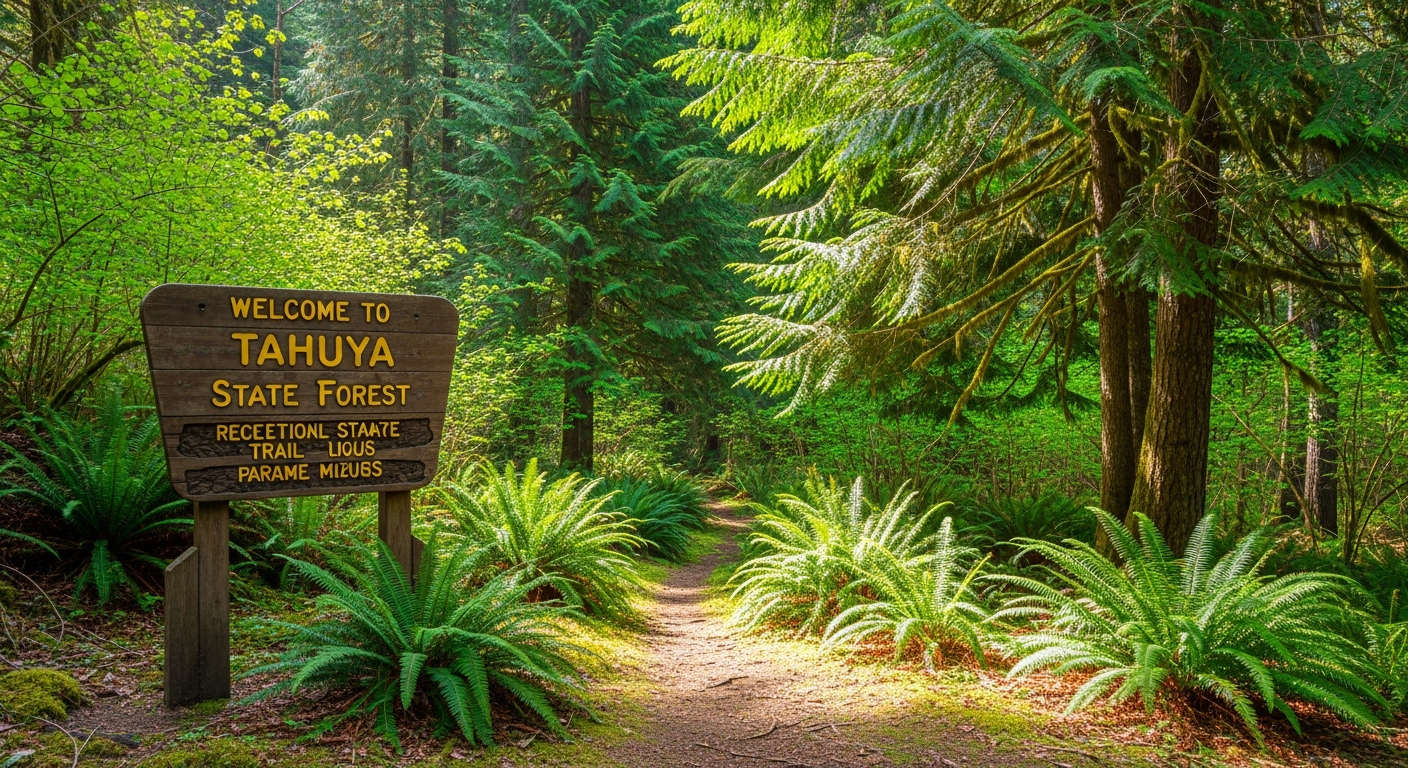
    One of the things that takes new North Mason residents by surprise: you have 23,000 acres of public forest practically in your backyard. Tahuya State Forest starts about 3.5 miles west of Belfair on SR-300, and it’s the kind of year-round recreational resource that people in larger metro areas would drive two hours for. North Mason residents often make it there in under fifteen minutes.

    The 2026 season is open — gates run April 15 through October 31. But a few things are worth knowing before your first trip, because Tahuya isn’t a conventional park and doesn’t operate like one.

    This Is a Working Forest, Not a Preserve

    Washington’s Department of Natural Resources manages Tahuya State Forest specifically to generate revenue for the state’s K-12 school trust lands — which means active timber harvesting is part of how this land is supposed to work. That has a direct effect on recreation: when logging operations are active in a section of the forest, trails in that zone get temporarily closed. This isn’t unusual, and it isn’t a sign of mismanagement. It’s the model.

    Right now in spring 2026, three active timber sales — Trail Mix, Little Wrangler, and School — are affecting portions of the trail network including Randy’s H2O Stop, Mission Creek, the 1.9 Mile trail, Hoof & Tail, and the Tahuya River Trail. The Howell Lake Loop Trail is also closed due to a washed-out bridge, with no repair timeline announced by DNR.

    What this means for your first visit: check conditions before you go, every time. Trails that are closed this week may be open next month as logging shifts to another section. The DNR page at dnr.wa.gov/GreenMountainTahuya is the authoritative source, and the DNR phone line at (360) 825-1631 is often more current for active timber operations.

    Where to Start: Elfendahl Pass Staging Area

    For your first visit, Elfendahl Pass is the right entry point. It’s the main trailhead hub — approximately 50 vehicle spaces with pull-through room for trailers, and access to the bulk of the open trail network.

    To get there from Belfair: SR-300 west 3.5 miles → right on Belfair-Tahuya Road for 1.9 miles → right on Elfendahl Pass Road for 2.3 miles. The March 2025 DNR trail map (available at dnr.wa.gov/GreenMountainTahuya) shows what’s accessible from Elfendahl Pass and how the system divides between motorized and non-motorized zones.

    Who Uses Tahuya and How

    The trail system is multi-use with designated routes for different activities. ATVs, dirt bikes, and 4×4 vehicles have designated motorized routes. Mountain bikers and hikers use shared and dedicated non-motorized trails. This is one of the more heavily used ATV and off-road recreation areas in the Puget Sound region — the two communities share the system well when everyone knows their designated zone. Bring the DNR trail map, especially on your first visit.

    Tahuya and the Broader North Mason Environment

    If you want to understand Tahuya in the context of the broader watershed, the Tahuya River flows from the heart of the state forest down to Hood Canal. The Belfair Bugle covered the recent expansion of the Tahuya River Preserve — a separate conservation effort that has assembled 190 acres of protected land along the lower river, focused on salmon habitat restoration: Tahuya River Preserve Reaches 190 Acres.

    For the full spring 2026 trail access picture, see: Know Before You Go: Spring Trail Closures at Tahuya State Forest.

    Frequently Asked Questions: Tahuya State Forest for New North Mason Residents

    Is Tahuya State Forest free to access?

    There is no day-use fee for the trail system. A valid Washington State Discover Pass is required to park at DNR recreation sites — check dnr.wa.gov/GreenMountainTahuya for specific parking requirements at different areas within the forest.

    Can I camp at Tahuya State Forest?

    Yes. The forest has several primitive campgrounds accessible from the trail system. Sites are typically first-come, first-served with basic amenities. Contact DNR at (360) 825-1631 or check dnr.wa.gov/GreenMountainTahuya for current campground status and locations.

    Is Tahuya State Forest different from Belfair State Park?

    Yes. Belfair State Park is a Washington State Parks-managed facility on Hood Canal with camping, a beach, and 3,720 feet of shoreline. Tahuya State Forest is a DNR-managed working forest several miles inland with an extensive multi-use trail network. They’re different facilities, different agencies, and serve different recreational needs. Both are accessible from Belfair.

    What’s a good first hike at Tahuya State Forest for new residents?

    Start at Elfendahl Pass Staging Area and pick a non-motorized designated route from the current DNR trail map. Given the active timber closures this spring, checking the map the day of your trip is the right first step. The DNR trail map at dnr.wa.gov/GreenMountainTahuya shows what’s currently open from each staging area.

    How long does it take to get to Tahuya State Forest from Belfair?

    The Elfendahl Pass Staging Area is approximately 8 miles from downtown Belfair via SR-300 and Belfair-Tahuya Road — typically 15-20 minutes by car depending on conditions. The forest is one of North Mason’s most accessible natural assets.

  • North Mason Families: Which Tahuya State Forest Trails Are Actually Open This Spring?

    North Mason Families: Which Tahuya State Forest Trails Are Actually Open This Spring?

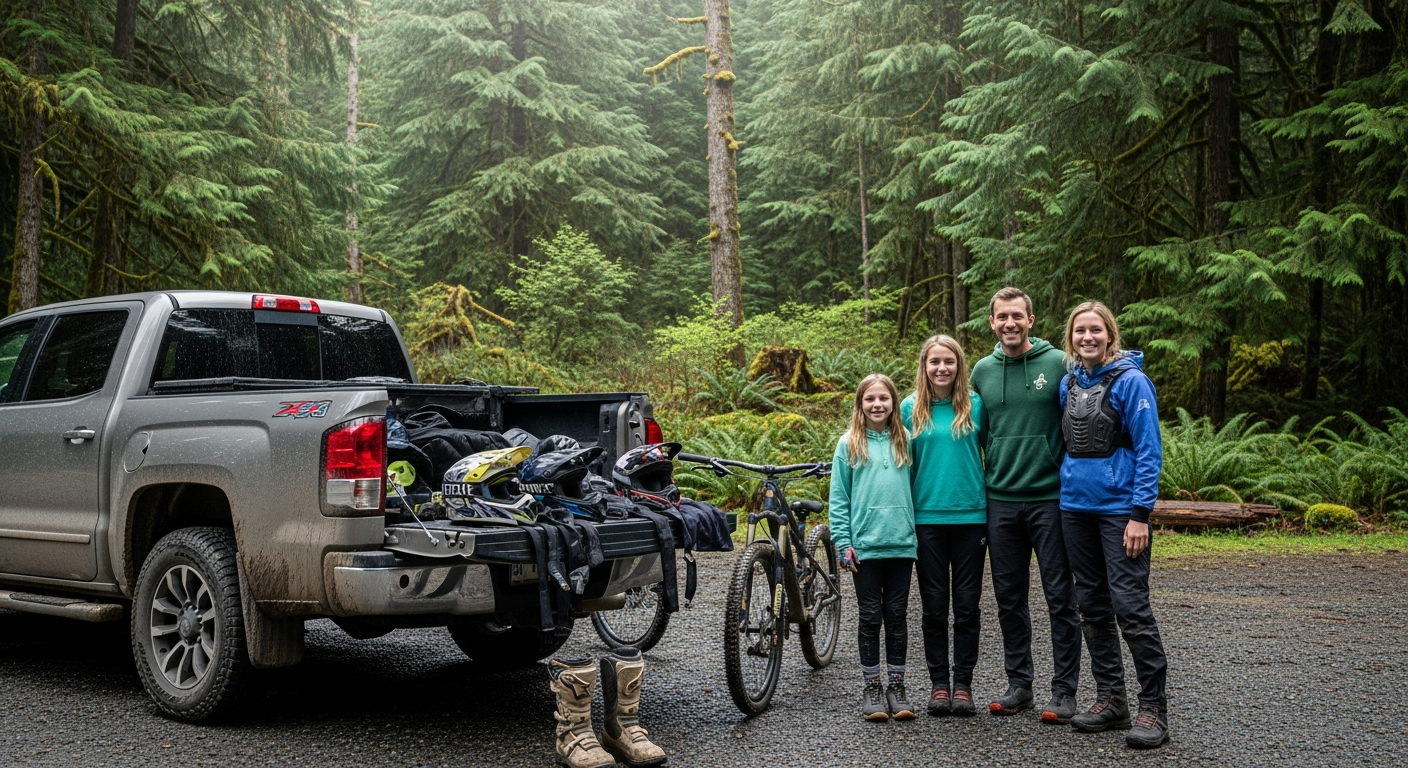
    If you’re loading the truck for a Tahuya weekend — mountain bikes, ATVs, kids who’ve been waiting all winter — the 2026 season is open. Gates are running April 15 through October 31, and Elfendahl Pass is set up to handle you. What it’s not set up to do is guarantee every trail on your mental list is accessible. Two distinct closure situations are affecting the network right now, and knowing them before you leave Belfair saves the Saturday.

    The Howell Lake Situation

    The Howell Lake Loop Trail is closed. A bridge washed out and DNR hasn’t set a repair timeline. If Howell Lake is on your family’s plan specifically — for fishing, swimming, or a picnic with easy lake access — the lake and day-use area are still open for non-motorized activity year-round. Your family can get to the water. You just can’t do the full loop trail until the bridge is fixed. Before committing to Howell Lake specifically, call DNR at (360) 825-1631 to get current status.

    Active Logging Is Blocking Several Trails

    Three timber sales currently operating in Tahuya — Trail Mix, Little Wrangler, and School — are causing temporary closures on Randy’s H2O Stop, Mission Creek, the 1.9 Mile trail, Hoof & Tail, and the Tahuya River Trail. If any of those are on your ride list, check current status before heading out.

    The key thing to understand about timber sale closures: they move. As logging operations shift from section to section, some trails reopen while others close. A trail that was shut last weekend may be running this weekend. This is why checking dnr.wa.gov/GreenMountainTahuya before every trip matters more at Tahuya than at a conventional park — conditions here aren’t static.

    What’s Definitely Running: Elfendahl Pass

    The Elfendahl Pass Staging Area is open and handling traffic well. It’s the best entry point for families — approximately 50 vehicle spaces with room to pull through with a trailer. From Belfair: SR-300 west 3.5 miles → right on Belfair-Tahuya Road 1.9 miles → right on Elfendahl Pass Road 2.3 miles. The majority of Tahuya’s trail network is accessible from there, divided between motorized and non-motorized designated routes.

    Before You Head Out

    • DNR page: dnr.wa.gov/GreenMountainTahuya — current closure alerts and the March 2025 trail map
    • Phone: (360) 825-1631 — often more current than the website for active timber operations

    For the full spring access picture, see our complete Tahuya spring 2026 trail guide. If you’re planning a broader Hood Canal family day, the North Mason families summer planning guide covers Belfair State Park, shellfish, and what to build around this season.

    Frequently Asked Questions: Tahuya State Forest for North Mason Families

    Can kids use Tahuya State Forest trails safely?

    Yes. Tahuya has both motorized and non-motorized designated trail zones. Non-motorized routes for hikers and mountain bikers are appropriate for families on foot or with bikes. Motorized routes handle ATVs and dirt bikes on separate designated trails. Check the DNR trail map to stay in the correct zone for your activity.

    Can we still go to Howell Lake with young children?

    Yes — the lake and day-use area remain open year-round for non-motorized activity. Fishing access, the picnic area, and the water are still accessible. The loop trail around the lake is closed due to the bridge washout, but getting to the lake itself is not affected.

    Is Elfendahl Pass suitable for families with trailers?

    Yes. The staging area accommodates approximately 50 vehicles with trailer pull-through space for rigs hauling ATVs, bikes, or boats. It’s the primary staging area for both motorized and non-motorized trail access.

    How much of the Tahuya trail network is currently accessible this spring?

    The majority of Tahuya’s trail system is open in spring 2026. Current closures affect the Howell Lake Loop Trail (bridge washout) and portions of several trails under active timber operations. Elfendahl Pass and its connected trail network remain available. Check dnr.wa.gov/GreenMountainTahuya for the current closure map before your trip.

  • Tahuya State Forest Spring 2026: Trail Access Guide for North Mason Families, Riders, and Hikers

    Tahuya State Forest Spring 2026: Trail Access Guide for North Mason Families, Riders, and Hikers

    Tahuya State Forest sits 3.5 miles west of Belfair on SR-300, and on any given spring weekend you’ll find North Mason families loading ATVs, mountain bikes, and hiking boots at the Elfendahl Pass Staging Area. It’s one of the most-used backyards this community has — 23,000 acres of DNR-managed working forest with a multi-use trail system that draws riders, hikers, and families from across Mason and Kitsap counties.

    The 2026 season opened April 15 and runs through October 31. Most of the trail network is accessible. But several sections are currently closed, and knowing which ones before you drive out could save a frustrating Saturday.

    The Howell Lake Bridge Is Out

    The biggest single closure this spring is the Howell Lake Loop Trail, which is shut down due to a washed-out bridge. DNR has not announced a repair timeline. The lake and day-use area themselves remain accessible for non-motorized use year-round — if you’re heading out for fishing, a picnic, or a family swim day, you can still get to Howell Lake. But the loop trail that circuits the lake is impassable until bridge repairs are completed. Before planning around it specifically, a call to the DNR South Puget Sound Region office at (360) 825-1631 is worth the two minutes.

    Three Timber Sales Are Affecting Multiple Trails

    Active logging operations across three DNR timber sales — known as Trail Mix, Little Wrangler, and School — are causing temporary closures and access disruptions across a section of the trail network. Trails currently affected include Randy’s H2O Stop, Mission Creek, the 1.9 Mile trail, Hoof & Tail, and the Tahuya River Trail.

    This is normal for Tahuya. DNR manages these 23,000 acres as working forest to generate trust land revenue for Washington public schools, and timber sales rotate through different sections over time. What that means practically: the closure footprint shifts week to week as operations move. A trail blocked this weekend may be clear in a few weeks, and new sections can become active as well. Check before you go, every time.

    What’s Open and Accessible: Elfendahl Pass

    Despite the active closures, the majority of Tahuya’s trail system remains open this spring. The Elfendahl Pass Staging Area — the main trailhead hub for the forest — is open for the 2026 season with space for approximately 50 vehicles, including trailer pull-through capacity for rigs hauling ATVs or trailers.

    Getting there from Belfair: take SR-300 west 3.5 miles → right on Belfair-Tahuya Road for 1.9 miles → right on Elfendahl Pass Road for 2.3 miles. The staging area is the entry point for the bulk of the open trail network.

    The Tahuya trail system is multi-use, meaning you’ll find both motorized (ATVs, dirt bikes, 4×4) and non-motorized (mountain bikes, hikers) users sharing the system on different designated routes. Know your designated zone before you ride or hike — the March 2025 DNR trail map at dnr.wa.gov/GreenMountainTahuya breaks this out clearly.

    How to Check Before You Go

    Trail conditions in Tahuya can shift quickly as logging operations relocate and spring weather affects access. The best practice is to verify current status every time:

    • Official DNR page: dnr.wa.gov/GreenMountainTahuya — current closure alerts, trail map updates, and campground information
    • Phone: (360) 825-1631 — DNR South Puget Sound Region office (often more current than the website for active timber operations)

    The Bigger Picture: Tahuya as Working Forest

    The closures and disruptions are worth understanding in context. Tahuya State Forest is not a dedicated recreation preserve — it’s a working forest where timber production and recreation coexist. DNR manages it specifically to generate revenue for Washington’s K-12 school trust lands, which means active logging is part of how the forest is supposed to function. Temporary trail closures are a predictable feature of that model, not an anomaly.

    For the North Mason community, that also means the forest’s recreational value is protected long-term by the same management structure that makes parts of it temporarily inaccessible. The trail network exists because DNR sees recreational access as compatible with its working forest mission.

    For a broader look at environmental stewardship in the Tahuya watershed, see the Belfair Bugle’s coverage of the Tahuya River Preserve’s 190-acre expansion and salmon restoration work. And if you’re planning a full day out that includes Hood Canal, our Hood Canal summer 2026 planning guide has the verified information for crab, shellfish, and camping.

    Frequently Asked Questions: Tahuya State Forest Spring 2026

    Can I still access Howell Lake if the loop trail is closed?

    Yes. Howell Lake and its day-use area remain accessible for non-motorized recreation year-round. The closure applies specifically to the Howell Lake Loop Trail due to a washed-out bridge. The lake itself, fishing access, and the picnic area are open. Contact DNR at (360) 825-1631 for current access details.

    What is the 2026 season for Tahuya State Forest?

    DNR gates at Tahuya are open from April 15 through October 31, 2026. Some areas including Howell Lake are accessible year-round for non-motorized use regardless of the gate season. Motorized access generally follows the gated season.

    Where do I park for Tahuya State Forest trails?

    The main staging area is Elfendahl Pass, which handles approximately 50 vehicles with trailer pull-through capacity. From Belfair: SR-300 west 3.5 miles → right on Belfair-Tahuya Road 1.9 miles → right on Elfendahl Pass Road 2.3 miles. A second staging area is located at Mission Creek.

    Are the timber sale trail closures at Tahuya permanent?

    No. Active timber sale closures are temporary — they shift as logging operations move through different sections of the forest. A trail closed today may reopen in a few weeks. Check dnr.wa.gov/GreenMountainTahuya for current closure status before any trip.

    Is Tahuya State Forest open to both motorized and non-motorized users?

    Yes. The trail system is multi-use, with designated routes for motorized users (ATVs, dirt bikes, 4×4) and non-motorized users (hikers, mountain bikers). The DNR trail map shows the designated zones for each user type.

  • Belfair Sewer Study and PUD 3 Cloquallum Fiber: What Mason County Business Owners Need to Know

    Belfair Sewer Study and PUD 3 Cloquallum Fiber: What Mason County Business Owners Need to Know

    Two infrastructure developments unfolding in Mason County this month carry direct implications for businesses operating in or considering the county — one with a deadline in 23 days, the other shaping Belfair’s long-term commercial capacity for years to come.

    Rural Businesses on Cloquallum Road: The May 31 Fiber Window

    For any business operating along the Cloquallum Road corridor in north Mason County — whether a home-based operation, agricultural business, or service provider — PUD 3’s construction application deadline is a genuine business decision, not just a household convenience.

    Mason County PUD No. 3 completed the Cloquallum Communities Fiberhood mainline on February 10, 2026, making gigabit fiber available to more than 680 properties along Wivell Road, Loertscher Road, and the Cloquallum Road Fiberhood. The $250 construction application fee is waived through May 31, 2026. After that date, businesses pay full price. Gigabit speeds on the PUD 3 open-access network mean 1,000/1,000 Mbps symmetrical — roughly 667 times faster than the existing 1.5 Mbps legacy service in the corridor.

    For businesses that rely on cloud software, conduct video consultations, process remote transactions, or manage any operations requiring consistent upload bandwidth — the kind of work that’s become standard across agriculture-tech, real estate, professional services, and home-based enterprises — this is the connectivity infrastructure that makes those activities viable from a Mason County rural address. Apply at pud3.org before May 31 to avoid the $250 fee.

    Belfair Sewer: What the Bremerton MOU Means for the Puget Sound Industrial Center

    The revised memorandum of understanding Mason County commissioners signed with the City of Bremerton in February 2026 is directly relevant to any business at or near the Puget Sound Industrial Center in north Belfair — and to any investor or developer watching the commercial corridor between Belfair and the Kitsap-Mason county line.

    The MOU contemplates extending Belfair sewer service to the PSIC. The revised agreement requires Bremerton to pay Mason County’s share of a comprehensive feasibility study before any work begins. That study must cover preliminary engineering and a full financial evaluation — capital, operational, and long-term cost implications for Mason County ratepayers. If Bremerton pays, the study runs 180 days. Commissioners then have 90 days to decide whether extending service is in the county’s best interest.

    For businesses at the PSIC or nearby, the practical implication is this: sewer capacity expansion into that corridor is a multi-year process at best, and it is contingent on a commissioner decision that explicitly weighs ratepayer fairness. The timeline is not 12 months. A more realistic planning horizon, assuming the study begins soon, puts any potential expansion decision into late 2026 or 2027 — and that assumes commissioner approval, which is not guaranteed given the public opposition the original MOU faced.

    Why Mason County Businesses Should Track This

    Sewer availability is a hard constraint on certain categories of commercial development. Industrial operations, food processing, healthcare facilities, and high-density commercial uses all require confirmed wastewater capacity before permitting can proceed. The Belfair WWRF’s documented structural issues — a suspected sinkhole flagged by the Department of Ecology in 2016 that has not been fully remediated — add a layer of uncertainty that makes “wait for the study” the only honest answer to capacity questions for now.

    The Squaxin Island Tribe consultation required under the MOU also means tribal government input is a formal part of the process. The Belfair WWRF sits within the tribe’s usual and accustomed fishing area, and the Coulter Creek salmon habitat implications of expansion will be part of any tribal review. That process adds time and is not a formality.

    For business owners who want to follow the process: the Belfair Sewer Advisory Committee is the primary public venue, alongside Mason County commissioner sessions. For context on Mason County’s broader infrastructure investment picture, see the full infrastructure update and Mason County Business Owner’s Guide to PUD 3 Fiber.

    Frequently Asked Questions

    Can a business in the Puget Sound Industrial Center connect to Belfair sewer today?

    Current Belfair sewer service is limited by existing capacity and the WWRF’s documented structural concern. Expansion to the Puget Sound Industrial Center is under study — no decision has been made. Businesses considering PSIC locations should factor multi-year uncertainty on sewer availability into their planning and consult Mason County Public Works directly about current connection eligibility at specific addresses.

    How does PUD 3 gigabit fiber benefit rural Mason County businesses specifically?

    Gigabit fiber provides 1,000 Mbps symmetrical connectivity — enabling cloud-based operations, video conferencing, remote point-of-sale, agricultural IoT sensors, and high-bandwidth data uploads that are not viable on 1.5 Mbps legacy service. For businesses operating from rural Mason County addresses, it removes connectivity as a limiting factor for most commercial applications. Apply before May 31 at pud3.org to avoid the $250 construction application fee.

    When might Belfair sewer expansion to the PSIC actually be decided?

    If Bremerton initiates payment for the feasibility study promptly, the 180-day study period runs through roughly late 2026. Mason County commissioners then have 90 days to decide — putting a final decision at earliest in early-to-mid 2027. That timeline assumes no delays, no appeal processes, and a positive commissioner vote. Businesses should plan for this as a 2027-or-later development at the earliest.

    Is there a Mason County resource for tracking Belfair sewer developments?

    Yes. The Belfair Sewer Advisory Committee publishes meeting agendas, minutes, and project updates at masoncountywa.gov/ac/belfair-sewer/. Mason County commissioner public meeting agendas are posted at masoncountywa.gov. These are the two primary venues where Belfair sewer decisions will be made and documented.

  • What the Bremerton Sewer Deal Means for Belfair Homeowners and Ratepayers

    What the Bremerton Sewer Deal Means for Belfair Homeowners and Ratepayers

    If you’re a property owner in or near Belfair — or if you’re currently connected to the Belfair sewer system — the revised memorandum of understanding Mason County commissioners signed with the City of Bremerton in February 2026 is worth understanding. Nothing has been decided yet. But the direction of this agreement, and the structural questions it carries, will shape what Belfair’s wastewater infrastructure looks like for the next generation of ratepayers.

    What the Revised MOU Actually Changes

    The original MOU between Mason County and Bremerton contemplated potential sewer service to the Puget Sound Industrial Center, a business corridor in north Belfair. That agreement drew vocal opposition from Belfair residents and sewer customers who argued that extending capacity to serve Bremerton’s industrial interests — while existing infrastructure issues remain unresolved — was not in their interest as ratepayers.

    The revised version signed in February 2026 addresses that concern directly: Bremerton must now pay Mason County’s full share of a comprehensive feasibility study before any work begins. Both parties have agreed to a study that includes preliminary engineering and a financial evaluation of all capital, operational, and long-term costs. If Bremerton initiates payment, the study must be completed within 180 days. Mason County commissioners then have 90 days to determine whether proceeding is in the best interest of county ratepayers. If commissioners decide it’s not, the expansion does not move forward regardless of the study’s findings.

    The Structural Issue That Hasn’t Gone Away

    The Belfair Wastewater Reclamation Facility carries a documented structural concern — a suspected sinkhole first flagged by the Washington State Department of Ecology in 2016 — that Mason County has not fully remediated. That means any conversation about expanding sewer capacity to serve new customers is happening against a backdrop of unresolved infrastructure risk at the existing facility.

    For current Belfair sewer customers, this raises a straightforward question: should the system take on additional customers and operational complexity before its own structural vulnerabilities are addressed? The feasibility study is supposed to answer the financial dimension of that question. The structural dimension is tracked separately through the county’s ongoing relationship with the Department of Ecology.

    Tribal Consultation and Coulter Creek

    The Belfair WWRF sits within the usual and accustomed fishing area of the Squaxin Island Tribe. Any expansion of the facility has potential implications for salmon habitat in Coulter Creek, which drains into the headwaters of Hood Canal near Belfair. The revised MOU requires Mason County to consult with Squaxin Island Tribe representatives before making any final decision on sewer expansion. For property owners near Coulter Creek or with property in or around the north Belfair drainage basin, this is a factor that could affect permitting and timelines for any expansion-adjacent development.

    What Property Owners Should Watch For

    The immediate trigger to track: does Bremerton initiate payment for the feasibility study? That single action starts the 180-day clock. Once the study is running, the venues to watch are Mason County commissioner briefings, the Belfair Sewer Advisory Committee, and public meetings required under the MOU process.

    If you are considering purchasing property near the Belfair sewer corridor or connecting an existing property to the sewer system, the outcome of this feasibility process is relevant to your planning timeline. For background on this story and the fiber project also affecting Mason County infrastructure right now, see the full Mason County infrastructure update. For broader Mason County infrastructure context, see Mason County PUD 1 Rate Change and Water System Upgrades.

    Frequently Asked Questions

    Could the Bremerton sewer expansion raise rates for existing Belfair customers?

    That question is exactly what the feasibility study is designed to answer. The study will evaluate financial impacts including capital, operational, and long-term costs to Mason County ratepayers. Commissioners are explicitly required to determine that expansion is in the best interest of current ratepayers before any agreement to proceed. If the study shows rate impacts that commissioners consider unfavorable to existing customers, they can and should decline to move forward.

    What is the sinkhole concern at the Belfair WWRF?

    The Washington State Department of Ecology flagged a suspected sinkhole at the Belfair Wastewater Reclamation Facility in 2016. Mason County has been monitoring this structural issue, but as of early 2026, full remediation has not been completed. The concern relates to the storage pond at the facility. This issue predates the Bremerton discussions and is tracked separately through Mason County’s relationship with the DOE.

    Can the Bremerton sewer expansion be blocked even after the feasibility study?

    Yes. Under the revised MOU, Mason County commissioners have 90 days after the study’s completion to determine whether proceeding is in the best interest of county ratepayers. A negative determination ends the expansion process regardless of the study’s findings. The commissioner vote is a genuine decision point, not a rubber stamp, and will be subject to public input through the Belfair Sewer Advisory Committee process.

    How can Belfair property owners participate in the sewer expansion decision process?

    The primary public venue is the Belfair Sewer Advisory Committee, which holds regular meetings and can be tracked at masoncountywa.gov/ac/belfair-sewer/. Mason County commissioner sessions are public and can be attended in person in Shelton or monitored through masoncountywa.gov. Written comments to the Board of County Commissioners are part of the formal process for decisions of this scale.

  • May 31 Deadline: Mason County’s Cloquallum Road Residents Have 23 Days to Lock In Free Gigabit Fiber

    May 31 Deadline: Mason County’s Cloquallum Road Residents Have 23 Days to Lock In Free Gigabit Fiber

    If you live off Wivell Road, Loertscher Road, or anywhere along the Cloquallum Road corridor in north Mason County, you have 23 days to lock in something your neighborhood has waited years for — and it costs nothing if you act before May 31, 2026.

    Mason County Public Utility District No. 3 completed the mainline fiber network for the Cloquallum Communities Fiberhood on February 10, 2026. The next step is individual property connections — and the $250 construction application fee that normally covers your drop installation is waived entirely through May 31. After that date, the fee is back in full and there are no exceptions.

    What the Application Actually Does

    Submitting a construction application tells PUD 3 you want a fiber drop installed to your property. That drop is the physical cable that runs from the PUD 3 mainline network on your road to your home or business. Once your drop is installed and active, you choose a retail internet service provider (ISP) from the multiple options available on PUD 3’s open-access fiber network and sign up for service at approximately $85 per month.

    The application itself is not a service contract — it’s a request for the physical connection. You’re not locked into a provider. PUD 3 owns the fiber infrastructure; ISPs compete to sell service over it. You can switch providers at any time without a new installation.

    What Changes When Gigabit Arrives

    Current broadband in the Cloquallum Road corridor runs at roughly 1.5 Mbps — legacy infrastructure that predates streaming video, remote work, and cloud-based applications. To give that context: a single standard Netflix stream requires 3 Mbps. A 4K stream requires 25 Mbps. A household with one person video-conferencing, one person streaming, and one gaming simultaneously is fighting over 1.5 Mbps total.

    PUD 3 gigabit fiber delivers 1,000 Mbps in both directions simultaneously. That is not a small upgrade — it is a fundamental change in what is possible from a rural Mason County property. Work from home becomes viable. Video calls are stable. Cloud backups, smart home devices, and streaming services all work without conflict. For property owners, studies of comparable rural broadband deployments consistently show fiber availability as a property value factor — especially as remote workers increasingly prioritize connectivity alongside acreage and school access.

    How to Apply Before May 31

    If you received a letter from PUD 3 with your address listed as eligible, follow the application instructions in the letter or go directly to pud3.org. If you live in the Wivell Road, Loertscher Road, or Cloquallum Road Fiberhood area and did not receive a letter, that does not necessarily mean you are ineligible — contact PUD 3 directly before May 31 to verify your address. The project area runs from west of Bear Trap Boulevard east toward Rock Creek Road.

    For more on how PUD 3’s Fiberhood model works and what the broader Mason County fiber buildout looks like, see When Is Fiber Internet Coming to My Mason County Neighborhood? and the full Mason County infrastructure update.

    Frequently Asked Questions

    Do I have to commit to a service provider when I submit the PUD 3 construction application?

    No. The construction application requests your physical fiber drop connection — the cable from the mainline to your property. Choosing an ISP and signing up for service is a separate step that happens after your drop is installed. PUD 3’s open-access model means multiple providers compete on the same fiber, and you can switch providers at any time without a new installation.

    What happens if I miss the May 31, 2026 PUD 3 deadline?

    After May 31, the $250 construction application fee is no longer waived. You can still apply and get fiber installed, but you will owe the full $250 upfront at the time of application. The mainline fiber in your area will remain in place — this deadline is specifically about the fee waiver, not about the availability of fiber service in your area.

    I didn’t get a letter from PUD 3. Does that mean I’m not eligible?

    Not necessarily. PUD 3 mails letters to addresses on its eligibility list, but some properties may be in the service area without having received a letter due to mailing database gaps. Contact Mason County PUD No. 3 directly through pud3.org or visit their Shelton office before May 31 to verify your address’s eligibility. Don’t assume you’re excluded without checking.

    How much does PUD 3 gigabit fiber cost per month in Mason County?

    Monthly service through PUD 3’s open-access fiber network runs approximately $85 per month. Because multiple retail ISPs offer service on the same PUD 3 infrastructure, rates may vary slightly by provider. The $85 figure is the benchmark for the open-access network; check pud3.org for the current ISP options and their specific pricing in the Cloquallum area once your drop is installed.