Which trade associations should restoration company owners join? The high-yield short list is chamber of commerce for civic presence, BOMA (Building Owners and Managers Association) for commercial property owners and managers, IFMA (International Facility Management Association) for facility managers inside larger organizations, and adjusters associations for claims referral flow. Beyond that, one or two industry-specific associations that match the commercial verticals the company actually serves — property management groups, healthcare facilities, hospitality, education. The list is not exotic. The discipline is consistent presence over years, not attendance in bursts.
A restoration owner who asked me recently which associations to join was already a member of twelve. She was attending almost none of them consistently. She had business cards from fifteen different lapel pins sitting in a drawer. She was spending real money on dues and sponsorships and was not certain she had closed a single piece of business from any of it.
The list of associations that matter for a restoration company is not long. The question is not which associations to join. It is which ones to actually show up for, for years, with a plan. Membership without presence is a line item in the expense report with nothing attached to it.
This article is the companion to the owner-as-rainmaker core piece. It covers each association on the short list in more detail — what it is, what actually happens there, and how to work it.
Chamber of Commerce
The chamber is the civic spine of the local business community. The mix varies by town: banks, law firms, insurance brokers, construction, real estate, manufacturing, retail, restaurants, professional services, municipal leadership. The chamber is where that whole cross-section ends up in the same rooms regularly.
Why it matters for restoration. Restoration is a referred business. Every referral source — the plumber, the insurance broker, the property manager, the real estate agent, the facilities lead at the bank branch — has a chamber presence in most towns. The chamber is where you build the relationships those referrals travel through. It is also where the mayor, the city council, the school superintendent, and the economic development director are — all of whom make decisions about buildings and vendors.
Get The Signal
What we actually ran, what it measured, and what it means for a restoration shop — every week, including the flops.
What to actually do. Pay for the membership. Attend at least two events a month — a monthly luncheon, a business-after-hours, a ribbon-cutting. Sit on a committee (the government affairs committee and the economic development committee tend to matter most). Sponsor one event a year at a level where your name is visible. Introduce yourself to every new member in your first six months. Make one referral per month to another chamber member, unprompted — you become known as someone who circulates value rather than just collecting it.
What not to do. Show up sporadically for six months and then stop. The chamber does not reward inconsistency. Pretend to be interested in committees you actually are not. People can tell. Ignore the smaller events because they are less polished. The coffee-at-seven-AM events are often where real relationships form.
How long it takes to work. Six to twelve months before the first real referral traced back to the chamber. Eighteen to twenty-four months before the chamber network becomes self-sustaining as a referral flow. Three years before it starts to feel inevitable.
BOMA — Building Owners and Managers Association
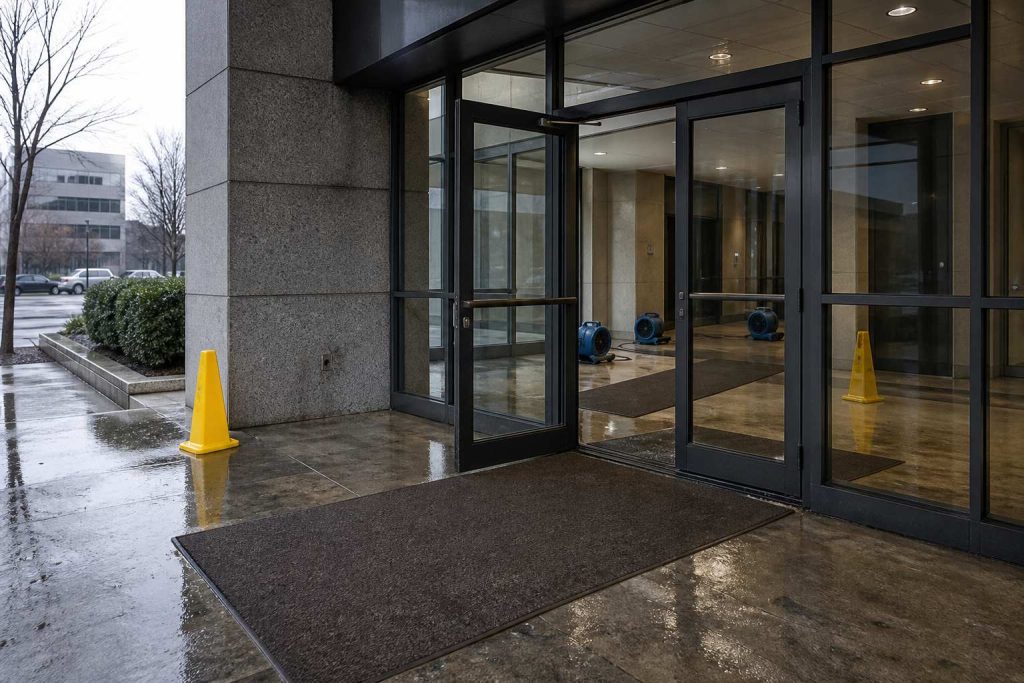
BOMA is the association for commercial property owners and the facility management teams who run their buildings. It is the single most important room for a restoration company that wants to serve commercial accounts.
Why it matters for restoration. The people in BOMA control the inside of millions of square feet of commercial space in every metro where it has a chapter. When one of those buildings has a water loss, a mold issue, a fire, or a storm event, the BOMA member is the decision-maker on who gets the call. A restoration company without presence at BOMA is not really in the commercial restoration market. It is in the hoping-someone-stumbles-onto-us market.
What to actually do. Join the local chapter. Pay for the full membership, not the associate level if you can afford it — associates are second-class citizens at most chapters. Attend every monthly meeting. Sponsor at a visible level at least once a year. Join a committee, especially emergency preparedness or facility management if those exist. Host an educational session at a member building about water mitigation or fire damage response (not sales — real education). Be the restoration resource the chapter turns to when a building in the community has an incident.
What not to do. Show up for the gala and skip the monthly meetings. The monthly meetings are where the relationships form. The gala is where they get reinforced. Pitch at events. BOMA members can smell a pitch from across the room, and the ones who show up are the ones being pitched to constantly. Lead with value — education, introductions, genuine help — and the commercial work follows.
How long it takes to work. Six months to be recognized as the regular at the chapter. Twelve to eighteen months to be the restoration name in the room. Two to three years before the chapter leadership routinely calls you for speaking slots and incidents.
IFMA — International Facility Management Association
IFMA is the professional body for facility managers — the operational leaders inside larger organizations who make the calls on emergency services, maintenance vendors, and capital project partnerships.
Why it matters for restoration. The facility manager at a healthcare system, a university campus, a large corporate headquarters, or a school district is a single decision-maker whose call creates hundreds of thousands of dollars of restoration work in the event of a loss. IFMA is where those facility managers gather, learn, and network. A restoration company that has real relationships with two dozen facility managers across a regional IFMA chapter is a restoration company that does not have to prospect commercial work.
What to actually do. Attend the local chapter meetings consistently. IFMA tends to be more education-oriented than BOMA — the meetings often feature continuing-education content. Show up for the content, not just the networking. Sponsor thoughtfully. Offer to present on a restoration-adjacent topic (water intrusion diagnosis, contents inventory best practices, mold awareness for facility staff) if the chapter’s program needs it. Build one-on-one relationships with specific facility managers. Offer to be a resource for them at their building — not for sales, for them being better at their job.
What not to do. Treat IFMA like a sales opportunity. Facility managers know every restoration company wants their business, and they reward the ones who act like peers rather than vendors. Skip events because they are technical. The technical content is often where you learn things that help you do your job better.
How long it takes to work. Similar arc to BOMA. Six months of consistent attendance to be recognized. Twelve to eighteen months to have working relationships. Longer to build deep trust with the biggest accounts — they are selective.
Adjusters Associations
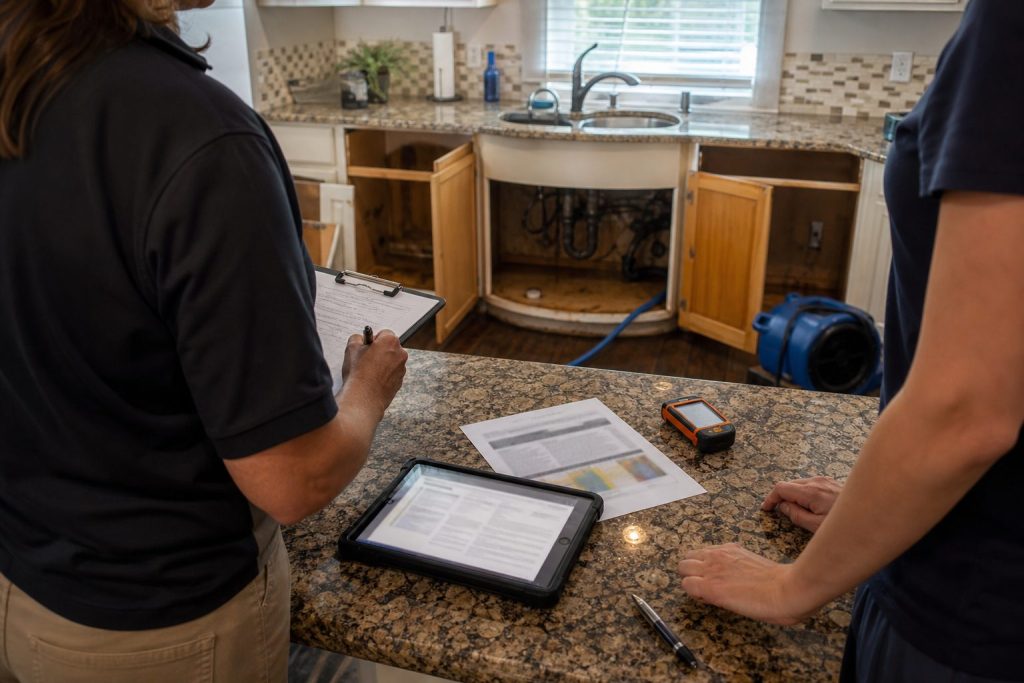
Claim adjusters gather in regional associations. Names vary — PLRB (Property & Liability Resource Bureau), state-specific adjusters associations, CAA (claim adjusters’ associations), independent adjuster groups. The specifics are market-dependent. The category matters universally.
Why it matters for restoration. Adjusters are often the first call for a homeowner or commercial property owner after a loss. They refer restoration companies constantly. The adjuster who knows your name and trusts your work routes claims to you throughout their career. Adjusters move between carriers and between regions, and the relationships compound across those moves.
What to actually do. Attend regional adjuster association events. Educate — continuing education is the currency in adjuster circles. Offer to host or co-host training on restoration scope, drying principles, contents inventory, mold protocols, whatever your expertise is. Build personal relationships with specific adjusters — the ones assigned to your region, the ones working your carrier partners, the ones you meet at claim sites. Run the relationships over time, not on a single-transaction basis.
What not to do. Compete for their business with lowball scopes and accommodating revisions. Adjusters prefer to work with restoration companies whose scope they can trust — the ones who push back on scope reductions they disagree with, and who stand behind the scope they write. The companies that fold under scope pressure end up being commoditized by every adjuster they work with. The companies that hold the line on real scope become the ones adjusters call first because the work is right.
How long it takes to work. Adjuster relationships compound slowly and durably. A year of consistent presence starts producing visible referral flow. Two years makes a meaningful pattern. Five years produces an asset that is extremely hard for a competitor to dislodge.
Industry-Specific Niches
Beyond the universal four, the associations worth adding depend on the commercial verticals the company serves.
Property management associations. If the company targets residential property management (apartment complexes, HOAs, condo associations), the local NAA, IREM, or CAI chapters are where the owners and managers gather.
Healthcare facility associations. If the company has healthcare restoration capability, ASHE (American Society for Health Care Engineering) or state equivalents are where healthcare facility directors cluster.
Hospitality operations groups. Regional hospitality associations and HFTP (Hospitality Financial and Technology Professionals) chapters put the company in front of hotel engineering teams.
Education business officers. State ASBO (Association of School Business Officials) chapters are where school district business administrators — the people who make facilities decisions — gather.
Restoration-specific industry bodies. RIA (Restoration Industry Association), IICRC (Institute of Inspection Cleaning and Restoration Certification), and state restoration industry associations produce credentials, training, and peer networks that matter for continuing credibility. They are not primarily referral sources. They are professional development and standards bodies.
Pick the two or three that match the company’s actual commercial focus. Commit for years. Decline the ones that do not match — membership without commitment is expense without return.
The Discipline, Not the List
The list is easy to produce. The discipline is the hard part.
Showing up consistently for five years at the chamber, BOMA, and one adjuster association will outperform membership in fifteen associations with sporadic attendance. The restoration companies that dominate their markets are rarely members of more associations than their competitors. They are just consistently present at the ones they committed to.
Pick three. Commit for three years. Show up. The rest compounds.
How This Pairs With the Rest of the Stack
Trade association presence is the vehicle for the owner-as-rainmaker doctrine. It connects naturally to the observational B2B plan — the trades you meet at the chamber are the trades you discover on the walks. It feeds the content engine with joint events, partner celebrations, and local presence. It reinforces the digital three-legged stool because every Google search triggered by a chamber referral hits a site that confirms the presence.
The associations are not a separate initiative. They are the physical embodiment of the community-first marketing doctrine.
Where to Start
Pick three associations today. Chamber, BOMA, and one adjuster association is the default recommendation unless the company’s commercial mix argues for a substitution. Commit to attending every major event for twelve months before evaluating whether it is working.
Drop anything you are currently a member of that does not fit the list. Recoup the dues. Redirect the time.
Build a simple attendance log. Date, event, association, people met, follow-up. The same discipline the events brief and post-mortem apply. Without the log, you will forget the work. With the log, you build a cumulative record of relationships that compounds.
Frequently Asked Questions
What trade associations should restoration owners prioritize? Chamber of commerce for civic presence, BOMA (Building Owners and Managers Association) for commercial property owners and managers, IFMA (International Facility Management Association) for facility managers inside larger organizations, and adjusters associations for claims referral flow. Beyond that, one or two industry-specific associations matching the company’s actual commercial focus.
How much time should a restoration owner spend on association presence? At least two events a month at the chamber, monthly attendance at BOMA and IFMA chapters, and quarterly adjuster events. Plus committee work and occasional speaking slots. Budget 6 to 10 hours a month on association activity as a baseline.
How long does it take for trade association membership to pay off? Six to twelve months to be recognized as a consistent member. Twelve to eighteen months for the first traceable referrals. Two to three years before association presence becomes a dependable lead source. Standing compounds over time — short-term investors do not see the return.
Should restoration companies join restoration-specific associations like RIA and IICRC? Yes, but for different reasons. RIA and IICRC produce credentials, training, and industry standards — not primarily referral flow. They matter for continuing credibility and professional development. BOMA, IFMA, and adjuster associations produce the referral relationships.
How many associations is too many? More than four to five active memberships for an individual owner typically means none are being worked consistently. Better to commit to three and show up than to join ten and drift through them. Membership without attendance is an expense without return.
What should the owner actually do at association events? Build standing. Not pitch. Show up consistently, sit on committees, make introductions for other members, sponsor events, offer to present educational content, volunteer when the chapter needs help. The goal is to become the known, trusted restoration person in the room so that referrals flow naturally and access is real.
Tygart Media on restoration — an analyst-operator body of work on the systems that separate compounding restoration companies from busy ones. No client names. No brand placements. Just the operating standard.
Get The Signal
What we actually ran, what it measured, and what it means for a restoration shop — every week, including the flops.
Leave a Reply