The restoration M&A market is the busiest it’s ever been. Private equity has deployed $6 billion+ across 50+ platforms since 2018, with notable exits like HighGround (13 acquisitions in 5 years to Knox Lane) and American Restoration (an 8-brand roll-up to Morgan Stanley) proving the playbook. If you own a restoration company, understanding the exit math is no longer optional.
Current 2026 valuation multiples
Restoration company values vary widely by size, mix, and quality of operations:
- Sub-$1M revenue shops: 1-2x SDE (seller’s discretionary earnings). Often sell asset-only.
- $1M – $3M revenue shops: 2.5x – 3.5x SDE typical.
- $3M – $10M revenue shops: 4x – 7x EBITDA range, with quality operators commanding the high end.
- $10M+ regional platforms: 7x – 10x EBITDA on PE platform deals.
- Industry average: Average EBITDA multiples across restoration companies range 3.24x – 4.31x; the broader observable range is 3-8x.
What PE buyers actually want
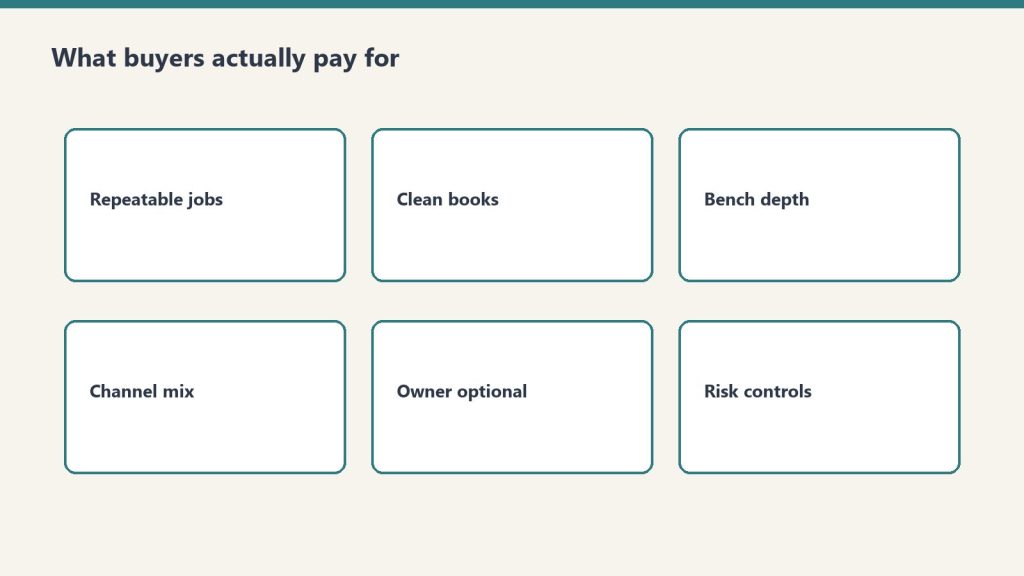
The typical PE acquisition strategy is to pay 3.0x – 3.5x SDE for a $2M – $5M revenue shop, bolt it onto a platform, and exit in 3-5 years at 4.5x – 5.5x to a larger PE platform or strategic. To be the kind of shop they’ll pay for, you need:
- Clean books. 3+ years of clean P&Ls, balance sheet, and tax returns. No commingled personal expenses.
- Diversified revenue. No single TPA, carrier, or referral source over 30% of revenue.
- Recurring relationships. Long-standing TPA enrollments, multi-year property management contracts, sustained referral patterns.
- Documented systems. SOPs, training program, software stack, KPIs being tracked.
- Owner-replaceable operations. If the owner is the rainmaker and the technical lead, the multiple drops because the owner can’t transfer.
- Working management team. Operations Manager + Estimator + PM(s) in place, not just the owner running everything.
What strategics want (different from PE)
Strategic buyers — Servpro corporate, BluSky, ATI, BELFOR, large regional players — care about:
- Geographic territory (do they want presence in your market?).
- TPA enrollment status (programs they don’t currently service).
- Specialty capabilities (large loss, biohazard, document recovery).
- Contracts and relationships (commercial property management portfolios).
- Trained workforce (especially in tight labor markets).
The 24-month exit prep checklist
- Months 1-6: Engage a CPA to clean books. Recast personal expenses to show true SDE/EBITDA. Build a 3-year P&L deck.
- Months 6-12: Document SOPs, formalize org chart, name an Operations Manager who can run it without you. Diversify referral sources to cap any single source under 30%.
- Months 12-18: Engage an M&A advisor (industry-specific is much better than generalist). Build CIM (Confidential Information Memorandum). Stress-test working capital.
- Months 18-24: Run buyer process. Multiple LOIs preferred. Negotiate structure (cash at close, earn-out, rollover equity).
Deal structure: what’s actually offered
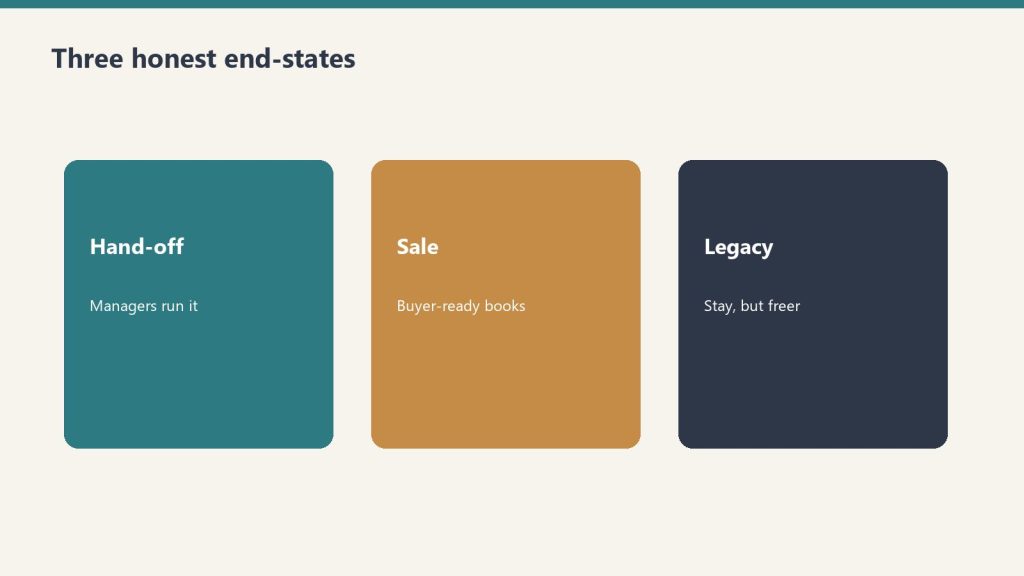
Most restoration deals are not 100% cash at close. Typical structures:
- 60-80% cash at close.
- 10-25% earn-out tied to revenue or EBITDA targets over 1-3 years.
- 5-15% rollover equity in the acquiring platform — often the highest-return component if the platform exits well.
- Owner consulting/employment agreement for 1-3 years to support transition.
FAQs about restoration acquisitions and exits
What multiple will I get for my restoration company?
Realistic 2026 ranges: under-$1M revenue 1-2x SDE; $1M-$3M revenue 2.5x-3.5x SDE; $3M-$10M revenue 4x-7x EBITDA; $10M+ revenue 7x-10x EBITDA on PE platform deals. Quality of books and management depth move you within those ranges.
What’s the difference between SDE and EBITDA in restoration deals?
SDE (seller’s discretionary earnings) adds back the owner’s salary, benefits, and one-time/personal expenses — used for owner-operator businesses. EBITDA is earnings before interest, taxes, depreciation, amortization — used for businesses where the owner doesn’t run daily operations. Most sub-$3M restoration shops trade on SDE; most over-$5M trade on EBITDA.
How long does it take to sell a restoration company?
From engaging an M&A advisor to closing, plan on 9-15 months. Including the 12-24 months of pre-sale prep work, the full timeline is often 2-3 years.
Should I sell to PE or to a strategic?
PE typically pays slightly higher multiples but expects more rigor (clean books, management depth, growth story). Strategics may pay less in cash but offer faster close and less due diligence intensity. The right answer depends on your goals — maximum dollars vs. maximum simplicity.
What kills restoration company sale value?
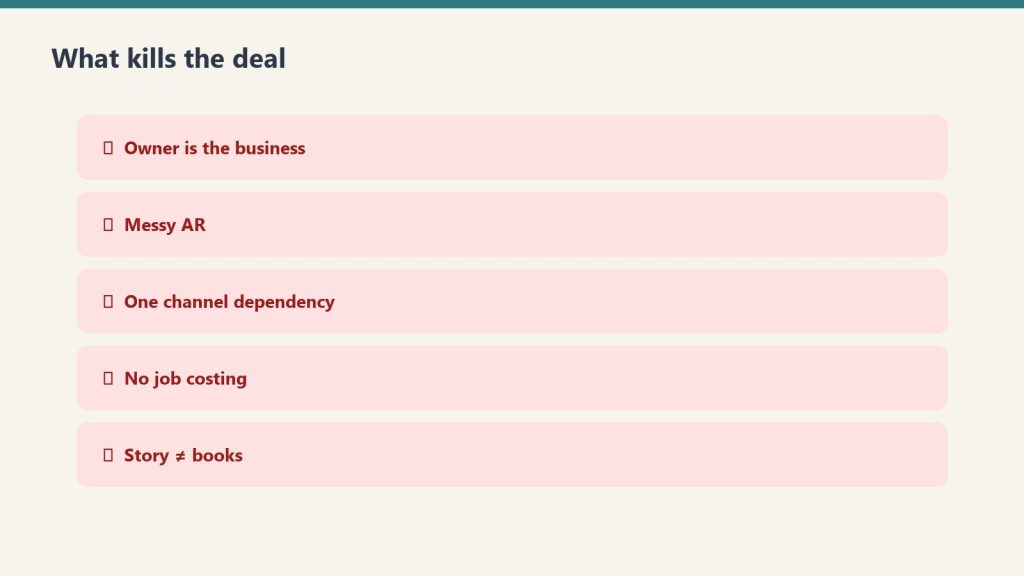
Customer concentration over 30%, owner-as-rainmaker dependency, sloppy books, expired insurance, lapsed TPA enrollments, pending litigation, missing equipment records, and undisclosed family employees. Address all of these in the 24-month prep window.
Full operator playbook: Restoration Startup and Scaling Master Guide.
Related on Tygart Media: Starlink on a water job · S500 in the van · local SEO for restoration.
Get The Signal
What we actually ran, what it measured, and what it means for a restoration shop — every week, including the flops.
Leave a Reply