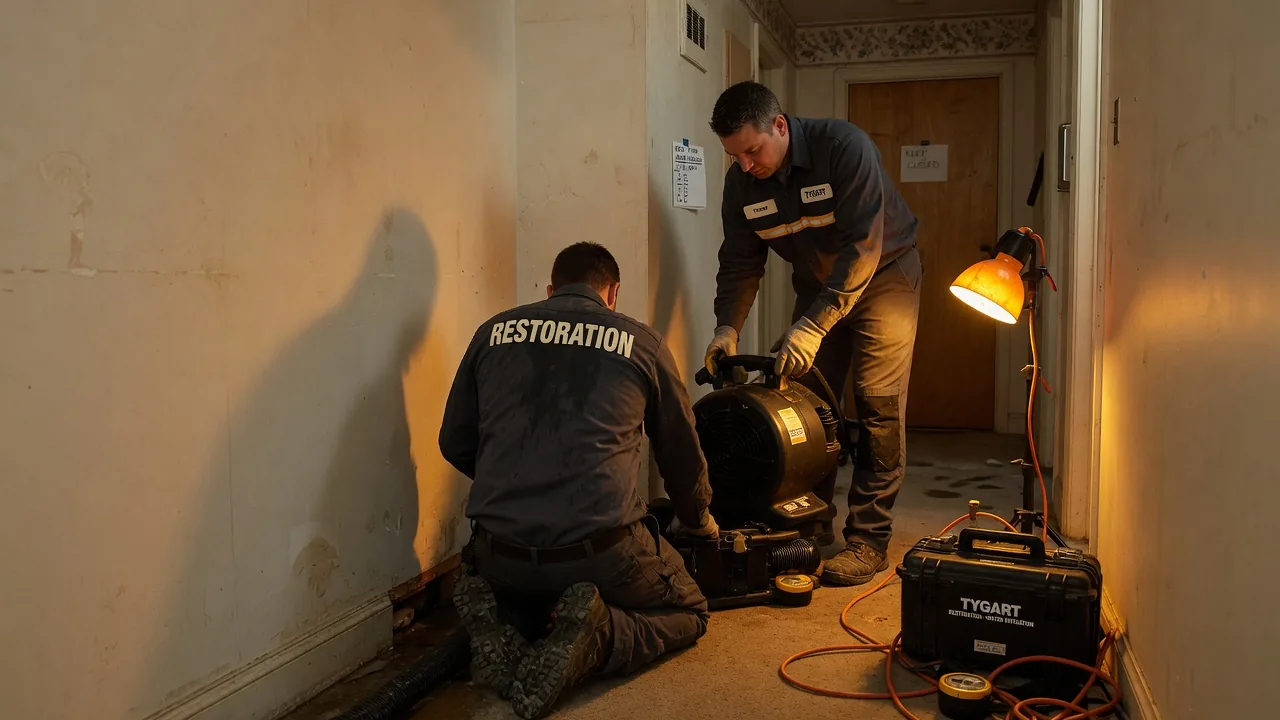
Restoration sales objections fall into a small number of repeating patterns. The same five or six concerns surface in nearly every estimate, and the difference between a 40% close rate and a 70% close rate is largely whether the rep has rehearsed responses to these objections or is improvising in the moment. This article walks through the objections that come up most often and the language that consistently moves the conversation forward.
This article is part of our restoration sales playbook.
Objection 1: “Your Price Is Too High”
The price objection is rarely about price in isolation. It is usually about value clarity, comparison shopping, or insurance confusion. The response that works opens with curiosity, not defense: “Help me understand what you’re comparing it to” — then tailor the response to what surfaces.
If the customer has a competitor quote, walk through the scope line by line and identify what is missing in the lower bid (almost always something is). If the customer is reacting to the absolute number, reframe around insurance: “Most of this will be covered. Your out-of-pocket exposure is your deductible. The rest is between us and the carrier.”
Objection 2: “Let Me Think About It”
The soft delay is the most common objection in residential restoration. It usually means the customer has unstated concerns. The response: “Of course. What’s the main thing you want to think through?” — then handle whatever surfaces. If they truly cannot articulate a concern, the urgency framing often works: “I understand. The main thing I’d mention is that the longer we wait to start drying, the more secondary damage typically occurs. We can have equipment running in two hours and you can still cancel within 24 hours if you change your mind.”
Objection 3: “I Need to Talk to My Spouse”
This is a legitimate concern that should not be steamrolled. The response: “That makes total sense. Is your spouse available to FaceTime now? I’m happy to walk them through what we found.” If FaceTime is not possible, schedule a specific follow-up time before leaving — never an open-ended “let me know.”
Objection 4: “I’m Going to Wait and See if It Dries Out on Its Own”
This is the most expensive customer mistake in restoration. The educational response: “That’s a fair instinct. The challenge is that what looks dry on the surface usually isn’t dry inside the wall cavities and subfloor. Within 48-72 hours, that hidden moisture typically grows mold, which becomes a much more expensive remediation later. Let me show you the moisture readings behind the drywall.” Then take a meter reading on camera.
Objection 5: “My Insurance Won’t Cover This”
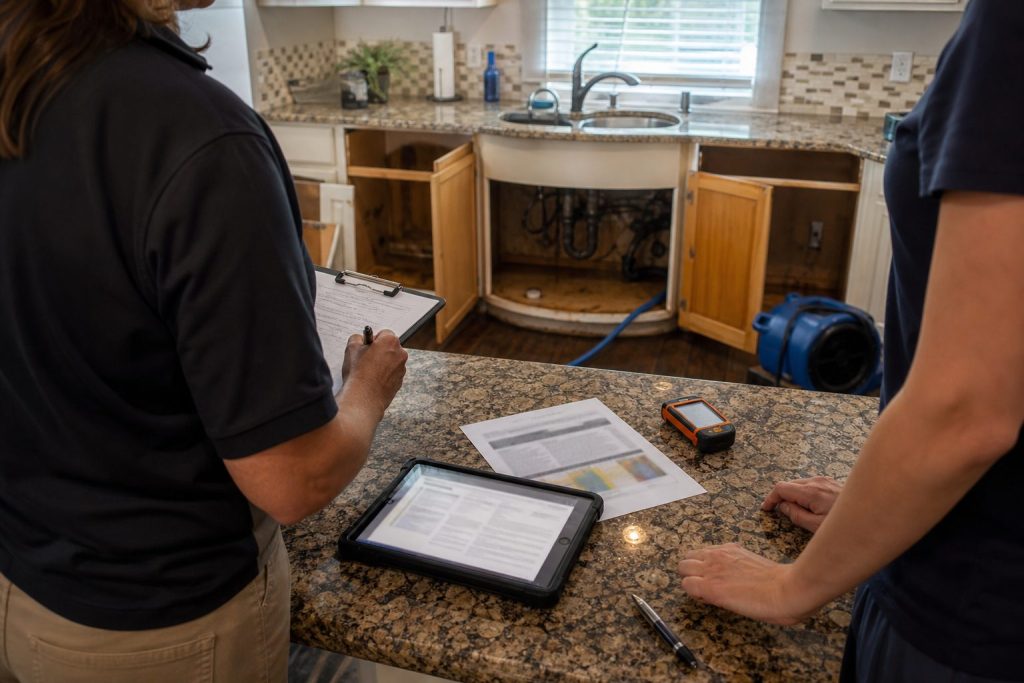
Often the customer is wrong about coverage, and the response is education: “Most homeowner policies cover sudden water damage from internal sources — would you mind sharing what your adjuster has said specifically?” If coverage truly is denied, transition to discussing scope reduction or financing options.
Objection 6: “I Don’t Trust You / I’ve Never Heard of Your Company”

Trust objections are rarely stated this directly but often signal through hesitation, intense scrutiny, or refusal to sign authorization. The response is credibility evidence: review counts and links, BBB rating, IICRC certifications, years in business, photos of recent jobs in their neighborhood, and offers to provide references. The defensive response (“Why don’t you trust me?”) fails. The confident response with proof works.
Objection 7: “Can You Give Me a Discount?”
The response that protects margin: “I appreciate the ask, but our pricing is set based on what it actually costs to do this work properly. What I can do is walk through the scope and see if there are any line items you’d want to remove — though I’d advise against cutting any of the drying equipment because that’s where the secondary damage risk lives.” Discounting on demand trains customers to ask every time and eats margin across the entire customer base.
Related on Tygart Media: Starlink on a water job · S500 in the van · local SEO for restoration.
Frequently Asked Questions
How many objections does a typical restoration estimate include?
A typical residential restoration estimate includes 1-3 objections from the customer before signing. Estimates with zero objections often signal the customer is going to “think about it” silently and then go elsewhere — surfacing objections in the room is actually a sign of engagement.
Should restoration salespeople memorize objection responses?
Memorize the framework, not the words. Word-for-word memorized responses sound robotic. Practiced frameworks delivered conversationally land naturally and protect against improvisation under pressure.
What is the most damaging objection-handling mistake?
Discounting at the first hint of price resistance. The price objection is usually a value clarity question — answering it with a discount confirms that the original price was inflated and trains the customer to expect discounts on future work.
How do I handle objections over the phone before the in-home visit?
Most pricing and scope questions on the phone should be redirected to the in-home visit: “I want to give you an accurate answer, and the only way to do that is to actually see the damage. Can we get a project manager out today?” Quoting blind on the phone usually loses the job and the in-home opportunity simultaneously.
When should I walk away from a customer rather than handle the objection?
Walk away when the customer is asking for scope or pricing that compromises quality (e.g., “skip the dehumidifiers”), demanding discounts that put the job below cost, or signaling distrust that the rep cannot recover. Working unprofitable or unhappy customers damages the business.
Get The Signal
What we actually ran, what it measured, and what it means for a restoration shop — every week, including the flops.
Leave a Reply