I’ve been building Tygart Media for a while now, and I’ve always struggled to explain what we actually do. Not because the work is complicated — it’s not. But because the thing we do doesn’t have a clean label yet.
We’re not a content agency. We’re not a marketing firm. We’re not an SEO shop, even though SEO is part of what happens. Those are all descriptions of outputs, and they miss the thing underneath.
The Moment It Clicked
I was working with a client recently — a business owner who has spent 20 years building expertise in his industry. He knows things that nobody else knows. Not because he’s secretive, but because that knowledge lives in his head, in his gut, in the way he reads a situation and makes a call. It’s tacit knowledge. The kind you can’t Google.
My job wasn’t to write blog posts for him. My job was to extract that knowledge, organize it, structure it, and put it into a format that could actually be used — by his team, by his customers, by AI systems, by anyone who needs it.
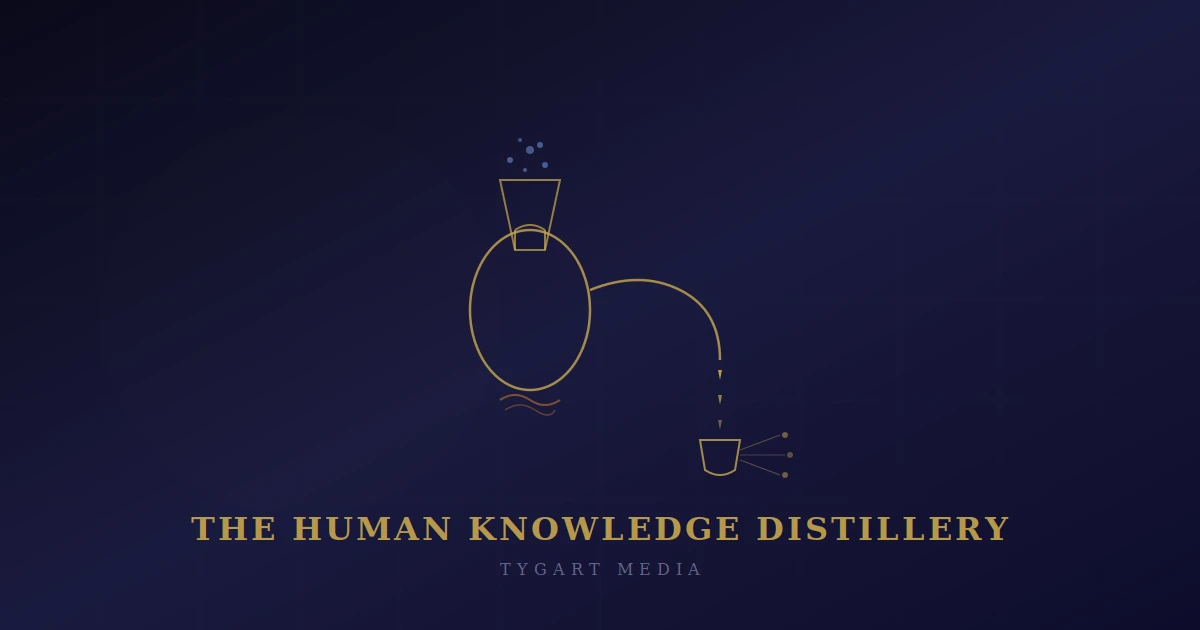
That’s when I realized: Tygart Media is a human knowledge distillery.
What a Knowledge Distillery Does
Think about what a distillery actually does. You take raw material — grain, fruit, whatever — and you run it through a process that extracts the essence. You remove the noise. You concentrate what matters. And you put it in a form that can be stored, shared, and used.
That’s exactly what we do with human expertise. Every business leader, every subject matter expert, every operator who has been doing this work for years — they are sitting on enormous reserves of knowledge that is trapped. It’s trapped in their heads, in their habits, in their decision-making patterns. It’s not written down. It’s not structured. It can’t be searched, referenced, or built upon by anyone else.
We extract it. We distill it. We put it into structured formats — articles, knowledge bases, structured data, content architectures — that make it usable.
The Media Is the Knowledge
Here’s the shift that changed everything for me: the word “media” in Tygart Media doesn’t mean content. It means medium — as in, the thing through which knowledge travels.
When we publish an article, we’re not creating content for content’s sake. We’re creating a vessel for knowledge that was previously locked inside someone’s brain. The article is just the delivery mechanism. The real product is the structured intelligence underneath it.
Every WordPress post we publish, every schema block we inject, every entity we map — those are all expressions of distilled knowledge being put into circulation. The websites aren’t marketing channels. They’re knowledge infrastructure.
Content as Data, Not Decoration
Most agencies look at content and see marketing material. We look at content and see data. Every piece of content we create is structured, tagged, embedded, and connected to a larger knowledge graph. It’s not sitting in a silo waiting for someone to stumble across it — it’s part of a living system that AI can read, search engines can parse, and humans can navigate.
When you start treating content as data and knowledge rather than decoration, everything changes. You stop asking “what should we blog about?” and start asking “what does this organization know that nobody else does, and how do we make that knowledge accessible to every system that could use it?”
Where This Goes
Right now, we run our own operations out of this distilled knowledge. We manage 27+ WordPress sites across wildly different industries — restoration, luxury lending, cold storage, comedy streaming, veterans services, and more. Every one of those sites is a node in a knowledge network that gets smarter with every engagement.
But here’s where it gets interesting. The distilled knowledge we’re building — stripped of personal information, structured for machine consumption — could become an open API. A knowledge layer that anyone could plug into. Your AI assistant, your search tools, your internal systems — they could all connect to the Tygart Brain and immediately get smarter about the domains we’ve mapped.
That’s not a fantasy. The infrastructure already exists. We already have the knowledge pages, the embeddings, the structured data. The question isn’t whether we can open it up — it’s when.
Some people call this democratizing knowledge. I just call it doing the obvious thing. If you’ve spent the time to extract, distill, and structure expertise across dozens of industries, why would you keep it locked in a private database? The whole point of a distillery is that what comes out is meant to be shared.
What This Means for You
If you’re a business leader sitting on years of expertise that’s trapped in your head — that’s the raw material. We can extract it, distill it, and turn it into a knowledge asset that works for you around the clock.
If you’re someone who wants to build AI-powered tools or systems — eventually, you’ll be able to plug into a growing, curated knowledge network that’s been distilled from real human expertise. Not scraped. Not summarized. Distilled.
Tygart Media isn’t a content agency that figured out AI. It’s a knowledge distillery that happens to express itself as content. That distinction matters, and I think it’s going to matter a lot more very soon.
Frequently Asked Questions: What Tygart Media Does
What exactly is Tygart Media and how is it different from a content agency?
Tygart Media is a human knowledge distillery — not a content agency, marketing firm, or SEO shop. The distinction is what we’re working with: most agencies produce content from briefs. We extract tacit knowledge from business owners and subject matter experts, then structure that knowledge into formats that can be searched, referenced, built upon, and understood by both humans and AI systems. The content is a byproduct of the knowledge architecture, not the goal itself.
What is tacit knowledge and why does it need to be distilled?
Tacit knowledge is the expertise that lives in a person’s head, gut, and decision-making instincts — built over years of doing the work. It can’t be Googled because it’s never been written down. Most businesses are sitting on enormous reserves of this knowledge that is completely trapped: inaccessible to their teams, invisible to customers, and unreadable by AI systems. Distillation means extracting that expertise, organizing it, and putting it into structured formats that can actually be used.
What does “AI-native” mean in the context of Tygart Media’s approach?
AI-native means the content and knowledge architecture is designed from the start to be readable and citable by AI systems — not just search engines. This includes structured data markup, entity saturation, answer-optimized formatting, and content that AI models like Claude, ChatGPT, and Gemini can retrieve and reference when answering questions in their domain. An AI-native knowledge base works for human readers and AI readers simultaneously.
Who is Tygart Media built for?
Business owners and operators who have deep domain expertise and want it working harder for them. Typically: service businesses with complex offerings, founders who are the primary knowledge holders in their company, and operators in specialized industries (restoration, lending, healthcare, B2B services) where the expertise gap between the business and its customers is large. If you have 10+ years of experience that isn’t structured anywhere, you’re the target.
What does a Tygart Media engagement actually produce?
The outputs vary by engagement but typically include: a structured content architecture (categories, clusters, internal linking), long-form articles that capture and communicate domain expertise, AEO/GEO-optimized content designed for AI citation, schema markup for rich search results, and in some cases a full Notion-based knowledge base that functions as a second brain for the business. The goal is a knowledge system that compounds — not a content calendar that resets every month.
Leave a Reply