This is the third article in the AI in Restoration Operations cluster under The Restoration Operator’s Playbook. It builds on why most projects fail and what to build first.
The phrase is not a metaphor
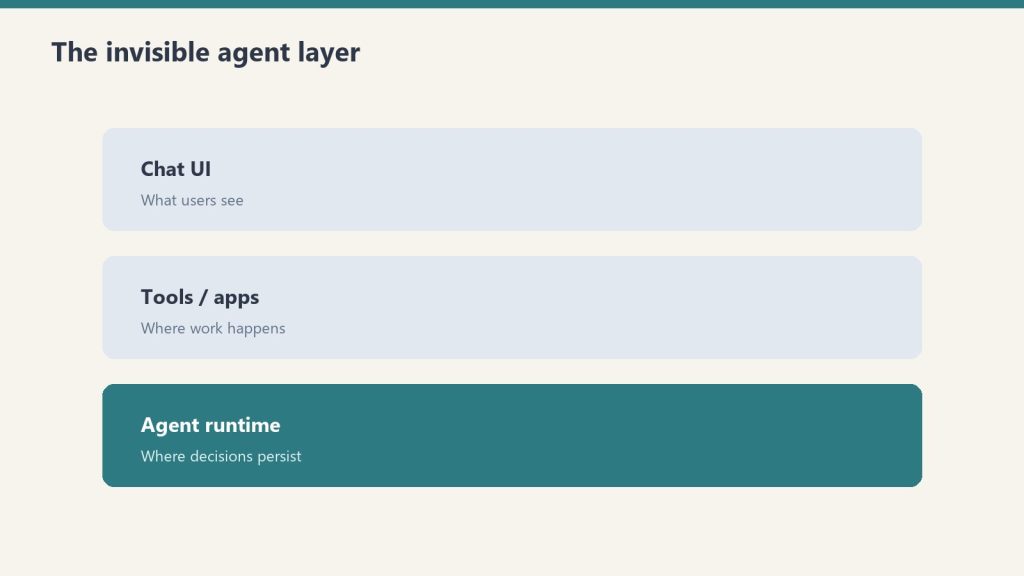
The most useful frame for thinking about AI deployments in restoration in 2026 is to treat the senior operator as the source code. The phrase is precise, not figurative. The substance of what an AI system produces, in any operational context, is determined by the captured judgment of the senior people whose decisions the system is trying to scale. The model is the runtime. The senior operator’s judgment is the actual source.
This frame has consequences. It changes how owners think about hiring, retention, training, documentation, and the strategic value of the people who already work in the company. Owners who internalize it make different decisions about where to invest, who to protect, and how to structure the company’s operating system. Owners who do not internalize it tend to treat AI as a technology purchase that should reduce their dependence on senior people — and then experience the predictable failure when the technology fails to perform without the human substrate it required all along.
This article is about what it actually means, in practice, to treat senior operators as source code.
What the model is doing when it works
To understand why the source-code frame is correct, it helps to understand what an AI model is actually doing when it produces a useful operational output.
The model is a pattern-matching engine. It takes the input it is given — a file, a prompt, a set of documents, a context — and produces an output that statistically resembles the patterns it has seen in similar situations. The patterns the model has access to come from two sources. The first is the broad training data the model was originally built on, which includes general knowledge about the world, language patterns, and a wide range of professional domains. The second is the specific context the deployment provides — the company’s documents, the operational standards, the prompts and instructions, the captured examples of good outputs.
For most operational use cases in restoration, the broad training data is largely irrelevant to whether the output is good. The model knows what English looks like, what a business document looks like, what a generic insurance file looks like. It does not know what a good handoff briefing for your specific company looks like, or what a competent scope review looks like in your specific operational context, or how your senior operators would actually communicate with a specific carrier.
The deployment-specific context is what makes the output useful. And that context, when traced back to its origin, comes from the senior operators in the company whose decisions, communications, standards, and judgment have been captured in some retrievable form. The model is rendering, at speed and at scale, the patterns those senior operators have established. The senior operators are not adjacent to the AI system. They are the AI system, in the sense that matters operationally.
What this means for hiring
The source-code frame changes the math on senior hiring in ways most restoration owners have not yet absorbed.
The conventional math values a senior operator at the work that operator does directly — the jobs they manage, the revenue they touch, the customer relationships they hold. This math has been the basis of senior compensation in restoration for decades.
The source-code math values a senior operator at the work that operator does directly plus the work that the AI-augmented operating system does in their image once their judgment has been captured. The second term in that equation is large and growing. A senior operator whose decision-making becomes the substrate for how the rest of the company handles initial response, scope decisions, sub assignments, photo organization, and documentation packaging is, mathematically, contributing to every job the company touches — including jobs that operator never personally sees.
The companies that are running on the source-code math are willing to pay more for senior operators than the conventional math would justify. They can afford to, because the contribution per senior operator is structurally larger than it used to be. They are also willing to invest more in the documentation and capture work that converts that operator’s judgment into AI substrate, because they understand that the documentation work is what unlocks the larger contribution.
The companies that are running on the conventional math are about to be outbid for senior talent by the companies running on the source-code math. The market has not fully repriced yet. The window for owners who recognize this and move now is real and finite, as discussed in the talent piece.
What this means for retention
The source-code frame also changes the math on senior retention. A senior operator whose judgment has been captured into the company’s operating system represents a different kind of risk to the business if they leave than a senior operator whose judgment lives only in their head.
This sounds counterintuitive at first. The natural reaction is that a documented operator is less of a flight risk because the company would not lose their judgment if they left. That reaction is partially correct. The captured judgment does survive the operator’s departure.
What does not survive is the operator’s continued contribution to the evolution of the captured judgment. The standard the operator wrote will become outdated. The decisions the operator would have made about new conditions, new construction styles, new carrier dynamics, will not be made by anyone in the company at the same level of competence. The captured judgment is a snapshot of the operator’s thinking at the time of capture. Without the operator continuing to refine it, the snapshot ages.
The companies running on the source-code frame understand this and treat the senior operator’s continued presence as strategically important even after the documentation work is well underway. The operator is not being documented in order to be replaced. The operator is being documented in order to be amplified. The retention investment scales accordingly.
This is also why the documentation work has to be framed correctly with the senior operator from the beginning. An operator who believes the documentation work is being done in order to make them disposable will resist or sabotage the work. An operator who understands that the documentation work is being done in order to scale their influence and increase their value will participate enthusiastically. The framing is not optional.
What this means for documentation

The source-code frame elevates documentation work from an administrative function to a strategic capability. The documentation is not paperwork. It is the company’s actual operating substrate. The quality of the documentation determines the quality of every AI output the company will ever produce, and therefore the quality of the operational performance the company will be able to achieve.
This reframing changes what kinds of documentation are worth investing in and how the investment should be made.
The documentation worth investing in is the documentation that captures the judgment of the people whose decisions matter most. Standards, decision frameworks, edge case discussions, judgment calls, the reasoning behind operational choices. Not policy manuals. Not procedural checklists divorced from reasoning. The documentation has to capture the why, not just the what, because the why is what allows the captured judgment to be applied to situations the original author did not anticipate.
The investment has to be made by the senior operator whose judgment is being captured, with the support of someone whose job it is to convert the operator’s verbal and intuitive knowledge into written, retrievable form. This work cannot be delegated to a junior staff member or a vendor. The operator’s voice has to be in the document, and the operator has to recognize the document as their own thinking. Documentation produced by anyone other than the operator (or in close collaboration with the operator) reads as someone else’s interpretation, which is not the substrate the AI deployment requires.
The cadence has to be sustainable. A senior operator who is asked to spend forty hours documenting their judgment in a single push will resent the work and produce poor results. A senior operator who is asked to spend two hours per week in a structured documentation conversation, with someone whose job it is to convert the conversation into documents, will produce a body of captured judgment over a year that is genuinely useful and that the operator will recognize as their own.
What this means for the operator themselves
The source-code frame is not just a way for owners to think about senior operators. It is also a way for senior operators to think about their own careers in 2026 and beyond.
An operator whose judgment is being captured is, in effect, leaving a permanent imprint on the company that extends far beyond the duration of their employment. That imprint is a kind of legacy that has not previously been available in the restoration industry. The senior operators who lean into the documentation work are creating a record of their professional contribution that survives them in the company in a way that is more concrete and more recognizable than the diffuse memory of their work that previous generations of senior operators left behind.
This framing matters because it changes the documentation work from an extractive process — the company taking knowledge from the operator — to a contributive process — the operator building something durable inside the company. Operators who experience the work the second way participate generously. Operators who experience it the first way participate grudgingly or not at all. The framing is set by leadership, in how the work is introduced and how the operator is treated throughout.
The source-code frame also has implications for what operators look for in their next role. An operator who has done significant documentation work and built operational substrate inside one company is more attractive to a company that understands the value of that experience. The operator’s market value rises not just because of what they know, but because of their demonstrated ability to translate what they know into a form that scales. This is a new kind of professional capability in restoration, and the operators who develop it will be in unusual demand.
The strategic implication for owners
If the senior operator is the source code, then protecting and developing senior operators is the central strategic question for any restoration company that wants to be operating well in 2028. Every other AI investment, every other technology purchase, every other operational improvement, depends on the quality and engagement of the senior operators whose judgment underlies the work.
Owners who treat senior operators as production capacity to be optimized are running a different strategy than owners who treat senior operators as strategic substrate to be protected and amplified. The two strategies will produce visibly different companies in three years. The first strategy will produce companies that have squeezed marginal efficiency out of human labor and that struggle to absorb new technology because the human substrate has been hollowed out. The second strategy will produce companies whose senior operators have been turned into operational systems through documentation and AI augmentation, and whose senior operators are still in the building because the work has been treated as their legacy rather than their replacement.
The choice between these two strategies is being made right now in restoration companies across the country, often without the owners explicitly framing it as a strategic choice. The choice is being made by where the owner’s attention goes, who the owner protects, what the owner invests in, and what conversations the owner has with their senior people. Each of those small decisions accumulates into the strategy the company is actually running, regardless of what the strategy slide deck says.
Owners who recognize this and make the second choice deliberately are setting up the company that will exist in 2028. Owners who default into the first choice without recognizing it as a choice are setting up a different company.
Next in this cluster: the economics of agent-assisted operations — the most underdiscussed topic in restoration AI right now and the one that will determine which companies are still profitable in 2028.
Leave a Reply