There’s a fight happening in the most expensive, most scrutinized, most technically demanding sport on earth — and it has nothing to do with tires or teammates. It’s a fight about what it even means to race.
Max Verstappen, four-time world champion, the most dominant driver of his generation, called Formula 1’s new 2026 cars “Formula E on steroids.” He said driving them isn’t fun. He said it doesn’t feel like Formula 1. He said — and this is a man who has never once seriously contemplated stopping — that he might walk away.
Let that land.
The man who won four consecutive world championships, who drove circles around the field while the rest of the paddock scrambled to understand how, is sitting in the fastest car ever built and saying: I don’t enjoy this.
Why? Because the car now thinks.
Not literally. But close enough that it matters. The 2026 power unit splits propulsion roughly 50/50 between the internal combustion engine and an electric motor delivering 350 kilowatts — nearly triple what it was before. The car harvests energy under braking, on lift-off, even at the end of straights at full throttle in a mode called “super clipping.” Up to 9 megajoules per lap, twice the previous capacity, stored, managed, and deployed in a continuous loop of harvesting and releasing that never stops.
You’re not just driving anymore. You’re managing a conversation between two completely different power systems — one that roars, one that hums — while hitting 200 miles per hour and making decisions in fractions of seconds that determine whether you win, crash, or run out of energy in the final corner.
Lando Norris, the reigning world champion, said F1 went from its best cars in 2025 to its worst in 2026. Charles Leclerc said the format is “a f—ing joke.” Martin Brundle told Verstappen to either leave or stop complaining. The entire paddock is arguing about what the sport is supposed to be.
And none of them realize they’re having the exact same argument happening in every boardroom, every startup, every kitchen table business in the world right now.
The Either/Or Was Always Wrong
For the past few years, the conversation about AI has been framed as a binary: human or machine. Replace or be replaced. Use it or lose to someone who does. Old way or new way.
This is the Verstappen position, and I say that with respect — because Max is right that the old feeling is gone. He’s just wrong about what that means.
Formula 1 didn’t abandon the combustion engine. They didn’t go full electric. They didn’t pick a side. They built something harder, something that demands more from drivers, not less — because now you have to be brilliant at two things simultaneously and know when to lean on each one.
The drivers who are thriving in 2026 stopped mourning what the car used to feel like and started learning the new language.
They’re harvesting energy through corners where they used to just brake. They’re deploying battery power in ways that look, from the outside, like supernatural acceleration. They’re thinking three moves ahead — not just about position, but about energy state.
That’s not easier than pure combustion racing. It’s harder. But it’s a different kind of hard. Sound familiar?
Business Is an F1 Track — and It Changes Every Race
Here’s what makes Formula 1 genuinely profound as a metaphor: the tracks are different every single week. Monaco demands precision and patience. Monza demands raw speed. Spa demands bravery in rain. Singapore demands night vision and inch-perfect walls. The same car, the same driver, the same team — and yet the setup, the strategy, the tire choice, the energy management plan all have to reinvent themselves race by race.
Business is no different. What worked in Q4 last year fails in Q1 this year. The competitive landscape that was stable for a decade reshapes overnight. A supply chain that was reliable becomes fragile. A channel that was growing saturates. A customer who was loyal gets poached.
The teams that win championships don’t win because they figured out the perfect setup. They win because they built the organizational capability to adapt faster than everyone else.
The old AI conversation asked: should I automate this? The new one asks something harder: what’s my energy state right now, and what does this moment call for?
The Dance Nobody Taught You
The 2026 F1 energy system doesn’t work like a switch. You can’t just floor it and let the battery do its thing. You have to harvest before you can deploy. You have to give before you can take. You have to think about the lap you’re on and the lap you’re about to run and the laps after that, all at once.
This is the part of AI integration that nobody talks about in the breathless headlines about productivity gains and job displacement.
The best operators I’ve seen aren’t using AI like a vending machine — put prompt in, get output out. They’re in a dance. They bring the domain knowledge, the judgment, the instinct built from years in the field. The AI brings the pattern recognition, the synthesis, the ability to hold fifty variables in mind without forgetting one. Neither is complete without the other. Both are diminished when treated as a substitute for the other.
The driver who just mashes the throttle and trusts the battery to save him will run out of energy in Turn 14 and coast to the pits. The driver who ignores the electric system entirely and tries to drive the 2026 car like a 2015 car will be half a second off pace before the first chicane. The dance — the real skill — is knowing when you’re in harvesting mode and when you’re in deployment mode, and making that transition so smooth that from the outside it just looks like speed.
Max Was Right About One Thing
Verstappen isn’t wrong that something was lost. The howl of a naturally aspirated V10 at 19,000 RPM is an irreplaceable thing. The feeling of a car that responds to pure mechanical input — no management, no algorithms, just physics and nerve — that’s real, and mourning it is legitimate.
The track doesn’t negotiate.
The regulations don’t care what you loved about the old car. The competitor who masters the new system while you’re grieving the old one is already three tenths faster. The market doesn’t pause while you decide whether you’re comfortable with how things are changing. The question was never do I have to change. The question is always how fast can I learn the new dance — because the music already changed, and the floor is moving.
A Word About Williams — and a Disclosure Worth Making
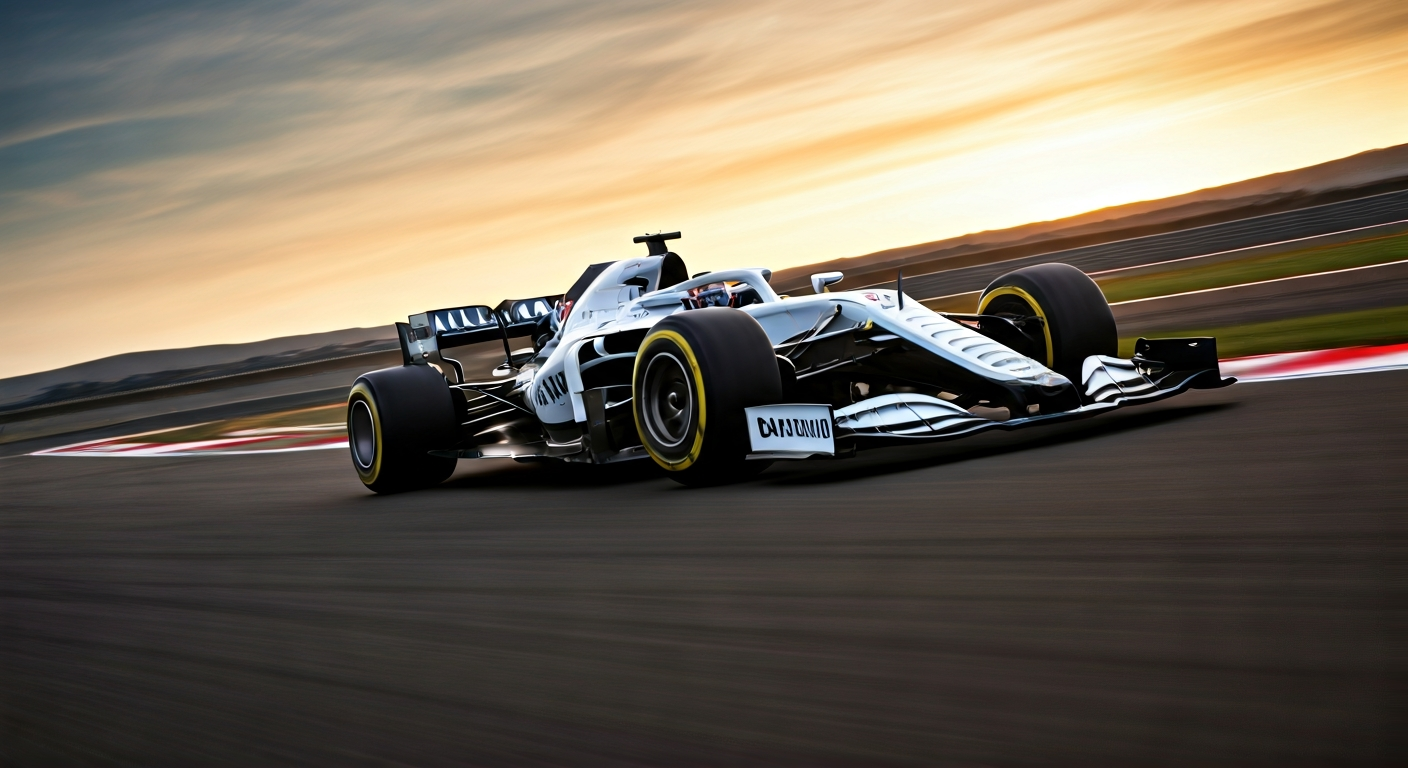
Williams Racing — one of Formula 1’s most storied teams, the last truly independent constructor in the paddock — just named Claude their Official Thinking Partner in a multi-year partnership with Anthropic.
My name is William Tygart. I use Claude every single day. And now Claude is on the side of an F1 car driven by one of racing’s most legendary teams. I’ll let you make of that what you will.
But the reason this partnership makes sense says something important. Williams isn’t Red Bull with unlimited resources. They’re not a manufacturer team with a factory army. They are, as Anthropic’s head of brand marketing put it, “world-class problem solvers focused on the smallest details.” They win not by outspending, but by out-thinking. That’s the promise of genuine AI partnership — not replacing the engineers, but serving as the thinking partner that helps brilliant people think better.
The Harvest Before the Deploy: A Framework
- Identify your harvesting moments. Where is knowledge being created in your operation that isn’t being captured? Where are patterns repeating that nobody’s noticed? AI harvests those moments — but only if you build the conditions for it.
- Identify your deployment moments. Where does speed matter most? Where is the bottleneck not ideas but execution velocity? Those are your deployment moments — where the stored energy gets released.
- Practice the transition. The driver who only harvests never wins. The driver who only deploys runs dry. The rhythm — harvest, deploy, harvest, deploy — has to become organizational muscle memory.
- Accept that the track changes. What worked at Monaco won’t work at Monza. Build teams and cultures that don’t just tolerate adaptation but expect it, plan for it, and practice it constantly.
The Race Is Already On
Max Verstappen may or may not be in Formula 1 next year. The paddock may or may not sort out its feelings about the 2026 cars. But the cars will race. The energy will be harvested and deployed. And somewhere on the grid, a driver who stopped arguing with the regulations and started mastering the new system will cross the finish line first.
The same is true in your industry. The debate about AI is real and worth having. But while it’s happening, the race is underway.
The hybrid era isn’t coming. It’s here. The only question is whether you’re learning the dance.
Sources: Verstappen on walking away — ESPN | Verstappen: “Formula E on steroids” — ESPN | 2026 F1 Power Unit Explained — Formula1.com | Anthropic × Williams F1 — WilliamsF1.com | Verstappen future uncertain — RaceFans
Leave a Reply