Tag: Claude

  • How Claude Cowork Task Scheduling Works

    How Claude Cowork Task Scheduling Works

    Claude AI · Tygart Media
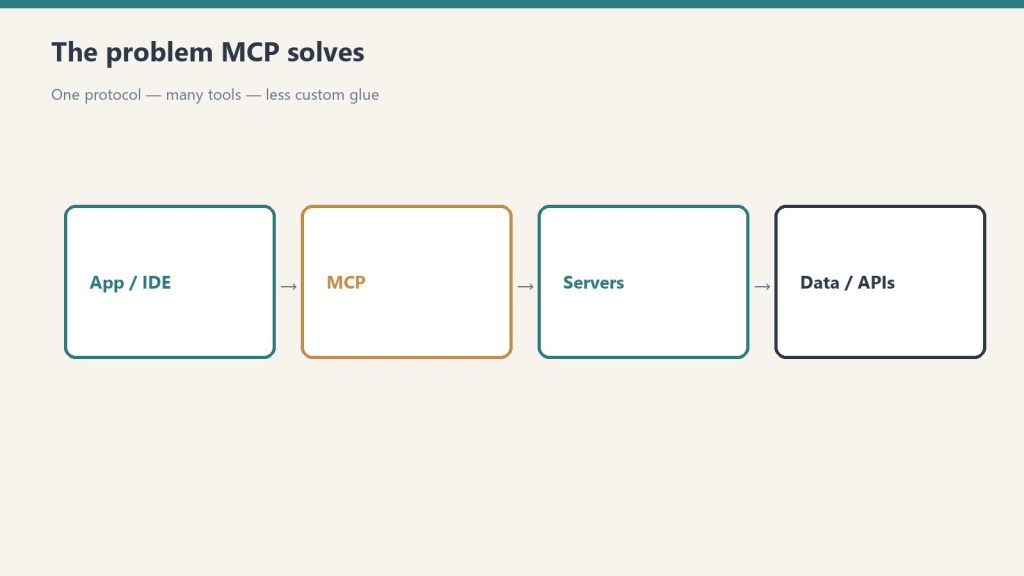
    How it works in plain terms: Cowork tasks are stored instruction sets that Claude executes on a schedule. You write the prompt once; Claude runs it at the scheduled time using whatever tools and MCP connections you have configured.

    Claude Cowork’s scheduling feature is one of the least-documented parts of the product, but it’s the most powerful. Understanding how it actually works — what triggers tasks, what Claude has access to when running them, and what the limitations are — changes how you design automation with it.

    How Cowork Tasks Are Stored

    Each Cowork task is a named, persistent instruction set saved locally in your Claude Desktop environment. The task contains: a name, a prompt (the full instruction Claude follows each run), a schedule, and optionally a working directory and a set of enabled tools. Tasks are stored in JSON format under your Documents folder at ~/Documents/Claude/Scheduled/ alongside a scheduled-tasks.json index file.

    What Triggers a Scheduled Task

    Tasks run on cron-style schedules configured when you create the task. Common schedules include daily at a specific time, weekly on specific days, or on-demand (manual trigger only). When the scheduled time arrives, Claude Desktop wakes the Cowork runner, loads the task prompt, and executes it with the configured tools and MCP connections active.

    Critical limitation: Claude Desktop must be running and your machine must be awake when the scheduled time fires. Cowork is not a cloud scheduler — it depends on the local process being live. If your machine is asleep or Claude Desktop is closed, the task is skipped for that run with no retry.

    What Claude Has Access to During a Task Run

    When a Cowork task runs, Claude has access to everything configured in your Claude Desktop environment at that moment: all active MCP servers (Notion, Gmail, Google Drive, etc.), the Cowork bash VM for executing scripts and filesystem operations, any skill files mounted in the VM, and the working directory specified in the task config. It does not have access to the interactive chat thread — the task runs in its own isolated context.

    Task Memory: What Carries Over Between Runs

    Nothing carries over automatically. Each task run is stateless — Claude starts fresh with only the task prompt as its context. If your task needs to know what happened last time (what was published, what changed, what errors occurred), you have to build that logging into the task itself. The standard pattern: at the end of each run, write a log entry to a Notion page or local file; at the start of the next run, read that log to pick up context.

    This is why well-designed Cowork tasks always end with a Notion write and start with a Notion read.

    How to Design a Reliable Cowork Task

    Tasks that work well have four components: a clear single objective per task (do one thing, do it well), explicit context loading at the start (read the log, check what already exists), a defined success condition Claude can verify, and a logging step at the end that captures what ran and any errors. Tasks that try to do too many things in one run, or that assume Claude will remember previous runs without explicit context, fail inconsistently.

    When to Move Tasks to GCP Instead

    Cowork scheduling works well for tasks that need to run during your working day when your machine is on. For anything that needs to run at 3 AM, run on a strict schedule with zero missed executions, or process large amounts of data that would exhaust the local VM disk — those belong on GCP Cloud Run or a Compute Engine cron job, not Cowork. The architectural principle: Cowork for interactive-adjacent automation, GCP for always-on production pipelines.

    How do I create a scheduled task in Cowork?

    Open Claude Desktop, navigate to the Cowork section, create a new task, write your prompt, and set the schedule. Tasks are saved locally and run when Claude Desktop is open at the scheduled time.

    Why did my Cowork task not run at the scheduled time?

    Most likely Claude Desktop was closed or your machine was asleep. Cowork tasks require Claude Desktop to be running. Tasks that miss their scheduled time are skipped — there is no retry or catch-up mechanism.

    Can Cowork tasks run while I am using Claude Chat?

    Yes. Cowork tasks run in a separate context from the chat interface. Active Cowork task runs do not interrupt or share context with your current chat sessions.


  • Claude Cowork Not Working: 5 Common Errors and Fixes

    Claude Cowork Not Working: 5 Common Errors and Fixes

    Claude AI · Tygart Media
    Most common cause: The Cowork VM disk is full (sessiondata.img). Second most common: a scheduled task depends on a local process that stops when your machine sleeps. Both are fixable in minutes.

    Claude Cowork stops working for a small set of predictable reasons. This page covers the five most common failures, how to diagnose which one you’re hitting, and the exact fix for each.

    Error 1: “useradd failed: exit status 12”

    What it means: The Cowork VM’s internal disk (sessiondata.img) is full. No new sessions can be provisioned.

    Fix: Quit Claude Desktop. Move sessiondata.img from %APPDATA%\Claude\vm_bundles\claudevm.bundle\ (Windows) or ~/Library/Application Support/Claude/vm_bundles/claudevm.bundle/ (macOS) to your Desktop. Relaunch Claude Desktop — it recreates a fresh image. Full walkthrough: Claude Cowork useradd Failed Error Fix.

    Error 2: Scheduled Tasks Stop Running

    What it means: Tasks that were running on schedule suddenly stop firing. Often appears as tasks last running a few days ago with no new entries.

    Causes: Machine went to sleep, Claude Desktop was quit, or the local runner process died. Cowork tasks require Claude Desktop to be open and running on an active machine. They are not fully cloud-hosted — they depend on the local Cowork environment being live.

    Fix: Reopen Claude Desktop and manually trigger one task to verify it runs. For tasks that need to run reliably without the machine being awake, move them to a GCP Cloud Run cron job or a cloud VM instead of Cowork’s local scheduler.

    Error 3: MCP Tools Not Available in Cowork

    What it means: Cowork tasks can’t access Notion, Gmail, or other connected services that work fine in Chat.

    Fix: MCP servers must be configured in claude_desktop_config.json — the same config file Claude Desktop uses. If an MCP server appears in Chat but not in Cowork, verify it’s listed in the desktop config, not just the web interface. Restart Claude Desktop after any config changes.

    Error 4: File Access Denied or Path Not Found

    What it means: A Cowork task fails trying to read or write a file that should be accessible.

    Fix: Cowork’s VM mounts specific directories from your machine. If the file is outside a mounted path, Cowork can’t reach it. Check that the file path is within your configured working directories. On Windows, path separator issues (\ vs /) inside the Linux VM can also cause this — use forward slashes or escape backslashes in task prompts.

    Error 5: Tasks Run but Produce Wrong Output

    What it means: Cowork is running but the results are stale, wrong, or missing context from previous runs.

    Fix: Cowork tasks don’t have memory of previous runs by default. If your task depends on knowing what happened last time — what was published, what changed — you need to build that context explicitly into the task prompt, typically by reading a log from Notion or a local file at the start of each run. The task prompt is the only persistent instruction; Claude doesn’t remember prior task outputs.

    Why did Cowork tasks stop running overnight?

    Cowork requires Claude Desktop to be running on an active machine. If your computer slept, hibernated, or Claude Desktop was closed, scheduled tasks won’t fire. For always-on reliability, route tasks through a cloud runner instead.

    Why can Cowork not find my files?

    Cowork’s Linux VM only has access to directories you’ve configured as mount points. Files outside those paths are invisible to the VM. Verify your working directory configuration in Claude Desktop settings.

    Does Cowork work on Windows?

    Yes, Cowork is available on both Windows and macOS via Claude Desktop. The VM behavior and file paths differ slightly between platforms but the core functionality is the same.


  • Claude Cowork vs Claude Chat: When to Use Which

    Claude Cowork vs Claude Chat: When to Use Which

    Claude AI · Tygart Media
    Quick answer: Use Cowork for scheduled, recurring, or multi-step tasks that need to persist and run on their own. Use Claude Chat for interactive work, analysis, writing, and one-off tasks you’re doing right now.

    Anthropic now offers two distinct modes of working with Claude — the familiar chat interface and Cowork, a persistent task and agent environment. They look similar but serve fundamentally different purposes. Using the wrong one creates friction; knowing which to reach for first saves significant time.

    What Cowork Actually Is

    Cowork is a persistent agent environment inside Claude Desktop. It gives Claude access to your local filesystem, a sandboxed Linux VM with bash execution, your installed MCP servers, and a scheduler. Tasks you set up in Cowork can run on a schedule — daily, weekly, whenever you trigger them — without you being in the conversation. Claude operates autonomously against your instructions until the task is done.

    What Claude Chat Actually Is

    Claude Chat (claude.ai or the Claude app) is a stateless, interactive conversation interface. Each session is fresh. Claude has no persistent memory across sessions beyond what you’ve configured in memory settings. It’s optimized for real-time back-and-forth: you ask, Claude responds, you refine. The bash environment in Chat (used for file operations and code execution) is sandboxed and resets between sessions.

    Side-by-Side Comparison

    Factor Claude Chat Claude Cowork
    Runs without you No Yes — scheduled tasks
    Access to your files Upload only Direct filesystem access
    Persistent across sessions No (memory only) Yes — tasks and state persist
    Best for Interactive work, writing, analysis Recurring automation, pipelines
    MCP tool access Yes (if configured) Yes + local filesystem tools
    Runs on Anthropic’s cloud Your local machine
    Resource competition None (cloud-side) Shares your CPU/disk
    Skill files Yes (/mnt/skills/) Yes (same mount)

    When to Use Claude Chat

    Chat is the right tool when you’re actively involved in the work — drafting, editing, analyzing, strategizing. If you need to go back and forth, refine an output, or make judgment calls mid-task, Chat’s interactive model is faster and more natural. It’s also better for any task that’s genuinely one-off: you do it once, you’re done, there’s nothing to schedule or automate.

    Chat also runs in the cloud, meaning it doesn’t compete with your machine’s other processes and doesn’t run into the local VM disk limitations that Cowork can hit with heavy workloads.

    When to Use Cowork

    Cowork shines for work that should happen without you: daily newsroom publishing, weekly SEO reports, nightly data syncs, any pipeline that follows the same steps every run. If you find yourself doing the same Claude Chat session more than twice a week, it’s a candidate for a Cowork task.

    Cowork also makes sense for tasks that need direct access to files on your machine — reading from a local folder, processing downloads, interacting with local applications — since Chat requires you to explicitly upload files each session.

    Known Cowork Limitation to Be Aware Of

    Cowork runs on a local VM (the sessiondata.img file) with a fixed 8.5GB disk. Heavy users with many skills installed will periodically hit a disk-full error that prevents new sessions from launching. This is a known bug (GitHub #30751) with a manual workaround. See Claude Cowork useradd Failed Error: How to Fix It for the fix.

    Is Claude Cowork better than Claude Chat?

    Neither is better — they serve different purposes. Chat is optimized for interactive, real-time work. Cowork is for persistent, scheduled, autonomous tasks. Most power users use both regularly for different types of work.

    Can Claude Cowork access the internet?

    Yes, through MCP server integrations and web search tools. Cowork tasks can call APIs, search the web, read from connected services like Notion or Gmail, and interact with any MCP-connected tool you’ve configured.

    Does Claude Cowork use the same AI model as Chat?

    Yes — Cowork uses the same underlying Claude models (currently Opus 4.6 and Sonnet 4.6). The difference is the execution environment, not the model.


  • Claude Cowork ‘useradd Failed’ Error: How to Fix the sessiondata.img Full Bug

    Claude Cowork ‘useradd Failed’ Error: How to Fix the sessiondata.img Full Bug

    Claude AI · Tygart Media
    ⚠ Known Bug: This is GitHub issue #30751 — still open as of April 2026. Anthropic has not shipped a permanent fix. The workaround below is the only reliable solution.

    If every Cowork task is failing with useradd: cannot create directory /sessions/friendly-youthful-thompson or a similar error, your Cowork VM’s internal disk is full. This is not something you broke — it’s a known Anthropic bug that affects power users consistently. Here’s exactly what’s happening and how to fix it in under two minutes.

    What’s Causing the Error

    Cowork runs on a local VM with a fixed 8.5GB disk image called sessiondata.img. Every Cowork conversation creates a new directory under /sessions/<name>/ inside that VM and caches all your installed plugins and skills there. Those directories are never cleaned up automatically. Once the disk fills — roughly 80 sessions for light users, 40–50 sessions for users with many skills installed — every new task fails immediately with a useradd error. The session simply can’t be provisioned.

    If you have 20+ skills installed (the Tygart Media stack runs 40+), you’ll hit the cap significantly faster than the average user.

    The Fix: Move the Image File

    The fix is the same on macOS and Windows: move sessiondata.img out of its location so Claude Desktop rebuilds it fresh on next launch.

    Windows

    Quit Claude Desktop completely. Open Run (Win + R), paste this path and press Enter:

    %APPDATA%\Claude m_bundles\claudevm.bundle\

    Find sessiondata.img and move it to your Desktop as a backup. Relaunch Claude Desktop — it will recreate a fresh image automatically. Your first Cowork session after the reset may take slightly longer while plugins reinstall.

    macOS

    Quit Claude Desktop. In Finder, press Cmd + Shift + G and go to:

    ~/Library/Application Support/Claude/vm_bundles/claudevm.bundle/

    Move sessiondata.img to your Desktop. Relaunch Claude Desktop.

    What Gets Wiped vs What’s Preserved

    Data Location Wiped?
    Sidebar task list Electron IndexedDB ✅ Preserved
    Scheduled task definitions Documents/Claude/Scheduled/ ✅ Preserved
    MCP server config claude_desktop_config.json ✅ Preserved
    Chat conversation history Electron LevelDB ✅ Preserved
    VM plugin/skill cache Inside sessiondata.img ⚠ Wiped (auto re-downloads)
    VM session working dirs /sessions/<n>/ inside VM ⚠ Wiped (this is the fix)

    How Often Will You Need to Do This?

    Until Anthropic ships automatic session cleanup, this is a recurring task. With a heavy skill load, plan on running the fix every 4–6 weeks or whenever you see the useradd error return. Setting a calendar reminder is the most reliable approach.

    The Longer-Term Fix: Move Heavy Operations Off Cowork

    The root cause is that Cowork was designed for lighter, conversational task automation — not running dozens of skills across many parallel sessions. If you’re running content pipelines, batch WordPress operations, or multi-step automation workflows, moving those operations to a GCP Cloud Run cron job or Compute Engine VM eliminates the local VM bottleneck entirely. Cowork’s local sandbox competes for your machine’s resources; GCP runs isolated, always-on, and never fills up your laptop’s disk.

    Why does Cowork say “useradd failed: exit status 12”?

    The Cowork VM’s internal disk (sessiondata.img) is full. It can no longer create new session user directories. Moving the image file out and letting Claude Desktop recreate it clears the disk and resolves the error.

    Will I lose my Cowork tasks if I move sessiondata.img?

    No. Your task definitions, scheduled tasks, MCP config, and conversation history are all stored outside the VM image. Only the internal plugin/skill cache is wiped — it re-downloads automatically on the next session.

    How do I prevent Cowork from filling up again?

    Until Anthropic ships a permanent fix (GitHub issue #30751), the options are: run the reset script periodically, reduce your installed skill count, or route heavy operations to GCP instead of Cowork.


  • Claude 5 Release Date 2026: Leak Signals, Expected Features & Anthropic’s Timeline

    Claude 5 Release Date 2026: Leak Signals, Expected Features & Anthropic’s Timeline

    Claude AI · Tygart Media · Updated April 2026
    Current status (April 16, 2026): Claude 5 has not been officially announced by Anthropic. The current latest models are Claude Opus 4.6 and Claude Sonnet 4.6, released in February 2026. Based on Anthropic’s release cadence and early signals, Claude 5 is expected Q2–Q3 2026.

    Every few months, a new wave of “Claude 5 release date” searches spikes — and it makes sense. Anthropic moves fast, the gaps between major generations have been shortening, and early signals like Vertex AI log leaks have given the community something to speculate on. Here’s an honest breakdown of what’s confirmed, what’s leaked, and what the pattern suggests.

    What’s Confirmed About Claude 5

    As of April 2026, Anthropic has not officially announced Claude 5 by name in any public release notes, API documentation, or blog post. The company’s official model table shows the Claude 4.x family as current. No countdown page exists. No API model string beginning with claude-5 has appeared in public documentation.

    What is confirmed: Anthropic is actively deprecating the original Claude 4.0 models (retiring June 15, 2026), recommending migration to Claude Sonnet 4.6 and Opus 4.6. This is a routine generational housekeeping move, not a Claude 5 announcement.

    The Evidence For a Q2–Q3 2026 Release

    The strongest early signal came in early February 2026, when a model identifier — claude-sonnet-5@20260203 — appeared briefly in Google Vertex AI error logs. Independent sources cross-verified the leak, and the codename “Fennec” circulated alongside claimed benchmark scores of around 80.9% on SWE-bench Verified, compared to Opus 4.6’s current scores.

    Beyond the leak, the pattern is consistent: Anthropic has released a new major model generation roughly every 12–14 months since Claude 3. Claude 4.5 (the highest-capability 4.x model) reached 77.2% on SWE-bench Verified. A Claude 5 release that clearly exceeds that — not just marginally — would justify a major version bump and align with Anthropic’s stated commitment to releasing models that represent genuine capability leaps, not incremental updates.

    Anthropic’s Release Pattern

    Generation Initial Release Gap to Next Major
    Claude 2 July 2023 ~8 months
    Claude 3 March 2024 ~14 months
    Claude 4 May 2025 ~12–14 months → Q2–Q3 2026

    A 12-month gap from the Claude 4 launch (May 2025) points to May–July 2026 as the earliest likely window. Anthropic has been explicit that they won’t rush a release — Claude 5 will need to clearly establish a new capability tier to justify the version number.

    What Claude 5 Is Expected to Improve

    Based on leaked benchmark data and Anthropic’s public research direction, the Claude 5 generation is expected to push forward on: extended thinking and multi-step reasoning (building on the chain-of-thought work in Claude 3.5+), larger context handling, improved agentic reliability for long-horizon tasks, and faster inference at the Sonnet tier. Pricing is expected to follow the established pattern — Claude 5 Sonnet likely priced at or below current Opus 4.6 rates while outperforming it on most tasks.

    The Current Models Are Excellent — Don’t Wait

    If you’re evaluating whether to build on Claude now or wait for Claude 5, the answer is build now. Claude Sonnet 4.6 and Opus 4.6 are capable, stable, and well-documented. The 4.x API will remain live well after Claude 5 launches — Anthropic maintains parallel model availability for enterprise predictability. Waiting costs you months of production time for a model that may arrive on an uncertain schedule.

    For current model specs and API strings, see Claude API Model Strings — Complete Reference. For pricing on current models, see Claude AI Pricing: Every Plan Explained.

    When is Claude 5 coming out?

    Claude 5 has not been officially announced. Based on Anthropic’s release cadence and early Vertex AI log leaks, Q2–Q3 2026 (roughly May–September) is the most cited window. No confirmed date exists as of April 2026.

    Is Claude 5 confirmed?

    No. Anthropic has not officially announced Claude 5 by name. The “Fennec” codename and claude-sonnet-5@20260203 model string surfaced in third-party Vertex AI logs, but Anthropic has not confirmed a Claude 5 release.

    What is the latest Claude model right now (April 2026)?

    The current latest Claude models are Claude Opus 4.6 (claude-opus-4-6) and Claude Sonnet 4.6 (claude-sonnet-4-6), both released in February 2026. Claude Haiku 4.5 is the current speed/cost tier.

    Will Claude 5 Sonnet beat Claude Opus 4.6?

    That’s the expected pattern. With every prior generation, the mid-tier Sonnet model of the new generation outperformed the previous generation’s Opus on most benchmarks, at lower cost. Leaked benchmark data suggests Claude 5 Sonnet (“Fennec”) scores around 80.9% on SWE-bench Verified versus Opus 4.6’s current scores.


  • Claude 4 Deprecation: Sonnet 4 and Opus 4 Retire June 15, 2026

    Claude 4 Deprecation: Sonnet 4 and Opus 4 Retire June 15, 2026

    Claude AI · Tygart Media
    ⚠ Deprecation Notice (April 2026): Anthropic has announced that claude-sonnet-4-20250514 and claude-opus-4-20250514 — the original Claude 4.0 models — are deprecated. API retirement is scheduled for June 15, 2026. Anthropic recommends migrating to Claude Sonnet 4.6 and Claude Opus 4.6 respectively.

    If you’re still running the original Claude Sonnet 4 or Opus 4 model strings in production, you have a hard deadline: June 15, 2026. After that date, calls to claude-sonnet-4-20250514 and claude-opus-4-20250514 will fail on the Anthropic API. Here’s exactly what’s being deprecated, what to migrate to, and what you’ll gain from upgrading.

    What’s Being Deprecated

    Anthropic is retiring the original Claude 4.0 model versions — the ones that shipped in May 2025. These are distinct from the 4.x versions released since. The specific API strings going offline:

    Model API String (retiring) Retirement Date
    Claude Sonnet 4 (original) claude-sonnet-4-20250514 June 15, 2026
    Claude Opus 4 (original) claude-opus-4-20250514 June 15, 2026

    These are not the latest Claude 4 models. If you’ve been on Anthropic’s recommended defaults, you’re likely already on 4.6. This deprecation primarily affects teams that pinned specific model version strings in their API calls rather than using the alias endpoints.

    What to Migrate To

    Anthropic’s recommendation is a direct version bump within the same model tier:

    Retiring Migrate To API String
    claude-sonnet-4-20250514 Claude Sonnet 4.6 claude-sonnet-4-6
    claude-opus-4-20250514 Claude Opus 4.6 claude-opus-4-6

    The 4.6 models are meaningful upgrades — not just version bumps. Claude Sonnet 4.6 ships with near-Opus-level performance on coding and document tasks, dramatically improved computer use capabilities, and a 1 million token context window in beta. Claude Opus 4.6 adds the same 1M context window alongside improvements to long-horizon reasoning and multi-step agentic work.

    Why Anthropic Deprecates Models

    Anthropic follows a predictable model lifecycle: new versions within a generation ship as upgrades, and older version strings are retired on a roughly 12-month timeline after a successor is available. This keeps the API surface clean and pushes users toward better-performing models. The deprecation of the original Claude 4.0 strings follows the same pattern as prior Claude 3 and 3.5 retirements.

    For most API users, the migration is a one-line change — swap the model string. Prompting styles, tool use conventions, and JSON response formats are stable across 4.x generations. Anthropic has not announced breaking changes that would require prompt rewrites when moving from 4.0 to 4.6.

    How This Fits the Claude 4 Generation Timeline

    Model Released Status
    Claude Sonnet 4 (original) May 2025 ⚠ Deprecated — retires June 15, 2026
    Claude Opus 4 (original) May 2025 ⚠ Deprecated — retires June 15, 2026
    Claude Opus 4.6 February 5, 2026 ✅ Current flagship
    Claude Sonnet 4.6 February 17, 2026 ✅ Current production default
    Claude Haiku 4.5 October 2025 ✅ Current speed/cost tier

    What If You Don’t Migrate Before June 15?

    API calls to claude-sonnet-4-20250514 or claude-opus-4-20250514 after June 15, 2026 will return errors. There is no automatic failover to a newer model — the call simply fails. If you have any production systems, scheduled jobs, or automated pipelines using these version strings, audit them now. A global search for 20250514 in your codebase is the fastest way to find exposure.

    What Comes After Claude 4.x

    Claude 5 is expected in Q2-Q3 2026, based on Anthropic’s release cadence and early signals from Vertex AI deployment logs. As has been the pattern with prior generations, Claude 5’s mid-tier Sonnet model is expected to outperform the current Opus 4.6 on most benchmarks at a lower price point. No official announcement has been made as of April 2026.

    When does Claude 4 deprecate?

    The original Claude Sonnet 4 (claude-sonnet-4-20250514) and Claude Opus 4 (claude-opus-4-20250514) are deprecated and retire on June 15, 2026. Current 4.6 models are not affected.

    What should I migrate to from Claude Sonnet 4?

    Migrate to claude-sonnet-4-6 (Claude Sonnet 4.6). It’s a direct upgrade in the same model tier with significantly improved capabilities and a 1M token context window in beta.

    Will my prompts still work after migrating from 4.0 to 4.6?

    In most cases, yes. Anthropic has maintained API compatibility across the 4.x generation. The 4.6 models are more capable, not differently structured. Most production prompts migrate without changes.

    What’s the difference between Claude 4 and Claude 4.6?

    Claude 4.6 (released Feb 2026) is a meaningful upgrade over the original Claude 4.0 (released May 2025). Key improvements: near-Opus performance at Sonnet pricing, 1M token context window in beta, dramatically better computer use, and improved instruction-following accuracy.

  • Claude vs Microsoft Copilot: Which AI Is Right for Your Workflow in 2026?

    Claude vs Microsoft Copilot: Which AI Is Right for Your Workflow in 2026?

    Claude AI · Fitted Claude

    Claude and Microsoft Copilot are both used for professional AI assistance, but they’re fundamentally different products solving different problems. Copilot is an AI layer built into the Microsoft 365 ecosystem — Word, Excel, PowerPoint, Teams, Outlook. Claude is a standalone AI model built for reasoning, analysis, and flexible integration. Choosing between them depends almost entirely on what you’re trying to do and where you work.

    Short version: If you’re deeply embedded in Microsoft 365 and want AI assistance inside Word, Excel, and Teams — Copilot is the right tool. If you need advanced reasoning, long-document analysis, custom integrations, or you’re not primarily a Microsoft shop — Claude is stronger.

    Claude vs Microsoft Copilot: Head-to-Head

    Capability Claude Microsoft Copilot Edge
    Microsoft 365 integration Via MCP connectors ✅ Native (Word, Excel, Teams) Copilot
    Context window 1M tokens (Sonnet/Opus) 128K tokens Claude
    Reasoning quality ✅ Stronger Good (GPT-4o backend) Claude
    Writing quality ✅ Stronger Good Claude
    Image generation ❌ Not included ✅ DALL-E 3 (Copilot Pro) Copilot
    Email access (Outlook) Via Gmail MCP connector ✅ Native Outlook access Copilot (for Outlook users)
    Custom integrations ✅ Any API via MCP Primarily M365 ecosystem Claude
    Non-Microsoft tools ✅ Flexible Limited Claude
    Enterprise compliance (SSO, audit) ✅ Via Claude Enterprise ✅ Via Microsoft 365 governance Tie — different ecosystems
    Consumer pricing Free tier + $20/mo Pro Free tier + $20/mo Copilot Pro Roughly equal
    Agentic coding ✅ Claude Code ✅ GitHub Copilot (separate product) Both — different tools
    Not sure which to use?

    We’ll help you pick the right stack — and set it up.

    Tygart Media evaluates your workflow and configures the right AI tools for your team. No guesswork, no wasted subscriptions.

    What Copilot Does Better

    Microsoft 365 native integration. This is Copilot’s core advantage and it’s meaningful. Copilot lives inside Word, Excel, PowerPoint, Teams, and Outlook. It has native access to your Microsoft Graph data — emails, calendar, documents, meetings — and can surface relevant context from your organization’s data without you needing to copy and paste anything. If you’re working inside these applications all day, Copilot is frictionless.

    Image generation. Copilot Pro includes DALL-E 3 image generation. Claude doesn’t generate images in its web interface. For workflows that combine writing and visual creation, Copilot Pro has a functional advantage.

    Existing Microsoft governance. For organizations already using Microsoft Purview, Intune, and Entra ID for compliance, Copilot inherits that existing governance framework — no new vendor relationship or separate compliance work required.

    What Claude Does Better

    Context window. Claude’s 1M token context window is roughly 8x Copilot’s 128K. For analyzing large document stacks, lengthy contract portfolios, or extended research contexts, Claude processes significantly more at once.

    Reasoning and writing quality. Copilot uses GPT-4o as its backend — capable, but Claude’s reasoning on complex tasks and writing quality on professional documents consistently rate higher in head-to-head comparisons. For strategic analysis, contract review, complex report generation, and nuanced writing — Claude is the stronger tool.

    Ecosystem independence. Copilot’s value is maximized inside Microsoft’s ecosystem — and reduced significantly outside it. Claude works with any system: via the API, MCP connectors across dozens of services, or direct file upload. If your team uses Google Workspace, Notion, Slack, or a mix of tools, Claude integrates without friction. Copilot requires significant custom development to connect to non-Microsoft systems.

    Flexibility for builders. Claude’s API and MCP architecture lets developers connect it to any data source or system. Copilot is primarily a user-facing product; building custom applications with it requires Microsoft’s more constrained extension model.

    The Typical Enterprise Decision

    Many organizations end up using both: Copilot for daily productivity tasks inside Office — drafting emails, summarizing meetings, building Excel formulas — and Claude for higher-stakes analytical work, long-document processing, and custom integrations. The tools are complementary rather than mutually exclusive.

    Organizations considering switching from a full Microsoft shop to Claude should evaluate switching costs carefully. If your email, calendar, documents, and collaboration are all in Microsoft 365, Copilot’s access to that unified data graph has genuine value that Claude would need custom MCP work to replicate.

    For Claude Enterprise pricing and compliance features, see Claude Enterprise Pricing. For Claude’s MCP integration ecosystem, see Claude Integrations: Complete List of What Claude Connects To.

    Frequently Asked Questions

    Is Claude better than Microsoft Copilot?

    For reasoning, long-document analysis, writing quality, and flexible integrations — yes. For daily productivity inside Microsoft 365 (Word, Excel, Teams, Outlook) — Copilot is purpose-built and more frictionless. The right choice depends on where you spend most of your workday.

    What’s the difference between Claude and Microsoft Copilot?

    Claude is a standalone AI model from Anthropic — accessible via web, desktop, mobile, and API, with a 1M token context window and strong reasoning. Microsoft Copilot is an AI layer built into Microsoft 365, using GPT-4o as its backend, with native access to your Outlook, Teams, Word, and Excel data. Fundamentally different designs for different workflows.

    Can I use both Claude and Microsoft Copilot?

    Yes, and many organizations do. The common approach: Copilot for daily Office tasks (email, meetings, documents), Claude for analytical work, complex reasoning, and building custom integrations. At $20/month each, running both is $40/month — a common setup for knowledge workers.

    Need this set up for your team?
    Talk to Will →

  • Grok vs Claude: Which AI Wins in April 2026?

    Grok vs Claude: Which AI Wins in April 2026?

    Claude AI · Fitted Claude

    Grok is xAI’s AI assistant, built by Elon Musk’s company and deeply integrated with the X (formerly Twitter) platform. Claude is Anthropic’s AI, built with a focus on safety and reasoning. They’re both frontier models — but they come from fundamentally different companies with different philosophies and different strengths. Here’s where each one wins.

    Current models (April 2026): Claude Sonnet 4.6 and Opus 4.6 (Anthropic) vs Grok 4 and Grok 4.1 (xAI). Grok 4.20 — a new multi-agent architecture — was reportedly in development as of Q1 2026 but not yet publicly released.

    Grok vs Claude: Direct Comparison

    Capability Grok 4 / 4.1 Claude Sonnet 4.6 / Opus 4.6 Edge
    Real-time X/Twitter data ✅ Native Via web search Grok
    Writing quality Good ✅ Stronger Claude
    SWE-bench (coding) ~75% (Grok 4 Fast) 80.8% (Opus 4.6) Claude Opus
    Context window ~128K tokens 1M tokens (Sonnet/Opus) Claude
    API pricing (input) ~$2/M (Grok 4.1 Fast) $3/M (Sonnet), $5/M (Opus) Grok (cheaper)
    Consumer subscription $22/mo (X Premium+) $20/mo (Claude Pro) Claude (slightly cheaper)
    Safety / refusal calibration Less restrictive ✅ Constitutional AI Depends on use case
    Enterprise / compliance Limited ✅ SSO, audit logs, BAA Claude
    Agentic coding tool Limited ✅ Claude Code Claude
    Not sure which to use?

    We’ll help you pick the right stack — and set it up.

    Tygart Media evaluates your workflow and configures the right AI tools for your team. No guesswork, no wasted subscriptions.

    What Grok Does Better

    Real-time X data. Grok’s native integration with X (Twitter) is a genuine differentiator — it can surface trending discussions, current sentiment, and breaking information from the platform in real time. If your work involves monitoring X, tracking social trends, or understanding current public discourse, this is an advantage no other model matches natively.

    Cost at the API level. Grok 4.1 Fast’s API pricing runs below Claude Sonnet on input tokens, making it attractive for high-volume workloads where cost per call is the primary consideration and you’re comfortable with the tradeoffs.

    Less restrictive outputs. Grok is designed to be less filtered than Claude. For users who find Claude’s safety calibration frustrating on specific use cases, Grok may produce responses Claude declines. Whether this is an advantage depends entirely on what you’re trying to do.

    What Claude Does Better

    Context window. Claude Sonnet 4.6 and Opus 4.6 both have 1 million token context windows — roughly 8x Grok’s current context capacity. For long-document analysis, extended coding sessions, or large codebase comprehension, this is a meaningful operational difference.

    Writing quality and instruction-following. On professional writing tasks — analysis, strategy documents, legal review, editorial content — Claude consistently produces more natural, constraint-adherent output. This is where Claude’s reputation was built and it remains a genuine advantage.

    Coding benchmarks. Claude Opus 4.6 scores 80.8% on SWE-bench Verified (real-world software engineering tasks), with Sonnet 4.6 close behind at 79.6%. Grok 4 is competitive but Claude’s overall coding ecosystem — especially Claude Code — gives it a practical advantage for development workflows.

    Enterprise features. Claude Enterprise offers SSO, audit logs, HIPAA BAA, configurable usage policies, and data processing agreements. Grok’s enterprise offering is less mature — meaningful for organizations with compliance requirements.

    The User Base Difference

    Grok’s primary audience is X users — people already on the platform who get Grok access as part of X Premium+. Claude’s primary audience is knowledge workers, developers, and enterprises who seek out a capable AI model. These different starting points shape each model’s design priorities and where each company invests in improvements.

    For the broader comparison of Claude against all major AI models, see Claude Models Explained and Claude vs ChatGPT: The Honest 2026 Comparison.

    Frequently Asked Questions

    Is Grok better than Claude?

    For real-time X/Twitter data and less filtered outputs — yes. For writing quality, long-context work, coding (via Claude Code), and enterprise compliance — Claude is stronger. Neither is definitively better; they have different strengths for different workflows.

    What is Grok’s advantage over Claude?

    Grok’s clearest advantage is real-time X/Twitter data integration — it can access and analyze current X activity natively. Grok 4.1 Fast also runs cheaper per token than Claude Sonnet at the API level, making it attractive for cost-sensitive high-volume workloads.

    Is Grok free to use?

    Grok has a free tier with limited access. Full Grok access requires X Premium+ ($22/month). Claude has a free tier with daily limits; Claude Pro is $20/month. Both have similar consumer price points with different bundling — Grok is tied to X, Claude is a standalone subscription.

    Need this set up for your team?
    Talk to Will →

  • Claude for Government: Compliance, Pricing, and Deployment Options

    Claude for Government: Compliance, Pricing, and Deployment Options

    Claude AI · Fitted Claude

    Government agencies using Claude need to think about data residency, compliance, security, and procurement — not just capability. Here’s what Anthropic offers for government use, what the compliance landscape looks like, and the key considerations before deploying Claude in a public sector context.

    Note on federal use: Anthropic’s relationship with federal agencies is an evolving area. As of April 2026, Claude is available to government customers through Anthropic’s Enterprise plan and via cloud providers (AWS Bedrock, Google Vertex AI). Organizations should verify current compliance certifications and procurement options directly with Anthropic’s government sales team.

    How Government Agencies Access Claude

    Government agencies have three primary paths to Claude:

    Anthropic direct (Enterprise plan). The Enterprise plan includes SSO/SAML, audit logs, data processing agreements, custom usage limits, and the ability to negotiate a Business Associate Agreement for HIPAA-regulated workloads. Government-specific compliance certifications and data handling requirements are discussed during Enterprise sales negotiations. Contact claude.com/contact-sales.

    AWS Bedrock. Claude models are available on AWS GovCloud and standard AWS Bedrock, which carries FedRAMP authorizations relevant to federal procurement. Organizations already on AWS infrastructure can access Claude via Bedrock within their existing cloud agreement and authorization boundary.

    Google Vertex AI. Claude is available on Google Cloud Vertex AI, which also has FedRAMP authorizations and is available to government customers through Google’s public sector programs.

    Data Residency and Compliance

    Government data sovereignty is a primary concern. Key compliance considerations when deploying Claude:

    • US-only inference — Anthropic offers US-only inference at 1.1x standard token pricing for workloads that must remain within US infrastructure.
    • FedRAMP — Available through AWS Bedrock and Google Vertex AI, which carry FedRAMP authorizations. Anthropic’s direct API does not currently carry independent FedRAMP authorization.
    • HIPAA — Business Associate Agreements are available on the Enterprise plan for healthcare agencies handling regulated data.
    • Data processing agreements — Enterprise plan includes DPAs covering how Anthropic processes and stores data.
    • Audit logs — Enterprise includes comprehensive audit logging for compliance reporting and security review.

    Government Use Cases

    Document analysis and summarization. Processing large volumes of policy documents, research reports, constituent correspondence, and regulatory filings. Claude’s 1M token context window handles substantial document stacks in a single session.

    Internal knowledge management. Building searchable knowledge bases from internal documentation, policy manuals, and institutional knowledge. Claude can be connected to internal document repositories via the API.

    Communications drafting. Drafting public-facing communications, internal memos, regulatory filings, and reports at scale — with human review before publication.

    Research synthesis. Summarizing research across large bodies of literature for policy analysis, regulatory review, or program evaluation.

    Code and systems development. Government IT teams use Claude Code and the API to build internal tools, modernize legacy system documentation, and accelerate software development.

    What Government Agencies Should Know About Claude’s Safety Posture

    Claude’s Constitutional AI training makes it more resistant to manipulation and more consistent in declining harmful requests than many alternatives — a meaningful consideration for public sector deployments where abuse of AI systems can carry regulatory or political consequences. The constitutional hierarchy (Anthropic training → operator system prompt → user input) means agency IT teams can configure behavior through system prompts to align with agency policies.

    For full Enterprise plan details including SSO, audit logs, and compliance features, see Claude Enterprise Pricing: What It Costs and What It Includes.

    Frequently Asked Questions

    Can government agencies use Claude?

    Yes. Government agencies access Claude through Anthropic’s Enterprise plan (direct) or via AWS Bedrock and Google Vertex AI, which carry FedRAMP authorizations. Anthropic also offers US-only inference at 1.1x standard pricing for data residency requirements.

    Is Claude FedRAMP authorized?

    Claude is available through AWS Bedrock and Google Vertex AI, both of which carry FedRAMP authorizations. Anthropic’s direct API does not currently carry an independent FedRAMP authorization. For federal procurement requiring FedRAMP, the cloud provider pathway is the current route.

    Does Anthropic offer government pricing for Claude?

    Government pricing is handled through Enterprise negotiations. Note that government agencies are specifically excluded from the Claude for Nonprofits discount program — they require a separate Enterprise agreement. Contact Anthropic’s sales team at claude.com/contact-sales for government-specific pricing discussions.

    Want this for your workflow?

    We set Claude up for teams in your industry — end-to-end, fully configured, documented, and ready to use.

    Tygart Media has run Claude across 27+ client sites. We know what works and what wastes your time.

    See the implementation service →

    Need this set up for your team?
    Talk to Will →

  • Claude for Nonprofits: Discount Pricing, Eligibility, and How to Apply

    Claude for Nonprofits: Discount Pricing, Eligibility, and How to Apply

    Claude AI · Fitted Claude

    Anthropic offers a Claude for Nonprofits program with up to 75% off Team and Enterprise plans for qualifying 501(c)(3) organizations. The discount makes the Team Standard plan available at approximately $8/user/month — a significant reduction from the standard $25/user/month annual rate.

    Who qualifies: 501(c)(3) nonprofits and international equivalents. K-12 public and private schools. Mission-based healthcare organizations (Critical Access Hospitals, FQHCs, Rural Health Clinics). Government agencies, political organizations, higher education institutions, and large healthcare systems are not eligible.

    Claude for Nonprofits: What’s Included

    Benefit Details
    Plan discount Up to 75% off Team and Enterprise plans — Team Standard ~$8/user/month (5-user minimum)
    Model access Opus 4.6, Sonnet 4.6, Haiku 4.5
    API access For custom application development and automation workflows
    MCP connectors Specialized integrations with Benevity (2.4M+ validated nonprofits), Blackbaud (donor management), and Candid (grant data)
    Training Free AI Fluency for Nonprofits course co-created with Giving Tuesday — no technical background required
    Shared Projects Team collaboration features for shared knowledge bases and workflows

    How Nonprofits Use Claude

    Grant writing. Claude helps research funders, draft grant proposals, and strengthen methodology sections — one of the highest-leverage applications for nonprofits with limited staff.

    Impact reporting. Synthesizing program data into donor reports, summarizing complex outcomes into readable narratives, and formatting impact metrics for different audiences.

    Donor communications. Drafting personalized acknowledgment letters, appeal emails, and stewardship content at scale without additional staff.

    Document analysis. Processing large volumes of text — research reports, policy documents, community feedback — and extracting key insights. Claude’s 1M token context window handles substantial document stacks.

    Custom tools via the API. Technical nonprofits can use the Claude API to build grant management systems, case management integrations, and program data dashboards tailored to their specific workflows.

    Eligibility: Who Qualifies and Who Doesn’t

    Eligible organizations:

    • 501(c)(3) nonprofits and international equivalents
    • K-12 public and private schools
    • Mission-based healthcare: Critical Access Hospitals, Federally Qualified Health Centers, Rural Health Clinics

    Not eligible:

    • Government agencies
    • Political organizations
    • Higher education institutions (covered under a separate Education program)
    • Large healthcare systems

    API Grants for Nonprofits

    Beyond the subscription discount, Anthropic runs grant programs for nonprofits through their social impact initiatives. These typically provide API credits rather than subscription discounts, covering organizations working in education, healthcare, environmental research, humanitarian response, and scientific research. The application involves demonstrating nonprofit status and describing the intended use case. Contact Anthropic directly through their website for current grant program details and eligibility.

    How to Apply

    The Claude for Nonprofits program is applied for through Anthropic’s sales team. Visit claude.com/contact-sales and specify that you’re applying for nonprofit pricing. You’ll need to provide documentation of your nonprofit status (501(c)(3) determination letter or equivalent) and describe your intended use case.

    For a comparison of all Claude plans including the standard Team pricing, see Claude Team Plan: What’s Included and Who It’s For.

    Frequently Asked Questions

    Does Anthropic offer nonprofit pricing for Claude?

    Yes. The Claude for Nonprofits program offers up to 75% off Team and Enterprise plans for qualifying 501(c)(3) organizations, K-12 schools, and mission-based healthcare organizations. Team Standard becomes approximately $8/user/month. API credits are also available through Anthropic’s grant programs.

    Can nonprofits use Claude for free?

    Not entirely free — the program offers discounted pricing rather than free access. API credit grants from Anthropic’s social impact programs can offset or eliminate costs for eligible workloads. The Claude free tier is available to everyone including nonprofits at no cost, but has usage limits.

    How do nonprofits apply for Claude discounts?

    Contact Anthropic’s sales team at claude.com/contact-sales and specify you’re applying for nonprofit pricing. Have your 501(c)(3) determination letter or equivalent ready and be prepared to describe your intended use case and organization size.

    Need this set up for your team?
    Talk to Will →