The Claude “Artifacts” Wrapper is Coming to the Core API
Anthropic’s “Artifacts” feature—which allows Claude to instantly render and preview code, diagrams, and UI elements in a side panel—has revolutionized the ChatGPT-style web interface. But for developers building their own applications using the Claude API, they’ve been forced to build those UI rendering wrappers from scratch.
According to emerging chatter on X (Twitter), that is about to change.
Social Radar Intel:“Rumors circulating that the Artifacts UI wrapper is finally coming to the core API next week. If developers can render interactive React components directly inside their own chat UIs using Claude, it’s game over for generic wrappers.”
Why This Matters for Builders
If Anthropic exposes the Artifacts rendering engine natively through the API, it significantly lowers the barrier to entry for building rich, interactive AI tools. You will no longer need a senior front-end engineer to parse JSON and render a React component on the fly; the API will handle the interactive framing.
The Tygart Verdict: We are keeping a close eye on the official Anthropic changelog over the next two weeks. If this drops, expect a flood of “wrapper” apps to pivot or die.
Field Intel (2026-05-30): Our social listening desks have detected a massive shift in developer sentiment regarding Claude’s context capabilities.
📈 The Upgrade: Developers on r/ClaudeAI are reporting silent upgrades to the API’s output token ceiling, with contiguous code generations exceeding 6,000 lines without hallucination.
💡 Why it matters: If Anthropic is actively tuning the output ceilings, relying on official documentation limits may underestimate what the model can actually handle in production right now.
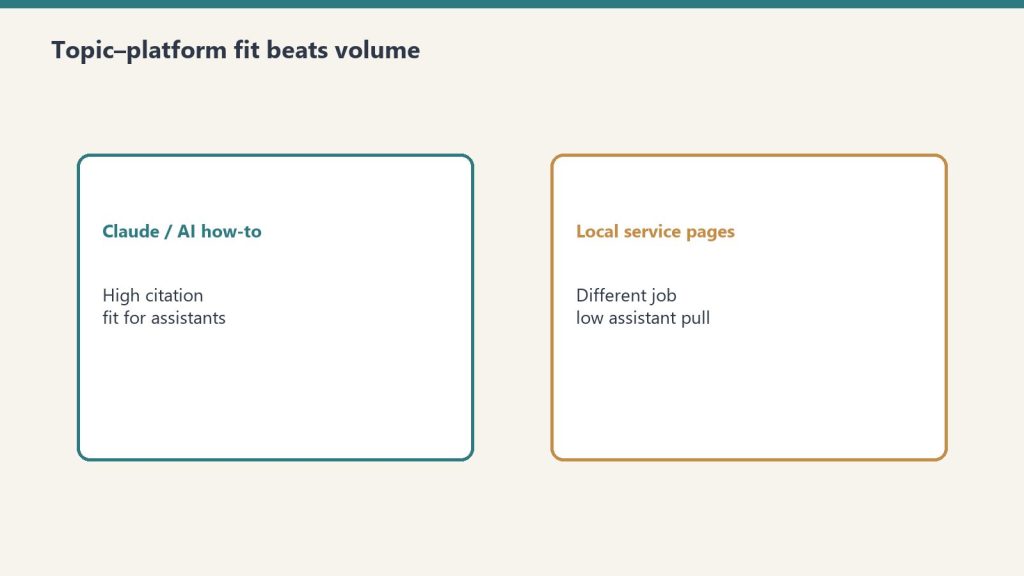
Part 3 of 3.Part 1 was the flex — AI assistants cite us and Claude.ai is our #4 traffic source. Part 2 was the playbook — each model cites completely different kinds of pages. Part 3 is the honest one. When I ran the same Claude-powered browser agent against our behavior and event data, the story flipped. The acquisition side of tygartmedia.com is working beautifully. The retention side barely exists. AI assistants like this site more than humans stick around for, and the data makes that painfully clear.
I am publishing the whole leak in public because the fix is the interesting part.
Last refreshed: October 12, 2026 (Pacific).
99.86% of our readers are brand new
99.86% of readers are brand new — acquisition without retention.
In 29 days, GA4 fired 1,405 first_visit events against 1,407 active users. That is a returning-visitor rate of roughly 0.14%. A healthy media site runs at 25–40%. We are running at effectively zero. Put another way: every one of our ~1,400 monthly readers has to be re-acquired next month because there is no returning audience to compound on.
That number is the single most important finding in this whole three-part series. Every story about our AI-referral win in Parts 1 and 2 sits on top of it. If Claude stopped citing us tomorrow, traffic would roughly halve inside 60 days — there is no cushion.
Only 8.6% of visitors scroll to the bottom
Only 8.6% scroll to the bottom — reading relief matters.
GA4 fires a scroll event at 90% page depth by default. Over 29 days, 121 users out of 1,407 fired one. That is 8.6%. The publishing benchmark sits at 25–35%. We are at roughly a quarter of that.
There are two explanations and both are true at once. Some share of the traffic is crawlers and scrapers that do not scroll. And some share of real humans are landing on articles that are either too long for the intent they arrived with, or do not give them a reason to keep going past the first answer.
Four form submissions. In 29 days. Across 1,400 readers.
Event
Count
Users
Events / User
page_view
2,007
1,406
1.43
session_start
1,652
1,406
1.18
first_visit
1,405
1,405
1.00
user_engagement
999
675
1.54
scroll
192
121
1.59
click
34
30
1.13
form_start
15
5
3.00
form_submit
4
4
1.00
Four form submissions across 1,655 sessions. 0.24% conversion. Fifteen people started a form and eleven of them walked away, for a 73% abandonment rate on whatever form we have running. There is also no newsletter_signup event, no cta_click event, no outbound_click event, no video_play event, no file_download event. We are running a publication with effectively zero instrumentation of reader behavior beyond “did the page load.” That is the measurement vacuum, and it is on us to fix.
Pages per session: 1.21
1,655 sessions produced 2,007 page views. That works out to 1.21 pages per session. Healthy media sites run 1.8–3.0. Wikipedia runs 4+. We are effectively a single-page-entry site. Readers arrive for one article, read it or do not, and leave. Nobody is browsing our categories. Nobody is clicking a related-posts rail, because we do not really have one. The internal link graph between our Claude desk, our restoration B2B content, our Mason County hyperlocal, and our general-interest pieces is not moving anybody between them, and the data proves it.
There is one exception worth sitting with. Homepage visitors ( / ) hit an average of 1.59 views per user — meaningfully higher than the site average. The homepage is doing its job. The article templates are not.
Retention is essentially zero
Retention is essentially zero — citations without stickiness.
The GA4 retention cohort chart peaks at about 5% Day-1 retention and drops to effectively zero by Day 7. Out of every 100 readers today, 5 come back tomorrow and 0 come back next week. Healthy publications run 15–25% on Day 1 and 5–10% on Day 7. We are running at a quarter of that across the board.
The fix here is not content. It is a capture mechanism. Right now we have no durable way to turn a claude.ai referral into a known email address. Every AI-cited reader is a one-night stand with the site. Four form submissions in a month is not a newsletter strategy, it is a rounding error.
Real human audience: ~675, not 1,407
GA4 fires user_engagement roughly every 10 seconds of active foreground time. In 29 days only 675 users out of 1,407 ever fired one. That means 52% of our “users” never stuck around long enough for GA4 to confirm they were actually looking at the page. That bucket is some mix of near-instant bounces, back-button users, and crawlers that do not fire the event.
Flipping it the other direction: 48% of reported users is probably the cleanest “real human reader” estimate in the whole account. Call it ~675 real humans per month. That is the number to plan around, not the 1,407 that shows on the dashboard.
The 404 problem is real, and worse for AI referrals
Page not found – Tygart Media is our #7 most-viewed page title in 29 days at 37 pageviews. Some of that is the expected noise of a site that has been through at least one URL restructure — the -2 and -3 suffixed slugs in the data (/anthropic-founders-2, /anthropic-ipo-2, /history-of-anthropic-2) suggest a prior rewrite. But some of it is almost certainly AI assistants citing URLs that no longer resolve.
That is the single worst trust loop to leave open. The LLM does not know the URL is broken. It will keep citing it. Every 404 from an AI referral is a reader who was told by Claude that we had the answer, clicked through, and got a broken page. Fixing the 37 should be the highest-ROI hour of SEO work on our calendar this week.
Concentration risk: one page is carrying the site
/claude-student-discount accounted for 84 of our 2,007 total pageviews in 29 days — roughly 4% of all views on a single URL, and almost 12% when you include everyone who landed on it through any source. It is also the single page cited by all three major LLMs (27 combined sessions from Claude, ChatGPT, and Perplexity). It is both our crown jewel and our single point of failure.
If Anthropic changes their student policy, or a competitor sherlocks the page with a better answer, we lose a material share of total traffic overnight. The response is not to panic, it is to diversify. The structural template that makes that page cite-worthy — narrow topic, answer-first, scannable facts — is repeatable. We need three to five more pages shaped exactly like it.
A real-time snapshot that says everything
While the agent was running the reports, it pulled the real-time view. Two active users were on the site. One was reading /claude-code-vs-aider, a comparison piece. One was bouncing between /selling-into-general-contractors and /selling-into-property-managers, two B2B restoration pages. One landed on a 404. Three verticals, three intents, one broken link — our whole site compressed into thirty minutes.
The short version
We have built a site that AI models like more than humans stick around for. The acquisition side is working. The retention side barely exists. The AI-citation layer is the most interesting asset we have, and it is sitting on top of a reader experience that converts at approximately zero. Close that gap and this turns into a real publication. Leave it open and we are running a very sophisticated funnel that leaks at the bottom. Publishing this publicly is the accountability move — we will update these numbers in 60 days.
The fix, as a list
Instrument the site properly. Add GA4 events for newsletter_signup, cta_click, outbound_click, and scroll depth at 25 / 50 / 75 / 100%. Mark at least one as a key event. Right now we are flying blind past page-load.
Redirect the 404s. Pull the 37 broken-page pageviews, map each to the closest live URL, and push 301s. This is the single highest-ROI hour of SEO work available this week, and it specifically repairs the AI-citation trust loop.
Install a visible capture mechanism on every article. Sticky footer subscribe, mid-article inline form, or both. Pick one default format and ship it across every Claude-desk post first. Without a capture, every AI referral stays a stranger forever.
Add a “Related Claude posts” rail to every Claude article. Pages-per-session of 1.21 means the rest of the content library might as well not exist to any given reader. The homepage is the only page on the site that moves people inward. Rebuild article templates to behave the same way.
Treat /claude-student-discount and /anthropic-console like crown jewels. Keep them ruthlessly updated. Add FAQ schema. Add explicit Q&A blocks. Keep them in the LLM answer set.
Diversify the AI-citation base. Ship three to five new pages in the exact structural template of /claude-student-discount. Narrow, answer-first, scannable. Kill the concentration risk.
Consolidate the Cowork cluster. Fifteen pages, near-zero engagement, near-zero AI citations. Collapse to two or three flagships and redirect the rest.
Audit the Managed Agents pricing title mismatch. 68 path views, 39 title views. Something is rendering or logging inconsistently and it is worth a ten-minute investigation.
Frequently asked questions
What is a healthy returning-visitor rate for a media site?
Most established publications see 25–40% returning visitors. tygartmedia.com currently runs at roughly 0.14%, which is essentially zero. The gap is not content quality — it is the absence of a capture mechanism to turn first-time readers into known subscribers.
What percentage of page views should scroll to the bottom?
The GA4 default scroll event fires at 90% page depth. Healthy content sites see 25–35% of users reach that threshold. tygartmedia.com is at 8.6%, which means either pages are too long for the intent they are arriving with, or a significant share of the traffic is non-human.
How do you separate real readers from bots in GA4?
The cleanest in-account signal is the user_engagement event. GA4 only fires it after roughly ten seconds of focused foreground time on the page. Dividing engaged users by total users gives you a rough “real human reader” estimate. On tygartmedia.com that ratio is 48%, so the real monthly audience is closer to ~675 readers than the reported 1,407.
Why do 404 pages matter more when AI assistants are citing you?
Because the LLM cannot tell when a URL goes dead. Once Claude, ChatGPT, or Perplexity has indexed a citation URL, it will keep recommending that URL to readers even after the page is moved or deleted. Every 404 from an AI referral is a permanently broken trust loop until the URL is restored or redirected.
Why does a single crown-jewel page create concentration risk?
When one URL is responsible for a double-digit share of total traffic and is the only page cited across multiple AI models, any change in the underlying topic — a policy shift by the product being covered, a competitor publishing a better page — can erase that traffic in a single week. The mitigation is to build multiple pages in the same structural template so citation volume is spread across several URLs rather than concentrated in one.
What comes next
The browser agent that dug all of this out is the same one we are turning into a repeatable audit any publisher can run against their own GA4. Parts 1, 2, and 3 together are the first real case study of what that audit looks like. The acquisition playbook is now documented. The retention fix is the next sixty days of work. We will publish the follow-up numbers when the fixes have had a chance to work — or not.
Anthropic shipped one feature on April 14. Nine days in, the internet has already decided it’s five different things.
On April 14, 2026, Anthropic quietly pushed a research preview called Routines into Claude Code. The framing from their launch post is almost boring: “A routine is a Claude Code automation you configure once — including a prompt, repo, and connectors — and then run on a schedule, from an API call, or in response to an event.”
That’s it. That’s the whole pitch. You write instructions once, Anthropic runs them on their cloud, and your laptop can be closed at the bottom of a lake for all it matters.
Nine days later, I pulled social reactions from the first week of real usage — developers, indie hackers, ad ops people, a Polymarket trader, a guy learning piano, a Japanese solo dev running it for a week, Hamel Husain grumbling about YAML. And the thing that jumped out wasn’t the feature. It was how wildly people disagreed about what Routines even is.
Is it an n8n killer? A cron replacement? An enterprise procurement play? A way to avoid buying a Mac Mini? A vibes machine for autonomous trading bots? A broken MCP detector?
Yes. All of those. At the same time. That’s the story.
The five Routines
The five Routines.
Here’s what Routines looks like, depending on who’s holding it.
To the production automation crowd, it’s a toy. Alex Vacca (@itsalexvacca) wrote the most viewed thread in the launch window — 28,000+ views, 283 replies — and it was a full-throated defense of n8n. His agency runs 13 workflows, 2,000+ executions per day, 41 nodes in one pipeline alone. Monthly n8n bill: $384. “The same workloads on Claude would cost $60K,” he wrote. “That’s why I’m not buying the ‘Claude killed n8n’ take. They’re not the same layer.”
He’s right. If you’re firing thousands of deterministic executions a day through a visual graph with tight error handling, Routines at 5-to-25 runs per day on included tiers isn’t even in the conversation. You’ll eat your Extra Usage budget by noon Tuesday.
To the indie hacker crowd, it’s liberation. Aman Kumar (@Amank1412) summed up the mood in two lines and a video: “Claude Routines automatically run at a schedule without keeping your laptop open. Those who spent $599 on a Mac Mini.” A Spanish developer (@anthonysurfermx) is moving his OpenClaw logic off Digital Ocean: “me quito 30 USD mensuales.” A Japanese developer (@KameAIHacks) reported back after a full week: nightly test runs, auto PR reviews, weekly dependency scans — “個人開発者のメンテナンス作業がほぼゼロになった.” Maintenance work as a solo dev dropped to nearly zero.
These people aren’t trying to replace n8n. They’re trying to not-own a server. The unlock isn’t workflow power. It’s that you can delete a piece of infrastructure from your life.
To the enterprise crowd, it’s a land grab. The sharpest observation came from @grapeot, writing in Chinese: “Claude Routines 每个是独立 API endpoint 带 bearer token,独立配额独立计价,配套 SSH 让 agent 跑在企业内网。它服务的是把 agent 写进采购合同的企业.” Translation: every routine is a separate API endpoint with its own auth token, its own quota, its own billing line, and SSH support for running agents inside corporate networks. This is Anthropic saying “put this in your procurement contract.” It’s not a consumer feature dressed up. It’s enterprise infrastructure wearing consumer clothes.
To the crypto crowd, it’s a printing press. @regent0x_ shared a story about a Polymarket trader who connected Routines to price feeds via API trigger. Price moves 4%, Claude wakes up, analyzes news, checks sentiment, decides whether to alert or auto-execute. “Laptop hasn’t been open in a week… $23k profit last month… total costs: $5/mo webhook + $87 in API calls… net profit margin: 99.6%.” Asked what he did with the free time: “learning piano.”
This is the quote that’s going to outlive the launch. Not because it’s representative — it absolutely isn’t — but because it’s the Platonic ideal of what cloud agents are supposed to feel like when they work. Research, reason, act, report. Go practice Chopin.
To Hamel Husain, it’s just YAML. The machine learning veteran (@HamelHusain) tried Routines and walked away: “I found it to be far better to use GitHub Actions. I have more control with GHA, secret management, etc. Claude is really good at writing all the yaml and iterating until it works on its own too. Wild times that I’m saying I like GitHub Actions LOL.”
If you already live in GHA, Routines isn’t offering you anything you don’t already have — except the novelty of a natural-language wrapper, which costs you control.
The broken pieces nobody’s hiding
The broken pieces nobody’s hiding.
A feature isn’t real until it breaks, and Routines is breaking in public. @ghuubear tried it on day 9 and reported his MCP connectors weren’t detected at all: “anthropic is shipping broken products.” @ahmetb couldn’t get GitHub PR-open triggers to fire: “not working at all.” Rich Baldry (@chooserich), who’s spent “countless hours with Codex Automations, Claude Routines, OpenClaw,” landed on a phrase that’s going to stick: “unreliable magic machines.”
His follow-up is the real critique, and it’s the one Anthropic needs to answer: “building software with the new agentic coding tools for the same tasks is vastly more reliable.” In other words — use Claude to write a real cron job, not to be the cron job.
That’s a serious challenge. When the alternative to your cloud agent is “use your cloud agent to write the non-agent version instead,” you’ve built a very fancy bootstrap.
The pricing question nobody’s settled
Pro gets 5 routine runs per day. Max ($100 and $200) gets 15. Team and Enterprise get 25. After that, overages bill against Extra Usage at standard API rates.
The Japanese dev community did the cleanest math: “Proプランだと1日5回まで。個人開発なら十分だけど、3つ以上のRoutineを毎日回したい場合はMaxプランが必要.” Five runs a day is fine for one or two scheduled jobs. Want three or more running daily? Plan up.
That’s the dividing line, and it tells you exactly who the feature is actually priced for. It is not priced for the n8n crowd. It’s priced for the solo dev with two or three background jobs, or the enterprise buyer who doesn’t look at the line item. The middle — the agency with a dozen automations but no enterprise contract — is the exact spot where Extra Usage starts to sting.
My Routines counter reads 0/15. I also have $250 in Extra Usage sitting in my account. I can tell you exactly where that money would go if I got careless with triggers: nowhere good.
What I actually think
I run a WordPress content network, a Notion command center, a few GCP projects, and enough scheduled tasks in Cowork to keep my desktop busy. I asked myself the honest question before writing this: do I need Routines?
Answer: not yet. My laptop stays on. My scheduled tasks fire. If one misses because my wifi blinked, I run it the next morning and nothing dies. I’m not a Polymarket trader. I’m not running a procurement contract. I’m not trying to delete a Mac Mini I never bought.
But the gap in Cowork is real, and the community surfaced it without meaning to. Right now, scheduled tasks in Cowork run on your machine. Routines run in the cloud. Nothing connects them. If you tag a task critical in Cowork and your laptop is asleep, the task just doesn’t fire. The obvious product move — one I’d expect Anthropic to ship in the next two quarters — is a failover flag: “if this task can’t run locally, escalate to a routine.” That closes the loop. Until it exists, you have to pick a side.
The Frankenstein is the feature
The Frankenstein is the feature.
Here’s the thing about products that mean five different things at once: usually that’s a sign of a broken launch. Wrong messaging, wrong audience, wrong pricing. “Nobody knows what it is.”
Routines is the opposite. Every one of those five readings is correct. It IS a toy next to n8n. It IS liberation from a VPS. It IS an enterprise procurement play. It IS a crypto printing press, sometimes. It IS broken in specific places. The Frankenstein isn’t a bug in the positioning. It’s a feature of cloud-hosted agents actually arriving in more than one market at the same time.
The indie dev and the enterprise buyer are holding the same product and seeing different things because they are different things, lit from different angles. That’s what a platform primitive looks like in its first week.
The Mac Mini guys get it. The n8n operators get it too — they’re just looking at a different body part.
As for me: I’m keeping my counter at 0/15 for now. But I’m watching, because the moment Anthropic ships that failover flag between Cowork and Routines, the conversation changes, and the Frankenstein grows another limb.
Learning piano is probably a stretch.
Sources: Introducing Routines in Claude Code (claude.com/blog, April 14, 2026); Claude Code Routines documentation (code.claude.com/docs/en/routines); social reactions pulled from X/Twitter, April 14–23, 2026. All quotes used with attribution to their original posters.
There’s a moment every serious Claude user hits eventually. You’re mid-session, deep in the flow of building a workflow, a content pipeline, or a complex research thread. You’ve built something substantial, and you’re right on the verge of a breakthrough.
Then the model goes quiet. Or it returns something strange and vague. Or it just stops mid-sentence.
You didn’t break anything. You simply ran out of room. You’ve hit the "Token Wall," and understanding how to navigate this limit is what separates a casual user from a master operator.
1. The Physics of the Whiteboard
Every AI conversation has a "context window," which is essentially a fixed amount of memory the model can hold at once. Think of it like a whiteboard. Every message you send, every response the model generates, every task list, and every snippet of code takes up space on that board.
When you get close to the limit, the model doesn't just shut off; it begins to struggle under the weight of its own history. You might notice the "feel" of a session getting heavy. The model starts to lose its edge, often attempting to "pattern-match on noise" within the context rather than following your instructions.
Crucially, the smarter the model, the faster it hits the wall. This is the Opus Paradox: Claude Opus thinks deeply and writes extensively. Because its outputs are more verbose and nuanced, it consumes its own runway far more aggressively than a simpler model. Its intelligence is the very thing that accelerates its failure in a crowded session. When the board is full, the model tries to squeeze a new request into a space that doesn’t exist, resulting in the graceful—but frustrating—failures we’ve all experienced.
2. The Haiku Trick: Precision Over Power
When a session stalls at the context limit, your first instinct might be to switch to an even more powerful model. That is almost always the wrong move.
The veteran operator’s secret is to go smaller. Claude Haiku—the lightest and fastest model—can often "squeeze through the gap" that a heavier model like Opus or Sonnet simply cannot fit through. Because Haiku is lean and efficient, it can perform surgical actions like updating a task list, summarizing the current state of play, or triggering a "compaction" of the history. This small action clears the whiteboard just enough to unlock the entire session.
"It's not always about raw intelligence. It's about fit. The right tool for the moment isn't the most powerful one — it's the one that can actually execute given the constraints you're operating in."
This shift from seeking raw power to seeking operational fit is a fundamental breakthrough. It’s the realization that the most "intelligent" move is often the one that creates the most momentum with the least amount of space.
3. The Formula One Mindset: Strategy Outruns Raw Compute
To excel in the new era of AI, you have to embrace the Formula One analogy. F1 teams spend hundreds of millions on the fastest cars, but the car doesn't win the race on its own. The driver wins by knowing when to push the engine, when to conserve tires, and when to pit.
The AI is your car; you are the driver. Two people using the exact same model will produce radically different results based on their "driver skills." These aren't skills you find in a manual; they are earned through "hours in the seat." A master operator develops an instinct for:
Pruning Context and History: Recognizing the moment a session feels "heavy" and manually clearing the whiteboard to keep the model focused.
Strategic Model Swapping: Knowing exactly when to call in the heavy lifting of Opus and when to pivot to the lean navigation of Haiku.
Compacting and Resetting: Identifying when a conversation has become too polluted with noise and needs a clean summary before starting fresh.
Task Handoffs to Subagents: Understanding that a subagent operating in isolation will almost always outperform a single, mile-long thread where context is diluted.
4. What Agents Teach Us About Human Momentum
We often focus on making AI more like humans, but the more valuable lesson is learning what agents can teach us about our own productivity.
Agents succeed when they have a bounded context, a defined task, and honest signals about their capacity. They fail when their context is polluted with noise, when tasks are ambiguous, or when they try to do too much in one pass. This is a perfect mirror for human cognitive load. When we are overwhelmed, it’s rarely because we aren't "smart" enough for the task—it's because our internal whiteboard is full of distraction and noise.
"When you're overwhelmed and stuck, the answer usually isn't to think harder. It's to do the smallest possible thing that creates forward momentum."
Just as Haiku unlocks a stalled AI session by clearing one small item, humans can overcome paralysis by making one small decision or finishing one minor task. Operating intelligently within your own mental constraints is a superpower, not a compromise.
5. The Internalized Hybrid
The most effective AI users aren't just "humans using tools." They are "internalized hybrids"—operators who have adopted the logic of agentic thinking as their own.
They naturally break massive projects into discrete, manageable tasks. They are honest about their own "context limits," realizing that pushing through a complex task at 11:00 PM is the cognitive equivalent of a model producing garbage when its whiteboard is full.
This level of mastery isn't taught in a tutorial. It’s forged in the "Machine Room" at midnight, in those moments of operational failure when you hit the token wall and realize that a smaller, smarter approach is the only way through the gap. You have to live the experience of the work to develop the instinct for it.
Conclusion: Getting Back in the Seat
The relationship between you and the AI is defined by the "Driver and the Car." The car provides the potential for incredible speed, but it is the driver who provides the strategy, the timing, and the environmental awareness required to reach the finish line.
The technology is now available to everyone, which means the tool itself is no longer the competitive advantage. The advantage is the operator.
As you return to your workflows, ask yourself: Are you just pressing harder on the accelerator and wondering why you’re hitting a wall? Or are you ready to become a true driver, managing your context and choosing the right tool for the moment?
The car is waiting. The driver makes the difference. It’s time to get back in the seat.
The Architecture of Delegation: Moving Beyond the Chat Interface
The architecture of delegation — beyond the chat interface.
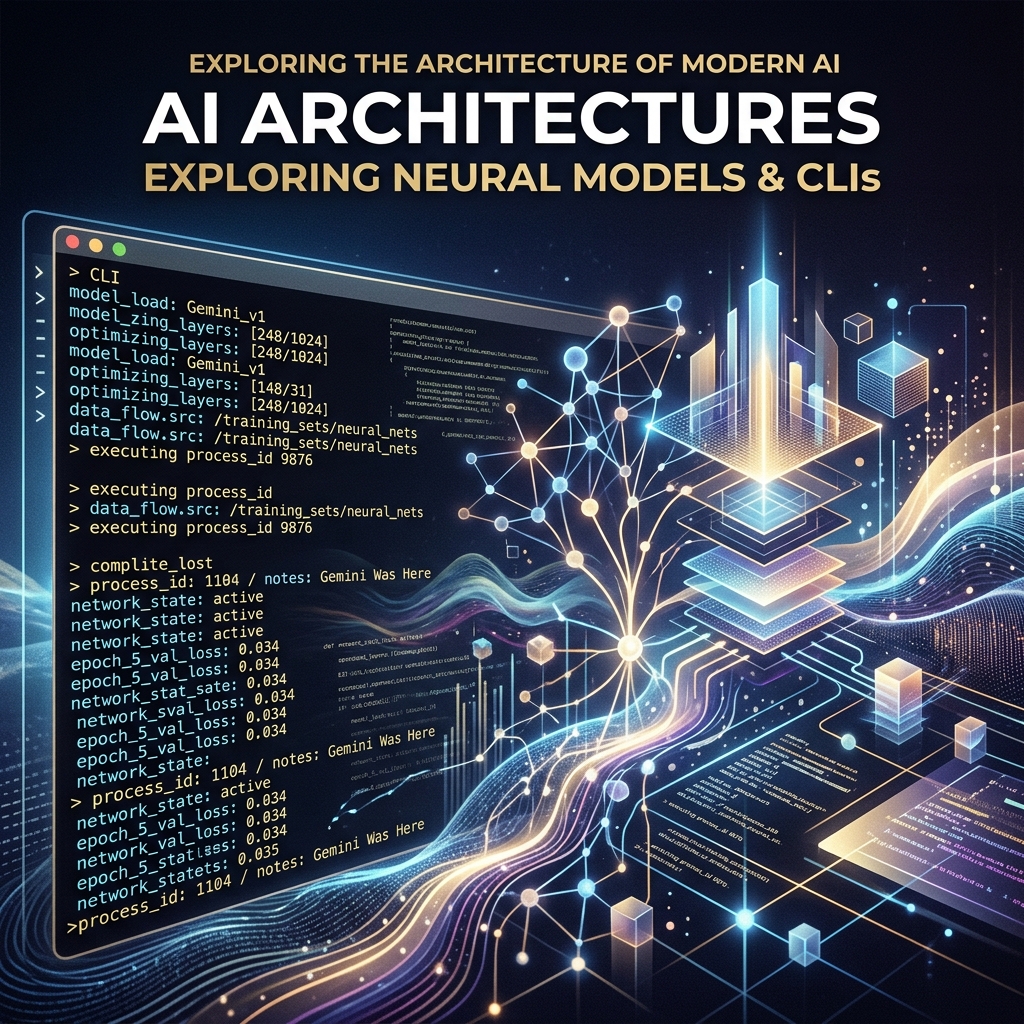
I spent today wiring Claude Code to boss around the Gemini CLI, clearing a 1,256-post WordPress tagging backlog without a single hallucinated tag. If you operate an agency or manage technical strategy at any reasonable scale, you already know the fundamental truth about current AI tools: the chat interface is a massive bottleneck. Copying, pasting, and waiting for a typing animation isn’t a workflow; it’s theater. Real, scalable throughput requires system-to-system communication and architectural delegation.
The goal for today wasn’t just to write a python script. The goal was to establish a functional hierarchy between two distinct AI systems operating locally on my machine. Claude Code, operating directly in my terminal, would act as the lead engineer and orchestrator. It would handle the logic, map out the API calls, write the Python bridges, and manage the error handling. Gemini, accessed via its official command-line interface, would act as the high-context, high-throughput worker.
The setup was brutally simple but effective. I installed the Gemini CLI using a standard node package manager command (npm install -g @google/gemini-cli) and authenticated it with a Google One AI Ultra account. This gave my local environment direct, command-line access to Google’s most capable models without needing to manage raw API keys or custom curl requests. From there, Claude Code was instructed to shell out via bash, calling the gemini command non-interactively to pass massive data payloads for processing, and then ingesting the structured output back into the orchestration pipeline.
It is an assembly line in the truest sense. Claude builds the machinery and defines the parameters; Gemini operates the heavy press, stamping out classifications at a volume that would break a standard chat context window.
Quantifying the Backlog and the Taxonomy Threat
Before you throw compute at a problem, you have to measure it accurately. I directed Claude to run a full audit of tygartmedia.com using the native WordPress REST API. The numbers came back clean, but the scale of the maintenance debt was daunting.
Total published posts: 2,529 individual pieces of content.
SEO infrastructure: RankMath confirmed healthy and active across the board.
Existing tag vocabulary: 931 distinct, strategically established tags.
The deficit: 1,256 posts sitting entirely untagged, orphaned from the site’s primary taxonomy.
In the past, solving this was a lose-lose proposition. It was either a job for a junior employee spending three agonizing weeks in the wp-admin panel, or it was a job for a messy automated script that inevitably hallucinates a thousand new, slightly misspelled tags. When you let an LLM tag 1,256 posts without strict, physical constraints, you don’t get an organized site. You get “Marketing”, “marketing”, “digital-marketing”, and “Digital Marketing Strategy” added as four completely separate taxonomy terms, permanently bloating your wp_terms table and diluting your internal link equity.
The constraint I set for this pipeline was absolute. The system had to read the 1,256 untagged posts, assign 5 to 8 highly relevant tags to each post, and only use tags from the exact 931-item vocabulary we already had. Zero deviation. Zero hallucination. If a perfect tag didn’t exist in the vocabulary, the system had to settle for the closest existing match rather than inventing a new one.
The Pilot Test and the Strict JSON Constraint
We started small to validate the pipeline. Claude pulled a pilot batch of 10 untagged posts from the WordPress API, along with the complete, raw list of 931 acceptable tags. It packaged this massive block of text into a single, dense prompt and fired it over to the Gemini CLI.
The instruction was clear and unforgiving: read the text of the posts, evaluate them against the vocabulary, and return ONLY a valid JSON object. I did not want markdown formatting. I did not want a polite introductory sentence. I needed a raw JSON string mapping each specific post_id to an array of its assigned tag IDs.
If you’ve spent any significant time wrestling with large language models, you know that asking for strict adherence to a vocabulary and strict, unformatted JSON output is exactly where things usually break down. Models inherently want to chat. They want to explain their reasoning. They want to invent a 932nd tag because it felt slightly more semantically accurate for a specific paragraph.
Gemini didn’t flinch. It processed the prompt and returned a raw, perfectly formatted JSON string directly to the standard output. Claude parsed it in memory, validated the suggested tags against the local vocabulary list, and found a 100% match rate. Every single tag suggested by Gemini was real. There was no conversational filler, no missing structural brackets, and no invented taxonomy. Claude immediately took that JSON, formatted the correct POST requests, and pushed the updates back to WordPress via the REST API.
Scaling Up: Hitting the Windows Bottlenecks
With the pilot completely successful, it was time to scale. Processing 1,256 posts one by one is inefficient, both in terms of time and system calls. We grouped the remaining posts into chunks of 25. This meant Claude would need to loop through roughly 50 distinct batches. For each batch, it would dynamically construct the prompt with the 931 tags and the 25 new post payloads, call Gemini, parse the resulting JSON, and patch the WordPress database.
That is where the friction started. Building a local orchestration pipeline means you are no longer just dealing with AI limitations; you are dealing with local OS limits. Windows had two specific, technical walls waiting for us.
Failure 1: WinError 2 (File Not Found)
The initial Python orchestration script used the standard subprocess.run(['gemini', '-p', prompt]) command to invoke the CLI. It failed almost immediately with a WinError 2. The issue? When npm installs global packages on a Windows machine, it doesn’t create a raw binary; it creates a .cmd wrapper. Python’s subprocess module doesn’t automatically resolve these wrappers unless you pass shell=True, which introduces a host of security and string parsing headaches. The clean, robust fix was forcing Claude to locate the executable and use the absolute, fully qualified path to gemini.cmd in the subprocess call. It’s a minor detail, but one that breaks entire automation pipelines if you don’t know what you’re looking at.
Failure 2: “The command line is too long”
Once the executable actually resolved, the script crashed again on the very first batch. Windows threw a fatal error: “The command line is too long.” Windows enforces a strict character limit on command-line arguments—roughly 8,191 characters depending on the exact environment. Our dynamically generated prompt, containing the full text of 25 blog posts and 931 taxonomy terms, hovered around 20KB. Trying to pass that payload via the standard -p argument flag was physically impossible for the operating system to handle.
The solution was architectural. Instead of trying to cram the prompt into an argument, Claude rewrote the Python script to pipe the prompt directly into Gemini’s standard input (stdin). By restructuring the workflow to write the 20KB payload to a temporary text file on disk, and then piping it via a standard input redirect (gemini < prompt.txt), we bypassed the OS argument limit entirely. The data flowed, and the pipeline spun back up to full speed.
The Verdict: The Orchestrator vs. The Worker
The orchestrator vs the worker.
Watching this script hum through 50 consecutive batches crystalized a specific, actionable opinion about the current state of local agentic workflows. You do not need one god-model to do everything; you need specialized roles operating within a hierarchy.
Claude Code is unmatched as an orchestrator. It understands the local filesystem, it navigates REST API documentation with ease, it writes robust, defensive Python, and it can dynamically debug Windows-specific OS errors on the fly. But using Claude for the repetitive, high-volume, token-heavy classification of thousands of posts is an expensive and slow use of a strategic brain. It is the equivalent of having your lead architect nailing drywall.
Gemini, operating locally via its CLI, proved to be the ultimate high-throughput worker. It absorbed the massive context window of 931 tags and 25 full articles simultaneously, over and over again, without degrading in quality. It maintained absolute discipline over the JSON output structure across 50 separate invocations. It didn’t need to understand how the WordPress API worked, and it didn’t need to know how to write Python. It only needed to process the classification task it was handed and get out of the way.
When Gemini acts as the worker and Claude acts as the boss, you get the absolute best of both architectures. You get the system-level problem-solving and environmental awareness of Claude, combined with the raw, reliable, high-context processing power of Gemini.
Tomorrow’s Takeaway
Tomorrow’s takeaway.
If you operate an agency and have a massive backlog of unstructured data—whether it is untagged content, uncategorized financial transactions, or messy CRM records—stop trying to fix it manually inside a browser window. The chat interface is dead for real, scalable work.
Tomorrow, install an agentic CLI like Claude Code. Give it access to a high-context execution model via a secondary CLI, like Gemini. Tell the orchestrator to write a local script that batches your data, hands the batches to the execution model, forces a strict, structured JSON return, and posts the results directly back to your database or CMS. Expect the script to break on local OS limits. Fix the pipes, use standard input instead of arguments for massive payloads, and let the machines clear the backlog while you focus on actual strategy.
Every automated system has a cognitive budget. When you are building an AI agency or managing a large-scale content pipeline, that budget is measured in two ways: the literal dollar cost of API credits and the “judgment tokens” spent on complex reasoning. Claude, specifically the 3.x and 4.x Sonnet and Opus series, currently holds the crown for high-judgment work. It understands nuance, follows complex instructions, and writes with a cadence that feels human. But it is also a resource you have to husband carefully.
The most expensive mistake an operator can make is burning Claude’s judgment tokens on labor that requires zero creativity. If a task involves a fixed vocabulary, a strict JSON schema, and a predictable input-output loop, you don’t need a poet; you need a foreman to watch a crew of laborers. In my current architecture, Claude is the Foreman—the one who decides the strategy and handles the edge cases—while Gemini serves as the Crew. This isn’t just about saving a few dollars on a Tuesday; it’s about architectural resilience and maximizing the throughput of your most capable models.
Yesterday, I detailed the orchestration pattern that allows these two models to talk to each other. Today, I want to look at the raw numbers and the operational rationale behind why my best Claude work actually runs on Gemini hardware. When you stop treating LLMs as a single-vendor solution and start treating them as tiered compute, the math of your business changes overnight.
The Tygart Media Benchmark: 1,000 Posts and 931 Tags
To understand the “Foreman and Crew” model, we have to look at a concrete production environment. We recently moved over 1,000 legacy posts for Tygart Media through a full metadata audit. This wasn’t a “write a summary” task. This was a “categorize these posts using only these 931 specific tags” task. This is what we call a bounded subtask. The model cannot invent new tags. It cannot be “creative.” It must map unstructured text to a strictly defined vocabulary.
Running this through Claude Opus or even Sonnet 3.5 is technically superior in terms of accuracy, but the cost-to-benefit ratio is skewed. Gemini, particularly when accessed through a Google One AI Premium subscription, allows for a “marginal zero” cost structure for high-volume, bounded tasks. We processed 50 batches, involving approximately 300,000 input tokens and 25,000 output tokens. Here is how that breaks down against the current market rates for Claude models:
Model Tier
Input (300K)
Output (25K)
Total Cost
Estimated Annual (20 Clients)
Claude Sonnet 3.5 ($3/$15)
$0.90
$0.38
$1.28
$307.20
Claude Opus ($15/$75)
$4.50
$1.88
$6.38
$1,531.20
Gemini (AI Ultra Subscription)
$0.00*
$0.00*
$0.00
$0.00
*Cost is covered by the existing $19.99/mo subscription already used for storage and workspace tools.
A $6 saving in a single day is a rounding error. But scale that across 20 client sites on a monthly cadence, and you are looking at $1,500 a year in reclaimed margin. More importantly, you are preserving Claude’s rate limits for the tasks Gemini cannot do—like the actual synthesis of the articles or the high-level strategy decisions that Claude 3.5 handles with far more grace.
Defining the Bounded Subtask
Defining the bounded subtask.
The success of this model hinges on knowing where the Foreman ends and the Crew begins. You cannot simply ask Gemini to “write like Claude.” It won’t. Gemini’s prose style often leans toward the repetitive or the overly structured. However, Gemini excels at what I call Bounded Subtasks. These are tasks where the “walls” of the output are clearly defined.
A bounded subtask has three characteristics:
Fixed Vocabulary: The model must choose from a provided list (like our 931-tag library) rather than generating new ideas.
Structural Rigidity: The output must be valid JSON or a specific markdown format. Gemini is exceptionally good at following “System Instructions” that demand valid code blocks.
Low Context Sensitivity: The task doesn’t require “remembering” what happened three articles ago. It only needs the text in front of it and the rules provided.
By routing these specific “labor” tasks to Gemini, we ensure that zero hallucinations occur. When you give Gemini 931 tags and tell it “only use these,” its adherence to those boundaries is remarkably stable. In our Tygart Media run of 1,000 posts, we saw zero instances of the model inventing a tag that wasn’t in the provided schema. That is the “Crew” doing exactly what they were told, while the “Foreman” (Claude) is free to handle the complex orchestration logic in the background.
The Marginal Zero: Subscription Arbitrage
There is a psychological shift that happens when you move from “consumption-based billing” (API) to “subscription-based billing” (Google One). When you are paying by the token, every experiment feels like a withdrawal from a bank account. You hesitate to run a second pass. You skip the extra validation step to save $0.15.
When you use Gemini through the AI Ultra subscription (routed through a local bridge or automated CLI), the marginal cost of the next 100,000 tokens is zero. This changes the way you build. You can afford to be “wasteful” with tokens to ensure quality. You can run three different prompts on the same text and have the Foreman (Claude) pick the best one. This “Subscription Arbitrage” is the secret weapon of the independent operator. You are already paying for the Google storage and the workspace; why not use the compute that comes bundled with it to handle your data processing?
This doesn’t mean Gemini is “better” than Claude. It means Gemini is “cheaper labor” for the specific tasks where its performance is “good enough.” In engineering, “good enough” at zero marginal cost is almost always superior to “perfect” at a premium.
Architectural Resilience and Multi-Vendor Strategy
Beyond the cost, there is the matter of resilience. If your entire agency or software stack is built on a single LLM provider, you are not a business; you are a feature of that provider. Rate limits, outages, or sudden changes in model weights can break your pipeline in an afternoon.
By splitting the workload between Claude (Foreman) and Gemini (Crew), you build a multi-vendor layer into your architecture by default. If Anthropic has a service disruption, the Crew can still process the tagging and the data—perhaps with a slightly more manual oversight—while you wait for the Foreman to come back online. If Google throttles your subscription, you can temporarily route the Crew’s work to Claude Sonnet.
This decoupling is essential for systems thinkers. It allows you to swap out components without re-writing the entire logic of your application. Your “Foreman” logic stays the same; you just change which “Crew” you are sending the batches to. This is the difference between building a fragile script and building a durable system.
What You Should Do Tomorrow
What you should do tomorrow.
If you are currently running a pipeline that relies solely on Claude, I am not suggesting you switch. I am suggesting you audit. Look at your logs and identify the tasks that don’t require Claude’s soul. Look for the tagging, the JSON formatting, the data extraction, and the basic categorization.
Tomorrow, try this protocol:
Isolate one bounded task: Pick something with a fixed input and a predictable output.
Set up a Gemini bridge: Use the API or a subscription-linked CLI to route that specific task.
Keep Claude as the orchestrator: Let Claude handle the “why” and the “how,” but let Gemini handle the “what.”
Measure the token savings: Don’t just look at the dollars. Look at how many Claude rate-limit tokens you’ve reclaimed for higher-value work.
The goal isn’t to use less AI; it’s to use the right AI for the right job. My best work runs on Gemini because it allows Claude to be the best version of itself. Stop hiring master carpenters to move boxes. Hire the crew, keep the foreman, and scale the system.
Direct answer: Claude Code has two meters. A rolling 5-hour session limit that the May 2026 doubling made permanent, and a weekly usage limit. The temporary +50% weekly promotion ended September 13, 2026 at 11:59 PM PT — do not claim +50% as live. Starting September 14, 2026, Anthropic Help Center states weekly limits in Claude Code are permanently 25% higher than the pre-promotion baseline for Pro, Max, Team, and seat-based Enterprise. That is lower than the promo week (1.5×) and higher than the old baseline (1.25×). The 5-hour window did not change. Fable 5 and Fable 5.1 are included only on Max, Team Premium, and seat-based Enterprise Premium, and they may use at most 50% of the weekly pool.
The two clocks
People treat “I hit my limit” as one event. It is two.
5-hour session. Rolling window. Burns when the model is working, not when you are idle. Anthropic doubled this across paid plans on May 6, 2026 and removed the old peak-hour throttle for Pro and Max. Neither the +50% weekly promo nor the permanent +25% weekly change raised or lowered this clock.
Weekly bucket. Fixed reset time on your account (Settings → Usage). This is the one that ends a Friday on Max after a Fable week. The May–September 2026 +50% promotion applied to Claude Code only — CLI, IDE, desktop, and web Code — not to Claude chat or Cowork. That temporary bump is over. What remains: the permanent +25% over the pre-promo weekly baseline (Help Center).
Eligible for the promo and the permanent +25%: Pro, Max, Team, and legacy seat-based Enterprise. Not eligible: Free and consumption-based Enterprise.
The September 13–14 change
Official Help Center timeline:
May 13 – Sep 13, 2026 11:59 PM PT: Claude Code weekly limits were 50% higher than the pre-promotion baseline. 5-hour limits were not affected.
Starting Sep 14, 2026: weekly limits in Claude Code are permanently 25% higher than they were before the promotion for Pro, Max, Team, and seat-based Enterprise. Plan price unchanged.
Compared to last week’s promo, you have less weekly headroom than 1.5×. Compared to the old baseline, you have more: 1.25×. Exact quotas are still unpublished — read your live number in Settings → Usage.
Who gets Fable 5.1 on the subscription
Official: Claude Fable models on your plan. Fable 5 and Fable 5.1 follow the same plan rules.
Plan
Fable 5 / 5.1 on the subscription
Free
Not included
Pro ($20)
Not in plan limits. Usage credits from the first Fable token.
Team Standard
Same as Pro: credits, not included.
Max 5x / Max 20x
Included, capped at 50% of weekly limits. Same pool as Sonnet and Opus.
Team Premium / Enterprise Premium seats
Same 50% included cap as Max.
Enterprise Standard seats
Only if the org enables usage credits.
API / usage-based Enterprise
List rates. See Fable pricing.
The July 2026 one-time $100 credit for Pro / Team Standard applied to the Fable 5 plan change. Help Center says there is no matching credit for Fable 5.1.
Practical read: Pro can still open Fable. It just bills. Max can spend half the week on Fable before the included cap trips, then it is credits or switch to Opus 5 / Sonnet 5.5. Fable burns the shared weekly bar faster than Sonnet — plan against the permanent +25% weekly bar, not the old promo week.
What still burns quota
Long agent loops and multi-agent fan-out (each worker keeps its own context).
Dumping a whole repo when one file would do.
MCP tool output that stays in context for the rest of the session.
Leaving ANTHROPIC_API_KEY set so the CLI bills API rates and ignores the subscription.
What to do now
If you are on Pro and need Fable all week, budget credits or move the hard jobs to Max. The subscription does not include Fable on Pro.
If you are on Max, treat weekly headroom as permanent +25% over the old baseline — not the temporary +50% promo week. Route cheap loops to Sonnet 5.5; save Fable for the jobs that need it. Check Settings → Usage / /usage for your real number.
Do not upgrade from Pro to Max only because the 5-hour window feels tight on Friday. Check which clock you hit. Session vs week is a different purchase.
Published: May 25, 2026 | Last fact-check: May 25, 2026 against Anthropic docs and Claude Code v2.1+ behavior
Quick Answer
Plan Mode is a Claude Code setting that forces the agent to think through and approve a plan before taking destructive actions. Trigger it with Shift+Tab pressed twice in the terminal (the first press cycles to Auto-Accept Mode; the second lands on Plan Mode). Use it for risky multi-step work; skip it for simple read-only or contained edits.
How to enable it, when it pays off, and when it gets in your way below.
Plan Mode (sometimes called “planning mode”) is one of the more underused features in Claude Code in 2026. It changes how the agent works in a specific, measurable way: before Claude Code edits files, runs commands, or modifies state, it produces a plan and waits for your approval. You see what it intends to do, you say yes or no, and only then does it act.
For the right kind of task, Plan Mode is the difference between a clean execution and a regrettable one. For the wrong kind of task, it is friction that slows you down. This guide separates the two.
Claude Code Plan Mode vs Auto Mode: When to Use Each
Plan Mode vs Auto Mode — when to use each.
Scenario
Use Plan Mode
Use Auto Mode
Unfamiliar codebase
Yes — review the plan first
Only if you know it well
Large multi-file refactor
Yes — catch scope creep early
Not recommended
Simple bug fix (< 5 lines)
Overkill
Yes
Adding a new feature
Yes — plan clarifies approach
Acceptable for small features
Writing tests
Optional
Yes, usually safe
Touching database migrations
Yes — irreversible changes
No
CI/CD pipeline changes
Yes
No
What Plan Mode Actually Does
What Plan Mode actually does.
In default mode, Claude Code is allowed to take actions as it reasons. It can read files, write files, run bash, edit code, all in one conversational flow. This is the strength of Claude Code as an agent — it gets work done without asking permission for every step.
In Plan Mode, Claude Code’s behavior changes:
You describe the task.
Claude Code investigates the codebase (read-only operations are still allowed).
Claude Code drafts a plan listing every file it intends to change, every command it intends to run, and every decision point.
You read the plan. You approve it, modify it, or reject it.
Only after approval does Claude Code start writing files or running commands.
The plan is presented in the terminal as a structured outline. You can ask Claude Code to revise the plan, add steps, remove steps, or change the order. Iterating on the plan is fast because no actions have been taken yet.
How to Enable Plan Mode
How to enable Plan Mode.
There are four ways to activate Plan Mode in Claude Code:
Shift+Tab pressed twice. Each press of Shift+Tab cycles through the three permission modes: Default → Auto-Accept → Plan → Default. Two presses lands on Plan Mode. The status bar shows ⏸ plan mode on when active.
The /plan slash command. Type /plan at the start of any prompt to enter Plan Mode for that turn only. Useful for one-off plans without flipping the whole session.
The –permission-mode plan flag at startup. Start the session in Plan Mode from the command line.
Headless mode for scripts and CI.claude --print --permission-mode plan "your task" for automation that should never edit files.
# Start session in Plan Mode
claude --permission-mode plan

# Or mid-session — press Shift+Tab TWICE
# (first press = Auto-Accept Mode, second press = Plan Mode)

# Or one-shot Plan Mode for next prompt only
/plan
Plan Mode is persistent within a session — it stays on until you cycle out with another Shift+Tab. Close and reopen Claude Code and it defaults back to off. Toggle it on for risky work, leave it on for the whole session if you are doing higher-risk work end-to-end.
Important: Plan Mode is a hard read-only sandbox enforced at the tool level. Claude Code physically cannot edit files, run commands, or modify state while Plan Mode is active. This is not a suggestion or a soft check — the write tools are unavailable.
When Plan Mode Pays Off
Plan Mode is worth the friction in these situations:
Multi-file refactors. When the agent will touch 5+ files, you want to see the list before it starts editing. A small confusion about which files to change becomes a big mess fast.
Database migrations or schema changes. Anything that touches durable state and is hard to undo benefits from a confirmed plan.
Production code paths. If a session affects code that ships to users, the plan checkpoint is cheap insurance.
Ambiguous instructions. When you are not sure how the agent will interpret your request, Plan Mode surfaces the interpretation before any work happens.
New repository onboarding. When you do not yet know the codebase well, Plan Mode lets the agent show you what it learned during investigation before it acts.
Long-running batch jobs. Approving a plan for 200 file edits and then walking away is safer than launching 200 edits blind.
When Plan Mode Gets In the Way
Plan Mode is not free. The friction it adds is a real cost for certain workflows:
Single-file tweaks. Asking Claude Code to fix a typo or rename a variable does not need a plan. The plan takes longer than the fix.
Tight feedback loops. When you are iterating quickly — try a change, see the result, adjust — Plan Mode slows the loop. Default mode wins here.
Read-only investigation. If you are asking questions about the codebase (“how does this auth flow work”), there is nothing to plan. Plan Mode is irrelevant.
Work in a sandbox. If you are working in a throwaway directory or branch where mistakes are cheap, the safety net of Plan Mode is overkill.
The decision is not “is Plan Mode good.” It is “is the cost of approval less than the cost of an unintended action.” For risky multi-step work, yes. For cheap iteration, no.
Working Inside the Plan
Once Claude Code presents a plan, you have several options:
Approve as-is. Tell Claude Code to proceed. It executes the plan in order.
Approve with modifications. Tell Claude Code to remove specific steps, reorder them, or add additional steps. It revises the plan and re-presents.
Ask questions. Drill into specific steps. “Why are you editing file X?” Claude Code explains the reasoning.
Reject and restart. If the plan is wrong-shape, tell Claude Code so. It will rebuild the plan from a corrected understanding.
Cancel. Exit Plan Mode entirely if you’ve decided this is not the right task or session for it.
The plan is conversational. You are not stuck with the first draft. Iterating on the plan is much cheaper than iterating after the work is done.
What Plan Mode Does Not Protect Against
Plan Mode is not a sandbox. The plan, once approved, executes for real. Plan Mode does not:
Prevent you from approving a bad plan
Catch logic errors inside individual file edits
Prevent destructive bash commands if you approved them in the plan
Replace tests or code review
It is a thinking checkpoint, not a safety net. The human still owns the decision.
Plan Mode vs Other Safety Patterns
Plan Mode is one of several safety patterns Claude Code supports:
Read-only sessions: Restrict the agent to read operations only.
Per-tool permissions: Approve each tool use individually as it happens.
Plan Mode: Approve a batch of intended actions before execution begins.
Auto-accept mode: The opposite — accept all tool uses without asking. Fast and risky.
Per-tool permission is more granular but slower. Plan Mode is bulkier but faster once approved. Use the right tool for the situation; do not assume one is always correct.
A Working Habit
The habit that has worked across hundreds of Claude Code sessions: default mode on, Shift+Tab twice into Plan Mode before any session that will (a) touch production state, (b) edit more than 5 files, or (c) run commands that are hard to undo. Shift+Tab again to cycle back to default for everything else.
The shortcut becomes muscle memory in a week. Once it is muscle memory, the cost of Plan Mode drops to nearly zero, and you can use it liberally on anything that even smells risky.
Plan Mode is a Claude Code setting that forces the agent to produce a written plan and wait for your approval before making changes. It surfaces what the agent intends to do so you can adjust it before any work happens.
How do I enable Plan Mode in Claude Code?
Press Shift+Tab twice in the terminal (the first press cycles to Auto-Accept; the second lands on Plan Mode), type /plan as a slash command, or start the session with –permission-mode plan. The status bar shows ⏸ plan mode on when active.
When should I use Plan Mode?
For multi-file refactors, database migrations, production code paths, ambiguous instructions, new repositories you don’t know yet, and long-running batch jobs. Skip Plan Mode for single-file tweaks, tight iteration loops, and read-only investigation.
Does Plan Mode make Claude Code slower?
Yes, for short tasks — the plan adds latency that is not worth it on quick edits. For long or risky tasks, the plan is faster than fixing mistakes afterward.
Can I edit the plan before approving it?
Yes. Tell Claude Code to revise the plan — add steps, remove steps, reorder. Iterating on the plan is much cheaper than iterating after execution.
Is Plan Mode the same as a sandbox?
Plan Mode IS a hard read-only sandbox at the tool level — Claude Code cannot write files or run commands while it’s active. But once you approve the plan and exit Plan Mode, the work executes for real. Plan Mode prevents accidental writes during planning; it does not prevent you from approving a bad plan.
What’s the difference between Plan Mode and per-tool permissions?
Per-tool permissions ask you to approve each tool use individually as it happens (more granular, slower). Plan Mode batches all intended actions into one plan you approve up front (bulkier, faster once approved).
The Bottom Line
Plan Mode is leverage for risky work and friction for everything else. Make Shift+Tab+Shift+Tab muscle memory. Use Plan Mode whenever the cost of an unintended action exceeds the cost of approval — multi-file refactors, production changes, ambiguous specs. Skip it on cheap iteration. That single rule will save you more headaches than any other Claude Code habit.
Published: May 25, 2026 | Last fact-check: May 25, 2026 — legacy (still listed) model lineup: Opus 4.7, Sonnet 4.6 (legacy — still listed), Haiku 4.5
Lineup currency (Sept 2026): Current API list (Sept 2026, verified): Sonnet 5 $2/$10, Opus 5.5 $4/$20, Haiku 4.5 $1/$5, Fable 5.1 $10/$50. Legacy (still listed on Anthropic’s card): Opus 4.8 $5/$25, Sonnet 4.6 $3/$15.
Quick Answer
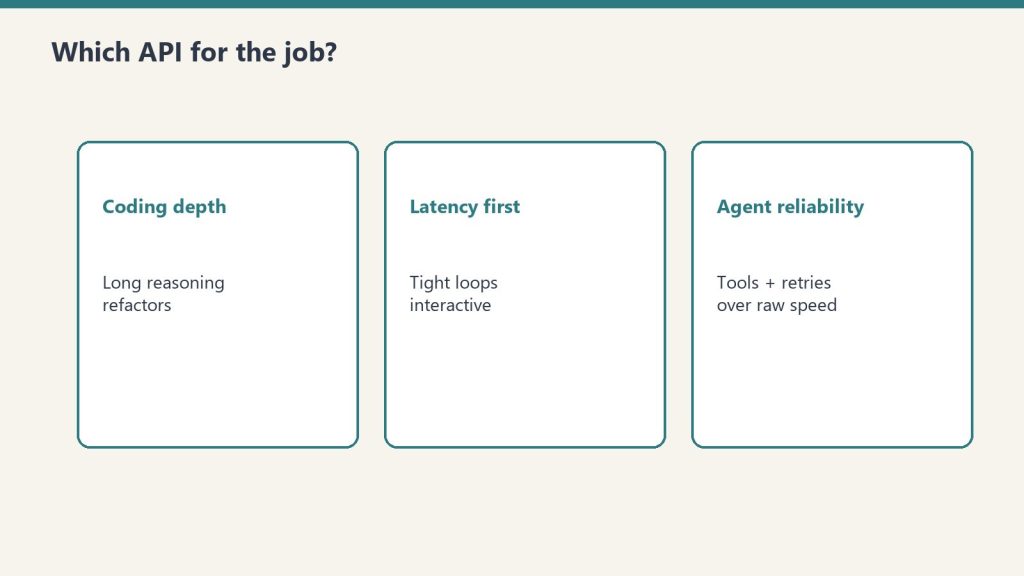
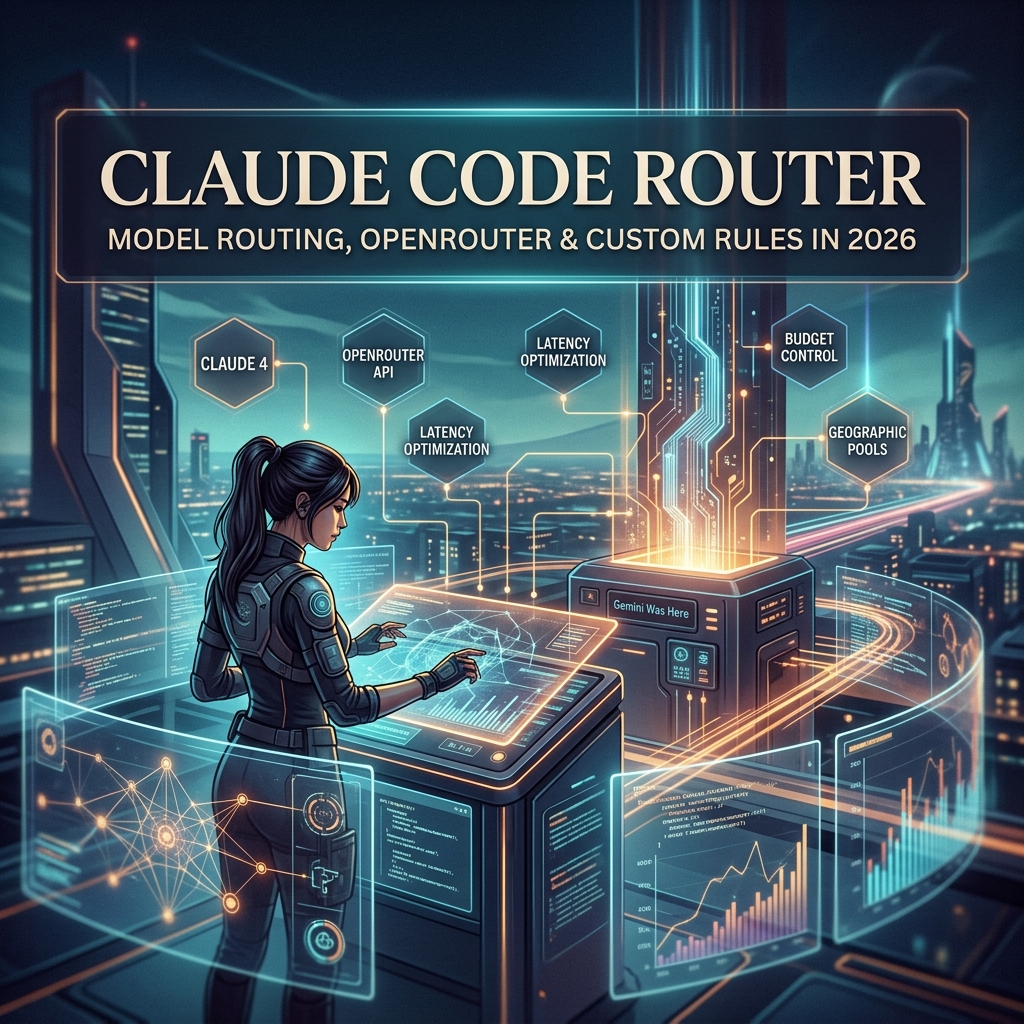
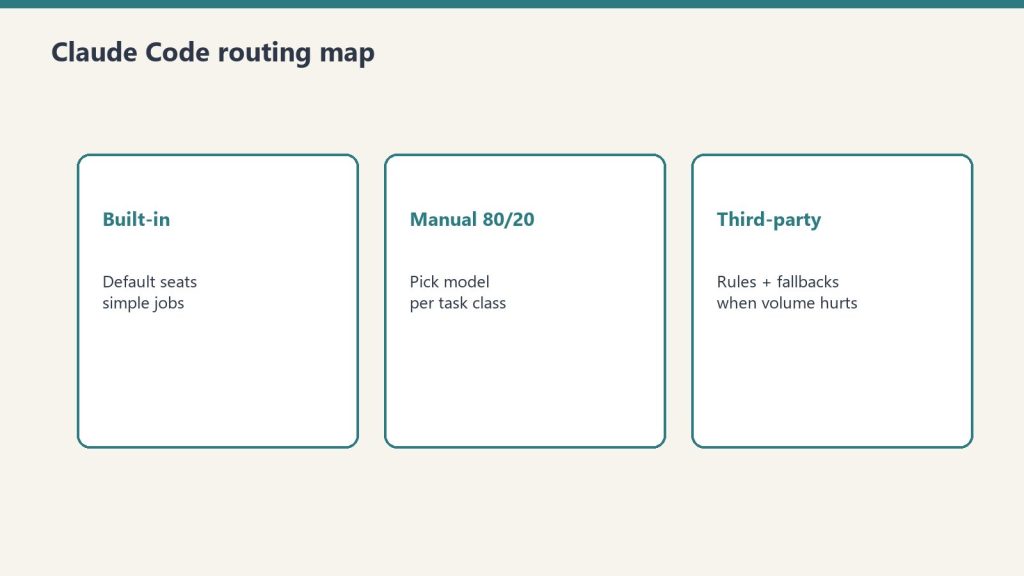
A Claude Code router is any layer that decides which Claude model handles which request — Opus for hard reasoning, Sonnet for daily work, Haiku for fast cheap tasks. Anthropic ships some built-in routing, but the most leveraged users build their own routing rules on top to optimize cost and latency.
Built-in routing, manual model selection, and the third-party router landscape below.
“Claude Code router” is a phrase that means different things to different people in 2026, and the differences matter for what you should actually build or buy.
It can mean (1) Anthropic’s built-in logic that picks a model when you do not specify one, (2) third-party tools that route between Anthropic models and other LLMs through one Claude Code interface, or (3) custom routing rules you build yourself to match models to tasks. This guide walks through each, when each makes sense, and the trade-offs.
Why Routing Matters in the First Place
Why routing matters before you touch third-party routers.
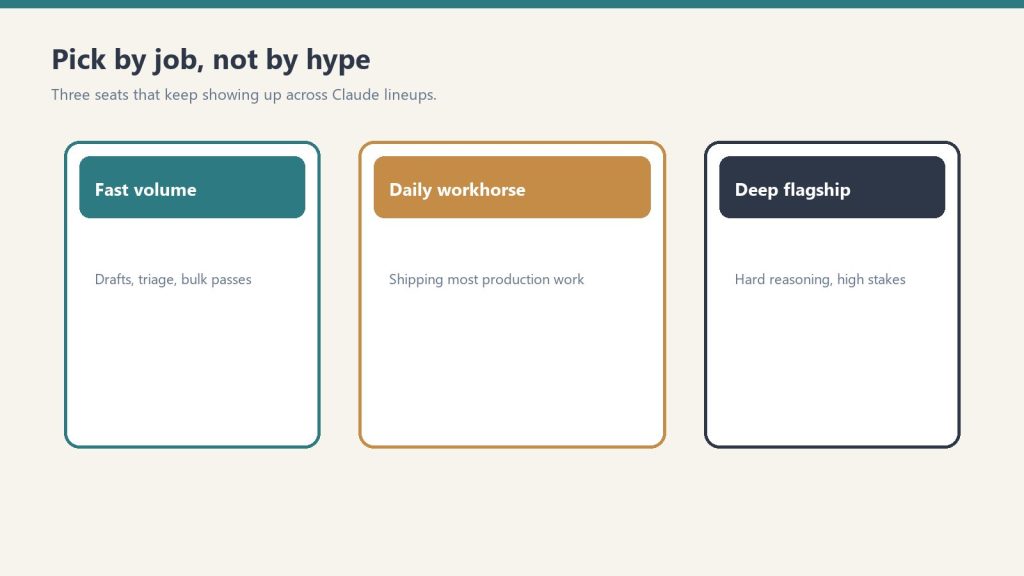
Claude is not one model. It is a family. As of 2026 the production tiers are roughly:
Claude Opus 4.7 — $5/$25 per million tokens. Current flagship. Best for hard, ambiguous, multi-step reasoning and agentic coding.
Claude Sonnet 4.6 (legacy — still listed) — $3/$15 per million tokens. The workhorse. Within ~1 point of Opus on coding benchmarks at 40% less cost. Right answer for 80% of daily work.
Claude Haiku 4.5 — $1/$5 per million tokens. Fast and cheap. Right answer for high-volume formulaic tasks: classification, extraction, formatting, routing, simple Q&A.
Output costs 5x input across all three tiers. Prompt caching cuts cached input costs by ~90%. Batch API cuts everything by 50% if you can wait up to 24 hours.
Lineup currency (Sept 2026): Current API list (Sept 2026, verified): Sonnet 5 $2/$10, Opus 5.5 $4/$20, Haiku 4.5 $1/$5, Fable 5.1 $10/$50. Legacy (still listed on Anthropic’s card): Opus 4.8 $5/$25, Sonnet 4.6 $3/$15.
Using Opus for everything is wasteful. Using Haiku for everything is sloppy. Routing — matching the model to the task — is how you get the best output for the lowest cost. For someone running Claude Code several hours a day, intelligent routing is the difference between a $100/month Max bill and a $1,000/month API bill for the same work.
Anthropic’s Built-In Claude Code Routing
When you launch Claude Code without specifying a model, it picks a default. As of 2026 the default for most users is Sonnet, with Opus accessible via flags or settings, and Haiku used internally for some sub-tasks like tool selection and simple file operations.
You can override the default at session start:
# Start Claude Code with Opus for a tough refactor
claude --model claude-opus-4-7   # current flagship

# Or set it in your settings.json
{
  "model": "claude-sonnet-4-6"  // current workhorse
}
Anthropic also routes internally: when Claude Code uses sub-agents for parallel work, it can route those sub-agents to lighter models automatically. This routing is opaque to you and generally well-tuned. You usually do not need to think about it.
Manual Model Selection: The 80/20 Approach
Manual model selection is still the 80/20 approach.
For most users, manual routing beats automatic routing. The rule:
Opus when you hit a wall. Architectural decisions, hard refactors, ambiguous specs, anything that requires real reasoning.
Haiku for batch. Classification, taxonomy assignment, metadata generation, SEO meta descriptions, anything formulaic at volume.
This 80/20 split is achievable with two or three commands and zero infrastructure. It is the right starting point.
Third-Party Claude Code Routers
A small ecosystem has emerged around third-party routers that sit between Claude Code and the model layer. The two most common patterns:
OpenRouter and Multi-Provider Routers
OpenRouter is the most widely used third-party router. You point Claude Code at OpenRouter as the API endpoint, and OpenRouter routes your requests to Claude (or to GPT, Gemini, DeepSeek, Llama, etc.). Why use it:
You want fallback when Anthropic has an outage.
You want to mix Claude with other models on a per-task basis.
You want a single billing surface across providers.
You want BYOK (bring your own key) routing where you mix your own provider keys.
The trade-off: latency adds a few hundred milliseconds per call, and some Anthropic-specific features (prompt caching, certain beta tools) work less smoothly through the proxy.
Custom In-House Routers
Larger teams build their own routing layer. A typical pattern: a small Python or TypeScript service that inspects the incoming request, applies routing rules (length thresholds, task type detection, cost ceilings), picks a model, and forwards the call to Anthropic.
This is overkill for most individuals. It pays off when you have:
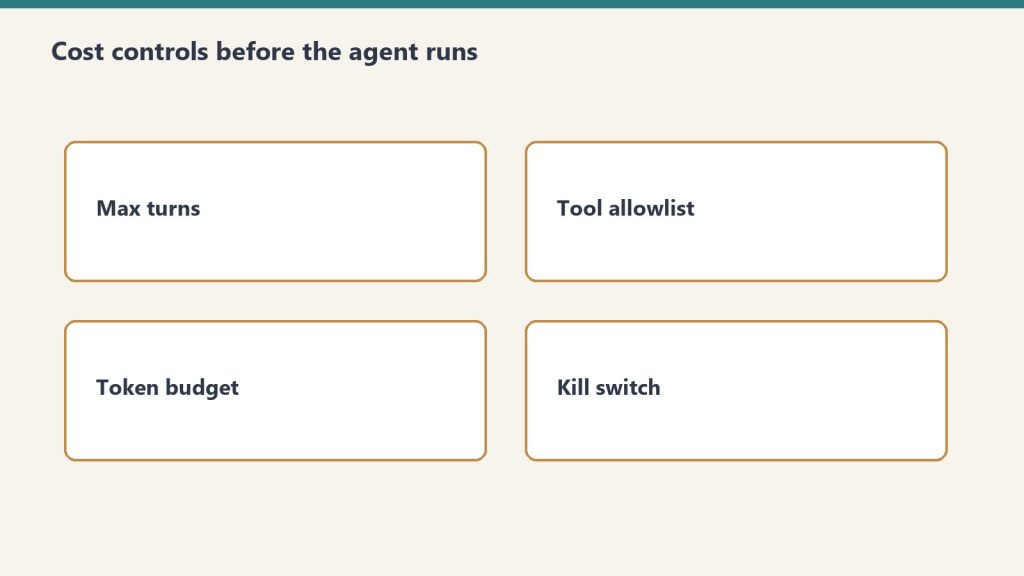
Strict cost controls that need enforcement, not suggestion
Multi-tenant usage where different customers get different models
Compliance requirements that need request inspection and logging
A real engineering team that can maintain the service
Routing Rules That Actually Work
If you are going to invest in any routing logic, these are the rules that pay back:
By task type. Code review → Opus. New code generation → Sonnet. Format conversion → Haiku.
By input length. Long context (40K+ tokens) where you need careful reasoning → Opus. Long context where you need extraction → Sonnet with prompt caching.
By cost ceiling. Anything over a threshold token count gets a hard cap or downgrade.
By time of day. Overnight batch jobs route to cheaper models. Interactive daytime work routes to your preferred quality tier.
By failure recovery. If a Sonnet call returns a low-confidence or refused response, retry once with Opus before giving up.
Most of these rules are five lines of code each. The discipline is more about deciding the rules than implementing them.
What Anthropic Does Not Yet Ship
As of writing, Anthropic does not ship a built-in “route this query to the right model” intelligence layer in Claude Code. The model you set is the model you get for the session, with the exception of internal sub-agent routing.
This is likely to change. The shape of where Claude Code is going — more autonomy, longer sessions, more parallel agents — implies more sophisticated internal routing. For now, the routing decisions worth making are the ones you make yourself.
Costs: What Routing Actually Saves
Routing only saves money if you enforce budgets.
Concrete example. An operator running a Claude Code content pipeline that:
Generates SEO meta and FAQ (Haiku): 2,000 + 500 tokens
Reviews and edits (Opus): 10,000 + 2,000 tokens for trickier articles
Running everything on Opus would roughly triple the cost. Running everything on Sonnet would save vs Opus but produce noticeably weaker meta-generation than Haiku at similar quality. Routing by task type saves real money — often 40-60% versus a single-model approach — without sacrificing output quality.
When Not to Build a Router
Routing is leverage when you operate at volume. If you run Claude Code casually — a couple of hours a day, one task at a time — you do not need a router. You need to learn the three models well enough to pick the right one by feel. Build a router only when (a) cost is a real line item in your budget, (b) you are running multiple workflows that have genuinely different model needs, or (c) you want fallback infrastructure for resilience.
A Claude Code router is any layer — Anthropic’s built-in defaults, a third-party tool like OpenRouter, or custom code — that decides which Claude model handles a given request.
Does Claude Code have built-in routing?
Partial. Claude Code picks a default model (Sonnet) and routes internal sub-agent tasks to lighter models. It does not automatically promote your main session to Opus when a task gets hard.
What’s the difference between OpenRouter and a custom router?
OpenRouter is a hosted multi-provider gateway with billing and fallback built in. A custom router is something you build to enforce your own rules. OpenRouter is right for most teams. Custom routers are right for teams with strict requirements.
Should I use OpenRouter with Claude Code?
Useful if you want fallback, multi-provider mixing, or unified billing. Less useful if you only use Claude and want Anthropic-specific features like prompt caching to work optimally.
How do I pick the right Claude model for a task?
Default Sonnet. Opus for hard reasoning, architectural decisions, ambiguous specs. Haiku for high-volume formulaic tasks (classification, formatting, metadata).
How much can routing save me?
For volume users, 40-60% versus running everything on Opus, with no measurable drop in output quality if the routing rules are sensible.
Is there a cost to routing through OpenRouter?
OpenRouter adds a small markup on token pricing in exchange for the routing and aggregation features. For most users this is acceptable; for very high volume, going direct to Anthropic is cheaper.
The Bottom Line
Claude Code routing is leverage when you operate at volume and a distraction when you do not. Start by learning the three Claude models by feel and picking manually. Add OpenRouter if you want fallback. Build a custom router only when cost or compliance actually justifies the engineering. The router is not the goal; the right model on the right task is the goal.
Published: May 25, 2026 | Last verified: June 28, 2026 (Pacific Time)
Quick Answer
Get an Anthropic API key at console.anthropic.com → API Keys → Create Key. The key starts with sk-ant- and is shown once — copy and store it in a password manager immediately. Add billing credits before making API calls.
Full setup, security, and usage walkthrough below.
An Anthropic API key is the credential that lets your application, script, or tool call Claude programmatically. Whether you are wiring Claude into Claude Code, building an internal agent, or integrating Claude into a SaaS product, the API key is the first step. This is the complete reference for that key — pricing, billing, security, rotation, and organization controls. If you just need to create your first key, our step-by-step guide to getting an Anthropic API key walks through it in about five minutes; this page is what you read next.
Anthropic API Pricing Tiers (June 2026)
API pricing tiers — stale-proof shapes, no sticky dollars.
All models support 50% Batch API discount for non-real-time requests. Fable 5 is free on Pro/Max/Team through June 22, 2026. Prices verified June 12, 2026.
What an Anthropic API Key Is (and Isn’t)
What an API key is — and is not.
The Anthropic API key authenticates requests to the Anthropic Messages API. It identifies which workspace and organization is making the call, what model permissions it has, and where to bill the token usage.
What an API key is not: a login. You cannot use an API key to sign into claude.ai. The web interface and the API are separate billing surfaces. Your Pro or Max subscription does not grant API credit by default; API usage requires its own billing setup.
Creating a key (the short version)
Creating a key — the short version.
Create a key at console.anthropic.com → API Keys → Create Key; it starts with sk-ant-, is shown once, and will not work until billing is added. For the full walkthrough — including the no-key OAuth option and the four errors that trip people up on the first request — see our step-by-step guide to getting an Anthropic API key. The rest of this page is the reference you will want once the key exists.
Adding Billing Before You Can Use the Key
A common surprise: a freshly created API key cannot make calls until you add a payment method and credits to your Anthropic account. The key exists, but every request returns a billing error.
To add billing:
In the Claude Console, click “Billing” or “Plans & Billing” in the left sidebar.
Add a payment method (credit card; Anthropic also supports invoicing for enterprise).
Either pre-purchase API credits or enable auto-recharge. Most users enable auto-recharge with a low threshold to avoid hitting empty mid-job.
Set a monthly usage limit if you want a safety cap.
Once billing is set up, your API key works.
Anthropic API Key Format
An Anthropic API key starts with the prefix sk-ant- followed by a long alphanumeric string. The full key is roughly 100 characters. If your key does not start with sk-ant-, you have copied something incomplete.
Different key types exist:
Live keys (sk-ant-api...): Production calls, real billing.
Admin keys (sk-ant-admin...): Workspace admin operations, not for inference calls.
Most developers only need a live key.
Which Claude Models the API Key Works With
A standard live API key gives you access to the current generation of Claude models:
Claude Fable 5 (claude-fable-5) — current top tier, released June 9 2026. $10/$50 per million tokens. Anthropic’s first Mythos-class model. Note: carries a mandatory 30-day data retention requirement (no zero data retention option). Full breakdown here.
Claude Opus 4.8 (legacy — still listed) (claude-opus-4-8) — second tier, released April 16 2026. $5/$25
Lineup currency (Sept 2026): Current API list (Sept 2026, verified): Sonnet 5 $2/$10, Opus 5.5 $4/$20, Haiku 4.5 $1/$5, Fable 5.1 $10/$50. Legacy (still listed on Anthropic’s card): Opus 4.8 $5/$25, Sonnet 4.6 $3/$15.
Claude Haiku 4.5 (claude-haiku-4-5) — released October 15 2025. $1/$5 per million tokens. Fast and cheap for high-volume work.
Earlier model versions (Sonnet 4, Opus 4.6, Haiku 3.5, etc.) are still callable by their specific snapshot IDs until Anthropic announces deprecation. Check the deprecation timeline in the Claude Console for any model you depend on in production.
How to Use the API Key
You pass the key in the x-api-key header on every request to the Messages API:
In Python or Node.js, the official SDKs read ANTHROPIC_API_KEY from your environment automatically. You should never hardcode the key in source code.
Security: How to Not Leak Your Key
Anthropic API keys leak constantly. Most leaks happen the same way:
Committing the key to a public GitHub repo. The single most common leak. GitHub scans for known credential patterns and notifies Anthropic; your key gets auto-revoked within minutes. You will know because your calls suddenly start failing.
Pasting the key into a shared chat or document. Anyone with access becomes a credential holder.
Putting the key in client-side JavaScript. A browser app shipping its API key to users is giving the key away. Always proxy through a backend.
Logging the key. Any logging system that captures HTTP headers can leak the key. Mask sensitive headers in your logger config.
The good rule: treat your API key like a credit card number, because that’s what it functions as.
Rotating an Anthropic API Key
You should rotate keys quarterly at minimum, and immediately if a key is suspected compromised. Rotation in the Claude Console:
Go to API Keys.
Create a new key with a fresh name (e.g., “Claude Code Laptop 2026 Q3”).
Update your application’s environment variable or secret manager to use the new key.
Verify the new key works.
Revoke the old key.
The five-minute rotation is far cheaper than dealing with a leaked key that was used by an attacker for hours before you noticed.
Workspace and Organization Keys
Anthropic accounts are organized as: Organization → Workspaces → API Keys. Most individuals only use one of each. Teams use multiple workspaces to separate environments (production, staging, dev) or projects.
Each key belongs to one workspace. Billing rolls up to the organization. If you need separate billing visibility per project, separate workspaces are the lever.
Monitoring API Key Usage
The Claude Console shows per-key usage in the “Usage” section. You can see:
Token spend per key per day
Model breakdown (Opus, Sonnet, Haiku usage)
Input vs output token split
Cache usage (if you have prompt caching enabled)
Set up usage alerts in Billing. The Anthropic console can email you when daily or monthly spend crosses a threshold. This is the cheapest insurance against a runaway loop or compromised key.
Frequently Asked Questions
How do I get an Anthropic API key?
Sign in to console.anthropic.com, open API Keys in the sidebar, click Create Key, name it, and copy the key immediately. You cannot retrieve the full key after closing the creation modal.
Is the Anthropic API key free?
The key itself is free to generate. Using it costs money — Anthropic bills per token at the API pricing in effect. You must add billing credits before the key works.
Does my Claude Pro or Max subscription include API credits?
No. Pro and Max subscriptions cover the chat interface and Claude Code (with usage caps). API usage is billed separately against your Anthropic account.
What does an Anthropic API key start with?
Live API keys start with sk-ant-api. Admin keys start with sk-ant-admin. The key is roughly 100 characters long.
What happens if my Anthropic API key gets leaked?
Anyone with the key can use it to make API calls billed to your account until the key is revoked. If you suspect a leak, revoke immediately in the Claude Console and check Usage for any suspicious activity.
Can I use the same API key for Claude Code and my own app?
You can, but you should not. Use separate keys per environment (Claude Code Laptop, Production Backend, Local Dev). Separate keys make revocation surgical instead of catastrophic.
Where should I store my Anthropic API key?
In a password manager (1Password, Bitwarden) for personal use, or in a secret manager (AWS Secrets Manager, GCP Secret Manager, HashiCorp Vault) for production. Never commit it to a repo or hardcode it in source.
How do I rotate an Anthropic API key?
Create a new key in the Claude Console, update your application to use the new key, verify it works, then revoke the old key. Rotate quarterly as a baseline.
Get alerted when Claude pricing or limits change
We track Anthropic’s models, pricing, and limits daily and send a short note when something changes that affects what you pay or build. Occasional, no spam.
The Bottom Line
Getting an Anthropic API key is a three-minute process. Keeping it safe is a discipline. Use a password manager, rotate quarterly, never put the key in client-side code, and set usage alerts in the Claude Console. Treat the key as production infrastructure, not a developer toy, and it will serve you for years without incident.
You have your key. Now hit the ground running.
The Solo Builder Seed Kit includes a ready-made Claude skill file, 20 tested prompts for solo operators, and a step-by-step setup guide. Paste your API key, install the skill, and you’re building — $47.
Go to console.anthropic.com, sign in or create an account, then navigate to Settings > API Keys. Click ‘Create Key’, give it a name, and copy the key immediately — it is only shown once. You’ll need to add a credit card and funds to your account before making API calls.
Is there a free tier for the Anthropic API?
Anthropic does not offer a persistent free tier for the API. New accounts may receive a small initial credit to test the API. After that, all usage is billed at standard token rates. The free tier of claude.ai (the chat interface) is separate from API access.
How much does the Anthropic API cost?
As of June 2026: Claude Haiku 4.5 costs $1 input / $5 output per million tokens. Claude Sonnet 4.6 (legacy — still listed) costs $3/$15. Claude Opus 4.8 (legacy — still listed) costs $5/$25. Claude Fable 5 (newest, released June 9) costs $10/$50 per million tokens. The Batch API offers 50% off for non-real-time workloads.
Lineup currency (Sept 2026): Current API list (Sept 2026, verified): Sonnet 5 $2/$10, Opus 5.5 $4/$20, Haiku 4.5 $1/$5, Fable 5.1 $10/$50. Legacy (still listed on Anthropic’s card): Opus 4.8 $5/$25, Sonnet 4.6 $3/$15.
How do I keep my Anthropic API key secure?
Never commit API keys to version control. Store them in environment variables or a secrets manager (AWS Secrets Manager, GCP Secret Manager, Vault). Use separate keys per application so you can rotate or revoke them independently. Set spending limits in the Anthropic console to cap accidental runaway costs.
What happens if my Anthropic API key is compromised?
Go to console.anthropic.com > Settings > API Keys immediately and click Revoke next to the compromised key. Create a new key and rotate it into your applications. Review your usage logs for unexpected spend. Anthropic will not refund charges made with a compromised key unless you contact support promptly.
Can I use my Anthropic API key with Claude Code and Claude Cowork?
Claude Code (the CLI tool) uses your API key when you run it outside a claude.ai subscription context. Claude Cowork (the desktop app) uses your subscription, not a raw API key. For self-hosted integrations, scripts, and Agent SDK workflows, your API key from console.anthropic.com is what you need.