Tag: AI Models 2026

  • Claude Cowork vs Claude Chat: When to Use Which

    Claude Cowork vs Claude Chat: When to Use Which

    Claude AI · Tygart Media
    Quick answer: Use Cowork for scheduled, recurring, or multi-step tasks that need to persist and run on their own. Use Claude Chat for interactive work, analysis, writing, and one-off tasks you’re doing right now.

    Anthropic now offers two distinct modes of working with Claude — the familiar chat interface and Cowork, a persistent task and agent environment. They look similar but serve fundamentally different purposes. Using the wrong one creates friction; knowing which to reach for first saves significant time.

    What Cowork Actually Is

    Cowork is a persistent agent environment inside Claude Desktop. It gives Claude access to your local filesystem, a sandboxed Linux VM with bash execution, your installed MCP servers, and a scheduler. Tasks you set up in Cowork can run on a schedule — daily, weekly, whenever you trigger them — without you being in the conversation. Claude operates autonomously against your instructions until the task is done.

    What Claude Chat Actually Is

    Claude Chat (claude.ai or the Claude app) is a stateless, interactive conversation interface. Each session is fresh. Claude has no persistent memory across sessions beyond what you’ve configured in memory settings. It’s optimized for real-time back-and-forth: you ask, Claude responds, you refine. The bash environment in Chat (used for file operations and code execution) is sandboxed and resets between sessions.

    Side-by-Side Comparison

    Factor Claude Chat Claude Cowork
    Runs without you No Yes — scheduled tasks
    Access to your files Upload only Direct filesystem access
    Persistent across sessions No (memory only) Yes — tasks and state persist
    Best for Interactive work, writing, analysis Recurring automation, pipelines
    MCP tool access Yes (if configured) Yes + local filesystem tools
    Runs on Anthropic’s cloud Your local machine
    Resource competition None (cloud-side) Shares your CPU/disk
    Skill files Yes (/mnt/skills/) Yes (same mount)

    When to Use Claude Chat

    Chat is the right tool when you’re actively involved in the work — drafting, editing, analyzing, strategizing. If you need to go back and forth, refine an output, or make judgment calls mid-task, Chat’s interactive model is faster and more natural. It’s also better for any task that’s genuinely one-off: you do it once, you’re done, there’s nothing to schedule or automate.

    Chat also runs in the cloud, meaning it doesn’t compete with your machine’s other processes and doesn’t run into the local VM disk limitations that Cowork can hit with heavy workloads.

    When to Use Cowork

    Cowork shines for work that should happen without you: daily newsroom publishing, weekly SEO reports, nightly data syncs, any pipeline that follows the same steps every run. If you find yourself doing the same Claude Chat session more than twice a week, it’s a candidate for a Cowork task.

    Cowork also makes sense for tasks that need direct access to files on your machine — reading from a local folder, processing downloads, interacting with local applications — since Chat requires you to explicitly upload files each session.

    Known Cowork Limitation to Be Aware Of

    Cowork runs on a local VM (the sessiondata.img file) with a fixed 8.5GB disk. Heavy users with many skills installed will periodically hit a disk-full error that prevents new sessions from launching. This is a known bug (GitHub #30751) with a manual workaround. See Claude Cowork useradd Failed Error: How to Fix It for the fix.

    Is Claude Cowork better than Claude Chat?

    Neither is better — they serve different purposes. Chat is optimized for interactive, real-time work. Cowork is for persistent, scheduled, autonomous tasks. Most power users use both regularly for different types of work.

    Can Claude Cowork access the internet?

    Yes, through MCP server integrations and web search tools. Cowork tasks can call APIs, search the web, read from connected services like Notion or Gmail, and interact with any MCP-connected tool you’ve configured.

    Does Claude Cowork use the same AI model as Chat?

    Yes — Cowork uses the same underlying Claude models (currently Opus 4.6 and Sonnet 4.6). The difference is the execution environment, not the model.


  • Claude Cowork ‘useradd Failed’ Error: How to Fix the sessiondata.img Full Bug

    Claude Cowork ‘useradd Failed’ Error: How to Fix the sessiondata.img Full Bug

    Claude AI · Tygart Media
    ⚠ Known Bug: This is GitHub issue #30751 — still open as of April 2026. Anthropic has not shipped a permanent fix. The workaround below is the only reliable solution.

    If every Cowork task is failing with useradd: cannot create directory /sessions/friendly-youthful-thompson or a similar error, your Cowork VM’s internal disk is full. This is not something you broke — it’s a known Anthropic bug that affects power users consistently. Here’s exactly what’s happening and how to fix it in under two minutes.

    What’s Causing the Error

    Cowork runs on a local VM with a fixed 8.5GB disk image called sessiondata.img. Every Cowork conversation creates a new directory under /sessions/<name>/ inside that VM and caches all your installed plugins and skills there. Those directories are never cleaned up automatically. Once the disk fills — roughly 80 sessions for light users, 40–50 sessions for users with many skills installed — every new task fails immediately with a useradd error. The session simply can’t be provisioned.

    If you have 20+ skills installed (the Tygart Media stack runs 40+), you’ll hit the cap significantly faster than the average user.

    The Fix: Move the Image File

    The fix is the same on macOS and Windows: move sessiondata.img out of its location so Claude Desktop rebuilds it fresh on next launch.

    Windows

    Quit Claude Desktop completely. Open Run (Win + R), paste this path and press Enter:

    %APPDATA%\Claude m_bundles\claudevm.bundle\

    Find sessiondata.img and move it to your Desktop as a backup. Relaunch Claude Desktop — it will recreate a fresh image automatically. Your first Cowork session after the reset may take slightly longer while plugins reinstall.

    macOS

    Quit Claude Desktop. In Finder, press Cmd + Shift + G and go to:

    ~/Library/Application Support/Claude/vm_bundles/claudevm.bundle/

    Move sessiondata.img to your Desktop. Relaunch Claude Desktop.

    What Gets Wiped vs What’s Preserved

    Data Location Wiped?
    Sidebar task list Electron IndexedDB ✅ Preserved
    Scheduled task definitions Documents/Claude/Scheduled/ ✅ Preserved
    MCP server config claude_desktop_config.json ✅ Preserved
    Chat conversation history Electron LevelDB ✅ Preserved
    VM plugin/skill cache Inside sessiondata.img ⚠ Wiped (auto re-downloads)
    VM session working dirs /sessions/<n>/ inside VM ⚠ Wiped (this is the fix)

    How Often Will You Need to Do This?

    Until Anthropic ships automatic session cleanup, this is a recurring task. With a heavy skill load, plan on running the fix every 4–6 weeks or whenever you see the useradd error return. Setting a calendar reminder is the most reliable approach.

    The Longer-Term Fix: Move Heavy Operations Off Cowork

    The root cause is that Cowork was designed for lighter, conversational task automation — not running dozens of skills across many parallel sessions. If you’re running content pipelines, batch WordPress operations, or multi-step automation workflows, moving those operations to a GCP Cloud Run cron job or Compute Engine VM eliminates the local VM bottleneck entirely. Cowork’s local sandbox competes for your machine’s resources; GCP runs isolated, always-on, and never fills up your laptop’s disk.

    Why does Cowork say “useradd failed: exit status 12”?

    The Cowork VM’s internal disk (sessiondata.img) is full. It can no longer create new session user directories. Moving the image file out and letting Claude Desktop recreate it clears the disk and resolves the error.

    Will I lose my Cowork tasks if I move sessiondata.img?

    No. Your task definitions, scheduled tasks, MCP config, and conversation history are all stored outside the VM image. Only the internal plugin/skill cache is wiped — it re-downloads automatically on the next session.

    How do I prevent Cowork from filling up again?

    Until Anthropic ships a permanent fix (GitHub issue #30751), the options are: run the reset script periodically, reduce your installed skill count, or route heavy operations to GCP instead of Cowork.


  • Claude 5 Release Date 2026: Leak Signals, Expected Features & Anthropic’s Timeline

    Claude 5 Release Date 2026: Leak Signals, Expected Features & Anthropic’s Timeline

    Claude AI · Tygart Media · Updated April 2026
    Current status (April 16, 2026): Claude 5 has not been officially announced by Anthropic. The current latest models are Claude Opus 4.6 and Claude Sonnet 4.6, released in February 2026. Based on Anthropic’s release cadence and early signals, Claude 5 is expected Q2–Q3 2026.

    Every few months, a new wave of “Claude 5 release date” searches spikes — and it makes sense. Anthropic moves fast, the gaps between major generations have been shortening, and early signals like Vertex AI log leaks have given the community something to speculate on. Here’s an honest breakdown of what’s confirmed, what’s leaked, and what the pattern suggests.

    What’s Confirmed About Claude 5

    As of April 2026, Anthropic has not officially announced Claude 5 by name in any public release notes, API documentation, or blog post. The company’s official model table shows the Claude 4.x family as current. No countdown page exists. No API model string beginning with claude-5 has appeared in public documentation.

    What is confirmed: Anthropic is actively deprecating the original Claude 4.0 models (retiring June 15, 2026), recommending migration to Claude Sonnet 4.6 and Opus 4.6. This is a routine generational housekeeping move, not a Claude 5 announcement.

    The Evidence For a Q2–Q3 2026 Release

    The strongest early signal came in early February 2026, when a model identifier — claude-sonnet-5@20260203 — appeared briefly in Google Vertex AI error logs. Independent sources cross-verified the leak, and the codename “Fennec” circulated alongside claimed benchmark scores of around 80.9% on SWE-bench Verified, compared to Opus 4.6’s current scores.

    Beyond the leak, the pattern is consistent: Anthropic has released a new major model generation roughly every 12–14 months since Claude 3. Claude 4.5 (the highest-capability 4.x model) reached 77.2% on SWE-bench Verified. A Claude 5 release that clearly exceeds that — not just marginally — would justify a major version bump and align with Anthropic’s stated commitment to releasing models that represent genuine capability leaps, not incremental updates.

    Anthropic’s Release Pattern

    Generation Initial Release Gap to Next Major
    Claude 2 July 2023 ~8 months
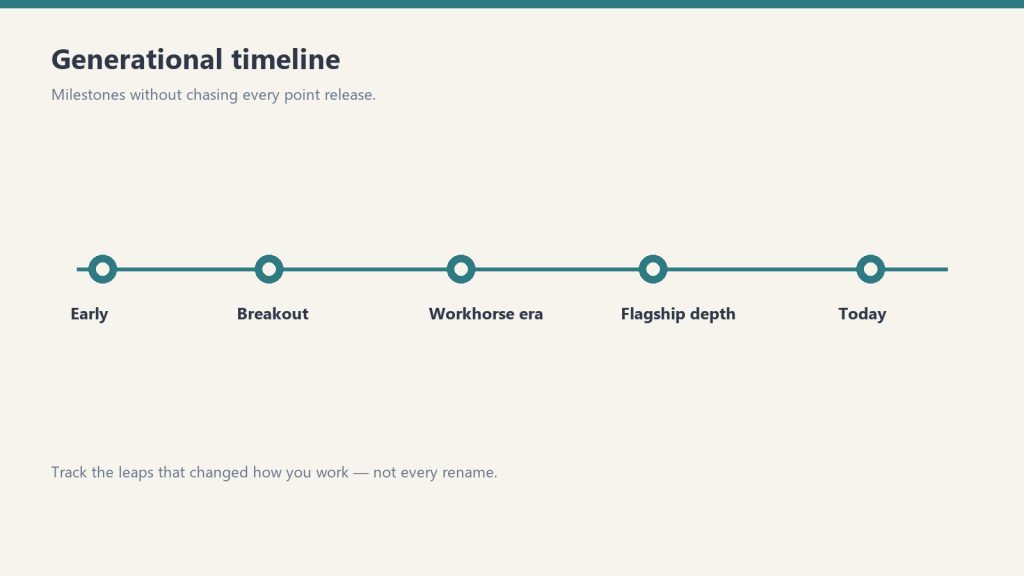
    Claude 3 March 2024 ~14 months
    Claude 4 May 2025 ~12–14 months → Q2–Q3 2026

    A 12-month gap from the Claude 4 launch (May 2025) points to May–July 2026 as the earliest likely window. Anthropic has been explicit that they won’t rush a release — Claude 5 will need to clearly establish a new capability tier to justify the version number.

    What Claude 5 Is Expected to Improve

    Based on leaked benchmark data and Anthropic’s public research direction, the Claude 5 generation is expected to push forward on: extended thinking and multi-step reasoning (building on the chain-of-thought work in Claude 3.5+), larger context handling, improved agentic reliability for long-horizon tasks, and faster inference at the Sonnet tier. Pricing is expected to follow the established pattern — Claude 5 Sonnet likely priced at or below current Opus 4.6 rates while outperforming it on most tasks.

    The Current Models Are Excellent — Don’t Wait

    If you’re evaluating whether to build on Claude now or wait for Claude 5, the answer is build now. Claude Sonnet 4.6 and Opus 4.6 are capable, stable, and well-documented. The 4.x API will remain live well after Claude 5 launches — Anthropic maintains parallel model availability for enterprise predictability. Waiting costs you months of production time for a model that may arrive on an uncertain schedule.

    For current model specs and API strings, see Claude API Model Strings — Complete Reference. For pricing on current models, see Claude AI Pricing: Every Plan Explained.

    When is Claude 5 coming out?

    Claude 5 has not been officially announced. Based on Anthropic’s release cadence and early Vertex AI log leaks, Q2–Q3 2026 (roughly May–September) is the most cited window. No confirmed date exists as of April 2026.

    Is Claude 5 confirmed?

    No. Anthropic has not officially announced Claude 5 by name. The “Fennec” codename and claude-sonnet-5@20260203 model string surfaced in third-party Vertex AI logs, but Anthropic has not confirmed a Claude 5 release.

    What is the latest Claude model right now (April 2026)?

    The current latest Claude models are Claude Opus 4.6 (claude-opus-4-6) and Claude Sonnet 4.6 (claude-sonnet-4-6), both released in February 2026. Claude Haiku 4.5 is the current speed/cost tier.

    Will Claude 5 Sonnet beat Claude Opus 4.6?

    That’s the expected pattern. With every prior generation, the mid-tier Sonnet model of the new generation outperformed the previous generation’s Opus on most benchmarks, at lower cost. Leaked benchmark data suggests Claude 5 Sonnet (“Fennec”) scores around 80.9% on SWE-bench Verified versus Opus 4.6’s current scores.


  • Claude 4 Deprecation: Sonnet 4 and Opus 4 Retire June 15, 2026

    Claude 4 Deprecation: Sonnet 4 and Opus 4 Retire June 15, 2026

    Claude AI · Tygart Media
    ⚠ Deprecation Notice (April 2026): Anthropic has announced that claude-sonnet-4-20250514 and claude-opus-4-20250514 — the original Claude 4.0 models — are deprecated. API retirement is scheduled for June 15, 2026. Anthropic recommends migrating to Claude Sonnet 4.6 and Claude Opus 4.6 respectively.

    If you’re still running the original Claude Sonnet 4 or Opus 4 model strings in production, you have a hard deadline: June 15, 2026. After that date, calls to claude-sonnet-4-20250514 and claude-opus-4-20250514 will fail on the Anthropic API. Here’s exactly what’s being deprecated, what to migrate to, and what you’ll gain from upgrading.

    What’s Being Deprecated

    Anthropic is retiring the original Claude 4.0 model versions — the ones that shipped in May 2025. These are distinct from the 4.x versions released since. The specific API strings going offline:

    Model API String (retiring) Retirement Date
    Claude Sonnet 4 (original) claude-sonnet-4-20250514 June 15, 2026
    Claude Opus 4 (original) claude-opus-4-20250514 June 15, 2026

    These are not the latest Claude 4 models. If you’ve been on Anthropic’s recommended defaults, you’re likely already on 4.6. This deprecation primarily affects teams that pinned specific model version strings in their API calls rather than using the alias endpoints.

    What to Migrate To

    Anthropic’s recommendation is a direct version bump within the same model tier:

    Retiring Migrate To API String
    claude-sonnet-4-20250514 Claude Sonnet 4.6 claude-sonnet-4-6
    claude-opus-4-20250514 Claude Opus 4.6 claude-opus-4-6

    The 4.6 models are meaningful upgrades — not just version bumps. Claude Sonnet 4.6 ships with near-Opus-level performance on coding and document tasks, dramatically improved computer use capabilities, and a 1 million token context window in beta. Claude Opus 4.6 adds the same 1M context window alongside improvements to long-horizon reasoning and multi-step agentic work.

    Why Anthropic Deprecates Models

    Anthropic follows a predictable model lifecycle: new versions within a generation ship as upgrades, and older version strings are retired on a roughly 12-month timeline after a successor is available. This keeps the API surface clean and pushes users toward better-performing models. The deprecation of the original Claude 4.0 strings follows the same pattern as prior Claude 3 and 3.5 retirements.

    For most API users, the migration is a one-line change — swap the model string. Prompting styles, tool use conventions, and JSON response formats are stable across 4.x generations. Anthropic has not announced breaking changes that would require prompt rewrites when moving from 4.0 to 4.6.

    How This Fits the Claude 4 Generation Timeline

    Model Released Status
    Claude Sonnet 4 (original) May 2025 ⚠ Deprecated — retires June 15, 2026
    Claude Opus 4 (original) May 2025 ⚠ Deprecated — retires June 15, 2026
    Claude Opus 4.6 February 5, 2026 ✅ Current flagship
    Claude Sonnet 4.6 February 17, 2026 ✅ Current production default
    Claude Haiku 4.5 October 2025 ✅ Current speed/cost tier

    What If You Don’t Migrate Before June 15?

    API calls to claude-sonnet-4-20250514 or claude-opus-4-20250514 after June 15, 2026 will return errors. There is no automatic failover to a newer model — the call simply fails. If you have any production systems, scheduled jobs, or automated pipelines using these version strings, audit them now. A global search for 20250514 in your codebase is the fastest way to find exposure.

    What Comes After Claude 4.x

    Claude 5 is expected in Q2-Q3 2026, based on Anthropic’s release cadence and early signals from Vertex AI deployment logs. As has been the pattern with prior generations, Claude 5’s mid-tier Sonnet model is expected to outperform the current Opus 4.6 on most benchmarks at a lower price point. No official announcement has been made as of April 2026.

    When does Claude 4 deprecate?

    The original Claude Sonnet 4 (claude-sonnet-4-20250514) and Claude Opus 4 (claude-opus-4-20250514) are deprecated and retire on June 15, 2026. Current 4.6 models are not affected.

    What should I migrate to from Claude Sonnet 4?

    Migrate to claude-sonnet-4-6 (Claude Sonnet 4.6). It’s a direct upgrade in the same model tier with significantly improved capabilities and a 1M token context window in beta.

    Will my prompts still work after migrating from 4.0 to 4.6?

    In most cases, yes. Anthropic has maintained API compatibility across the 4.x generation. The 4.6 models are more capable, not differently structured. Most production prompts migrate without changes.

    What’s the difference between Claude 4 and Claude 4.6?

    Claude 4.6 (released Feb 2026) is a meaningful upgrade over the original Claude 4.0 (released May 2025). Key improvements: near-Opus performance at Sonnet pricing, 1M token context window in beta, dramatically better computer use, and improved instruction-following accuracy.

  • Claude 4 Release Date & Deprecation: What’s Changing June 2026

    Claude 4 Release Date & Deprecation: What’s Changing June 2026

    Claude AI · Fitted Claude

    Anthropic hasn’t announced a specific “Claude 4” as a distinct release — the current model generation is the Claude 4.x series, with Claude Opus 4.6 and Claude Sonnet 4.6 as the current flagship models. If you’re searching for Claude 4, you’re likely looking for the current generation. Here’s exactly what’s live, what the naming means, and what to watch for next.

    Current status (April 2026): The Claude 4.x model family is live. Claude Opus 4.6 (claude-opus-4-6) and Claude Sonnet 4.6 (claude-sonnet-4-6) are Anthropic’s current production models. These are the “Claude 4” generation.

    The Current Claude 4.x Lineup

    Model API String Status Position
    Claude Opus 4.6 claude-opus-4-6 ✅ Live Flagship / maximum capability
    Claude Sonnet 4.6 claude-sonnet-4-6 ✅ Live Production default / balanced
    Claude Haiku 4.5 claude-haiku-4-5-20251001 ✅ Live Speed / cost efficiency

    Claude Model Naming: How It Works

    Anthropic uses a generation.version naming convention. The “4” in Claude 4.6 denotes the fourth major model generation. The “.6” is a version within that generation — a meaningful update that improves on the generation’s base capabilities without being an entirely new architecture.

    This is why there’s no single “Claude 4 release date” to point to — the Claude 4.x family has been rolling out incrementally, with different model tiers (Haiku, Sonnet, Opus) shipping at different points within the generation. The generation is live; you’re using it now if you’re on current Claude models.

    Claude 4 vs Claude 3: What Changed

    The jump from Claude 3.x to Claude 4.x brought improvements across reasoning, coding accuracy, instruction-following, and agentic capability. Claude 3.5 Sonnet — released in mid-2024 — was the model that first clearly demonstrated Claude could compete with and often exceed GPT-4o on most professional benchmarks. The 4.x series extended those gains.

    The most notable improvements in the 4.x generation: stronger performance on multi-step reasoning, better coherence in long agentic sessions, and improved accuracy on coding tasks including the SWE-bench benchmark for real-world software engineering.

    What Comes After Claude 4.x

    Anthropic hasn’t announced a Claude 5 release date or feature set. Based on the pace of releases — major generations arriving every several months, point releases more frequently — the next major generation will likely arrive within the year. When it does, the pattern will hold: the new mid-tier model (Sonnet) will likely outperform the current top-tier (Opus) on most tasks, at a fraction of the cost.

    For anticipation content on the next Sonnet release, see Claude Sonnet 5: What We Know. For the current model API strings and specs, see Claude API Model Strings — Complete Reference.

    Frequently Asked Questions

    When does Claude 4 come out?

    Claude 4 is already out — the current model generation is Claude 4.x. Claude Opus 4.6 and Claude Sonnet 4.6 are live and in production as of April 2026. There’s no separate “Claude 4” launch pending; you’re on it.

    What is Claude 4?

    Claude 4 refers to Anthropic’s fourth major model generation — currently the Claude 4.x series including Opus 4.6, Sonnet 4.6, and Haiku 4.5. The generation brought improvements in reasoning, coding, instruction-following, and agentic performance over Claude 3.

    Is Claude 4 better than Claude 3?

    Yes, across most benchmarks and practical tasks. The Claude 4.x generation improves on Claude 3 in reasoning accuracy, coding performance, long-context coherence, and agentic capability. Claude 3.5 Sonnet — the bridge between generations — was the model that first demonstrated Claude could consistently outperform GPT-4o on professional tasks.

    Need this set up for your team?
    Talk to Will →

  • Claude Haiku vs Sonnet vs Opus: The Complete Three-Model Comparison

    Claude Haiku vs Sonnet vs Opus: The Complete Three-Model Comparison

    Claude AI · Fitted Claude

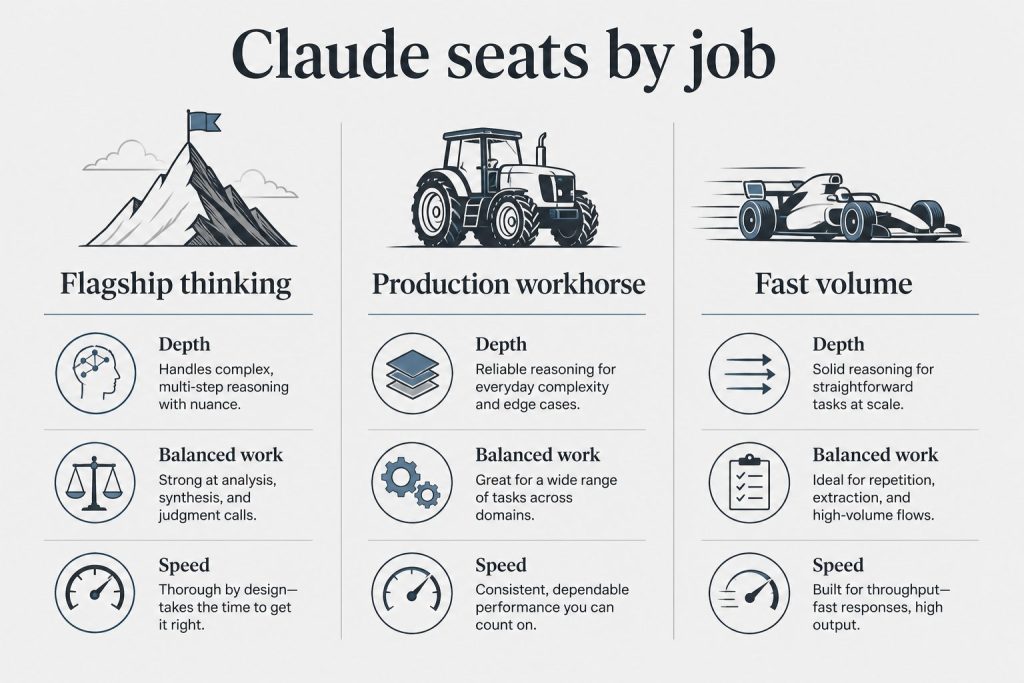
    Choosing between Claude’s three models comes down to one question: how hard is the task, and how much does cost matter? Haiku, Sonnet, and Opus each occupy a distinct position — this is the complete three-way breakdown so you can route work correctly from the start.

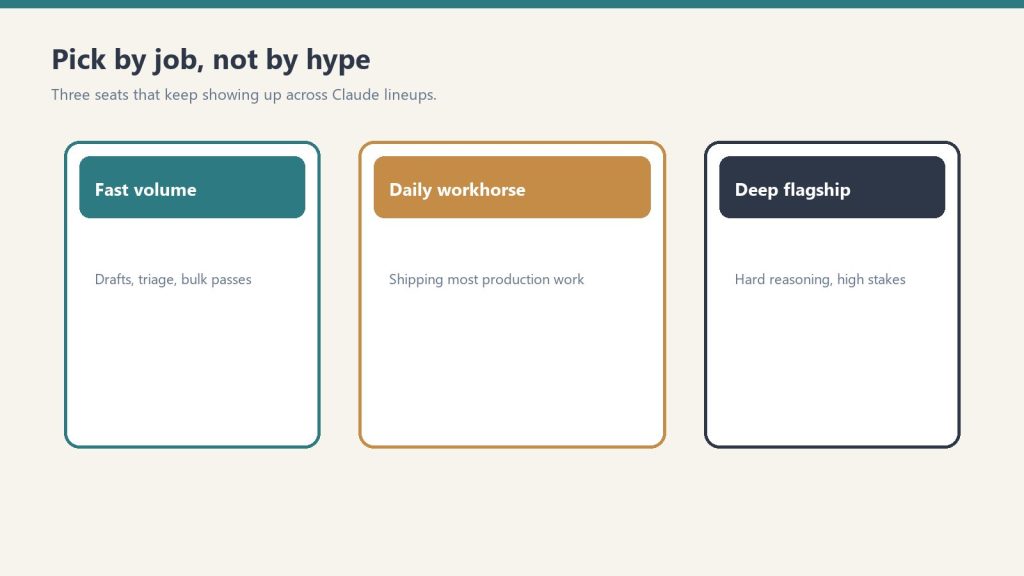
    The routing rule in one sentence: Haiku for volume and speed, Sonnet for almost everything else, Opus for the tasks where Sonnet isn’t quite enough.

    Haiku vs Sonnet vs Opus: Full Comparison

    Spec Haiku Sonnet Opus
    API string claude-haiku-4-5-20251001 claude-sonnet-4-6 claude-opus-4-6
    Input price (per M tokens) ~$1.00 ~$3.00 ~$5.00
    Output price (per M tokens) ~$5.00 ~$5.00 ~$25.00
    Context window 200K 1M 1M
    Speed ⚡ Fastest ⚡ Fast 🐢 Slower
    Reasoning depth Good Excellent Maximum
    Writing quality Good Excellent Maximum
    Cost vs Sonnet ~4× cheaper ~5× more expensive

    Claude Haiku: The Volume Model

    Haiku is optimized for tasks that are high in quantity but low in complexity — situations where you’re running the same operation hundreds or thousands of times and cost per call is a real constraint. Classification, extraction, summarization, metadata generation, routing logic, short-form responses, and real-time features where latency matters more than depth.

    The output quality on constrained tasks is strong. Where Haiku shows its limits is on open-ended, nuanced work — multi-step reasoning, long-form writing where voice consistency matters, or problems with competing constraints. For those, Sonnet is the right call.

    Claude Sonnet: The Default

    Sonnet handles the vast majority of professional work at a quality level that’s indistinguishable from Opus for most tasks. Writing, analysis, research, coding, summarization, strategy — Sonnet does all of it well. It’s the model to start with and the one most people should use as their production default.

    The gap between Sonnet and Opus shows on genuinely hard tasks: novel multi-step reasoning, edge cases in complex code, nuanced judgment in ambiguous situations, or extended agentic sessions where small quality differences compound. For everything else, Sonnet is the right choice and a fraction of the cost.

    Claude Opus: The Specialist

    Opus earns its premium on tasks where maximum capability is the only variable that matters and cost is secondary. Complex legal or technical analysis, research synthesis across conflicting sources, architectural decisions with long-term consequences, extended agentic sessions, and any task where you’ve tried Sonnet and felt the output was a notch below what the problem deserved.

    The practical test: if Sonnet’s output on a task is good enough, use Sonnet. Only reach for Opus when you’ve genuinely hit Sonnet’s ceiling on a specific problem. Most professionals do this on a small fraction of their actual workload.

    The Decision Framework

    Use Haiku when: same operation at high volume, output is constrained/structured, cost and speed matter, real-time latency required.

    Use Sonnet when: any standard professional task — writing, coding, analysis, research. This should be your default 90% of the time.

    Use Opus when: the task is genuinely hard, involves novel reasoning, Sonnet’s output wasn’t quite right, or quality is the only variable that matters regardless of cost.

    For full pricing details, see Anthropic API Pricing. For a Haiku deep-dive, see Claude Haiku: Pricing, Use Cases, and API String. For the Opus vs Sonnet head-to-head, see Claude Opus vs Sonnet.

    Frequently Asked Questions

    What’s the difference between Claude Haiku, Sonnet, and Opus?

    Haiku is fastest and cheapest — built for high-volume, constrained tasks. Sonnet is the balanced production default with excellent quality across most professional work. Opus is the most capable model for complex reasoning — about 5× more expensive than Sonnet on input tokens.

    Which Claude model should I use?

    Start with Sonnet for almost everything. Switch to Haiku when you’re running the same operation at high volume and cost matters. Switch to Opus when Sonnet’s output on a specific task isn’t quite at the level the problem requires.

    Is Claude Haiku good enough for most tasks?

    For structured, constrained tasks — yes, Haiku is strong. For open-ended writing, complex reasoning, or work requiring nuanced judgment, Sonnet is the right step up. The cost savings from Haiku are meaningful at scale, making it the right choice when the task fits its strengths.

    Need this set up for your team?
    Talk to Will →

  • Claude Haiku: Pricing, API String, Use Cases, and When to Use It

    Claude Haiku: Pricing, API String, Use Cases, and When to Use It

    Claude AI · Fitted Claude

    Claude Haiku is Anthropic’s fastest and most cost-efficient model — the right choice when you need high-volume AI at low cost without sacrificing the quality that makes Claude worth using. It’s not a cut-down version of the flagship models. It’s a purpose-built model for the tasks where speed and cost matter more than maximum reasoning depth.

    When to use Haiku: Any time you’re running the same operation across many inputs — classification, extraction, summarization, metadata generation, routing logic, short-form responses — and cost or speed is a meaningful constraint. Haiku handles these at a fraction of Sonnet’s price with output quality that’s more than sufficient.

    Claude Haiku Specs (April 2026)

    Spec Value
    API model string claude-haiku-4-5-20251001
    Context window 200,000 tokens
    Input pricing ~$1.00 per million tokens
    Output pricing ~$5.00 per million tokens
    Speed vs Sonnet Faster — optimized for low latency
    Batch API discount ~50% off (~$0.50 input / ~$2.50 output)

    Claude Haiku vs Sonnet vs Opus

    Model Input cost Speed Reasoning depth Best for
    Haiku ~$1.00/M Fastest Good High-volume, latency-sensitive
    Sonnet ~$3.00/M Fast Excellent Production workloads, daily driver
    Opus ~$5.00/M Slower Maximum Complex reasoning, highest quality

    What Claude Haiku Is Best At

    Haiku is optimized for tasks where the output is constrained and the logic is clear — not open-ended creative or strategic work where maximum capability pays off. The practical use cases where Haiku earns its position:

    • Classification and routing — is this a support ticket, a bug report, or a feature request? Tag it and route it. Haiku handles thousands of these per hour at minimal cost.
    • Extraction — pull the names, dates, dollar amounts, or addresses from a document. Structured output from unstructured text at scale.
    • Summarization — condense articles, emails, or documents to key points. Haiku’s summarization is strong enough for most production use cases.
    • SEO metadata — generate title tags, meta descriptions, alt text, and schema markup in bulk. This is where Haiku shines for content operations.
    • Short-form responses — FAQ answers, product descriptions, short explanations. Anything where the output is a few sentences or a structured short block.
    • Real-time features — chatbots, autocomplete, inline suggestions — anywhere latency affects user experience.

    Claude Haiku vs GPT-4o Mini

    GPT-4o mini is OpenAI’s comparable low-cost model and is less expensive than Haiku per token. The cost trade-off is real — GPT-4o mini is cheaper. The quality trade-off depends on the task. For instruction-following on complex structured outputs, Haiku tends to be more reliable. For simple, high-volume tasks where the output format is forgiving, the cost difference may favor GPT-4o mini. For teams already building on Claude for quality reasons, Haiku is the natural choice for high-volume work within that stack.

    Using Claude Haiku in the API

    import anthropic
    
    client = anthropic.Anthropic()
    
    message = client.messages.create(
        model="claude-haiku-4-5-20251001",
        max_tokens=256,
        messages=[
            {"role": "user", "content": "Classify this support ticket: ..."}
        ]
    )
    
    print(message.content)

    For a full model comparison, see Claude Models Explained: Haiku vs Sonnet vs Opus. For API pricing across all models, see Anthropic API Pricing.

    Frequently Asked Questions

    What is Claude Haiku?

    Claude Haiku is Anthropic’s fastest and most affordable model — approximately $1.00 per million input tokens. It’s purpose-built for high-volume, latency-sensitive tasks like classification, extraction, summarization, and short-form generation where cost efficiency matters more than maximum reasoning depth.

    How much does Claude Haiku cost?

    Claude Haiku costs approximately $1.00 per million input tokens and $5.00 per million output tokens. The Batch API reduces these to approximately $0.40 input and $2.00 output — roughly half price for non-time-sensitive workloads.

    When should I use Claude Haiku instead of Sonnet?

    Use Haiku when your task is well-defined with a constrained output, you’re running it at high volume, and cost or latency is a meaningful consideration. Use Sonnet when the task is complex, requires nuanced reasoning, or produces longer open-ended outputs where maximum quality matters.

    What is the Claude Haiku API model string?

    The current Claude Haiku model string is claude-haiku-4-5-20251001. Always verify the current string in Anthropic’s official model documentation before production deployment.

    Need this set up for your team?
    Talk to Will →

  • Claude 3.5 Sonnet: The Release That Changed Claude’s Trajectory

    Claude 3.5 Sonnet: The Release That Changed Claude’s Trajectory

    Claude AI · Fitted Claude

    Claude 3.5 Sonnet was Anthropic’s mid-2024 flagship model — the release that significantly closed the gap between Claude and GPT-4o and established Claude as a serious competitor for daily professional use. Here’s what it was, how it compared at launch, and where it fits in the current model lineup.

    Current status: Claude 3.5 Sonnet has been succeeded by Claude Sonnet 4.6 (claude-sonnet-4-6). If you’re building something new, use the current Sonnet model. If you’re maintaining a system built on Claude 3.5, check Anthropic’s deprecation schedule for transition timing.

    Claude 3.5 Sonnet: What It Was

    Claude 3.5 Sonnet launched in June 2024 and was Anthropic’s strongest model at the time — outperforming Claude 3 Opus on most benchmarks while being significantly faster and cheaper. This made it an unusual release: the mid-tier model in a new generation beating the top-tier model from the previous generation. It set the pattern for how Anthropic structures model generations.

    At launch, Claude 3.5 Sonnet scored at the top of industry benchmarks on graduate-level reasoning, coding, and mathematics. It was the first Claude model to support computer use — the ability to see and interact with computer interfaces — in beta.

    Model Generations: Where 3.5 Sonnet Fits

    Model Generation Status
    Claude 3 Opus / Sonnet / Haiku Claude 3 (early 2024) Deprecated / legacy
    Claude 3.5 Sonnet / Haiku Claude 3.5 (mid 2024) Superseded
    Claude Sonnet 4.6 Claude 4.x (current) ✅ Current production default
    Claude Opus 4.6 Claude 4.x (current) ✅ Current flagship

    Why Claude 3.5 Sonnet Was a Landmark Release

    Before 3.5 Sonnet, the conventional wisdom was that Claude Opus was the model you reached for on serious tasks, accepting higher cost and slower speed. Claude 3.5 Sonnet changed that calculus — it was fast enough to use as a daily driver and capable enough to replace Opus on most tasks. The cost savings were substantial for anyone running high-volume API workloads.

    The release also marked Claude’s first serious push into coding benchmarks — it scored highly on SWE-bench, a test of real-world software engineering tasks, which attracted significant developer attention and migration from GPT-4o.

    Claude 3.5 Sonnet vs. Current Models

    The current Claude Sonnet 4.6 builds on what Claude 3.5 Sonnet established, with improvements across reasoning, coding, instruction-following, and context handling. If you were a Claude 3.5 Sonnet user, the upgrade path is straightforward — switch the model string and expect better performance across most tasks.

    For current model strings and specs, see Claude API Model Strings — Complete Reference. For a comparison of current Sonnet vs. Opus, see Claude Opus vs Sonnet: Which Model Should You Use?

    Frequently Asked Questions

    Is Claude 3.5 Sonnet still available?

    Claude 3.5 Sonnet has been superseded by Claude Sonnet 4.6. Anthropic maintains older models for a period after new releases but eventually deprecates them. Check Anthropic’s model documentation for current availability and any deprecation notices for Claude 3.5 Sonnet API strings.

    What was the Claude 3.5 Sonnet API model string?

    The Claude 3.5 Sonnet model strings were claude-3-5-sonnet-20240620 and the later version claude-3-5-sonnet-20241022. If you have production systems using these strings, verify their current availability in Anthropic’s model documentation and plan migration to current model strings.

    Should I upgrade from Claude 3.5 Sonnet to the current Sonnet?

    Yes. Claude Sonnet 4.6 outperforms Claude 3.5 Sonnet across most tasks. Migration is typically straightforward — update the model string in your application and test your core use cases. The current model string is claude-sonnet-4-6.

    Need this set up for your team?
    Talk to Will →

  • Claude Sonnet 5: What We Know About the Next Claude Model (2026)

    Claude Sonnet 5: What We Know About the Next Claude Model (2026)

    Claude AI · Fitted Claude

    Anthropic hasn’t announced Claude Sonnet 5 yet — but based on how they’ve released models so far, here’s what we know about the Claude model roadmap, what Sonnet 5 is likely to look like when it arrives, and how to stay current as the lineup evolves.

    Current status (April 2026): The current Sonnet release is Claude Sonnet 4.6 (claude-sonnet-4-6). Anthropic has not announced a release date or feature set for a Sonnet 5. This page tracks what we know and will be updated as Anthropic makes announcements.

    The Current Claude Model Lineup

    Model API String Status
    Claude Opus 4.6 claude-opus-4-6 ✅ Current flagship
    Claude Sonnet 4.6 claude-sonnet-4-6 ✅ Current production default
    Claude Haiku 4.5 claude-haiku-4-5-20251001 ✅ Current fast/cheap tier
    Claude Sonnet 5 ⏳ Not yet announced

    How Anthropic Releases Models

    Anthropic follows a consistent pattern: new models launch across the Haiku, Sonnet, and Opus tiers, often in sequence rather than simultaneously. Sonnet tends to be the first tier developers get meaningful access to at each generation — it’s the workhorse tier, and Anthropic has historically prioritized making it available broadly.

    Major model generations arrive roughly every several months. Point releases (like 4.5 → 4.6) happen more frequently and often bring targeted capability improvements rather than fundamental architecture changes. A “Sonnet 5” designation would signal a new major generation rather than an incremental update.

    What to Expect From Claude Sonnet 5

    Based on the pattern across Claude generations, each new major Sonnet release has delivered: improved reasoning and instruction-following, better code generation, expanded context handling, and lower cost relative to the previous generation’s Opus tier. The trajectory has consistently moved toward making the mid-tier model do what only the top-tier could do previously.

    Specific feature claims about an unannounced model would be speculation. What’s documented is the direction: Anthropic is investing heavily in extended thinking, agentic capabilities, and multimodal performance. Those priorities will almost certainly shape what Sonnet 5 looks like when it ships.

    How to Stay Current on Claude Model Releases

    The most reliable sources for Claude model announcements:

    • Anthropic’s blog (anthropic.com/news) — official launch announcements
    • Anthropic’s model documentation (docs.anthropic.com/en/docs/about-claude/models) — current API strings and deprecation notices
    • Anthropic’s changelog — incremental updates and point releases
    • This page — updated as new Claude model information becomes available

    Should You Wait for Sonnet 5?

    For most use cases, no. Claude Sonnet 4.6 is a capable production model. If you’re building something today, build on the current model and upgrade when the new one releases — that’s the standard pattern for any production API dependency. Waiting for an unannounced model before starting development rarely makes sense.

    If you’re doing initial architecture decisions and want to understand where the platform is heading, Anthropic’s research publications and roadmap hints from their public communications are worth tracking. But for day-to-day work, the current Sonnet is the right tool.

    For the current model lineup with full specs, see Claude Models Explained: Haiku vs Sonnet vs Opus. For API model strings and how to use them, see Claude API Model Strings — Complete Reference.

    Frequently Asked Questions

    Has Anthropic announced Claude Sonnet 5?

    No. As of April 2026, Anthropic has not announced Claude Sonnet 5 or provided a release date. The current Sonnet model is Claude Sonnet 4.6. This page will be updated when an announcement is made.

    What is the current version of Claude Sonnet?

    The current Claude Sonnet version is Sonnet 4.6, with the API model string claude-sonnet-4-6. It’s the production default for most API workloads.

    How often does Anthropic release new Claude models?

    Anthropic releases major model generations every several months, with point releases more frequently. The pace has been accelerating — each year has brought multiple significant model updates across the Haiku, Sonnet, and Opus tiers.

    Need this set up for your team?
    Talk to Will →

  • Claude API Model Strings, IDs and Specs — Complete Reference (April 2026)

    Claude API Model Strings, IDs and Specs — Complete Reference (April 2026)

    Claude AI · Fitted Claude

    When you’re building on Claude via the API, you need the exact model string — not just the name. Anthropic uses specific model identifiers that change with each version, and using a deprecated string will break your application. This is the complete reference for Claude API model names, IDs, and specs as of April 2026.

    Quick reference: The current flagship models are claude-opus-4-6, claude-sonnet-4-6, and claude-haiku-4-5-20251001. Always use versioned model strings in production — never rely on alias strings that may point to different models over time.

    Current Claude API Model Strings (April 2026)

    Model API Model String Context Window Best for
    Claude Opus 4.6 claude-opus-4-6 1M tokens Complex reasoning, highest quality
    Claude Sonnet 4.6 claude-sonnet-4-6 1M tokens Production workloads, balanced cost/quality
    Claude Haiku 4.5 claude-haiku-4-5-20251001 200K tokens High-volume, latency-sensitive tasks

    Anthropic publishes the full, current list of model strings in their official models documentation. Always verify there before updating production systems — model strings are updated with each new release.

    How to Use Model Strings in an API Call

    import anthropic
    
    client = anthropic.Anthropic()
    
    message = client.messages.create(
        model="claude-sonnet-4-6",  # ← model string goes here
        max_tokens=1024,
        messages=[
            {"role": "user", "content": "Your prompt here"}
        ]
    )
    
    print(message.content)

    Model Selection: Which String to Use When

    The right model depends on your task requirements. Here’s the practical routing logic:

    Use Haiku (claude-haiku-4-5-20251001) when: you need speed and low cost at scale — classification, extraction, routing, metadata, high-volume pipelines where every call matters to your budget.

    Use Sonnet (claude-sonnet-4-6) when: you need solid quality across a wide range of tasks — content generation, analysis, coding, summarization. This is the right default for most production applications.

    Use Opus (claude-opus-4-6) when: the task genuinely requires maximum reasoning capability — complex multi-step logic, nuanced judgment, or work where output quality is the only variable that matters and cost is secondary.

    API Pricing by Model

    Model Input (per M tokens) Output (per M tokens)
    Claude Haiku ~$1.00 ~$5.00
    Claude Sonnet ~$3.00 ~$5.00
    Claude Opus ~$5.00 ~$25.00

    The Batch API offers roughly 50% off all rates for asynchronous workloads. For a full pricing breakdown, see Anthropic API Pricing: Every Model and Mode Explained.

    Important: Versioned Strings vs. Aliases

    Anthropic occasionally provides alias strings (like claude-sonnet-latest) that point to the current version of a model family. These are convenient for development but can create problems in production — when Anthropic updates the model the alias points to, your application silently starts using a different model without a code change. For production systems, always pin to a versioned model string and upgrade intentionally.

    Frequently Asked Questions

    What is the Claude API model string for Sonnet?

    The current Claude Sonnet model string is claude-sonnet-4-6. Always verify the current string in Anthropic’s official models documentation before deploying, as strings are updated with each new model release.

    How do I specify which Claude model to use in the API?

    Pass the model string in the model parameter of your API call. For example: model="claude-sonnet-4-6". The model string must match exactly — Anthropic’s API will return an error if the string is invalid or deprecated.

    What Claude API model should I use for production?

    Claude Sonnet is the right default for most production workloads — it balances quality and cost well across a wide range of tasks. Use Haiku when speed and cost are the priority at scale. Use Opus when the task genuinely requires maximum reasoning capability and cost is secondary.

    Need this set up for your team?
    Talk to Will →