Tag: Adjusters

  • Insurance and Adjuster Dynamics on Specialty Losses: Who Sits at the Table, Who Decides What, and How the Restoration Company Earns a Place in the Conversation

    Insurance and Adjuster Dynamics on Specialty Losses: Who Sits at the Table, Who Decides What, and How the Restoration Company Earns a Place in the Conversation

    Direct answer: On a commercial specialty loss, the room is bigger than most restoration operators assume. The carrier has a staff, independent, or TPA adjuster running the file. The facility has a risk manager and often a broker. A public adjuster may be retained. A large loss brings in large-loss specialists, accountants for business interruption, and technical experts for specialty valuations. The restoration company that understands this room — who decides what, what documentation each party needs, and how specialty work fits into commercial policy structures — is treated as a participant in the claim rather than as a vendor waiting for scope approval. That shift in positioning is worth more revenue over time than any rate-sheet negotiation.

    The previous seven articles in this cluster have built the operational case for the specialty wedge: what the categories are, what the ESA looks like, what accounts respond to it, and how the specialist bench gets built. This article covers the financial and contractual mechanics that run in parallel — the insurance and adjusting side of every commercial specialty loss. Miss this side and the operational work does not convert into paid work.

    Commercial insurance is structurally different from residential insurance in ways that matter for every decision a restoration company makes on a specialty event. Policies are written on different forms. Deductibles are higher and sometimes paid out-of-pocket by the insured before the carrier engages. Business interruption is a live coverage that runs on its own clock. Scope of loss is adjudicated against policy language and often against pre-existing replacement-cost-value schedules. Specialty items frequently carry their own endorsements, riders, or scheduled coverages separate from the main property form. And the adjusting function is distributed across multiple roles rather than concentrated in one person. A restoration company that enters this environment with residential habits — “I’ll do the work and the carrier will pay the invoice” — spends two years getting punished by the system before learning how it actually works.

    The rest of this article is the operator-level map.

    Who is actually in the room
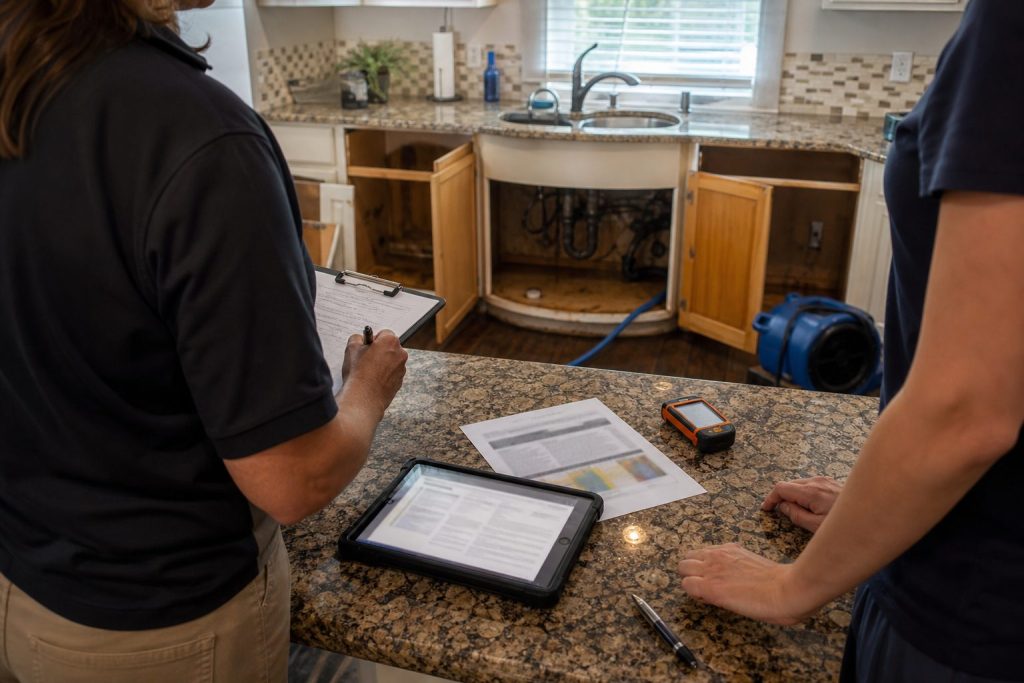
    The parties at the table on a commercial specialty loss, in roughly the order they appear:

    The insured. The facility itself — through its facilities director, risk manager, operations leader, or corporate real estate director. This is the party whose property is damaged and whose coverage is at stake. On significant losses, the insured is represented by its risk function, which is materially different from the facilities function. Risk manages the policy relationship and the financial outcome; facilities manages operations. Both matter. They do not always agree with each other.

    The broker. Most commercial policies are placed through a broker — Aon, Marsh, Willis, Lockton, Gallagher, Alliant, Brown & Brown, Hub, and many regional and specialty brokers. The broker is the insured’s advocate with the carrier, is paid by the carrier out of premium, and usually has a long relationship with the insured’s risk function. On large losses, the broker’s claims advocacy team is actively involved in negotiating scope and settlement.

    The carrier’s adjuster. This is the person running the claim on the carrier’s side. Three variants exist. A staff adjuster is a carrier employee; common on small to mid-size losses and on carriers that use in-house handling. An independent adjuster (IA) is a contractor deployed by the carrier through firms like Alacrity Solutions, Pilot Catastrophe, Eberl, Worley, Crawford, or Sedgwick; common on large losses, CAT events, and geographically dispersed exposure. A TPA (third-party administrator) adjuster is the primary handler for carriers that outsource claims administration and for self-insured and captive-insured programs; common on commercial programs, public entities, and corporate risk-management structures. The restoration company’s ability to work productively with the adjuster depends significantly on which type is assigned, because their authority, their time horizon, and their reporting structure differ.

    The public adjuster. When retained by the insured (usually on significant losses where the insured wants its own adjusting advocate), the public adjuster — PA — is paid by the insured, typically on a percentage of settlement, and represents the insured’s interests in scope development and negotiation. PAs are regulated state by state; several states prohibit them on commercial losses, others allow them with restrictions. On losses where a PA is involved, the dynamic shifts — negotiations take longer, documentation is scrutinized harder, and the restoration company needs to provide tighter scope evidence.

    The large-loss adjuster or general adjuster. On losses above a dollar threshold — typically $250,000 to $1 million depending on the carrier — the file escalates to a large-loss or general adjuster. These are senior, experienced adjusters with broader authority and usually a more commercial orientation. Some are staff, some are GA-track independents. When a large-loss adjuster takes the file, the restoration company’s interaction becomes more substantive and more documentation-driven.

    Specialty consultants. On large or technically complex losses, the carrier commonly retains technical experts: a forensic engineer for cause-and-origin, a certified industrial hygienist for environmental and IAQ work, a forensic accountant for business interruption, a specialty valuer for art or antique items, a cost consultant for high-dollar reconstruction, and sometimes a building consultant for envelope or structural issues. These specialists produce deliverables that drive scope decisions.

    The TPA’s file examiner. When a TPA is administering claims, an examiner manages the file behind the scenes — reviewing adjuster work product, authorizing payments, and enforcing the program’s service-level standards. The examiner is rarely on site and is often invisible to the restoration company, but their decisions affect payment timing and scope approval.

    Coverage counsel. On disputed losses or large losses where coverage issues surface, the carrier will engage coverage counsel. The insured may engage its own. At this point the claim has become a negotiation in a legal frame. The restoration company’s documentation becomes evidence.

    The restoration company does not work with all of these parties on every loss. On a $50,000 commercial water event, it may be only the insured and an independent adjuster. On a $5,000,000 hospital fire with specialty equipment and business interruption, it may be all of them. The operator’s task is to map who is at the table on each event and communicate with each party at the right level of technical and contractual detail.

    Commercial policy structures and what they cover on specialty losses

    Commercial property policies are not written on a single form. Four families of forms matter for the restoration company’s day-to-day work.

    ISO Commercial Property program. The Insurance Services Office writes standardized forms — Building and Personal Property Coverage Form (CP 00 10), Causes of Loss forms (Basic, Broad, Special), and various endorsements. Most mid-market commercial policies are written on ISO forms or close variants. Specialty items get coverage through the Building and Personal Property form unless they are scheduled out into separate endorsements.

    Manuscript forms and package policies. Large commercial accounts and specialized verticals (healthcare, universities, financial services, real estate portfolios, manufacturing) often have carrier-specific or manuscript forms that modify or replace ISO language. AIG, Zurich, Chubb, FM Global, Travelers, Liberty Mutual, and The Hartford all publish proprietary commercial forms. These forms generally provide broader coverage than ISO Special Form but with more complex conditions and sublimits.

    Scheduled property. Certain high-value items are scheduled individually rather than covered under the general property form. Fine art (blanket or itemized scheduled), rare books, specialty medical equipment, trading-floor technology, and specific pieces of machinery are often scheduled with specific values, specific covered perils, and sometimes specific named conservators or repair vendors.

    Inland marine. Specialty coverages that sit outside the building are often written as inland marine — fine art (scheduled or blanket), medical equipment on lease (Motor Truck Cargo for mobile medical imaging, for example), contractor’s equipment, and data-processing equipment at multiple locations.

    The implication for restoration companies: the answer to “is this covered?” on a specialty item is rarely obvious from the general property policy. The insured’s broker or risk manager will know how a specific item is scheduled, endorsed, or covered. The restoration company should ask — politely, early — about coverage structure on high-value items before assuming the work will be paid under the mainline property form.

    Three coverage concepts that appear on most commercial losses:

    Replacement cost value vs. actual cash value. RCV settles at the cost to replace with like kind and quality. ACV settles at RCV less depreciation. Most commercial forms pay RCV if the insured repairs or replaces, but pay ACV initially with a holdback until repair is proven. For restoration services, this distinction matters because the invoice structure has to support the RCV conversion — which means documented scope, documented completion, and invoicing that tracks to the carrier’s RCV recovery process.

    Coinsurance. Commercial property forms usually contain a coinsurance clause requiring the insured to carry coverage at a specified percentage (commonly 80%, 90%, or 100%) of the insured value. Under-insurance triggers a penalty that reduces the settlement. This is not usually a restoration company problem, but it affects the insured’s willingness to accept an aggressive scope because a scope that triggers a coinsurance penalty is a scope that costs the insured money. Restoration companies that scope aggressively without understanding the policy structure damage the insured’s financial outcome and the relationship.

    Sublimits. Commercial policies routinely have sublimits for specific categories: contents in rooms subject to flood, fine art, electronic data, business records, and items in specific storage configurations. A loss that exceeds a sublimit is paid only up to the sublimit, regardless of the full loss value. Restoration companies working on specialty losses should know the sublimits in play so they can scope and communicate realistically.

    Business interruption and the restoration clock
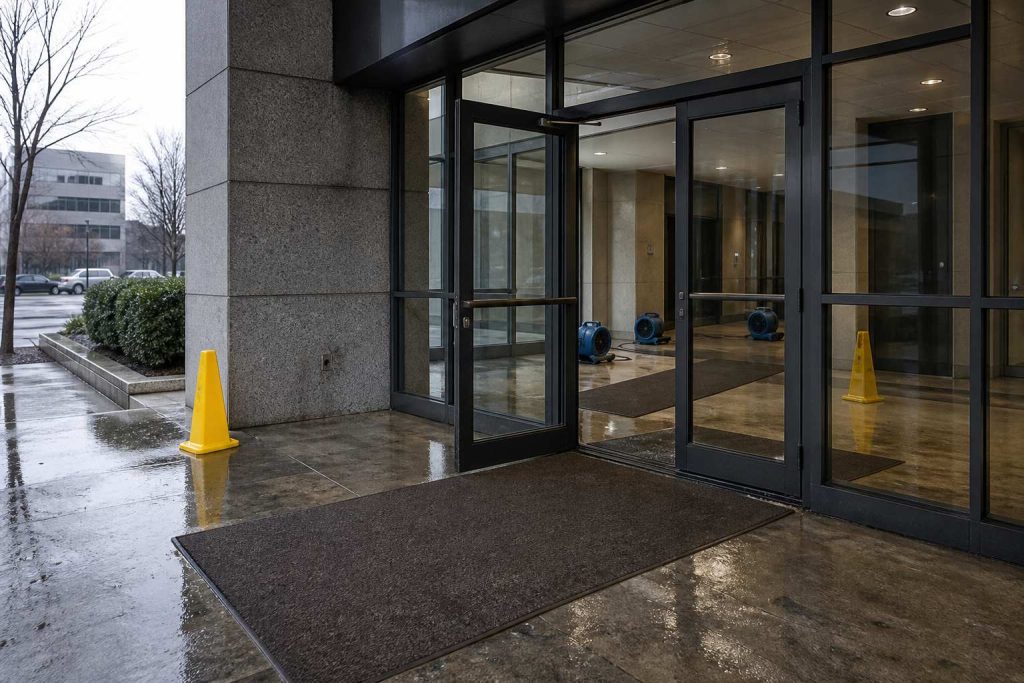
    Business interruption coverage is the financial engine behind commercial restoration urgency and is the single coverage most often misunderstood by operators.

    BI pays the insured for lost income during the period of restoration — the time from the loss event until the property can, with reasonable speed, be repaired or replaced and operations restored. The clock runs during restoration. The longer the restoration, the more BI the insured collects — which sometimes makes people assume that slower restoration is better for the insured. That is backwards in most cases. BI is capped by period-of-indemnity limits (often 12 months), by policy sublimits on dependent property and civil authority extensions, by extra expense limits that may be exhausted mid-loss, and by the insured’s actual lost margin — which includes lost customers who do not return when operations resume.

    The correct operational posture is that the insured and the restoration company share an interest in restoring quickly. BI is not an excuse to slow down; it is the mechanism that funds the urgency. Specialty work is directly BI-sensitive — a hospital whose imaging is down is losing procedure revenue and triggering BI; a financial firm whose records are off-site in freeze-drying is limited in its operations; a cultural institution whose galleries are closed is generating BI on lost admissions and event revenue. The specialty wedge reduces BI duration, which is often the strongest ROI argument for the ESA in the first place.

    Three BI-adjacent coverages that restoration companies should know:

    Extra expense. Pays the insured for costs incurred to continue operations or accelerate restoration beyond normal costs. A temporary imaging suite rental, expedited manufacturer recertification, priority freeze-drying at premium rates, emergency specialist activation — these are often extra expense items. Getting them pre-approved by the adjuster at the time of incurrence is cleaner than arguing about them at invoice.

    Civil authority coverage. Pays BI when a civil authority prohibits access to the insured property because of damage at an adjacent property. Relevant on CAT events and in urban environments.

    Dependent property / contingent business interruption. Pays BI when a dependent property (a supplier, a customer, a key logistics node) suffers a loss that impacts the insured. Emerging in commercial coverage and usually outside the scope of restoration work, but sometimes in play when the specialty loss affects a contract manufacturer, logistics hub, or shared facility.

    The scope-of-loss process

    The scope of loss is the formal document that defines what the restoration work is. It is the central artifact of any commercial claim, and the quality of the scope drives the quality of the payment.

    The standard scope-of-loss process on commercial work:

    Initial inspection. Carrier adjuster, insured or PA, and restoration company walk the loss. Observations recorded by all parties. On large losses, specialists from the specialty bench may be present on the walk-through.

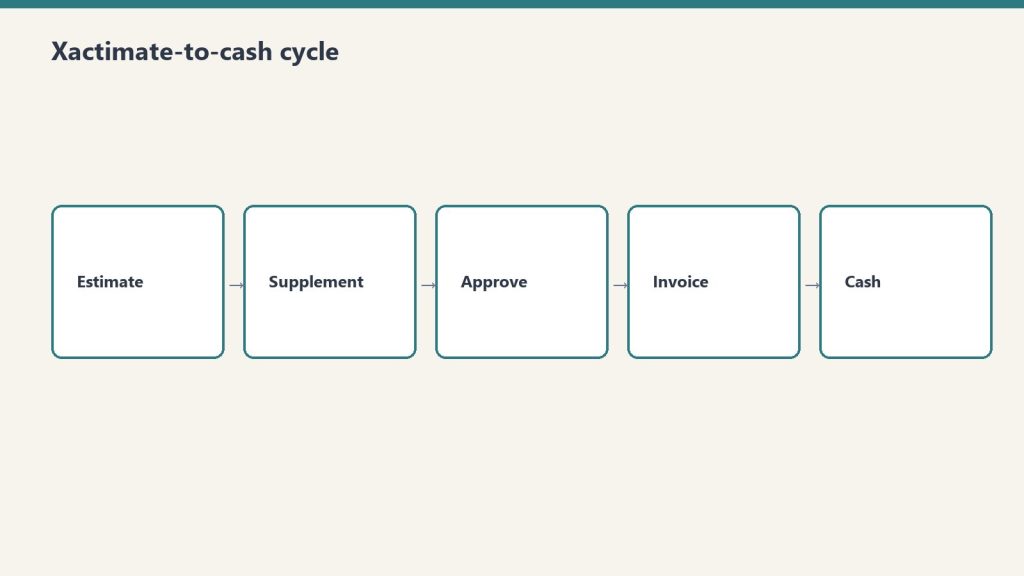
    Mitigation scope. The emergency services work — water extraction, dry-out, containment, specialty stabilization — is scoped separately and billed early, often before the full scope of loss is developed. This is priced against the ESA rate schedule or against Xactimate mitigation line items.

    Full scope of loss. After the property is stable, the carrier’s adjuster, often with specialists (engineering, IAQ, specialty valuers), develops a full scope covering structural repair, contents, specialty items, and business interruption. This scope is the basis for settlement of the claim and the basis for the restoration company’s reconstruction and specialty work pricing.

    Scope approval and work authorization. The insured and the carrier agree on scope. The restoration company receives authorization for each phase of work.

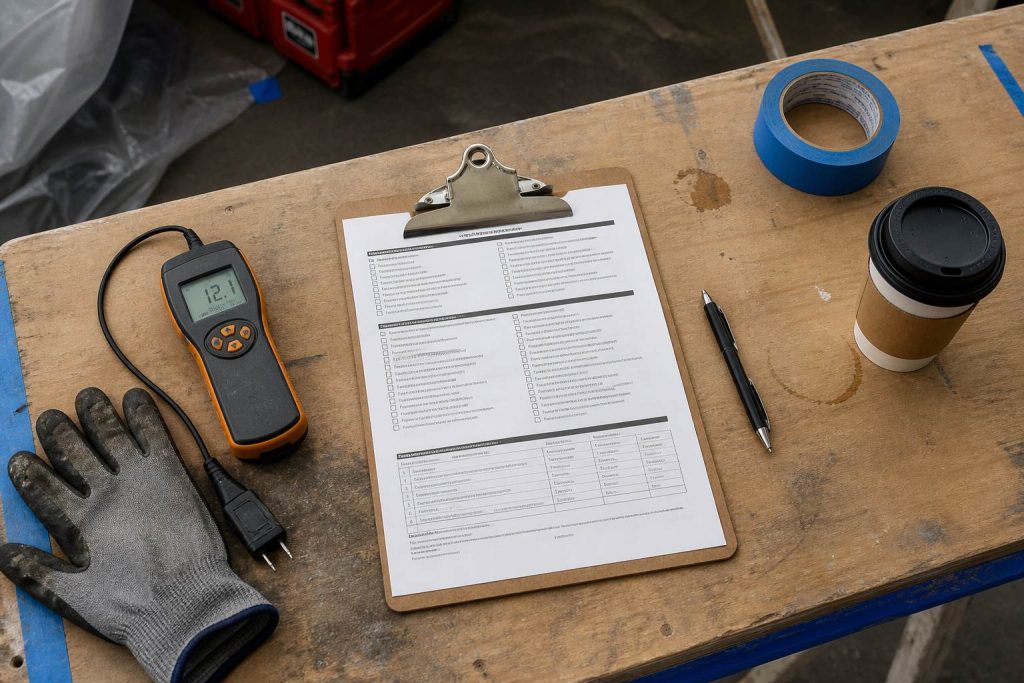
    Execution and documentation. Work is performed. Documentation is produced on a rolling basis — daily notes, photographs, moisture logs for drying, chain-of-custody logs for document work, biomed sign-offs for medical equipment, conservator reports for art. This documentation is the evidence that the work was performed to scope.

    Invoice and payment. Invoices submitted against approved scope with supporting documentation. Payment processed through the adjuster or directly through the carrier’s claims system. Some carriers pay through an insured-controlled account (insured pays the contractor, carrier reimburses the insured); some pay direct to the contractor (common when there is an AOB or direct-bill arrangement); some pay jointly (to insured and contractor).

    Xactimate is the dominant estimating platform. Approximately 80% of property claims are estimated in Xactimate. Restoration companies working commercial need Xactimate proficiency — either an in-house estimator with Level 1 or Level 2 certification or a relationship with a third-party estimating service. Scope developed in Xactimate using current carrier price lists settles faster than scope developed in other formats. Scope that deviates from Xactimate norms needs specific justification — unique conditions, specialty pricing not in the standard price list, or negotiated departures from default pricing.

    Specialty scope is where Xactimate runs out of detail. Freeze-drying a pallet of documents, ultrasonic cleaning of a rack of servers, biomed recertification of a CT scanner, conservation of a damaged oil painting — none of these live cleanly inside Xactimate line items. The restoration company, in partnership with the specialist, has to develop specialty scope separately using the specialist’s own pricing methodology (per cubic foot, per square foot of material, per piece, per instrument) and then incorporate that into the overall scope. The adjuster may or may not accept the specialty scope at face value. On significant losses, the carrier will often retain a specialty consultant to validate the specialty scope and pricing. Being ready for that validation — with chain-of-custody documentation, technical evidence of the recovery need, and industry-standard pricing references — is what converts specialty scope into paid work.

    Documentation discipline on specialty losses

    The documentation produced during a specialty loss is both operational evidence and financial instrument. On commercial losses, the quality of documentation drives settlement speed, settlement value, and audit defensibility. Five documentation streams that belong on every specialty loss:

    Loss environment documentation. Photographs at arrival, photographs during stabilization, photographs at completion. Moisture mapping. Environmental readings (temperature, relative humidity, particulate, air pressure). Atmospheric condition logs for the first 72 hours (the window in which most specialty loss decisions are made). Any readings beyond normal environmental parameters — toxic vapor, asbestos disturbance, lead dust — with documentation of the protective measures deployed.

    Chain of custody. Every physical item removed from the site, every location it travels to, every person who handles it, every environmental condition it is stored in, every return event. For documents, this is boxes and pallets tracked by RFID or barcode. For electronics, this is serialized equipment with date/time/handler logs. For art, this is object-level tracking including photographic documentation of condition at each transfer. For medical equipment, this is serial-number-tracked items with biomed sign-off at each transfer. Chain-of-custody is the single most important specialty documentation stream and the one most often underbuilt.

    Scope evidence. Line-item justification for every scope item. Xactimate documentation for standard items. Specialty-specific pricing documentation with industry references where possible (freeze-drying per cubic foot reference ranges, ultrasonic cleaning per square inch, conservation per hour with AIC conservator rate guidance, biomed recertification per OEM schedule).

    Specialist technical reports. Each specialty subcontractor produces a technical report on their portion of the work: conservator’s treatment report, biomed’s recertification documentation, electronics restoration’s testing and clearance reports, document recovery’s drying logs and post-processing condition reports. These reports are the basis for specialty scope, specialty pricing, and specialty settlement.

    Compliance documentation. For regulated environments — HIPAA, GxP, FERPA, PCI — documentation of the compliance posture maintained during the loss. BAA references, data-handling logs, secure-destruction certificates, access logs, training records for on-site personnel. This documentation is what defends against a regulatory finding layered on top of the loss.

    The documentation produced during a specialty loss should be assembled into a final loss package at closure — a single comprehensive deliverable that the carrier, the insured, and the broker each receive. This final package is the artifact that closes the claim cleanly and that serves as evidence if any part of the claim is later disputed or audited.

    How the restoration company earns a seat at the table

    Commercial restoration companies are rarely invited to participate in scope discussions. They are usually asked to submit estimates and then wait for approvals. The specialty wedge changes this dynamic for two reasons. First, the specialty work requires technical input the adjuster does not have — the carrier needs the specialist’s voice to develop the scope. Second, the ESA relationship pre-establishes the restoration company as a known, trusted, pre-vetted party with an existing relationship with the insured.

    The combination of technical specialty and pre-loss relationship is what converts the restoration company from vendor to participant. Concrete behaviors that accelerate that conversion:

    Bring specialty expertise to the scope meeting. The first walk-through after a specialty loss should include the specialty subcontractor, not just the restoration company’s general lead. A walk-through where the specialist points out what the carrier’s generalist adjuster will miss — environmental degradation windows, irreversible damage thresholds, specialty-specific salvage considerations — is a walk-through where the restoration company demonstrates value beyond commodity labor.

    Build credibility with the adjusting community. The commercial adjusting world is relationship-dense. Independent adjusters working for multiple carriers carry reputations from job to job. TPA file examiners talk to each other. Large-loss adjusters know the handful of restoration companies that operate at a high-specialty level. Sustained, consistent, high-documentation work on a handful of losses produces a reputation that compounds — and eventually a reputation that the adjusting community refers work to rather than one that chases work.

    Communicate in the adjusters’ language. The restoration company that can speak about scope in terms of ISO forms, sublimits, coinsurance, RCV versus ACV, extra expense allowance, dependent property coverage, and specific Xactimate line items is taken seriously by the adjuster. The restoration company that speaks only in operational terms is relegated to operational status. The language is learnable — a few IICRC-adjacent certifications (NICA or RIA’s classes on insurance, Xactimate certification, a few hours reading ISO CP form language) is enough to change the conversation.

    Avoid adversarial postures on ordinary disputes. The scope process produces routine disagreements over items, pricing, and methods. These are negotiations, not fights. Restoration companies that treat every disagreement as a fight train the adjuster to minimize future interaction; restoration companies that negotiate professionally with evidence build relationships that pay forward. Reserve adversarial postures for the few cases where a carrier is genuinely behaving inappropriately, and handle those through coverage counsel and the broker rather than directly.

    Invest in the broker relationship. Brokers are often the most overlooked party in the room. A strong broker-side relationship means the restoration company is referenced when the broker is advising a client after a loss, and sometimes means the broker recommends the restoration company for the ESA conversation in the first place. Time with brokers, participation in broker-hosted client events, and involvement in broker-sponsored risk-management content are all high-ROI activities for restoration companies targeting commercial accounts.

    When the relationship should route through a public adjuster

    On significant commercial losses, the insured may retain a public adjuster. This changes the dynamic. PAs are paid by the insured as a percentage of settlement, which means they are motivated to maximize scope and valuation. That motivation aligns with the restoration company’s interest in being paid fully for the work but can create tension with the carrier’s cost-control interest.

    Operating effectively when a PA is on the file:

    Recognize the PA as the insured’s advocate. The PA will push hard on scope, pricing, and documentation. The restoration company’s job is to be ready — scope that was developed casually will be scrutinized, pricing that was loose will be challenged, documentation that was informal will be demanded in finished form. The PA is not the enemy; they are the scope’s quality control.

    Keep the carrier relationship professional. The carrier will respond to a PA’s scope pressure in kind. If the restoration company appears aligned with the PA against the carrier, the carrier’s cooperation evaporates. The restoration company’s proper posture is neutral service provider with documented scope and professional communication on both sides.

    Watch for PA fees coming out of the restoration company’s invoice. In a few states and a few PA contracts, the PA’s percentage fee is calculated against the total settlement including mitigation and restoration payments to the contractor. This can effectively reduce the contractor’s payment. Restoration companies should understand how the PA fee structure flows and negotiate for pre-deducted arrangements when possible.

    Regulatory and coverage exposure the restoration company carries

    A specialty commercial loss creates a handful of exposures the restoration company needs to manage regardless of how the insurance pays out.

    HIPAA and data regulations. Discussed in earlier cluster articles. A healthcare-loss mishandling triggers direct regulatory exposure under HIPAA. A financial-services-loss mishandling may trigger GLBA or state financial-privacy law. A student-records mishandling triggers FERPA. These regulatory exposures are not paid by the insured’s insurance and are the restoration company’s own problem.

    Contractual indemnification to the facility. Discussed in the ESA article. Indemnity provisions in the ESA govern how losses caused by the restoration company’s performance route back. Insurance is the funding mechanism; the contract is the liability structure. Restoration companies operating at the commercial specialty level need adequate general liability and professional liability coverage to support the indemnity they have agreed to.

    Subcontractor liability. Specialty work performed by subcontractors flows back to the restoration company through the master subcontractor agreements. Insurance coordination between the restoration company and the specialist is what funds this liability. The additional-insured posture and the certificate-of-insurance cross-referencing from the earlier bench and ESA articles is the operational answer.

    State-specific licensing and consumer-protection exposure. Many states regulate insurance-restoration contracts, including post-loss AOBs, fixed-price contracts, work authorizations, and cooling-off periods. Restoration companies operating multi-state need to know their exposure in each state they work. A contract that is enforceable in one state may be void in another.

    Xactimate scrutiny and audit. Repeated carrier work produces audit patterns over time. Consistent overbilling patterns, scope padding, or line-item inflation are tracked across the industry and eventually produce carrier pushback, reduced approvals, or removal from preferred-vendor lists. The operational discipline of scoping honestly, pricing against Xactimate as the default, and negotiating deviations transparently is what preserves long-term commercial work.

    How this article completes the specialty cluster

    The pillar and seven cluster articles before this one have covered, in sequence: why specialty is a commercial door-opener, what the four specialty categories are, what the ESA needs to contain, what accounts to pursue, how to build the specialist bench. This article covers the financial mechanics that make the system sustainable.

    The specialty restoration wedge as a commercial strategy depends on operating competently in each of these domains simultaneously. A restoration company with a great bench but weak ESA structure loses to the contract. A restoration company with a great ESA but thin bench loses to the event. A restoration company with both but no understanding of the adjusting dynamics gets paid slowly, paid incompletely, or paid after disputes that erode the relationship. The system works when every layer works.

    The operator’s takeaway: the specialty wedge is not a single product. It is an integrated capability that includes operational specialty execution, contract infrastructure, account-portfolio focus, bench relationships, and claims-handling competence. Any restoration company building toward this model should treat the eight articles in this cluster as a checklist. A company that has made progress on six or seven of the eight dimensions is a company that will convert commercial specialty opportunities. A company that has only focused on one or two dimensions will keep losing to companies that have covered all eight.

    Frequently asked questions

    How is a commercial claim different from a residential claim from the restoration company’s perspective?
    Three practical differences. First, the adjusting is distributed across more parties (broker, adjuster, PA, specialists, large-loss adjuster, coverage counsel) rather than concentrated in one adjuster. Second, the policy is more complex — specialty items are often scheduled or sub-limited, business interruption is a live coverage, and the language matters more. Third, the documentation bar is higher. Commercial claims are audited more aggressively, disputed more technically, and settled more formally than residential claims.

    What is the most common reason specialty scope is denied or reduced?
    Insufficient technical documentation. A specialist saying “this needs freeze-drying” is not enough. The scope needs to document why the material is unstable, what the degradation window is, what the alternative (replacement or reconstruction) would cost, and why the specialty work is the economically correct choice. Adjusters reduce scope they cannot defend to their file examiners. Technical documentation is what makes scope defensible.

    How do we avoid being paid slowly on commercial work?
    Invoice promptly with complete documentation. Incomplete invoices delay payment more than anything else. Invoice against approved scope, reference approvals in the invoice, attach supporting documentation in standard format, and follow up on the adjuster’s payment-processing timeline. Restoration companies that become easy to pay get paid faster.

    When should we recommend the insured retain a public adjuster?
    Rarely. Recommending a PA creates apparent alignment with the insured against the carrier and damages the restoration company’s neutrality. If the insured asks whether to retain a PA, the appropriate answer is that this is a decision for the insured, the broker, and the insured’s counsel, and that the restoration company works effectively with or without a PA on the file. State law also matters — in some states, a restoration company recommending a PA can itself be a licensing violation.

    How much Xactimate competence do we actually need?
    Enough to produce a defensible mitigation estimate in Xactimate format, enough to read and discuss an adjuster’s Xactimate scope, and enough to identify line items that are mis-applied or missing. Level 1 certification meets this bar. Anything beyond is useful but optional. Specialty work does not live inside Xactimate, but everything around the specialty work does, so Xactimate fluency is the table-stakes communication layer.

    What role does the broker play and how do we engage them?
    The broker is the insured’s advocate with the carrier and is often involved in large-loss scope discussions. Engaging the broker means building relationships before the loss — meeting commercial brokers in the region, participating in broker-hosted events, and being referenceable as a restoration partner. Brokers who have worked with the restoration company on prior losses are far more likely to recommend the company in future situations.

    What happens when a specialty item exceeds its scheduled coverage?
    The item is paid up to the scheduled limit, and the excess is the insured’s uninsured loss. Restoration companies should understand this before developing scope on scheduled items, because scoping aggressively on an item that is already at its coverage limit pushes the insured into out-of-pocket territory. A scope discussion that acknowledges the coverage ceiling and negotiates trade-offs is more useful than a scope that exceeds the ceiling and creates a conflict.

    How do large-loss adjusters differ from regular adjusters, and how should we behave differently?
    Large-loss adjusters have broader authority, more technical experience, and less tolerance for informal handling. Behaviors that work on a $30,000 loss with a junior adjuster will not work on a $3,000,000 loss with a GA. The restoration company’s posture on a large loss should be more documented, more formal, more specialist-integrated, and more patient. Large-loss claims are settled on their documentation; shortcuts cost real money.

    What is the single most important piece of advice for a restoration company starting to work commercial specialty losses?
    Invest in understanding commercial insurance before you chase commercial accounts. A few weeks of study — ISO property forms, Xactimate certification, the basics of commercial underwriting, familiarity with the major carrier claims programs — is worth more than a year of trying to figure it out one loss at a time. The language and the structure of commercial insurance is learnable. Once learned, it converts specialty capability from a sales pitch into a durable commercial practice.

    What closes this cluster?
    This cluster closes the specialty restoration wedge as a complete commercial strategy: the categories, the contract, the accounts, the bench, and now the financial mechanics. The remaining work is execution — picking two verticals, building the bench, signing the first two or three ESAs, running the first few real events, and iterating. The framework is in place. The specialty wedge is durable because it serves a real need that commercial facilities feel and that general restoration positioning does not answer. Build it, run it, and protect it.
  • Selling Into Adjusters: The Partnership Where the Currency Is Competence, Not Referral Fees

    Selling Into Adjusters: The Partnership Where the Currency Is Competence, Not Referral Fees

    Selling Into Adjusters: The Partnership Where the Currency Is Competence, Not Referral Fees

    Direct answer: An adjuster relationship is the single partnership in this series where money cannot change hands in either direction. Every state has ethical rules that prohibit or restrict paid referrals between adjusters and restoration contractors, and many states treat it as a licensing violation. What does work: being the restoration company whose scope, documentation, drying logs, and clearance language make the adjuster’s file defensible on the first pass. An adjuster who trusts your documentation hands you three things — faster claim resolution on jobs you’re already on, mental real estate as the name they remember when a homeowner asks, and introductions into commercial accounts and property portfolios where your capability can be written into the vendor workflow. None of that requires a referral fee. All of it requires operational discipline the market largely ignores.

    Every restoration owner has been told to “build adjuster relationships.” Almost none of them have been told exactly what that relationship can and cannot include, which categories of adjuster they’re talking about, and where the actual leverage sits. This article is the careful version of that conversation.

    Three things are true about adjusters that shape the entire channel:

    First, there are three different kinds of adjusters — staff, independent, and public — and each has a completely different role, loyalty, and value to a restoration company. If you approach them the same way, you lose all three.

    Second, the legal and ethical framework around adjuster-contractor relationships is stricter than almost any other trade covered in this series. Referral fees are restricted or prohibited in most states. Steering language can trigger licensing action against the adjuster. Anti-kickback rules apply in full force on insurance-funded work. The whole partnership operates in a lane narrower than it looks from the outside.

    Third, the real leverage isn’t a referral at all. The real leverage is access — specifically, being introduced into new commercial accounts, property portfolios, and programs where your company can be written into the maintenance and emergency vendor workflow for a building, a campus, a complex, or an entire owner. This is the part of the relationship almost nobody talks about clearly, and it’s the part that produces real annual revenue without ever brushing the ethics rules.


    The Three Kinds of Adjusters and Why They Require Different Strategies

    Before anything else: know who you’re actually talking to.

    Staff adjusters. Employees of an insurance carrier. Salaried, benefited, trained to the carrier’s specific claims-handling standards. They owe a duty of good faith to the policyholder on any claim they handle, but their paycheck comes from the carrier. They work a defined territory or a defined product line — property, auto, commercial, large-loss. Their mental bar on a contractor is: does this person’s scope, documentation, and pricing make my file defensible, or does it make my file a problem? If you make their file clean, they remember your name. If your invoice produces a supplement fight, they remember your name in the other direction.

    Independent adjusters (IAs). Contract adjusters who work on assignment from one or more insurance carriers, typically through an IA firm (Pilot, Eberls, Pacesetter, Worley, Engle Martin, and many regional firms). IAs do the on-site inspection work, write the scope, and send the file back to the carrier. They are paid per file or per hour. They handle large volumes during catastrophe events — named storms, hail, freeze — and a steady baseline of non-cat work. IAs are typically licensed in multiple states. They have no duty to the policyholder. They work for the carrier. Their priority is file throughput and accuracy. A restoration contractor who writes scopes the IA can accept without supplement becomes the name they mention when the homeowner asks for recommendations — carefully, within the anti-steering rules.

    Public adjusters (PAs). Licensed professionals hired by policyholders to represent them against the insurance company. Paid a contingency, typically 10–25 percent of the recovery, depending on state. A PA’s incentive is to maximize the claim settlement, not to protect the carrier’s file. In many states, PAs are required to disclose any financial relationship with restoration contractors, and many states explicitly prohibit or restrict referral fees between PAs and restoration contractors. The New York Department of Financial Services, for example, allows limited compensation from a restoration contractor to a PA only if fully disclosed in a compensation agreement with the insured. Florida’s rules are similarly strict. Texas prohibits PAs from paying referral fees to contractors entirely.

    Three kinds of adjuster. Three different strategies. Confusing them is the most common mistake.


    What Is Legally and Ethically Off the Table

    This is the section you need to read twice.

    Referral fees from restoration contractor to adjuster. Off the table with staff adjusters in essentially every state — it’s a bribery issue. Off the table with IAs in essentially every state — same reason. With public adjusters, heavily restricted by state and typically subject to written disclosure to the insured. The safest rule: do not offer, pay, or promise any form of financial consideration to any adjuster in exchange for a referral or for access to an account. This includes cash, gift cards, tickets, meals above de minimis amounts, trips, sponsored events that function as compensation, or work on their personal property at a discount.

    Referral fees from adjuster to restoration contractor. Off the table. An adjuster cannot accept compensation from a contractor for directing work to them. The OGC opinion from the New York Department of Financial Services on PAs makes this explicit: compensation must be disclosed and within the contract with the insured. Staff and IA adjusters cannot take fees at all.

    Steering. State anti-steering laws generally prohibit an insurer or adjuster from requiring a policyholder to use a specific contractor, and qualified anti-steering statutes in many states require that any contractor recommendation be accompanied by a disclosure of the insured’s right to choose their own contractor. An adjuster who directs a policyholder to you in a way that crosses the steering line creates a licensing problem for themselves and a potential bad-faith argument for the carrier. You do not want your name on the wrong side of that line.

    Financial interest disclosure. In most states, an adjuster who has any form of financial interest in a contractor must disclose it. If you ever find yourself in a conversation that suggests an undisclosed financial interest — “we could partner on this account if you send work my way” — decline clearly and end the conversation. That’s a career-ending conversation for the adjuster and a reputational problem for you.

    Gifts and entertainment. Many carriers have explicit no-gift policies for their staff adjusters. Carrier-side IA firms often have the same. Holiday gifts over $25, meals over $50, tickets to events, golf outings tied to claims — all of it can trigger an internal violation. The safe posture: de minimis or nothing. A branded pen or a coffee at a CE class is fine. Anything more substantial is a risk for them and therefore a risk for you.

    CE sponsorship. Continuing education classes are one of the clean channels. Restoration companies can sponsor or host CE classes for adjusters — content must be educational, the CE credit must come from a legitimate provider, and the sponsorship cannot be contingent on attendance or post-class work. Done correctly, CE is one of the few ways to spend money on adjuster relationships that is explicitly permitted and actually useful.

    The bottom line. The entire channel has to be built on value delivery, not compensation. Documentation quality, scope accuracy, drying logs, clearance letters, photo-standards, communication speed, and educational content. That’s the whole toolkit.


    What Is Legally and Ethically On the Table (And Where the Real Leverage Sits)

    Here’s where the careful reader finds the actual opportunity.

    Your documentation makes their file defensible. A staff adjuster’s job is to close files quickly and accurately. An IA’s job is to produce a scope the carrier will accept on the first pass. The restoration contractor whose scope aligns with Xactimate-standard coding, whose drying logs show industry-standard psychrometric progression, whose moisture readings are documented at the correct intervals, whose photo standards match carrier expectations — makes both adjuster jobs easier. Over time, that contractor becomes the name they remember when the homeowner asks “is there anyone you’d recommend?” The adjuster cannot tell them “use this company.” They can respond with a list of contractors licensed in the market, and your name can be on it.

    CE content that actually teaches something. Carriers and IA firms need CE credits for their licensed adjusters every two years in most states. Hosting a free CE class on a specific restoration topic — Cat 3 water scope methodology, mold remediation protocols under ANSI/IICRC S520, large-loss contents handling, commercial drying on concrete slab — serves their regulatory need and positions your company as technical experts. Done right over four or eight classes a year, your name becomes synonymous with technical competence in that market. This is the single best channel for mental real estate with adjusters and is entirely within the rules.

    Joint emergency response on large losses. Catastrophe response for commercial clients, condos, apartment complexes, or institutional accounts is where restoration companies and IAs actually work together on site. Showing up on a large loss, stabilizing the scene, producing mitigation documentation in near real time, and making the IA’s first-day scope-write easier is the most direct way to earn their trust. The subsequent introduction — “I worked with [your company] on the [account] loss last quarter and their documentation was clean” — is the kind of credibility that propagates through IA firms faster than any marketing channel.

    Clean supplement submissions. When a mitigation scope legitimately requires a supplement (hidden damage discovered during demo, new Cat 3 zone uncovered, additional drying days needed), a restoration company that submits the supplement with clear photo documentation, specific scope justification, and clean Xactimate line items gets paid faster and creates less work for the adjuster. Adjusters remember which contractors produce clean supplement files and which produce fights.

    Introductions into commercial accounts and property portfolios. This is the highest-leverage opportunity in the entire adjuster channel, and it is the specific angle most restoration companies miss.


    The Introduction-Into-Accounts Play

    This section is the reason this article exists. Read slowly.

    An experienced commercial staff adjuster or senior IA works a book of accounts — large commercial properties, multi-site operators, condo associations, apartment portfolios, institutional clients (universities, hospitals, manufacturing, senior living), municipal clients, property-management-backed portfolios. When any of those accounts has a loss, the adjuster is the first carrier-side human on the ground. They have relationships with the risk manager, the facilities director, the property owner, and often the vendor coordinator who maintains the approved-vendor list for that portfolio.

    The adjuster cannot tell the account “use [your company].” That’s steering. But the adjuster can, in the normal course of their work, introduce your principal to the risk manager or facilities director during a site visit. They can say, truthfully, “these are one of the restoration companies in this market with the documentation and commercial capability that file well for us.” They can mention you in a conversation about emergency vendor lists. They can include you on the site during a drying check and let the relationship evolve on its own terms.

    That introduction is not a referral. It is not compensated. It does not trigger steering rules if the adjuster is honest about the fact that the account is free to choose any qualified contractor. It is a normal business introduction between three professionals who work in the same industry.

    The result, done properly over twelve to twenty-four months of relationship-building, is your company being invited to submit credentials to be added to the approved-vendor list of that portfolio. That’s where the annual revenue actually lives. A single 40-building multifamily portfolio added to your approved-vendor list is worth more than every residential adjuster referral you’ll receive in a career.

    The sequence is specific:

    1. Your documentation earns adjuster trust on the jobs you’re already handling.
    2. Your CE content and industry posture keep your name in front of them.
    3. Your commercial capability gets proven on one or two meaningful large losses.
    4. The adjuster, during normal commercial-account interactions, introduces your principal to the risk manager or facilities director.
    5. The account’s vendor-approval process begins — you submit your prequal file, your rate sheets, your insurance, your references.
    6. You get written into their approved-vendor list.
    7. Every subsequent loss on any building in that portfolio becomes a dispatch to your intake line.

    The adjuster never referred a specific job. You never paid for a specific introduction. The ethics bar stays clean. The revenue follows anyway, because the operational competence was real.

    This is the careful, legal, high-leverage version of the adjuster partnership. Everything else is either small-bore (individual residential referrals that may or may not come) or high-risk (payment arrangements that create licensing exposure for everyone involved).


    The Six Moments Where Adjusters Form Lasting Impressions of Restoration Companies

    Moment 1: The first on-site meeting at a claim. Tech shows up, meets the adjuster on site, introduces themselves, walks the damage, produces a clean scope discussion. Your tech’s professionalism in that thirty-minute interaction is what the adjuster remembers. Badly dressed, untrained, overpromising, arguing scope in front of the homeowner — all remembered, all disqualifying.

    Moment 2: The scope-and-estimate handoff. Your scope lands in the adjuster’s inbox within 48 hours of mitigation start. It matches Xactimate coding, the line items are justified, the photos are embedded, the drying log is attached. The adjuster spends fifteen minutes on the file instead of ninety. You are now the preferred contractor in that adjuster’s mental rolodex.

    Moment 3: The mid-job update. Day three or four, your PM emails the adjuster a drying log update, a photo of the containment, and a note about any changes in scope. Zero adjusters receive proactive mid-job updates from restoration contractors. You will stand out.

    Moment 4: The supplement submission. Legitimate supplement arrives in the adjuster’s inbox with photo-documented justification, specific line items, and a clean reason. Approval happens quickly. No supplement fight, no argument, no email chain. The adjuster remembers this.

    Moment 5: The closeout documentation package. Final invoice, clearance letter, drying log, moisture-reading progression, before-and-after photos, certificate of completion, signed customer authorization. Delivered in one PDF. The claim file closes cleanly. The adjuster closes their file, hits their metric, and your company just made their quarter slightly better.

    Moment 6: The industry interaction outside the claim. CE class, claims association event, IA firm roundtable, commercial risk-management meeting. You show up as a technical expert, not a salesperson. Answer questions honestly. Don’t talk about referrals. The impression from these interactions outlasts any single claim you handle.

    Every one of these moments is a chance to become the name an adjuster trusts. Most restoration companies squander most of them.


    Why Most Restoration-to-Adjuster Relationships Fail

    1. Treating the adjuster like a referral source instead of a peer professional. The sales-pitch-at-the-claim-site is the single most common mistake. The adjuster is not your customer. They are a professional on the same job you’re on. The relationship is built through competence, not selling.

    2. Offering anything that looks like a fee or gift. Lunch on a claim is awkward. A gift basket at the holidays is risky. A round of golf is off-limits with most carriers. Sponsored tickets to events tied to claims are explicit violations at many firms. When in doubt, offer nothing. Your documentation is your gift.

    3. Producing supplement-fight invoices. An invoice that the adjuster cannot approve on first review is a career-long reputation problem. Even one supplement fight where your scope was aggressive or your documentation thin gets remembered.

    4. Cross-talking about other adjusters or other contractors. The restoration industry is small. The IA firm world is smaller. Anything you say about another adjuster, another IA, another carrier, or another contractor will be repeated. Speak cleanly or don’t speak.

    5. Approaching public adjusters with an expectation of fee-for-referral exchange. Public adjusters have specific state-by-state compensation rules with restoration contractors. If you’re operating outside those rules, you create a compliance problem for them and a liability for yourself. If you work with PAs, know your state’s statute cold, and document every relationship in writing.

    6. Confusing the CAT-response environment with the everyday claims environment. During named storms, hurricanes, major hail events, IA firms are operating in emergency-deployment mode with different procedures and pressure. A restoration company that crashes into a CAT zone without a credentialed intake process, without preset rate agreements, without commercial-scale equipment, burns every IA relationship they had before the storm. CAT response is a different operational muscle.


    Ten Operational Disciplines for an Adjuster Channel That Works

    1. Xactimate-compliant scope language on every job. Not optional. Every line item matches the standard coding. Every photo correlates to a line item. Every scope narrative uses industry-standard terminology.

    2. Drying logs and psychrometric documentation to IICRC S500 standard. Daily readings. Tracked charts. Delivered in the closeout package.

    3. Clearance letters on every mold and Cat 3 job. Third-party where required by scope, in-house protocol documented where not. Signed, dated, delivered.

    4. Host four CE classes per year. Restoration-adjacent technical content. Real CE credit through a state-licensed provider. Invite staff adjusters, IAs, and commercial risk managers. Do not run these as sales events.

    5. Show up to two or three regional claims association meetings per year. Not as a sponsor selling. As a member attending. Join CPCU, local chapters of insurance associations, regional loss-adjuster associations where you’re eligible.

    6. Build a commercial-capabilities one-pager. Large-loss equipment fleet. Fire and water simultaneous capacity. Document reconstruction capability. 24/7 command response. Put it in the hands of every commercial adjuster and risk manager you meet.

    7. Dedicated commercial account-manager role. If your company is past $3M in revenue and serious about commercial work, you need one person whose job is commercial accounts, adjuster relationships, and large-loss intake. Not a sales role — an account management role.

    8. Clean supplement process. Supplements get submitted within five days of discovery. Photos, justification, scope, numbers. No exceptions.

    9. Never discuss a claim with the homeowner in a way that undermines the adjuster’s position. Customers sometimes want you to be their advocate against the adjuster. That’s what public adjusters are for. Your role is to produce a clean scope, document honestly, and let the claim process work. Taking customer-side positions against the adjuster kills the relationship for every subsequent claim.

    10. Quarterly adjuster-channel review internally. Track every claim by adjuster, by IA firm, by carrier. Look at supplement rate, approval time, customer satisfaction scores, and commercial-account invitations. Adjust behavior based on data, not anecdote.


    The Ninety-Day Adjuster Channel Program

    Week 1: Target map. Identify the IA firms active in your market. Identify the carriers with significant local presence and whose staff adjusters work your territory. List the top five to eight public adjusters working your market — note the state compensation rules specific to your state.

    Week 2: CE content calendar. Plan four CE classes for the next twelve months. Topics, CE provider, venue. Engage a state-licensed CE provider to issue credit.

    Week 3: Xactimate and documentation audit. Audit your last twenty closed claims. How clean were the scopes? How complete were the closeout packages? Any supplements denied or fought? Fix the internal process before adding volume.

    Week 4: Prequal package for commercial accounts. Assemble the commercial-capabilities one-pager, insurance certificates, licenses, references, sample large-loss documentation. Ready to hand to any risk manager or facilities director.

    Week 5: First CE class. Host the first class. Adjusters attend for credit. You teach, don’t sell. Follow-up email thanks them for attending and offers to answer scope questions on any future file.

    Week 6: On-site excellence audit. Watch two of your PMs run claim-site meetings with adjusters. Coach professionalism, communication, and scope-discussion posture.

    Week 7: Commercial introduction opportunity. At the next commercial large-loss adjuster interaction, ask (in the normal course of the work) if there are ways to connect with the risk manager or facilities director on the account. Let the introduction happen naturally.

    Week 8: Second CE class scheduled. Different topic. Same discipline.

    Week 9: Supplement process review. Any supplements submitted in the quarter that produced friction? Dissect them internally. Adjust the process.

    Week 10: Public adjuster outreach within rules. If PAs are active in your market, schedule coffee with one or two where your state’s compensation and disclosure rules permit a clean professional relationship. No financial arrangements. Just knowing who they are.

    Week 11: Commercial account prequal submitted. Any opportunity from weeks 5–10 that produced a commercial introduction — complete the vendor-approval process. Get on the list.

    Week 12: Quarterly review internally. Measure the channel. Which adjusters trusted your documentation? Which IA firms produced repeat assignments? Which commercial introductions converted? Plan the next ninety days.

    By day ninety, you should have held two CE classes, audited your documentation standards, proven your scope quality on 15–25 claims, and either secured at least one commercial-account introduction or mapped exactly why you haven’t.


    Where to Start This Week

    1. Pull your last ten closed claims. Review every scope, every supplement, every closeout package. Score your documentation honestly.
    2. Identify the three most active IA firms in your market. Learn the names of their local IA leads.
    3. Identify the two largest commercial insurers with local staff adjusters.
    4. Book a conversation with a CE provider about running a quarterly restoration-topic class.
    5. Build the commercial-capabilities one-pager.
    6. Decide who in your company owns the adjuster channel. This is an account management role, not a sales role.
    7. Read your state’s specific rules on adjuster-contractor relationships, public adjuster compensation, and anti-steering statutes. Not the summary — the statute.

    If you’re stuck on step one, the honest scope audit is the single highest-ROI action in this entire article. A clean scope-and-documentation practice unlocks every other opportunity. A sloppy one ruins them.


    Where This Article Fits in the Larger Playbook

    This is the eighth article in The Restoration Operator’s Playbook partner-industries series. The documentation discipline in this article is the operational application of marketing signals beyond lead count and organic asset vs paid rent. The commercial-channel introduction strategy here compounds with the facility services partnership and the property manager partnership. The scope-lane discipline pairs with the general contractor partnership. For the first-call trades that often initiate the claims that land on adjuster desks, see plumbers, HVAC, carpet cleaners, and pest control.

    Next in the queue: realtors, pool and spa service, roofers, appliance installers. Same research-first, operational-truth, ninety-day-program treatment.


    Frequently Asked Questions

    Can I ever pay a referral fee to an adjuster?
    To a staff adjuster, no — never, in any state. To an independent adjuster, no — never, in any state. To a public adjuster, the rules vary by state, and in the states that permit any compensation arrangement, the compensation must be disclosed in writing to the insured and fall within a defined maximum. The safe default for the entire channel is no fee arrangements of any kind. The leverage comes from documentation quality, CE content, and commercial account introductions — none of which require compensation.

    Is it okay to take an adjuster to lunch or send a holiday gift?
    Most carriers have explicit gift and entertainment policies for their staff adjusters — commonly capping gifts at $25 per person per year and meals at a defined low dollar amount. IA firms often have similar internal rules. Public adjusters have state-regulated disclosure obligations. When in doubt: a coffee on site during a claim is fine, a working lunch at a CE class is fine, and nothing above de minimis value is safer than anything. If you want to build goodwill, a genuinely valuable CE class that teaches something is worth more than any gift.

    What’s the difference between a legitimate adjuster introduction and steering?
    An adjuster legitimately informs a policyholder that multiple qualified restoration companies exist in the market, may provide a list of names, and explicitly tells the insured they are free to choose any qualified contractor they prefer. Steering happens when the adjuster directs the insured to a specific contractor in a way that pressures choice, suggests the carrier requires that contractor, or obscures the insured’s right to choose. Most state statutes require any contractor recommendation by an adjuster to include a disclosure of the insured’s right to select. The difference is real and legally consequential.

    How do I get onto an IA firm’s “preferred list”?
    IA firms themselves generally don’t maintain restoration-contractor preferred lists in the way managed-repair networks do — that’s the carrier’s purview. What IA firms do maintain is an internal reputation for which contractors produce clean files that don’t create problems. Your path onto that reputation ladder is operational: clean Xactimate scopes, fast supplement submissions with clear documentation, professional on-site conduct, no customer-side advocacy that undermines the adjuster. Over twenty or thirty claims handled well with a given IA firm, your name becomes one of the ones they respect. That reputation travels between adjusters inside the firm.

    What’s realistic to expect from commercial-account introductions through the adjuster channel?
    A patient operator running the channel correctly can expect one to three meaningful commercial-account introductions per year within the first eighteen months. Of those, perhaps half to three-quarters will actually lead to a vendor-approval process, and of those, some portion will convert to being written onto the approved-vendor list. A single mid-sized commercial portfolio added through this channel (multi-site retail, multifamily, institutional) produces five to ten times the annual revenue of every individual residential claim referral combined. The math is in the accounts, not the individual referrals.

    If the rules are this strict, why bother building adjuster relationships at all?
    Because adjuster trust compounds across every insurance-funded job your company does. Cleaner files mean faster payment. Fewer supplement fights mean higher realized margins. Named-contractor mental real estate in an adjuster’s head means — within the anti-steering framework — a steady trickle of homeowners hearing your name when they ask for options. And the commercial-account introduction channel, done over years, produces a book of portfolio work that nobody else in your market can replicate. The channel is slower than a plumber referral and narrower than a property manager dispatch — but it’s also the most durable and the most defensible, because it’s built on operational discipline no competitor can shortcut.


  • Job Closeout Package Builder — Claude AI Skill for Restoration

    Job Closeout Package Builder — Claude AI Skill for Restoration

    Close every job with complete documentation — without spending an hour assembling it.

    Who This Is For

    Built for restoration project managers who know closeout documentation matters for billing and disputes but routinely send final invoices without complete file documentation because assembling it takes too long.

    The Problem

    Job closeout is the last impression you make on both the homeowner and the adjuster. A complete, professional closeout package — customer summary, adjuster narrative, equipment retrieval confirmation, certificate of completion — signals a professional operation. Most restoration companies skip parts of it because it takes time they do not have at the end of a job. This skill assembles it in under ten minutes.

    What It Does

    • Customer summary letter: plain-language explanation of what was done, why, and what the outcome was — written for a homeowner, not an adjuster
    • Adjuster closeout narrative: technical documentation of scope, process, and measurable outcomes in the language adjusters expect
    • Internal closeout checklist: confirms every documentation item is in the file before the final invoice goes out
    • Equipment retrieval confirmation log: documentation that all equipment was retrieved and in what condition
    • Certificate of completion draft: ready to sign and include in the file

    What You Get

    The complete skill file in Claude-compatible format, a prompt library specific to the use case, and a setup guide that gets you running in under five minutes. After purchase, everything downloads instantly.

    Job Closeout Package Builder — Claude AI Skill for Restoration

    $47

    Delivered to your inbox within 24 hours — skill file, prompt library, and setup guide

    Buy Now →

    Secure checkout via Square — all major cards accepted

    Want a custom version built specifically for your business? Email will@tygartmedia.com

    Frequently Asked Questions

    Can I customize the closeout package for different job types?

    Yes — the skill generates output based on the job type and details you provide. Water jobs produce different documentation than fire or mold jobs.

    Does this integrate with my job management software?

    No integration required. You provide the job details and the skill generates the documents. You then place them in whatever system you use.

    What if the job had complications or supplements?

    You can include that context in the job details you provide. The closeout narrative will reflect the full job history including any supplemented scope.

    How is this delivered?

    Within 24 hours of purchase via email from will@tygartmedia.com. Skill file, prompt library, and setup guide delivered as a ZIP download.

    Does this require a paid Claude subscription?

    A Claude account is required. The free tier works for light use. Claude Pro ($20/mo) is recommended for regular use. The skill works with both.

    Can I get a custom version built for my specific business?

    Yes. Email will@tygartmedia.com with a description of your business and workflows. Custom skill builds are available as part of The Fitting service.

  • Moisture Map & Drying Log Generator — Claude AI Skill for Restoration

    Moisture Map & Drying Log Generator — Claude AI Skill for Restoration

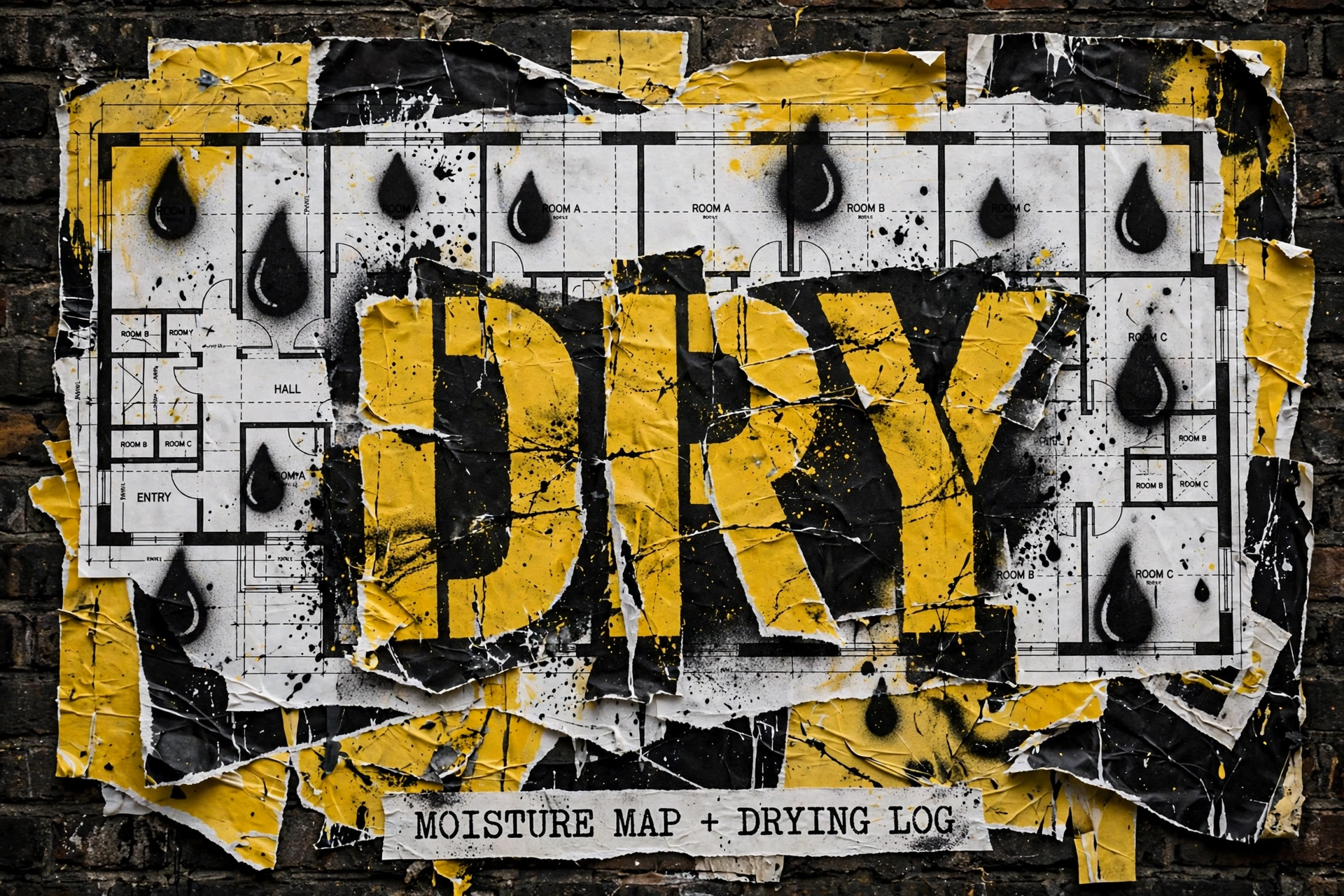
    Daily readings in. Adjuster-ready drying documentation out.

    Who This Is For

    Built for restoration technicians and project managers who take daily moisture readings but spend too much time formatting that data into documentation adjuster-reviewable reports.

    The Problem

    Daily moisture documentation is both critical and tedious. The readings take minutes. The documentation — formatting them into zone-by-zone progress reports, calculating GPP changes, noting equipment performance, flagging stalled areas — takes much longer and often gets done poorly under job pressure. Adjuster-ready drying documentation that demonstrates a professional drying protocol is one of the most important defenses against disputed claims.

    What It Does

    • Formats daily readings into structured progress reports by zone — readable, professional, adjuster-ready
    • Calculates daily GPP change per zone and flags areas that are stalling or trending wrong
    • Generates a drying narrative for each day that explains what the readings mean in plain language
    • Tracks equipment placement and output against moisture readings to demonstrate protocol compliance
    • Outputs a complete drying log summary for file closure — one document that tells the whole drying story

    What You Get

    The complete skill file in Claude-compatible format, a prompt library specific to the use case, and a setup guide that gets you running in under five minutes. After purchase, everything downloads instantly.

    Moisture Map & Drying Log Generator — Claude AI Skill for Restoration

    $47

    Delivered to your inbox within 24 hours — skill file, prompt library, and setup guide

    Buy Now →

    Secure checkout via Square — all major cards accepted

    Want a custom version built specifically for your business? Email will@tygartmedia.com

    Frequently Asked Questions

    What reading format do I need to input?

    The skill accepts readings in any format — you can paste from a spreadsheet, dictate from the field, or type them in whatever order you collected them. It organizes and formats from there.

    Does it generate actual moisture maps or just the data documentation?

    Text-based documentation organized by zone and material. It does not generate graphical maps but produces the same data in a structured, readable format.

    Does this replace dedicated moisture tracking software?

    No — it is a complement to whatever tracking system you use. If you have readings in Encircle or a spreadsheet, you paste them in and get formatted reports out. It handles the documentation layer.

    How is this delivered?

    Within 24 hours of purchase via email from will@tygartmedia.com. Skill file, prompt library, and setup guide delivered as a ZIP download.

    Does this require a paid Claude subscription?

    A Claude account is required. The free tier works for light use. Claude Pro ($20/mo) is recommended for regular use. The skill works with both.

    Can I get a custom version built for my specific business?

    Yes. Email will@tygartmedia.com with a description of your business and workflows. Custom skill builds are available as part of The Fitting service.

  • Restoration Supplement Writer — Claude AI Skill

    Restoration Supplement Writer — Claude AI Skill

    The supplement money you are leaving on the table is a Claude prompt away.

    Who This Is For

    Built for restoration contractors who are closing jobs without submitting supplements, or submitting supplements that get denied because the justification language wasn’t strong enough.

    The Problem

    Industry research consistently shows that restoration companies leave significant money on the table per job in unsupported or unpursued supplements. The line items are legitimate. The documentation exists. The problem is the writing — getting from job notes and moisture logs to a professionally written, line-by-line supplement request that adjusters are trained to approve. This skill does exactly that, on every job, in under ten minutes.

    What It Does

    • Reads your job notes, moisture logs, scope data, and existing estimate
    • Identifies supplementable items by damage category — items that were done but not included in the original scope
    • Writes each supplement line with specific IICRC-referenced justification language
    • Formats the complete request as a professional submission letter ready to send
    • Flags items that need additional documentation before submission so nothing gets denied on a technicality
    • Supplement phrase library by damage type included — water, fire, mold, structural, contents

    What You Get

    The complete skill file in Claude-compatible format, a prompt library specific to the use case, and a setup guide that gets you running in under five minutes. After purchase, everything downloads instantly.

    Restoration Supplement Writer — Claude AI Skill

    $97

    Delivered to your inbox within 24 hours — skill file, prompt library, and setup guide

    Buy Now →

    Secure checkout via Square — all major cards accepted

    Want a custom version built specifically for your business? Email will@tygartmedia.com

    Frequently Asked Questions

    How is this different from the Adjuster Communication Kit?

    The Adjuster Communication Kit handles all adjuster communications — supplement requests, disputes, follow-ups, and denials. This skill is specifically and deeply focused on supplement writing, with a complete phrase library and more output examples. If you primarily need supplement writing help, this is the right product. If you need the full communication toolkit, consider the kit.

    How much supplement revenue should I expect to recover?

    That varies significantly by job type, carrier, and how thorough your existing documentation is. We do not make specific dollar projections. What we can say is that professionally written supplements with standards-based justification language have a materially higher approval rate than informal submissions.

    Does it require a specific format or documentation input?

    No — the skill works with whatever job documentation you have. The more complete your input, the more complete the supplement. It asks clarifying questions when information is missing.

    How is this delivered?

    Within 24 hours of purchase via email from will@tygartmedia.com. Skill file, prompt library, and setup guide delivered as a ZIP download.

    Does this require a paid Claude subscription?

    A Claude account is required. The free tier works for light use. Claude Pro ($20/mo) is recommended for regular use. The skill works with both.

    Can I get a custom version built for my specific business?

    Yes. Email will@tygartmedia.com with a description of your business and workflows. Custom skill builds are available as part of The Fitting service.

  • Restoration Adjuster Communication Kit — Claude AI Skill

    Restoration Adjuster Communication Kit — Claude AI Skill

    Stop losing money because the supplement letter wasn’t professional enough.

    Who This Is For

    Built for restoration contractors and project managers who communicate with adjusters daily and know their documentation should be stronger but don’t have time to write every letter from scratch.

    The Problem

    Adjuster communication is where restoration money is made and lost. A well-written supplement request that cites IICRC standards and provides specific line-item justification gets approved. A generic one gets ignored or denied. Most restoration companies write these communications under time pressure with whatever language comes to mind. This skill replaces that with professional, specific, hard-to-dismiss language every time.

    What It Does

    • Supplement request letters with line-by-line justification language — specific, documented, professionally framed
    • Depreciation dispute letters citing industry standards and comparable market data
    • Authorization follow-up sequences that create a documented paper trail
    • Denial response letters with structured appeal framing
    • Scope justification narratives for challenged line items
    • 25 communication templates organized by scenario type

    What You Get

    The complete skill file in Claude-compatible format, a prompt library specific to the use case, and a setup guide that gets you running in under five minutes. After purchase, everything downloads instantly.

    Restoration Adjuster Communication Kit — Claude AI Skill

    $47

    Delivered to your inbox within 24 hours — skill file, prompt library, and setup guide

    Buy Now →

    Secure checkout via Square — all major cards accepted

    Want a custom version built specifically for your business? Email will@tygartmedia.com

    Frequently Asked Questions

    Can I customize the letters with my company name and specific job details?

    Yes — the skill generates letters based on the job details you provide. Every output is specific to your job, your line items, and your adjuster.

    Does this work for all insurance carriers?

    The communication language is designed to be carrier-agnostic. The skill focuses on standards-based justification language that works across carriers.

    What if my supplement gets denied anyway?

    The skill also generates denial response and appeal letters. It is built for the full adjuster communication lifecycle, not just the first submission.

    How is this delivered?

    Within 24 hours of purchase via email from will@tygartmedia.com. Skill file, prompt library, and setup guide delivered as a ZIP download.

    Does this require a paid Claude subscription?

    A Claude account is required. The free tier works for light use. Claude Pro ($20/mo) is recommended for regular use. The skill works with both.

    Can I get a custom version built for my specific business?

    Yes. Email will@tygartmedia.com with a description of your business and workflows. Custom skill builds are available as part of The Fitting service.

  • Xactimate Scope Drafter — Claude AI Skill for Restoration

    Xactimate Scope Drafter — Claude AI Skill for Restoration

    Input the damage. Get an Xactimate-ready scope draft. Stop staring at a blank line item screen.

    Who This Is For

    Built for restoration estimators and project managers who spend hours building scope documents from scratch when the job notes are already in their hands.

    The Problem

    Xactimate scoping is one of the most time-consuming parts of a restoration job — not because it is complex, but because it is tedious. Every estimator knows what the scope should include. Getting it from field notes into a structured, complete document takes time that could be spent on the next job. This skill does the translation.

    What It Does

    • Translates your field observations into organized Xactimate line item categories — demo, dry-out, structural, contents, and more
    • Prompts you for missing information rather than guessing — if dimensions or materials are unclear, it asks
    • Applies correct damage class and category framing based on damage type
    • Flags items commonly missed for each damage type: O&P, general conditions, equipment, and category-specific line items
    • Outputs in a structured format ready to transfer into Xactimate
    • 20 scope prompts by damage type included — water, fire, mold, contents, biohazard

    What You Get

    The complete skill file in Claude-compatible format, a prompt library specific to the use case, and a setup guide that gets you running in under five minutes. After purchase, everything downloads instantly.

    Xactimate Scope Drafter — Claude AI Skill for Restoration

    $47

    Delivered to your inbox within 24 hours — skill file, prompt library, and setup guide

    Buy Now →

    Secure checkout via Square — all major cards accepted

    Want a custom version built specifically for your business? Email will@tygartmedia.com

    Frequently Asked Questions

    Does this write a finished Xactimate estimate?

    No — it produces a complete structured scope draft that you then enter into Xactimate. The skill handles the thinking and organization. You handle the entry and pricing.

    What damage types does it cover?

    Water damage by category and class, fire and smoke, mold remediation, contents, biohazard, and structural damage. The scope prompts library includes templates for each.

    Does it need to be connected to Xactimate?

    No. This is a standalone Claude skill. The output is a structured document you read and transfer. No integration required.

    How is this delivered?

    Within 24 hours of purchase via email from will@tygartmedia.com. Skill file, prompt library, and setup guide delivered as a ZIP download.

    Does this require a paid Claude subscription?

    A Claude account is required. The free tier works for light use. Claude Pro ($20/mo) is recommended for regular use. The skill works with both.

    Can I get a custom version built for my specific business?

    Yes. Email will@tygartmedia.com with a description of your business and workflows. Custom skill builds are available as part of The Fitting service.

  • Photo and Documentation Discipline for Two Audiences: Mitigation’s Most Underrated Operational Lever

    Photo and Documentation Discipline for Two Audiences: Mitigation’s Most Underrated Operational Lever

    This is the third article in the Mitigation-to-Reconstruction Intelligence cluster under The Restoration Operator’s Playbook. It builds on the handoff piece and the prep standard piece.

    The mitigation crew is photographing for two audiences. They only know about one.

    Watch a mitigation tech document a water loss and you will see them taking photos with one audience in mind: the adjuster. Wide shots of the affected area. Close-ups of the moisture meter readings. The hose entry point. The water source. A few establishing shots that prove the loss happened, that prove the work was done, and that defend the bill if the carrier ever pushes back.

    Those photos are necessary. They are not sufficient.

    There is a second audience for those photos that almost no mitigation tech is trained to think about: the reconstruction estimator who will open the file two days later and try to scope the rebuild from a cold read. That estimator needs an entirely different set of photos to do their job well. They need to see things the adjuster does not need to see and does not care about. They need to see them at angles, in lighting, and at distances that the adjuster shoot will never produce.

    The mitigation crew is photographing for two audiences and only being trained for one. The result is that the rebuild estimator either has to send someone back to the site to take the photos that should have been taken on day one, or they have to scope the job from incomplete information and absorb the cost of every guess that turns out to be wrong.

    This is one of the cleanest, lowest-cost, highest-leverage operational fixes in the entire industry. It also requires precisely zero new technology. It requires a documented protocol and a half-day of training.

    What the adjuster needs to see

    To make the two-audience problem concrete, start with what the adjuster needs and what they do not need.

    The adjuster needs proof of loss, scope of damage, evidence of mitigation work performed, and documentation of any pre-existing conditions that bear on the claim. Their visual diet is wide shots that establish the room and the affected area, close-ups that document moisture readings and visible damage, equipment placement shots that prove drying was performed appropriately, and any photos that protect the file against pre-existing condition disputes.

    The adjuster does not need photos that capture the specific finish profile of the baseboard, or the exact pattern of the LVP, or the texture rake on the ceiling, or the cabinet kick reveal, or the trim casing at the door jambs. None of that is relevant to validating the claim. None of it gets shot, in most companies, because the tech is shooting for the audience they have been trained to serve.

    What the rebuild estimator needs to see

    The rebuild estimator opening the file two days later needs an almost entirely different set of images.

    They need finish profile shots. The exact baseboard profile, captured at an angle that lets them identify the manufacturer or, if the trim is custom, lets them estimate what it would cost to mill a match. They need close-ups of the casing, the crown, and any specialty trim that the homeowner will expect to be matched at the rebuild.

    They need texture shots. Ceiling texture is the single most argued-about finish detail in residential reconstruction. A close-up of the existing ceiling texture under raked lighting, captured before any demo begins, is the difference between a clean texture match and a callback. Wall texture matters less but is not zero. The estimator needs both.

    They need flooring shots that capture pattern, plank width, color, and the pattern interruption at any transition the rebuild team is going to have to handle. A photo of an LVP floor that shows where the existing pattern would terminate at a rebuild seam is worth ten phone calls during the rebuild.

    They need cabinet shots that capture not just the face but the construction. The reveal at the kick. The hinge style. The door overlay. The drawer slide type, captured from inside the drawer. Whether the boxes are face-frame or frameless. Whether the finish is paint, stain, thermofoil, or laminate. Each of these affects whether a partial repair is possible and what it would cost.

    They need door and casing photos at every door inside the affected area, captured before any baseboard or casing is removed. The photo set should include the casing profile, the door slab, any hardware detail that is a notable spec, and the threshold or transition at the floor.

    They need fixture shots. Light fixtures, switch and outlet plate styles, any specialty hardware that will need to be matched. Most of these do not get touched by mitigation, but the rebuild often involves restoring a finished space that includes them, and the estimator who has photos of the existing condition writes a tighter scope than the one who is guessing.

    They need reference shots from unaffected areas. A photo of the same flooring in the next room, captured before the mitigation crew works the affected area, gives the rebuild team a continuity reference that becomes invaluable when matching transitions.

    And they need the worst-case shot for every condition that is going to be a question. If there is any doubt about whether subfloor will need to be replaced, an extra shot of the subfloor through the mitigation cut is cheap. If there is any doubt about whether wall insulation is wet or dry behind a partial removal, an extra shot is cheap. The cost of a few extra photos is zero. The cost of being wrong about a condition six weeks later is real.

    The protocol that solves both audiences

    The companies that have addressed this problem have written and trained on a single combined photo protocol that satisfies both the adjuster and the rebuild estimator. The protocol typically organizes around four moments in the job lifecycle, with a defined photo set at each moment.

    The first moment is on arrival, before any work begins. This is the largest set, because the structure is being captured in its pre-mitigation state, which is the only state in which finish details, undamaged reference areas, and pre-existing conditions can be documented. The arrival set includes wide establishing shots of every affected room, finish profile close-ups for every category of finish present, reference shots from unaffected areas, and any pre-existing condition documentation. The arrival set is the one that, if neglected, can never be recovered. Once mitigation begins, the original conditions are gone.

    The second moment is during demo, capturing what is being removed and the conditions revealed underneath. This set serves both audiences — the adjuster needs evidence of the work and the conditions, and the rebuild team needs to see what is behind the walls, under the floors, and inside the cabinet cavities. The during-demo set should always include shots of any unexpected condition discovered during demo, captured before anything is altered.

    The third moment is post-demo, with the structure exposed and equipment in place. This set is mostly for the adjuster file, but the rebuild team uses it to confirm what was actually removed and what was left, and to plan the rebuild scope against the now-visible substrate.

    The fourth moment is at the close of mitigation, before equipment is removed and the file is handed to the rebuild team. This set captures the final dried state, the moisture readings that document successful dryout, and a clean condition photo of the structure as it is being passed off. The final set is the rebuild team’s starting condition, and a clean version saves hours of confusion at the start of the rebuild.

    Each moment in the protocol has a checklist. The checklists are short — usually six to twelve items per moment — and they are oriented around the categories of decisions the rebuild team will have to make. The crew runs the checklist on every job. Over time, the checklist becomes habit and the protocol becomes invisible.

    Documentation discipline beyond photos

    Photos are the most visible part of the documentation problem, but they are not the only part. The handoff package the mitigation team leaves for the rebuild team has several components, and each one matters.

    Moisture readings have to be captured in a way that gives the rebuild estimator confidence that the structure is genuinely dry, not just signed off as dry. Date-stamped readings at the close of mitigation, organized by location, are the standard. Companies that maintain this discipline rarely get into rebuild-side disputes about hidden moisture. Companies that do not, regularly do.

    Equipment placement records — what was placed where, for how long, and what readings each piece produced — serve both the carrier file and the rebuild team’s confidence that the dryout was complete.

    The mitigation supervisor’s notes are the most underrated document in the entire handoff. A few paragraphs, written by the supervisor at the close of mitigation, summarizing what was found, what was done, what surprised them, and what the rebuild team should know going in, is worth more than the entire automated dryout report. Most companies do not require these notes, and most rebuild teams have learned to do without. The companies that do require them have a different kind of handoff.

    The pre-existing condition log is its own document. Every condition observed on arrival that is not part of the loss but that the rebuild team needs to know about — the prior repair in the corner, the settled floor, the existing crack, the homeowner-installed surface that does not meet code — gets logged with photo references. This protects the company against post-rebuild disputes and gives the rebuild team a clear understanding of what is theirs to fix and what is not.

    The training that makes it stick

    None of this matters without training, and the training has a specific shape. Sending the protocol document to the crew and asking them to follow it produces no behavior change. The companies that have implemented working photo discipline have done it through field training led by someone who has done both sides of the job.

    The training is not classroom. It is on a real job, with a real loss, with the senior trainer walking the crew through each photo moment as it happens, explaining the audience and the reasoning. The crew shoots the protocol shots and the trainer reviews them, calls out the ones that miss the rebuild estimator’s needs, and has them reshoot. After two or three jobs done this way, the protocol becomes the crew’s habit.

    The reinforcement comes from the rebuild side. When a rebuild estimator opens a file and finds it complete, they say so to the mitigation team. When they open one and find it incomplete, they flag it specifically — not as a complaint, but as feedback that goes into the next training rev. The two functions sharing accountability for documentation quality is what keeps the protocol alive over years.

    Why this is more important now than it was three years ago

    The two-audience photo problem is not new. The reason to address it now is that the cost of getting it wrong is rising faster than most operators have noticed.

    Carrier and TPA scrutiny on documentation has tightened. Files with thin documentation get more pushback than they used to. Files with rich documentation get faster approvals, fewer reopenings, and better program standing.

    Homeowners have higher expectations than they did five years ago about what a competent restoration job looks like. The rebuild that misses a finish detail because the mitigation crew did not capture it gets noticed and reviewed publicly.

    And the companies that are putting AI-assisted tooling on top of their operations need photo and documentation discipline to make those tools work. An AI system asked to help scope a rebuild from a cold file performs as well as the file allows. Companies with tight documentation discipline can put modern tools on top of it and get force multiplication. Companies with loose documentation discipline can buy the same tools and get nothing, because the tools have nothing to work with.

    The crew taking the photos does not need to know any of that. They need a protocol, training, and feedback. The owners and operators above them need to know why it matters and need to invest in making the protocol the standard. The companies that do the investment are quietly building one of the most durable operational advantages available in the industry. The ones that don’t are about to keep paying for guesses for the rest of the decade.

    Next in this cluster: the feedback loop architecture that turns rebuild discoveries into the next revision of the prep standard, and the shared metrics that hold the mitigation and reconstruction functions accountable to the same scoreboard.

  • The Restoration Hiring Email: How to Turn a Job Posting Into a CRM Community Touch

    The Restoration Hiring Email: How to Turn a Job Posting Into a CRM Community Touch

    You have a job to fill. You’ve probably already drafted the Indeed posting. Before you publish it, spend 20 minutes doing something that will generate better candidates, cost nothing, and quietly remind 400 warm contacts that your company exists.

    Send an email to your entire local database.

    This guide is the tactical companion to the strategic case for treating your CRM as a community. That article explains why this works. This one tells you exactly how to do it — the segments, the copy, the timing, and the follow-up. Take this document and hand it to whoever manages your email or your CRM. They can have the campaign out this week.


    Before You Write a Word: Pull and Segment Your Database

    The hiring email only works if it feels personal. A generic blast to a mixed list feels like spam. Three short, targeted emails to three different audiences feel like a phone call from someone who respects the relationship.

    Your minimum viable segmentation is three groups:

    Segment 1: Past Homeowner Clients (Local Only)

    Filter your CRM or job management software for residential jobs completed in your service area in the last three to five years. If your system is ServiceTitan or Jobber, you can export this directly from the customer list filtered by job type and zip code. If you’re on a spreadsheet, sort by city or zip and pull anything within your service radius.

    What you’re looking for: name, email address, job completion date, and job type (water, fire, mold, etc.). You don’t need anything else for this email.

    Segment 2: Industry Contacts (Adjusters, Agents, Public Adjusters)

    These are the professional referral relationships in your CRM — insurance adjusters you’ve worked with on claims, agents who have sent you referrals, PAs you’ve collaborated with. Filter by contact type if your CRM supports it, or manually tag this group.

    Segment 3: Trade Contacts (Vendors, Subs, Partners)

    Suppliers, subcontractors, and trade partners. These people understand your business from the inside and often have the strongest networks within the trades workforce.

    If your database is in ServiceTitan: navigate to Customers → Export, then filter by customer type. For Jobber: go to Clients → Export CSV. For a spreadsheet: create a column called “Segment” and sort manually. The whole segmentation process for most restoration companies takes under an hour.


    The Email Copy: Three Versions, One Campaign

    Each version is short. The goal is a 90-second read that feels like a note from a real person, not a marketing email. Do not use HTML templates with banners and logos. Plain text or minimal formatting performs significantly better for relationship-based emails. No header image. No footer with six social icons. Just your name, your company, and the ask.

    Version 1: Past Homeowner Clients

    Subject line: Quick question — do you know anyone looking for good work?

    Hi [First Name],

    It’s [Your Name] from [Company Name]. We had the pleasure of working with you on your [water/fire/mold] job at [property address or neighborhood] — hope everything has been holding up well since then.

    I’m reaching out because we’re growing. We’re currently looking for a [position title — e.g., crew lead, project coordinator, estimator] to join our team, and before we post publicly, I wanted to reach out to people we’ve worked with and whose opinion I trust.

    If you know someone who might be a great fit for a company like ours — a family member, a friend, someone in the trades looking for a stable company with a good culture — I’d love to hear from you. Just reply to this email with their name and I’ll take it from there. No formal application needed on your end.

    Either way, I hope you’re doing well. And if you ever need us again or have any questions about your property, don’t hesitate to reach out.

    [Your Name]
    [Title]
    [Company Name]
    [Phone Number]


    Version 2: Industry Contacts (Adjusters, Agents)

    Subject line: Growing our team — wanted to reach out to you first

    Hi [First Name],

    Hope things are going well on your end. I wanted to reach out personally because we’re adding to our team — specifically hiring for [position title] — and I always prefer to see if someone in my network has a connection before going the generic posting route.

    If you know anyone in the area who would be a great fit for a professional restoration company — someone who takes their work seriously and wants to be part of a growing operation — I’d genuinely appreciate the introduction. Just reply with their contact info and I’ll handle it from there.

    Thanks for everything over the years. Looking forward to the next one.

    [Your Name]
    [Title]
    [Company Name]
    [Phone Number]


    Version 3: Trade Contacts (Vendors, Subs)

    Subject line: Hiring for [position] — know anyone good?

    Hey [First Name],

    We’re hiring for [position title] and figured I’d reach out to people in the trades before going the job board route. You know the kind of people we work with better than anyone.

    If anyone comes to mind — someone looking to land somewhere solid — just shoot me a reply. Happy to take it from there.

    [Your Name]
    [Company Name]
    [Phone]


    The Technical Setup: Getting These Emails Out

    You have three realistic paths depending on what tools you already have.

    Path A: Your CRM’s Built-In Email (ServiceTitan or Jobber)

    Both ServiceTitan and Jobber have basic email blast capability built in. In ServiceTitan, navigate to Marketing → Campaigns → Email. In Jobber, use the Client Communications feature under the Marketing tab. Compose your email, select your filtered list, and send. This is the fastest path if your contact list is already clean in the system. Limitation: formatting options are limited and tracking (opens, clicks) may be minimal depending on your plan tier.

    Path B: Mailchimp (Recommended for Most Shops)

    Mailchimp’s Essentials plan starts at $13/month for up to 500 contacts. For a typical restoration company database of 300–800 local contacts, you’ll likely stay in the $13–$30/month range depending on list size. The free plan as of 2026 caps at 250 contacts with no automation, which is not enough for most shops — pay for Essentials.

    Setup process:

    1. Export your three segments from your CRM as CSV files (Name, Email, Segment Type, Job Type)
    2. Create three Audiences in Mailchimp — one per segment — or use one Audience with tags for each segment
    3. Build one campaign per segment using the corresponding email template above
    4. Schedule them to send on the same day, 30 minutes apart, so you’re not flooding your own inbox with replies simultaneously

    Important Mailchimp note: the platform charges for unsubscribed contacts unless you manually archive them. If your list has been in Mailchimp for a while, audit it before your campaign — you may be paying for contacts who can’t receive your email. Archive anyone who unsubscribed more than 6 months ago.

    Path C: Brevo (Best if You Have a Large or Mixed List)

    Brevo (formerly Sendinblue) prices by emails sent rather than contacts stored, which works in your favor if you have a large database but only email them a few times a year. Their free plan includes 300 emails per day with unlimited contact storage. For a quarterly campaign to 800 contacts, Brevo’s free tier may cover your needs entirely. Upgrade to the Starter plan ($9/month) if you need scheduling and no daily send limit.


    Timing and Frequency

    Send the homeowner version on a Tuesday or Wednesday morning between 9am and 11am local time. Open rates for warm, local databases are typically highest mid-week in the morning window — people are at their desks, not yet in weekend mode.

    Send the industry version on the same day, 30 minutes later. These contacts are professionals and check email throughout the day — timing matters less than it does for homeowners.

    Send the trade version on the same day, afternoon. Tradespeople often check phones between jobs in the afternoon rather than first thing in the morning.

    Do not send all three simultaneously. Staggering by 30 minutes gives you manageable reply volume and prevents any single moment of inbox overwhelm.


    What to Do With the Replies

    This is where most companies drop the ball. The email generates replies. Someone refers their nephew who’s looking for work. An adjuster forwards it to a plumber he knows. A past homeowner replies just to say hi and mention their neighbor had a pipe burst last month.

    You need a simple log. A Notion page, a Google Sheet, or even a notes field in your CRM — whatever you’ll actually use. For every reply:

    • Log the sender name and contact type (homeowner, adjuster, vendor)
    • Log whether they referred someone (yes/no)
    • Log any other signal in the reply (lead mention, service inquiry, general warmth)
    • Set a follow-up reminder for 30 days if the reply was warm but didn’t lead anywhere immediately

    This log becomes the seed of your community intelligence layer. Over time, you’ll see which contacts are active in your network and which have gone completely cold. That’s information worth having.


    The Prompt Library: Using Claude to Write Your Versions

    If you want to adapt these templates for your specific company voice, job title, or market, here are four ready-to-use prompts for Claude (claude.ai). Paste these directly into a new Claude conversation:

    For the homeowner version:

    “Write a short, plain-text hiring email from a restoration company owner to a past homeowner client. We completed [water damage / fire damage / mold remediation] work for them in [city]. We’re hiring a [job title]. The email should feel personal and warm, mention that we’re reaching out before posting publicly, and ask if they know anyone — family or friends — who might be a great fit. No sales pitch. No marketing language. Sign it from [owner name] at [company name]. Keep it under 150 words.”

    For the industry version:

    “Write a short professional email from a restoration company owner to an insurance adjuster they’ve worked with on claims. We’re hiring a [job title]. The tone should be collegial and peer-to-peer — not formal, not salesy. We’re reaching out to trusted contacts before posting publicly and asking for referrals if they know anyone in the area. Keep it under 120 words.”

    For the subject line variations:

    “Give me 5 subject line options for a hiring referral email from a restoration company to past clients. The email is not a job posting — it’s a personal note asking if they know anyone who might want to work at a company like ours. The tone should be warm and human, not corporate. No clickbait. No exclamation points.”

    For customizing to your brand voice:

    “Here are two emails I’ve written before that represent how I communicate with clients: [paste examples]. Using this voice, rewrite the following hiring email template: [paste template]. Keep the same message but make it sound like I wrote it.”


    Frequently Asked Questions

    Do I need to include an unsubscribe link in these emails?

    If you’re sending through an email marketing platform like Mailchimp or Brevo, yes — the platform will add one automatically. If you’re sending through your CRM’s built-in email or directly from your own inbox to a small list, the legal requirements vary by country and list size. In the U.S., CAN-SPAM applies to commercial email. A personal, non-promotional email like this occupies a gray area — consult your legal advisor for your specific situation, but err toward including an unsubscribe option for any bulk send.

    What if my CRM doesn’t have email addresses for past clients?

    This is a data problem worth fixing before the next job completes. Make capturing email address a standard part of your intake process going forward. For the existing database, you can often find emails through invoice records, text message history, or a simple re-engagement call (“We’re updating our records — can I get the best email for you?”). Even 50% coverage on a 400-contact database is 200 warm reaches.

    How long should I wait before sending this campaign?

    Don’t wait. If you’re hiring now, send now. The email is most authentic when it reflects a real, current need. The whole premise is that this is a genuine business moment, not a manufactured excuse.

    What if someone replies with a lead instead of a job referral?

    Log it immediately. Route it to whoever handles incoming leads. Thank the person who referred it. This is the community strategy working exactly as intended — and it’s why the reply log matters.


  • The LinkedIn Algorithm Doesn’t Care About Your Company Page

    The LinkedIn Algorithm Doesn’t Care About Your Company Page

    The Machine Room · Under the Hood

    Company Pages Are Dead Weight

    If your LinkedIn strategy centers on your company page, you’re optimizing for a channel that LinkedIn itself has deprioritized. Company page organic reach averages 2-5% of followers. Personal profiles regularly hit 10-20x that reach. LinkedIn’s algorithm explicitly favors individual voices over brand accounts because individual content drives the engagement that keeps users on the platform.

    This isn’t a bug – it’s LinkedIn’s core product design. The platform monetizes company pages through paid promotion. Free organic reach goes to people, not logos. Understanding this reality is the first step toward a LinkedIn strategy that actually works.

    What the Algorithm Rewards in 2026

    Dwell time is the primary signal. LinkedIn measures how long users stop scrolling to read your post. Long-form text posts with strong hooks outperform short updates because they capture more dwell time. The hook – your first 2-3 lines before the ‘see more’ fold – determines whether anyone reads the rest.

    Comments outweigh reactions. A post with 50 thoughtful comments outranks a post with 500 likes in LinkedIn’s distribution algorithm. Comments signal engagement depth, which LinkedIn uses to push content to broader networks. Asking specific questions and making debatable claims drives comment activity.

    Niche consistency beats viral randomness. LinkedIn rewards creators who post consistently about a defined topic. If your last 20 posts are about AI in marketing, your next AI post gets preferential distribution to an audience that’s already engaged with that topic. Random viral posts don’t build algorithmic momentum.

    Document posts and carousels get extended distribution. PDF carousel posts receive 3-5x the impression window of text-only posts because users swipe through multiple slides, generating extended engagement signals. We create carousels from our best-performing blog content and consistently see higher reach.

    The Personal Brand as Pipeline Strategy

    At Tygart Media, LinkedIn isn’t a social media channel – it’s a pipeline. Every post is designed to do one of three things: establish expertise on a specific topic, tell a story that demonstrates results, or spark a conversation that leads to DM inquiries.

    The results compound over time. One of our insurance adjuster connections called because she’d been reading LinkedIn posts for six months. She didn’t respond to a single post publicly. She didn’t click any links. She just read, consistently, until she had a need that matched the expertise we’d demonstrated. That’s the pipeline at work.

    This approach works for any professional service business. A restoration company owner posting about emergency response procedures becomes the recognized expert in their market. A luxury lender posting about high-value asset trends becomes the trusted advisor. LinkedIn turns your expertise into a passive lead generation engine.

    How to Write Posts That Actually Perform

    The hook formula: Start with a specific claim, a counterintuitive observation, or a question that challenges conventional wisdom. ‘We spent $127,000 on Google Ads so you don’t have to’ outperforms ‘Here are some PPC tips’ by orders of magnitude.

    The rehook: After 3-4 lines of context, drop a second hook that pulls readers further in. This technique keeps dwell time high and reduces drop-off after the initial fold.

    The value delivery: The body of the post should teach something specific or share a concrete result. Abstract advice performs poorly. Specific numbers, tools, and frameworks perform well.

    The engagement trigger: End with a question or a mildly controversial take that invites responses. ‘What’s your experience with this?’ works, but ‘I think most agencies are wrong about this – change my mind’ works better.

    Frequently Asked Questions

    How often should I post on LinkedIn?

    3-5 times per week for aggressive growth. 2-3 times per week for maintenance. Consistency matters more than frequency – posting daily for a week then disappearing for a month is worse than steady 3x/week cadence.

    Should I use hashtags on LinkedIn?

    Minimally. 3-5 relevant hashtags maximum. LinkedIn’s hashtag system is less impactful than it was in 2023. Topic consistency in your content matters far more than hashtag optimization for algorithmic distribution.

    Do LinkedIn engagement pods still work?

    LinkedIn actively detects and penalizes engagement pods. Artificial engagement from the same group of people on every post triggers algorithmic suppression. Authentic engagement from diverse connections is what the algorithm rewards.

    Is LinkedIn Sales Navigator worth the cost?

    For B2B pipeline building, yes. Navigator’s advanced search and InMail capabilities are valuable for targeted outreach. For content distribution and organic reach, the free platform is sufficient – Navigator doesn’t boost post performance.

    Your Profile Is Your Pipeline

    Stop treating LinkedIn as a social media obligation and start treating it as your highest-leverage business development channel. The algorithm rewards consistency, depth, and authentic expertise. Build those three things into your posting routine, and LinkedIn becomes a pipeline that works while you sleep.

    {
    “@context”: “https://schema.org”,
    “@type”: “Article”,
    “headline”: “The LinkedIn Algorithm Doesnt Care About Your Company Page”,
    “description”: “LinkedIn’s algorithm favors personal profiles over company pages. Here’s how to turn your posts into a pipeline that generates leads.”,
    “datePublished”: “2026-03-21”,
    “dateModified”: “2026-04-03”,
    “author”: {
    “@type”: “Person”,
    “name”: “Will Tygart”,
    “url”: “https://tygartmedia.com/about”
    },
    “publisher”: {
    “@type”: “Organization”,
    “name”: “Tygart Media”,
    “url”: “https://tygartmedia.com”,
    “logo”: {
    “@type”: “ImageObject”,
    “url”: “https://tygartmedia.com/wp-content/uploads/tygart-media-logo.png”
    }
    },
    “mainEntityOfPage”: {
    “@type”: “WebPage”,
    “@id”: “https://tygartmedia.com/the-linkedin-algorithm-doesnt-care-about-your-company-page/”
    }
    }