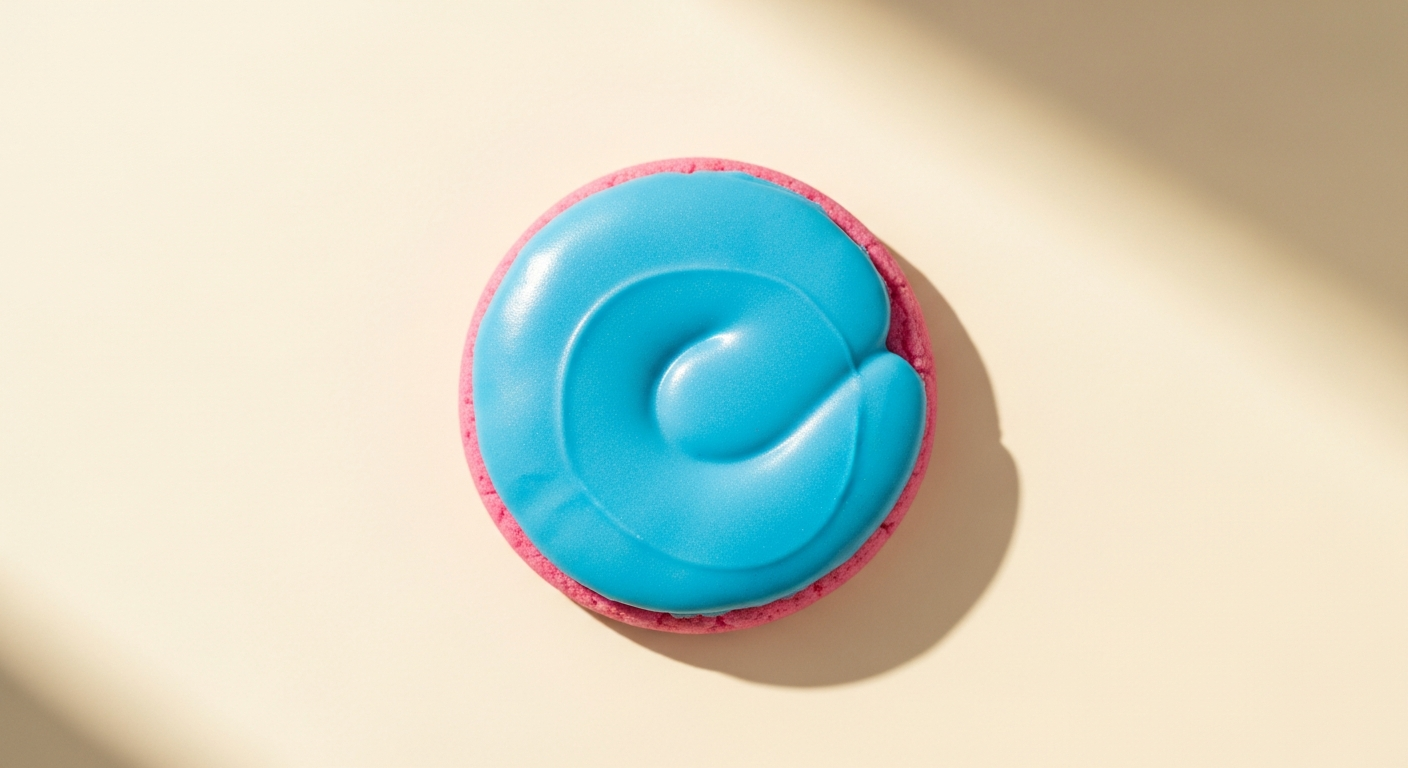
For one week in spring 2026, Crumbl’s signature pink cookie isn’t pink. It’s cerulean. The same shade Miranda Priestly described twenty years ago in a four-minute monologue that has somehow become more relevant every year since the movie came out.
If you’ve worked in marketing long enough, you already know the speech by heart. Andy Sachs makes the mistake of laughing at the difference between two belts that look “exactly the same” to her. Miranda doesn’t yell. She doesn’t roll her eyes. She walks Andy backwards through the supply chain — Oscar de la Renta, Yves Saint Laurent, the casual corner, the department stores, the clearance bin — until the lumpy blue sweater on Andy’s body is revealed to be cerulean, and the choice she thought she made was made for her, by the people in the room, two seasons earlier.
The point of the monologue isn’t that fashion is powerful. The point is that culture is a current you’re already swimming in, whether you noticed it or not.
That’s why Crumbl made their cookie cerulean this week.
What Crumbl Actually Did
The Devil Wears Prada 2 hits theaters May 1, 2026. The marketing window is therefore the last week of April through opening weekend. A film studio in this position has the same options every studio has always had: trailers, billboards, late-night appearances, partnerships with fashion magazines, the press tour. These work. They are also expensive, predictable, and increasingly invisible to the audience the studio actually wants — the millennial women who saw the original in a theater in 2006 and are now in their late thirties and forties, who do not watch network television, do not read print magazines, and have learned to scroll past sponsored content without registering it.
What those women do is open Instagram on Sunday afternoon to see what flavor Crumbl dropped this week.
Crumbl’s weekly drop is one of the most reliable consumer rituals built in the last decade. Six rotating cookies, announced Sunday at 6 p.m. local time, available for one week only. The pink sugar cookie is the constant — the brand’s signature, the cookie that tells you what store you’re standing in. When Crumbl makes the pink cookie a different color, the whole audience notices. That is the entire point of having a signature in the first place.
So this week, the pink cookie is cerulean. The campaign doesn’t have to say Devil Wears Prada anywhere. The color does the work. And the color works because thousands of women between thirty-five and fifty look at it, recognize it instantly, and feel a small private smile of being in on it. Then they tell three friends, who tell three friends, and a partnership budget that would have bought eleven seconds of TV ad time during a streaming awards show instead becomes a week of organic Instagram impressions inside the exact demographic the studio paid Anne Hathaway to bring back.
This is what marketing looks like when it works the way Miranda Priestly described it. Top down. Deliberate. Invisible to most people standing inside it. And almost free.
The Cookie Isn’t About the Cookie
Here is the part that most marketers miss when they try to copy this kind of move.
Crumbl is not selling cookies. Crumbl has not been selling cookies for years. Crumbl is selling a weekly emotional event — a small, predictable, low-stakes moment of anticipation that thousands of people have built into their Sundays. The cookie is the artifact. The drop is the product. The flavor is the headline. And the customer is not paying $4.50 for a sugar cookie; they are paying $4.50 to be the kind of person who knows what dropped this week and can text their friend a photo of it.
When Crumbl turns the pink cookie cerulean, they are not running a movie tie-in. They are giving their audience a more interesting thing to text about. The Devil Wears Prada 2 connection is a gift to the audience, not a sales pitch. It says: we know you. We know what you grew up watching. We know what made you laugh in 2006 and what makes you laugh now. We’re paying attention to the same things you’re paying attention to.
That is a relationship. The cookie is the proof of the relationship.
What This Means for the Rest of Us
Most businesses do not have a Sunday cookie drop. Most businesses are not in a position to make a single product change that lands inside the cultural conversation by Tuesday morning. But every business has the same underlying opportunity Crumbl has, which is to notice what their audience is already paying attention to and then to participate in it without trying to monetize it directly.
The mistake most companies make is thinking the lesson here is “do a movie tie-in.” That isn’t the lesson. The lesson is that the cookie was already cerulean before Crumbl made it cerulean — the cultural moment existed, the audience was already there, the affection for the original film was already in the room. Crumbl’s only job was to notice and to translate that noticing into a one-week color change. The marketing was free because the meaning was already paid for, by twenty years of a movie that refuses to die.
For most operators, the equivalent move isn’t a cookie. It’s a one-line caption on a Tuesday post. It’s the color of the section header on your homepage. It’s whether you remembered the thing your customer said offhand six months ago and brought it up the next time they walked in.
The cerulean cookie is a reminder that connection is not built on advertising spend. It is built on attention.
Why Tygart Media Is Cerulean Now
This article exists because of a cookie. Specifically, because Stefani Tygart — co-founder of Tygart Media and a person who has loved The Devil Wears Prada since the year it came out — saw the cerulean drop on Sunday, brought one home Monday, and made the connection out loud over coffee Tuesday morning. She didn’t pitch a campaign. She just noticed something and said it. By Wednesday, the homepage of Tygart Media was cerulean.
This is the part of running an AI-native media company that does not show up in any pitch deck. The infrastructure matters. The Notion control plane matters. The deployment pipelines and the model routing and the schema stack all matter. But none of it works without the human at the front of it noticing what’s worth paying attention to and saying it out loud at the right time.
Stef notices things. That is the job. The cookie noticed her back, and now we’re cerulean for a while, and somewhere a Crumbl marketer in Lindon, Utah is having a very good week.
That’s how culture moves. That’s the monologue. That’s the whole lesson.
The Devil Wears Prada 2 opens in theaters May 1, 2026. Crumbl’s cerulean pink cookie is available the week of April 28, 2026 only.
Leave a Reply