Tacoma - Tygart Media

Category: Tacoma

Tacoma Business Journal coverage

  • City of Tacoma Department of Public Utilities (TPU): Pay Your Bill, Power Outage Map & Rates Guide

    City of Tacoma Department of Public Utilities (TPU): Pay Your Bill, Power Outage Map & Rates Guide

    Last verified: June 4, 2026. Utility rates, payment options, contact details, and outage status change over time — always confirm time-sensitive details at the official Tacoma Public Utilities links provided below before acting.

    If you live or run a business inside the city, the City of Tacoma Department of Public Utilities — almost everyone just calls it TPU — is the single agency behind the power in your outlets, the water at your tap, and even the sewer and garbage lines on your monthly statement. This guide cuts through the menu trees: how to pay, what the rates look like, how to start or stop service, and where to check the live outage map when the lights go down.

    Tacoma Public Utilities at a glance

    • Pay your bill: Log in to the TPU MyAccount portal to pay by card or bank transfer, or pay by mail, phone, or in person. Residential pay-by-phone runs through 253-502-8608.
    • Customer service: Reach TPU at 253-502-8600 (toll-free 800-752-6745), Monday–Friday; confirm current hours and contact options on the official customer service page.
    • Report a power outage: Call the dedicated outage line 253-502-8602, report it inside MyAccount, or text “OUT” to 50419 if you’re enrolled in text alerts.
    • Live outage map: The interactive Tacoma Power outage map is real-time — check live rather than relying on any printed status.
    • Electric & water rates: New Tacoma Power rates took effect April 1, 2026; see the official power rates and water rates pages for current schedules.
    • Sewer & garbage: City of Tacoma Environmental Services charges (wastewater, surface water, solid waste, recycling) ride on your TPU bill; billing questions go to the City at 253-502-2100.

    How to pay your Tacoma Public Utilities bill

    The fastest route is the MyAccount portal, where you can pay with a card or move money directly from a checking or savings account. MyAccount also lets you set up paperless billing, autopay, and outage text alerts in one place.

    Prefer not to use the web? TPU keeps several options open, detailed on its Ways to Pay page:

    • By phone: Residential customers can pay by card at 253-502-8608 (also TPU’s 24-hour automated line); general customer service is 253-502-8600.
    • In person: Visit the TPU Administration Building at 3628 S. 35th St., Tacoma, WA 98409.
    • Pay Boxes: Located at select grocery stores around Pierce County and at the Administration Building.
    • By mail: Send your payment with the remittance stub from your statement.

    If money is tight, don’t wait for a shutoff notice. TPU’s payment assistance page lists bill-credit programs, discount rates for qualifying households, and payment arrangements — call customer service early and they can usually work something out.

    Electric and water rates, and how to read your bill

    Tacoma Power is a publicly owned, hydropower-heavy utility, which is a big reason Tacoma’s electricity has historically stayed well below the national average. New power rates took effect April 1, 2026; TPU has said the typical residential customer should expect an average increase of roughly $7.09 per month under the new schedule. Because the exact per-kWh energy charge and monthly basic charge are set in the formal rate schedule and adjust periodically, confirm the current figures on the official Power Rates Schedule (Schedule A1 for residential service) rather than budgeting off an old number.

    Water customers can review the residential and commercial water rate structure on the Tacoma Water rates page. One thing that surprises new arrivals: a single TPU statement can bundle electric, water, and the City’s environmental charges together — so a month-over-month jump isn’t always your power usage. Itemize the bill before you assume the cause.

    Starting, stopping, or transferring service

    Moving into a Tacoma address, or out of one? Set up, disconnect, or transfer your electric and water service through the Start/Stop Service page. Have your service address, move date, and ID ready. New connections that require a field appointment — meter sets, certain water taps, and the like — are scheduled through TPU’s appointment system, and customer service at 253-502-8600 can walk you through what your specific property needs. Builders and contractors pulling new electric or water connections should start that conversation early, since infrastructure work has lead time.

    Power outages: report it, then check the live map

    When your power goes out, report it first — outages aren’t always automatically detected, and a quick report helps crews pinpoint the affected area. You can report by calling the dedicated outage line 253-502-8602, through MyAccount, or by texting “OUT” to 50419 if you’ve enrolled in text notifications.

    To see where outages are happening and follow restoration progress, use the real-time Tacoma Power outage map. Outage counts and restoration estimates change minute to minute, so we don’t print current numbers here — check live at the official map for the truth on the ground. A few safety reminders from TPU: stay far away from any downed line and always assume it’s energized; unplug sensitive electronics; keep the refrigerator closed; and never run a generator indoors or plug one into a wall outlet.

    Sewer, stormwater, and garbage: the City of Tacoma side

    Here’s the wrinkle that trips up a lot of residents. Your TPU bill also carries solid waste (garbage), recycling, wastewater (sewer), and surface water (stormwater) charges — but those services are run by City of Tacoma Environmental Services, not TPU. TPU just consolidates everything onto one statement for convenience. So for questions about your garbage pickup day, recycling, a sewer backup, or the rate on those line items, call the City of Tacoma at 253-502-2100 (Monday–Friday) or visit the City of Tacoma Environmental Services department; TPU’s own customer service line handles the electric and water side. The TPU Environmental Services billing overview explains how the two agencies share one bill.

    Frequently asked questions

    What is the City of Tacoma Department of Public Utilities?

    The City of Tacoma Department of Public Utilities (TPU) is the municipally owned utility that provides electric power (Tacoma Power), water (Tacoma Water), and rail service (Tacoma Rail) to Tacoma and parts of Pierce County. It also consolidates City of Tacoma Environmental Services charges — sewer, stormwater, solid waste, and recycling — onto a single monthly bill. Learn more at mytpu.org.

    How do I pay my Tacoma Public Utilities bill?

    The easiest way is online through the MyAccount portal using a card or bank transfer. You can also pay by phone (residential card payments at 253-502-8608), by mail, at a Pay Box in participating Pierce County grocery stores, or in person at 3628 S. 35th St., Tacoma. See Ways to Pay for all options.

    How do I check a City of Tacoma power outage?

    Use the real-time Tacoma Power outage map to see active outages and restoration estimates — the status updates continuously, so always check it live rather than relying on a printed figure. To report an outage, call the dedicated outage line 253-502-8602, use MyAccount, or text “OUT” to 50419 if enrolled in alerts.

    What is the Tacoma Public Utilities customer service phone number?

    TPU customer service is 253-502-8600 (toll-free 800-752-6745), available Monday through Friday; check the official customer service page for current hours. Residential customers can pay by phone at 253-502-8608, and the dedicated power-outage line is 253-502-8602. For sewer, stormwater, solid waste, or recycling charges on your bill, call City of Tacoma Environmental Services at 253-502-2100.

    How much does electricity cost in Tacoma?

    Tacoma Power is publicly owned and hydropower-heavy, so its rates have historically run below the national average. New rates took effect April 1, 2026, with TPU citing an average residential increase of about $7.09 per month. For the exact current basic charge and per-kWh energy rate, check the official Power Rates Schedule.

  • Tacoma Weather & Climate: Seasonal Norms and Live Forecast (Pierce County, WA)

    Tacoma Weather & Climate: Seasonal Norms and Live Forecast (Pierce County, WA)

    Last verified: June 1, 2026. Climate norms below are long-term averages, not a forecast — for current conditions, watches, or warnings, always confirm time-sensitive details at the official National Weather Service links provided throughout this page.

    Tacoma weather at a glance

    • Live Tacoma forecast comes from the NWS Seattle/Tacoma forecast office (WFO SEW), which issues the official 7-day outlook, watches, and warnings for Pierce County. Check live forecast →
    • Climate type: Tacoma has a mild, marine-influenced climate — cool, wet, cloudy winters and short, warm, notably dry summers, moderated by Puget Sound. (Weather Spark climate summary)
    • Warmest month: August, with average highs around the upper 70s°F and overnight lows in the mid-50s°F. (US Climate Data)
    • Coldest month: December, with average highs near the mid-40s°F and lows in the upper 30s°F; hard freezes and snow are occasional, not routine.
    • Wettest stretch: November and December are the rainiest months; the driest month is July (often under an inch of rain). (Tacoma rainfall by month)
    • Best window for sun: the dry season runs roughly early May through mid-October, peaking in July when skies are clearest.

    What is the weather like in Tacoma year-round?

    If you are new to Pierce County, the single most useful thing to understand is that Tacoma’s reputation for rain is half-right. The region is genuinely wet — but the rain is concentrated in the cooler half of the year and arrives as long stretches of light drizzle and gray overcast rather than heavy downpours. Total annual precipitation falls in roughly the 39-to-50-inch range depending on the measuring station and the source, which is wetter than the national average but spread across far more days of light rain.

    Temperatures are mild and stable by U.S. standards. Puget Sound acts as a giant thermal buffer, so Tacoma rarely sees the brutal summer heat or deep winter cold common inland. Summer highs typically sit in the 70s°F, and genuine heat waves into the 90s°F are short-lived events, not the norm. Winter lows seldom drop far below freezing. For the authoritative current reading and the official 7-day outlook for the Tacoma area, use the NWS point forecast (check live).

    Tacoma weather by season

    Winter (December–February): Expect overcast skies, frequent light rain, and highs in the mid-40s°F. January is statistically the cloudiest month of the year. Lowland snow does happen — usually a few inches across a handful of days — but it rarely sticks for long. When cold air slides down from the Fraser Valley or a Pacific system collides with it, snow and ice can briefly snarl the South Sound; that is exactly when you should be watching the NWS Seattle/Tacoma office (check live) for winter weather advisories.

    Spring (March–May): A gradual dry-out. March and April remain showery, but by May the rain tapers sharply and sunny breaks become common. Highs climb from the 50s°F into the 60s°F. This is the transition into Tacoma’s signature dry summer.

    Summer (June–September): The payoff for residents. From late June through mid-September, Tacoma is warm, dry, and often spectacularly clear. July is the driest and sunniest month, frequently logging under an inch of rain. Highs run in the mid-to-upper 70s°F, with comfortable low humidity. The main summer caveat is wildfire smoke drifting in from regional fires, which can degrade air quality for days at a time — another reason to check official advisories before planning extended outdoor time.

    Fall (October–November): The wet season returns, usually arriving in mid-October. November is one of the rainiest months of the year, with shortening days and steadily falling temperatures. Atmospheric-river events can deliver heavy multi-day rain and minor flooding along area rivers.

    Where to get the official live forecast for Tacoma

    Tacoma and all of Pierce County are served by the National Weather Service forecast office in Seattle/Tacoma (WFO SEW), headquartered at 7600 Sand Point Way NE, Seattle. This is the government office that issues every official forecast, watch, and warning for the South Sound — the source meteorologists, emergency managers, and local media all build from.

    For the current conditions and hour-by-hour outlook specific to the city, the NWS point forecast for downtown Tacoma (check live) is the page to bookmark. Because weather is volatile and changes by the hour, this guide deliberately does not print today’s numbers — the live link always carries the most current, authoritative data straight from the source.

    How Tacoma’s weather differs from Seattle

    Tacoma and Seattle share the same forecast office and a nearly identical climate signature, so day-to-day differences are small. Tacoma sits about 30 miles south of downtown Seattle and a little farther from the open water of the central Sound, which can mean marginally warmer summer afternoons and slightly different snow outcomes during borderline winter events. The practical takeaway: a Seattle forecast is a reasonable proxy for Tacoma, but for anything time-sensitive you should pull the Tacoma-specific point forecast rather than relying on a Seattle headline number.

    Frequently asked questions

    What is the weather like in Tacoma, WA?

    Tacoma has a mild marine climate: cool, gray, wet winters and short, warm, dry summers, all moderated by Puget Sound. Summer highs are typically in the 70s°F and winter highs in the mid-40s°F, with rain concentrated from November through March. For current conditions, check the official NWS Tacoma forecast (live).

    What is the Tacoma weather forecast for today?

    Today’s forecast changes by the hour, so this page does not print it. Get the official, up-to-the-minute 7-day outlook from the National Weather Service point forecast for Tacoma (check live).

    How much does it rain in Tacoma?

    Tacoma averages roughly 39 to 50 inches of precipitation per year, spread across a large number of light-rain days. The wettest months are November and December; July is the driest, often under an inch. See Tacoma rainfall by month.

    When is the best weather in Tacoma, Washington?

    The dry season runs from about early May through mid-October, with July and August offering the warmest, sunniest, and driest conditions of the year — the best window for outdoor plans in Pierce County.

    Does it snow in Tacoma?

    Snow is occasional, not routine. Tacoma averages only a few inches of snow per year, mostly in December and January, and it rarely lingers. Significant accumulation or ice usually comes with specific cold-air events, so watch the NWS Seattle/Tacoma office (check live) for winter weather advisories.

  • Pierce County Jail Roster & Inmate Lookup (Tacoma): How to Use LINX

    Pierce County Jail Roster & Inmate Lookup (Tacoma): How to Use LINX

    Last verified: June 1, 2026. Booking records, bail amounts, court dates, and visitation rules change constantly — always confirm time-sensitive details on the official Pierce County links below before you act on anything you read here.

    If someone you know was just arrested in Tacoma or anywhere in Pierce County, the fastest legitimate way to find them is the county’s own online system — not a third-party “mugshot” site. Here’s exactly how the official roster works, what the records mean, and how to handle bail, court dates, and visits.

    Pierce County jail roster at a glance

    • The official inmate lookup is LINX — Pierce County’s Legal Information Network eXchange. Search the live jail roster on LINX (check live); it’s free and no subscription is needed to view the public roster.
    • Search by name or booking ID at the LINX search page. Each record shows the booking ID, facility, charges, bail, and projected release date.
    • The jail runs two buildings in downtown Tacoma — the Main Jail at 910 Tacoma Ave. S. and the New Jail at 701 Nollmeyer Ln. — both run by the Pierce County Sheriff’s Corrections Bureau.
    • Custody questions go to (253) 798-4590; jail administration is (253) 798-4668. Staff can confirm whether someone is in custody when the roster lags.
    • Bookings appear after intake is processed, not instantly — a recent arrest can take hours to surface, so re-check the live roster rather than assuming someone isn’t there.

    How to search the Pierce County jail roster on LINX

    Pierce County does not publish a single static “list of everyone in jail” document. Instead, the roster is a live database inside LINX Online, the county’s case-information portal. To look someone up:

    1. Open the LINX jail roster (or go to LINX Search to query by name).
    2. Find the person in the roster and select their record to see the booking ID, the facility they’re housed in, and the projected release date.
    3. Click the booking ID to drill into details — arresting agency, the specific charges, and bail amount.

    Because this is a live, real-time view, the roster you see this minute may differ from an hour from now. Treat it as a current snapshot, not a permanent record, and re-load it if you don’t find someone right away. People searching for a “Pierce County jail roster PDF” are usually after a printable list — there isn’t an official downloadable PDF roster; the live LINX page is the authoritative source, and you can print that page from your browser if you need a copy.

    What the booking record actually means

    A booking record is an administrative entry, not a verdict. Here’s how to read the fields without jumping to conclusions:

    • Charges are the offenses the arresting agency listed at booking. They can change, get reduced, or be dropped once a prosecutor reviews the case. A charge is an accusation, not a conviction.
    • Bail is the amount set for release pending court. It may be adjusted at the first court appearance.
    • Facility tells you whether the person is in the Main Jail or the New Jail — useful for visits and for sending mail or funds.
    • Projected release date is an estimate based on current information and can shift as the case moves.

    For the matching court case — charges, hearing schedule, and filings — Pierce County Superior Court records live in LINX court calendars. For district and municipal court hearings statewide, use the Washington Courts Find My Court Date tool and select the Pierce County court.

    Booked in the last 72 hours and the “recent arrests” question

    One of the most common reasons people search the roster is to find someone arrested in the past day or two. There is no separate official “last 72 hours” feed — the live LINX roster already reflects everyone currently in custody, including recent intakes, once their booking is processed. A few practical notes:

    • Processing takes time. After an arrest, intake and booking can run several hours, especially overnight or on busy weekends. If you don’t see a name yet, wait and re-check the live roster.
    • People are also released continuously. Someone booked overnight may post bail and be gone by morning, so an empty result can simply mean they’ve already been released.
    • When in doubt, call. The Corrections Bureau custody line, (253) 798-4590, can confirm whether a person is currently in custody.

    We deliberately don’t publish a live mugshot gallery or republish booking data on this page. Those records belong on the county’s official system, where they stay accurate and where corrections happen — and that’s where you should always verify.

    Bail, release, and how to visit

    If a person can post bail, release can happen relatively quickly. Anyone who does not post bail within the first 24 hours is brought before a judge for an initial appearance, where bail may be set, adjusted, or addressed. Bail can typically be paid at the facility’s designated payment location, online, or through a licensed bail bond agent.

    For visitation, the Sheriff’s Corrections Bureau runs a scheduled visiting program with both in-person and video options, and inmates generally schedule their own visits up to seven days in advance. Each housing unit is assigned specific days and times, and the number of visits allowed, how many guests may attend, and the ID requirements all depend on the visit type and the unit. Those rules and unit schedules change, so confirm the current details on the county’s visiting hours and jail visitation pages before you drive downtown. Attorneys arrange professional visits separately through the bureau’s Corrections Bureau contacts. Call custody at (253) 798-4590 to confirm the current schedule and limits for the building where your person is housed.

    Frequently asked questions

    How do I look up the Pierce County jail roster?

    Use the official LINX system. Open the Pierce County jail roster on LINX or search by name at LINX Search. It’s free, no account is required to view the public roster, and it shows booking ID, facility, charges, bail, and projected release date.

    What is the Pierce County LINX jail roster?

    LINX stands for Legal Information Network eXchange — Pierce County’s online case-information and jail-roster portal at linxonline.co.pierce.wa.us. It’s the county’s authoritative, real-time source for who is currently in custody, plus Superior Court calendars and case information.

    Is there a Pierce County jail roster PDF I can download?

    There is no official downloadable PDF roster. The live LINX roster is the authoritative source. If you need a hard copy, you can print the current roster page directly from your web browser.

    How long does it take for an arrest to show up on the Tacoma / Pierce County jail roster?

    It depends on intake volume. Booking can take several hours after an arrest, especially overnight or on weekends. If you don’t see someone yet, wait and re-check the live roster, or call the Corrections Bureau custody line at (253) 798-4590 to confirm.

    How do I find an inmate’s court date or bail amount in Pierce County?

    Click the booking ID in the LINX roster for the arresting agency, charges, and bail. For Superior Court hearing dates, check the LINX court calendars; for district and municipal court, use the Washington Courts Find My Court Date tool.

  • Sea-Tac Airport (SEA) Guide: Parking, Light Rail, Rideshare, Terminals and Travel Tips

    Sea-Tac Airport (SEA) Guide: Parking, Light Rail, Rideshare, Terminals and Travel Tips

    Last verified: June 1, 2026. Rates and schedules at Seattle-Tacoma International Airport (SEA) change periodically — we re-verify this guide regularly, but always confirm time-sensitive details (TSA wait times, flight status, live parking availability) at the official links below before you travel.

    Sea-Tac at a glance

    • Airport parking: SEA garage, 11,000+ stalls. General parking runs about $37–$47/day (≈$222/week); Floor 4 is reservable “Terminal Direct.” Official rates & reservations →
    • Cheapest way downtown: Sound Transit Link light rail, about $3.50, ~35–45 min to downtown Seattle. SeaTac/Airport Station →
    • Uber / Lyft pickup: 3rd floor of the parking garage (rows G–J). Rideshare pickup →
    • Cell phone waiting lot: S. 170th St (across from Doug Fox), ~200 free spaces with WiFi.
    • TSA wait times: check the free MyTSA app/site. Flight status: your airline or the Port of Seattle SEA site.

    Parking at Sea-Tac

    The SEA Airport Garage sits directly across from the terminal and holds more than 11,000 vehicles, making it the most convenient option for most travelers. According to the Port of Seattle, the airport adjusts parking rates annually to keep pace with inflation and local taxes, so treat the figures here as a current snapshot and confirm before you park.

    Garage rates and options

    • General parking (garage floors 1–3 and 5–8): roughly $37–$47 per day, with a standard weekly rate around $222.
    • Terminal Direct (Floor 4): a reservable, guaranteed space closest to the skybridges. Book ahead through the official SEA reservation system — this is the move during holiday peaks when the garage fills.

    Off-airport and budget options

    Independent off-site lots near the airport (along International Boulevard and S. 170th St) advertise daily rates well below the garage, typically with free shuttle service to the terminal. Compare total cost including shuttle time; for short trips the garage often wins on convenience, while multi-day trips favor off-airport or Link light rail.

    Cell phone waiting lot (free)

    Picking someone up? Use the free cell phone waiting lot on S. 170th Street, directly across from Doug Fox Parking. It has about 200 spaces and free WiFi, and lets you wait off-roadway until your traveler is actually at the curb — far cheaper and calmer than circling the drives.

    Getting to and from Sea-Tac

    Link light rail (the value pick)

    Sound Transit’s 1 Line connects the SeaTac/Airport Station to downtown Seattle and, via the network’s northern extensions, to neighborhoods well beyond. The station is about a 5-minute covered walk from the terminal, and a one-way fare to downtown runs about $3.50 with a travel time of roughly 35–45 minutes. From baggage claim, head to carousel 16, go up one floor to the skybridge level, cross Skybridge 6, and follow signs (a free electric shuttle runs between the garage and the light rail station).

    Rideshare, taxis, shuttles and town cars

    • Uber / Lyft (app-based rideshare): pickup is on the 3rd floor of the parking garage, in the designated zone around rows G–J. Drop-offs use the departures drive on the upper roadway.
    • Taxis and for-hire: available at the ground transportation island on the 3rd floor of the garage.
    • Shuttles and town cars: hotel shuttles, regional vans (to Tacoma, Olympia and beyond) and pre-booked town cars load at marked stalls on the ground transportation level.

    Driving and drop-off

    Departures (check-in) use the upper drive; arrivals (baggage claim) use the lower drive. Curbside is for active loading only — for any wait, use the free cell phone lot.

    Terminals, security and getting around

    SEA operates a single main terminal with concourses A–D and the North and South satellites, reached by the underground SEA Underground train. Allow extra time to reach satellite gates. For current security line conditions, check TSA wait times via the MyTSA tool rather than guessing — waits swing widely by time of day and season. TSA PreCheck and the SEA Spot Saver program can shorten the wait.

    Flight status, dining, services and lost & found

    • Flight status: confirm with your airline or the Port of Seattle SEA flight information board before heading to the airport.
    • Dining & shops: SEA has extensive pre- and post-security options across the concourses; see our companion Sea-Tac dining guide for a terminal-by-terminal breakdown.
    • Lost & found, WiFi, accessibility: free airport WiFi is available terminal-wide, and lost-item reports are handled through the Port of Seattle.

    Frequently asked questions

    How much does parking cost at Sea-Tac Airport?

    General parking in the SEA garage runs about $37–$47 per day, with a weekly rate around $222. Floor 4 offers reservable “Terminal Direct” parking, and off-airport lots advertise lower daily rates with shuttle service. Rates are adjusted annually, so confirm current pricing on the Port of Seattle parking page before you travel.

    What is the cheapest way to get to downtown Seattle from Sea-Tac?

    Sound Transit’s Link light rail is the cheapest reliable option — about $3.50 one way, roughly 35–45 minutes to downtown, departing from the SeaTac/Airport Station about a 5-minute walk from the terminal. It avoids traffic and parking entirely.

    Where do Uber and Lyft pick up at Sea-Tac?

    App-based rideshare pickups happen on the 3rd floor of the airport parking garage, in the designated zone around rows G–J. Follow the “App-Based Rideshare” signs from baggage claim up to the garage.

    Where is the Sea-Tac cell phone waiting lot?

    The free cell phone waiting lot is on S. 170th Street, directly across from Doug Fox Parking, with about 200 spaces and free WiFi. Wait there until your arriving passenger is at the curb rather than circling the airport drives.

    How early should I arrive at Sea-Tac for a flight?

    A common guideline is two hours before a domestic departure and three hours before international, but security waits at SEA vary widely. Check live TSA wait times with the MyTSA tool the morning of your flight, and add buffer during holiday peaks when the garage and checkpoints are busiest.


  • Tacoma’s Port Is Betting on Breakbulk: Inside the 2026 Capital Agenda Reshaping the Tideflats

    Tacoma’s Port Is Betting on Breakbulk: Inside the 2026 Capital Agenda Reshaping the Tideflats

    If you only watch the container counts, you would think the Port of Tacoma is having a quiet year. Look at what the Port is building instead, and a very different story shows up — one where Tacoma is quietly repositioning itself around the cargo that bigger gateways can’t easily handle, and pouring concrete on a capital agenda that will outlast any single year’s tariff cycle.

    Here’s the operator’s read on where the Tideflats are headed in 2026.

    The container numbers are soft — and that’s the whole point

    Let’s get the headline out of the way. Through October 2025, the Northwest Seaport Alliance (NWSA) — the marine-cargo partnership that runs the container terminals in both Tacoma and Seattle — moved 2,665,144 TEUs year to date, down 2.9% from the same stretch in 2024. October alone was off 14.4%. The Alliance was blunt about why: “Tariffs continue to weigh on container volumes,” and the year-over-year comparisons are distorted by cargo that diverted through Canada during the fall 2024 labor disruptions.

    That’s the cyclical layer. It matters, but it’s not the structural story. International trade volumes through the Puget Sound gateway move with tariffs, consumer demand, and where the big ocean carriers decide to call — forces no port controls. What a port can control is what kind of cargo it’s built to handle, how deep its water is, and how fast a box or a turbine blade can get from the dock to the interstate. That’s where Tacoma is making its moves.

    And the long arc still points up. In a five-year forecast released in January 2026, the NWSA projected total container volumes reaching about 3.63 million TEUs by 2030, driven mainly by international shipments. The soft patch is real; the trajectory hasn’t broken.

    Breakbulk is the bet — and it’s already paying off

    Containers grab the headlines, but the more interesting 2026 number is in breakbulk — the heavy, oversized, can’t-fit-in-a-box cargo like steel, machinery, project components, and wind-energy equipment. Through April 2026, the NWSA handled 125,411 metric tonnes of breakbulk across Seattle and Tacoma, up 24% over the same period last year, according to reporting on the Alliance’s April cargo figures (Project Cargo Journal, May 21, 2026).

    That’s not a rounding error. A 24% jump in heavy-lift and project cargo signals that the gateway is winning a category that plays to its strengths: deep industrial land, rail at the dock, and room to stage oversized loads. Breakbulk is also stickier business than containers. A wind-turbine manufacturer or a steel importer that builds a supply chain around your berths doesn’t reroute on a whim the way a container line repositions a vessel string.

    Why heavy cargo favors Tacoma specifically

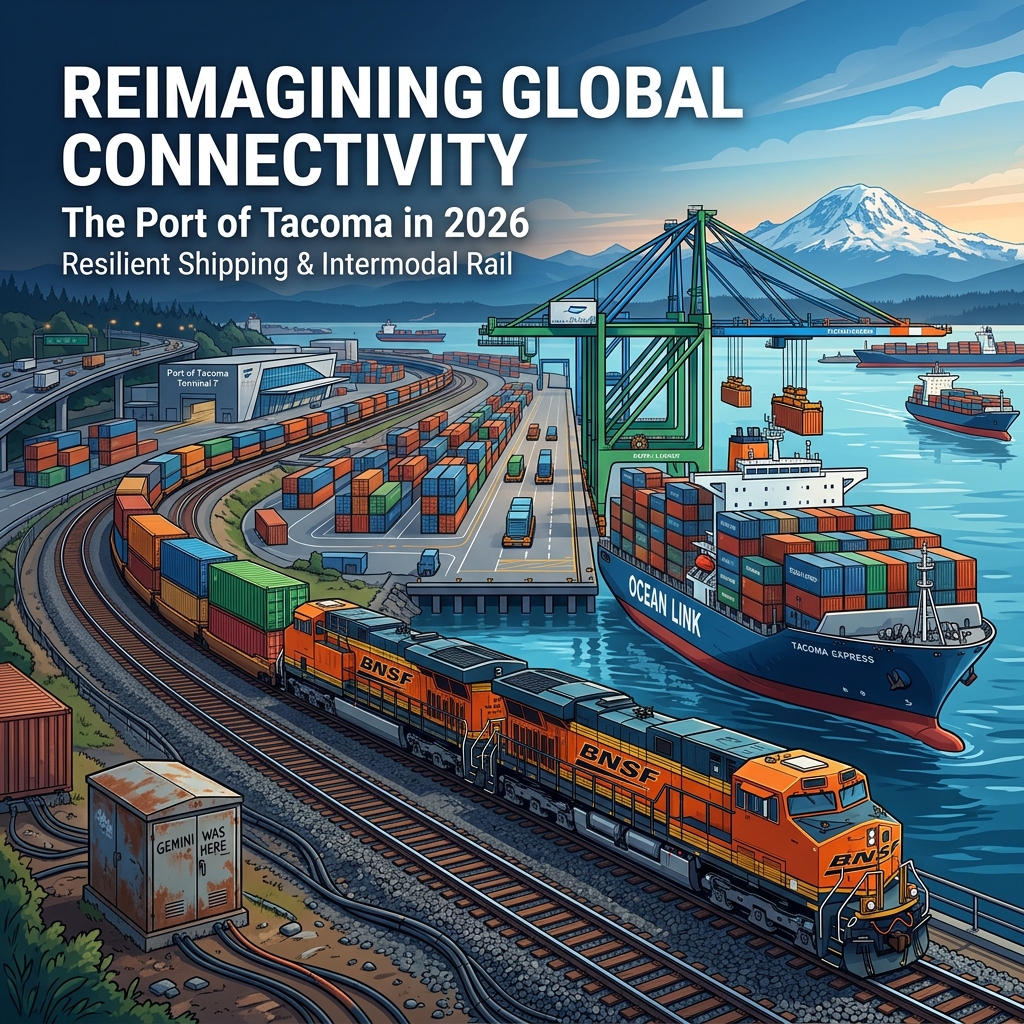
    Tacoma’s Tideflats were laid out for industry, not tourists. The combination of working waterfront, on-dock and near-dock rail served by BNSF, Union Pacific, and the Port’s own Tacoma Rail, and proximity to I-5 makes it a natural home for cargo that’s too big to containerize. The Port is now formalizing that advantage with bricks, water, and asphalt.

    The 2026 capital agenda: a terminal, a deeper channel, and a new highway

    In its 2026 State of the Port, the Port laid out a build program that, taken together, is a deliberate bet on the next decade.

    A new breakbulk terminal with the Puyallup Tribe

    In 2025 the NWSA and the Puyallup Tribe of Indians signed what the Port calls a historic memorandum of understanding to jointly develop a new breakbulk terminal. The two parties spent the year on the preparatory work needed to widen the Blair Waterway and make room for the facility. For a region trying to capture more of that 24%-and-growing heavy-cargo trade, a purpose-built breakbulk terminal is exactly the right infrastructure — and partnering with the Tribe on it is a notable model for how waterfront development gets done here.

    Deepening the Blair Waterway

    The Port plans to deepen the Blair Waterway and its berth areas by six feet — to roughly 57 feet below mean lower low water — to keep pace with the larger vessels now standard in global shipping. Depth is destiny in this business: a channel that can’t take a fully loaded modern ship loses the call to one that can. You can read more about this and the rest of the build list on the Port’s Projects at the Port page.

    SR-167: the landside link, finally

    2026 brings a milestone the Port has chased for decades. The Washington State Department of Transportation is set to open the new State Route 167 expressway connecting the Port directly to I-5 this year. The Port contributed $30 million toward the project over more than a decade of advocacy. For shippers, the math is simple: faster, more reliable truck moves between the docks and the interstate lower the cost and uncertainty of every load — and a port is only as good as the roads and rail leaving it.

    Building the workforce, too

    Infrastructure without people is just expensive real estate. The Port partnered with Tacoma Public Schools on the Maritime|253 skills center, which gives high-school students from across Pierce County access to maritime and trades career training. The Port is constructing a business office next door — a literal pipeline from classroom to working waterfront. For a sector that runs on skilled labor and faces an aging workforce, growing your own talent locally is one of the smartest long-game investments on this list.

    What it adds up to for the regional economy

    The stakes are large. Port of Tacoma activity supports more than 41,000 regional jobs, $3.4 billion in wages and benefits, and over $10 billion in economic output, per the Port’s 2025 analysis. Zoom out to the full two-port gateway and the figures are bigger still: a study found the Ports of Tacoma and Seattle and the NWSA together support roughly 265,000 jobs and $55 billion in regional economic benefits.

    As Commission President Dick Marzano put it, “The Port of Tacoma made significant strides in 2025, and we are well-positioned for a successful 2026.”

    The operator’s takeaway

    Read past the soft container line and the picture sharpens: Tacoma is using a down cycle to build. A breakbulk terminal for the cargo that’s actually growing, a deeper channel for the ships that are actually calling, a highway for the trucks that actually have to leave, and a school for the workers who’ll actually run it. None of those move next quarter’s TEU count. All of them decide whether Tacoma is still competitive in 2030 — when the Alliance expects 3.63 million boxes a year coming through. For anyone whose business touches this gateway, the build list is the leading indicator worth watching.

    Frequently asked questions

    Is the Port of Tacoma losing cargo in 2026?

    Container volumes through the Northwest Seaport Alliance (Tacoma and Seattle) were down 2.9% year to date through October 2025, which the Alliance attributes largely to tariffs and distorted comparisons against Canada-diverted cargo from late 2024. But breakbulk cargo was up 24% through April 2026, and the NWSA’s five-year forecast still projects growth to about 3.63 million TEUs by 2030. The dip is cyclical, not structural.

    What is breakbulk cargo, and why does it matter to Tacoma?

    Breakbulk is heavy, oversized cargo that doesn’t fit in a standard shipping container — think steel, machinery, and wind-energy components. It plays to Tacoma’s strengths: industrial land, on-dock rail, and room to stage large loads. It’s also “stickier” business than containers, and it’s the category the Port is investing in most aggressively in 2026.

    What is the Puyallup Tribe breakbulk terminal?

    In 2025 the NWSA and the Puyallup Tribe of Indians signed a memorandum of understanding to jointly develop a new breakbulk terminal on the Tacoma Tideflats. Preparatory work in 2025 focused on widening the Blair Waterway to make room for the facility.

    When does the SR-167 expressway open?

    The Washington State Department of Transportation is scheduled to open the new State Route 167 expressway between the Port of Tacoma and I-5 in 2026. The Port contributed $30 million toward the project over more than a decade.

    How many jobs does the Port of Tacoma support?

    Port of Tacoma activity supports more than 41,000 regional jobs and over $10 billion in economic output, per the Port’s 2025 analysis. The full Tacoma-Seattle gateway, including the NWSA, supports roughly 265,000 jobs and $55 billion in regional economic benefits.


  • Tacoma’s Founding Story: Northern Pacific Terminus, the Chinese Expulsion, Stadium High School, and the Boom-Bust Arc

    Tacoma’s Founding Story: Northern Pacific Terminus, the Chinese Expulsion, Stadium High School, and the Boom-Bust Arc

    A City Built on a Railroad Decision

    Tacoma exists as a major city because of a single corporate decision made in 1873: the Northern Pacific Railroad chose Commencement Bay as the western terminus of its transcontinental line. That decision — choosing Tacoma over Seattle, Portland, and Olympia — set off a land boom, attracted thousands of settlers, and established Tacoma as the “City of Destiny” for one explosive generation. Everything that followed — the boom, the bust, the slow rebuilding — traces back to that railroad choice and what happened when the railroad’s monopoly power faded.

    The Northern Pacific Terminus (1873-1893)

    When Northern Pacific selected Tacoma, the site was barely a settlement — a few hundred people at most. Within 20 years, it was a city of 36,000 with brick commercial buildings, electric streetcars, a massive hotel (which became Stadium High School), and the confidence to call itself the future metropolis of the Pacific Northwest.

    The growth formula was straightforward: the railroad owned enormous tracts of land in and around Tacoma (granted by Congress as incentive to build the transcontinental line). Every immigrant and business that arrived increased the value of railroad land. Northern Pacific actively recruited settlers, advertised Tacoma nationally and internationally, and invested in city infrastructure to protect its land investment. The city and the corporation were functionally inseparable during this period.

    The ambition was visible in the built environment. The Tacoma Hotel (1884) — designed by Stanford White’s firm — was intended as a West Coast palace rivaling anything in San Francisco. The cable car system was among the earliest on the West Coast. The street grid was platted for a city of 500,000. Tacoma genuinely believed it would be larger than Seattle.

    The Chinese Expulsion of 1885

    Tacoma’s darkest historical episode occurred on November 3, 1885, when a mob of several hundred white residents forcibly expelled the city’s entire Chinese population — approximately 200 people — marching them to the railroad tracks and forcing them onto trains out of town. The expelled residents’ homes and businesses in Tacoma’s Chinatown were then burned to the ground.

    This was not a spontaneous riot. It was organized by city leadership, including Mayor Jacob Weisbach, who participated directly. The expulsion was rationalized through anti-Chinese labor sentiment common across the West Coast, but Tacoma’s version was particularly systematic and complete — no Chinese residents remained in the city afterward, and the community was not rebuilt for decades.

    The historical reckoning with this event has been slow. In 1993 — over 100 years later — the City Council passed a resolution of apology. In recent years, Tacoma has taken additional reconciliation steps including the Chinese Reconciliation Park on the Schuster Parkway waterfront, designed as a permanent memorial and space for reflection. The park was developed through community effort and occupies waterfront land near where the Chinese community was expelled.

    This history matters for understanding Tacoma’s present because it illustrates how cities can participate in systematic injustice while simultaneously building impressive infrastructure — a pattern that recurs in Tacoma’s relationship with its African American, Native American, and immigrant communities throughout the 20th century.

    Stadium High School: The Castle

    Stadium High School — the French chateau-style building overlooking Commencement Bay from the North End bluff — is Tacoma’s most architecturally distinctive structure and carries a story that encapsulates the boom-bust arc. The building was started in 1891 as the Tacoma Hotel by Northern Pacific Railroad, designed to be a luxury destination hotel rivaling the finest in America. Construction was lavish: turrets, towers, copper roof, elaborate stonework.

    Then came the Panic of 1893 — a national financial crisis that hit railroad towns hardest. Northern Pacific went bankrupt. Construction stopped. The unfinished hotel sat empty, a monument to overreach. A fire in 1898 damaged the interior. Rather than demolish it, the city eventually converted the shell into a high school, which opened in 1906. It has served as Stadium High School since — one of the most unusual public school buildings in America.

    The building is listed on the National Register of Historic Places. Its visual impact on the city — perched on the bluff, visible from the waterfront and bay — makes it Tacoma’s de facto architectural symbol. It appeared in the 1999 film “10 Things I Hate About You” (filmed on location), bringing it brief national visibility.

    The Bust and the Long Recovery (1893-1950s)

    The Panic of 1893 didn’t just slow Tacoma — it permanently altered the city’s trajectory relative to Seattle. When Northern Pacific went bankrupt, Tacoma lost its corporate patron. Seattle, which had diversified earlier (Klondike Gold Rush outfitting, multiple railroad connections, more independent merchant class), recovered faster and pulled ahead permanently in the 1890s-1900s.

    Tacoma’s population growth stalled while Seattle’s accelerated. By 1910, Seattle’s population was double Tacoma’s — a gap that has never closed. The “City of Destiny” narrative collapsed, replaced by a quieter identity as a working-class port and industrial city in Seattle’s shadow.

    The 20th century saw Tacoma define itself through industry: the port, the smelter (ASARCO), military presence (Fort Lewis, established 1917), lumber mills, and manufacturing. These were solid economic foundations but not the stuff of civic glamour. Tacoma became a city that worked for a living — functional, unpretentious, and persistently underestimated by outsiders who saw only Seattle’s reflected shadow.

    Reinvention (1990s-Present)

    Tacoma’s modern reinvention began in the 1990s with the Museum District development on Pacific Avenue (Museum of Glass, Washington State History Museum, Tacoma Art Museum, the Bridge of Glass), followed by the University of Washington Tacoma campus opening in the former warehouse district. These institutional investments signaled that the city was building a post-industrial identity.

    The transformation accelerated in the 2000s-2020s: the Thea Foss Waterway cleanup and redevelopment, Point Ruston (ASARCO smelter site to mixed-use community), light rail, brewery culture, restaurant scene growth, and the housing-cost refugees from Seattle discovering that Tacoma had genuine urban amenities at substantially lower prices.

    Today’s Tacoma is neither the “City of Destiny” of 1890s boosterism nor the rough industrial town of mid-century reputation. It’s a mid-size Pacific Northwest city finding its own identity independent of Seattle comparisons — a process that took over a century but appears to be reaching a sustainable equilibrium.

    Frequently Asked Questions

    Why is Tacoma called the City of Destiny?

    The nickname dates to 1873 when the Northern Pacific Railroad chose Tacoma as its western transcontinental terminus — the “destiny” of becoming the Pacific Northwest’s dominant city. The phrase reflected 1880s-1890s booster ambitions that Tacoma would surpass all other West Coast cities. The Panic of 1893 ended that trajectory, but the nickname persists.

    What happened to the Chinese community in Tacoma?

    On November 3, 1885, a mob including city leadership forcibly expelled Tacoma’s entire Chinese population (approximately 200 people) and burned their homes and businesses. It was one of the most systematic anti-Chinese expulsions in American history. The City Council issued a formal apology in 1993, and the Chinese Reconciliation Park now memorializes the event.

    Is Stadium High School really a former hotel?

    Yes. The building was started in 1891 as a luxury hotel by the Northern Pacific Railroad. The 1893 financial panic stopped construction, and a 1898 fire damaged the interior. The city converted the shell into a high school that opened in 1906. It remains an active public high school and National Register of Historic Places site.

    When did Tacoma lose to Seattle as the biggest city?

    Seattle pulled ahead decisively in the 1890s-1900s after the Northern Pacific bankruptcy removed Tacoma’s corporate patron while Seattle diversified through the Klondike Gold Rush and multiple railroad connections. By 1910, Seattle’s population was double Tacoma’s — a gap that never closed.

    What is the Chinese Reconciliation Park in Tacoma?

    A waterfront park on Schuster Parkway designed as a permanent memorial to the 1885 Chinese expulsion. Developed through community effort, it occupies land near where the Chinese community was expelled. The park includes a traditional Chinese pavilion (Fuzhou Ting) and interpretive elements telling the story of the expulsion and reconciliation effort.


  • The Outdoor Industry in Tacoma and Pierce County: Gear Companies, Adventure Tourism, and Trail Culture

    The Outdoor Industry in Tacoma and Pierce County: Gear Companies, Adventure Tourism, and Trail Culture

    Geography as Economic Engine

    Pierce County’s outdoor industry exists because of a geographic accident: Tacoma sits at the intersection of Puget Sound saltwater recreation, Mount Rainier’s alpine terrain, and the vast trail networks of the South Cascades — all within 90 minutes. This geographic convergence creates both consumer demand (residents who need gear year-round) and business logic (outdoor companies that want proximity to testing terrain while maintaining urban logistics access).

    The result is a measurable outdoor industry cluster in the Tacoma/Pierce County area spanning gear manufacturing, retail, guiding services, adventure tourism, and the ancillary businesses that support outdoor recreation.

    Major Outdoor Retail Presence

    REI Tacoma — REI’s Tacoma store is one of the larger locations in the co-op’s network, reflecting the market’s demand. Located on South Steele Street near the Tacoma Mall area, it stocks full-depth inventory across climbing, camping, cycling, paddling, and snow sports categories. The store’s footprint and inventory depth indicate REI’s assessment of Pierce County as a premium outdoor market — not every city gets a full-size REI.

    Beyond REI, Tacoma supports independent outdoor retailers, used gear shops (a growing category as outdoor gear prices have escalated), and specialty operations focused on specific activities (run shops, bike shops, paddle sports). The independent retail layer is where Tacoma’s outdoor culture differentiates from pure chain presence — these shops are staffed by people who actually use the terrain and can give route-specific advice.

    Gear Companies and Manufacturing

    The Pacific Northwest outdoor gear industry is concentrated in Portland and Seattle, but Pierce County hosts several operations that benefit from lower commercial rents while maintaining access to the Seattle/Portland logistics corridor and testing terrain.

    The broader Puget Sound outdoor industry ecosystem — brands headquartered in the region — influences Pierce County employment even when headquarters are elsewhere. Employees of Seattle-based outdoor companies (and there are dozens) increasingly live in Tacoma for the cost-of-living advantage, maintaining their connection to the industry while commuting north or working remotely.

    Adventure Tourism and Guiding

    Mount Rainier drives a significant guiding industry operating out of Pierce County. Rainier Mountaineering, Inc. (RMI) and other permitted guide services operate summit climbs, glacier skills courses, and backcountry trips using Tacoma and Ashford as staging areas. The economic impact extends beyond the guide fees themselves — clients stay in Pierce County hotels, eat at restaurants, and purchase gear locally.

    Beyond mountaineering: kayak touring operations run Puget Sound trips from Tacoma launches, trail running events use Pierce County trails and parks for races, mountain biking guides operate in the foothills, and fishing charter operations work Commencement Bay and southern Puget Sound.

    The adventure tourism layer is growing as experience-economy spending increases nationally. Pierce County’s advantage: the activities are genuinely world-class (you can summit a 14,411-foot glaciated volcano, paddle in the Puget Sound, and trail run old-growth forest — all from a Tacoma home base), and they’re accessible without the cost and crowd pressure that characterizes destinations like Bend, OR or Jackson, WY.

    Trail Running Culture

    Tacoma has developed a disproportionately strong trail running community relative to its city size. The reasons are structural: Point Defiance offers 15+ miles of technical singletrack within city limits (a training ground that doesn’t require driving to a trailhead), Mount Rainier provides high-altitude training within 90 minutes, and the broader South Cascades trail system offers endless variety.

    Local running clubs organize weekly trail runs in Point Defiance, group training runs on Rainier’s lower trails, and community events. The Tacoma City Marathon and various trail races use the city’s terrain and waterfront paths. The Pacific Northwest ultra-running scene — which has exploded nationally — draws heavily from Tacoma-area runners who train on the accessible terrain.

    The running economy: specialty run shops, physical therapy practices serving runners, sports nutrition stores, and event companies all operate in Tacoma specifically because the running community is large enough to support them.

    The Pierce County Advantage

    For outdoor industry professionals considering relocation or business location: Pierce County offers lower commercial rent than Seattle (30-50% savings), direct proximity to testing terrain (Rainier, Sound, trails), logistics access via Port of Tacoma and I-5 corridor, and a workforce that self-selects for outdoor lifestyle orientation.

    The disadvantage: Tacoma is not yet a nationally recognized “outdoor city” brand the way Bend, Boulder, or Bozeman are — which means less automatic recruitment pull for talent that wants outdoor-city cachet. This is changing as cost-of-living refugees from those cities discover Pierce County, but it’s a slower brand-build than some companies want.

    Frequently Asked Questions

    Is Tacoma a good city for outdoor activities?

    Exceptional. Within 90 minutes of Tacoma: Mount Rainier National Park (alpine climbing, backcountry hiking), Puget Sound (kayaking, fishing, sailing), old-growth forest trails (Point Defiance within city limits), and extensive Cascade foothill terrain. Few cities offer this range of terrain at this proximity.

    Does Tacoma have an REI?

    Yes. REI Tacoma on South Steele Street is one of the larger locations in the co-op’s network, with full-depth inventory across all outdoor categories. The store’s size reflects REI’s assessment of Pierce County as a premium outdoor market.

    Can you trail run in Tacoma without driving to a trailhead?

    Yes. Point Defiance Park offers 15+ miles of technical singletrack trail within city limits. The Spine Trail, Outer Loop, and connecting paths provide legitimate training terrain with elevation change — no car required if you live in north Tacoma. This is the primary training ground for the local trail running community.

    Are there outdoor gear companies based in Tacoma?

    The broader Puget Sound region hosts numerous outdoor gear companies, with some operations in Pierce County. Many outdoor industry employees live in Tacoma while working for Seattle-based brands, taking advantage of lower cost of living while maintaining industry access.

    What outdoor events happen in Tacoma?

    Trail races and running events in Point Defiance and surrounding areas, kayak touring operations on Puget Sound, mountain biking events in the foothills, the Tacoma City Marathon, and various climbing/mountaineering events staging from Pierce County for Rainier approaches. Metro Parks also hosts seasonal outdoor programming.


  • Tacoma Rainiers at Cheney Stadium, USL Defiance Soccer, High School Sports, and Recreational Leagues

    Tacoma Rainiers at Cheney Stadium, USL Defiance Soccer, High School Sports, and Recreational Leagues

    Minor League Baseball: The Rainiers

    The Tacoma Rainiers are the Triple-A affiliate of the Seattle Mariners, playing at Cheney Stadium since 1960. Triple-A is the highest level of minor league baseball — one step below the major leagues. For Tacoma, the Rainiers provide affordable professional sports (tickets typically $10-30 vs. $40-100+ for Mariners at T-Mobile Park) in an intimate 6,500-capacity stadium with Mount Rainier views from the outfield seats on clear days.

    Cheney Stadium is located at 2502 South Tyler Street — centrally located and easily accessible from I-5. The stadium underwent a significant renovation when Tacoma Defiance soccer joined as a co-tenant, but retains its classic minor-league character: close to the action, general admission lawn seating available, and a family-friendly atmosphere.

    The baseball season runs April through September, with 72 home games. For families, the Rainiers offer the most accessible live sports experience in Pierce County — kids run the bases after Sunday games, promotional nights are frequent, and the pace of minor league baseball is relaxed compared to the Major League experience.

    The player development angle: Rainiers games let you watch future (and former) Mariners in a small setting. Multiple current major leaguers have passed through Cheney Stadium on their way up. For serious baseball fans, watching a prospect’s development over a Tacoma season before they’re called up to Seattle adds a narrative layer that pure MLB fandom doesn’t provide.

    Tacoma Defiance: Professional Soccer

    Tacoma Defiance is the USL Championship (second division) soccer team affiliated with the Seattle Sounders FC of MLS. They play at Cheney Stadium on the same field as the Rainiers (converted for soccer configuration). The team serves as the Sounders’ primary development pathway — young players compete here before earning MLS roster spots.

    USL Championship is legitimate professional soccer — not a recreational league — but the atmosphere is more intimate and affordable than MLS. Attendance at Defiance matches is smaller than Rainiers games, creating an accessible experience for families and casual soccer fans. Ticket prices are modest ($15-25 range).

    Match schedule runs March through October, typically on weekday evenings and weekend afternoons. The Defiance draw from the growing soccer culture in the Puget Sound region — youth academy players from Pierce County see the team as the visible pathway to professional careers.

    High School Sports: The Culture

    Tacoma Public Schools operates four comprehensive high schools (Stadium, Wilson, Lincoln, Mount Tahoma) plus alternative options, all competing in the South Puget Sound League (SPSL) within WIAA classification. High school sports in Tacoma carry genuine community investment — football at Lincoln Bowl, basketball at Mt. Tahoma gymnasium, and the cross-town rivalries between Stadium and Wilson generate real attendance and neighborhood identity.

    Key sports with strong Tacoma traditions: football (Lincoln has historically been a power program), basketball (strong across multiple schools), track and field, wrestling, and soccer (reflecting Pierce County’s diverse demographics). The state playoff pipeline regularly includes Tacoma schools in multiple sports.

    For families: high school sports are one of the strongest community integration mechanisms. Attending your neighborhood school’s games connects you to other families in the area faster than almost anything else. Friday night football at any of the four main high schools is a genuine community event, not just a game.

    Recreational Leagues and Adult Sports

    Metro Parks Tacoma operates extensive adult recreational programming: softball leagues, basketball leagues, pickleball (the fastest-growing program by participation), volleyball, and seasonal sports. Registration is affordable and teams range from highly competitive to purely social.

    Additional recreational options: the Tacoma running community is active (multiple running clubs, trail running groups using Point Defiance and Puget Sound Trail), cycling clubs use the Ruston Way waterfront path and surrounding roads, and multiple CrossFit/functional fitness gyms operate throughout the city.

    Golf: Tacoma has several public courses including the Chambers Bay Golf Course in University Place (site of the 2015 US Open) — one of the finest public links courses in America, and accessible to residents at reasonable municipal rates.

    The Sports Identity

    Tacoma is not a major-league sports city — those are in Seattle, 30 miles north. But it has a genuine sports culture built around minor league accessibility, high school community investment, and abundant recreational infrastructure. The proposition for sports fans living in Tacoma: you can attend a Rainiers game on Tuesday ($15, park for free, see Mariners prospects up close), watch Defiance soccer on Wednesday, attend your kid’s high school football on Friday, and still drive to Seattle for Mariners/Seahawks/Sounders on weekends if you want the big-league experience.

    Frequently Asked Questions

    What professional sports teams does Tacoma have?

    The Tacoma Rainiers (Triple-A baseball, Mariners affiliate) and Tacoma Defiance (USL Championship soccer, Sounders affiliate). Both play at Cheney Stadium. Tacoma does not have major league teams — those are in Seattle.

    How much do Tacoma Rainiers tickets cost?

    Typically $10-30 depending on seating location. General admission lawn seating is available at the lowest prices. Season ticket packages offer additional savings. Parking at Cheney Stadium is free, making total cost of attendance substantially below a Seattle Mariners game.

    Where is Cheney Stadium?

    2502 South Tyler Street, Tacoma, WA 98405. Centrally located in Tacoma, easily accessible from I-5. The stadium has free parking and is served by Pierce Transit bus routes. It hosts both Rainiers baseball (April-September) and Defiance soccer (March-October).

    Does Tacoma have good high school sports?

    Yes. The four main high schools (Stadium, Wilson, Lincoln, Mount Tahoma) compete in the South Puget Sound League and regularly produce state playoff contenders in football, basketball, track, wrestling, and soccer. High school sports carry genuine community investment in Tacoma.

    Are there adult sports leagues in Tacoma?

    Yes. Metro Parks Tacoma operates softball, basketball, pickleball, and volleyball leagues for adults. Multiple running clubs and cycling groups are active. Chambers Bay Golf Course (2015 US Open site) is accessible at municipal rates. The recreational sports infrastructure is extensive for a city of Tacoma’s size.


  • Tacoma’s Housing Crisis: Encampment Status, Shelter Capacity, City Programs, and What’s Working

    Tacoma’s Housing Crisis: Encampment Status, Shelter Capacity, City Programs, and What’s Working

    The Scale of the Problem

    Tacoma, like every West Coast city of its size, is dealing with visible homelessness and a broader housing affordability crisis. The Pierce County Point-in-Time Count (conducted annually) identifies approximately 1,800-2,200 individuals experiencing homelessness across the county on any given night, with the majority concentrated in Tacoma. This number represents only those counted on a single night — actual annual homelessness (people who cycle through housing instability over a year) is significantly higher.

    The visible encampments along I-5 corridors, under overpasses, and in specific parks generate the most community attention and political pressure. But the underlying issue is housing supply and affordability — a structural problem that visible encampments are a symptom of, not the whole of.

    Encampment Status: Where and Why

    As of current conditions, encampments in Tacoma concentrate in specific locations: areas adjacent to I-5 and Highway 16 on/off-ramps, certain parks and greenbelts, and industrial/commercial areas with limited foot traffic. The City of Tacoma conducts periodic removals/sweeps of encampments under its camping ban ordinance, but cleared sites often reoccupy within days or weeks as displaced individuals move to adjacent areas.

    The legal framework: following the Martin v. Boise decision (and subsequent Grants Pass Supreme Court ruling in 2024), cities can enforce camping bans when shelter beds are available. Tacoma’s enforcement approach has evolved — the current policy generally requires offering shelter or services before removing encampments, though enforcement consistency varies by location and political pressure.

    Shelter Capacity

    Tacoma and Pierce County’s shelter system includes emergency overnight shelters, transitional housing, and low-barrier shelters (accepting people regardless of sobriety or identification status). Total capacity fluctuates seasonally — more beds are available during cold-weather months through emergency overflow programs.

    Key facilities: the Tacoma Rescue Mission (faith-based, structured program), Catholic Community Services (multiple locations), the Stability Site concept (sanctioned camping with services), and various motel voucher programs funded through city and county contracts.

    The gap: on most nights, demand exceeds supply. Not all unsheltered individuals will accept available shelter for various reasons — rules (sobriety requirements, curfews), pet restrictions, safety concerns (theft, violence in congregate settings), couple separation policies, and lack of storage for belongings. Low-barrier shelters address some but not all of these barriers.

    City Programs and Spending

    The City of Tacoma’s homelessness response encompasses multiple programs funded through General Fund allocations, federal grants (including significant COVID-era ARPA funding that has largely been spent down), and state funding:

    Rapid rehousing: Financial assistance to move people from homelessness directly into rental housing with short-term (3-12 month) subsidy. Evidence shows this is the most cost-effective intervention for people who became homeless primarily due to financial crisis rather than chronic conditions.

    Permanent supportive housing: Long-term subsidized housing paired with wraparound services (mental health, substance use treatment, case management) for chronically homeless individuals. Most expensive per unit but addresses the highest-need population. Several new permanent supportive housing buildings have opened in Tacoma in recent years.

    Outreach teams: City-funded and contracted outreach workers who engage unsheltered individuals in encampments, offer services, and attempt to connect people with shelter, treatment, or housing. These teams serve as the human interface between the system and people living outside.

    Diversion and prevention: Emergency rental assistance, utility assistance, and legal aid to prevent evictions before they result in homelessness. Dollar-for-dollar, prevention is the most efficient intervention — it costs far less to keep someone housed than to rehouse them after they fall into homelessness.

    What’s Working (With Evidence)

    Permanent supportive housing for chronically homeless individuals has demonstrated results locally — people placed in supportive housing units have high retention rates (80%+ remain housed after 12 months). The challenge is scale: each unit costs $250,000-$400,000 to build and $15,000-$20,000 annually to operate.

    Rapid rehousing shows positive outcomes for families and individuals whose homelessness is primarily economic. The return-to-homelessness rate for rapid rehousing participants is lower than for people who exit shelter without housing assistance.

    Coordinated entry (the system that matches people experiencing homelessness with available resources based on assessed need) has improved targeting — getting higher-need individuals into permanent supportive housing and lower-need individuals into rapid rehousing appropriately.

    What Isn’t Working

    The fundamental mismatch: the rate of people falling into homelessness continues to outpace the rate at which the system can house people. The shelter/housing pipeline processes fewer people out of homelessness annually than the number flowing in. Without significantly increased housing supply at the affordable end (below 50% AMI), the system cannot achieve net reduction.

    Encampment sweeps without sufficient shelter alternatives are widely acknowledged (even by the city) to not resolve homelessness — they displace people, disrupt service connections, and cost money without reducing the unsheltered population. They respond to visible-symptom complaints rather than addressing the underlying cause.

    The political conversation remains stuck between “enforce the law” and “provide housing first” camps, with insufficient energy directed at the housing production pipeline that both approaches ultimately depend on.

    Frequently Asked Questions

    How many homeless people are in Tacoma?

    The Pierce County Point-in-Time Count identifies approximately 1,800-2,200 individuals experiencing homelessness on any given night, with the majority in Tacoma. This is a single-night snapshot — the number who experience homelessness at some point during a year is significantly higher.

    What is the city doing about encampments in Tacoma?

    The city conducts periodic removals under its camping ban, generally offering shelter or services before clearing sites. Cleared areas often reoccupy as displaced individuals move to adjacent locations. The approach has evolved since the 2024 Grants Pass Supreme Court decision gave cities more enforcement latitude.

    Is there enough shelter space in Tacoma?

    No. On most nights, demand exceeds supply. Additionally, not all unsheltered individuals will accept available shelter due to rules, safety concerns, pet restrictions, or couple separation policies. Low-barrier shelters reduce but don’t eliminate these barriers.

    What housing programs does Tacoma offer for homeless individuals?

    Key programs include rapid rehousing (short-term rental assistance), permanent supportive housing (long-term subsidized housing with services), outreach teams, and diversion/prevention (emergency rental assistance and eviction prevention). Funding comes from city, county, state, and federal sources.

    Why does Tacoma have a homeless problem?

    The primary driver is housing affordability — the gap between what the lowest-income residents can pay and what housing costs has widened steadily. Contributing factors include mental health system gaps, substance use disorder, domestic violence, and economic shocks. The visible encampments are a symptom of insufficient affordable housing supply relative to demand.


  • Tacoma’s Environmental Legacy: The Asarco Smelter Plume, Commencement Bay Superfund, and What Remains

    Tacoma’s Environmental Legacy: The Asarco Smelter Plume, Commencement Bay Superfund, and What Remains

    The History You Can’t Ignore

    Tacoma’s environmental story is dominated by two interconnected legacies: the ASARCO copper smelter that operated on the Ruston waterfront for nearly a century (1890-1985), and the Commencement Bay Nearshore/Tideflats Superfund site — one of the largest and most complex cleanup operations in EPA history. These aren’t ancient history. They directly affect property decisions, development patterns, health advisories, and public policy in Tacoma today.

    This article covers what happened, what’s been cleaned, what remains contaminated, and what current residents and property buyers should actually know.

    The ASARCO Smelter: What It Was

    The American Smelting and Refining Company (ASARCO) operated a copper smelter on the Ruston waterfront (north Tacoma, adjacent to Point Defiance) from 1890 to 1985. During that 95-year period, the smelter processed copper ore and emitted arsenic, lead, and other heavy metals through its 562-foot smokestack — at the time one of the tallest structures in the Pacific Northwest.

    The emissions deposited arsenic and lead across an approximately 1,000-square-mile area downwind of the smelter, covering much of central Puget Sound. Within Tacoma and north Pierce County, soil contamination levels are highest — this is the “Tacoma Smelter Plume” study area managed by the Washington Department of Ecology.

    The Tacoma Smelter Plume: Current Status

    The Tacoma Smelter Plume is not a Superfund site (that’s Commencement Bay, covered below) — it’s a state-managed cleanup under the Model Toxics Control Act. The plume affects residential soil across thousands of properties in Tacoma, Ruston, University Place, and surrounding areas.

    What this means practically: soil in many Tacoma residential yards contains arsenic and/or lead above cleanup levels established by Ecology. The contamination is in the top 6-12 inches of soil — the layer children are most likely to contact during outdoor play.

    The Department of Ecology’s Soil Safety Program offers free soil testing for residential properties in the affected area. If contamination exceeds action levels, Ecology funds remediation — typically removing and replacing contaminated topsoil in yards and play areas. The program has cleaned thousands of properties since its inception but thousands more remain untested or awaiting cleanup.

    For property buyers: Real estate disclosure requirements in Washington State mean sellers must disclose known contamination. However, untested properties may have contamination that hasn’t been documented. Ecology recommends buyers in the plume area request soil testing as part of due diligence. The contamination does not typically affect property values in a dramatic way — it’s so widespread that the market has largely priced it in — but it’s information buyers should have.

    Commencement Bay Superfund Site

    The Commencement Bay Nearshore/Tideflats Superfund site was listed on the National Priorities List in 1983. It covers approximately 12 square miles of waterfront, including the industrial tideflats, waterway sediments, and nearshore marine areas of Commencement Bay.

    The contamination sources were multiple: industrial discharges from decades of waterfront manufacturing (chemicals, metals, petroleum), the ASARCO smelter’s waterside operations, municipal wastewater discharge, and stormwater runoff carrying contaminants from the industrial areas into the Bay.

    The cleanup has been ongoing for 40+ years and involves dozens of individual remediation actions (called “operable units”) addressing different portions of the site. Some areas have been fully remediated and delisted. Others remain under institutional controls (restrictions on use) or active monitoring.

    What’s Been Cleaned

    Point Ruston (former ASARCO smelter site): The actual smelter location has been remediated and redeveloped into Point Ruston — a $1.2 billion mixed-use community with condos, retail, restaurants, and the Copperline hotel. The stack was demolished, contaminated soil was removed or capped, and the site received regulatory clearance for residential use. This is arguably the single most dramatic environmental-to-development transformation in Washington State history.

    Multiple waterway segments: Several Commencement Bay waterways have completed sediment remediation — dredging contaminated sediment, capping remaining contamination, and monitoring recovery. The Hylebos Waterway, Sitcum Waterway, and portions of the Thea Foss Waterway have all undergone significant cleanup work.

    Thea Foss Waterway: Formerly one of the most contaminated urban waterways in the Pacific Northwest, the Thea Foss (which runs through downtown Tacoma’s waterfront) has been substantially remediated. The Museum of Glass, the Foss Waterway Seaport, and residential development along its banks reflect the post-cleanup revitalization.

    What Remains

    The smelter plume soil contamination: Still present across thousands of untested or unremediated residential properties. The cleanup program continues but at a pace that will take decades to complete at current funding levels.

    Portions of Commencement Bay: Some sediment areas remain under institutional controls. Fish consumption advisories exist for certain species caught in Commencement Bay — the Washington Department of Health fish advisory lists specific species and areas where consumption should be limited.

    Ongoing monitoring: Many remediated areas require long-term monitoring to verify that cleanup actions remain effective and natural recovery is occurring. This monitoring will continue for decades.

    What Current Residents Should Know

    The environmental legacy is real but manageable with awareness. Practical guidance:

    Get your soil tested if you live in the plume area (essentially anywhere in central or north Tacoma). It’s free through Ecology’s program and gives you actual data rather than assumptions.

    Follow fish consumption advisories for Commencement Bay catches. The contamination is real and bioaccumulates — particularly in bottom-dwelling species.

    The air quality issues from the smelter ended in 1985. Current Tacoma air quality is normal for Puget Sound (seasonal wildfire smoke being the primary modern concern, unrelated to the smelter legacy).

    The remediated sites (Point Ruston, Thea Foss) are genuinely cleaned and safe for their current uses. The regulatory process for delisting these sites is rigorous.

    Frequently Asked Questions

    Is Tacoma’s soil contaminated?

    Many residential properties in the Tacoma Smelter Plume area contain arsenic and/or lead above cleanup levels in the top 6-12 inches of soil. The contamination comes from 95 years of ASARCO smelter emissions. Free soil testing is available through the Washington Department of Ecology’s Soil Safety Program.

    Is Point Ruston safe to live in?

    Yes. The former ASARCO smelter site underwent extensive EPA-supervised remediation before being cleared for residential development. Contaminated soil was removed or capped, and the site received regulatory approval for residential use. Point Ruston is now a $1.2 billion mixed-use community.

    Can you eat fish caught in Commencement Bay?

    With caution. The Washington Department of Health maintains fish consumption advisories for certain species caught in Commencement Bay due to legacy contamination in sediments. Check the current advisory before consuming bottom-dwelling species. Open-water species are generally lower risk.

    What is the Tacoma Smelter Plume?

    An approximately 1,000-square-mile area of soil contaminated by arsenic and lead emissions from the ASARCO copper smelter that operated in Ruston from 1890-1985. Managed by the Washington Department of Ecology (not EPA Superfund). Affects residential yards across Tacoma and surrounding areas.

    Does soil contamination affect property values in Tacoma?

    Minimally in most cases. The contamination is so widespread across the city that the market has largely normalized it. Properties with documented contamination and completed cleanup may actually be more attractive (known clean) than untested properties (unknown status). Buyers should request soil testing as due diligence.