Author: Will Tygart

  • Discovering Port Townsend’s Maritime Soul: From Touch Tanks to Teak Decks

    Discovering Port Townsend’s Maritime Soul: From Touch Tanks to Teak Decks

    Port Townsend has always been defined by the water around it. Perched at the northeastern tip of the Olympic Peninsula where the Strait of Juan de Fuca meets Admiralty Inlet, this Victorian seaport has been drawing people to its shores since the 1850s — first as a boomtown that believed it would become the great metropolis of the Pacific Northwest, then as a quiet backwater that preserved its 19th-century architecture almost by accident, and now as one of Washington’s most beloved destinations for anyone who wants to get close to the natural and human history of the sea. In early May, with the rhododendrons still holding their bloom and the Strait gleaming silver on clear mornings, two institutions anchor what makes a Port Townsend visit genuinely memorable: the Port Townsend Marine Science Center and the Northwest Maritime Center. Together, they tell the full story of this coastline — one from the tide pools up, and one from the dock out.

    Port Townsend Marine Science Center — Where the Intertidal Zone Comes to Life

    The Port Townsend Marine Science Center occupies the historic Battery Kinzie building at Fort Worden State Park, a squat concrete structure that once housed coastal artillery and now holds one of the most accessible marine education facilities on the Olympic Peninsula. The setting alone is worth the visit: the building sits at the edge of the fort’s north beach, a few hundred yards from Point Wilson and the lighthouse that has guided ships through Admiralty Inlet since 1913. On a clear spring morning, you can stand outside the entrance and watch container ships threading their way toward Puget Sound with the snow-capped Cascades as a backdrop.

    Inside, PTMSC’s touch tanks are the centerpiece for visitors of any age. These shallow saltwater pools are stocked with live intertidal animals — purple sea urchins, ochre sea stars, giant hermit crabs, sun stars, and the occasional spiny sculpin — pulled from the rocky shoreline just outside. Staff and volunteers are on hand to guide interactions and explain the ecological relationships at work in this environment. Spring is a particularly rich season: the cold upwelling waters of the Strait support dense intertidal communities, and the longer days bring out species that stayed deeper through winter.

    Beyond the touch tanks, PTMSC maintains natural history exhibits covering the marine ecosystems of the Salish Sea, with a focus on the species and habitats found specifically in the waters off the Olympic Peninsula. The center also runs guided tide pool walks during low-tide windows throughout the spring and summer season — these walks are led by trained naturalists and cover the stretch of rocky beach directly below Fort Worden’s north bluff. It’s the kind of experience that makes you see the beach completely differently afterward. To check current walk schedules and confirm spring hours before making the drive, visit ptmsc.org or call the center directly on weekday mornings.

    The Northwest Maritime Center — A Living Shipyard on the Waterfront

    A mile south along Port Townsend’s waterfront, at 431 Water Street where the downtown blocks meet the boat basin, the Northwest Maritime Center is something harder to categorize than a museum and more interesting than a visitor center. It is, essentially, a working maritime campus — a place where wooden boats are still built, traditional seamanship is still taught, and the connection between a community and the sea it lives beside is treated as something worth actively maintaining.

    The NMC is home to the Wooden Boat Foundation, which has anchored Port Townsend’s identity as the wooden boat capital of the West Coast since the 1970s. The Foundation’s signature event is the Wooden Boat Festival each September, which draws tens of thousands of visitors and hundreds of classic vessels to PT’s harbor. But the NMC operates year-round, and spring is a wonderful time to visit before the summer crowds arrive. The boat shop is open to visitors, and on weekdays you can watch craftspeople restoring historic vessels or building new ones in the traditional lapstrake and carvel methods. There is something genuinely meditative about watching someone fit a plank to a frame in a building that smells of cedar and caulk while the harbor stretches out behind them through the open workshop doors.

    The NMC also runs a full sailing school, with classes ranging from introductory day sails to multi-day coastal passages. Spring enrollment opens in early May for the summer season, and if you have any inclination toward learning to sail, this is one of the finest places on the West Coast to start. The docks immediately in front of the NMC are also the landing point for the Keystone-Port Townsend passenger ferry from Whidbey Island, which makes a car-free arrival possible for visitors coming from the north. Check nwmaritime.org for current programming, workshop schedules, and spring events.

    Plan Your Visit

    Both the Marine Science Center and the Northwest Maritime Center are within walking distance of Port Townsend’s downtown core, which makes combining them into a single day straightforward. A reasonable sequence: start with a morning visit to PTMSC at Fort Worden (about 2 miles north of downtown via the Lawrence Street trail corridor), allow two hours for the exhibits and the beach, then drive or walk back into town for lunch on Water Street before spending the afternoon at the NMC. The waterfront between the NMC and Point Hudson Marina is worth a full slow walk — the views across the Strait toward Whidbey and the Cascades are among the best on the peninsula.

    Parking at Fort Worden requires a Discover Pass (Washington State Parks annual or day-use fee). Downtown PT street parking is free for two hours with extended-stay lots nearby. Both institutions ask that you call ahead or check websites before visiting on weekdays outside the peak summer season, as hours can vary. For lodging, the Fort Worden commons hostel-style accommodations are a unique option if you want to stay on the park grounds — book well in advance for any May or June weekend.

  • May Is Navy Gold Star Remembrance Month — How NAVSTA Everett Honors the Surviving Families of Sailors

    May Is Navy Gold Star Remembrance Month — How NAVSTA Everett Honors the Surviving Families of Sailors

    What is Navy Gold Star Remembrance Month? May is the Navy’s official month to honor surviving families of Sailors who died on active duty. The program — called Navy Gold Star — provides long-term support to spouses, parents, children, and siblings, regardless of branch, location, or manner of death. At Naval Station Everett, the All American Restaurant in Building 2025 is serving special Gold Star–inspired meals every Tuesday this month, and the Region Northwest Navy Gold Star Coordinator is reachable through the Fleet and Family Support Center at 425-304-3735.

    The blue star, then the gold one, then the silence. Most civilians know the Gold Star symbol from the small banner that hangs in a window after a service member dies on duty. What fewer people in Everett realize is that the Navy runs an entire month — every May — to make sure those families are not left to grieve alone. Navy Gold Star Remembrance Month is officially observed Navy-wide in May, and at Naval Station Everett the program shows up in small, deliberate ways: a featured Tuesday menu at the base restaurant, a dedicated coordinator at the Fleet and Family Support Center, and a standing invitation to surviving families to walk back through the gate any time they want, for as long as they want.

    If you’re new to the Pacific Northwest as a Navy spouse, parent, or sibling — or if you’re a civilian neighbor wondering how to honor the families behind the uniforms in your community — here is what May means at NAVSTA Everett, where to call, and what’s available year-round.

    Tuesdays at the All American: A Quiet Way the Base Says “We Remember”

    The most visible NAVSTA Everett observance this year is happening at the All American Restaurant, the Morale, Welfare and Recreation–run dining facility in Building 2025. According to Naval Station Everett’s Fleet and Family Readiness page announcing the observance, the All American is serving special meals every Tuesday in May “inspired by their stories and traditions” — meaning each Tuesday menu is built around a Gold Star Sailor remembered through the dish.

    It is a small gesture and a meaningful one. The All American is open to authorized patrons for breakfast, lunch, and dinner on weekdays, with brunch and supper on weekends and holidays. For menu details, hours, or to confirm a specific Tuesday’s offering, the restaurant’s direct line is 425-304-3943.

    If you’re a surviving family member who hasn’t been on base in a while: the program supports your continued use of base facilities through your existing dependent ID, and if you’ve lost track of how to keep that current, the Region Northwest Navy Gold Star Coordinator at Everett FFSC will walk you through it.

    What Navy Gold Star Actually Is — And Who Qualifies

    The Navy Gold Star program is the service’s official long-term support program for the surviving families of Sailors who die on active duty. Three things make it different from how most civilians imagine “veteran services”:

    • It is not branch-restricted on the receiving end. If your loved one served in any branch, Navy Gold Star coordinators will help you connect to the appropriate branch’s survivor services. The program describes itself as “inclusive — regardless of your loved one’s military branch, location, or manner of death.”
    • It is not time-limited. Coordinators provide outreach and assistance for as long as the surviving family member desires. There is no expiration.
    • It does not change your benefits. Participation does not grant additional entitlements beyond what the survivor was already eligible for; it adds support, not paperwork.

    Eligibility is broader than many families realize. The Navy Gold Star program lists the following eligible relationships to a fallen Sailor: widow or widower (remarried or not); each parent — including stepparents, adoptive parents, and foster parents who stood in loco parentis; each child, including stepchildren and adopted children; and each sibling, including half-siblings and step-siblings. If you wondered whether you “count” — you probably do.

    How to Reach the Region Northwest Coordinator at Everett FFSC

    The Navy Region Northwest Gold Star Coordinator is housed within the Fleet and Family Support Center system, and Naval Station Everett’s FFSC routes Gold Star inquiries the same way it handles every other family-support request: through Centralized Scheduling.

    • NAVSTA Everett FFSC Centralized Scheduling: 425-304-3735
    • FFSC email (Region Northwest): ffsp.cnrnw@navy.mil
    • Navy Gold Star national line: 1-888-509-8759

    The same FFSC team that supports active-duty families through deployment, PCS, financial counseling, and the Sexual Assault Prevention and Response program also handles Gold Star outreach. That continuity matters — if you were already a part of the FFSC family before your loss, the same building, same number, and (often) the same people are still there for you.

    Gold Star Lapel Buttons and Next of Kin Pins

    The small lapel pin you sometimes see on a parent or spouse — the gold star on a purple background, or the gold star on a gold background for next of kin — is issued by the Department of Defense, not purchased privately. If your pin was lost, damaged, or never reached you, replacements are available.

    Eligible family members can request a replacement Gold Star Lapel Button or Next of Kin Lapel Pin two ways: by contacting the Region Northwest Navy Gold Star Coordinator through Everett FFSC for assistance, or by submitting DD Form 3 (“Application for Gold Star Lapel Button”) directly to:

    Navy Personnel Command
    Navy Casualty Office (PERS-00C)
    ATTN: Long Term Assistance Program
    5720 Integrity Drive
    Millington, TN 38055

    Bells Across America and the Survivors of Suicide Loss Group

    Two Navy Gold Star programs run year-round and are worth knowing about even if your loss is not recent.

    Bells Across America for Fallen Service Members is an annual remembrance ceremony held each spring across Navy installations and partner communities. The names of Sailors lost in the previous year are read aloud, and a bell is rung after each name. The Region Northwest event is coordinated through the Gold Star program; ask the Everett coordinator for the year’s date and location.

    The Survivors of Suicide Loss Virtual Support Group is a Navy Gold Star–facilitated peer support group specifically for surviving family members of Sailors lost to suicide. It runs virtually, which matters in a region as geographically spread out as Navy Region Northwest — you do not have to drive to Everett or Bremerton to attend.

    For Civilian Neighbors: How to Honor Without Intruding

    Snohomish County is a Navy town in ways that don’t always announce themselves. There are Gold Star families in Mukilteo, Lake Stevens, Marysville, Edmonds, and every neighborhood in Everett. If you want to honor the month without overstepping, three quiet things help:

    • Recognize the symbol, not the story. If you see a Gold Star Lapel Pin or a Gold Star banner in a window, a nod or a “thank you” is welcome. Asking for the story is not — let the family raise it if they want.
    • Support the local infrastructure. The same nonprofits that show up for veterans show up for Gold Star families: American Legion posts and VFW posts, the USO Northwest, and Snohomish County’s Veterans Assistance Program at the Drewel Building. Volunteering or donating to these organizations supports surviving families directly.
    • Show up Memorial Day weekend. The county’s Memorial Day observances at Tahoma National Cemetery, the Eternal Flame at the Drewel Building, and Lake Stevens Post 181 are the formal closing of Gold Star Month — and showing up is the most visible thing a civilian neighbor can do.

    Connecting the Month to Memorial Day

    Navy Gold Star Remembrance Month deliberately bookends Memorial Day. The month builds toward the federal holiday on Monday, May 25, when ceremonies will be held at Tahoma National Cemetery in Kent at 1 p.m. and at the Eternal Flame outside the Robert J. Drewel Building in downtown Everett. The Gold Star program’s framing is that Memorial Day is a single day; remembrance is a continuum, and the families who carry it deserve a month of visibility and a year-round line they can call.

    For families newly assigned to NAVSTA Everett — including those arriving during the spring PCS season as Military Spouse Appreciation Day approaches on May 8 — this is the month to put the Gold Star coordinator’s number in your phone, even if you never need it. Your neighbor on base, in the chapel pew, or in the carpool line might.

    Frequently Asked Questions

    Is Navy Gold Star only for families of Sailors killed in combat?

    No. Navy Gold Star supports surviving families of Sailors who died on active duty regardless of the manner of death — combat, training accident, illness, or suicide. The program is explicit that it is “inclusive — regardless of your loved one’s military branch, location, or manner of death.”

    If I remarried, do I lose access to Gold Star support?

    No. The Navy Gold Star program lists “widow (remarried or not)” and “widower (remarried or not)” as eligible. Remarriage does not end your participation in the support program.

    My loved one wasn’t Navy. Can the Region Northwest coordinator still help?

    Yes. Navy Gold Star coordinators help connect surviving families to the appropriate branch’s survivor services regardless of which branch the service member belonged to. Call 1-888-509-8759 or the Everett FFSC at 425-304-3735 to be routed.

    How do I get a replacement Gold Star Lapel Pin?

    Submit DD Form 3 (“Application for Gold Star Lapel Button”) to Navy Personnel Command, Navy Casualty Office (PERS-00C), ATTN: Long Term Assistance Program, 5720 Integrity Drive, Millington, TN 38055 — or contact the Region Northwest Navy Gold Star Coordinator through the Everett FFSC for help with the application.

    When are the All American’s Gold Star Tuesday meals served?

    Every Tuesday in May 2026 during regular meal hours at the All American Restaurant in Building 2025 at NAVSTA Everett. For the specific menu on a given Tuesday, call 425-304-3943.

    Is Bells Across America held at NAVSTA Everett?

    The Region Northwest Bells Across America observance rotates and is coordinated through the Navy Gold Star program. Contact the Region Northwest coordinator through Everett FFSC at 425-304-3735 for the current year’s date, location, and how to attend or read a name.

    Where do Memorial Day observances happen in Snohomish County?

    The two largest Snohomish County–accessible observances are Tahoma National Cemetery in Kent (1 p.m. Monday, May 25) and the Eternal Flame ceremony at the Robert J. Drewel Building in downtown Everett. Smaller services run at Lake Stevens American Legion Post 181, Floral Hills Cemetery in Lynnwood, and Evergreen Cemetery in Everett.

  • Mason County Business Spotlight: OneStop Northwest Brings Shelton Showroom, North Mason Ports Eye $2M Investment

    Mason County Business Spotlight: OneStop Northwest Brings Shelton Showroom, North Mason Ports Eye $2M Investment

    Mason County’s business landscape is seeing fresh momentum this spring, with a downtown Shelton showroom grand opening on the south end of the county and two north Mason port districts joining forces to explore a significant commercial real estate investment — developments that reflect the county’s broad economic ambitions stretching from Shelton’s main street to the shores of Hood Canal.

    OneStop Northwest Opens Downtown Shelton Showroom — Grand Opening May 22

    A Mason County-rooted business is expanding its footprint with a brand-new showroom in downtown Shelton, and the ribbon-cutting is just weeks away. OneStop Northwest LLC — a minority-owned company based in Union, Washington, with more than 20 years of industry experience — will host a grand opening celebration on Friday, May 22, 2026, from 4:30 to 7:00 p.m. at 124 N. 2nd St., Suite A in Shelton.

    The event is free to attend, though attendees are asked to RSVP in advance. The evening will feature a ribbon-cutting ceremony, tours of the new showroom space, an opportunity to meet the team, light refreshments, and prize giveaways.

    OneStop Northwest describes itself as a “360° Brand Management” partner, offering a wide menu of services under one roof: promotional products and branded apparel, commercial printing, custom company stores, website development, SEO and social media marketing, digital marketing, IT support, payroll automation, and government contracting for internet and phone services. The company serves organizations ranging from small local businesses to larger operations seeking integrated branding and technology solutions.

    The company is a member of the Shelton-Mason County Chamber of Commerce, and the new downtown Shelton location marks a meaningful expansion from its Union-area roots — bringing its full lineup of services to a visible, central address accessible to businesses across the county. For organizations in Shelton, Belfair, Allyn, Hoodsport, Matlock, or any community in Mason County looking to elevate their brand presence or streamline business operations, the new showroom offers a genuine one-stop resource right in the county seat.

    Founder and team information will be featured at the grand opening event. Attendees can explore the full range of services, including the company’s branded merchandise catalog and print shop, which operates under the onestopnw.com umbrella alongside digital and IT service lines. The expansion into a dedicated Shelton showroom signals confidence in Mason County’s small business community and a recognition that local businesses increasingly want professional marketing and branding support without having to go outside the county.

    To RSVP or learn more, visit onestopnw.com or find OneStop Northwest LLC on the Shelton-Mason County Chamber of Commerce member directory.

    Ports of Allyn and Grapeview Explore $2 Million Commercial Investment on SR-3

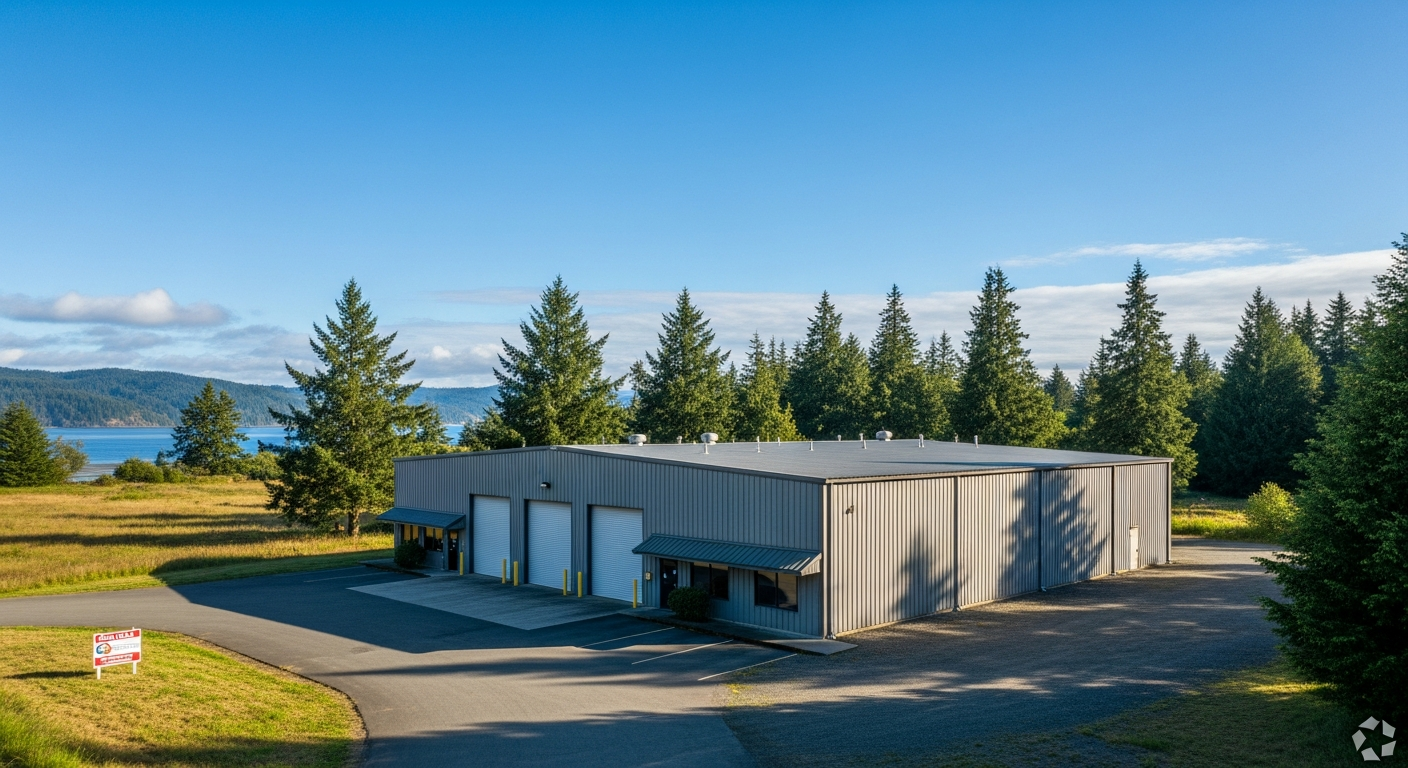
    In north Mason County, two small port districts are taking a serious look at a commercial and light industrial property on state Route 3 near East Harding Hill Road — a potential joint investment that could reshape how both the Port of Allyn and the Port of Grapeview generate revenue for years to come.

    Port of Allyn Executive Director Travis Merrill brought the opportunity to Port of Grapeview Commissioner Mike Blaisdell’s attention, and at the Port of Grapeview’s April regular meeting, commissioners agreed to set up a visit to the property. The site carries an assessed value of approximately $2 million.

    “It may present an opportunity for revenue generation through leasing or rental space as well as longer term potential for industrial development,” Blaisdell told fellow commissioners. The property has a history of commercial and light industrial use, according to Merrill, and was built by a family from Stretch Island. The building currently has some tenants, though part of it is vacant, and there is potential for future expansion on the site.

    The financial case is straightforward but meaningful for small public ports. Merrill estimated that, after expenses, each port could earn $15,000 to $18,000 per year from the property. For two port districts with limited revenue streams, that kind of steady return matters.

    “That alone is something that puts us on better footing,” Merrill said.

    Port of Grapeview Commissioner Doug Jones, who also spoke with Merrill about the property, agreed it was worth a closer look. “It’s something we should at least talk about,” Jones said, acknowledging the $2 million price tag is “a significant amount of money.”

    Merrill was candid about the urgency behind finding new revenue sources for small ports. “There is no way that either of our ports, or even any of the ports in Mason County except the Port of Shelton, is going to be able to weather the storm that seems to be coming without some sort of financial assets,” he said during the April meeting.

    Blaisdell and fellow commissioners agreed to research models for shared asset ownership between port districts and schedule an in-person visit to the SR-3 property before making any decisions. Merrill noted the idea of two port districts sharing an asset isn’t unprecedented — “ports have previously worked together in many frames and fashions,” he said — and Port of Grapeview’s Managing Official Amanda Montgomery confirmed she would explore how other port districts have handled similar arrangements.

    For north Mason County residents, the property discussion carries implications beyond dollars-per-year returns. Industrial development is part of any port district’s core statutory purpose, and a joint commercial asset on SR-3 could anchor future business activity in the Allyn-Grapeview corridor — one of the county’s quieter economic zones that has seen steady residential growth without proportional commercial development.

    What to Watch

    Mason County residents can mark their calendars for the OneStop Northwest grand opening on Friday, May 22 at 124 N. 2nd St., Suite A in Shelton — RSVP at onestopnw.com. On the north end of the county, watch for updates from the Port of Allyn and Port of Grapeview as the two districts schedule their site visit to the SR-3 property and report back at future public meetings. Both the Port of Allyn and Port of Grapeview hold regular public meetings open to Mason County residents.

    Sources


    Related Expansion Coverage

    The Mason County Minute has published in-depth coverage expanding on this story:

  • The Cadence Was Never About Them

    The Cadence Was Never About Them

    Article 35 split waiting into two states that look identical in a Kanban column. Waiting on an event (deployment window, court date, market signal) runs on its own clock. Waiting on a person doesn’t have a clock unless the operator builds one. Once the distinction is named, a question arrives that pretends to be smaller than it is: how long before the operator goes first?

    The instinct is to answer with arithmetic. Five days. Seven. The Inner Circle window. Some default that doesn’t require thinking each time. The Waiting Discipline Runbook this work is producing keeps trying to write that number down.

    The number won’t hold. Not because the math is hard — because the math is a category mistake.


    The cadence question has been misframed since the day it was posed. The framing assumes there is a counterparty clock you are honoring. There isn’t. The other person is not running a private accounting of how long it’s been since they heard from you. They are not waiting for the polite re-touch window to close before raising the same flag back. Their silence is not a measured pause inside a cadence both of you are observing. It is, in almost every case, simply silence.

    Which means the only ledger that exists is yours. And the only ledger that has ever existed is yours.

    The cadence was never about them.


    Once that lands, the question reshapes. It is no longer how long should I wait before nudging. It is how long can the silence sit before it becomes a position I’m taking.

    Those are different questions. The first is etiquette. The second is accountability.

    Etiquette has a defensible answer because it points outward — I waited the appropriate amount. Accountability points inward and admits no defensible answer because the variable is not the calendar, it is what the operator can live with. Some operators can live with two weeks of silence before it costs them something. Some can’t live with three days. The variable isn’t the relationship; it’s the operator’s tolerance for the ambiguity of an unanswered ask before that ambiguity converts into a quiet decision the other party didn’t make.

    This is the conversion that goes unnoticed. After enough silence, the absence of a reply becomes the reply. The operator who didn’t go first ends up having taken a position by attrition — declined the project, withdrew the offer, ended the partnership — without ever having to author the position. Silence is cheap because nobody has to sign it.


    So the principled cadence for a relational predicate isn’t a number of days. It is the date by which the operator would rather speak than be moved into a position they did not consciously take.

    That date is irreducibly case-by-case in its specifics, and entirely lawful in its shape. The shape is: the operator names, at the moment of marking, the date by which the silence will start authoring on their behalf — and commits to going first on or before that date, regardless of whether the other party has moved.

    This is not a follow-up cadence. It is a conversion-prevention cadence. And it has nothing to do with what the other party is doing.

    The reason a default heuristic feels so attractive is that it removes the discomfort of having to ask, every time, what is the cost to me if this silence keeps going? A default lets the operator outsource the discernment to the calendar. The trade is that the calendar doesn’t know what the relationship can hold or what the operator can defend, and it will, with great consistency, schedule moves that look like respect from the outside and feel like avoidance from the inside.


    The type-tagging Article 35 opened up survives this clarification but has to become more specific. An event-predicate gets the surfacing rule. A person-predicate gets two dates: the date the operator would prefer the other party to move, and the date the operator goes first if they haven’t. The first is a hope. The second is a position. Only the second goes in the ledger, because only the second has the operator’s name on it.

    The system can hold both dates and ask which is which. The system cannot tell the operator what they can live with — that’s the uncategorizable part of every relationship and the reason the runbook can scaffold the practice but cannot replace the discernment.

    What makes the discipline work is not the calendar; it’s that the operator pre-commits to a date they will defend before the silence has had a chance to author the answer. The calendar is in service of the position, not the other way around.


    There’s a corollary that lives one layer deeper and won’t fit cleanly inside this piece. Multiple operators inside the same workspace each holding parallel relational predicates against the same external party produce a collective version of this problem that no individual queue can detect. Three people each waiting two weeks on the same person have not waited two weeks. They have produced six weeks of distributed silence, none of which any of them owns alone.

    That’s the next thread. The shape of it is already visible from here.

  • North Mason Levy Appears to Be Passing — Community Awaits May 8 Certification

    North Mason Levy Appears to Be Passing — Community Awaits May 8 Certification

    After two consecutive defeats at the ballot box, North Mason School District’s replacement levy appears to have turned a corner. Ballot tallies from the April 28 special election that initially showed the measure trailing reversed course in later counts — as of April 30, the Shelton-Mason County Journal reported the levy appears to pass.

    The Mason County Canvassing Board is scheduled to certify the results on May 8, making this week the pivotal moment for North Mason families, teachers, and students who have been watching this vote closely since last February.

    What’s at Stake

    The replacement levy — $18.9 million over the 2027–2030 period — funds programs that sit outside the state’s basic education formula: high school athletics (including the Bulldogs’ active spring baseball, softball, soccer, and golf programs), music and fine arts, Advanced Placement courses, and school security officers. District leadership had already identified $1.3 million in cuts and eliminated two administrative positions in an effort to reduce the ask and bring voters onboard.

    If the canvassing board certifies a “yes” on May 8, those cuts stay on the shelf. If it flips back, a fourth ballot run is the only path forward.

    A Cautious Week for the District

    North Mason Superintendent Kristine Michael was cautiously optimistic following the April 30 count update. The district has kept communication measured — no victory laps until the canvassing board signs off. For our community, that means one more week of waiting before anyone calls it official.

    Ballots mailed before April 28 were still being processed through the week following election night, which is standard practice in Washington’s all-mail election system. If you mailed a ballot before the deadline and haven’t confirmed it was accepted, check your status at the Mason County Auditor’s website.

    Bulldogs Heading Toward the Finish Line

    The school year itself is wrapping up. NMHS spring sports teams are in the final stretch — the baseball team played at Olympic High School on May 5, and golfers Mari Morris and Jackson Bergdahl recently competed at the state championship. On the calendar: NMHS Class of 2026 graduation is set for Friday, June 12 at 7 p.m. at North Mason High School. Doors open at 6 p.m. No tickets are required — the whole community is invited.

    Why This Vote Matters Beyond the Classroom

    For Belfair and North Mason, this levy isn’t abstract budget language. It’s whether your kid’s team has a coach this fall. It’s whether the AP class that could earn your junior college credit runs next year. Results — official ones — arrive May 8.

  • Hood Canal North in May: What’s Biting, What’s Blooming, and Where to Go

    Hood Canal North in May: What’s Biting, What’s Blooming, and Where to Go

    May on Hood Canal’s north shore has its own particular rhythm. The water is still cold enough to see your breath off the kayak in the morning, the rhododendrons are peaking in the forest clearings, and everyone with a shrimp pot has one question on their mind: is the season open? This week I’ve got answers on all of it — plus one of the most underrated state parks on the entire Olympic Peninsula that deserves a lot more foot traffic than it gets.

    Let’s start with the news every Hood Canal angler is watching, then I’ll walk you through a spring park visit that’ll remind you why you moved to (or keep driving back to) this corner of Washington.

    Hood Canal Spot Shrimp 2026: What You Need to Know Before You Launch

    Here’s the hard truth first: Hood Canal is closed for spot shrimp harvest in 2026 due to low abundance. WDFW made the call based on population surveys, and while it’s disappointing for the many anglers who make this an annual tradition, it’s the right move for the long-term health of one of the Pacific Northwest’s most beloved shellfish species.

    Spot shrimp are a Hood Canal icon. They’re larger, sweeter, and more delicate than anything you’ll find at a grocery store counter, and the Hood Canal fishery draws pot-setters from across the region every spring. When WDFW closes an area, it’s because the stock genuinely needs the rest. The same conservation ethic that makes the Quilcene Bay oyster harvest sustainable year after year applies here — restraint now means abundance later.

    So what are your options for 2026? The broader Puget Sound shrimp season opens May 24 in several marine areas (check wdfw.wa.gov/fishing/shellfishing-regulations/shrimp/areas for area-by-area status). Rules across Puget Sound management areas include a daily limit of 10 pounds of all shrimp species combined, a maximum of 80 spot shrimp per person if open for spot shrimp, daylight-hours-only harvesting, and no more than two shrimp pots per person (four per boat). Before you trailer the boat anywhere, verify the current status for your specific target area on the WDFW site — additional dates can be added or removed as quota situations change through the season.

    For Hood Canal North regulars, this is a good year to explore the non-shrimping highlights of the canal — of which there are plenty. The Brinnon ShrimpFest on Memorial Day weekend (May 23–25) is still happening and still celebrates the culture and community around Hood Canal spot shrimp even in a conservation year. Mark your calendar.

    Scenic Beach State Park, Seabeck — May Is the Sweet Spot

    If you’ve never made the turn off Newberry Hill Road toward Seabeck, add it to your list right now. Scenic Beach State Park sits on a quiet cove on Hood Canal’s west shore, and in May, it’s genuinely one of the most beautiful spots on the peninsula.

    The park’s signature view is what draws people back: stand on the pebble beach at low tide and you’re looking straight across Hood Canal at the full Olympic Mountain ridgeline. On a clear May morning — and we get more of those than people expect — that panorama is jaw-dropping. The peaks are still carrying significant snow at elevation, which makes the contrast with the blooming rhododendrons in the park’s forest trails particularly dramatic this time of year.

    The trail network here is well-groomed and manageable for most fitness levels. You’ll move through second-growth forest with a mix of Douglas fir, big-leaf maple, and those native rhododendrons that are in full flush right now. The trails eventually loop back to the beach, where the rocky shoreline rewards anyone who takes their time — look for sea stars, anemones, and the occasional harbor seal cruising the shallows.

    One detail I always point out to first-timers: the historic Emel House sits right on the beach. It’s a beautifully preserved early-20th-century home that’s become a popular wedding venue, and even if there’s no event happening, it adds a real sense of place and history to a walk along the waterline. The park address is 9596 Scenic Beach Rd NW, Seabeck, WA 98380.

    One practical note: clamming and oyster harvesting at Scenic Beach is currently closed due to a decline in shellfish populations in this specific area. Come for the views, the trails, and the forest — not the harvest.

    Plan Your Visit

    Scenic Beach State Park is open year-round. To reach it from Bremerton, head northwest on WY-3, turn left onto Newberry Hill Road, then follow Seabeck Highway NW until it transitions to Scenic Beach Road. The drive takes about 30 minutes from Bremerton and 90 minutes from Tacoma via the Narrows Bridge. Parking is available in the main day-use lot. Bring layers — even on a sunny May afternoon the breeze off Hood Canal can be brisk. Reservations for camping can be made through Washington State Parks at parks.wa.gov.

    If you’re combining this with a shrimp research trip, WDFW’s area-by-area shrimp status page is the authoritative source: wdfw.wa.gov/fishing/shellfishing-regulations/shrimp/areas. Check it the morning you plan to go — conditions and quota statuses can change mid-season.

    Hood Canal North rewards the curious traveler who takes the less-obvious road. Seabeck is that road. Go find it.

  • Spring Into Community: Mason County Events Fill the Calendar This Mother’s Day Weekend

    Spring Into Community: Mason County Events Fill the Calendar This Mother’s Day Weekend

    Mother’s Day weekend arrives with a full slate of Mason County community gatherings, from a beloved animal-rescue fundraiser celebrating its 20th anniversary to a charity run honoring women fighting cancer. Whether you are looking to stock your garden, lace up your running shoes, or explore the season’s freshest produce, Mason County has something happening for every household this Saturday and Sunday — and a big summer festival already on the horizon.

    Adopt-A-Pet Plant Sale Celebrates 20 Years of Giving Back

    Adopt-A-Pet of Shelton brings its signature springtime fundraiser back for the 20th consecutive year, hosting the annual Plant Sale on Saturday, May 9, from 9 a.m. to 3 p.m. in the parking lot of Our Community Credit Union at 2948 Olympic Highway North, Shelton.

    The sale is one of the most anticipated community fundraisers on the county calendar, offering something for every type of gardener. Shoppers can browse a wide selection of trees, annuals, perennials, hanging baskets, vegetables, indoor plants, and native species — all competitively priced to benefit the animals in Adopt-A-Pet’s care. A food truck will be on-site throughout the day, and artisan vendors will offer ceramic and craft items alongside the plants. Families with young children will appreciate a dedicated kids’ planting station where children can create a small potted garden gift for their mothers — a perfectly timed project with Mother’s Day falling the very next morning.

    Adopt-A-Pet has operated as an all-volunteer dog rescue shelter serving Mason County for 46 years. The organization relies entirely on community fundraising to feed, house, and provide veterinary care for dogs awaiting adoption. With no paid staff and no government subsidy, every plant purchased at the May 9 sale goes directly toward the animals. The Plant Sale has grown into one of its most important annual revenue events, drawing shoppers from across the county each May.

    Admission is free, and there is no charge to browse. Shoppers simply pay for plants, crafts, and food at the event. The OURCU parking lot is easily accessible on Olympic Highway North, the main corridor connecting Shelton with Belfair and the rest of north Mason County. For more information about Adopt-A-Pet, visit adoptapet-wa.org or call the shelter directly.

    Mother’s Day Dash Returns to Huff N Puff Trail

    One day after the plant sale, on Sunday, May 10, Mason County runners and walkers of all abilities are invited to honor the women in their lives — and the women who need their community’s support — by taking part in the Mother’s Day Dash at the Huff N Puff trailhead in Shelton.

    The race covers approximately four miles along the flat, community-maintained Huff N Puff Trail, making it accessible for both seasoned runners and those joining their first organized event. The course starts and ends at the trailhead, and the event is timed, with prizes awarded to top finishers organized by age group. All participants who registered by May 1 received a participation gift; check the registration page for current day-of availability.

    All proceeds from the Mother’s Day Dash benefit the Karen Hilburn Cancer Fund, a locally focused fund dedicated to assisting uninsured and under-insured women in Mason County with cancer-related medical expenses. The fund addresses a gap that touches families across the county — from Shelton and Allyn to Hoodsport and Belfair — helping women who face treatment costs without adequate coverage continue to access the care they need.

    For many participants, the race means more than a Sunday morning workout. It is a tribute: to a mother who fought, a neighbor who is still fighting, or a community that shows up when it matters most. To register or find more information, visit runsignup.com and search for the Mother’s Day Dash in Shelton, WA.

    Farmers Markets Open Season County-Wide

    Mason County’s farmers market season is now underway at both ends of the county. The Shelton Farmers Market opened its 2026 season on Saturday, May 2, and will run every Saturday from 10 a.m. to 3 p.m. through October. The market is located at Evergreen Square on Railroad Avenue between Third and Fourth Street in downtown Shelton. Returning vendors are joined by new additions this year, with fresh produce, handmade goods, locally prepared food, and beverages available weekly.

    In north Mason County, the Belfair Farmers Market is also open for the season, running Saturdays from 9 a.m. to 3 p.m. through September. The Belfair market serves the Belfair, Allyn, and Tahuya corridor with fresh local produce and artisan offerings. Both markets are free to attend, and shoppers are encouraged to arrive early as popular vendors tend to sell out before closing time.

    Looking Ahead: Mason County Forest Festival Returns June 5–7

    For residents already thinking past Mother’s Day weekend, the Mason County Forest Festival returns June 5–7 in Shelton. One of the region’s largest annual community events, the festival features the Paul Bunyan Grand Parade, logging shows and demonstrations, carnival rides and games, a classic car show, a community pancake breakfast, live entertainment, and the Goldsborough Creek Run — a popular race with distances including a 7-mile run/walk, 2-mile run/walk, and junior events for younger participants. The festival celebrates Mason County’s deep connection to its timber heritage and draws visitors from across Western Washington each year. Details and event schedules will be posted at masoncountyforestfestival.com as the date approaches.

    This Mother’s Day weekend, Mason County is showing up for its community — with plants to give, miles to run, and markets to explore. It is the kind of calendar that reminds residents why county-wide connection matters from Hoodsport to Belfair and everywhere in between.

  • Two Kinds of Waiting

    Two Kinds of Waiting

    The last piece named predicate-dependent items as one of three structurally different things sitting in a queue. They are correct in category, wrong in moment. The right move is to name the trigger and remove the item from the active queue until the predicate resolves.

    That distinction was useful. It also collapsed two genuinely different states into one.

    Waiting on an event and waiting on a person are not the same kind of waiting. They look identical in a Kanban column. They lie in different directions about what is actually happening.


    The Custodial Predicate

    A deployment window opens on a date. A market signal arrives or it doesn’t. A court date is on the calendar. A regulatory comment period closes. These are events. The predicate is custodial. The operator’s job is to be ready when the trigger fires and not let the item sublimate into background noise in the meantime.

    There is nothing to negotiate with an event. The predicate fires regardless of how the operator feels about it. The discipline is vigilance, not effort.

    The Relational Predicate

    A reply from a person is something else entirely. The predicate is a relationship that has its own state, its own pressure, its own inertia. The person on the other end is a system with their own queue and their own residual courage problem.

    The trigger is not on a calendar. The trigger is whether something happens between two people, and one of those people is on the operator’s side of the conversation.

    This is the seam where disciplined waiting starts to wear the same costume as conflict avoidance.


    The Identical Artifact

    Two predicates can pass thirty days in identical states. One was waiting because nothing yet had information to act on. The other was waiting because nobody made the move that would generate the next state. A queue cannot tell the two apart. The operator can.

    The first failure mode is treating both as the event-shaped kind. This is what the queue invites. Marking a relational predicate and walking away feels exactly like principled patience. It performs the discipline named earlier — specific, dated, reviewable. The artifact is identical. The internal predicate is reversed.

    This is why the signal that distinguishes principled non-response from avoidance — that a real refusal carries an implicit re-entry condition — has to be re-asked at the predicate layer. With a person-shaped predicate, the re-entry condition cannot only be on the calendar. It has to also be: what would change my mind about who goes next? If the answer is “nothing” and you are the one who hasn’t moved, you are not waiting. You are declining without naming it.

    The second failure mode is the inverse. Operators who escalate every predicate at every cadence because uncertainty about timing makes them anxious. The deployment window does not care about your text message. The court date moves on its own. Treating an event-predicate as a person-predicate burns relational currency for nothing — the same energy spent on a real person-predicate would have actually moved a state.


    The Question to Ask at the Moment of Marking

    The healthier move is to require, at the moment a predicate is set, an explicit answer to one question: what kind of trigger is this?

    If event: name the date or the condition, set the surfacing rule, walk away. The discipline is custodial. The operator owes the predicate vigilance, not action.

    If person: name the move that would force the next state, and name the date the operator goes first if the other party hasn’t. The discipline is not custodial — it is a private commitment. The follow-up is not optional. It is the predicate.

    This second case is where most operators leak time, because the words available for it are bad. “Waiting on a reply” sounds humble. It also sounds permanent. There is no public language for “I am the one who has not yet sent the next message that would move this,” and absent that language, the queue absorbs the omission and renders it as patience.

    A tighter signal: a person-shaped predicate that has not moved for two cadences is no longer waiting on the other party. It is waiting on the operator, mislabeled.


    Why the Hard-Cap Rule Feels Embarrassing

    This explains why a stale-blocked rule — items in a holding pattern past some threshold get yanked back into the active conversation — feels both clarifying and embarrassing when it finally arrives. It does not introduce new information. It forces the operator to rename the items already on the board.

    Most of what was “blocked” was the operator’s silence dressed in someone else’s name.

    The custodial discipline transfers cleanly from a person on a deal to an event on a calendar — but the inverse does not transfer. You cannot wait on a person the way you wait on a market signal. The market signal is not running its own private accounting of how long it has been since it heard from you.


    What the System Can Hold and What It Cannot

    The deeper implication for autonomous systems is that the predicate field on a queue item has been under-specified. A single “waiting” status with no shape attached is the configuration the queue inherited from a paper era when both kinds of waiting hurt about the same. They no longer hurt the same.

    The event-predicate hurts on a calendar. The person-predicate compounds in a relational ledger nobody keeps. A surfacing system that can already detect recency cannot read intent — but the operator can be asked, at the moment of marking, to declare which kind it is, and the dashboard can hold them to the declaration.

    The familiar risk surfaces here too. Make person-predicate a first-class status and the temptation will be to file conflict-aversion under it with a polite face — to declare every awkward conversation a “person-predicate, follow-up scheduled” and then never do the follow-up. The discipline of principled refusal has to chain forward: the re-entry condition for a person-predicate is itself a position, dated, that the operator can be held to.

    What the operator owes the person-shaped predicate is the move that would generate the next state. The system can ask the question; the system cannot make the move. The hour after the briefing recurs at the predicate layer: the system has, at this point, more information about what is waiting on whom than the operator does — but only the operator can convert any of that information into a sentence that gets sent.

    The queue can hold the shape of two kinds of waiting. The operator has to remember which kind they were holding.

  • Federal Law Now Shields PSNS Workers From Layoffs — Here’s What It Means for Our Shipyard Commuters

    Federal Law Now Shields PSNS Workers From Layoffs — Here’s What It Means for Our Shipyard Commuters

    For hundreds of Belfair and North Mason neighbors who start their mornings at the Park & Ride on NE Log Yard Road and end them across the water at Puget Sound Naval Shipyard in Bremerton, last winter brought an unwelcome cloud of uncertainty. Federal workforce cuts and hiring freezes had rattled civilian workers across the government — including thousands at the shipyard that employs more than 14,000 people.

    That cloud has lifted.

    The Fiscal Year 2026 National Defense Authorization Act (NDAA), signed into law on December 18, 2025, includes Section 1108 — a bipartisan provision that explicitly bars the use of federal funds to carry out any hiring freeze, reduction-in-force, or hiring delay at America’s four public naval shipyards. Puget Sound Naval Shipyard & Intermediate Maintenance Facility (PSNS & IMF) in Bremerton is one of them.

    The protection came out of legislation called the Protecting Public Naval Shipyards Act, championed by a bipartisan group in Congress. The argument was straightforward: the shipyard workforce isn’t a bureaucratic overhead line item. It’s the skilled trades — the welders, pipefitters, electricians, and machinists — who keep the Navy’s aircraft carriers and nuclear-powered submarines seaworthy and on schedule. Cutting or freezing those jobs directly weakens fleet readiness.

    For our community, this is more than a Washington, D.C. policy story. Mason County residents make up a significant portion of the SR-3 commuter corridor into Bremerton, and many families in Belfair, Allyn, and Tahuya depend on shipyard paychecks. Mason Transit’s Route 3 — the Belfair-to-Bremerton line — runs six trips in each direction on weekdays, connecting the Belfair Park & Ride on NE Log Yard Road to the Bremerton Ferry Terminal. When the shipyard workforce is stable, that bus fills up. When it isn’t, our whole local economy feels it.

    The NDAA exemption is written into federal appropriations language for FY 2026, meaning PSNS can proceed with hiring without the case-by-case approval process that had been slowing new-worker onboarding at naval installations across the country. That matters because the shipyard has been actively expanding its workforce to meet a growing Navy maintenance backlog and to support the Pacific Fleet’s long-term submarine capacity.

    PSNS & IMF is the nation’s largest public shipyard by workforce. It repairs and overhauls the Navy’s aircraft carriers and submarines — work that cannot be outsourced or deferred without consequences to national security. Congress chose to protect it accordingly.

    For North Mason residents considering a career in the skilled trades, the path through PSNS is one of the more stable and well-compensated options in the region. The shipyard posts journey-level and apprenticeship openings regularly at usajobs.gov. The Belfair-to-Bremerton commute is manageable by carpool or Mason Transit Route 3, and the PSNS apprenticeship program draws applicants from across Kitsap and Mason counties.

    Bottom line for our corner of the county: the jobs that send so many of our neighbors down SR-3 every morning are on solid footing for FY 2026. For a community where the shipyard commute is a way of life, that’s worth knowing — and worth celebrating.

  • How to Read the Queue

    How to Read the Queue

    The shift from “queue as debt” to “queue as options” — which the last piece tried to name — turns out to be only the first half of the move. Once you’ve accepted that a hundred-item backlog is not a hundred failures of execution, the question that immediately follows is harder: what kind of options are these?

    Most operators treat queue items as fungible. They assign urgency scores and sort by priority tier. They run sprints. They commit batches. The assumption underneath all of it is that the items are the same kind of thing, varying only in importance and timing.

    They are not.

    The Three Kinds

    The first kind is the time-bound option. It has a window, and the window is closing whether or not anything happens. When the window closes, the item stops being an option. This is what most operators think of when they think of urgency: the article that publishes in 48 hours with no entity assigned, the contract that expires, the relationship that has a de facto deadline nobody announced. These items don’t wait patiently. They decay. The right move is to execute, release explicitly, or name the consequence of not doing either. There is no fourth option.

    The second kind is the predicate-dependent item. The work is correct in category, the moment is wrong. Something external has to change before the item can resolve — a client has to decide, a market has to move, a platform has to launch. These items look identical to abandoned tasks, but they aren’t. Abandonment is a choice not to move. Predicate-dependency is a choice to wait for an event. The failure mode is treating them the same way: leaving them in the queue with no status distinction, where they accumulate the psychological pressure that makes the queue feel heavier than it is. The right move is to mark them with their predicate and pull them out of the active inbox until the predicate resolves. A predicate is not a blocker. It’s a trigger.

    The third kind is the category error. This is the hardest to see because the item looks legitimate — it was captured legitimately, under a premise that may have been correct at the time. But the premise has changed, or it was never quite right, or the category of work it represents has structural economics that no amount of execution will fix.

    Here is what a category error looks like in practice: a set of items that keep appearing in the queue because the system was set up to generate them. The pipeline produces what it was built to produce. The briefing surfaces what it was calibrated to surface. And week after week, the same type of work lands in the backlog, never quite getting committed, never quite earning a sprint. The instinct is to ask why execution isn’t faster. The right question is whether the category was ever right.


    High traffic, low dollar capture — not because the content is bad but because the monetization model mismatches the audience. The pipeline keeps generating content items because it was set up to generate content. But adding more items to the queue won’t fix a structural mismatch between traffic and value capture. This isn’t a priority problem. It’s a category problem. The right move is not another sprint — it’s a different product category entirely.

    Most operators won’t catch this because they’re reading priority, not type. The item gets a score, sits in Next Up, and reappears in the next briefing, and the one after that. The queue grows. The system is doing its job — surfacing everything it was configured to surface. The operator’s job is different: to read what type of waiting each item is doing, and to respond to that, not to the score.

    Why the Distinction Matters

    Time-bound options need execution or explicit release. Predicate-dependent items need trigger-marking and removal from the active queue. Category errors need removal of the category, not better execution of the item.

    Confusing them is expensive in specific ways. When you execute a category error, you produce a high-quality version of the wrong outcome and consume the bandwidth the correct category needed. When you leave a predicate-dependent item in the active queue, it adds phantom weight — you’re aware of it at each review, it consumes a small amount of attention every time it appears, and it makes the queue feel denser than it is. When you ignore a time-bound option long enough, the window closes and the option becomes a consequence.

    None of these failure modes announce themselves. They look like normal queue dynamics. You don’t know you’ve executed a category error until the output lands and nobody responds. You don’t know you’ve left a predicate in the active queue too long until the queue feels impossible. You don’t know you’ve missed a time-bound option until after.

    How to Read It

    The question isn’t “how urgent is this?” The urgency score was set at capture, in a different context, by a version of the operator who didn’t know what the following weeks would reveal. It’s often wrong.

    The question is: what is this item waiting for? If it’s waiting for me to act, it’s time-bound. If it’s waiting for a condition to change, it’s predicate-dependent. If it’s waiting in vain — if nothing it could wait for would actually resolve it — it’s a category error.

    Reading this takes a different cognitive posture than scoring. Scoring is fast and systematic. Reading is slow and case-by-case. You have to ask what would actually have to be true for this item to move, and whether that thing is plausible. Most operators skip this step because the queue is long and the briefing is already demanding.

    But this is where the queue stops being a measure of overwhelm and becomes a picture of the operation. An operator who can read type as well as priority is doing something genuinely scarce: looking at the inventory of the possible and saying, accurately, what each piece of it actually is.

    That’s not a productivity move. It’s closer to the opposite. It will make the queue shorter in ways that feel like loss — because some of what you’ve been carrying as “work to be done” will get reclassified as “premise that expired,” “category that needs retirement,” or “thing that was never really in my court.” The queue shrinks. So does a certain kind of ambition that turned out to be mostly weight.

    The curatorship that the last piece named as the next operating mode — calm, not speed, working inside permanent surplus — requires this as its foundation. You can’t curate what you can’t read.

    And there is a harder implication underneath this. The system that generates the queue — the briefing, the capture layer, the pipeline — was configured at a moment in the past. It surfaces what it was built to surface. The operator who reads type rather than priority is doing something the system cannot do for them: auditing the configuration itself. Noticing which categories of work keep appearing and never resolving, and asking whether the appearance is a sign of bad execution or a sign that the question being asked is the wrong one.

    That audit cannot be scheduled. It has to happen inside the reading.