
The unit of generative engine optimization is the chunk, not the page
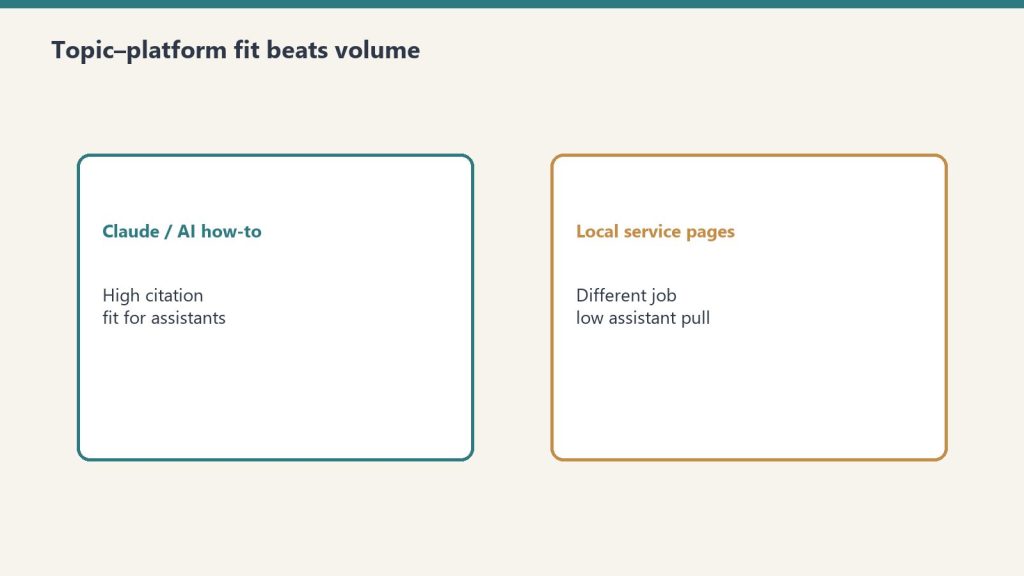
Most generative engine optimization advice still reads like SEO advice with new vocabulary. Add statistics. Build entities. Earn mentions. All true, all incomplete. The mechanic that determines whether ChatGPT, Perplexity, or Google AI Overviews quote your page in an answer is not the page. It is the chunk — the 200- to 500-character passage the retrieval layer pulled out of your page, scored against the user’s prompt, and handed to the language model as evidence.
If your paragraphs do not survive that extraction step intact, the rest of your GEO program is academic. This is the implementation gap most content teams have not closed yet, and it is the highest-leverage shift you can make in Q2 2026.
What the retrieval layer actually does
When a user asks Perplexity or ChatGPT a question, the system runs a process best described as query fan-out and chunked retrieval-augmented generation (RAG). The prompt is decomposed into sub-queries. Each sub-query is sent to a search index (Bing for ChatGPT, a proprietary index plus partner search for Perplexity, Google’s own corpus for AI Overviews). Top-ranking pages are fetched, broken into chunks, and re-scored against the original prompt for semantic match, factual density, source authority, and recency.
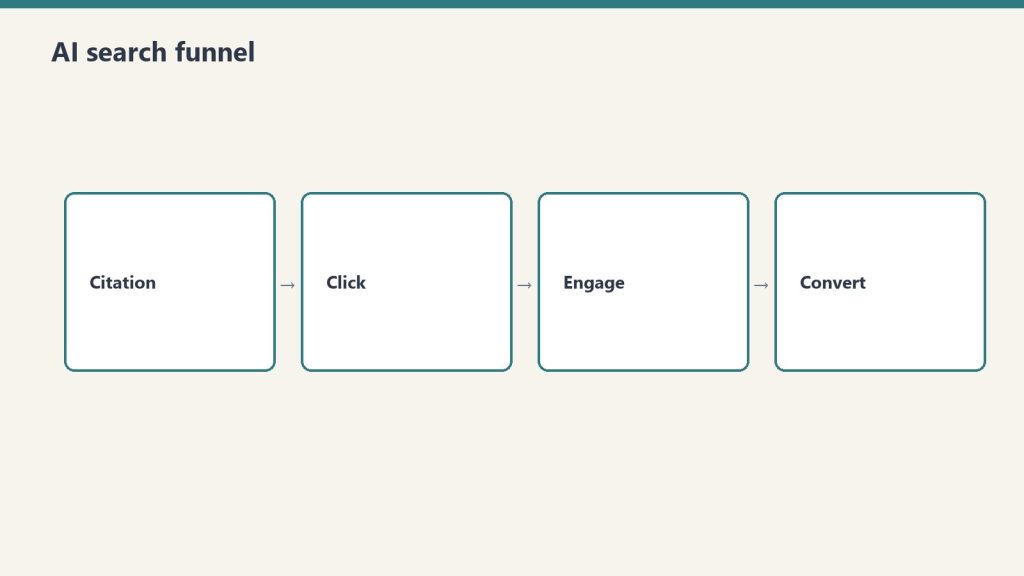
The model then composes its answer from the three to seven highest-scoring chunks across all retrieved pages. The visible citations are the source pages those winning chunks came from. Your page can rank well in the underlying search index and still produce no chunks that score high enough to enter the answer. That is the silent failure mode in GEO right now: traffic-tier visibility, zero citation share.
What a chunk-optimized paragraph looks like
The optimization target is a paragraph that reads as a self-contained answer when removed from the page around it. No pronouns referring back to a previous heading. No “as we discussed above.” No buried lede. The first sentence is the claim. The second through fifth sentences supply the supporting fact, the qualifier, and the source if one is needed.
Concretely, here is the same answer written two ways. The first will not survive extraction. The second will.
Will not chunk well:
As we covered earlier in this post, the answer depends on what you are trying to measure. It is more nuanced than most people assume. There are several factors at play, including the ones we mentioned in the introduction.
Will chunk well:
LLMs.txt is a plain-text file at the root of a domain that points AI crawlers to the most authoritative Markdown versions of a site’s documentation. The file format was proposed by Jeremy Howard in September 2024 and has seen adoption signals from major AI vendors through 2025 and into 2026. A minimal valid file is twelve lines and takes under ten minutes to deploy.
The second version has a definition, a provenance fact, an adoption signal, and a deployment qualifier — four extractable units in three sentences. A retrieval system scoring chunks for “what is llms.txt” will rank this passage higher than a longer paragraph that buries the same facts under hedging language.
The five rules that produce chunk-survivable paragraphs
These rules come from observing what actually appears in Perplexity citations, ChatGPT browsing answers, and AI Overview extractions across hundreds of cited passages. They are mechanical. Apply them in revision passes, not at first draft.
1. One claim per paragraph. Multi-claim paragraphs lose to single-claim paragraphs because the retriever cannot score them as cleanly against a specific sub-query. If you have three claims, write three paragraphs.
2. Front-load the noun and the verb. The first eight words of the paragraph determine semantic match. “Generative engine optimization is…” beats “When thinking about how to approach modern search, generative engine optimization is…” every time.
3. Resolve every pronoun within the paragraph. If a paragraph says “it” or “this” without naming the antecedent inside the same paragraph, the chunk reads as orphaned to the retriever and gets discounted.
4. Keep paragraphs between forty and one hundred twenty words. Shorter paragraphs lack the factual density that scores well. Longer paragraphs get truncated mid-thought, which destroys the chunk. The forty-to-one-twenty band is where modern retrievers operate cleanly.
5. Put the source inline. “Princeton research published in 2023 found a 30 to 40 percent visibility lift from adding statistics and citations” outperforms the same fact with a footnote, because the retriever sees the authority signal in the same chunk as the claim.
A revision protocol you can run today

For any page already ranking in the top twenty for a target query, run this three-step pass before chasing new content.
Step one: Print the article. Cover all headings. Read each paragraph in isolation. Mark any paragraph that does not answer a specific question on its own. That mark is your rewrite list.
Step two: For each marked paragraph, identify the implicit question it is trying to answer. Rewrite the first sentence to state the answer. Move supporting context into sentences two through four. Cut anything past sentence five into a new paragraph.
Step three: Add one inline source per claim that involves a number, a date, or a contested fact. Inline means “according to Anthropic’s official documentation,” not a hyperlinked footnote at the end of a sentence.
A site with eighty published pages can complete this pass in four to six weeks at one editor’s pace. The lift typically shows in AI referral traffic in GA4 — under Acquisition, Traffic Acquisition, with a manual segment for sessions where the source contains “chatgpt,” “perplexity,” “claude,” “copilot,” or “gemini” — within three to five weeks of the changes going live, because retrieval indexes refresh on independent cycles from Google’s main crawl.
Why this beats writing more content
New content takes weeks to be indexed by the underlying search layer and additional weeks before the retrieval scoring stabilizes. Rewritten paragraphs on already-indexed pages start scoring against retrieval queries the next time the page is recrawled, typically within days. The compound effect of converting forty already-ranking pages into chunk-optimized pages is larger and faster than the effect of publishing forty new pages.
This is the GEO discipline that separates teams who say they are doing generative engine optimization from teams whose names appear in actual AI answers. The unit of work is the paragraph. The test is whether the paragraph survives extraction. Everything else — entity binding, schema, llms.txt, brand co-occurrence — sits on top of that foundation.
Related on Tygart Media: RAG / source-worthy content · GEO tactics · SEO vs GEO vs AEO.
Frequently asked questions
What is the ideal chunk length for GEO?
Modern retrievers extract chunks in the 200 to 500 character range, which corresponds to paragraphs of roughly 40 to 120 words. Paragraphs in this band give retrievers enough context to score factual density without losing the chunk to mid-paragraph truncation.
How is chunk-first GEO different from entity optimization?
Entity optimization tells the AI system who you are. Chunk-first writing tells the AI system what to quote. The two operate on different surfaces and are complementary. Entity work without chunk-survivable paragraphs leaves you recognized but unquoted.
Do headings matter for chunk extraction?
Headings help retrievers segment the document and improve the score of the paragraph immediately below the heading. The heading-then-clear-paragraph pattern is the strongest GEO structure currently observable in AI Overview citations.
How do I measure whether my chunks are getting cited?
Track AI referral sessions in GA4 with a segment filtering for source contains chatgpt, perplexity, claude, copilot, or gemini. Pair that with prompt-set testing in tools that query multiple LLMs with your target queries and parse the cited URLs from the responses.
Will Google penalize chunk-optimized writing?
Chunk-optimized paragraphs read as cleanly written, source-attributed prose. The same structural rules that help retrieval scoring also help featured snippet capture and traditional on-page SEO. There is no documented penalty signal and the structure is consistent with Google’s own quality rater guidelines on clear, useful writing.
Leave a Reply