
Last refreshed: October 5, 2026 (Pacific)
If you’ve ever connected a few Model Context Protocol (MCP) servers to Claude Code and watched your usage limit drain faster than the work you actually did would explain, you’re not imagining it. There’s a real, documented, and sometimes substantial token cost to wiring MCP servers into your Claude environment — and most setup guides don’t mention it.
The short version: each MCP server you connect injects its complete tool schema into the context of every message you send. Multiple servers stack. The total overhead can range from a few thousand tokens for a single server up to roughly 18,000 tokens per turn when you’re running a typical multi-server developer setup. Anthropic’s own engineering team has acknowledged this in a public GitHub issue and shipped optimizations to reduce it.
This article walks through where the overhead actually comes from, how to measure your own setup, what Anthropic has changed in 2026 to ease the cost, and the concrete steps you can take to keep MCP useful without burning through your token budget.
What MCP actually is, briefly
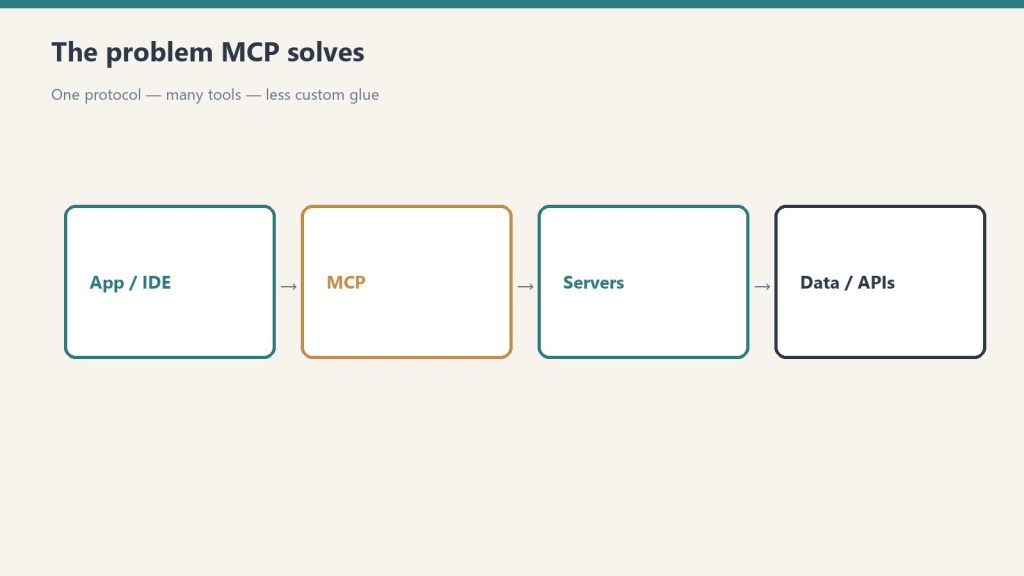
The Model Context Protocol is an open standard created by Anthropic that lets Claude (and other LLMs that adopt the standard) connect to external tools and data sources through a common interface. Instead of writing a custom integration for every API or database you want Claude to access, you point Claude at an MCP server, and the server exposes its capabilities — file access, Slack messages, GitHub repos, database queries — in a format Claude can use.
It’s a real productivity unlock. It’s also why the token math gets complicated.
Where the token cost comes from

When you connect an MCP server to Claude Code (or any MCP-aware client), three things happen on every message:
1. Tool schema injection. Every tool the server exposes — every name, every description, every parameter definition — is included in the context Claude sees. A Slack MCP server with 10–15 tools typically adds about 2,000 tokens. A GitHub server is heavier. A custom internal-tooling server with verbose descriptions can run 5,000–8,000 tokens on its own.
2. Tool-use system prompt overhead. Anthropic’s documentation confirms that whenever tools are present in a request, a special system prompt is automatically prepended that teaches the model how to use tools. For Claude 4.x models with tool_choice: auto, that’s an additional 346 tokens per request. The bash tool adds 245. The text editor tool adds 700. The computer-use tool adds 735 plus a 466–499 token system prompt extension.
3. Stateless re-sending. Each message in a conversation is a fresh API request that includes the full conversation history plus the full tool schema. Claude does not “remember” your tools from the last turn the way a human remembers a colleague’s job description. Every turn pays the schema cost again.
That’s the math. Now multiply by the number of MCP servers you have connected. A developer running Slack + GitHub + a database connector + an internal custom server can easily land in the 15,000–20,000 tokens-per-turn range — and that’s before you’ve typed your actual question.
The 18,000-token figure, sourced
The “up to 18,000 tokens per turn” number comes from a combination of public sources verified May 15, 2026:
- Anthropic’s own GitHub repo for Claude Code, issue #3406, titled “Built-in tools + MCP descriptions load on first message causing 10–20k token overhead.” Anthropic engineers acknowledged the issue and have shipped progressive optimizations against it.
- Independent analysis by MindStudio measuring real Claude Code sessions with multiple MCP servers attached.
- Anthropic’s official Claude Code documentation on cost management explicitly recommends running
/mcpto inspect connected servers and disabling unused ones to control token consumption.
The exact number for your setup will be different. The shape of the problem is the same.
Why this matters more than it looks
Claude’s standard context window is 200,000 tokens. Losing 18,000 of those to tool definitions before you start typing represents about 9% of your effective working space. That’s a real ceiling cost — but it’s not the part that hurts most.
The part that hurts is the cumulative bill. If you’re on a Claude subscription with a usage limit, every turn through Claude Code is paying the full schema cost again. A workflow that takes 30 turns of back-and-forth burns 540,000 tokens worth of tool definitions across that session — even if the tool descriptions never change. On the API at current Sonnet 5.5 rates, that’s about $1.08 in pure schema overhead per session, before any of the actual work gets billed.
Lineup currency (Oct 2026): Current API list (Oct 2026, verified): Sonnet 5.5 $2/$10, Opus 5.5 $4/$20, Haiku 4.5 $1/$5, Fable 5.1 $10/$50. Legacy (still listed on Anthropic’s card): Opus 4.8 $5/$25, Sonnet 4.6 $3/$15.
Multiply by a team of engineers running Claude Code daily, and the overhead becomes the largest single line item in your token spend.
What Anthropic has changed in 2026
Anthropic has shipped two meaningful optimizations against MCP token bloat over the past few months:
Deferred tool loading. In recent Claude Code releases, MCP tool definitions are no longer all loaded into context at the start of a session by default. Tool names enter context, but the full schemas only load when Claude actually invokes a particular tool. This is a substantial improvement for sessions where you have many tools available but only use a few.
Tool Search. A new built-in search mechanism lets Claude discover relevant MCP tools on demand rather than carrying them all in context. One independent measurement reported a Claude Code MCP context cut of 46.9% — from roughly 51,000 tokens down to 8,500 tokens — by using Tool Search instead of full upfront loading.
These optimizations help, but they don’t make the overhead zero. The baseline cost of having any MCP server connected at all is real, and you still pay it on every turn even with deferral active.
How to measure your own MCP token cost

Two practical methods work for most setups:
Method 1 — The /mcp command. In Claude Code, run /mcp to see every server currently connected. For each one, check how many tools it exposes. Anthropic’s documentation explicitly recommends this as the first step to controlling MCP costs.
Method 2 — Token-count delta. Send a single message in Claude Code with no MCP servers connected and note the input token count from the API response. Reconnect your MCP servers one at a time. The delta in input tokens between configurations is the per-turn cost of each server. This is the most precise way to know your own number.
Anything north of about 8,000 tokens per turn in pure MCP overhead is worth optimizing. North of 15,000 is a flag.
Concrete steps to control MCP token cost
- Disable MCP servers you aren’t actively using. The single highest-leverage move. If you connected a server two weeks ago for one experiment and never went back to it, every turn you’ve taken since has been paying for it.
- Prefer CLI tools over MCP servers when both exist. Anthropic’s own cost-management guidance notes that tools like
gh,aws,gcloud, andsentry-cliremain more context-efficient than equivalent MCP servers because they don’t add per-tool listing overhead. Claude can simply invoke them via the bash tool. - Use MCP gateways for large server counts. If you genuinely need many tools available, gateway products (Maxim, Milvus-backed setups, others) consolidate tools and surface only relevant ones per query, cutting net overhead substantially.
- Run a complex CLAUDE.md audit. Long project-level CLAUDE.md files compound the per-turn baseline. Treat CLAUDE.md as an asset that’s expensive to keep verbose.
- Watch for context compounding. In long Claude Code sessions, conversation history grows alongside the tool schema cost. If you’re running a workflow longer than 20 turns, periodically clear context (
/clear) to reset the per-turn cost to baseline.
Related on Tygart Media: how to use Claude · Anthropic API key.
Frequently Asked Questions
Does every MCP server cost 18,000 tokens?
No. The 18,000-token figure is for a typical multi-server setup with several connected servers and built-in tools active. A single small MCP server (5–10 tools, concise descriptions) might only add 1,500–3,000 tokens. The cost scales with the number of servers and the verbosity of their tool definitions.
Why does Claude reload the tool definitions every turn?
The Claude API is stateless. Every message is a fresh API request containing the full conversation history and the full tool schema. The model has no memory between requests, so the schema must be present every time tools could be used. Recent deferred-loading optimizations reduce this for unused tools, but anything Claude actually needs still loads each turn.
How do I see what’s loaded in my Claude Code environment?
Run /mcp in Claude Code to list every connected MCP server and its tool count. To check the actual token cost, send a test message and inspect the input token count returned by the API.
Are CLI tools really cheaper than MCP servers?
Yes, for tools that have both options. CLI tools accessed via the bash tool only add the bash tool’s 245-token overhead. An equivalent MCP server adds its full tool schema for every tool it exposes. For tools you use frequently, MCP can still be worth it for the structured interface; for tools you use rarely, CLI is more efficient.
Does this affect Claude on the web (claude.ai) too?
Web Claude does not use the same MCP server-connection model as Claude Code. The MCP token-overhead pattern primarily affects Claude Code, custom Agent SDK applications, and other developer-facing clients where you wire in MCP servers directly.
Will this get better in future Claude releases?
Likely. Anthropic has already shipped deferred tool loading and Tool Search in 2026, both of which materially reduce the per-turn overhead for unused tools. The architectural baseline (tools must be present in context to be invoked) is unlikely to change, but the practical cost should keep dropping as the deferred-loading optimizations mature.
Related Reading
- Claude Agent SDK Dual-Bucket Billing
- Amazon Prime Student + Claude Pro
- Claude Models Roadmap May 2026
How we sourced this
Sources reviewed May 15, 2026:
- Anthropic GitHub: anthropics/claude-code issue #3406, “Built-in tools + MCP descriptions load on first message causing 10-20k token overhead” (primary source for the overhead figure and Anthropic acknowledgment)
- Anthropic Claude Code documentation: Connect Claude Code to tools via MCP and Manage costs effectively (primary source for /mcp command and CLI vs. MCP guidance)
- Anthropic Pricing Documentation: tool-use system prompt token counts, bash/text-editor/computer-use overheads (primary source for the per-tool fixed costs)
- Independent analysis: MindStudio (multiple Claude Code MCP measurements), Joe Njenga’s Tool Search 51K→8.5K measurement, Maxim and Scott Spence on optimization patterns (Tier 2 confirming sources)
Token-cost numbers in this article are accurate as of May 15, 2026. Anthropic is shipping MCP optimizations regularly, so the practical overhead may be lower in your environment than what’s described here.
Leave a Reply