

You’re spending $15,000 a month on marketing and you can’t tell me which channel produced your last ten jobs. That’s not a marketing problem. That’s a measurement problem. And it’s costing you more than the marketing itself.
The restoration industry runs on gut feeling and spreadsheets. Ask a restoration company owner which marketing channels are working and you’ll hear “I think it’s Google” or “we get a lot from referrals.” Ask them to prove it and the conversation ends. Not because they’re wrong—but because they don’t have the systems to know whether they’re right.
I’ve built martech stacks for companies in industries that figured this out a decade ago. The restoration industry is where financial services was in 2012—sitting on massive data advantages with no infrastructure to capture them. That’s the opportunity.
The Three-System Foundation
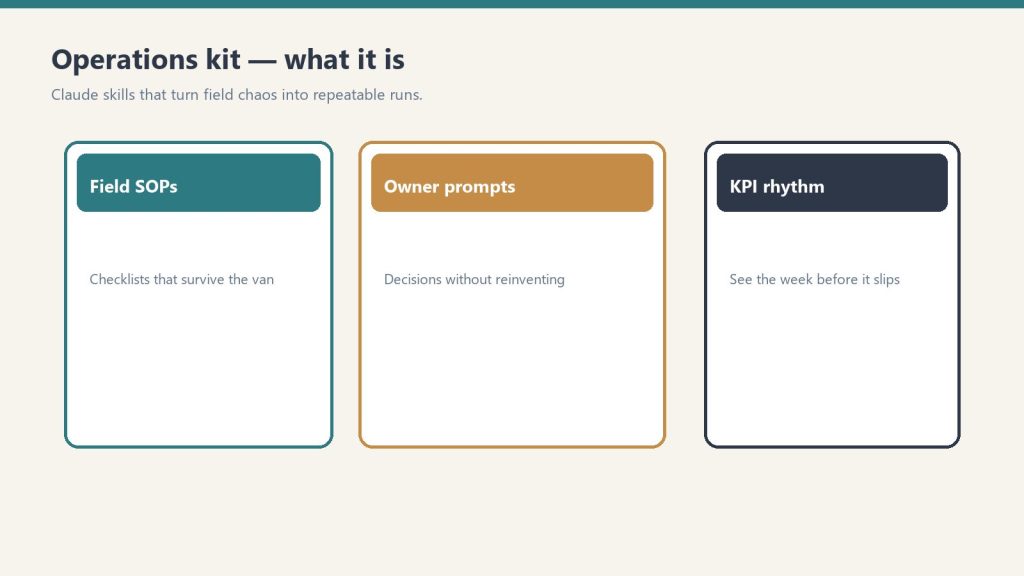
Every restoration company needs exactly three systems working in coordination: a CRM, call tracking, and attribution. Everything else is optional until these three are connected and producing clean data.
CRM (Customer Relationship Management). HubSpot powers 45.8% of B2B martech stacks. Salesforce commands 42% market share. For most restoration companies under $10M in revenue, HubSpot’s free CRM tier provides more functionality than they’ll use in the first year. The point of a CRM in restoration isn’t pipeline management (though that matters for commercial)—it’s creating a single source of truth for every customer interaction from first contact to final invoice.
Call tracking. In restoration, 70-80% of leads come by phone. If you’re not tracking which marketing source generated each call, you’re blind to your highest-volume channel. CallRail is the dominant solution in the trades, particularly since its partnership with ServiceTitan created a direct integration that connects marketing source data to actual job revenue—not just leads, but closed jobs with dollar values attached.
Attribution. Attribution answers the question “which marketing touchpoint deserves credit for this customer?” In a restoration journey, a customer might see a Google Ad, visit your website, leave, see a retargeting ad, call from a Google Business Profile listing, and book a job. Without attribution, you credit GBP. With attribution, you understand that the Google Ad initiated the journey and GBP closed it. Those are fundamentally different strategic insights.
The ServiceTitan-CallRail Integration: Why It Matters
The CallRail-ServiceTitan integration is the most significant martech development for the restoration industry in recent years. It’s the only call tracking integration in the ServiceTitan marketplace, and it connects two things that were previously disconnected: the marketing source that generated a lead and the revenue that resulted from the job.
Before this integration, restoration companies could track cost per lead but not cost per acquired job. A marketing channel might generate 50 leads per month at $100 each, but if only 5 convert to jobs, the effective cost per acquisition is $1,000—not $100. Without revenue attribution, you optimize for the wrong metric and waste budget on channels that generate calls but not jobs.
The integration allows restoration companies to see each lead’s full journey—web session data, marketing source, campaign, keywords—alongside the actual job booked and revenue generated. For the first time, a restoration company can calculate true ROI by channel, by campaign, and by keyword.
Google Analytics 4: What It Actually Tells You (And What It Doesn’t)
GA4 replaced Universal Analytics and most restoration companies are still confused by the transition. Here’s what matters: GA4 is an event-based analytics platform. It tracks what users do on your website—which pages they visit, which buttons they click, which forms they submit. It’s good at measuring website behavior. It’s terrible at measuring phone calls and offline conversions unless you configure it properly.
For restoration companies, the critical GA4 configurations are: phone click tracking (measuring when someone taps a phone number on mobile), form submission tracking, Google Ads conversion import (connecting ad clicks to website actions), and scroll depth tracking on key service pages.
Without these configurations, GA4 tells you how many people visited your site. With them, it tells you which visitors took actions that lead to revenue. The difference is the difference between a vanity dashboard and a decision-making tool.
Dashboard Design: What to Measure and What to Ignore
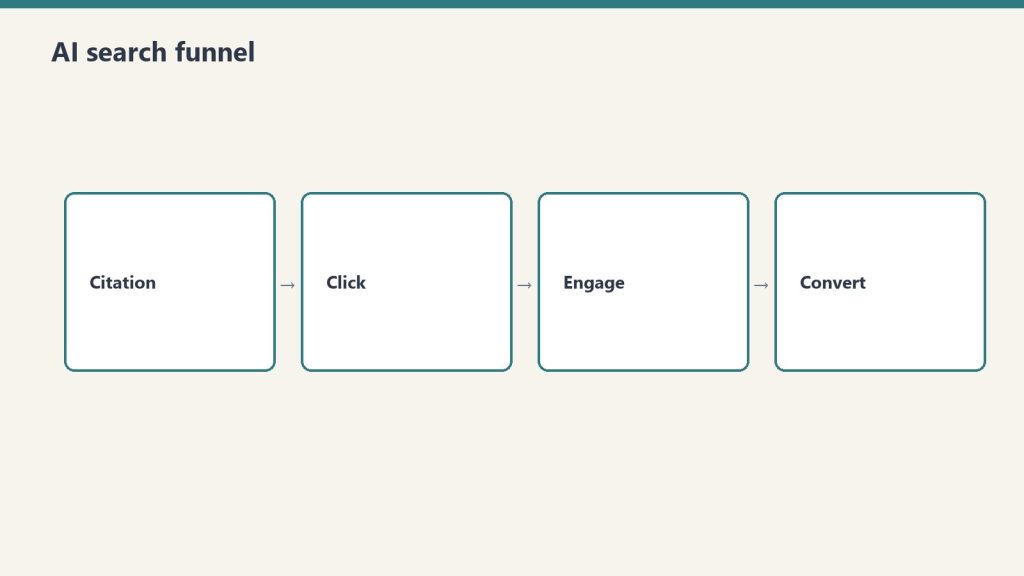
The 2026 martech trend that matters most for restoration companies is unified dashboards—single views that combine data from your CRM, call tracking, ad platforms, and analytics into one screen. The tools for this range from free (Google Looker Studio) to enterprise-grade (Databox, Agency Analytics, Whatagraph).
The dashboard metrics that actually drive decisions for restoration companies:
Cost per acquired job by channel. Not cost per lead. Not cost per click. Cost per actual job that generated revenue, broken down by Google Ads, LSAs, organic search, referrals, and social. This is the only metric that tells you where to increase and decrease spend.
Lead-to-job conversion rate by source. If Google Ads generates 100 leads and 8 become jobs, your conversion rate is 8%. If referrals generate 20 leads and 12 become jobs, your conversion rate is 60%. This tells you where your sales process is strong and where it’s leaking.
Response time by lead source. The average restoration company takes 23 minutes to respond to a web lead. Companies that respond within 5 minutes convert at 3-4x the rate. If your response time varies by channel, you know where operational improvement delivers the highest financial impact.
Revenue per marketing dollar by channel (ROAS). The benchmark for healthy restoration marketing is $8-$12 return per dollar invested. Channels consistently below $5 need optimization or reallocation. Channels above $15 need more investment.
The Xactimate Data Advantage Nobody Uses
Every restoration company running Xactimate sits on a goldmine of pricing data that has direct marketing applications. Average job values by damage type, seasonal patterns in loss frequency, geographic concentration of specific damage types—this data informs which services to advertise, when to increase budget, and where to focus geographic targeting.
Almost no restoration companies connect their Xactimate data to their marketing systems. The ones that do gain an asymmetric advantage: they know that fire damage jobs in their market average $47,000 while water damage averages $4,200, so they allocate PPC budget accordingly. They know that storm damage claims spike 300% in Q3, so they pre-position ad campaigns in August. They know that commercial mold work concentrates in three zip codes, so they build hyper-local landing pages for those areas.
Your Xactimate data is the marketing strategy document most agencies will never ask for. Use it.
Building the Stack: Priority Order
If you have nothing: Start with CallRail ($45/month) and HubSpot free CRM. Connect them. You now have call tracking with source attribution feeding into a CRM. That alone puts you ahead of 80% of restoration companies.
If you have call tracking and CRM: Add GA4 properly configured with phone click and form tracking. Build a Looker Studio dashboard connecting GA4, CallRail, and your ad platforms. You now have a unified view of marketing performance.
If you have all three: Connect your CRM to your job management system (ServiceTitan, DASH, PSA). Now you can track from first click to final invoice. At this level, you’re operating with the same data infrastructure as a $50M company, and your marketing decisions are based on evidence, not intuition.
The stack doesn’t have to be expensive. It has to be connected. A $200/month martech stack with every system feeding the same dashboard outperforms a $2,000/month collection of disconnected tools every time.
{
“@context”: “https://schema.org”,
“@type”: “Article”,
“headline”: “The Restoration Company’s Martech Stack: What to Measure, What to Connect, What to Ignore”,
“author”: {“@type”: “Organization”, “name”: “Tygart Media”},
“publisher”: {“@type”: “Organization”, “name”: “Tygart Media”},
“datePublished”: “2026-03-19”,
“description”: “A practical guide to building a marketing technology stack for restoration companies covering CRM selection, call tracking, attribution, the ServiceTitan-CallRail integration, GA4 configuration, dashboard design, and the Xactimate data advantage.”
}
{
“@context”: “https://schema.org”,
“@type”: “FAQPage”,
“mainEntity”: [
{“@type”: “Question”, “name”: “What are the essential martech tools for restoration companies?”, “acceptedAnswer”: {“@type”: “Answer”, “text”: “Every restoration company needs three core systems: a CRM (HubSpot or Salesforce), call tracking (CallRail), and attribution software. These three systems working in coordination allow you to track from first marketing touchpoint to final job revenue. Everything else is optional until these three are connected.”}},
{“@type”: “Question”, “name”: “How does the CallRail-ServiceTitan integration help restoration companies?”, “acceptedAnswer”: {“@type”: “Answer”, “text”: “The integration connects marketing source data directly to job revenue in ServiceTitan. For the first time, restoration companies can see which marketing channels produce actual jobs with dollar values—not just leads. This enables true ROI calculation by channel, campaign, and keyword, rather than optimizing for lead volume alone.”}},
{“@type”: “Question”, “name”: “What marketing metrics should restoration companies track?”, “acceptedAnswer”: {“@type”: “Answer”, “text”: “Four metrics drive real decisions: cost per acquired job by channel (not cost per lead), lead-to-job conversion rate by source, response time by lead source, and revenue per marketing dollar (ROAS) by channel. The benchmark for healthy restoration marketing ROAS is $8-$12 return per dollar invested.”}},
{“@type”: “Question”, “name”: “How much does a basic martech stack cost for a restoration company?”, “acceptedAnswer”: {“@type”: “Answer”, “text”: “A foundation stack starts at roughly $200/month: CallRail at $45/month for call tracking, HubSpot free CRM, and Google Analytics 4 (free) with proper configuration. Connected through a free Looker Studio dashboard, this setup provides more actionable data than most restoration companies currently have, regardless of their marketing budget.”}}
]
}
Leave a Reply