• Tacoma, WA
• Industry Bulletin
Search Fragmented. Your Strategy Needs to Follow.
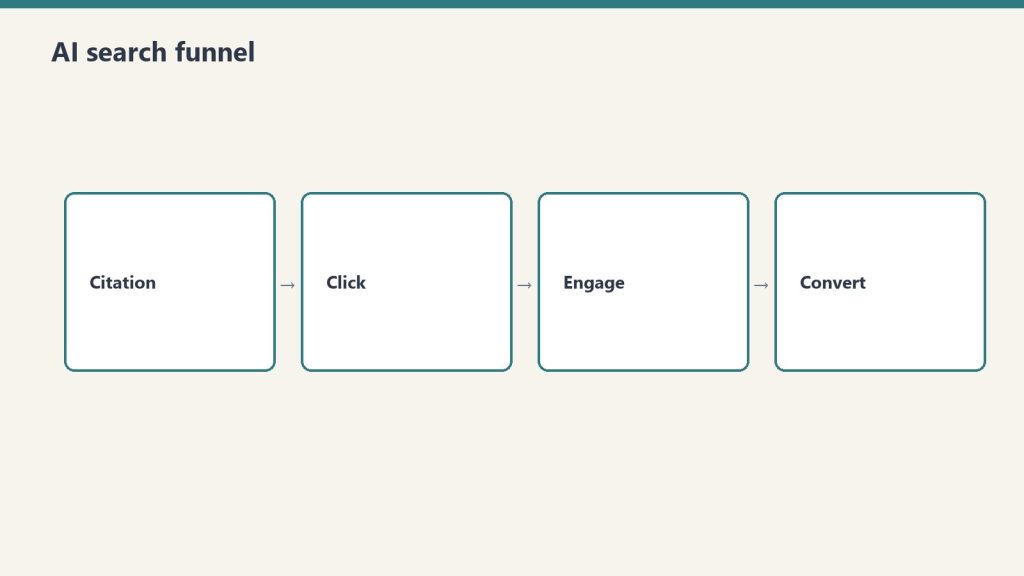
When you started doing SEO, “search” meant Google. Ten blue links. Maybe Yahoo or Bing on the margins. You optimized for one algorithm, one results page, one set of ranking factors. The game was complex but the playing field was singular.
That’s not the world your clients operate in anymore. Their potential customers search through Google’s traditional results, Google’s AI Overviews, ChatGPT’s search integration, Perplexity’s answer engine, Claude’s knowledge base, voice assistants on phones and smart speakers, and whatever new AI-powered search interface launches next quarter. Each surface has different selection criteria. Each one determines visibility through different signals.
As a freelance SEO consultant, you’re being asked — explicitly or implicitly — to keep your clients visible across all of these surfaces. That’s a reasonable expectation from the client’s perspective. They pay you for search visibility, and search now happens in more places than it did when you started.
The question is how you deliver on that expanding expectation without becoming a different person.
The Three Surfaces, Simplified
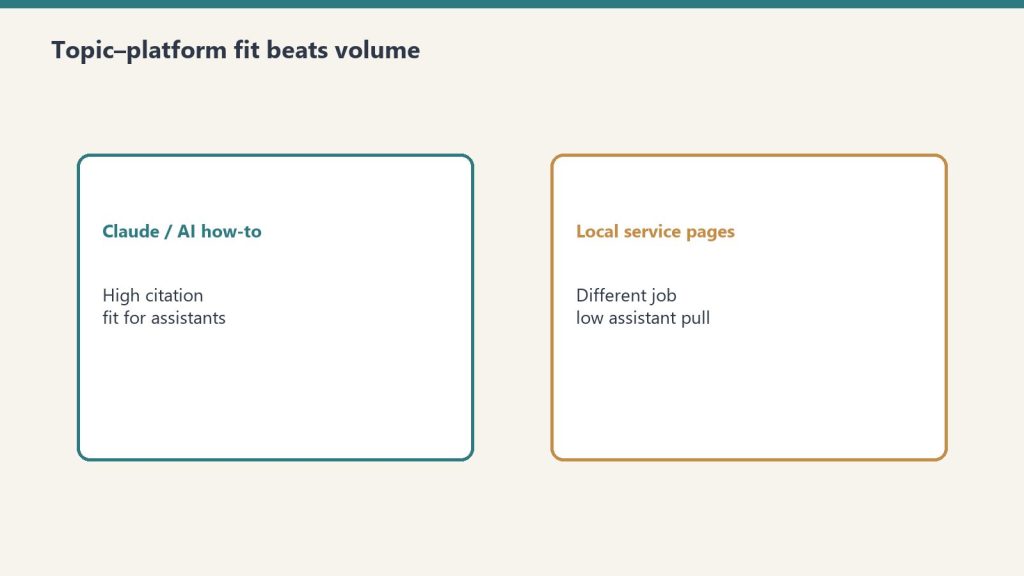
Strip away the jargon and search visibility now operates on three surfaces. They overlap but they’re not the same.
Surface one is traditional organic search. Google, Bing, their traditional ranking algorithms. This is what SEO has always addressed. Authority signals, relevance signals, technical health, backlinks, content quality. Your bread and butter. Still important. Still driving the majority of search-driven business outcomes for most industries.
Surface two is answer engines. Featured snippets, People Also Ask, voice search responses, direct answer boxes. These surfaces pull content from the same web as traditional search but select it based on different criteria — structural clarity, direct answer quality, schema markup, content format. A page can rank number one and still not own the featured snippet. The optimization requirements are related to but distinct from traditional SEO.
Surface three is generative AI. ChatGPT, Perplexity, Claude, Google’s AI Overviews, Siri’s AI-enhanced responses. These systems synthesize answers from multiple sources and cite specific content as references. The selection criteria include factual density, entity authority, structural readability, and source consistency across the web. This surface is growing rapidly and the optimization discipline — GEO — is still maturing.
Each surface requires attention. Ignoring any one of them means your client is invisible somewhere their customers are looking. But addressing all three simultaneously is work that goes beyond what traditional SEO covers.
What Changes and What Doesn’t

Here’s the good news for experienced SEO consultants: surface one — traditional organic — is still the foundation. Nothing about AEO or GEO works without solid SEO underneath. Rankings still matter. Technical health still matters. Content quality still matters. Backlinks still matter. Everything you’ve built your career on remains relevant.
What changes is what you layer on top. For surface two, the content you’re already creating needs structural refinement — snippet-ready formatting, FAQ sections with schema, direct answer blocks at the top of relevant sections. For surface three, the content needs entity optimization — stronger factual density, clearer attribution, consistent entity signals, and structural elements that help AI systems extract and cite information accurately.
Neither layer contradicts or undermines SEO. They extend it. The work you’re doing today becomes more valuable when AEO and GEO layers are added, not less. That’s the practical reality that gets lost in the marketing hype around AI search.
The Realistic Assessment
I’m not going to tell you that AI search is replacing Google tomorrow. I don’t know the exact trajectory, and neither does anyone else claiming certainty. What I can tell you is that the trend is directional: more search activity is happening through more interfaces, and each interface has its own optimization surface.
Some industries are seeing significant AI search impact already. Others are barely touched. The pace varies by vertical, by query type, by user demographics. For some of your clients, AI search optimization is urgent. For others, it’s a forward-looking investment. Part of the value of the plugin model is having someone who can help you make that assessment for each client individually, based on their specific competitive landscape and search behavior patterns.
What I won’t do is manufacture urgency with made-up statistics or scare you into action with doomsday predictions about traditional SEO. The landscape is evolving. The smart response is to evolve with it — deliberately, with clear-eyed assessment of where the opportunity actually is for each client.
Where the Plugin Fits
The plugin model addresses the capability gap between surface one (your expertise) and surfaces two and three (the expanding landscape). You continue to own the SEO strategy. The plugin layer adds the AEO and GEO optimization that extends your clients’ visibility into the answer engine and generative AI surfaces.
Over time, some consultants choose to build their own AEO and GEO expertise and internalize these capabilities. The plugin model supports that transition too — I’m happy to teach the methodology and help you build the skills to do this work yourself. The goal isn’t dependency. The goal is making sure your clients are visible across every surface where their customers search, whether that capability comes from you directly or from the plugin layer.
Frequently Asked Questions
Should I be telling my clients about AI search even if their industry isn’t heavily impacted yet?
Yes — but framed as awareness, not alarm. “We’re monitoring how AI-powered search is evolving in your industry and positioning your content to be visible across these new surfaces as they grow” is a proactive, responsible message that positions you as forward-thinking without manufacturing urgency.
Is traditional SEO becoming less important?
No. Traditional SEO is the foundation that everything else builds on. What’s happening is that SEO alone covers a shrinking percentage of total search visibility as new surfaces emerge. That doesn’t make SEO less important — it makes it necessary but no longer sufficient on its own for comprehensive search presence.
How do I decide which clients need AEO/GEO optimization now versus later?
Look at three factors: how information-rich their queries are (informational queries trigger AI answers more than transactional ones), how competitive their search landscape is (saturated markets see AI impact faster), and how their customers actually search (B2B research queries are heavily impacted by AI, simple local searches less so). Those factors help prioritize which clients benefit most from early AEO/GEO investment.
{
“@context”: “https://schema.org”,
“@type”: “Article”,
“headline”: “What Search Means Now: A Practical Guide for Freelance SEO Consultants Navigating the AI Shift”,
“description”: “Search is no longer just Google’s ten blue links. A practical overview of every surface where your clients need to be visible — and what it takes to show “,
“datePublished”: “2026-04-03”,
“dateModified”: “2026-04-03”,
“author”: {
“@type”: “Person”,
“name”: “Will Tygart”,
“url”: “https://tygartmedia.com/about”
},
“publisher”: {
“@type”: “Organization”,
“name”: “Tygart Media”,
“url”: “https://tygartmedia.com”,
“logo”: {
“@type”: “ImageObject”,
“url”: “https://tygartmedia.com/wp-content/uploads/tygart-media-logo.png”
}
},
“mainEntityOfPage”: {
“@type”: “WebPage”,
“@id”: “https://tygartmedia.com/what-search-means-now-a-practical-guide-for-freelance-seo-consultants-navigating-the-ai-shift/”
}
}
Leave a Reply