
· Senior Advisory
· Operator-grade intelligence
This guide is the working document for calculating Scope 3 greenhouse gas emissions from water damage mitigation jobs under the Restoration Carbon Protocol. It contains the actual emission factors, the calculation methodology for each Scope 3 category, and a complete worked example from a real job type. A contractor who follows this guide will produce a per-job carbon figure that is defensible in a third-party ESG audit.
Job Classification: Why It Matters Before You Calculate
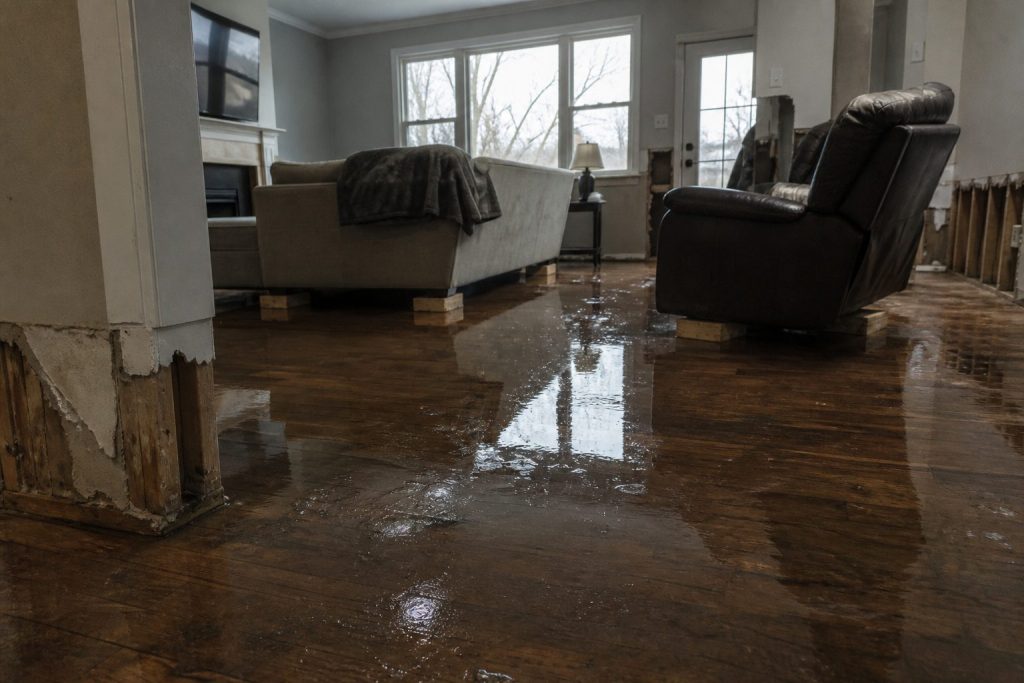
Your emissions total will vary by a factor of 10 or more depending on water category and drying class. Before calculating, classify the job correctly using IICRC S500 definitions:
| Category | Source | Emissions Driver | Typical Total Range |
|---|---|---|---|
| Cat 1 / Class 1–2 | Clean supply water, limited area | Transportation dominant | 0.1–0.5 tCO2e |
| Cat 2 / Any class | Gray water (washing machine, dishwasher, toilet overflow without feces) | Materials + transportation | 0.3–1.5 tCO2e |
| Cat 3 / Any class | Black water (sewage, floodwater, standing water) | Hazmat disposal + transportation | 1.0–8.0 tCO2e |
| Cat 3 / Class 3–4 | Black water, large affected area requiring demolition | All four categories significant | 3.0–12.0 tCO2e |
Category 4: Transportation Emissions
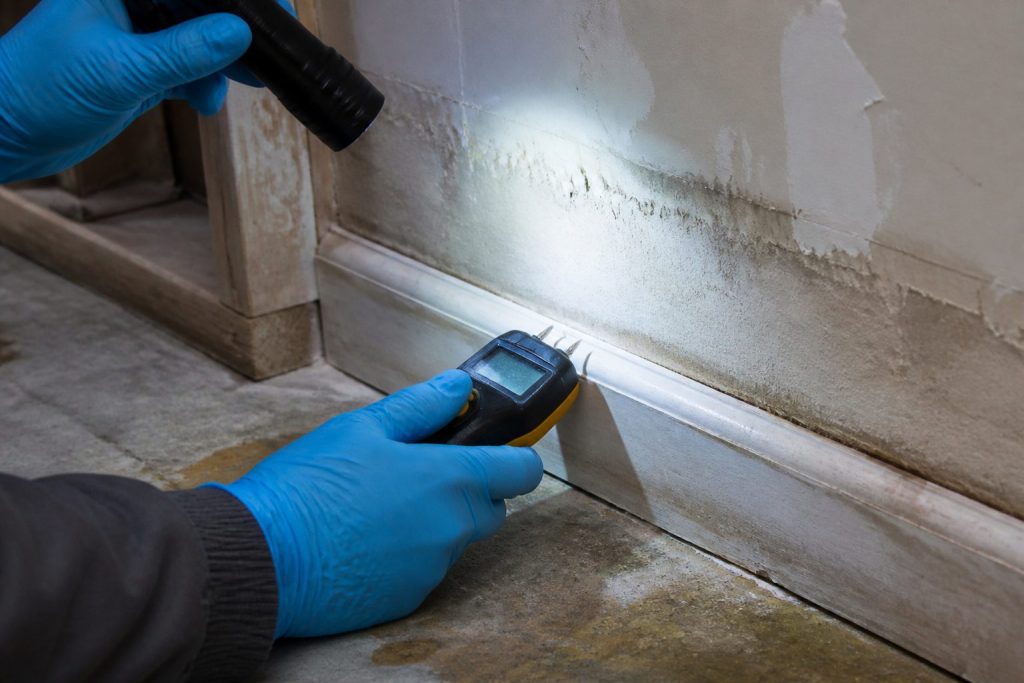
Transportation is typically the largest or second-largest emission source on water damage jobs. Calculate every vehicle separately.
Emission Factors (EPA Mobile Combustion, 2024)
| Vehicle Type | Fuel | kg CO2e per mile | Source |
|---|---|---|---|
| Passenger car / cargo van | Gasoline | 0.355 | EPA Table 2 |
| Light-duty truck (crew cab, work van) | Gasoline | 0.503 | EPA Table 2 |
| Light-duty truck | Diesel | 0.523 | EPA Table 2 |
| Medium-duty truck (equipment trailer) | Diesel | 1.084 | EPA Table 2 |
| Heavy-duty truck (dump truck, tanker) | Diesel | 1.612 | EPA Table 2 |
| Heavy-duty truck (loaded, waste hauling) | Diesel | 2.25 | EPA Table 2 + load factor |
Calculation formula: Vehicle miles × emission factor = kg CO2e. Convert to tCO2e by dividing by 1,000.
What counts as “vehicle miles”: Round-trip distance from your facility or previous job to the loss site, multiplied by the number of trips. Include equipment pickup trips, progress check visits, and equipment retrieval trips. Do not include the vehicle miles of subcontractors — their emissions are captured in their own RCP calculation.
Category 1: Materials Emissions
Emission Factors for Common Water Damage Materials
| Material | Unit | kg CO2e per unit | Source |
|---|---|---|---|
| Quaternary ammonium antimicrobial (liquid) | Liter | 2.8 | EPA EEIO — Chemical manufacturing |
| Hydrogen peroxide-based antimicrobial | Liter | 1.9 | EPA EEIO — Chemical manufacturing |
| Desiccant drying agent (silica gel) | kg | 1.4 | EPA EEIO — Chemical manufacturing |
| Disposable Tyvek suit (Category B) | Each | 1.2 | EPA EEIO — Apparel manufacturing |
| Nitrile gloves (pair) | Pair | 0.3 | EPA EEIO — Rubber/plastics |
| N95 respirator | Each | 0.4 | EPA EEIO — Medical equipment |
| P100 half-face respirator cartridge (pair) | Pair | 0.8 | EPA EEIO — Medical equipment |
| 6-mil polyethylene sheeting | m² | 0.55 | EPA EEIO — Plastics product manufacturing |
| HEPA filter (air scrubber, standard) | Each | 3.2 | EPA EEIO — Industrial machinery |
Note on antimicrobial volumes: If you don’t track liters applied per job, use these application rate proxies: Cat 2 jobs — 0.015 liters per sq ft of affected area. Cat 3 jobs — 0.025 liters per sq ft (double application typically required).
Category 5: Waste Emissions
Emission Factors by Waste Type and Disposal Method
| Waste Type | Disposal Method | tCO2e per ton | Source |
|---|---|---|---|
| Mixed C&D debris (non-hazardous) | Landfill | 0.16 | EPA WARM v16 |
| Contaminated porous materials (Cat 2) | Landfill (standard) | 0.18 | EPA WARM v16 + contamination premium |
| Contaminated porous materials (Cat 3) | Landfill (regulated) | 0.22 | EPA WARM v16 + hazmat transport |
| Disposable PPE and consumables | Landfill | 0.25 | EPA WARM v16 — mixed plastics |
| Contaminated water (Cat 3) | Municipal wastewater treatment | 0.000272 per liter | EPA WARM v16 — wastewater treatment |
| Contaminated water (Cat 3) | Permitted treatment facility (tanker) | 0.000272 per liter + transport | EPA WARM + tanker transport |
Estimating waste weight when you don’t have disposal receipts: Use 2.5 lbs per sq ft of demolished drywall (standard 1/2″ drywall), 3.0 lbs per sq ft of demolished flooring (carpet + pad), 0.8 lbs per sq ft of demolished wood subfloor. For Cat 3 contaminated water: estimate from extractor tank fill cycles × tank capacity.
Category 12: Demolished Building Materials
| Material | tCO2e per ton (landfill) | tCO2e per ton (recycled) | Source |
|---|---|---|---|
| Gypsum drywall | 0.16 | 0.02 | EPA WARM v16 |
| Carpet + pad | 0.33 | 0.05 | EPA WARM v16 |
| Hardwood flooring | -0.12 (carbon storage credit) | -0.18 | EPA WARM v16 |
| Vinyl/LVP flooring | 0.28 | 0.08 | EPA WARM v16 — plastics |
| Ceramic tile | 0.04 | 0.01 | EPA WARM v16 — inert material |
| Fiberglass batt insulation | 0.33 | 0.05 | EPA WARM v16 |
| Cellulose insulation | 0.06 | -0.02 | EPA WARM v16 |
| Dimensional lumber (framing) | -0.07 (carbon storage credit) | -0.15 | EPA WARM v16 |
Important: Negative values for wood-based materials reflect carbon storage credits under EPA WARM methodology — lumber and hardwood store carbon that is not immediately released when landfilled. Apply these credits only if the material is being landfilled rather than incinerated.
Complete Worked Example: Category 2, Class 3 Commercial Water Loss
Job profile: Washing machine supply line failure, 2,400 sq ft commercial office, second floor. Affected area includes cubicle space and server room (contents moved). Required demolition: 800 sq ft drywall, 600 sq ft carpet. Crew: 2 technicians, 3-day mitigation. Your facility is 24 miles from the job site.
Category 4 — Transportation
2 light trucks × 48 miles round trip × 4 trips (initial, day 2, day 3, equipment pickup) = 384 vehicle-miles
384 × 0.503 kg CO2e/mile = 193 kg CO2e
1 equipment trailer (dehumidifiers, air movers) × 48 miles × 2 trips (drop-off + pickup) = 96 vehicle-miles
96 × 1.084 kg CO2e/mile = 104 kg CO2e
1 dump truck for debris × 14 miles to transfer station × 1 trip = 14 vehicle-miles
14 × 2.25 kg CO2e/mile = 32 kg CO2e
Equipment power source: building electrical supply (Scope 2 — property owner, not included here)
Category 4 total: 329 kg CO2e = 0.33 tCO2e
Category 1 — Materials
Quaternary ammonium antimicrobial: 2,400 sq ft × 0.015 L/sq ft = 36 liters × 2.8 kg CO2e/L = 101 kg CO2e
PPE: 2 technicians × 3 days × 2 Tyvek suits/day = 12 suits × 1.2 kg = 14 kg; 2 × 3 × 4 glove pairs = 24 pairs × 0.3 kg = 7 kg; 2 × 3 × 2 N95 = 12 respirators × 0.4 kg = 5 kg. PPE total: 26 kg CO2e
HEPA filter replacement (2 air scrubbers, 1 filter change each): 2 × 3.2 kg = 6 kg CO2e
Category 1 total: 133 kg CO2e = 0.13 tCO2e
Category 5 — Waste
C&D debris (wet materials, Cat 2 contaminated): estimated 1.2 tons (800 sq ft drywall at 2.5 lbs/sq ft = 1,000 lbs; carpet remnants ~400 lbs)
1.2 tons × 0.18 tCO2e/ton = 0.22 tCO2e
Disposable PPE and consumables: ~0.05 tons × 0.25 tCO2e/ton = 0.01 tCO2e
Category 5 total: 0.23 tCO2e
Category 12 — Demolished Building Materials
800 sq ft drywall demolished: 800 × 2.5 lbs = 2,000 lbs = 0.91 tons × 0.16 tCO2e/ton = 0.15 tCO2e
600 sq ft carpet + pad: 600 × 3.0 lbs = 1,800 lbs = 0.82 tons × 0.33 tCO2e/ton = 0.27 tCO2e
Category 12 total: 0.42 tCO2e
Job Total
| Category | tCO2e |
|---|---|
| Category 4 — Transportation | 0.33 |
| Category 1 — Materials | 0.13 |
| Category 5 — Waste disposal | 0.23 |
| Category 12 — Demolished materials | 0.42 |
| Total | 1.11 tCO2e |
This figure — 1.11 tCO2e — is what goes in the Category 4, 1, 5, and 12 rows of the RCP Job Carbon Report delivered to the property manager. The spend-based estimate for a $28,000 job like this (using EPA Services to Buildings factor of approximately 0.10 kg CO2e per dollar) would produce 2.8 tCO2e — more than 2.5x the actual calculated figure. This is why primary data matters.
What is the single most important data point to capture for accurate water damage Scope 3 calculation?
Vehicle mileage. Transportation is typically the largest single emission source and is the most accurately calculated when mileage is documented. All other data points can be estimated from proxies, but vehicle mileage should be captured from actual dispatch records or GPS fleet data for every job.
Can I use the same emission factors for all antimicrobial products?
The EPA EEIO factor for chemical manufacturing (2.8 kg CO2e/liter for quaternary ammonium compounds) is an appropriate default for most antimicrobial treatments. Hydrogen peroxide-based products have a lower factor (1.9 kg CO2e/liter). If your company has specific product lifecycle assessment data, use that in place of the EEIO factor and note the source in your data quality section.
How do I handle a multi-week job that spans two calendar years?
Calculate total emissions for the full job and report the portion attributable to each calendar year based on the percentage of work performed in each year. For most clients, the simpler approach is to report the full job total in the year the job was completed — check with your client’s ESG team which convention they prefer for their Scope 3 inventory.
Antimicrobial and Chemical Emission Factors: Updated Methodology
The EPA EEIO chemical manufacturing factor used in the Category 1 table above is an economic input-output proxy — useful for estimation but not sourced to the actual chemistry. The following replaces or supplements those values where peer-reviewed lifecycle data now exists.
Hydrogen Peroxide-Based Antimicrobials
H₂O₂ is the only restoration antimicrobial with published lifecycle assessment data. The anthraquinone auto-oxidation production process yields 1.33 kg CO₂e per kg of active H₂O₂ (ACS Omega, 2025); the ecoinvent European market average is 1.79 kg CO₂e per kg based on eight producers. For diluted restoration products (typically 3–7.5% concentration), the per-liter emission scales proportionally. A gallon of 7.5% H₂O₂ antimicrobial contains approximately 0.28 kg of active ingredient, yielding roughly 0.37–0.50 kg CO₂e per gallon of diluted product — substantially lower than the EPA EEIO proxy of 1.9 kg CO₂e/liter previously used. Update your calculations accordingly.
Quaternary Ammonium Compounds (QACs)
No cradle-to-gate lifecycle assessment has been published for quaternary ammonium compound production as of April 2026. QACs are petrochemical-derived surfactants manufactured via chloromethane reactions with tertiary amines. The EPA EEIO factor of 2.8 kg CO₂e/liter remains the only available proxy. Flag all QAC calculations as EPA EEIO estimated in the data_quality section of any RCP Job Carbon Report delivered to clients facing SBTi or CSRD verification requirements. The RCP will update this factor when manufacturer-specific LCA data becomes available.
Botanical Antimicrobials (Thymol-Based Products)
Products such as Benefect Decon 30 (thymol active ingredient) carry USDA BioPreferred certification and UL EcoLogo status but no published LCA emission factor as of April 2026. Essential oil distillation is energy-intensive with extremely low extraction yields (1–2% from plant material). The RCP treats botanical antimicrobials as a data gap requiring manufacturer EPD documentation. In the absence of manufacturer data, apply the QAC proxy (2.8 kg CO₂e/liter) and flag as estimated.
Truck-Mounted Extraction Unit: Fuel Consumption Reference Data
Truck-mounted extraction units operate on dedicated gasoline or diesel engines separate from the vehicle drivetrain. The fuel consumed during extraction operations is a direct Domain 2 Category 4 emission source. Manufacturer specifications and field-reported consumption rates:
| Unit / Engine | Fuel | Consumption Rate | kg CO₂ per hour |
|---|---|---|---|
| Prochem Peak 500 (Kawasaki FD851D-DFI, 31 HP) | Gasoline | ~1.0 gal/hr | 8.9 |
| Prochem Everest 870HP (Kubota 75 HP) | Gasoline | 1.5–2.5 gal/hr | 13.3–22.2 |
| Standard slide-in truckmount (industry consensus) | Gasoline | ~1.0 gal/hr | 8.9 |
| PTO-driven van-powered (e.g., HydraMaster CDS 4.8) | Gasoline | +1–2 gal/hr above idle | 8.9–17.8 (incremental) |
RCP proxy for truck mount extraction: 1.0 gallon gasoline per hour of extraction unit operation (8.9 kg CO₂ per hour). A 4-hour extraction job on a standard truckmount generates approximately 35.5 kg CO₂ from the unit alone — independent of the vehicle transportation emissions calculated in Domain 2. Log extraction start/stop times in the job record.
Capture actual fuel consumption from fuel receipts where possible. Where runtime-only is documented, apply the proxy. Flag as proxy in the data_quality section.
Refrigerant Considerations: LGR Dehumidifiers and Fugitive Emissions
Commercial LGR dehumidifiers contain refrigerant charges that are potential Scope 3 emission sources if units are serviced, recharged, or have fugitive leaks. This is not a required RCP data point in v1.0 but is disclosed here for methodological completeness and for contractors with SBTi-committed clients.
Refrigerant Charge Data by Unit Type
| Unit | Refrigerant | GWP-100 (AR6) | Approx. Charge |
|---|---|---|---|
| Phoenix DryMAX XL (125 ppd) | R-410A | 2,256 | ~0.68 kg |
| Phoenix DryMAX (80 ppd) | R-410A | 2,256 | ~0.54 kg |
| Dri-Eaz Revolution LGR (140 ppd) | R-410A | 2,256 | ~0.60 kg |
| Dri-Eaz LGR 6000i | R-32 | 771 | Not published |
The Dri-Eaz LGR 6000i is the first major restoration dehumidifier using R-32, a refrigerant with a GWP of 771 under IPCC AR6 — representing a 63–67% reduction in refrigerant climate impact compared to R-410A units. This is relevant for the RCP Carbon Reduction Playbook: equipment replacement cycles that prioritize R-32 or R-454B (GWP ~530) units over R-410A materially reduce the fugitive emission exposure of a restoration fleet.
Fugitive emission screening: The EPA default annual leak rate for sealed hermetic refrigeration equipment (residential/commercial A/C) is 10% of charge capacity. For a Dri-Eaz Revolution LGR with 0.60 kg R-410A at the 10% screening rate, the annual fugitive contribution would be 0.06 kg × 2,256 GWP = 135 kg CO₂e per unit per year. Actual leak rates for sealed hermetic dehumidifier compressors are likely 1–5% annually. Contractors are not required to calculate refrigerant emissions under RCP v1.0 but should document unit refrigerant type for RCP v1.1 compliance.
Wastewater Extraction: Methodological Note
Extracted water discharged to municipal sanitary sewer generates indirect emissions at the wastewater treatment facility. Based on Metropolitan Water Reclamation District energy intensity data (Elevate Energy, 2018), the national average wastewater treatment energy intensity is approximately 1,978 kWh per million gallons treated, yielding 0.00074 kg CO₂e per gallon discharged at the national grid emission factor. A typical water damage extraction of 500–2,000 gallons produces only 0.37–1.48 kg CO₂e for wastewater treatment — under 0.5% of total job emissions on most jobs. The RCP excludes this source from required calculation in v1.0 but acknowledges it here for methodological completeness and CSRD-grade reporting contexts.
Leave a Reply