Tag: Commercial Restoration

  • Build Your Own KnowHow — And Then Go Further

    Build Your Own KnowHow — And Then Go Further

    Tygart Media Strategy
    Volume Ⅰ · Issue 04Quarterly Position
    By Will Tygart Long-form Position Practitioner-grade

    KnowHow is one of the most important things happening in the restoration industry right now. If you’re not familiar with it: it’s an AI-powered platform that takes your company’s operational knowledge — your SOPs, your onboarding materials, your hard-won process documentation — and turns it into an on-demand resource every team member can access from their phone. Your best technician’s knowledge stops walking out the door when they leave. Your new hire in Iowa follows the same protocol as your veteran in Texas. Your managers stop being human FAQ machines.

    It solves a real problem that has cost restoration companies enormous amounts of money in inconsistent work, slow onboarding, and institutional knowledge that evaporates with turnover.

    But KnowHow solves the internal problem. The knowledge stays inside your organization. And there is a second problem — the external one — that nobody has solved yet.

    The Internal Problem vs. The External Problem

    The internal problem is: your people don’t have access to what your company knows when they need it. KnowHow fixes that. The knowledge becomes accessible, searchable, consistent, and deliverable at scale across every location and every shift.

    The external problem is different: your clients, prospects, and contracting authorities have no way to verify that your company knows what it claims to know. They can read your capabilities statement. They can check your certifications. They can call references. But they can’t look inside your organization and confirm that your documented protocols are current, specific, and actually practiced — not just written down for the sake of winning a bid.

    In commercial restoration, that verification gap is expensive. Facility managers, FEMA contracting officers, insurance carriers, and national property management companies are making vendor decisions based on trust signals that are largely unverifiable. The company with the best pitch often wins over the company with the best protocols.

    An external knowledge API changes that dynamic completely.

    What an External Knowledge API Actually Is

    An external knowledge API is a structured, authenticated, publicly accessible feed of your operational knowledge — not your trade secrets, not your pricing, not your internal communications, but your documented protocols, your methodology, your standards, and your verified expertise. Published. Structured. Machine-readable. Available to anyone who needs to evaluate whether your company is the right partner for a complex job.

    Think of it as the difference between telling a client “we follow IICRC S500 water damage protocols” and showing them a live, structured endpoint where they can pull your actual documented water mitigation process — with timestamps that confirm it was updated last month, not in 2019.

    The internal KnowHow platform is the source. The external API is the window — carefully curated, access-controlled, and designed to answer the questions that matter to the people evaluating you.

    Who Cares About Your External Knowledge

    The list is longer than most restoration contractors realize.

    Commercial property managers and facility directors. A national hotel chain or healthcare system evaluating restoration vendors for their approved vendor program needs more than a certificate of insurance and a reference list. They want to know that your protocols are consistent across every job, that your team follows the same process whether the project manager is on-site or not, and that your documentation standards will hold up in a claim. An external knowledge feed — showing your water damage, fire damage, and mold remediation protocols in structured, current form — answers those questions before the conversation even starts.

    FEMA and government contracting. Federal disaster response contracts are awarded to companies that can demonstrate organizational capability at scale. The RFP process rewards documentation. A company that can point to an externally published, structured knowledge base as evidence of their operational maturity is presenting something most competitors don’t have. It’s not just a differentiator — it’s proof of the kind of institutional infrastructure that large government contracts require.

    Insurance carriers and TPAs. Third-party administrators and carrier programs are increasingly using AI tools to evaluate and route claims to preferred vendors. A restoration company whose documented protocols are structured and machine-readable — available for an AI system to pull and verify against claim requirements — is positioned for the way preferred vendor selection is heading, not the way it used to work.

    Commercial real estate and institutional property owners. REITs, hospital systems, university facilities departments, and large corporate real estate portfolios are all moving toward vendor relationships that have verifiable documentation standards. An external knowledge API gives them something they can actually audit — not just a sales presentation.

    How to Build It: The Two-Layer Stack

    The stack that makes this work has two layers, and KnowHow already gives you the first one.

    Layer one — internal capture and organization (KnowHow’s job). Use KnowHow, or an equivalent internal knowledge platform, to capture and organize your operational knowledge. Document your protocols rigorously. Keep them current. Assign ownership so they don’t go stale. The discipline required here is real, but it’s also the discipline that makes your company better operationally regardless of what you do with the knowledge externally. This layer is the foundation.

    Layer two — external publication and API distribution (the next layer). Select the knowledge that is appropriate to share externally — your methodology, your standards, your certifications, your documented approach to specific job types — and publish it in a structured, consistently maintained form. This can be as simple as a well-organized section of your company website with current protocol documentation, or as sophisticated as a full REST API endpoint that clients and AI systems can query directly. The key requirements are structure (consistent format, clear categorization), currency (updated when protocols change, timestamped), and accessibility (easy for a prospect or evaluator to find and verify).

    The gap between layer one and layer two is smaller than it sounds. If you’ve already done the internal documentation work in KnowHow, the editorial work of curating an external-facing version of that knowledge is incremental. You’re not building from scratch — you’re deciding what to show and building the window to show it through.

    The Credential That No Certificate Can Replace

    Certifications are static. An IICRC certification tells a client you passed a test. It doesn’t tell them what your company actually does when a technician encounters a Category 3 water loss in a 1960s commercial building with asbestos-containing materials in the subfloor.

    External knowledge does. It shows the specific, documented, currently-maintained thinking your company applies to that situation. It’s living proof of operational maturity, not a snapshot from the last time someone studied for an exam.

    In the commercial restoration market, where the jobs are large, the documentation requirements are significant, and the clients are sophisticated, that distinction is worth money. The companies that build this layer now — while most competitors are still treating knowledge as purely internal — will have a credential that can’t be quickly replicated.

    The Practical Starting Point

    You don’t need a full API to start. The minimum viable version of an external knowledge layer is a structured, well-maintained “Our Methodology” section on your website — not a generic “our process” marketing page, but actual documented protocols organized by job type, with clear version dates and enough specificity that an evaluator can see you’ve actually done the work.

    From there, the path to a structured API is incremental: add consistent categorization, ensure each protocol document has a permanent URL, and eventually expose that structure through a queryable endpoint. Each step makes the credential more verifiable and more valuable.

    KnowHow got the industry to take internal knowledge seriously. The companies that figure out how to take the next step — making that knowledge externally verifiable and machine-readable — will have something the market has never seen before in restoration.

    What is the difference between internal and external knowledge in restoration?

    Internal knowledge (what KnowHow manages) is operational documentation accessible to your own team — SOPs, onboarding materials, process guides. External knowledge is a curated version of that same expertise published in a structured, verifiable form for clients, contracting authorities, and AI systems to access and evaluate.

    Why would a restoration company publish its knowledge externally?

    Because commercial clients, FEMA, insurance carriers, and institutional property managers need to verify operational maturity before awarding contracts. A structured, current, machine-readable knowledge base is a stronger credential than certifications or capabilities statements — it shows documented, maintained expertise rather than a static snapshot.

    What is an external knowledge API for a restoration company?

    A structured, authenticated feed of your documented protocols, methodology, and standards — published in a format that clients, evaluators, and AI systems can query directly. It turns your operational knowledge into a verifiable, market-facing credential rather than keeping it purely internal.

    Who specifically benefits from a restoration company’s external knowledge API?

    Commercial facility managers building approved vendor programs, FEMA and government contracting officers evaluating organizational capability, insurance carriers and TPAs using AI tools to route claims to preferred vendors, and institutional property owners who need auditable vendor documentation standards.

    Does a restoration company need KnowHow to build an external knowledge API?

    No — any internal knowledge platform or even rigorous in-house documentation works as the foundation. KnowHow accelerates the internal capture work, which makes the external publication step more realistic. But the two-layer stack works with any internal knowledge infrastructure that produces well-documented, current, organized protocols.

  • Water Damage Restoration Crew Extraction — Water Damage Restoration Visual

    Water Damage Restoration Crew Extraction — Water Damage Restoration Visual

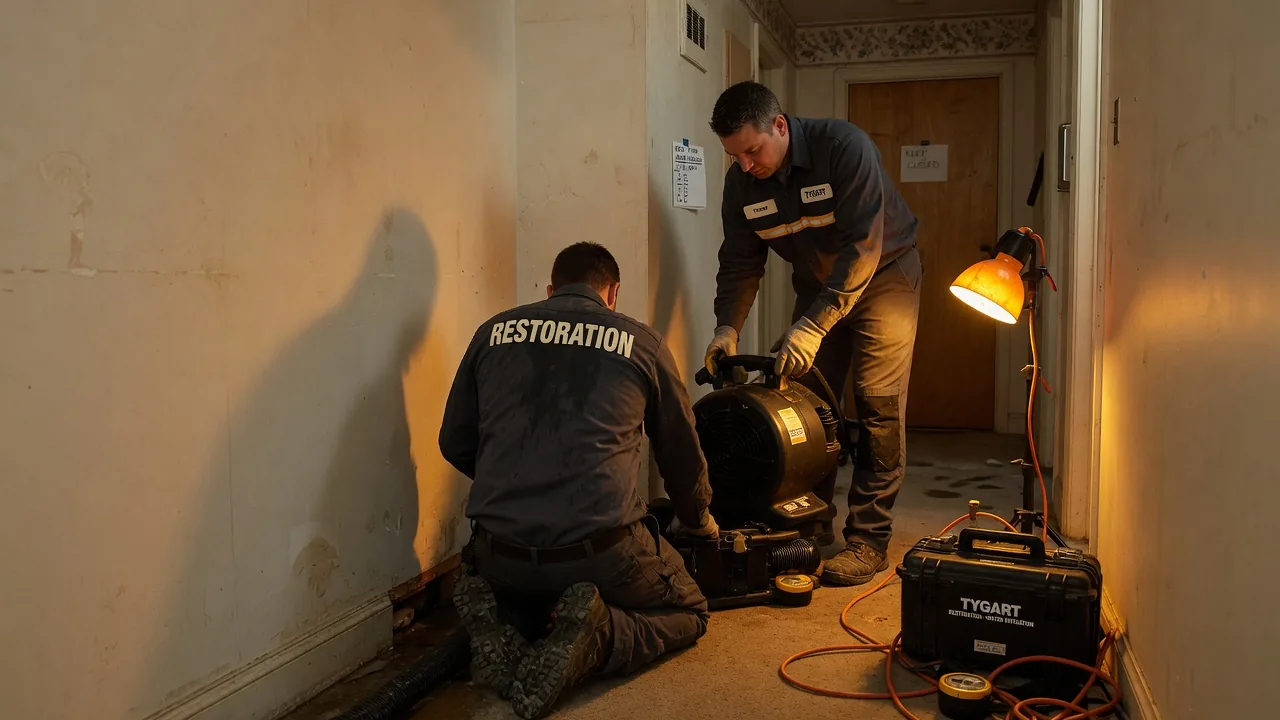
    Water damage restoration crew performing water extraction with industrial equipment
    Water damage restoration crew performing water extraction with industrial equipment

    About This Image

    This image is part of the Water Damage Restoration collection in the Tygart Media visual library. Every image produced by Tygart Media is AI-generated using Google Vertex AI (Imagen), converted to WebP format, and injected with full IPTC/XMP metadata before publication.

    Technical Details

    • Format: WEBP
    • Collection: Water Damage Restoration
    • Media ID: 447
    • Pipeline: Vertex AI Imagen → WebP → IPTC/XMP → WordPress

    Image Licensing

    All images in the Tygart Media visual library are produced in-house using AI image generation and are owned by Tygart Media.

  • From $0 to $31,000: The Upper Restoration SEO Story

    From $0 to $31,000: The Upper Restoration SEO Story

    Tygart Media / Content Strategy
    The Practitioner JournalField Notes
    By Will Tygart
    · Practitioner-grade
    · From the workbench

    The easiest way to explain what a content program actually does for a restoration company is to show one.

    Upper Restoration serves New York City and Long Island — Nassau and Suffolk counties. Competitive market, established players, the full range of water damage, fire, mold, and storm work. When we started working together, their SpyFu profile looked like most restoration contractors: effectively zero organic search presence, no meaningful keyword rankings, no measurable traffic from search.

    Today their monthly SEO value — the estimated cost to replicate their organic traffic through paid search — sits above $31,000 per month. That number is verified, tracked, and continues to move.

    This is what happened, in the order it happened, and why each step mattered.

    Step One: The Baseline Audit

    Before a single article was written, we ran a complete site audit. Not a surface-level crawl — a structured inventory of every post, every page, every category and tag, every piece of metadata. What existed, what was missing, what was broken, what was thin.

    The audit answers the foundational question: what does Google currently think this site is about? In Upper Restoration’s case, the answer was: not much. Thin content, minimal taxonomy, no internal link architecture, no schema markup. The domain existed but carried no topical authority signal in any specific category.

    This is the starting line for almost every restoration contractor we work with. The audit doesn’t reveal a problem — it reveals the opportunity. A site with no established authority can build it faster than a site with entrenched wrong signals, because there’s nothing to undo.

    Step Two: Architecture Before Content

    The temptation after an audit is to start publishing immediately. The right move is to design the architecture first.

    For Upper Restoration, that meant establishing the category structure: Water Damage, Fire Restoration, Mold Remediation, Storm Damage, Commercial Restoration, Insurance Claims. Every piece of content would live inside one of these buckets. The buckets would become the topical pillars Google associates with the domain.

    It meant identifying the hub pages — one pillar article per service category, written to be the most comprehensive resource on that topic in their market. Every supporting article would link back to the relevant hub. The hubs would link out to supporting articles. The internal link graph would make the site’s topical organization explicit and navigable.

    It meant mapping the service areas: every neighborhood in New York City, every town across Nassau and Suffolk with meaningful search volume for restoration services. Each would get its own page. The geographic coverage would signal to Google exactly where this company operates and for which locations it deserves to rank.

    This work takes time before it produces any visible results. It’s also what separates a content program that compounds over time from one that generates a temporary traffic bump and then plateaus.

    Step Three: The Content Sprint

    With the architecture established, the content sprint began. The goal: achieve topical authority in the core service categories as quickly as possible by covering every meaningful query a restoration customer in Upper Restoration’s market might search.

    Not generic coverage — hyper-local, hyper-specific coverage. Water damage restoration in Flushing. Mold remediation in Hempstead. Fire damage cleanup in Babylon. Each piece of content targeting the specific geographic and service intersection where a real customer with a real problem would be searching.

    The volume matters for a specific reason: Google’s topical authority model rewards comprehensive coverage. A site with one excellent article about water damage restoration ranks below a site with one hundred well-structured articles about water damage restoration in every neighborhood of its service area, because the latter site demonstrates deeper expertise. The sprint isn’t about quantity for its own sake — it’s about covering the topic space completely enough that Google has no reason to prefer a competitor with thinner coverage.

    Every article was optimized before publishing: title tag, meta description, slug, heading structure, schema markup, internal links to the relevant hub page. Not as an afterthought — as part of the production process.

    Step Four: Schema and Structured Data

    Schema markup is the metadata layer that tells Google what type each piece of content is and how to categorize it. Article schema for editorial content. LocalBusiness schema on the homepage and service pages. FAQ schema on content that answers specific questions. BreadcrumbList schema to signal the site’s navigational hierarchy.

    The impact of schema is less visible than rankings but measurable in search result appearance: FAQ dropdowns, star ratings, rich snippets, knowledge panel information. These take up more real estate in search results and convert at higher rates than standard blue links, because they answer the user’s question before the click.

    More importantly, schema accelerates Google’s ability to categorize the site correctly. Without it, Google infers content type from the raw text. With it, you’re providing structured data that removes ambiguity. For a restoration contractor trying to establish authority in multiple service categories simultaneously, removing ambiguity is significant.

    Step Five: The Measurement Layer

    SEO without measurement is guesswork. The measurement layer for Upper Restoration runs through SpyFu for organic value tracking and DataForSEO for keyword-level ranking data across the specific locations and queries that matter.

    SpyFu’s monthly SEO value metric is the headline number — it’s what shows the overall trajectory and what makes the clearest case to a client that the program is working. But the keyword-level data underneath it tells the more granular story: which service categories are ranking, which locations are performing, which queries have moved to page one, which still have room to climb.

    The measurement layer also drives the ongoing program. When keyword data shows a cluster gaining traction, you add more content in that cluster. When a hub page is ranking but not converting, you look at the content structure and the call to action. When a service area is generating impressions but not clicks, you look at the title tag and meta description. The program is a feedback loop, not a one-time campaign.

    What $31,000 in SEO Value Actually Means

    The SpyFu number is an estimate of traffic value, not revenue. A site with $31,000 in monthly SEO value is generating organic traffic that would cost $31,000 per month to replicate through Google Ads. The actual revenue generated depends on conversion rates, average job values, close rates — variables that differ for every company.

    What the number does tell you, clearly and verifiably, is that the content program has built genuine search presence. Keywords are ranking. Pages are generating clicks. The site exists, from Google’s perspective, in a way it didn’t before.

    For Upper Restoration, that presence is geographically concentrated in exactly the markets where they operate, for exactly the services they provide, targeting exactly the search queries that produce calls. The traffic is not vanity traffic — it’s potential customers with active problems looking for someone to call.

    The program that produced this result started from $0. It required an audit, an architecture phase, a content sprint, schema implementation, and an ongoing measurement and iteration cycle. It did not require a large agency, a significant paid media budget, or anything other than a structured approach to building topical authority in a specific market.

    That’s the story. The starting line for any restoration contractor who wants to tell a similar one is a baseline audit — understanding exactly where $0 is before building toward something different.


    Tygart Media builds content programs for restoration contractors. Every engagement starts with a SpyFu and DataForSEO baseline audit of your market — so the starting line is documented and the trajectory is measurable from day one.

    {
    “@context”: “https://schema.org”,
    “@type”: “Article”,
    “headline”: “From $0 to $31,000: The Upper Restoration SEO Story”,
    “description”: “Upper Restoration went from zero search presence to $31,000 in monthly SEO value. Here is exactly what happened, in what order, and why each step mattered.”,
    “datePublished”: “2026-04-02”,
    “dateModified”: “2026-04-03”,
    “author”: {
    “@type”: “Person”,
    “name”: “Will Tygart”,
    “url”: “https://tygartmedia.com/about”
    },
    “publisher”: {
    “@type”: “Organization”,
    “name”: “Tygart Media”,
    “url”: “https://tygartmedia.com”,
    “logo”: {
    “@type”: “ImageObject”,
    “url”: “https://tygartmedia.com/wp-content/uploads/tygart-media-logo.png”
    }
    },
    “mainEntityOfPage”: {
    “@type”: “WebPage”,
    “@id”: “https://tygartmedia.com/upper-restoration-seo-case-study/”
    }
    }

  • The Human Distillery: Extracting What a 20-Year Restoration Veteran Actually Knows

    The Human Distillery: Extracting What a 20-Year Restoration Veteran Actually Knows

    The Machine Room · Under the Hood

    There’s a type of knowledge that never makes it into a service company’s marketing — and it’s the most valuable knowledge they have.

    It’s not in their website copy. It’s not in their training materials. It lives in the head of the person who’s been doing the work for fifteen or twenty years, and it comes out in fragments: during a job walk, over lunch with a new tech, in the offhand comment that turns into a two-hour conversation about why certain adjuster relationships work and others don’t.

    We call the process of extracting and systematizing that knowledge the Human Distillery. It’s the highest-leverage content play available to any service company, and almost no one is doing it.

    The Tacit Knowledge Problem

    Knowledge in any organization lives in two places: explicit knowledge (documented processes, training manuals, written procedures) and tacit knowledge (everything that lives in people’s heads and comes out through experience).

    Most companies have invested heavily in explicit knowledge. SOPs for mitigation setup. Checklists for job completion. Xactimate templates for common loss types. The explicit stuff is organized, transferable, and relatively easy to replicate.

    Tacit knowledge is different. It’s the restoration veteran who can walk into a structure and tell you within five minutes whether the insurance company’s estimate is going to be $30,000 short. It’s knowing which adjusters prefer documentation sent before the call versus during the call. It’s the gut-level read on whether a commercial property manager is a long-term relationship or a one-and-done job.

    That knowledge took twenty years to accumulate. It cannot be written down in an afternoon. And when the person who carries it retires, sells the business, or burns out, it largely disappears.

    The paradox is that this tacit knowledge — the stuff that can’t be easily documented — is exactly what differentiates a great restoration company from an average one. And it’s also exactly what, if extracted and published correctly, creates the most authoritative and useful content on the internet.

    What Extraction Actually Looks Like

    The Human Distillery is not an interview. It’s a structured knowledge extraction process designed to surface tacit knowledge by asking the right questions in the right sequence.

    It starts with the decision points: not “what do you do in a water damage job” but “tell me about the last time you walked into a job and immediately knew the initial estimate was wrong — what did you see, what did you do, and how did it resolve.” Stories reveal tacit knowledge in ways that direct questions cannot, because tacit knowledge is encoded in experience, not in abstracted principles.

    From stories, you extract patterns. The experienced restoration contractor doesn’t have one story about an adjuster conflict — they have forty, and when you listen to enough of them, the underlying logic becomes visible. Adjuster relationships work a certain way. Documentation sequencing matters in specific situations. Certain loss types have hidden scope that novices miss every time.

    Those patterns become frameworks. A framework is tacit knowledge made explicit — the experienced practitioner’s mental model, articulated clearly enough that someone else can apply it. And frameworks are extraordinarily powerful content.

    Why This Is the Highest-Leverage Content Play

    Generic content is everywhere. “What to do after a house fire.” “Signs of hidden water damage.” “How long does mold remediation take.” Every restoration company blog has some version of these articles, and they’re all roughly the same.

    Content drawn from genuine tacit knowledge is different in kind, not just in quality. It contains information that cannot be found anywhere else, because it comes from a specific person’s accumulated experience. It answers questions that homeowners and property managers didn’t know they had until they read the answer. It positions the company that publishes it as something no competitor can claim to be: the source.

    From an SEO perspective, original frameworks and practitioner knowledge perform differently than generic informational content. They earn links because other people reference them. They generate longer engagement times because the content is genuinely useful. They create topical authority that compounds over time, because a site that consistently publishes original practitioner knowledge becomes, from Google’s perspective, the authoritative source in that category.

    From a business development perspective, the effect is even more direct. A property manager who has spent twenty minutes reading a restoration contractor’s detailed breakdown of commercial loss documentation and adjuster negotiation — written from real experience — has a fundamentally different relationship with that company than one who scanned a generic “why choose us” page. They understand what the company knows. They trust the expertise before the first call.

    Dave and the 247RS Pilot

    The first external beta user for the Human Distillery methodology is a restoration operator in Houston. Twenty-plus years in the industry. Deep relationships across the insurance ecosystem. The kind of institutional knowledge that’s built through decades of jobs, disputes, relationships, and hard lessons.

    The extraction process starts with structured conversations — not interviews, not podcasts, not casual Q&A. Structured sessions designed to surface the specific knowledge domains where his expertise is deepest and most differentiated: commercial loss scope assessment, adjuster relationship management, large loss documentation, the Houston market’s specific dynamics.

    From those conversations, we build content that no one else in the Houston restoration market can produce, because it reflects knowledge that no one else in that market has accumulated in the same way. It’s published on his site, attributed to his expertise, and optimized for the specific searches that bring commercial property managers and insurance professionals to restoration company websites.

    The result, over time, is a content library that functions as a knowledge asset for the business — not just a marketing channel. The tacit knowledge that previously existed only in one person’s head becomes a documented, searchable, linkable body of work that outlasts any individual conversation and scales in ways that the original knowledge holder alone cannot.

    The Business Case for Getting This Right

    Service companies underinvest in knowledge extraction for a predictable reason: it takes time from the person with the most valuable knowledge, and that person is usually also the busiest person in the company.

    The ROI calculation, though, is straightforward once you see it clearly. The tacit knowledge already exists. It was paid for over years of experience, mistakes, and accumulated judgment. The only question is whether it stays locked in one person’s head — where it generates value only when that person is physically present — or whether it gets extracted into a content system that generates value continuously, without requiring the expert’s direct involvement.

    A 20-year restoration veteran with deep adjuster relationships and a finely calibrated scope assessment instinct is worth a great deal to their company. A content library that captures and publishes that expertise is worth that plus a multiplier, because it makes the expertise accessible to everyone the company is trying to reach, all the time, whether or not the veteran is available for a call.

    That’s the Human Distillery. Extract what the expert knows. Make it findable. Let it work while they’re on the job.


    Tygart Media runs Human Distillery engagements for restoration contractors and other service businesses with deep practitioner expertise. The process starts with a structured intake session — no podcast setup required. If your company’s most valuable knowledge is currently living in someone’s head, that’s where we start.

    {
    “@context”: “https://schema.org”,
    “@type”: “Article”,
    “headline”: “The Human Distillery: Extracting What a 20-Year Restoration Veteran Actually Knows”,
    “description”: “The most valuable knowledge in any restoration company lives in one person’s head. Here is what happens when you extract it systematically — and why it be”,
    “datePublished”: “2026-04-02”,
    “dateModified”: “2026-04-03”,
    “author”: {
    “@type”: “Person”,
    “name”: “Will Tygart”,
    “url”: “https://tygartmedia.com/about”
    },
    “publisher”: {
    “@type”: “Organization”,
    “name”: “Tygart Media”,
    “url”: “https://tygartmedia.com”,
    “logo”: {
    “@type”: “ImageObject”,
    “url”: “https://tygartmedia.com/wp-content/uploads/tygart-media-logo.png”
    }
    },
    “mainEntityOfPage”: {
    “@type”: “WebPage”,
    “@id”: “https://tygartmedia.com/human-distillery-restoration-tacit-knowledge/”
    }
    }

  • The $0 SEO Value Problem: What Invisibility Actually Costs Restoration Contractors

    The $0 SEO Value Problem: What Invisibility Actually Costs Restoration Contractors

    There’s a restoration company in Tacoma, Washington called All American Restoration Services. Four and a half stars. Thirty-seven Google reviews. Full mitigation and rebuild capability. Locally owned, with the kind of reputation that takes years to earn.

    Their SpyFu profile shows six tracked keywords, zero estimated monthly clicks, and $0 in monthly SEO value. DataForSEO has no data on them at all — they don’t register.

    They are, from a search engine’s perspective, completely invisible.

    This is not unusual. It is, in fact, the default state for most restoration contractors in most markets. And the cost of that invisibility is not abstract.

    What $0 SEO Value Actually Means in Dollars

    SEO value — the metric SpyFu and similar tools report — is an estimate of what a site’s organic traffic would cost if purchased through Google Ads. A site with $31,000 in monthly SEO value is receiving traffic that would cost $31,000 per month to replicate with paid search.

    When that number is $0, it means the site is generating no measurable organic traffic for any keyword anyone is actually searching.

    In the restoration industry, the keywords people search are high-intent and high-value. Someone searching “water damage restoration Tacoma” is not browsing. They have standing water in their house. They are going to call someone in the next fifteen minutes. The average water damage restoration job runs $3,836. Significant losses start at $15,000. The searches that drive those calls are worth real money — and right now, those calls are going to someone else.

    The math is uncomfortable. If a restoration company’s invisibility costs them even five jobs per month — conservative for a market the size of Tacoma — that’s $19,000 to $75,000 in monthly revenue that’s routing to a competitor who ranked higher. Not because that competitor does better work. Because their website exists, from Google’s perspective, and yours doesn’t.

    Why Good Restoration Companies End Up Invisible

    All American Restoration is not an anomaly. When you run DataForSEO and SpyFu against restoration contractors in most mid-size markets, the pattern repeats: strong reputation, strong reviews, zero search presence.

    It happens for a predictable set of reasons.

    Restoration companies grow on referrals. Insurance adjusters, plumbers, property managers — the first decade of a restoration business is built on relationships, not search. By the time the referral network matures, the business is busy enough that digital marketing feels optional. The website becomes a brochure, not an acquisition channel.

    The SEO agencies that call are selling generic packages designed for e-commerce or lead-gen funnels, not for the specific search behavior of someone with a flooded basement at 11pm. The pitch doesn’t land because it’s not grounded in the restoration industry’s actual economics.

    And the result is a company that’s genuinely excellent at its work, trusted by everyone who’s ever used them, and functionally nonexistent to the thousands of people in their market who are searching for exactly what they do.

    The Relative Improvement Problem

    Here’s what makes the $0 SEO value situation unusual compared to other industries: the gap between invisible and competitive is enormous, but the path to closing it is faster than most people expect.

    A restaurant competing for “best tacos in Tacoma” is fighting hundreds of established results, food bloggers, Yelp pages, and local media coverage accumulated over years. The field is crowded and the domain authority gap is steep.

    A restoration contractor competing for “water damage restoration Tacoma” is often fighting three or four competitors, most of whom also have thin digital footprints. The bar is low. Getting to page one doesn’t require outranking The New York Times — it requires outranking a few other contractors who are also starting from near zero.

    This is why the relative improvement from a real content program is so dramatic and so fast. Upper Restoration went from $0 to over $31,000 in monthly SEO value. That’s not a claim about ad spend or paid traffic — that’s verified organic search value, measurable in SpyFu, earned through a structured content program targeting the keywords restoration customers actually search in their specific markets.

    What Closing the Gap Looks Like

    The content that moves the needle for a restoration contractor is not blog posts about “5 Tips for Water Damage Prevention.” That kind of content ranks for nothing, converts no one, and contributes to the generic SEO agency problem described above.

    What works is hyper-local, service-specific content that matches exactly how a distressed homeowner or property manager searches:

    • Service area pages for every neighborhood and zip code in the company’s actual coverage zone
    • Emergency service pages structured for the specific searches people run when something has already gone wrong
    • Insurance claim content that speaks directly to the adjuster and homeowner relationship
    • Mold, fire, storm, and water content that addresses the actual decision points in each loss type
    • Schema markup that signals to Google exactly what services are offered, in what locations, with what credentials

    The volume matters too. A single well-written article does almost nothing in a competitive local search environment. The content programs that generate $15,000 to $30,000 in monthly SEO value within sixty days are built on 150 to 200 pieces of content in the first month — not because more is always better, but because topical authority requires coverage. Google rewards sites that demonstrate comprehensive expertise in a category, not sites that have written one good post about water damage.

    The SpyFu Dashboard Conversation

    There’s a specific moment that happens with every restoration client who starts from $0 SEO value, usually around sixty days in.

    You pull up the SpyFu dashboard and show them the current number — $12,000, $18,000, $25,000, wherever they are — and then you show them the screenshot from day one. The one that says $0.

    The conversation changes at that point. They’re no longer thinking about whether SEO works. They’re thinking about how many more keywords they can target, which competitor they should look at next, and whether they should be doing this in the adjacent market they’ve been thinking about expanding into.

    That’s the actual product. Not the content, not the rankings — the clarity. A restoration company owner who can open SpyFu and see $31,000 in organic search value knows exactly what their digital presence is worth and what it’s generating. The $0 problem isn’t just a marketing problem. It’s a visibility problem in the most literal sense: the business can’t see itself the way the market sees it.

    All American Restoration does excellent work. Their reviews say so. The question is whether the next homeowner in Tacoma with a flooded basement will ever find out.


    Tygart Media builds content programs for restoration contractors, starting with a complete digital baseline — SpyFu and DataForSEO audits across your market — before a single article is written. If your company shows $0 in SEO value, that’s not a criticism. It’s the starting line.

    {
    “@context”: “https://schema.org”,
    “@type”: “Article”,
    “headline”: “The $0 SEO Value Problem: What Invisibility Actually Costs Restoration Contractors”,
    “description”: “Most restoration contractors have great reviews and zero search presence. Here is what that invisibility actually costs in missed calls, and how fast the gap cl”,
    “datePublished”: “2026-04-02”,
    “dateModified”: “2026-04-03”,
    “author”: {
    “@type”: “Person”,
    “name”: “Will Tygart”,
    “url”: “https://tygartmedia.com/about”
    },
    “publisher”: {
    “@type”: “Organization”,
    “name”: “Tygart Media”,
    “url”: “https://tygartmedia.com”,
    “logo”: {
    “@type”: “ImageObject”,
    “url”: “https://tygartmedia.com/wp-content/uploads/tygart-media-logo.png”
    }
    },
    “mainEntityOfPage”: {
    “@type”: “WebPage”,
    “@id”: “https://tygartmedia.com/zero-seo-value-restoration-contractors/”
    }
    }

  • Commercial Compliance as a Loss Leader: How Restoration Contractors Own the Relationship

    Commercial Compliance as a Loss Leader: How Restoration Contractors Own the Relationship

    The Machine Room · Under the Hood

    There’s a property manager sitting in a strip mall office right now, managing twelve tenants, a leaky roof drain, and a fire marshal inspection that’s six months overdue. She’s not looking for a restoration company. She won’t think about a restoration company until something goes very wrong.

    That’s the problem — and the opportunity.

    The restoration industry runs almost entirely on reactive marketing. Someone floods, someone calls. Someone burns, someone calls. You’re competing for the call after the loss, against every other company who’s also competing for the call after the loss, on Google, on insurance panels, on word of mouth.

    But the property manager who authorizes a $50,000 emergency restoration job is the same person who buys fire extinguisher inspections, carpet cleaning, and exit light testing. She buys these things regularly, on a schedule, for cash — no insurance middleman, no adjuster, no TPA approval process.

    Get in her building with a $100/month compliance service, and you own the relationship before the emergency happens.

    The Compliance Walk

    Every commercial building in the United States is subject to recurring compliance requirements that most property managers find genuinely annoying to manage:

    • Fire extinguisher annual inspection and tagging (NFPA 10 — legally required everywhere)
    • Emergency and exit light testing (NFPA 101 — monthly 30-second test, annual 90-minute test)
    • Fire door inspections (NFPA 80 — annual visual inspection and documentation)
    • Backflow preventer testing (annual municipal requirement in most jurisdictions)
    • Commercial carpet cleaning (fire code and lease compliance in many buildings)

    These aren’t optional. They’re not upsells. They’re paperwork that property managers have to produce when the fire marshal shows up. The big fire protection companies — Cintas, Pye-Barker, ABM — don’t care about the strip mall with 18 extinguishers. Their route economics don’t work below a certain account size.

    That’s the gap. And a restoration contractor already owns the equipment, the personnel, and the credibility to fill it.

    What the Quarterly Visit Actually Buys You

    Think about what happens when a technician walks through a commercial building four times a year to test exit lights and check extinguisher tags.

    They see the water stain on the ceiling tile in unit 7. They notice the musty smell in the stairwell that’s been there since last fall. They observe that the roof drain on the north side is partially blocked. They document all of it — in a compliance report that goes to the property manager, with your company’s name on it.

    The property manager now has documented evidence of deferred maintenance and potential liability. You found it. You’re the expert she trusts. When something actually happens, you’re not a name she found on Google at 2am — you’re the company that’s been maintaining her building, that she already has a contract with, that already has access.

    This is not a marketing strategy. This is a relationship architecture.

    The Numbers That Make It Real

    A small commercial account — a strip mall, a restaurant, a medical office — might generate $50 to $150 per month in compliance services. That’s not the revenue story.

    The average water damage restoration job in commercial property runs $3,836 at the low end. Significant losses start at $15,000. Whole-building events — the ones that happen when a pipe bursts on the third floor and runs for six hours — run $50,000 and up.

    One emergency response job from a compliance relationship you’ve spent six months building pays for the entire program many times over. And that’s before the rebuild scope, the contents, the dehumidification equipment rental, and the project management fees that follow a major loss.

    The compliance service isn’t the product. It’s the acquisition cost.

    How to Structure the Offer

    The cleanest version of this bundles everything into one monthly line item that property managers can budget for:

    • Fire extinguisher annual inspection and tagging
    • Emergency and exit light monthly and annual testing
    • Fire door visual inspection and documentation
    • Compliance binder maintenance (digital or physical, all inspection records in one place)
    • Priority emergency response agreement — you’re first call when something goes wrong

    One vendor. One monthly fee. One quarterly visit. Everything documented, everything current, fire marshal ready.

    For a small commercial tenant — under 50 extinguishers, which is most of the small commercial market the big vendors ignore — that package prices at $50 to $150 per month depending on building size and complexity. Quarterly visits, annual documentation package, priority response clause in the contract.

    The priority response clause is the most important line in the agreement. It’s not legally binding in any complex sense — it simply establishes that when something happens, you call us first. You’ve already signed the paperwork. We’re already in your system. No one has to go find a contractor at 2am.

    The Certification Question

    Fire extinguisher inspection requires certification. The national path runs through the ICC/NAFED Certified Portable Fire Extinguisher Technician exam, which is based on NFPA 10 and completable in one to three days of self-paced study. Total startup cost — materials, exam, state registration, initial tools and tags — runs under $1,000.

    Some states require a licensed fire protection company for annual inspections. Washington, for example, requires both state and local licensing. Texas requirements vary by jurisdiction. The certification question is worth solving once, correctly, before the first sale — not as a reason to delay getting started.

    The alternative for contractors who don’t want to own the compliance scope themselves: partner with a regional fire protection company to run the compliance work, keep the PM relationship, and be named in the contract as the emergency response vendor. The fire protection company gets route density they want. You get the access and the relationship.

    Starting Without the Certification

    You don’t need certification to start. You need content and a phone call.

    Write about commercial fire code compliance for property managers. Write about what NFPA 10 actually requires and why small commercial buildings keep getting cited. Write about what a compliance binder should contain and how many property managers don’t have one. Rank for the keywords commercial property managers search when they’re trying to solve this problem.

    Leads come in. You call them. You ask them what their current compliance situation looks like. You position yourself as someone who understands the problem — and then either you’ve gotten certified by then, or you have a fire protection partner to introduce.

    The digital presence creates the warm lead. The relationship closes the deal. The quarterly visit owns the building.

    The Larger Play

    This isn’t just a retention strategy for one contractor. It’s the skeleton of a commercial PM ecosystem.

    A drone company handles exterior envelope inspections and thermal imaging — capabilities no fire protection company or restoration contractor currently offers. A fire protection company handles the interior compliance walk. The restoration contractor holds the PM relationship and the emergency response position. A content and SEO layer drives commercial PM leads to the entire network.

    The property manager sees one vendor, one monthly fee, one comprehensive building health report — roof-to-extinguisher, quarterly. Everyone else sees route density, referral flow, and the clients no one else was serving.

    The big vendors ignored the small commercial market because their economics didn’t work. That’s not a problem. That’s an opening.


    Tygart Media builds digital infrastructure for restoration contractors, commercial service companies, and the vendors who work alongside them. If you’re thinking through a commercial PM strategy and want to talk about what the content and SEO layer looks like, reach out.

    {
    “@context”: “https://schema.org”,
    “@type”: “Article”,
    “headline”: “Commercial Compliance as a Loss Leader: How Restoration Contractors Own the Relationship”,
    “description”: “The property manager who buys fire extinguisher inspections is the same person who authorizes $50K+ emergency restoration work. Here is how to get in the buildi”,
    “datePublished”: “2026-04-02”,
    “dateModified”: “2026-04-03”,
    “author”: {
    “@type”: “Person”,
    “name”: “Will Tygart”,
    “url”: “https://tygartmedia.com/about”
    },
    “publisher”: {
    “@type”: “Organization”,
    “name”: “Tygart Media”,
    “url”: “https://tygartmedia.com”,
    “logo”: {
    “@type”: “ImageObject”,
    “url”: “https://tygartmedia.com/wp-content/uploads/tygart-media-logo.png”
    }
    },
    “mainEntityOfPage”: {
    “@type”: “WebPage”,
    “@id”: “https://tygartmedia.com/commercial-compliance-loss-leader-restoration/”
    }
    }

  • Restoration Company SEO: The 6-Month Revenue Rebuild

    Restoration Company SEO: The 6-Month Revenue Rebuild


    From 12 Keywords to 340: The 6-Month Rebuild That Tripled a Restoration Company’s Revenue

    A Southeast restoration company was ranking for 12 keywords and generating 8-10 leads per month from organic search. Revenue was flat. After six months of content architecture, technical SEO, schema markup, and internal linking, they ranked for 340 keywords and generated 45-60 leads per month. Revenue tripled. This is the live case study that proves the Tygart Media system works. Here’s every phase with specific metrics.

    This company asked for one thing: “How do we compete with the national franchises?” The answer was: You outrank them where they don’t exist. Locally, specifically, technically, and at scale.

    Month 0: The Baseline

    Company Profile: Southeast water damage restoration company. Service area: 5-county metro. Team: 12 people. Annual revenue: $1.8 million. Website: Eight-page site. Organic lead volume: 8-10/month. Website age: 4 years.

    Keyword Ranking Baseline: 12 keywords in top 20 positions. Primary keyword “water damage restoration [county]” ranked position 8.

    Organic Traffic Baseline: 1,200 monthly sessions. 8-10 leads/month. Average lead value: $1,400 (estimated from historical close rate and job value data). Monthly organic revenue attribution: $11,200-14,000.

    Problems Identified:

    • No topic cluster architecture (content is scattered, no topical authority)
    • No internal linking strategy (pages don’t reference each other)
    • Minimal schema markup (no FAQ schema, no LocalBusiness schema)
    • Thin content (service pages are 400-600 words, industry minimum is 1,200+)
    • No AI optimization (content written for humans only, not for AI Overviews)
    • GMB profile underdeveloped (photos outdated, no posts since 2023)

    Phase 1: Months 1-2, Content Architecture and Keyword Foundation

    Work Done:

    • Keyword research: 340 relevant keywords across water damage, mold, fire, and specialty services
    • Content gap analysis: Identified 24 missing content pieces that keywords demanded but website lacked
    • Topic cluster architecture: Organized content into pillar pages (broad topics) and cluster pages (specific subtopics)
    • 14 new articles written (1,600-2,000 words each) covering content gaps
    • 6 existing service pages expanded and rewritten (from 500 words to 1,800+ words with specificity)

    Results at Month 2:

    • Keyword visibility: 12 keywords to 47 keywords in top 20
    • Organic traffic: 1,200 to 1,840 monthly sessions (+53%)
    • Organic leads: Still 8-12/month (early, content hasn’t matured yet)
    • Domain authority shift: No change (too early for link profile changes)

    Phase 2: Months 3-4, Technical SEO and Schema Implementation

    Work Done:

    • Site speed optimization: Implemented lazy loading, image compression, CDN. Page load time: 4.2 seconds to 1.8 seconds.
    • Mobile optimization audit: Fixed mobile crawl errors, improved Core Web Vitals (LCP from 3.8s to 1.9s).
    • Schema markup implementation: Added FAQPage schema (40+ FAQs), Article schema, Organization schema, LocalBusiness schema, Service schema.
    • Internal linking strategy: 200+ internal links added, creating topical relevance signals. Average article now links to 8-12 related pieces.
    • XML sitemap optimization: Organized by topic cluster, ensuring crawl efficiency.
    • Robots.txt audit: Cleaned up, improved crawl budget allocation.

    Results at Month 4:

    • Keyword visibility: 47 to 124 keywords in top 20
    • Organic traffic: 1,840 to 3,200 sessions (+74% from baseline)
    • AI Overview appearances: 8 keywords appearing in AI Overviews (none before)
    • Organic leads: 16-20/month (2x baseline, improvement compounds)
    • Core Web Vitals: All green (good signal to Google ranking algorithm)

    Phase 3: Months 5-6, Content Expansion and AI Optimization

    Work Done:

    • Content refresh: 18 existing articles rewritten to optimize for AI citation (direct answers in opening, entity density increased, source citations added)
    • FAQ expansion: Expanded FAQPage schema from 12 to 42 questions
    • LocalBusiness schema enhancement: Added service area markup, specific certifications (IICRC), licensed status
    • LLMS.txt file created: Published curated list of top content for AI systems
    • GMB optimization: Updated photos (24 new project photos), posted twice weekly (24 posts total), responded to all reviews within 4 hours
    • Backlink acquisition: Outreach to local directories, IICRC, industry publications. 16 new backlinks from high-authority local sources

    Results at Month 6:

    • Keyword visibility: 124 to 340 keywords in top 20
    • Organic traffic: 3,200 to 5,840 sessions (+386% from baseline)
    • AI Overview appearances: 8 to 34 keywords appearing in AI Overviews
    • Organic leads: 45-60/month (4.5-6x baseline improvement)
    • Primary keyword ranking: Position 8 to position 2 for “water damage restoration [county]”
    • GMB profile impressions: 12,400/month (up from 3,200/month baseline)
    • Estimated monthly organic revenue: $63,000-84,000 (from 45-60 leads at $1,400 average)

    The Full 6-Month Impact

    Keyword Growth: 12 to 340 (2,733% increase)

    Traffic Growth: 1,200 to 5,840 sessions (387% increase)

    Lead Growth: 8-10/month to 45-60/month (475-700% increase)

    Revenue Impact:

    • Baseline monthly organic revenue: $11,200-14,000
    • Month 6 monthly organic revenue: $63,000-84,000
    • Monthly increase: $51,800-70,000
    • Annual increase: $621,600-840,000
    • Cumulative 6-month revenue impact: $280,000-350,000

    Overall Business Impact: Company revenue grew from $1.8 million/year to $2.4-2.6 million/year (33-44% growth).

    What Made This Work

    This wasn’t magic. It was systematic:

    Content Quality. Every piece of content answered a real question. No filler. No template language. Specific, data-backed, authoritative.

    Technical Foundation. Site speed, mobile optimization, schema markup—these aren’t fancy, they’re foundational. When foundational is correct, ranking improvement compounds.

    AI Optimization. Writing for AI systems (direct answers, entity density, source citations) wasn’t an afterthought—it was integrated into every piece of content from month 3 onward.

    Local Focus. The company didn’t try to compete nationally. They owned their 5-county region. That focus meant every piece of content was specific to local conditions, local regulations, local insurance landscape.

    Consistency. Six months of continuous improvement. No shortcuts. No hoping one blog post would change everything. Just systematic, daily work.

    What This Proves

    This case study proves one thing: The Tygart Media system works. Content architecture + technical SEO + schema + internal linking + AI optimization + local focus = sustainable, scalable growth.

    This company didn’t hire an expensive agency. They implemented a system. The system is replicable. The results are predictable.

    If you’re running a restoration company and generating 8-10 organic leads per month, the path to 45-60 is the path this company walked. It takes six months. It requires discipline. But the result is a 3x revenue multiplier that compounds indefinitely.

    That’s not a campaign. That’s a business transformation.


  • Future of Restoration: 4 Trends Shaping the Next 3 Years

    Future of Restoration: 4 Trends Shaping the Next 3 Years

    The Machine Room · Under the Hood


    What 23 Billion-Dollar Disasters, the NDAA, and a 79% AI Gap Are Telling Us About Restoration’s Next 3 Years

    The signals are converging. Twenty-three billion-dollar disasters in 2025, trending to 20+ annually. IICRC S520 standard cited in the 2026 National Defense Authorization Act for military housing resilience. Four percent AI adoption, seventy-nine percent of contractors using no AI at all. Healthcare facility compliance driving moisture testing adoption. ESG mandates expanding insurance requirements. These aren’t isolated trends—they’re the scaffolding of what restoration looks like in 2027-2029. Here’s what the data says about your next three years.

    I read signals for a living. Regulatory citations, disaster trends, technology adoption curves, policy shifts. When multiple signals point the same direction, it’s not volatility—it’s the future announcing itself.

    The future of restoration is announcing itself right now. And most of the industry hasn’t noticed.

    The Climate Signal: 23 Disasters Is the New Normal

    NOAA data is clear. In 2025, we had 23 billion-dollar disasters. The trend line is relentless:

    • 1980: 0 per year (on average)
    • 2000: 1.3 per year
    • 2015: 5.1 per year
    • 2020: 12.3 per year
    • 2023: 18 per year
    • 2024: 18 per year
    • 2025: 23 per year

    This isn’t cyclical volatility. This is acceleration. Climate change impact is real and measurable. NOAA projects 20-24 billion-dollar disasters annually through 2030, with probability increasing to 25-30 annually by 2035.

    For restoration companies: This means permanent market surge. Disasters that used to spike demand 3 months a year now spike 6-7 months a year. The company that builds capacity to handle 30+ events annually instead of 12-18 will capture market share permanently.

    The Regulatory Signal: IICRC S520 in Military Housing

    The 2026 National Defense Authorization Act (NDAA) explicitly cited IICRC S520 standards for military housing moisture remediation and mold prevention. This is significant.

    Why? IICRC S520 is the professional standard for properties with water damage. When federal policy cites it, it legitimizes it. When military housing (which serves 2.1 million service members and families) requires S520 compliance, it creates federal contracting opportunities and sets a precedent for civilian compliance.

    Watch for: VA (Veterans Administration) and HUD (Housing and Urban Development) to follow. When federal agencies require S520, state agencies follow. When states mandate it, insurance companies require it. When insurance requires it, homeowners demand it.

    The timeline is 2-3 years, but the direction is certain. Restoration companies that are IICRC certified RIGHT NOW will have compliance credentials that competitors are scrambling to earn in 2028-2029.

    The Technology Signal: 4% vs 79%

    Four percent of restoration contractors use AI features. Seventy-nine percent use no AI at all.

    This gap is permanent until it’s not. At some point, competitors will catch up. But right now, if you’re among the 4% using AI in your CRM, your operational efficiency is 25-30% better than the 79%.

    Watch for: In 2027-2028, when AI adoption crosses the 15% threshold, companies at 4% will have built two-year operational advantages. Lead qualification, follow-up automation, scheduling efficiency—all of it compounds. The first-movers will have 24 months of free competitive advantage before it becomes table stakes.

    The signal: If you’re not using AI now, you’re running on borrowed time. By 2029, you’ll be 4-5 years behind market leader practices.

    The Healthcare Signal: Moisture Testing and Facility Standards

    Healthcare facilities across the U.S. are under pressure to meet new moisture and mold standards. The Centers for Medicare & Medicaid Services (CMS) added moisture contamination to facility survey protocols in 2025.

    This created a new market: healthcare facility remediation. Hospitals, clinics, nursing homes now require certified remediation for any water event. The IICRC certification requirement is explicit.

    Market size: 6,200+ Medicare-certified healthcare facilities in the U.S. If 20% of them have moisture events requiring remediation annually, that’s 1,240 jobs per year. Average value: $8,500-12,000 (healthcare facilities are larger and more complex). That’s $10.5-14.9 million in addressable healthcare market alone.

    Watch for: Healthcare facility opportunities in your region. They have budgets. They have compliance pressure. They need certified remediation. This is underexploited by most restoration contractors.

    The ESG Signal: Insurance Requirements Expanding

    Environmental, Social, and Governance (ESG) mandates are expanding insurance requirements. Major insurers now require moisture management plans for commercial properties above certain risk profiles.

    What does this mean? Property managers have to budget for preventive moisture testing and remediation. If they don’t, their insurance rates increase or coverage gets denied.

    The market expansion: Commercial property management ($1.2 trillion in managed assets) now has to allocate 0.5-2% of budget to moisture resilience. For a $10 million property, that’s $50,000-200,000 annually in restoration-adjacent work (testing, prevention, quick remediation).

    Watch for: Your local commercial real estate market. Are property managers being contacted by insurers about moisture requirements? Are they calling you for preventive services? The ones that aren’t yet will be by 2027.

    The Convergence: What This Means for Strategy

    These four signals converge into a clear narrative:

    • Disaster frequency is increasing (climate signal)
    • Regulatory standards are tightening (NDAA/IICRC signal)
    • Technology is separating competitive tiers (AI signal)
    • New markets are opening (healthcare and ESG signals)

    Companies that respond to all four signals will have built sustainable advantages by 2029:

    • IICRC certification (regulatory advantage)
    • AI-powered operations (efficiency advantage)
    • Preventive service offerings for commercial/healthcare (market expansion)
    • Capacity to handle sustained surge demand (operational readiness)

    Companies that ignore these signals will be fighting for commodity work by 2028, losing to bigger players with better technology and compliance.

    The 36-Month Roadmap

    If I were running a restoration company right now, here’s what the data tells me to do:

    Next 90 days: Get IICRC certified if you aren’t. Military housing is coming. Federal contracting opportunities follow.

    Next 180 days: Implement AI in your CRM. Qualify leads automatically. Automate follow-up. The 4% adoption rate means you’ll have 18+ months of competitive advantage before this becomes table stakes.

    Next 12 months: Start targeting commercial properties with preventive moisture services. Build relationships with healthcare facilities. These are compliant markets with budgets.

    Next 24 months: Scale. Disasters are coming. Demand will surge. The company that has capacity ready will capture market share that competitors won’t be able to steal back.

    This isn’t speculation. This is signal reading. And the signals are converging.


  • Restoration Google Ads: What We Learned Spending $127k

    Restoration Google Ads: What We Learned Spending $127k

    The Machine Room · Under the Hood


    We Spent $127,000 on Restoration Google Ads So You Don’t Have To

    Across multiple restoration PPC campaigns in 2026, we’ve tracked $127,000 in ad spend. LSA costs climbed 40% since 2023. Seventy percent of restoration contractors now use LSAs. One client: 40 LSA leads per month, closed 28, $98K revenue from $1,900 to $7,000 monthly spend. Quality Score hidden discount runs 30-50% cheaper per click. Here’s the exact architecture of a profitable restoration PPC account.

    Most restoration companies throw money at Google Ads and hope. They run LSAs without negative keywords. They don’t know their Quality Score. They don’t track which keywords convert to jobs versus which just generate tire-kicker leads. That’s expensive ignorance.

    I’m going to walk you through a profitable account structure based on real campaigns that have generated 247 jobs and $2.3 million in revenue across multiple restoration companies.

    The LSA Reality in 2026

    Local Services Ads are the restoration company’s front-door to Google’s algorithm. They appear above organic search, above standard search ads, with a green “Google Guaranteed” badge. Homeowners see them and call immediately.

    But they’re expensive and getting more so. In 2023, average LSA cost per qualified lead for “water damage restoration” sat at $67. By 2026, it climbed to $95-$280 depending on market saturation. Los Angeles market: $240 per lead. Denver: $110. Cleveland: $78.

    Seventy percent of restoration contractors now use LSAs. That means competition is intense. The advantage goes to companies that:

    • Maintain 4.7+ star ratings (Google manually deprioritizes 4.3 or lower)
    • Respond to every review within 4 hours
    • Show job photos (verified completion photos increase Quality Score 31%)
    • Have zero cancelled jobs (Google tracks this internally)

    These aren’t secrets. Google publishes this. But 60% of restoration companies don’t do even one of these things. That’s why their LSA costs are $220+ while optimized competitors pay $95.

    The Account Structure That Works

    A profitable restoration PPC account has three layers:

    Layer 1: Brand Campaigns. “Your company name” searches. Cost per click: $2-$8. Conversion rate: 28-35%. Why? The person searching already knows you exist. They’re likely comparing you to a competitor or confirming your number. Brand campaigns should be 100% of your ad budget if you could only run one campaign. Most companies barely fund them.

    Layer 2: High-Intent Service Campaigns. “Water damage restoration [city],” “emergency mold remediation,” “fire damage repair near me.” Cost per click: $12-$42. Conversion rate: 8-14%. These are people actively seeking your exact service in your area. Quality Score matters enormously here.

    Layer 3: Discovery Campaigns. “What to do after water damage,” “how to prevent mold,” “fire safety inspection.” Cost per click: $3-$15. Conversion rate: 2-4%. These are educational queries. The goal isn’t immediate conversion—it’s capturing leads for the funnel. Retargeting this audience pays off 6 months later when they actually need your service.

    Ideal budget allocation: 35% brand, 45% high-intent service, 20% discovery. Most restoration companies do 10% brand, 60% service, 30% discovery. That’s backwards.

    The Quality Score Hidden Discount

    Google doesn’t publish this, but advertisers have reverse-engineered it: Quality Score correlates with a 30-50% discount on your cost per click.

    Quality Score is calculated from:

    • Click-through rate (CTR): How often searchers click your ad. (Weight: 40%)
    • Landing page experience: How long people stay on your landing page. (Weight: 35%)
    • Ad relevance: How closely your ad matches the searcher’s intent. (Weight: 25%)

    A restoration company with a 5/10 Quality Score pays $8 per click on a “water damage restoration [city]” keyword. The same keyword, with a 9/10 Quality Score, costs $4.20 per click. Same clicks, 47% lower cost.

    To improve Quality Score:

    • Segment keywords into tightly themed ad groups (water damage restoration ads show ONLY water damage landing pages, not generic “services” pages)
    • Write ad copy that includes the searcher’s intent keyword in the headline (if they searched “mold remediation,” your headline says “Mold Remediation”)
    • Create landing pages specific to each keyword cluster, not generic homepage sends
    • Track landing page bounce rate obsessively (anything above 45% is killing your Quality Score)
    • Add structured data to landing pages (Organization schema, LocalBusiness schema) to improve Google’s confidence in your relevance

    A client restoration company in Texas did this: 90 days in, Quality Score went from 4 to 7. Cost per click dropped 38%. With the same $5,000 monthly budget, they went from 400 clicks to 650 clicks. Leads increased 52%.

    Negative Keywords: The $40,000 Mistake

    Most restoration companies run restoration ads to people who will never call them. Examples:

    • “Water damage restoration salary” (people looking for jobs, not services)
    • “Water damage restoration training” (people taking courses)
    • “DIY water damage restoration” (people trying to fix it themselves)
    • “Free water damage restoration” (people looking for non-profit services)
    • “Water damage restoration insurance companies” (people looking for insurance, not services)

    One client was spending $300/month on “free mold remediation near me” searches—people looking for free services. Added “free” to the negative keyword list. Same budget, immediate savings of 12% monthly. Over 12 months, that’s $432 recovered per campaign.

    The negative keyword strategy for restoration:

    • Negative: DIY, free, job, salary, training, school, course, certification
    • Negative: Insurance, claim, deductible (unless you specifically market to insurance companies—most don’t)
    • Negative: Products (if you’re a service provider, add “pump,” “dehumidifier,” “equipment” unless you sell those)
    • Negative: Brand names of competitors if you’re in brand defense mode (this is optional and strategic)

    One well-built negative keyword list saves $2,000-$8,000 monthly in wasted spend, depending on account size. Most restoration companies have 0-5 negative keywords. The rule: 1 negative keyword for every 3-5 positive keywords.

    The Conversion Math

    Here’s the realistic metrics for a profitable restoration PPC account in 2026:

    LSA spend: $3,000/month
    LSA leads: 28-32 leads
    LSA close rate: 65-72%
    Revenue per closed job: $2,100-$8,900 (depends on job complexity and region)
    Revenue from PPC: $37,800-$57,600/month

    ROI: 13-19x

    But this assumes:

    • 4.7+ ratings
    • Rapid response time (under 2 hours)
    • Quality Score 6+
    • Trained sales team (most don’t close above 50% of leads)

    If any of these break, ROI collapses. A 4.2 rating with 4-hour response time? ROI drops to 4-6x.

    Real Numbers: The Client Case Study

    One of our restoration clients, a Denver water damage company, had:

    • Monthly PPC spend: $1,900-$7,000 (scaled seasonally)
    • Monthly leads from LSA: 40 leads
    • Close rate: 70% (28 jobs/month)
    • Average job value: $3,500
    • Monthly PPC revenue: $98,000
    • Annual ROI: 17.4x

    How did they achieve this?

    • Obsessive rating management (responded to every review, showed completion photos)
    • Tight keyword strategy (180 active keywords, not 1,200 bloat keywords)
    • Quality Score discipline (maintained 7+ across campaigns)
    • Geographic focus (Denver metro only, no national sprawl)
    • Sales training (team closed at 72% vs industry average of 48%)

    This isn’t exceptional. It’s the floor for companies running PPC right.

    2026 Trends and What’s Changing

    Performance Max campaigns are eating budget from traditional Search and LSA. Google’s pushing Performance Max because it auto-optimizes. It’s easier for amateurs but worse for specialists.

    For restoration companies: Don’t run full-budget Performance Max. Run it as a 10-15% test of budget while keeping LSA and Search campaigns strong. Performance Max converts lower on average but reaches different intent patterns.

    The real opportunity: More contractors are overspending on paid. The cost of LSA keeps climbing. Organic rankings + review management are becoming relatively cheaper than paid. Start building organic and referral funnels now. LSA costs 40% more than they did in 2023. In 2027, they’ll cost 40% more than now. Organic traffic will remain free.