Tag: Claude AI

  • Claude 3.5 Sonnet: The Release That Changed Claude’s Trajectory

    Claude 3.5 Sonnet: The Release That Changed Claude’s Trajectory

    Last refreshed: May 15, 2026

    Historical reference: This article covers Claude 3.5 Sonnet and the Claude 4.x generation timeline.
    Current flagship as of May 2026: Claude Opus 4.7 (claude-opus-4-7).
    See current models →

    Claude AI · Fitted Claude

    Claude 3.5 Sonnet was Anthropic’s mid-2024 flagship model — the release that significantly closed the gap between Claude and GPT-4o and established Claude as a serious competitor for daily professional use. Here’s what it was, how it compared at launch, and where it fits in the current model lineup.

    Current status: Claude 3.5 Sonnet has been succeeded by Claude Sonnet 4.6 (claude-sonnet-4-6). If you’re building something new, use the current Sonnet model. If you’re maintaining a system built on Claude 3.5, check Anthropic’s deprecation schedule for transition timing.

    Claude 3.5 Sonnet: What It Was

    Claude 3.5 Sonnet launched in June 2024 and was Anthropic’s strongest model at the time — outperforming Claude 3 Opus on most benchmarks while being significantly faster and cheaper. This made it an unusual release: the mid-tier model in a new generation beating the top-tier model from the previous generation. It set the pattern for how Anthropic structures model generations.

    At launch, Claude 3.5 Sonnet scored at the top of industry benchmarks on graduate-level reasoning, coding, and mathematics. It was the first Claude model to support computer use — the ability to see and interact with computer interfaces — in beta.

    Model Generations: Where 3.5 Sonnet Fits

    Model Generation Status
    Claude 3 Opus / Sonnet / Haiku Claude 3 (early 2024) Deprecated / legacy
    Claude 3.5 Sonnet / Haiku Claude 3.5 (mid 2024) Superseded
    Claude Sonnet 4.6 Claude 4.x (current) ✅ Current production default
    Claude Opus 4.7 Claude 4.x (current) ✅ Current flagship

    Why Claude 3.5 Sonnet Was a Landmark Release

    Before 3.5 Sonnet, the conventional wisdom was that Claude Opus 4.7 was the model you reached for on serious tasks, accepting higher cost and slower speed. Claude 3.5 Sonnet changed that calculus — it was fast enough to use as a daily driver and capable enough to replace Opus on most tasks. The cost savings were substantial for anyone running high-volume API workloads.

    The release also marked Claude’s first serious push into coding benchmarks — it scored highly on SWE-bench, a test of real-world software engineering tasks, which attracted significant developer attention and migration from GPT-4o.

    Claude 3.5 Sonnet vs. Current Models

    The current Claude Sonnet 4.6 builds on what Claude 3.5 Sonnet established, with improvements across reasoning, coding, instruction-following, and context handling. If you were a Claude 3.5 Sonnet user, the upgrade path is straightforward — switch the model string and expect better performance across most tasks.

    For current model strings and specs, see Claude API Model Strings — Complete Reference. For a comparison of current Sonnet vs. Opus, see Claude Opus 4.7 vs Sonnet: Which Model Should You Use?

    Frequently Asked Questions

    Is Claude 3.5 Sonnet still available?

    Claude 3.5 Sonnet has been superseded by Claude Sonnet 4.6. Anthropic maintains older models for a period after new releases but eventually deprecates them. Check Anthropic’s model documentation for current availability and any deprecation notices for Claude 3.5 Sonnet API strings.

    What was the Claude 3.5 Sonnet API model string?

    The Claude 3.5 Sonnet model strings were claude-3-5-sonnet-20240620 and the later version claude-3-5-sonnet-20241022. If you have production systems using these strings, verify their current availability in Anthropic’s model documentation and plan migration to current model strings.

    Should I upgrade from Claude 3.5 Sonnet to the current Sonnet?

    Yes. Claude Sonnet 4.6 outperforms Claude 3.5 Sonnet across most tasks. Migration is typically straightforward — update the model string in your application and test your core use cases. The current model string is claude-sonnet-4-6.

    Need this set up for your team?
    Talk to Will →

  • Claude Context Window: 200K Tokens (and 1M in Beta) — What It Means

    Claude Context Window: 200K Tokens (and 1M in Beta) — What It Means

    Last refreshed: May 15, 2026

    Model Accuracy Note — Updated May 2026

    Current flagship: Claude Opus 4.7 (claude-opus-4-7). Current models: Opus 4.7 · Sonnet 4.6 · Haiku 4.5. Claude Opus 4.7 (claude-opus-4-7) is the current flagship as of April 16, 2026. Where this article references Opus 4.6 or earlier models, those references are historical. See current model tracker →. See current model tracker →

    Claude AI · Fitted Claude

    Claude’s context window determines how much information it can hold and process in a single conversation. Claude Sonnet 4.6 and Opus 4.6 support 1 million tokens; Haiku 4.5 supports 200,000 tokens — one of the largest in the industry. Here’s what that means in practice, what you can actually fit inside it, and how context window size affects your work.

    200K tokens in plain terms: Roughly 150,000 words, or about 500 pages of text. That’s enough for an entire novel, a full codebase, or months of conversation history — all in a single session without truncation.

    Claude Context Window by Model (April 2026)

    Model Context Window ~Words ~Pages
    Claude Haiku 200,000 tokens ~150,000 ~500
    Claude Sonnet 200,000 tokens ~150,000 ~500
    Claude Opus 200,000 tokens ~150,000 ~500

    What Fits in 200K Tokens

    Content type Approximate fit
    News articles ~200+ articles
    Research papers ~30–50 papers depending on length
    A full novel Yes — most novels fit with room to spare
    Python codebase Medium-sized codebases (10k–50k lines)
    Legal contracts Hundreds of pages of contracts
    Conversation history Very long sessions before truncation

    Context Window vs. Output Length

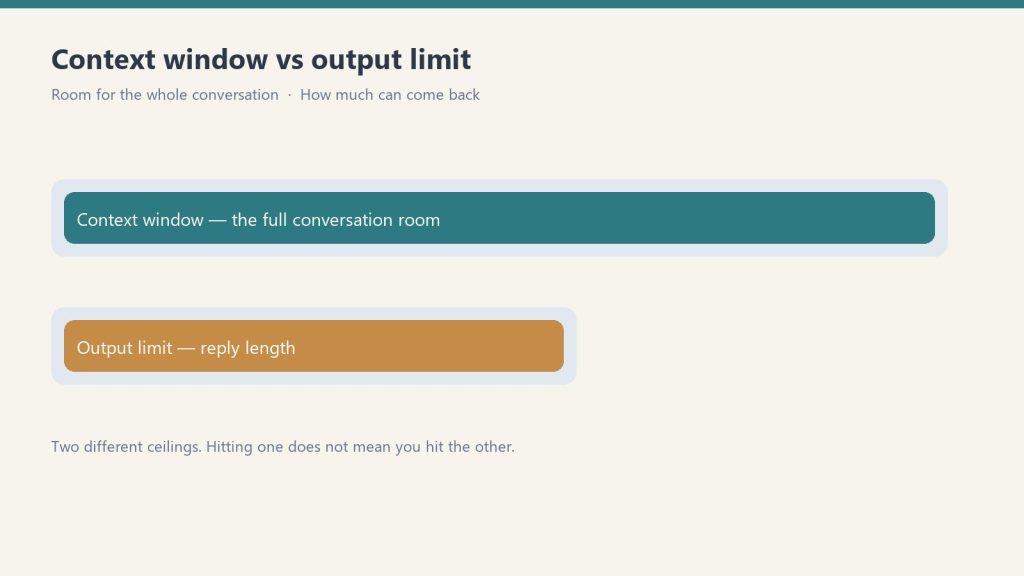
    The context window covers everything Claude processes — both input and output combined. If your prompt is 50,000 tokens (a long document), Claude has 150,000 tokens remaining for its response and any further back-and-forth. The window is shared between what you send and what Claude generates.

    Maximum output length is a separate constraint — Claude won’t generate an infinitely long response even within a large context window. For very long outputs (full books, extensive reports), you typically work in sections rather than expecting Claude to produce everything in one pass.

    Why Context Window Size Matters

    Context window size is the practical limit on how much work you can give Claude at once without losing information. Before large context windows, working with long documents required chunking — splitting the document into pieces, analyzing each separately, and manually synthesizing the results. With 200K tokens, Claude can hold the entire document and answer questions about any part of it with full awareness of everything else.

    This matters most for: document analysis and legal review, code understanding across large files, research synthesis across many sources, and long multi-step conversations where earlier context affects later decisions.

    How Claude Performs at the Edges of Its Context Window

    Research on large language models has found that performance can degrade somewhat for information buried in the middle of a very long context — sometimes called the “lost in the middle” problem. Claude performs well across its context window, but for maximum reliability on information from a very long document, referencing specific sections explicitly (“in the section about pricing on page 12…”) helps ensure Claude focuses on the right part.

    For the full model spec breakdown, see Claude API Model Strings and Specs and Claude Models Explained: Haiku vs Sonnet vs Opus.

    Frequently Asked Questions

    What is Claude’s context window size?

    Claude Sonnet 4.6 and Opus 4.6 support a 1 million token context window at standard pricing. Claude Haiku 4.5 supports 200,000 tokens. That’s approximately 150,000 words or about 500 pages of text in a single conversation.

    How many tokens is 200K context?

    200,000 tokens is approximately 150,000 words of English text. One token is roughly four characters or three-quarters of a word. A typical 800-word article is about 1,000 tokens; a full novel is typically 80,000–120,000 tokens.

    Can I upload a full PDF to Claude?

    Yes, as long as the PDF’s text content fits within the 200K token context window. Most documents, reports, contracts, and research papers fit easily. Very large documents (multiple volumes, extensive legal filings) may need to be split.

    Need this set up for your team?
    Talk to Will →

  • Does Claude Have Memory? How Context, Projects, and Memory Features Work

    Does Claude Have Memory? How Context, Projects, and Memory Features Work

    Last refreshed: May 15, 2026

    Claude AI · Fitted Claude

    Claude doesn’t have persistent memory by default — each conversation starts fresh, with no recollection of previous sessions. But there are several ways to give Claude memory, both through Anthropic’s built-in features and through how you structure your interactions. Here’s exactly how memory works in Claude and what your options are.

    Short answer: By default, no — Claude doesn’t remember previous conversations. Within a single conversation, Claude remembers everything said so far. Claude’s Projects feature gives you persistent context that carries across sessions. And Claude.ai has a memory feature that extracts and stores facts about you automatically.

    The Three Types of Claude Memory

    Memory Type What it does Persists across sessions?
    In-conversation context Everything said in the current chat No — resets when conversation ends
    Projects Custom instructions + uploaded knowledge ✓ Yes — available in every session
    Memory feature Facts Claude learns about you over time ✓ Yes — grows over time

    In-Conversation Context: What Claude Remembers Right Now

    Within a single conversation, Claude has full access to everything that’s been said — all your messages, all its responses, any files you’ve uploaded. This is the context window, which for current Claude models supports up to 200,000 tokens. That covers very long conversations, large documents, and extensive back-and-forth without Claude losing track of earlier details.

    When the conversation ends, that context is gone. Start a new conversation and Claude has no knowledge of the previous one.

    Projects: Persistent Context Across Sessions

    Projects are Claude’s primary mechanism for persistent memory. A Project is a workspace where you can:

    • Set custom instructions that apply to every conversation in that Project
    • Upload documents, style guides, or knowledge files that Claude can reference
    • Keep your conversation history organized by topic or client

    Every conversation you start within a Project has access to those instructions and documents from the beginning — without you having to re-explain your context every time. This is the practical solution for most persistent memory use cases: tell Claude who you are, what you’re working on, and what you need once in the Project settings, and it carries forward.

    The Memory Feature: Claude Learning About You

    Claude.ai has a Memory feature (found in Settings → Memory) where Claude automatically extracts and stores facts about you from your conversations — your job, preferences, ongoing projects, communication style. These memories surface in future conversations to make Claude more personalized without you having to re-introduce yourself.

    You can view, edit, and delete individual memories from the settings page. You can also turn the feature off entirely if you’d rather start fresh each time. When Memory is active, Claude may reference things you mentioned in past conversations — “you mentioned you work in restoration…” — which can feel surprisingly persistent for a tool that otherwise has no cross-session recall.

    Memory in the API

    For developers building on Claude via the API, there’s no built-in persistent memory — each API call is stateless by default. Persistent memory for API applications requires building it yourself: storing conversation history in a database and injecting relevant context into each new request. Anthropic’s system prompt is the standard mechanism for doing this — load relevant facts or history into the system prompt at the start of each call.

    Frequently Asked Questions

    Does Claude remember previous conversations?

    Not by default. Each new conversation starts fresh. You can enable persistent memory through Projects (custom instructions and uploaded knowledge that apply to every session) or through Claude’s Memory feature (which stores facts about you across conversations).

    How do I give Claude memory between sessions?

    Use Projects: create a Project, add custom instructions describing your context, and upload any relevant documents. Every conversation within that Project will have access to that information from the start — no re-explaining required.

    What is Claude’s memory feature?

    Claude’s Memory feature (Settings → Memory) automatically extracts facts about you from conversations and stores them to personalize future interactions. You can view, edit, or delete individual memories, or disable the feature entirely.

    Does Claude remember within a conversation?

    Yes, fully. Within a single conversation Claude has access to everything said — up to 200,000 tokens of context for current models. It won’t forget something you said earlier in the same conversation.

    Need this set up for your team?
    Talk to Will →

  • Claude AI Privacy: What Anthropic Does With Your Conversations

    Claude AI Privacy: What Anthropic Does With Your Conversations

    Last refreshed: May 15, 2026

    Claude AI · Fitted Claude

    Before you paste anything sensitive into Claude, you should understand what Anthropic does with your conversations. The answer varies significantly by plan — and most people are on the plan with the least data protection. Here’s the complete picture.

    The key fact most people miss: On Free and Pro plans, Anthropic may use your conversations to train future Claude models. You can opt out in settings. Team and Enterprise plans have stronger protections and the Enterprise tier supports custom data handling agreements for regulated industries.

    Claude Data Handling by Plan

    Plan Training data use Human review possible? Custom data agreements
    Free Yes (opt-out available) Yes
    Pro Yes (opt-out available) Yes
    Team No (by default) Limited
    Enterprise No Configurable ✓ BAA available

    How to Opt Out of Training Data Use

    On Free and Pro plans, you can disable conversation use for model training in your account settings. Go to Settings → Privacy → and toggle off “Help improve Claude.” This applies to future conversations — it doesn’t retroactively remove past conversations from training data already collected.

    What Anthropic Can See

    Anthropic employees may review conversations for safety research, model improvement, and trust and safety purposes. This applies to all plan tiers, though the scope and purpose of review is more restricted on Team and Enterprise. Human reviewers follow internal access controls, but if you’re sharing genuinely sensitive information, the better approach is to use Enterprise with appropriate data handling agreements — not to rely on the assumption that your specific conversation won’t be reviewed.

    Data Retention

    Anthropic retains conversation data for a period before deletion. The specific retention period isn’t published in a simple number — it varies based on account type and purpose. Your conversation history in the Claude.ai interface can be deleted by you at any time from Settings. Deletion from the UI doesn’t guarantee immediate removal from all backend systems, and may not remove data already used in training.

    Claude and GDPR

    For users in the EU, Anthropic operates under GDPR obligations. This includes rights to data access, correction, and deletion. Anthropic’s privacy policy covers these rights and how to exercise them. For organizations subject to GDPR with stricter requirements around AI data processing, Enterprise is the appropriate tier — it supports data processing agreements and more granular controls.

    What Not to Share With Claude on Standard Plans

    On Free or Pro plans, avoid sharing:

    • Patient health information (HIPAA-regulated)
    • Client confidential data under NDA
    • Non-public financial information
    • Personally identifiable information beyond what the task requires
    • Trade secrets or proprietary business processes

    For a full breakdown of Claude’s safety posture beyond just privacy, see Is Claude AI Safe? For current, authoritative terms, always refer to Anthropic’s privacy policy directly.

    Frequently Asked Questions

    Does Claude store your conversations?

    Yes. Anthropic retains conversation data for a period of time. You can delete your conversation history from the Claude.ai interface, but this doesn’t guarantee immediate removal from all backend systems or data already incorporated into training.

    Is Claude HIPAA compliant?

    Not on standard plans. HIPAA compliance requires a Business Associate Agreement (BAA) with Anthropic, which is only available on the Enterprise plan. Do not share patient health information with Claude on Free, Pro, or Team plans.

    Can I stop Anthropic from using my conversations to train Claude?

    Yes, on Free and Pro plans you can opt out in Settings → Privacy. Team plans don’t use conversations for training by default. On Enterprise, this is governed by your data processing agreement.

    Is Claude private?

    Claude conversations are not end-to-end encrypted in the way messaging apps are. Anthropic can access conversation data. “Private” in the sense of not being shared with third parties — yes, Anthropic doesn’t sell your data. Private in the sense of completely inaccessible to the company that runs it — no.

    Deploying Claude for your organization?

    We configure Claude correctly — right plan tier, right data handling, right system prompts, real team onboarding. Done for you, not described for you.

    Learn about our implementation service →

    Need this set up for your team?
    Talk to Will →

  • Is Claude AI Safe? Data Handling, Content Safety, and What to Know

    Is Claude AI Safe? Data Handling, Content Safety, and What to Know

    Last refreshed: May 15, 2026

    Claude AI · Fitted Claude

    Claude is built by Anthropic — a company whose stated mission is AI safety. But “safe” means different things depending on what you’re asking: Is Claude safe to use with sensitive information? Is it safe for children? Does it produce harmful content? Is it psychologically safe to rely on? Here’s the honest answer to each version of the question.

    Short answer: Claude is one of the safest AI assistants available for general professional use. It’s designed to refuse harmful requests, be honest about uncertainty, and avoid manipulation. For sensitive business data, read the data handling section below before sharing anything confidential.

    Is Claude Safe to Use? By Use Case

    Concern Safety Level Notes
    General professional use ✅ Safe Standard writing, research, analysis
    Children and minors ⚠️ Use with awareness Claude declines adult content but isn’t a parental control tool
    Sensitive personal information ⚠️ Read privacy policy Conversations may be used to improve models on free/Pro tiers
    Confidential business data ⚠️ Enterprise tier recommended Enterprise has stronger data handling commitments
    HIPAA-regulated data ❌ Not on standard plans Requires Enterprise with a BAA from Anthropic
    Harmful content generation ✅ Declines Claude refuses instructions for weapons, self-harm, etc.

    How Anthropic Builds Safety Into Claude

    Anthropic uses a training methodology called Constitutional AI — Claude is trained against a set of principles rather than purely optimizing for user approval. This means Claude is more likely to push back on bad premises, decline harmful requests, and express uncertainty rather than generate a confident-sounding wrong answer.

    Concretely: Claude won’t provide instructions for creating weapons, won’t generate content that sexualizes minors, won’t help with clearly illegal activities targeting individuals, and is designed to be honest rather than sycophantic. These are trained behaviors, not just content filters bolted on afterward.

    Data Safety: What Happens to Your Conversations

    This is the area that matters most for professional users. Anthropic’s data handling varies by plan:

    Free and Pro plans: Conversations may be used by Anthropic to improve Claude’s models. You can opt out of this in your account settings. Anthropic retains conversation data for a period before deletion.

    Team plan: Stronger data handling commitments. Conversations are not used to train models by default.

    Enterprise plan: Custom data handling agreements available. This is the tier for organizations with compliance requirements — HIPAA, SOC 2, GDPR, etc. A Business Associate Agreement (BAA) from Anthropic is required before sharing any HIPAA-regulated data.

    For current, authoritative data handling details, check Anthropic’s privacy policy directly — it supersedes any summary here. For privacy-specific questions, see Claude AI Privacy: What Anthropic Does With Your Data.

    Is Claude Psychologically Safe?

    Claude is designed not to manipulate users, not to foster unhealthy dependency, and not to tell people what they want to hear at the expense of accuracy. It will disagree with you, push back on flawed premises, and decline to validate bad decisions. Whether that’s “safe” depends on your frame — but it’s a deliberate design choice that makes Claude more honest and less likely to be weaponized as a validation machine.

    Frequently Asked Questions

    Is Claude AI safe to use?

    Yes, for general professional use. Claude is designed to refuse harmful requests, be honest, and avoid manipulation. For sensitive business data or regulated information, review Anthropic’s data handling policies for your plan tier before sharing anything confidential.

    Is Claude safe for children?

    Claude declines to generate adult or harmful content, which makes it safer than many AI tools. However, it’s not a purpose-built parental control system and shouldn’t be treated as one. Anthropic’s Terms of Service require users to be 18 or older, or to have parental permission.

    Can I share confidential business information with Claude?

    On standard plans (Free, Pro), conversations may be reviewed by Anthropic and used for model improvement. For confidential business data, use the Team or Enterprise plan — Enterprise offers custom data handling agreements. Never share HIPAA-regulated data without a Business Associate Agreement in place.

    Is Claude safer than ChatGPT?

    Both Claude and ChatGPT have safety measures in place. Claude’s Constitutional AI training approach is designed specifically around safety as a core methodology rather than an add-on. For data handling, the comparison depends on which plan tier you’re on for each product — Enterprise tiers of both have stronger commitments than free or standard paid plans.

    Deploying Claude for your organization?

    We configure Claude correctly — right plan tier, right data handling, right system prompts, real team onboarding. Done for you, not described for you.

    Learn about our implementation service →

    Need this set up for your team?
    Talk to Will →

  • Claude vs ChatGPT for Writing: Which Is Better in 2026?

    Claude vs ChatGPT for Writing: Which Is Better in 2026?

    Last refreshed: May 15, 2026

    Claude AI · Fitted Claude

    For writers, content creators, and knowledge workers whose primary output is text, the Claude vs ChatGPT question has a clearer answer than it does for other use cases. Having used both extensively for articles, client deliverables, emails, strategy documents, and brand content — here’s the honest breakdown.

    For writing: Claude wins. More natural prose, better instruction-following on style and format, less likely to default to AI-sounding patterns. ChatGPT can match Claude on simple writing tasks but loses ground on anything requiring sustained voice consistency, nuanced tone, or precise adherence to style constraints over long outputs.

    Head-to-Head: Writing Comparison

    Writing Task Claude ChatGPT Edge
    Long-form articles Good Claude — more natural, less formulaic
    Matching a specific voice OK Claude — holds style constraints more precisely
    Editing and rewriting Good Claude — more surgical, less over-editing
    Short-form content Tie — both strong on short tasks
    Email drafting Tie on simple; Claude on complex/nuanced
    Avoiding AI-sounding prose Claude — consistently less robotic
    Creative writing Good Claude — more distinctive voice options

    The AI-Sounding Prose Problem

    ChatGPT has a recognizable voice pattern. Responses tend to start with acknowledgment (“Certainly!”), organize into bullet-heavy sections, use phrases like “It’s important to note that” and “In conclusion,” and end with a summary of what was just said. These patterns persist even when you explicitly tell it not to use them — they return within a few exchanges.

    Claude is more malleable. When you tell Claude to write in a specific tone, avoid certain phrases, or use a particular structural approach, it holds those constraints more reliably through a long output. For any writing where the text needs to sound like a human wrote it — client-facing content, articles under your byline, thought leadership — this difference matters practically.

    Voice Matching and Style Consistency

    Give both models three examples of your writing and ask them to match your voice. Claude’s matches are more accurate and more consistent across a long piece. ChatGPT’s matches drift — the opening paragraph sounds like you, but by the third section the patterns revert to the default. For writers trying to use AI to scale their own voice, not replace it with a generic one, this is the critical test.

    Editing Behavior

    When editing existing text, Claude tends to make targeted changes where you ask for them without rewriting sections you didn’t touch. ChatGPT often over-edits — touching paragraphs you wanted left alone because they “could be improved.” For writers who want AI to help refine specific passages rather than rewrite the whole piece, Claude’s more restrained editing behavior is a real advantage.

    Where ChatGPT Keeps Up for Writing

    For short, well-defined tasks — a subject line, a tweet, a 200-word product description — the gap between Claude and ChatGPT narrows substantially. Both produce good output on clear, constrained tasks. The difference shows on longer, more complex writing where sustained quality and voice consistency are required.

    For a broader comparison across all use cases, see Claude vs ChatGPT: The Honest 2026 Comparison. For prompts that get better writing results from Claude, see the Claude Prompt Generator and Improver.

    Frequently Asked Questions

    Is Claude better than ChatGPT for writing?

    Yes, for most professional writing tasks. Claude produces more natural prose, holds style and voice constraints more consistently through long outputs, and is less likely to default to AI-sounding patterns. For short-form tasks both are competitive; the gap opens on longer, more complex writing.

    Why does Claude’s writing sound more natural than ChatGPT?

    Claude is less likely to fall into ChatGPT’s recognizable patterns — the sycophantic openers, bullet-heavy structure, and summary conclusions that make AI writing identifiable. Claude follows specific voice and format instructions more precisely and holds them through longer outputs without drifting.

    Can Claude match my writing voice?

    Yes, more reliably than ChatGPT. Give Claude examples of your writing and ask it to match your style — it will hold that voice more consistently through a full piece. Include specific instructions about what to avoid (phrases, structure patterns, tone) and Claude will follow them more precisely than alternatives.

    Need this set up for your team?
    Talk to Will →

  • Claude vs ChatGPT Reddit: What Users Actually Say in 2026

    Claude vs ChatGPT Reddit: What Users Actually Say in 2026

    Last refreshed: May 15, 2026

    Claude AI · Fitted Claude

    If you’ve spent any time on Reddit trying to figure out whether Claude or ChatGPT is actually better, you’ve seen the debate play out across r/ChatGPT, r/ClaudeAI, r/artificial, and r/MachineLearning. Here’s what Reddit actually says — the real consensus that emerges from people using both tools daily, not marketing copy.

    Reddit’s general consensus: Claude wins for writing quality, nuanced reasoning, and following complex instructions. ChatGPT wins for integrations, image generation, and ecosystem breadth. Power users often keep both. The Claude subreddit skews toward people who’ve already switched; ChatGPT subreddits have more defenders of the status quo.

    What Reddit Says Claude Does Better

    “Claude doesn’t sound like an AI”

    This is the most consistent thread in Claude discussions on Reddit. Users repeatedly describe Claude’s writing as more natural, less formulaic, less likely to fall into the bullet-point-heavy structure that ChatGPT defaults to. Threads asking “which is better for writing?” heavily favor Claude. The specific complaints about ChatGPT — sycophantic openers, generic structure, “certainly!” affirmations — get cited constantly as reasons people switched.

    Instruction-following and context retention

    Multi-part prompts with specific constraints are a recurring Reddit test. Users report Claude holds requirements more consistently through long responses — if you say “don’t use bullet points” or “write in first person” at the start, Claude is less likely to drift mid-response. ChatGPT gets called out frequently for “forgetting” constraints partway through.

    Honesty about uncertainty

    Reddit threads about AI hallucination tend to frame ChatGPT as more confidently wrong and Claude as more willing to express uncertainty. This matters for research and factual tasks — Claude saying “I’m not certain about this” is more useful than ChatGPT making something up with conviction.

    Long documents and large context

    Users uploading long PDFs, code files, or research papers consistently report better results from Claude. Claude’s 200K context window and coherence across long inputs gets cited as a practical advantage for document-heavy work.

    What Reddit Says ChatGPT Does Better

    Image generation

    DALL-E integration is the most cited ChatGPT advantage. Reddit users who need image generation in their workflow find it more convenient to stay in ChatGPT than to use a separate tool. Claude doesn’t generate images natively in the web interface, which is a real gap for this use case.

    Plugin and integration ecosystem

    ChatGPT’s broader plugin and connection ecosystem gets cited often by users who rely on specific third-party integrations. Although Claude’s MCP integrations are expanding rapidly, ChatGPT has more established connections across consumer apps.

    Code interpreter for data analysis

    ChatGPT’s ability to run Python in-chat, generate charts, and work interactively with data files is repeatedly cited as a concrete advantage. Reddit users doing exploratory data analysis prefer ChatGPT’s sandbox for this specific workflow.

    The Honest Reddit Meta-Conclusion

    The most upvoted takes on Reddit tend to be: use Claude as your primary tool if you do writing, analysis, or complex reasoning work. Keep ChatGPT for image generation and integrations. The “I switched to Claude and never looked back” posts get more engagement than the reverse — but the “I use both and they serve different purposes” takes are probably the most accurate.

    For a structured comparison rather than crowd sentiment, see Claude vs ChatGPT: The Honest 2026 Comparison and Is Claude Better Than ChatGPT?

    Frequently Asked Questions

    What does Reddit say about Claude vs ChatGPT?

    Reddit’s general consensus favors Claude for writing quality, instruction-following, and nuanced reasoning, while ChatGPT wins for image generation and integrations. Power users typically keep both. The Claude subreddit (r/ClaudeAI) skews heavily toward satisfied switchers.

    Is Claude more popular than ChatGPT on Reddit?

    ChatGPT has a larger subreddit by subscriber count. Claude’s subreddit (r/ClaudeAI) is smaller but highly engaged and skews toward daily professional users. The cross-subreddit sentiment on comparison threads consistently shows Claude gaining ground in preference, particularly for writing tasks.

    Why do Reddit users prefer Claude for writing?

    The most cited reasons: Claude produces more natural prose that doesn’t immediately read as AI-generated, it follows style instructions more precisely, and it’s less likely to default to formulaic structures. Reddit users specifically criticize ChatGPT’s tendency toward sycophantic openers and excessive bullet points — Claude avoids both more reliably.

    Need this set up for your team?
    Talk to Will →

  • Claude Artifacts: What They Are and How to Use Them

    Claude Artifacts: What They Are and How to Use Them

    Last refreshed: May 15, 2026

    Claude AI · Fitted Claude

    Claude Artifacts are a feature in Claude.ai that lets Claude generate standalone, interactive content — code, HTML pages, documents, diagrams, and more — directly in the chat interface as a separate panel you can view, copy, or iterate on without it cluttering the conversation. Here’s what Artifacts are, what they’re useful for, and how to use them effectively.

    Short version: When you ask Claude to write code, build a component, or create a document, it can output that content as an Artifact — a dedicated panel next to the conversation where the content renders and can be worked on separately. It’s the difference between Claude pasting code into the chat and Claude opening a mini IDE alongside it.

    What Claude Can Create as Artifacts

    Artifact Type What it is Example use
    Code Any programming language Python scripts, SQL queries, bash commands
    React components Interactive UI that renders live Calculators, dashboards, forms, games
    HTML pages Full web pages with CSS/JS Landing pages, reports, email templates
    SVG Scalable vector graphics Diagrams, icons, charts
    Markdown documents Formatted text documents Reports, READMEs, documentation
    Mermaid diagrams Flowcharts, sequence diagrams Architecture diagrams, process flows

    How Artifacts Work in Practice

    When you ask Claude to build something — “create a React component for a login form” or “write a Python script that processes this CSV” — Claude creates the content in a panel that appears to the right of the conversation. The chat continues on the left; the Artifact lives on the right.

    From the Artifact panel you can: copy the content to your clipboard, download it as a file, preview rendered output (for HTML and React), and ask Claude follow-up questions that update the Artifact without starting over. “Make the button blue” or “add error handling to that function” updates the Artifact in place.

    Why Artifacts Are Useful

    The core problem they solve: when Claude outputs long code or a full document directly into chat, it buries the conversation and makes iteration awkward. You’re scrolling up to find what Claude wrote, copying it out, asking for changes, and scrolling up again. Artifacts keep the output in a fixed, workable location while the conversation continues normally.

    For longer sessions — building a multi-function script, iterating on a UI component, refining a report — Artifacts make the back-and-forth substantially cleaner.

    Enabling and Using Artifacts

    Artifacts are available in Claude.ai on Pro, Max, Team, and Enterprise plans. They may need to be enabled in Settings → Feature Preview depending on your account. Once enabled, Claude will automatically create Artifacts for appropriate content — you can also explicitly request one: “Create this as an Artifact” or “Put that in an Artifact panel.”

    Artifacts vs. Claude Code

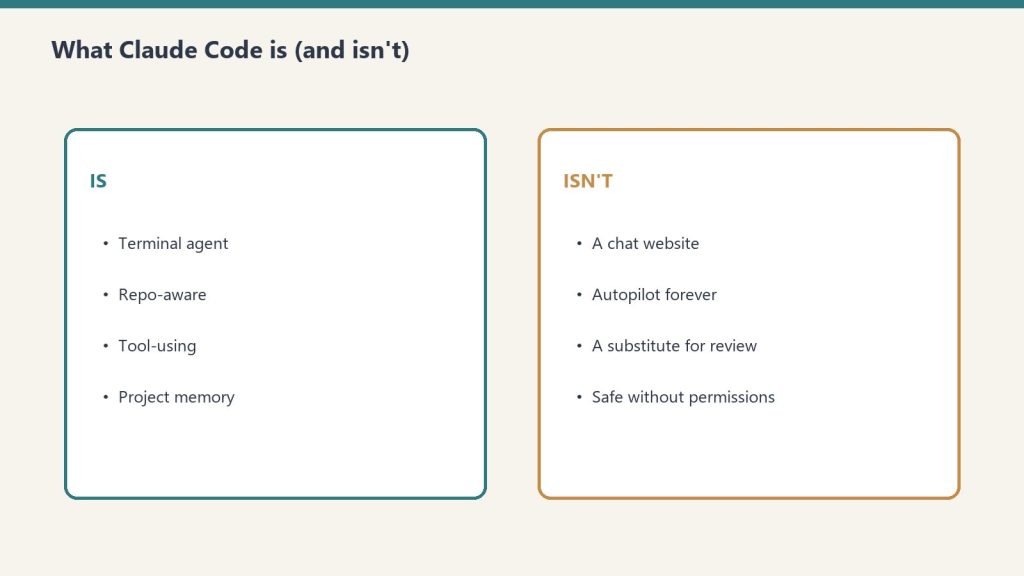
    Artifacts are in-chat content generation — Claude produces something, it appears in a panel, you iterate via conversation. Claude Code is a terminal agent that operates autonomously inside your actual development environment — reading files, running tests, making commits. They serve different purposes: Artifacts are for in-session creation and prototyping; Claude Code is for real development work inside a codebase. See Claude Code pricing for details on that tier.

    Frequently Asked Questions

    What are Claude Artifacts?

    Claude Artifacts are a Claude.ai feature that displays generated content — code, HTML, React components, documents, diagrams — in a dedicated panel alongside the chat. They make it easier to view, iterate on, and copy longer outputs without cluttering the conversation.

    Are Claude Artifacts available on the free plan?

    Artifacts are primarily a feature of paid plans (Pro, Max, Team, Enterprise). Availability on the free tier may be limited or subject to change. Check Settings → Feature Preview in your account for current status.

    Can I download content from Claude Artifacts?

    Yes. From the Artifact panel you can copy the content to your clipboard or download it as a file, depending on the content type.

    Need this set up for your team?
    Talk to Will →

  • Claude MCP: What the Model Context Protocol Is and How to Use It

    Claude MCP: What the Model Context Protocol Is and How to Use It

    Last refreshed: May 15, 2026

    Claude AI · Fitted Claude

    MCP — the Model Context Protocol — is Anthropic’s open standard for connecting Claude to external tools, data sources, and services. It’s the architecture that lets Claude read from your Google Drive, post to Slack, query a database, or interact with any API without you having to write custom integration code for each one. Here’s what MCP is, how it works, and why it matters.

    Short version: MCP is how Claude gets access to tools beyond the chat window. Instead of every developer writing one-off integrations, MCP creates a standard protocol — Claude speaks it, and any tool that implements it can plug in. Think of it as USB-C for AI tool connections.

    What MCP Actually Does

    Without MCP, connecting Claude to an external system means building a custom bridge: write code that calls the external API, format the results in a way Claude understands, handle authentication, manage errors. Every integration is a separate project.

    With MCP, the external system (a database, a SaaS tool, a file system, an API) publishes an MCP server — a standardized interface that describes what it can do. Claude connects to that server and immediately knows what tools are available, what inputs they need, and how to use them. The developer only builds the MCP server once; Claude handles the rest.

    What You Can Do With Claude MCP Today

    MCP Integration What Claude Can Do
    Google Drive Search, read, and summarize documents in your Drive
    Slack Read channels, search messages, post drafts
    GitHub Read repos, create issues, review pull requests
    Notion Read and write pages, query databases
    PostgreSQL / databases Run queries, read schema, analyze data
    File systems Read, write, and organize local files
    Web search Search the web and return current results
    Custom APIs Any API with an MCP server implementation

    MCP vs. Claude’s Built-In Tools

    Claude already has some built-in capabilities — web search, code execution in certain contexts, file analysis. MCP extends this with external integrations that persist across sessions, connect to your actual data, and scale to any service that builds an MCP server.

    The practical difference: built-in tools are what Anthropic ships with Claude. MCP tools are what the ecosystem builds — which means the integration surface grows every week as more services add MCP support.

    How to Use MCP With Claude

    MCP works differently depending on where you’re running Claude:

    Claude.ai (web/app): MCP integrations are available through the Connections settings. Anthropic has partnered with services like Google, Notion, Slack, and others whose MCP servers are pre-built and available to connect in a few clicks.

    Claude Desktop: The desktop app supports MCP configuration via a JSON config file, letting you connect to any MCP server — including self-hosted ones or custom integrations you build.

    Claude Code / API: Developers can wire MCP servers directly into Claude API calls, giving Claude access to any tool during an agentic session.

    Why MCP Is a Big Deal

    Before MCP, each AI company built its own plugin standard — OpenAI had plugins, others had connectors, and nothing worked across systems. MCP is Anthropic’s bet on an open standard: publish the spec, let anyone build to it, and Claude (and any other AI that implements it) gains access to the entire ecosystem.

    The momentum has been significant. Within months of the MCP spec being published, major platforms including Cloudflare, Zapier, HubSpot, and dozens of others shipped MCP server implementations. The network effect is real — the more tools support MCP, the more useful Claude becomes without Anthropic having to build any of those integrations themselves.

    For a deeper technical walkthrough, see the Claude MCP Tutorial.

    Frequently Asked Questions

    What is Claude MCP?

    MCP (Model Context Protocol) is an open standard from Anthropic that lets Claude connect to external tools, databases, and services. Instead of one-off integrations, MCP creates a universal protocol — any tool that builds an MCP server can be connected to Claude.

    How do I add MCP tools to Claude?

    In Claude.ai, go to Settings → Connections to add pre-built MCP integrations for services like Google Drive, Notion, and Slack. In Claude Desktop, you configure MCP servers in a JSON config file. Via the API, you pass MCP server URLs in your request.

    Is MCP only for Claude?

    No. MCP is an open protocol — any AI model or application can implement it. Anthropic published the spec publicly with the intent of making it an industry standard. Other AI tools have begun adopting it, though Claude has the deepest native MCP integration currently.

    What’s the difference between MCP and Claude plugins?

    Claude doesn’t use a “plugin” model the way older ChatGPT did. MCP is Anthropic’s approach — an open, standardized protocol rather than a proprietary plugin marketplace. MCP integrations work at a deeper level and are designed to scale across any service that implements the standard.

    Need this set up for your team?
    Talk to Will →

  • Claude AI Login: How to Sign In, Download the App, and Fix Common Issues

    Claude AI Login: How to Sign In, Download the App, and Fix Common Issues

    Last refreshed: May 15, 2026

    🔄 Last verified: April 29, 2026

    Claude AI · Fitted Claude

    Claude lives at claude.ai — there’s no separate login page to find. If you’re trying to get into your Claude account, here’s exactly where to go and how to sign in across web, mobile, and desktop.

    Direct links: Sign in → claude.ai/login | Create account → claude.ai/signup | The Claude app (iOS/Android) → search “Claude” by Anthropic in your app store.

    How to Log In to Claude on Web

    1. Go to claude.ai in any browser
    2. Click Sign in — you can sign in with Google, or with your email and password
    3. If you signed up with Google, click Continue with Google and select your account
    4. If you used email, enter your address and password, then verify via the link Anthropic sends
    5. Once in, you’ll land directly in a new conversation

    Claude App: Mobile and Desktop

    Platform Where to get it Notes
    iPhone / iPad App Store — search “Claude by Anthropic” Free download, same account as web
    Android Google Play — search “Claude by Anthropic” Free download, same account as web
    Mac desktop claude.ai → download from the menu, or Mac App Store Native app with system integration
    Windows desktop claude.ai → download from the menu Desktop app available
    Web (any device) claude.ai in any browser No install required

    Your account, conversation history, and Projects sync across all platforms. Sign in with the same Google account or email on every device.

    Common Login Issues

    Forgot your password

    On the sign-in page, click Forgot password? and enter your email. Anthropic will send a reset link. If you signed up with Google, you don’t have a separate Claude password — just use the Google option.

    Not receiving the verification email

    Check your spam folder. The email comes from an @anthropic.com address. If it’s not there after a few minutes, try signing in again to trigger a new send.

    “Account not found” error

    You may have signed up with a different email or via Google. Try the Google sign-in option even if you think you used email — it’s the most common source of this confusion.

    Claude.ai is down or slow

    Check status.anthropic.com for current system status. Anthropic publishes live uptime and incident reports there.

    Creating a New Claude Account

    Go to claude.ai/signup. You can sign up with Google or with an email address. Phone verification may be required depending on your region. The free tier is available immediately after signup — no payment info required. For plan details, see the complete Claude pricing guide.

    Frequently Asked Questions

    Where do I log in to Claude AI?

    Go to claude.ai and click Sign In. The direct login URL is claude.ai/login. You can sign in with Google or with your email and password.

    Is there a Claude AI app?

    Yes. Claude has native apps for iPhone, iPad, Android, Mac, and Windows. Search “Claude by Anthropic” in your app store, or download from claude.ai. All apps use the same account as the web version.

    Can I use Claude without creating an account?

    In some regions, Anthropic allows limited use without an account. Full access — including conversation history, Projects, and higher usage limits — requires a free account. Creating one takes about a minute at claude.ai/signup.

    Is Claude login free?

    Yes. Creating an account and using Claude’s free tier costs nothing. The free tier has daily usage limits. Upgrading to Claude Pro ($20/month) or Max ($100/month) removes those limits. See what the free tier includes.