# Generative Engine Optimization: Why Your Agency Needs an AEO Strategy Now
The digital world is undergoing its most profound transformation since the advent of the internet itself. For decades, the battle for online visibility has been fought on the battleground of Search Engine Optimization (SEO). Agencies have meticulously crafted strategies around keywords, backlinks, and algorithm updates, all in pursuit of the coveted top spot on search engine results pages (SERPs). But a new, more intelligent gatekeeper is emerging, one that doesn’t just index information but understands, synthesizes, and generates it: Artificial Intelligence.
By 2026, the digital landscape will be dominated by AI-powered interfaces – advanced voice assistants, sophisticated chatbots, hyper-personalized content feeds, and integrated search experiences that deliver synthesized answers rather than lists of links. Users will increasingly bypass traditional SERPs, receiving direct, AI-curated information. In this new reality, traditional SEO, focused solely on search engine algorithms, is no longer sufficient. Agencies that fail to adapt will find their clients’ content invisible to these new discovery mechanisms, leading to a catastrophic loss of visibility, traffic, and revenue. The time has come for Generative Engine Optimization (AEO).
AEO is not merely an evolution of SEO; it’s a fundamental paradigm shift. It’s about optimizing for AI comprehension, synthesis, and output, ensuring your clients’ content is discoverable, trusted, and effectively utilized by the AI models and AI-powered platforms that will define digital interactions. Early adoption of AEO will position agencies as indispensable partners, leading the charge in this evolving digital frontier.
## The Paradigm Shift: From Keywords to Concepts
The foundational difference between traditional SEO and AEO lies in how information is processed. Search engines, at their core, have historically relied on keywords and their permutations. While sophisticated, their understanding was often lexical. Generative AI models, however, operate on a different plane. They understand context, nuance, and complex concepts, not just isolated keywords.
For agencies, this means content can no longer be a mere collection of keyword-stuffed phrases. It must be semantically rich, well-structured, and designed to provide clear, comprehensive answers to complex questions. AI models excel at extracting meaning from well-organized information. This necessitates a shift towards topic clusters, detailed explanations, and content that anticipates follow-up questions, effectively building a knowledge graph around a subject. Your content needs to be a reliable source of truth, not just a keyword target.
## Building Trust in the Age of AI: The E-E-A-T Imperative
In a world where AI can generate vast amounts of information, the premium on trust and authority has never been higher. AI models are designed to prioritize authoritative, fact-checked, and unbiased information to avoid propagating misinformation. For agencies, this means demonstrating strong E-E-A-T (Experience, Expertise, Authoritativeness, Trustworthiness) signals for their clients is no longer a best practice; it’s a survival imperative.
AEO demands that content not only be accurate but also demonstrably credible. This involves showcasing the credentials of authors, citing reputable sources, providing evidence for claims, and ensuring transparency in data presentation. Agencies must actively work to build and amplify their clients’ reputations as thought leaders and trusted sources within their respective industries. This isn’t just about pleasing an algorithm; it’s about becoming a reliable input for the AI’s knowledge base, which in turn influences the AI’s output to users.
## Beyond Text: Multi-Modal Optimization for AI Comprehension
While text remains a cornerstone of digital content, generative AI extends far beyond it. Image generators, video analysis tools, and advanced audio processing are all part of the AI ecosystem. AEO, therefore, must embrace multi-modal optimization.
This means optimizing images, videos, and audio for AI interpretation and generation. For images, this translates to descriptive alt-text that goes beyond simple keywords, providing rich context. For videos, it means comprehensive transcripts, detailed descriptions, and structured metadata that explain the content’s purpose and key takeaways. Audio content requires similar attention to transcripts and clear categorization. The goal is to make every piece of digital content, regardless of its format, fully comprehensible and usable by AI models, enabling them to accurately describe, summarize, and even generate new content based on your assets.
## Proactive Integration: Agencies as AI Pioneers
The rise of AI presents a choice: react to its changes or proactively integrate its power. Agencies that choose the latter will gain a significant competitive edge. This isn’t just about optimizing *for* AI; it’s about optimizing *with* AI.
Agencies should actively integrate AI tools into their content creation, distribution, and analysis workflows. This could involve using AI for content ideation, generating initial drafts, summarizing lengthy reports, personalizing content at scale, or analyzing performance data with unprecedented depth. By becoming proficient in leveraging generative AI, agencies can streamline operations, enhance creativity, and deliver more impactful results for their clients, positioning themselves as true innovators in the digital marketing space.
## The Ethical Compass: Transparency and Bias in AI Content
As AI becomes more pervasive, the ethical considerations surrounding its use become paramount. Content optimized for AI must adhere to stringent ethical guidelines, actively work to avoid bias, and be transparent about its origins and purpose. This isn’t just a moral obligation; it’s a strategic necessity for building and maintaining user trust.
Agencies must ensure that the content they produce and optimize for AI is fair, accurate, and representative. This involves scrutinizing data sources, challenging inherent biases in language, and being transparent about when AI has been used in content creation or curation. Trust is the ultimate currency in the digital age, and any perceived ethical lapse or bias in AI-generated or AI-optimized content can severely damage a client’s reputation.
## Your Agency’s AEO Action Plan: Navigating the New Frontier
The transition to AEO is not a distant future concern; it’s an immediate strategic imperative. Here’s how your agency can begin to implement a robust AEO strategy now:
### Audit for AI Readiness
Start by analyzing your clients’ existing content. Evaluate it not just for traditional SEO metrics, but for semantic clarity, the strength of its E-E-A-T signals, and its multi-modal optimization potential. Identify gaps where content is unclear, lacks authority, or is poorly structured for AI comprehension.
### Crafting AI-First Content Strategies
Develop content strategies specifically designed for AI comprehension and synthesis. This means prioritizing comprehensive answers, creating clear topic clusters, and structuring information logically. Think about how an AI would process and summarize your content, and design it to facilitate that process.
### The Power of Structured Data & Schema
Invest heavily in implementing advanced structured data and schema markup. This provides explicit signals to AI models about the meaning of your content, its relationships to other entities, and its overall context. Schema.org vocabulary is your direct line of communication with AI, helping it understand your content’s purpose and relevance.
### Staying Ahead: Monitoring AI Evolution
The AI landscape is dynamic. Agencies must commit to continuously monitoring how leading AI models (e.g., Google’s Gemini, OpenAI’s GPT) are evolving, how they source information, and what they prioritize. Staying informed about model updates and best practices will be crucial for maintaining AEO effectiveness.
### Upskilling Your Team for AEO
Educate your content creators, SEO specialists, and strategists on the nuances of AEO. Provide training on semantic content creation, E-E-A-T best practices, multi-modal optimization techniques, and the effective use of structured data. Your team needs to be fluent in the language of AI.
### Embracing Generative AI Tools
Experiment with generative AI tools for content ideation, drafting, summarization, and optimization. This hands-on experience will not only make your team more efficient but also provide invaluable insights into the capabilities and limitations of AI from an agency perspective, informing your AEO strategies.
The digital future is here, and it speaks AI. Agencies that embrace Generative Engine Optimization now will not only future-proof their services but will also emerge as leaders, guiding their clients through this transformative era and ensuring their continued visibility and success in a world increasingly shaped by artificial intelligence.
*AEO is the critical evolution of digital marketing, optimizing content for AI comprehension and synthesis. Agencies must adopt AEO strategies now to ensure client visibility and trust in an AI-dominated digital landscape by 2026.*
Related on Tygart Media: GEO tactics · SEO vs GEO vs AEO · AEO content optimizer skill.
Track the AI tools you actually use
Live, vendor-neutral prices & limits for ChatGPT, Claude, Gemini, Perplexity and more — and we’ll email you the moment your tools change price or limits. Free, no hype.
See the live AI tracker →or set up your alerts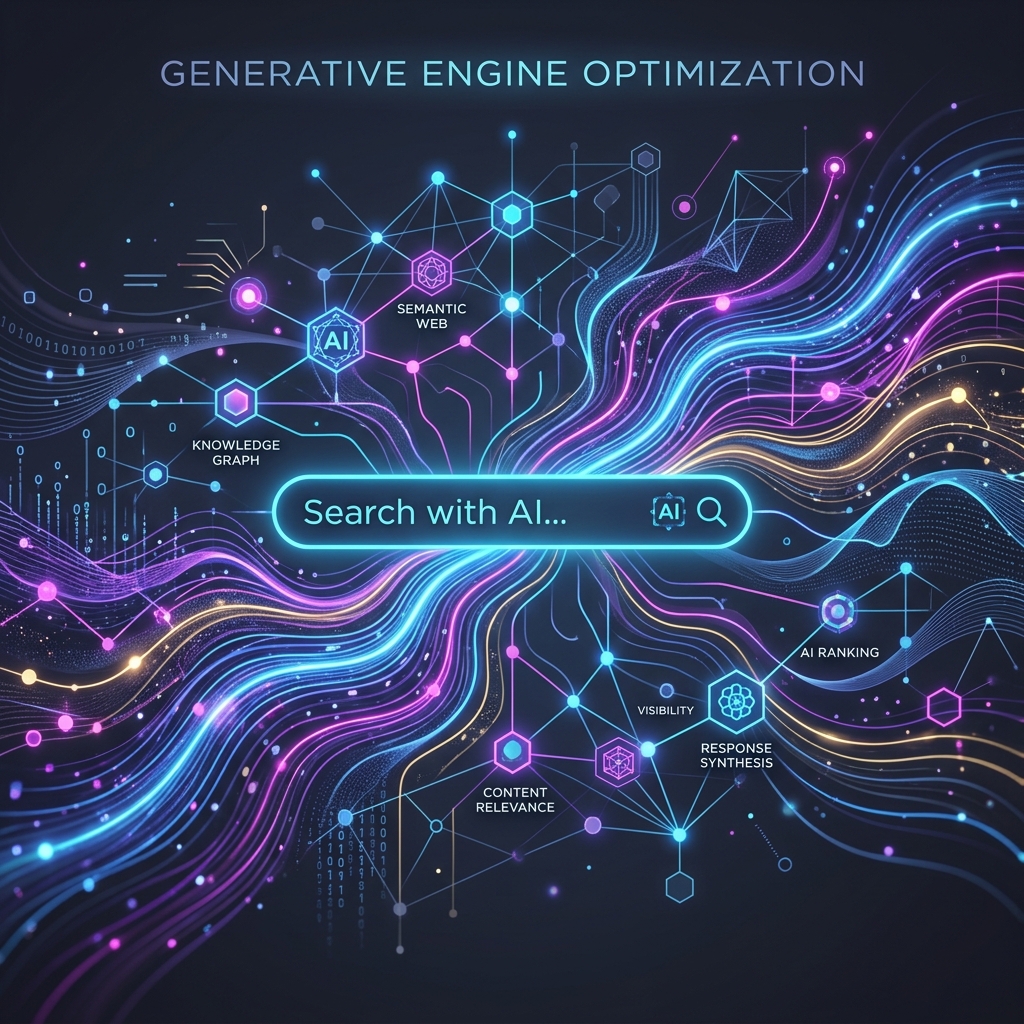
Leave a Reply