Related on Tygart Media: what Notion AI agents are · Claude vs Notion AI · how to use Claude.
The 60-second version
You don’t have to pick the model anymore. Notion 3.2 added auto-selection, which routes each request to the best-fit model from the available pool — currently including Claude Opus 4.7, GPT-5.2, and Gemini 3. Simple tasks (rewrites, summaries, quick drafts) go to faster models. Complex tasks (multi-step reasoning, long-context analysis, tool-heavy agent runs) go to more capable ones. You can override the selection per request, but the default behavior is “let Notion pick” — and for most workflows, that’s the right call.
Why auto-selection matters
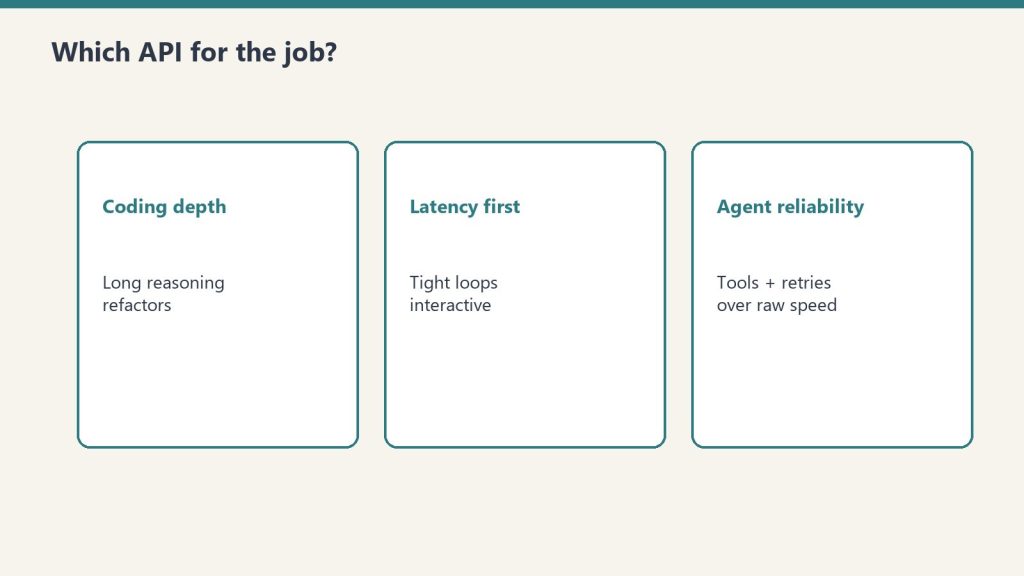
Three reasons it’s a meaningful shift:
1. You stop being a model-picker. Before auto-selection, getting good output required knowing which model handled which task best. That’s expert knowledge most users don’t have. Auto-selection internalizes that knowledge.
2. Cost-performance balance happens automatically. Faster models are cheaper to run; capable models are more expensive. Notion’s auto-selection routes simple work to cheap models and reserves expensive models for tasks that need them. After May 4, when credits start metering Custom Agent work, this matters financially.
3. Model diversity becomes a feature, not friction. Different models have different strengths. Claude is consistently strong on long-form writing and tool use. GPT is strong on broad reasoning. Gemini is strong on multimodal and certain analytical tasks. Auto-selection uses the right tool without forcing you to know which is which.
When to override the auto-selection
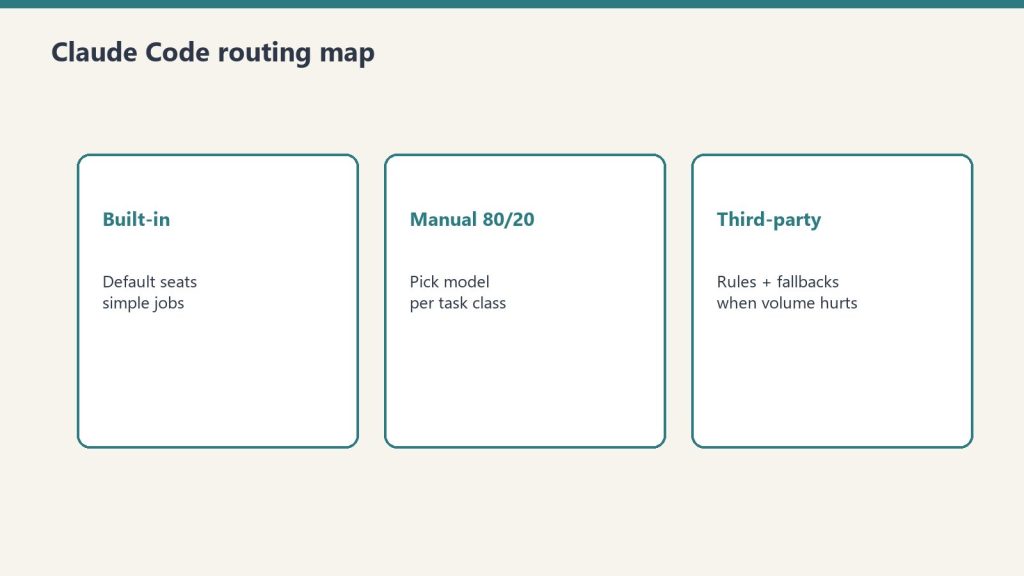
Three cases where manual model choice still wins:
1. You’ve measured a specific preference. If you’ve tested the same task across all three models and found one consistently better for your use case, lock to that one. Auto-selection optimizes for the average user; you may not be the average user.
2. You’re working in a domain with a clear model strength. Long-form editorial work where Claude’s prose quality is meaningfully better. Code work where GPT’s tool use feels more natural. Visual analysis where Gemini’s multimodal handles your case better.
3. Reproducibility matters. Auto-selection means today’s request might use Claude and tomorrow’s might use GPT. If you need consistent voice or behavior across runs, lock the model.
For everything else, auto-selection is fine. Stop optimizing the optimizer.
What auto-selection isn’t
It isn’t infinite model access. The pool is curated by Notion. You don’t get every model on the market. You get the ones Notion has integrated and validated for the platform.
It also isn’t a replacement for model expertise if you’re a developer building on the API. When you build with Workers or skills via the API, you may want explicit model selection because reproducibility matters more there than in interactive use.
How to verify auto-selection is working

A 5-minute test:
1. Open a page with substantive content (a project doc, an article, a meeting transcript)
2. Run three different prompts: a quick rewrite, a complex synthesis, and a multi-step extraction
3. Look at the output quality for each
4. If all three feel right for the task, auto-selection is doing its job
5. If any feel off — outputs that are too brief or too verbose, missing the task’s complexity — that’s where to consider manual override
Why Claude Opus 4.7 in particular matters
The Claude Opus 4.7 addition is worth noting separately. Anthropic’s latest uses fewer tokens (cheaper to run), makes 3x fewer tool errors (more reliable for agents that call Workers), and handles complex workflows better. For Notion specifically, that means agents that previously hit edge cases when chaining multiple skills or Workers now have a more reliable backbone.
If you’re heavy into Custom Agents and Workers, Opus 4.7 in the rotation is the quiet upgrade that makes everything more dependable.
Leave a Reply