
Almost every developer I trust has both Claude Code and Cursor open at the same time. The “which is better” question is the wrong one. The real question is which tool earns which job, and that answer has shifted twice in the last six weeks. Cursor 3.0 landed on April 2 with the Agents Window, Anthropic shipped Agent View into Claude Code on May 11, and Cursor Composer 2.5 dropped on May 18 — yesterday. If you locked in your mental model of these tools at the start of the year, it is already stale.
Here is the honest version of where they stand right now, where each one loses, and how I am actually using them in May 2026.
The pricing is closer than the discourse suggests
Both Pro tiers start at $20/month. Cursor knocks that to roughly $16 on annual billing, Anthropic to $17 on annual. From there the price ladders are nearly mirror images: Cursor sells Pro+ at $60 and Ultra at $200; Claude Code sells Max 5× at $100 and Max 20× at $200. Cursor Business is $40/seat with admin controls and centralized billing. Claude Code routes team buyers through Team Premium, which lands somewhere between $100 and $150 per seat depending on configuration.
For a ten-person engineering team, that math gets real. Cursor Business at $40 × 10 is $400/month. Claude Code via Team Premium is roughly $1,000–$1,500/month for the same headcount. That is a 2.5×–3.75× spread, and it is the single biggest reason Cursor still wins net-new enterprise pilots in 2026. Sticker shock is a feature, not a bug, in procurement.
Token efficiency cuts the other way. In side-by-side benchmark runs, Claude Code on Opus 4.7 has been hitting roughly 5× lower token usage than Cursor’s agent on identical tasks — one widely circulated benchmark showed 33K tokens vs 188K tokens for the same refactor. If you are on metered API pricing rather than a flat plan, the headline seat price is misleading. The plan tier you actually need depends on whether your team mostly types alongside the agent (Cursor’s strength) or dispatches autonomous jobs and walks away (Claude Code’s strength).
The May 2026 feature gap, honestly
Claude Code spent the spring building out parallelism. The headline is Agent View, which shipped in Claude Code v2.1.130 on May 11. Running claude agents opens a single CLI dashboard showing every background session, which ones are waiting on input, and which are still grinding. You can dispatch a session, send it to the background, and pull it forward only when it has a question. Combined with subagents — which already let you scope tool access and route to claude-haiku-4-5-20251001 for cheap exploration work before handing off to claude-opus-4-7 for the actual edits — you now get both horizontal parallelism between sessions and vertical parallelism inside one. The /goal command, also from this release window, lets you define outcome-based tasks that run with minimal supervision. Rate limits doubled in the same release window.
Cursor’s answer is the Agents Window from Cursor 3.0 (April 2), expanded yesterday by Composer 2.5. The Agents Window is the same idea as Agent View but lives inside the IDE rather than the terminal — multiple background agents, each in its own sandboxed checkout, running tests and shell commands while you keep editing. Composer 2.5 is Cursor’s house frontier model, tuned for low-latency agentic loops; Anthropic claims most turns complete in under 30 seconds, with a smaller Composer 2 variant doing cheap coordination work and calling out to stronger third-party models only when needed.
The contours: Claude Code’s parallelism story is built around a CLI agent that lives in your repo and treats the editor as optional. Cursor’s parallelism story is built around an IDE that treats the agent as one of several panes. Neither approach is obviously correct. Which one feels right depends on whether you already live in your terminal or your editor.
MCP support is finally a tie
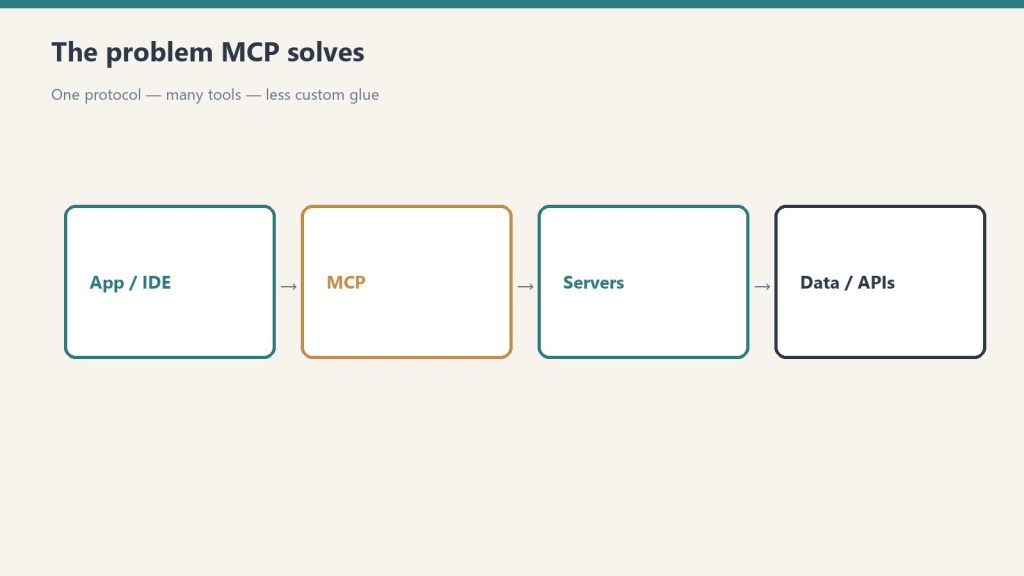
This was Claude Code’s structural advantage all the way through 2025 — native Model Context Protocol support, which let you wire the agent to Postgres, Notion, Linear, internal APIs, anything that spoke MCP. That moat is gone. Cursor shipped native MCP support during the 3.0 cycle and the rough edges are now mostly sanded down. Both tools can query your database schema mid-session, both can hit your Linear or Notion workspace, both let you write custom MCP servers for internal tooling.
The remaining difference is ecosystem inertia. The Anthropic-published MCP servers tend to land in Claude Code first, and the third-party MCP server registry skews toward Claude Code usage patterns. If you are wiring up esoteric internal systems, expect to write more glue code on the Cursor side. If you are connecting standard SaaS, both tools are fine.
Where Claude Code still wins outright
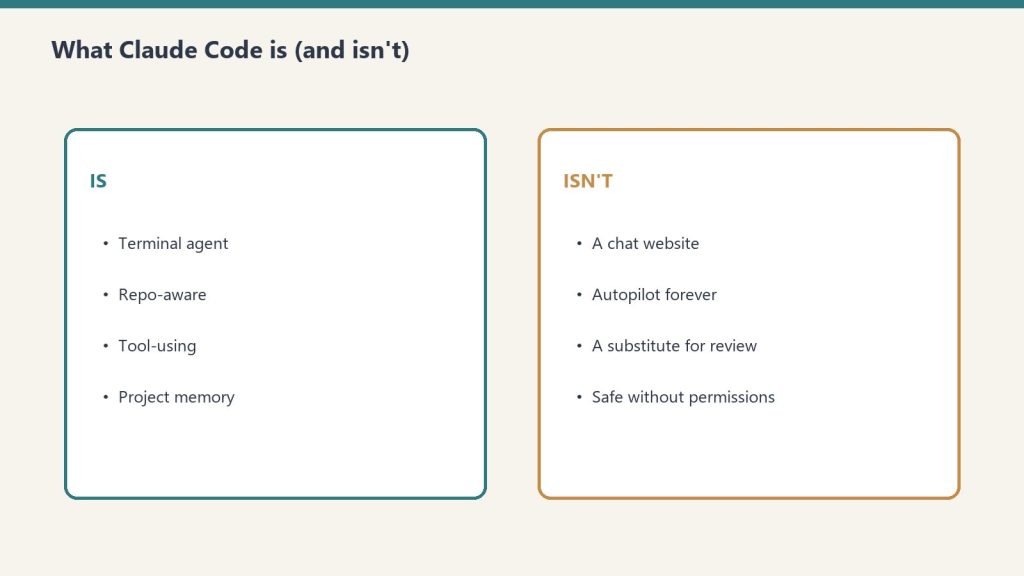
One-million-token context on Opus 4.7, generally available since March, with no surcharge — a 900K-token request costs the same per-token rate as a 9K one. For codebases above roughly 200K tokens of relevant context, this is decisive. Cursor in “auto” mode picks a model and manages context for you, which is fine for small repos and unreliable for large ones. When I am asking a question that genuinely requires the agent to hold most of a service in its head — cross-service refactors, undocumented legacy code, migration planning — I open Claude Code.
The other Claude Code win: the agent will happily run for an hour on a hard problem without checking in, then come back with a working branch. Cursor’s agent prefers shorter loops and more interaction. That is a design choice, not a defect on either side, but it makes Claude Code the right answer for “go fix this entire test suite while I am in standup.”
Where Cursor still wins outright
Anything where you want the agent to be a faster you, not a substitute for you. Inline completion is still better in Cursor. Tab completion is still better in Cursor. The “watch my edits and infer the pattern” loop is still tighter in Cursor. If 80% of your day is writing code with occasional AI assistance, the IDE wraps the model better than a CLI does, no matter how good the CLI gets.
The other Cursor win: cost discipline at scale. Composer 2 doing cheap coordination and calling out to Opus or GPT only when needed is a smart cost-management pattern, and it shows up in your monthly bill. Cursor’s @codebase, @docs, @web, and @file mentions let you constrain the context window manually, which means fewer tokens chewed up by speculative retrieval.
How I actually use them
Cursor for the 80% — daily edits, feature work, bug fixes where I am still doing most of the thinking. Claude Code for the 20% — anything where I want to dispatch the agent and stop watching. Migrations. Test suite repair. Schema refactors that touch fifteen files. Anything where the right loop is “kick it off, go to lunch, come back to a PR.”
The decision rule that keeps me sane: if I will be in the editor anyway, I use Cursor. If I would otherwise be doing something else while waiting, I use Claude Code’s Agent View and let it run.
The tools are converging on feature parity at the surface — both have agent dashboards, both speak MCP, both have background sessions, both ship frontier models. The differences left are about texture: where you live (terminal vs editor), how much autonomy you want to grant in a single turn, and whether your spend looks more like a flat subscription or a metered API line item. Pick the texture that matches how your day already runs. Switching cost is low. Switching pain is real.
📖 Recommended Reading in Claude Code Insider
Related on Tygart Media: how to use Claude · Anthropic API key.
Start here: Claude Code vs Cursor: Which AI Coding Tool is Better? — the full head-to-head comparison.
Leave a Reply