
Traditional analytics platforms can’t see the most important impression you’re making in 2026. When a user asks ChatGPT, Perplexity, Gemini, or Claude about your category, your brand either shows up in the answer or it doesn’t — and your GA4 dashboard has no idea either way. This is the measurement blind spot at the center of generative engine optimization. If you can’t measure LLM visibility, you can’t optimize for it.
This guide walks through the measurement stack that actually works in 2026: the GA4 channel grouping that catches AI referral traffic, the manual verification protocol that costs nothing, and the dedicated LLM visibility platforms that automate prompt monitoring at scale. By the end, you’ll have a measurement framework you can run starting today.
Why GA4 alone is not enough
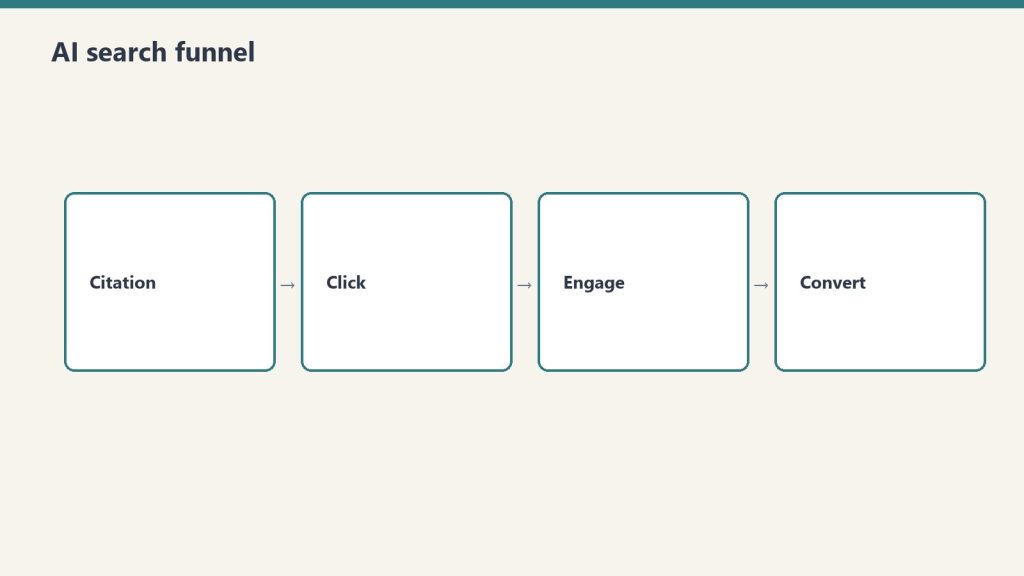
Standard web analytics measures what happens after the click. LLM visibility is what happens before the click — or instead of one. According to widely cited industry reporting, a large share of AI search sessions end without the user ever clicking through to a source, which means the brand impression inside the AI response is often the only impression you get. GA4 cannot see that impression. It cannot see when ChatGPT recommends you in a comparison. It cannot see when Perplexity cites your article as a source for an answer.
You still need GA4 — AI referral traffic is real, growing, and converts well — but you need it as one layer of a two-layer stack. Layer one is referral-side measurement, which captures the users who actually click through from AI platforms. Layer two is response-side measurement, which monitors what AI platforms are saying about you whether anyone clicks or not.
Layer one: catching AI referrals in GA4
GA4 does not have a built-in “AI” channel. By default, traffic from ChatGPT, Perplexity, Claude, and Gemini gets bucketed into the generic Referral channel, where it disappears next to social and partner sites. The fix is a custom channel group that uses a referrer regex to peel AI traffic out into its own bucket.
In GA4, go to Admin → Data Settings → Channel Groups, create a custom channel group, and add a new rule above the default Referral rule. Set the conditions to Source matches regex and use a pattern like this:
chatgpt\.com|openai\.com|perplexity\.ai|claude\.ai|anthropic\.com|gemini\.google\.com|copilot\.microsoft\.com|deepseek\.com|you\.com|meta\.ai|poe\.comThe order matters. Your AI Traffic rule must sit above the Referral rule in the priority list, or AI traffic will be captured by Referral first and never reach your custom channel. Once the rule is live, you can build Explorations that segment AI traffic by source, page, conversion rate, and engagement time — and compare that segment against organic, direct, and social.
The referrer attribution gap
One caveat: not every AI click passes a referrer. ChatGPT’s free tier in particular has been reported to strip referrer headers in many configurations, meaning a meaningful share of ChatGPT traffic shows up as Direct in GA4 rather than as a chatgpt.com referral. This is a known limitation across the industry. Treat your AI referral numbers as a floor, not a ceiling, and use response-side monitoring to fill in the gap.
Layer two: response-side monitoring
This is the measurement that traditional SEO never needed. You’re no longer just asking “did anyone visit?” — you’re asking “what is the AI saying about me?” There are two ways to answer that question.
The manual verification protocol
The free, no-tool approach is a structured query log. Build a list of 15 to 25 prompts that a buyer in your category would realistically type into an AI assistant. Be specific. “Best CRM for small B2B teams” is a prompt. “What is a CRM” is not — that’s a research query, not a buyer query.
Once a week, run every prompt through each AI platform you care about — typically ChatGPT, Perplexity, Gemini, and Claude — and record three things per query: whether your brand was mentioned, whether your domain was cited as a source, and what position your brand appeared in if it was named alongside competitors. A simple spreadsheet with prompt, date, platform, mention (yes/no), citation (yes/no), and position is enough to start. Week-over-week deltas on this sheet will tell you whether your GEO and AEO work is moving the needle.
This is slow and manual but it’s the only method that gives you ground truth. The dedicated platforms below are essentially automating this protocol — running the same kind of prompt log against the same APIs on a daily schedule. If you’re under $1,000/month in marketing spend, run it manually. If you’re past that, automate it.
Dedicated LLM visibility platforms
A new category of tools emerged in 2025 and matured in 2026 specifically to monitor LLM responses. They all do roughly the same thing — run your target prompts daily across multiple AI engines, score visibility, track which sources the AIs cite, and surface competitor gaps — but they segment by price point.
At the budget end, Otterly.AI offers monitoring plans starting around $29/month, with a Share of AI Voice metric and time-to-first-data of under ten minutes after signup. It’s the simplest entry point for teams that just want a citation-frequency dashboard. In the mid-market, Peec AI starts around €89/month and emphasizes multilingual coverage and actionable recommendations — it doesn’t just tell you you’re invisible, it suggests what to change. At the enterprise tier, Profound starts around $499/month and adds Prompt Volumes, which estimates real AI search demand by topic with demographic breakdowns. SOC 2 compliance and dedicated onboarding generally start at the $1,000+ enterprise tiers across this category.
Other platforms in active use this year include Semrush’s AI Toolkit, SE Ranking’s SE Visible, Goodie AI, Rankscale, Nightwatch, AirOps, and Searchable. The category is moving fast — pricing and features change quarterly — so verify the current state of any platform before committing.
The six KPIs to track
Whatever measurement stack you use, the same handful of metrics will tell you whether GEO is working. Organize them into leading and lagging indicators:
Leading indicators (response-side, change first):
- Mention Rate — the percentage of monitored prompts where AI responses mention your brand name. This is the broadest signal.
- Citation Rate — the percentage of monitored prompts where your domain is cited as a source, not just named. Citation is stronger than mention because it implies the AI is treating your content as authoritative.
- Position — when your brand is named alongside competitors, where in the list does it appear. First-named brands get disproportionate attention.
Lagging indicators (referral and revenue-side, change later):
- AI Referral Sessions — total sessions from your AI Traffic channel group in GA4.
- AI Referral Engagement — engagement rate and average engagement time for the AI segment, compared to organic. Strong AI referral traffic typically engages longer because the user arrived with intent already framed by the AI.
- AI-Influenced Conversions — conversions where AI was part of the attribution path, even if not the last touch.
Tier-one metrics move first because content changes affect what AIs say within days to weeks. Tier-two metrics lag because they require enough traffic to be statistically meaningful, which can take a quarter or more to develop.
The minimum viable setup

If you do nothing else this week, do these three things:
- Add the AI Traffic channel group to GA4 using the regex above and move it above Referral in priority.
- Build a 15-prompt spreadsheet of buyer-intent queries for your category and run them once across ChatGPT, Perplexity, Gemini, and Claude. Record mention, citation, and position.
- Set a calendar reminder to repeat step two every Friday for four weeks. After four weeks you’ll have a real trendline.
That setup costs nothing and produces the measurement layer that lets you tell whether your GEO, AEO, and LLMs.txt work is actually compounding — or whether you’re guessing. Once the trendline is stable, evaluate whether automating with Otterly, Peec, or Profound is worth the spend. For most operators, the manual protocol gets you 80% of the insight at 0% of the budget.
Related on Tygart Media: LLM visibility measurement · citation monitoring · Bing Webmaster AI tab.
Frequently Asked Questions
What is LLM visibility?
LLM visibility is the measurement of how often, and how prominently, a brand or website appears in responses generated by large language models like ChatGPT, Perplexity, Gemini, and Claude. It is the response-side counterpart to traditional search ranking — instead of measuring where you appear in a results page, you’re measuring whether AI assistants mention or cite you when answering questions in your category.
Can GA4 track AI traffic from ChatGPT and Perplexity?
GA4 can track AI referral clicks if you create a custom channel group with a referrer regex matching AI domains and place it above the default Referral rule. It cannot track impressions inside AI responses where the user doesn’t click through, and ChatGPT’s free tier often strips referrers entirely, so a portion of AI traffic still lands in Direct. Treat GA4 numbers as a floor.
What is the difference between mention rate and citation rate?
Mention rate measures the percentage of monitored AI prompts where your brand name appears anywhere in the response. Citation rate measures the percentage where your specific domain or URL is referenced as a source. Citation is a stronger signal because it indicates the AI is treating your content as authoritative, not just naming you in passing.
Which LLM visibility tool should I use in 2026?
For budget-conscious teams, Otterly.AI starts around $29/month and gets you to first data in minutes. For mid-market needs with multilingual coverage and recommendations, Peec AI starts around €89/month. For enterprise teams that need prompt-volume demand data and SOC 2 compliance, Profound starts around $499/month. Verify current pricing before purchasing — the category moves quickly.
How often should I check my LLM visibility?
For manual tracking, weekly is the right cadence — frequent enough to catch movement, infrequent enough to avoid noise. Dedicated platforms typically run automated checks daily and let you review weekly. Don’t expect day-to-day stability; AI responses have inherent variance, so look at week-over-week and month-over-month trends rather than single data points.
Leave a Reply