
Last refreshed: October 5, 2026 (Pacific)
Claude Code pricing has stopped being a clean sticker number and started being a question of which ceiling you hit first. There is a $20 plan, a $100 plan, and a $200 plan — and underneath all three sits a 5-hour rolling window, a weekly active-hours cap added in August 2025, and a per-model multiplier that quietly makes Opus 5.5 the most expensive thing you can do inside the terminal. If you came looking for the right plan, the honest answer is: it depends on whether you are mostly a Sonnet operator or you live in Opus.
The three subscription tiers, stripped down
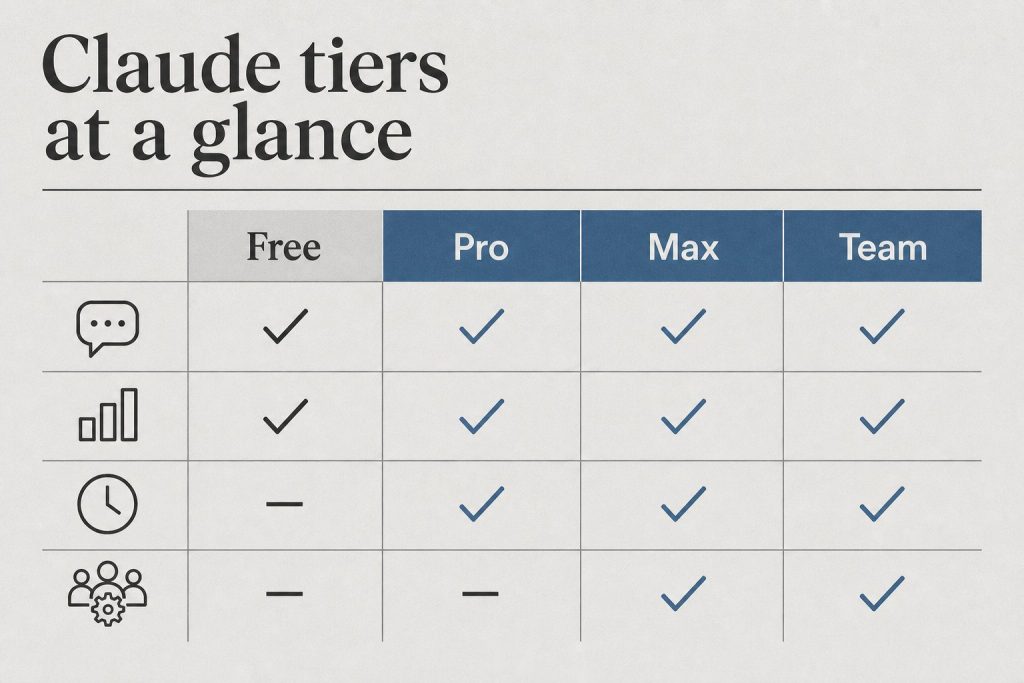
Pro — $20/month. Access to Claude Code in the terminal, web, and desktop, with both Sonnet 5.5 and Opus 5.5 available. The practical envelope is about 44,000 tokens per 5-hour window and roughly 40–80 weekly active hours on Sonnet, depending on session concurrency. This is the plan for someone running Claude Code a few hours a day on focused work — refactors, scoped feature builds, debugging passes — not someone leaving an agent running while they eat lunch.
Max 5x — $100/month. Five times the Pro envelope, plus priority during peak demand. The window allocation lands around 88,000 tokens per 5-hour block. This is the tier where you stop thinking about token budgets during a single working day and start thinking about them across a whole week. Picked correctly, it is the cheapest way to use Claude Code as your primary IDE companion without flipping over to API billing.
Max 20x — $200/month. Twenty times Pro — about 220,000 tokens per window — which translates to roughly 480 Sonnet-hours or about 40 Opus-hours per week before the weekly cap kicks in. Real-world reports from early 2026 had $200/month users watching single Opus prompts eat 10–20% of their daily allocation; Anthropic publicly acknowledged the problem, expanded capacity, and doubled the 5-hour rate limit for Pro and Max accounts. If you are running Claude Code across multiple repos all week and reaching for Opus on the hard problems, this is the tier that stops you from staring at a rate-limit wall.
The API, as a sanity check

If you want a sanity check on whether the subscription math works, price the same workload against the API:
- Claude Haiku 4.5 (
claude-haiku-4-5-20251001): $1.00 input / $5.00 output per million tokens - Claude Sonnet 5.5 (
claude-sonnet-5-5): $2.00 input / $10.00 output per million tokens - Claude Opus 5.5 (
claude-opus-5-5): $4.00 input / $20.00 output per million tokens
Prompt caching is the lever almost nobody uses correctly. Cache writes cost 1.25x input price for the 5-minute TTL or 2.0x for the 1-hour TTL, but cache reads cost 0.05x — a 95% discount on every subsequent request that hits the same context. If your .clauderules file, project map, and the file you are editing are all stable for an hour, the bill on a long pairing session can drop by an order of magnitude. The Batch API knocks another 50% off both directions for asynchronous workloads, which is worth knowing if you are running large refactor sweeps.
One trap on Opus 4.7 specifically: the model uses a new tokenizer that inflates token counts by up to 35% on identical text compared to Opus 4.6. The headline price did not change, but your effective spend per request did — sometimes by nothing, sometimes by a third, depending on the content. If you migrated from Opus 4.6 and your bill went up without your prompt patterns changing, that is the reason.
How to actually choose
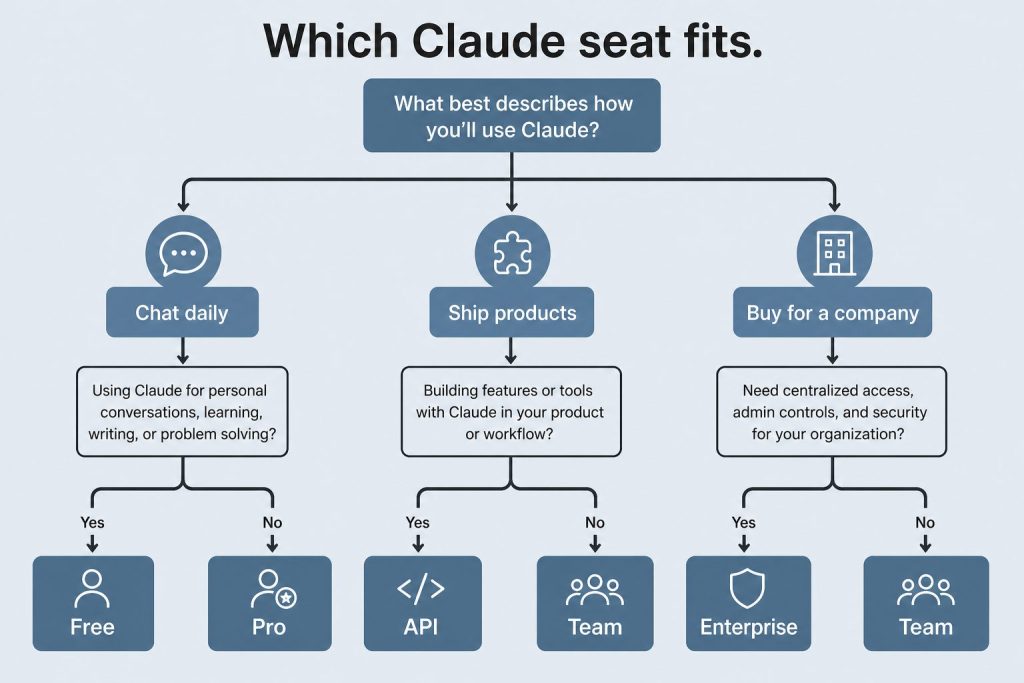
The cleanest way to pick a plan is to first decide your model mix, then your weekly hours.
If you are mostly a Sonnet operator — long agentic runs, multi-file edits, codebase Q&A, with Opus only reached for on the architectural questions — Pro at $20 is plausible up to about 5–8 hours of focused use per day, Max 5x covers most full-time individual developers, and Max 20x is overkill unless you are running multiple sessions in parallel.
If you live in Opus — long-horizon agentic work, hard refactors across many files, anything where you would rather have one good attempt than three Sonnet retries — Pro will frustrate you within two weeks, Max 5x is the realistic floor, and Max 20x is the only tier that gives you a defensible Opus envelope without bouncing over to API billing.
And if you are running Claude Code across multiple repos all week, leaving agents to grind on tasks while you do other things, Max 20x is the only subscription that holds up — and even then, the weekly cap is real. Use the API for the spillover and you will still come out cheaper than trying to brute-force a smaller plan.
The number that matters
One developer’s public report this year: roughly 10 billion tokens consumed across Claude Code over eight months. API metered cost would have exceeded $15,000. The same workload on Max at $100/month for the same window came in around $800 — about 93% cheaper. That is the gap that makes the subscription model worth taking seriously, even when the rate limits feel arbitrary. The $200 tier is not a vanity number; it is the price Anthropic charges to stop being a meaningful constraint on your workflow.
The right way to read Claude Code pricing in October 2026 is not to ask which plan is cheapest. It is to ask which plan is the cheapest one that disappears — the one that stops appearing in your day. For most full-time developers reaching for Opus regularly, that plan is Max 20x. For everyone else, Max 5x is the first plan that actually gets out of your way.
📖 Recommended Reading in Claude Code Insider
Related on Tygart Media: how to use Claude · Anthropic API key.
Part of the complete guide: Claude Code
Two meters
- Seat — claude.ai / Claude Code usage cap on Pro, Max, Team, Enterprise.
- API — prepaid credits in the console. Same models, different bill.
Official seats: claude.com/pricing and the Team Help Center article. Official tokens: API pricing.
Token rates used inside Code (API path)
| Model | In / out per MTok | When |
|---|---|---|
| Haiku 4.5 | $1 / $5 | Cheap lookups |
| Sonnet 5.5 | $2 / $10 | Current Sonnet |
| Opus 5.5 | $4 / $20 | Current Opus. Docs say start here |
| Opus 5 | $5 / $25 | Legacy. Still listed |
| Fable 5.1 | $10 / $50 | Only if the job is worth it |
Sonnet 4.6 ($3 / $15), Opus 4.7 ($5 / $25), and Opus 4.8 ($5 / $25) remain on the legacy list. Do not start new work on them. Opus 5.5 fast mode is up to 2.5× faster at 2× standard pricing.
Which seat
- Light Code: Pro.
- Several hours a day: Max 5×.
- All-day / long agents: Max 20×.
- 2–150 people, one bill: Team. Premium if those seats burn the weekly cap.
- SSO / SCIM / audit and usage that should scale: Enterprise.
- Unattended pipelines: console API key with a spend cap.
Related: current models · console setup.
Part of the complete guide: Claude Code
Leave a Reply