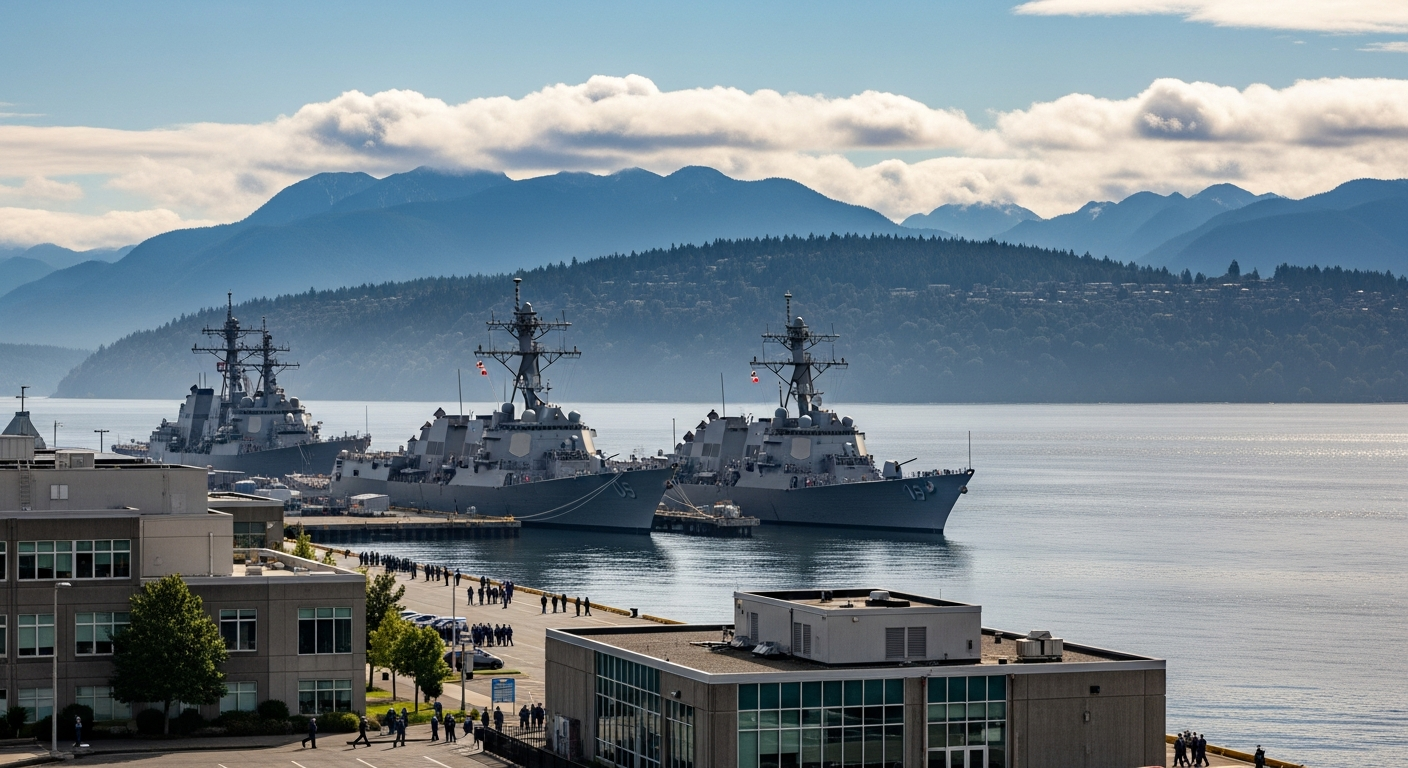
For NAVSTA Everett families: The new VOAWW Pallet Shelter Village on Sievers-Duecy Boulevard — 20 units for women and children, opened April 27, 2026 — is part of a growing Snohomish County civilian safety net that Navy spouses and dependents should know exists. Military families experience housing crises at rates above the civilian average, often triggered by PCS transitions, deployment, separation, or financial hardship. The civilian resources described here do not require active-duty status, rank, or command referral to access.
Military families understand housing pressure in ways the civilian world rarely talks about openly. PCS orders arrive with 30 days notice. Base housing waitlists run months long. A deployment can change the calculus of whether a family stays in Everett or moves back to extended family. A separation — whether from the military or from a spouse — can leave a Navy wife with children in a city she didn’t choose, navigating a rental market where Snohomish County’s April 2026 median home price is $750,000 and rental vacancies are tight.
Everett’s civilian safety net has grown significantly in the past two years. The newest addition — VOAWW’s 20-unit Pallet Shelter Village for women and children, which opened April 27, 2026, off Sievers-Duecy Boulevard — is the piece most military families haven’t heard about yet. This guide maps the full picture. For the complete guide to the shelter itself, see the VOAWW Pallet Shelter complete guide.
Last refreshed: October 17, 2026 (Pacific).
The VOAWW Pallet Shelter: What It Is
VOAWW operates the new Pallet Shelter Village on city-owned land off Sievers-Duecy Boulevard in west Everett. Twenty units, each housing one woman and up to three children, opened April 27, 2026. Each unit has a lockable door, climate control, and secure storage. The surrounding village has a community kitchen, showers, restrooms, and a playground. Stays are up to 12 months, with wraparound recovery and job support from VOAWW. Funding came from City of Everett ARPA dollars and a $250,000 Snohomish County match — total project cost $2.7 million.
Who can access it: any woman with children experiencing homelessness in Snohomish County. There is no military-specific restriction, but also no military-preference track. Referrals through VOAWW or 211.
Why Navy Families Should Know This Exists
The NAVSTA Everett Family Support ecosystem — Fleet and Family Support Center (FFSC) at 425-304-3735, the Command Financial Specialist program, unit ombudsmen, and Military Family Life Counselors (MFLCs) available without referral — is the first-line support system. Use it. But when a Navy spouse finds herself in a housing crisis that extends beyond what the military support chain can resolve — particularly if a marriage has ended, if a sailor is deployed and the family’s housing situation has collapsed, or if financial crisis has made the current arrangement unworkable — civilian resources become the path forward.
The Full Snohomish County Resource Map for Military Families in Crisis
VOAWW Pallet Shelter Village (Sievers-Duecy) — Women with children, transitional, up to 12 months. Referrals through VOAWW (voaww.org) or 211.
Everett Gospel Mission — West Everett, with a $30 million expansion underway adding 172 shelter beds. Emergency shelter, meals, recovery support, transitional housing. See the complete Gospel Mission guide.
211 Snohomish County — Dial 2-1-1 or text your zip code to 898-211. 24 hours, multilingual. Real-time referrals to all housing resources in the county.
Snohomish County Veterans Assistance Program — 3000 Rockefeller Avenue, Everett. Emergency financial assistance for veterans and families, including rent and utilities. County-funded, not VA benefits. Does not require service-connected disability.
Everett Vet Center — 3311 Wetmore Avenue, Everett. Counseling, readjustment support, and referrals. Specific expertise helping veterans and military families navigate civilian systems after separation or during family crises.
HousingHope — Snohomish County’s largest homeless services and affordable housing nonprofit. Family housing programs, rapid rehousing assistance, transitional units. No military restriction.
FFSC Everett (Fleet and Family Support Center) — 425-304-3735 at NAVSTA Everett. Financial counseling, crisis intervention, relocation support, and civilian resource referrals. Works with Navy spouses even during deployment. No command referral required.
For the broader 2026 NAVSTA mental health resource map, see Mental Health Awareness Month at NAVSTA Everett 2026.
A Note on Privacy
Military families sometimes hesitate to access civilian resources out of concern it will be visible to the chain of command or affect a service member’s career. Civilian resources — VOAWW, Everett Gospel Mission, 211, Snohomish County Veterans Assistance, HousingHope — have no connection to the military reporting chain. Accessing them is confidential. The FFSC also operates under client confidentiality rules and does not report to command except in specific safety situations. If you are unsure, ask the FFSC intake counselor about their confidentiality policy before sharing information.
Frequently Asked Questions for Navy Families at NAVSTA Everett
Can a Navy spouse access the VOAWW Pallet Shelter if her service member is deployed?
Yes. The shelter serves women with children experiencing homelessness regardless of military status. Deployment status of a spouse does not affect eligibility.
Does accessing civilian housing resources affect a service member’s security clearance?
Accessing civilian homelessness resources is not a reportable event for security clearance purposes. Consult with a JAG officer or legal assistance attorney if you have specific clearance concerns.
How long can a family stay at the VOAWW Pallet Shelter?
Up to 12 months, with wraparound services from VOAWW. This is a transitional shelter, not emergency overnight housing.
What if the shelter doesn’t have availability?
Contact 211 (dial 2-1-1) for real-time referrals to other available resources in Snohomish County. The FFSC can also assist with emergency housing referrals.
Does the Snohomish County Veterans Assistance Program serve active-duty families?
The program primarily serves veterans. Active-duty family members in crisis should start with FFSC, which can facilitate access to emergency funds and make civilian resource referrals.
Is the FFSC confidential?
The FFSC operates under client confidentiality rules and does not report to command except in specific safety situations. Ask the intake counselor directly about their confidentiality policy.
Leave a Reply