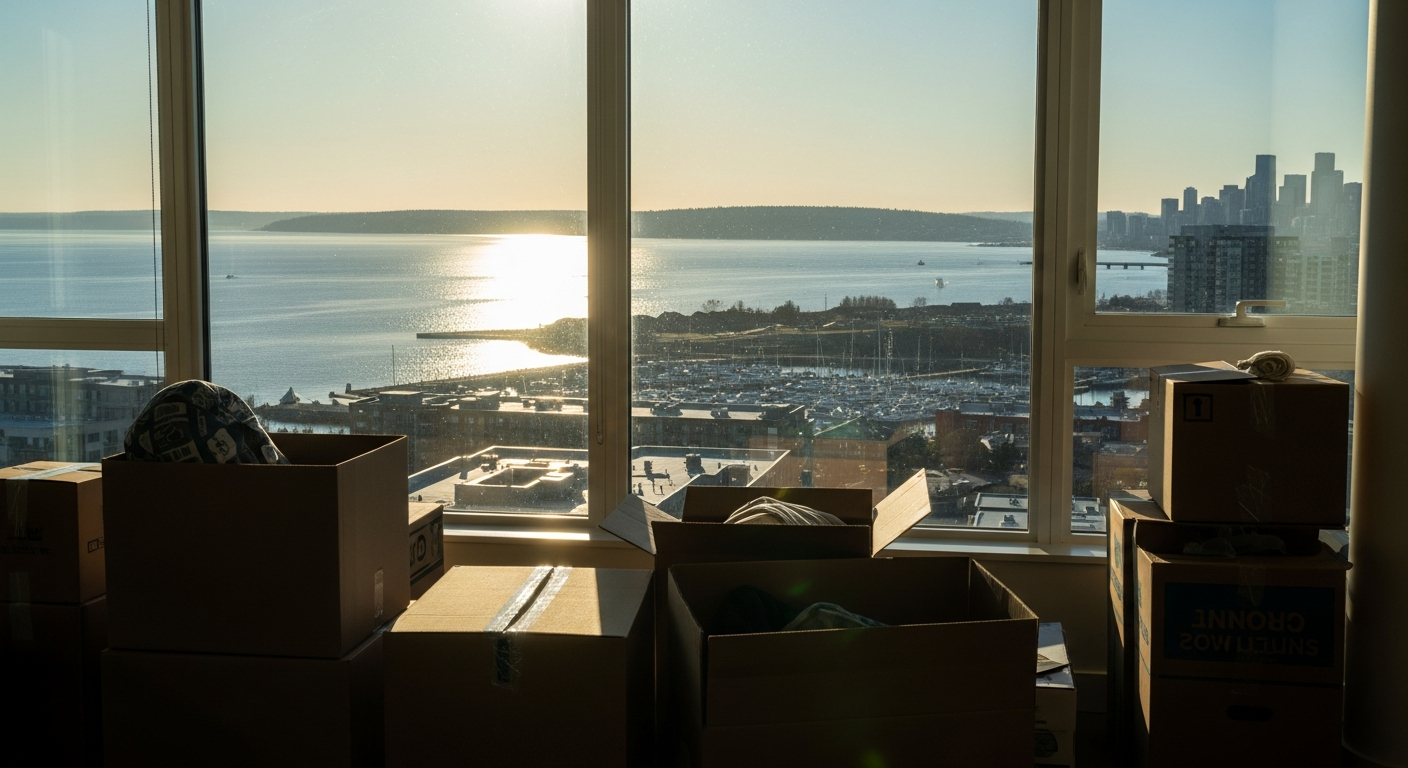
For people moving to Everett in 2026: The Sound Transit June 30 vote matters more than most relocation guides will tell you. Which neighborhoods you buy or rent in, whether transit-oriented development assumptions hold, and how Everett compares to Lynnwood or South Snohomish County as a place to live — all of it turns on whether the full Everett spine gets funded or gets truncated at SW Everett near Paine Field.
If you’re planning a move to Everett — from Seattle, from King County, or relocating for a Boeing job or a Navy assignment at NAVSTA Everett — the Sound Transit board vote on June 30, 2026 is a piece of context that will shape your neighborhood decision for years.
Why Light Rail Matters for Where You Live in Everett
Everett is a city of 114,070 people with 21 distinct neighborhoods. Where you live relative to the planned light rail stations will determine whether your daily commute improves dramatically or stays dependent on driving and buses over the next decade.
Lynnwood City Center opened its Link station in 2024. Residents of Lynnwood now have a direct light rail connection to the University District, Capitol Hill, and downtown Seattle. Everett is next on the spine — but the question of when, and how far north rail actually goes, depends on the June 30 vote.
The Stations That Are Planned for Everett
The full Everett Link Extension, if funded under Approaches 1 or 2, would include stations at: Ash Way (near Ash Way Park and Ride), Mariner (near 128th Street SW), SW Everett Industrial Center (the Paine Field/Boeing area), Airport Road, SR 526/Evergreen Way, and downtown Everett Station (connected to Everett Station transit hub).
Under Approach 3, rail would stop at SW Everett Industrial Center. Downtown Everett and the four stations between SW Everett and Everett Station would not be built in this phase.
The Mariner neighborhood — which sits near the planned Mariner station — is currently under a city-funded annexation study. What the Mariner annexation study means for residents explains the context.
Neighborhoods to Evaluate Differently Based on the Vote Outcome
If Approaches 1 or 2 pass (full spine): Neighborhoods along the corridor from Mariner through central Everett to downtown — including the Broadway District, Bayside, Port Gardner, and the Millwright District waterfront — would all sit within the broader light rail catchment. Downtown Everett Station would become a regional transit hub. Commute access to Seattle via Link would be a real option.
If Approach 3 passes (truncated at SW Everett): Paine Field-adjacent neighborhoods and the SW Everett industrial corridor get a station. Central and northern Everett neighborhoods — where housing costs are often lower — do not get the transit premium. The commute picture for downtown-area residents stays bus-and-drive for the foreseeable future.
Everett vs. Lynnwood: The Current Comparison
Right now, Lynnwood has a transit advantage Everett doesn’t yet have. A Lynnwood resident can ride Link to Seattle in roughly 35–40 minutes. An Everett resident driving to Lynnwood to catch Link adds 20–30 minutes each way. When the Everett extension opens — under any approach — that advantage shifts. But the full spine to downtown Everett Station creates a much stronger case for living in central Everett than a truncated SW Everett connection does.
For the full neighborhood picture: Everett’s three housing submarkets — a complete 2026 guide. And for the transit baseline: The complete guide to the Everett Transit and Community Transit merger.
The June 30 Timeline and What Comes Next
The board adopts the revised ST3 System Plan by June 30. This sets the policy framework — it does not immediately change construction schedules. Environmental review, station design finalization, and procurement follow over subsequent years. The opening window of 2037–2041 for the full Everett extension could shift based on the adopted approach and any design changes.
For the full guide to what the vote means for Everett: The complete 2026 guide to the Sound Transit June 30 vote.
Frequently Asked Questions
How does the Sound Transit June 30 vote affect people moving to Everett?
The vote determines which Everett neighborhoods will have direct light rail access and when. Full spine approaches (1 and 2) deliver a downtown Everett Station with regional connections. Approach 3 truncates at SW Everett near Paine Field, leaving central and northern Everett neighborhoods without a light rail stop in this phase.
Which Everett neighborhoods are closest to planned light rail stations?
Mariner sits near the planned Mariner station. The SW Everett Industrial Center station serves the Paine Field/Boeing corridor. Under the full spine, downtown Everett and Everett Station would anchor the northern terminus, benefiting Broadway District, Bayside, and Port Gardner neighborhoods. The Mariner station is in all three approaches.
When would Everett light rail open?
Sound Transit’s working timeline for the Everett extension is 2037 to 2041. The June 30 vote and subsequent design decisions will refine that range.
Is it better to live in Lynnwood than Everett for transit access right now?
Lynnwood currently has a Link station giving direct access to Seattle, Bellevue, and Sea-Tac. Everett residents must drive or bus to Lynnwood to access Link. When the Everett extension opens — under any approach — that gap closes. The full spine delivers stronger transit access for central and downtown Everett than a truncated SW Everett connection.
What is the Mariner annexation and how does it connect to light rail?
Everett City Council funded a study to potentially annex the Mariner neighborhood, which sits near a planned light rail station. The annexation’s transit-oriented development rationale depends partly on that station being built. A truncation that skips Mariner would weaken the case for annexation.
Leave a Reply