
Last refreshed: October 20, 2026
The answer to the question in the title is: it depends, and the framework for deciding is more important than any blanket yes or no. But before we get to the framework, it is worth spending some time on why the question is harder than the AI industry’s current marketing posture suggests.
In the spring of 2026, the dominant narrative at AI engineering conferences and in developer tooling launches is one of frictionless connection. Give your AI access to everything. Let it read your email, monitor your calendar, respond to your Slack, manage your files, run commands on your server. The more you connect, the more powerful it becomes. The integration is the product.
This narrative is not wrong exactly. Broadly connected AI agents are genuinely powerful. The capabilities being described are real and the productivity gains are real. What gets systematically underweighted in the enthusiasm — sometimes by speakers who are simultaneously naming the risks and shipping the product anyway — is what happens when those capabilities are exploited rather than used as intended.
This article is the risk assessment the integration demos skip.
What the AI Engineering Community Actually Knows (And Ships Anyway)
The most clarifying thing about the current moment in AI security is not that the risks are unknown. It is that they are known, named, documented, and proceeding regardless.
Get The Signal
What we actually ran, what it measured, and what it means for a restoration shop — every week, including the flops.
At the AI Engineer Europe 2026 conference, the security conversation was unusually candid. Peter Steinberger, creator of OpenClaw — one of the fastest-growing AI agent frameworks in recent history — presented data on the security pressure his project faces: roughly 1,100 security advisories received in the framework’s first months of existence, the vast majority rated critical. Nation-state actors, including groups attributed to North Korea, have been actively probing open-source AI agent frameworks for exploitable vulnerabilities. This was stated plainly, in a keynote, at a major developer conference, and the session continued directly into how to build more powerful agents.
The Lethal Trifecta framework — the recognition that an agent with private data access, untrusted content access, and external communication capability is a qualitatively different risk than any single capability — was presented not as a reason to slow down but as a design consideration to hold in mind while building. Which is fair, as far as it goes. But the gap between “hold this in mind” and “actually architect around it” is where most real-world deployments currently live.
The point is not that the AI engineering community is reckless. The point is that the incentive structure of the industry — where capability ships fast and security is retrofitted — means that the candid acknowledgment of risk and the shipping of that risk can happen in the same session without contradiction. Individual operators who are not building at conference-demo scale need to do the risk assessment that the product launches are not doing for them.
The Three Capabilities and What Each Actually Means
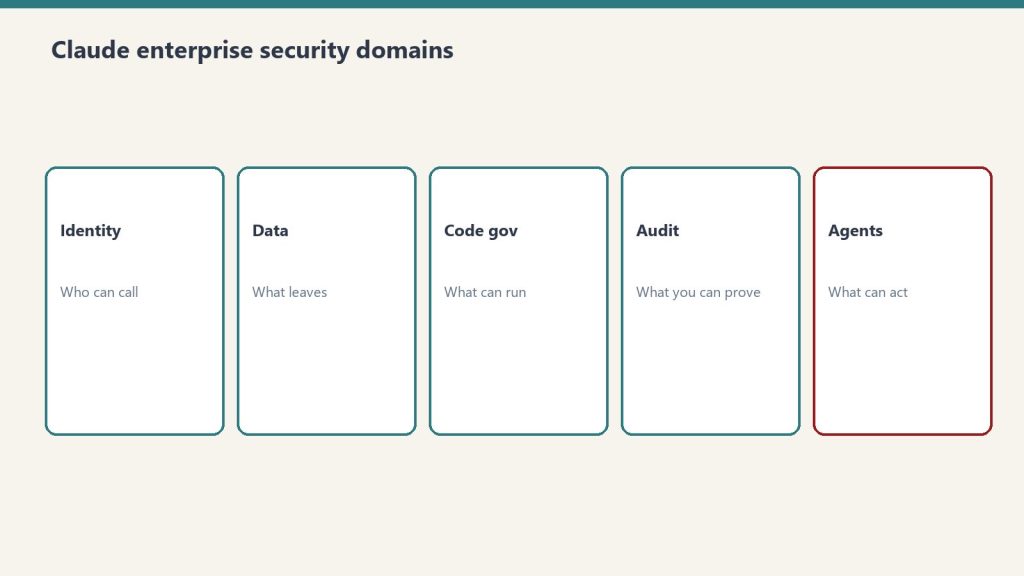
The Lethal Trifecta is a useful lens because it separates three capabilities that are often bundled together in integration pitches and treats each one as a distinct risk surface.
Access to Your Private Data
This is the most commonly understood capability and the one most people focus on when thinking about AI privacy. When you connect Claude — or any AI agent — to your email, your calendar, your cloud storage, your project management tools, your financial accounts, or your communication platforms, you are giving the AI a read-capable view of data that exists nowhere else in the same configuration.
The risk is not primarily that the AI platform will misuse it, though that is worth understanding. The risk is that the AI becomes a single point of access to an unusually comprehensive portrait of your life and work. A compromised AI session, a prompt injection, a rogue MCP server, or an integration that behaves differently than expected now has access to everything that integration touches.
The practical question is not “do I trust this AI platform” but “what is the blast radius if this specific integration is exploited.” Those are different questions with different answers.
Access to Untrusted External Content
This capability is less commonly thought about and considerably more dangerous in combination with the first. When you give an AI agent the ability to browse the web, read external documents, process incoming email from unknown senders, or access any content that originates outside your controlled environment, you are exposing the agent to inputs that may be deliberately crafted to manipulate its behavior.
Prompt injection — embedding instructions in content that the AI will read and act on as if those instructions came from you — is not a theoretical vulnerability. It is a documented, actively exploited attack vector. An email that appears to be a routine business inquiry but contains embedded instructions telling the AI to forward your recent correspondence to an external address. A web page that looks like a documentation page but instructs the AI to silently modify a file it has write access to. A document that, when processed, tells the AI to exfiltrate credentials from connected services.
The AI does not always distinguish between instructions you gave it and instructions embedded in content it reads on your behalf. This is a fundamental characteristic of how language models process text, not a bug that will be patched in the next release.
The Ability to Communicate Externally
The third leg of the trifecta is what turns a read vulnerability into a write vulnerability. An AI that can read your private data and read untrusted content but cannot take external actions is a privacy risk. An AI that can also send email, post to Slack, make API calls, or run commands has the ability to act on whatever instructions — legitimate or injected — it processes.
The combination of all three is what produces the qualitative shift in risk profile. Private data access means the attacker gains access to your information. Untrusted content access means the attacker can deliver instructions to the agent. External action capability means those instructions can produce real-world consequences without your direct involvement.
The agent that reads your email, processes an injected instruction from a malicious sender, and then forwards your sensitive files to an external address is not a hypothetical attack. It is a specific, documented threat class that AI security researchers have demonstrated in controlled environments and that real deployments are not consistently protected against.
Cross-Primitive Escalation: The Attack You Are Not Modeling
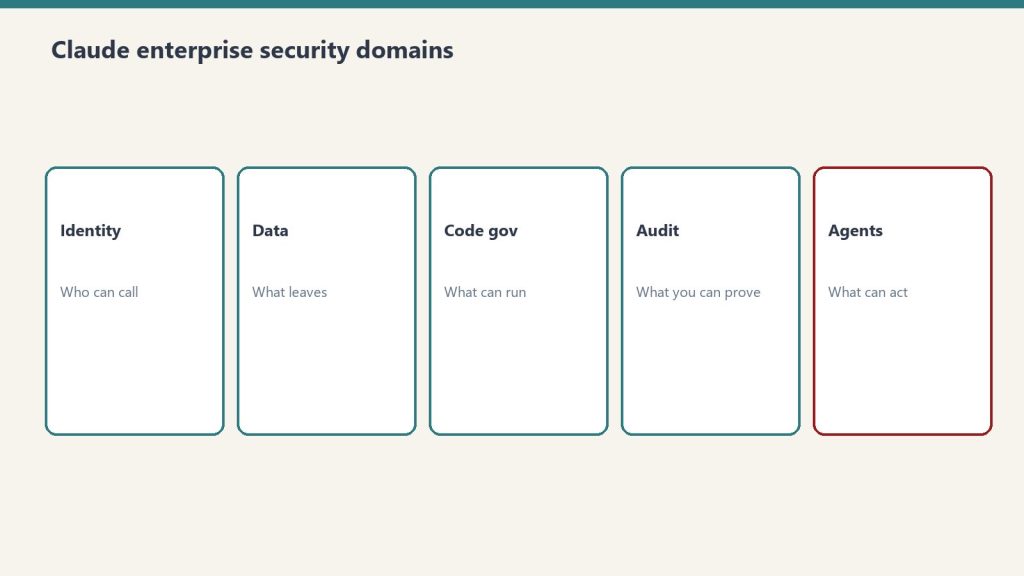
The AI engineering community has a more specific term for one of the most dangerous attack patterns in this space: cross-primitive escalation. It is worth understanding because it describes the mechanism by which a seemingly low-risk integration becomes a high-risk one.
Cross-primitive escalation works like this: an attacker compromises a read-only resource — a document, a web page, a log file, an incoming message — and embeds instructions in it that the AI will process as legitimate directives. Those instructions tell the AI to invoke a write-action capability that the attacker could not access directly. The read resource becomes a bridge to the write capability.
A concrete example: you connect your AI to your cloud storage for read access, so it can summarize documents and answer questions about project files. You also connect it to your email with send capability, so it can draft and send routine correspondence. These seem like two separate, bounded integrations. Cross-primitive escalation means a compromised document in your cloud storage could instruct the AI to use its email send capability to forward sensitive files to an external address. The read access and the write access interact in a way that neither integration’s risk model accounts for individually.
This is why the Lethal Trifecta matters at the combination level rather than the individual capability level. The question to ask is not “is this specific integration risky” but “what can the combination of my integrations do if the read-capable surface is compromised.”
The Framework: How to Actually Decide
With the risk structure clear, here is a practical framework for evaluating whether to grant any specific AI integration.
Question 1: What is the blast radius?
For any integration you are considering, define the worst-case scenario specifically. Not “something bad might happen” but: if this integration were exploited, what data could be accessed, what actions could be taken, and who would be affected?
An integration that can read your draft documents and nothing else has a contained blast radius. An integration that can read your email, access your calendar, send messages on your behalf, and call external APIs has a blast radius that encompasses your professional relationships, your schedule, your correspondence history, and whatever systems those APIs touch. These are not comparable risks and should not be evaluated with the same threshold.
Question 2: Is this integration delivering active value?
The temptation with AI integrations is to connect everything because connection is low-friction and disconnection requires a deliberate action. This produces an accumulation of integrations where some are actively useful, some are marginally useful, and some were set up once for a specific purpose that no longer exists.
Every live integration is carrying risk. An integration that is not delivering value is carrying risk with no offsetting benefit. The right practice is to connect deliberately and maintain an active integration audit — reviewing what is connected, what it is actually doing, and whether that value justifies the risk posture it creates.
Question 3: What is the minimum scope necessary?
Most AI integration interfaces offer choices in how broadly to grant access. Read-only versus read-write. Access to a specific folder versus access to all files. Access to a single Slack channel versus access to all channels including private ones. Access to outbound email drafts only versus full send capability.
The principle is the same one that governs good access control in any security context: grant the minimum scope necessary for the function you need. The guardrails starter stack covers the integration audit mechanics for doing this in practice. An AI that needs to read project documents to answer questions about them does not need write access to those documents. An AI that needs to draft email responses does not need send-without-review access. The capability gap between what you grant and what you actually use is attack surface that exists for no benefit.
Question 4: Is there a human confirmation gate proportional to the action’s reversibility?
This is the question that most integration setups skip entirely. The AI engineering community has a name for the design pattern that gets this right: matching the depth of human confirmation to the reversibility of the action.
Reading a document is reversible in the sense that nothing changes in the world if the read is wrong. Sending an email is not reversible. Deleting a file is not immediately reversible. Making an API call that triggers an external workflow may not be reversible at all. The confirmation requirement should scale with the irreversibility.
An AI integration with full autonomous action capability — no human in the loop, no confirmation step, no review before execution — is an appropriate architecture for a narrow set of genuinely low-stakes tasks. It is not an appropriate architecture for anything that touches external communication, data modification, or actions with downstream consequences. The friction of confirmation is not overhead. It is the mechanism that makes the capability safe to use.
SSH Keys Specifically: The Highest-Stakes Integration
The title of this article includes SSH keys because they represent the clearest case of where the Lethal Trifecta analysis should produce a clear answer for most operators.
SSH access is full computer access. An AI with SSH key access to a server can read any file on that server, modify any file, install software, delete data, exfiltrate credentials stored on the system, and use that server as a jumping-off point to reach other systems on the same network. The blast radius of an SSH key integration extends to everything that server touches.
The AI engineering community has thought carefully about this specific tradeoff and arrived at a nuanced position: full computer access — bash, SSH, unrestricted command execution — is appropriate in cloud-hosted, isolated sandbox environments where the blast radius is deliberately contained. It is not appropriate in local environments, production systems, or anywhere that the server has meaningful access to data or systems that should be protected.
This is a reasonable position. Claude Code running in an isolated cloud container with no access to production data or external systems is a genuinely different risk profile than an AI agent with SSH access to a server that also holds client data and has credentials to your infrastructure. The key question is not “should AI ever have SSH access” but “what does this specific server touch, and am I comfortable with the full blast radius.”
For most operators who are not running dedicated sandboxed environments: the answer is to not give AI systems SSH access to servers that hold anything you would not want to lose, expose, or have modified without your explicit instruction. That boundary is narrower than it sounds for most real-world setups.
What Secure AI Integration Actually Looks Like

The risk framework above can sound like an argument against AI integration entirely. It is not. The goal is not to disconnect everything but to connect deliberately, with architecture that matches the capability to the risk.
The AI engineering community has developed several patterns that meaningfully reduce risk without eliminating capability:
MCP servers as bounded interfaces. Rather than giving an AI direct access to a service, exposing only the specific operations the AI needs through a defined interface. An AI that needs to query a database gets an MCP tool that can run approved queries — not direct database access. An AI that needs to search files gets a tool that searches and returns results — not file system access. The MCP pattern limits the blast radius by design.
Secrets management rather than credential injection. Credentials never appear in AI contexts. They live in a secrets manager and are referenced by proxy calls that keep the raw credential out of the conversation and the memory. The AI can use a credential without ever seeing it, which means a compromised AI context cannot exfiltrate credentials it was never given.
Identity-aware proxies for access control. Enterprise-grade deployments use proxy architecture that gates AI access to internal tools through an identity provider — ensuring that the AI can only access resources that the authenticated user is authorized to reach, and that access can be revoked centrally when a session ends or an employee departs.
Sentinel agents in review loops. Before an AI takes an irreversible external action, a separate review agent checks the proposed action against defined constraints — security policies, scope limitations, instructions that would indicate prompt injection. The reviewer is a second layer of judgment before the action executes.
Most of these patterns are not available out of the box in consumer AI products. They are the architecture that thoughtful engineering teams build when they are taking the risk seriously. For operators who are not building custom architecture, the practical equivalent is the simpler version: grant minimum scope, maintain a confirmation gate for irreversible actions, and audit integrations regularly.
The Honest Position for Solo Operators and Small Teams
The AI security conversation at the engineering level — MCP portals, sentinel agents, identity-aware proxies, Kubernetes secrets mounting — is not where most solo operators and small teams currently live. The consumer and prosumer AI products that most people actually use do not yet offer granular integration controls at that level of sophistication.
That gap creates a practical challenge: the risk is real at the individual level, the mitigations that are most effective require engineering investment most operators cannot make, and the consumer product interfaces do not always surface the right questions at integration time.
The honest position for this context is a set of simpler rules that approximate the right architecture without requiring it:
- Do not connect integrations you will not actively maintain. If you set up a connection and forget about it, it is carrying risk without delivering value. Only connect what you will review in your quarterly integration audit. Stale integrations are a form of context rot — carrying signal you no longer control.
- Do not grant write access when read access is sufficient. For any integration where the AI’s function is informational — summarizing, searching, answering questions — read-only scope is enough. Write access is a separate decision that should require a specific use case justification.
- Do not give AI agents autonomous action on anything with a large blast radius. Anything that sends external communications, modifies production data, makes financial transactions, or touches infrastructure should have a human confirmation step before execution. The confirmation friction is the point.
- Treat incoming content from unknown sources as untrusted. Email from senders you do not recognize, external documents processed on your behalf, web content accessed by an agent — all of this is potential prompt injection surface. The AI processing it does not automatically distinguish instructions embedded in content from instructions you gave directly.
- Know the blast radius of your current setup. Sit down once and map what your AI integrations can reach. If you cannot describe the worst-case scenario for your current configuration, you are carrying risk you have not evaluated.
None of these rules require engineering expertise. They require the same deliberate attention to scope and consequences that good operators apply to other parts of their work.
The Market Will Not Solve This for You
One of the more uncomfortable truths about the current AI integration landscape is that the market incentives do not strongly favor solving the risk problem on behalf of individual users. AI platforms are rewarded for adoption, engagement, and integration depth. Security friction reduces all three in the short term. The platforms that will invest heavily in making the security posture of broad integrations genuinely safe are the ones with enterprise customers whose procurement processes require it — not the consumer products that most individual operators use.
This is not an argument against using AI integrations. It is an argument for not assuming that the product’s default configuration represents a considered risk assessment on your behalf. The default is optimized for capability and adoption. The security posture you actually want requires active choices that push against those defaults.
The AI engineering community named the Lethal Trifecta, documented the attack vectors, and ships them anyway because the capability demand is real and the market rewards it. Individual operators who understand the framework can make different choices about what to connect, at what scope, with what confirmation gates — and those choices are available right now, in the current product interfaces, without waiting for the platforms to solve it.
The question is not whether to use AI integrations. The question is whether to use them with the same level of deliberate attention you would give to any other decision with that blast radius. The answer to that question should be yes, and it usually is not yet.
Frequently Asked Questions
What is the Lethal Trifecta in AI security?
The Lethal Trifecta refers to the combination of three AI agent capabilities that creates compounded risk: access to private data, access to untrusted external content, and the ability to take external actions. Any one of these capabilities carries manageable risk in isolation. The combination creates attack vectors — particularly prompt injection — that can turn a read-only vulnerability into an irreversible external action without the user’s knowledge or intent.
What is prompt injection and why does it matter for AI integrations?
Prompt injection is an attack where instructions are embedded in content the AI reads on your behalf — an email, a document, a web page — and the AI processes those instructions as if they came from you. Because language models do not reliably distinguish between user instructions and instructions embedded in processed content, a malicious actor who can get the AI to read a crafted document can potentially direct the AI to take actions using whatever integrations are available. This is an actively exploited vulnerability class, not a theoretical one.
Is it safe to give Claude access to my email?
It depends on the scope and architecture. Read-only access to your sent and received mail, with no ability to send on your behalf, has a significantly different risk profile than full read-write access with autonomous send capability. The relevant questions are: what is the minimum scope necessary for the function you need, is there a human confirmation gate before any send action, and do you treat incoming email from unknown senders as potential prompt injection surface? Read access for summarization with no send capability and manual review before any draft is sent is a defensible configuration. Fully autonomous email handling with broad send permissions is not.
Should AI agents ever have SSH key access?
Full computer access via SSH is appropriate in deliberately isolated sandbox environments where the blast radius is contained — a dedicated cloud instance with no access to production data, no credentials to sensitive systems, and no path to infrastructure that matters. It is not appropriate for servers that hold client data, production systems, or any infrastructure where unauthorized access would have significant consequences. The key question is not SSH access in principle but what the specific server touches and whether that blast radius is acceptable.
What is cross-primitive escalation in AI security?
Cross-primitive escalation is an attack pattern where a compromised read-only resource is used to instruct an AI to invoke a write-action capability. For example, a malicious document in your cloud storage might contain instructions telling the AI to use its email-send capability to forward sensitive files externally. The read integration and the write integration each seem bounded; the combination creates a bridge that neither risk model accounts for individually. It is why the Lethal Trifecta analysis applies at the combination level, not just per-integration.
What is the minimum viable security posture for AI integrations?
For operators who are not building custom security architecture: connect only what you will actively maintain; grant read-only scope unless write access is specifically required; require human confirmation before any irreversible external action; treat incoming content from unknown sources as potential prompt injection surface; and maintain a quarterly integration audit that reviews what is connected and whether the access scope is still appropriate. These rules do not require engineering investment — they require deliberate attention to scope and consequences at integration time.
How does AI integration security differ for enterprise versus solo operators?
Enterprise deployments have access to architectural mitigations — identity-aware proxies, MCP portals, sentinel agents in CI/CD, centralized credential management — that meaningfully reduce risk without eliminating capability. Solo operators and small teams typically use consumer product interfaces that do not offer the same granular controls. The gap means individual operators need to apply simpler rules (minimum scope, confirmation gates, regular audits) that approximate the right architecture without requiring it. The risk is real at both levels; the available mitigations differ significantly.
Get The Signal
What we actually ran, what it measured, and what it means for a restoration shop — every week, including the flops.
Leave a Reply