Tag: Transportation

  • For Boeing and Paine Field Commuters: What the 2026 Everett Transit Merger With Community Transit Means for Your Drive to Work

    For Boeing and Paine Field Commuters: What the 2026 Everett Transit Merger With Community Transit Means for Your Drive to Work

    Q: I work at Boeing Everett, at Paine Field, or somewhere along Seaway Boulevard. What changes for my commute if Everett Transit merges into Community Transit?

    A: For aerospace workers commuting to the Boeing Everett factory, Paine Field, or the Seaway Boulevard industrial corridor, the Everett Transit → Community Transit annexation announced on April 22, 2026 matters for three reasons: (1) the Swift Blue Line and Swift Green Line — already the backbone of bus service to Paine Field and the 99 corridor — are operated by Community Transit and get a fully unified local feeder network inside Everett; (2) any route consolidation inside Everett that connects neighborhoods to the Swift lines and to Boeing could see schedule improvements funded by Community Transit’s 1.2% sales tax replacing Everett’s ~0.6%; (3) long-term, a single regional transit operator is the same agency that will connect you to Sound Transit’s future Everett Link light rail stations — including the Paine Field scenario that remains in active planning. For shift workers, the headline is: more consistent service planning across the county, funded by roughly 2x the transit tax revenue inside Everett.

    Why aerospace commuters should care

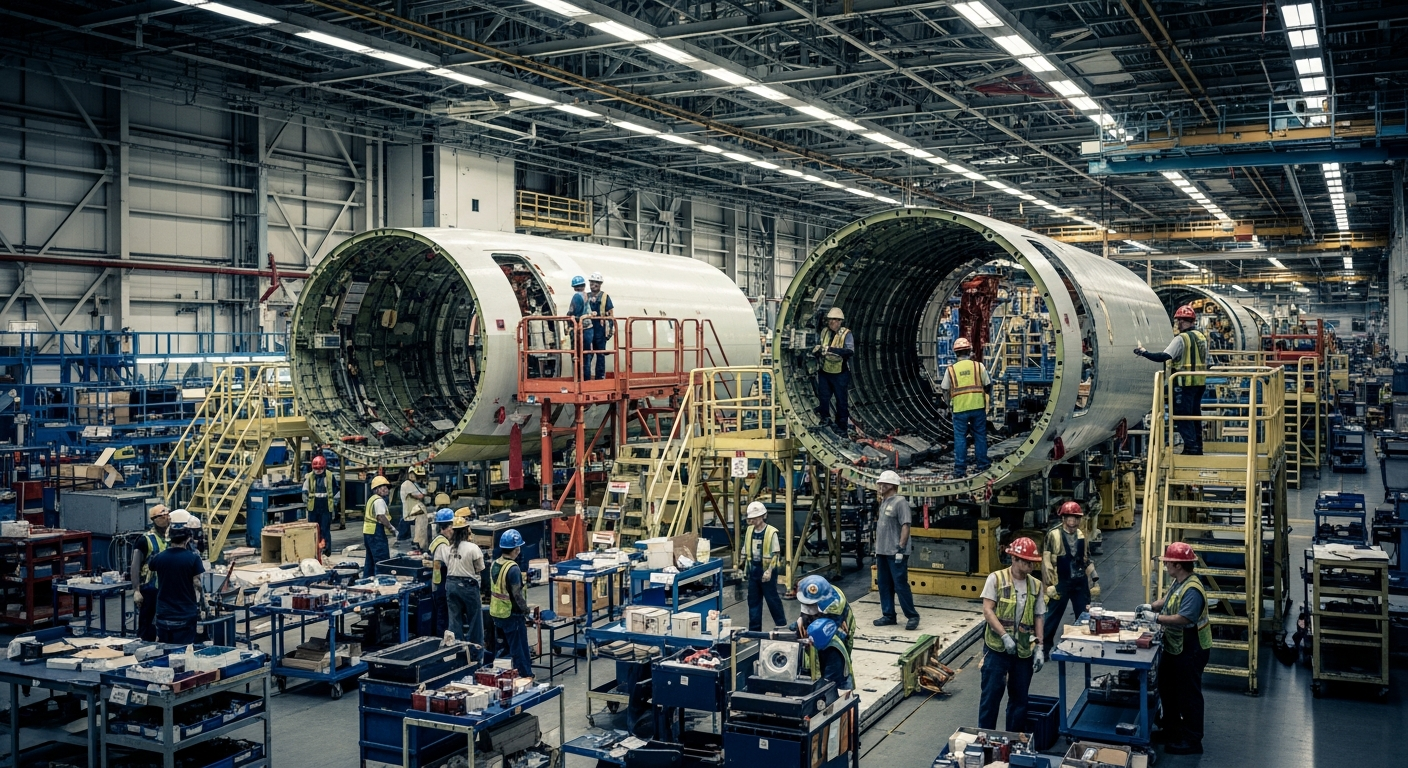
    The Boeing Everett factory, the IAM 751 Machinists Institute, Paine Field, and the surrounding supplier corridor on Seaway Boulevard and Airport Road employ tens of thousands of people. A significant share live in Everett neighborhoods — Casino Road, Silver Lake, Bayside, View Ridge-Madison, Evergreen — and need to reach the factory for shift changes that happen outside traditional 9-to-5 windows. Transit service to those shift windows has historically been the weakest link in Everett’s bus network. A consolidated Community Transit with more revenue per Everett-resident rider can specifically fund off-peak and early-morning/late-night service improvements that benefit aerospace shift patterns.

    The Swift connection

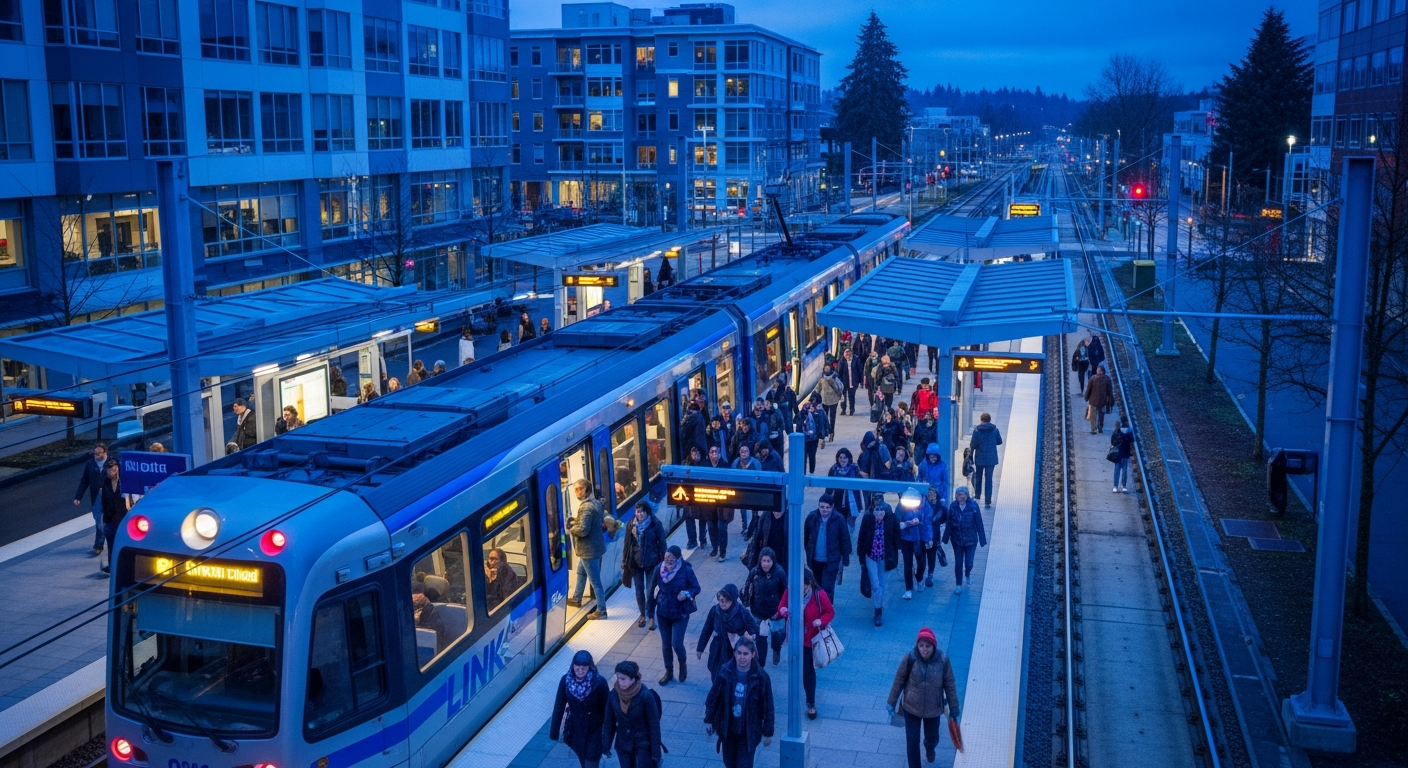
    Community Transit’s Swift Green Line already serves the Paine Field and aerospace corridor with 10-to-15-minute frequency most of the day. The Swift Blue Line on Evergreen Way and SR 99 connects south Everett and Lynnwood. Both are already Community Transit. What changes after the merger is the local feeder network inside Everett that connects neighborhoods to the Swift lines — the short-hop routes that take you from your apartment on Casino Road to the Blue Line station, or from your house off Airport Road to the Green Line. Those feeders are currently split between the two agencies. After annexation, they become one planning exercise, which should tighten timed transfers.

    What about the drive? Parking? The commute lot at the factory?

    Direct drive commute is unaffected by a transit annexation. If you drive, you still drive. What the merger does do over time: give Community Transit more budget to recruit choice riders — people who could drive but ride because the bus is faster or more reliable — out of the single-occupant-vehicle pool. That is the mechanism by which factory-area congestion on Airport Road and Seaway Boulevard typically improves. It’s slow. But it’s the lever that exists.

    Shift work, early mornings, and nights

    The 737 North Line activation, the 777X production ramp, and the 767/KC-46 transition all put Boeing Everett in a place where three-shift operations are the norm. Early morning and late-night bus service — historically thin on Everett Transit — is exactly the kind of capacity a larger Community Transit funded by a 1.2% sales tax is positioned to add. The interlocal agreement and the first post-merger service change cycle will show whether the agencies actually program that capacity. Watch public hearings in fall 2026 and the Community Transit service change proposals in early 2027.

    The light rail tie-in

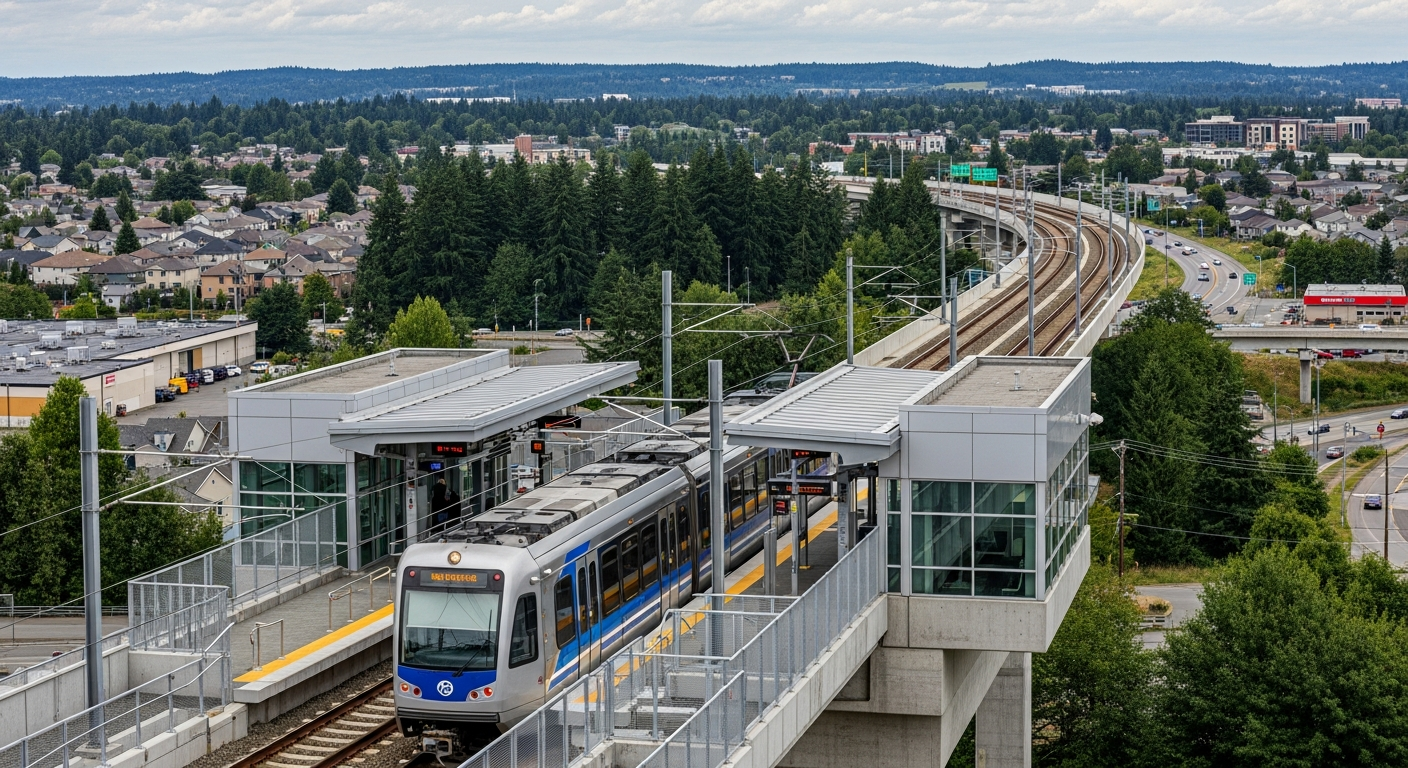
    Sound Transit’s Everett Link extension — covered in our 2026 complete guide — remains the biggest long-term variable for Paine Field commuters. The 2026 planning scenarios range from the original 2036 Everett Station timeline to a phased delivery that reaches Paine Field first. Either way, the bus network that connects you to the light rail stations — including potentially a Paine Field station — is designed by Community Transit. A unified Community Transit covering all of Everett simplifies that design.

    Frequently Asked Questions

    Will Community Transit add more early-morning buses to Paine Field?

    Possibly. The higher sales tax revenue inside Everett (1.2% vs. ~0.6%) is explicitly earmarked for service expansion per public statements from both agency leaders. Actual schedule decisions happen in the interlocal agreement and the first post-merger service change cycle (expected 2027).

    Does this change Sound Transit Everett Link or commuter bus to Seattle?

    No. Sound Transit is a separate regional agency and its Express buses and future light rail are not part of this annexation.

    What about the Boeing employee bus or carpool program?

    Employer-sponsored commute programs are not operated by Everett Transit or Community Transit and are unaffected by the annexation.

    Swift Green Line and Swift Blue Line — do they change?

    No. Both are already Community Transit and continue as-is. They are, in fact, the backbone the rest of the network will be rebuilt around.

    Will my sales tax go up if I live outside Everett but work in Everett?

    Sales tax is collected based on where the purchase is made, not where you live. If you make purchases inside Everett city limits, you would pay the higher 1.2% transit portion. Purchases outside Everett — in unincorporated Snohomish County, Mukilteo, Lynnwood — are unaffected by this specific annexation.

    Related coverage

    See the complete 2026 Everett Transit merger guide, our aerospace worker guide to the IAM 751 Machinists Institute, and our breakdown of Sound Transit’s Everett Link extension.

    Related Coverage From Tygart Media’s Exploring Everett Series

  • The Everett Transit Merger Into Community Transit: The Complete 2026 Guide to the Annexation, the No-Ballot Pathway, and What It Changes

    The Everett Transit Merger Into Community Transit: The Complete 2026 Guide to the Annexation, the No-Ballot Pathway, and What It Changes

    Q: What does the Everett Transit merger with Community Transit actually mean, and why is this happening now?

    A: On April 22, 2026, Everett Mayor Cassie Franklin and Community Transit CEO Ric Ilgenfritz jointly announced the resumption of efforts to annex Everett Transit into Community Transit’s service district. Under a 2025 state law amended in 2026, that annexation no longer requires a public vote — only approval by the Everett City Council and the Community Transit Board of Directors, following a public hearing. The two agencies aim to have an interlocal agreement ready for a final vote by the end of 2026, with service changes phased in over roughly one year afterward. If approved, Community Transit’s 1.2% transit sales tax would replace Everett’s current ~0.6% rate inside city limits, roughly doubling dedicated transit revenue. The stated motivation is light rail readiness: Sound Transit’s Everett Link extension is moving toward Everett Station and Paine Field in the next decade, and a single regional operator simplifies the bus network that feeds it.

    Why the Everett Transit merger matters more than a typical agency reorg

    This is the biggest structural change to transit in Everett since Everett Transit became its own municipal system. Cassie Franklin and Ric Ilgenfritz didn’t pick April 22 by accident — they picked it because the political plumbing is finally in place. In 2025, the Washington State Legislature passed a law allowing Public Transportation Benefit Areas (like Community Transit) to annex city-operated transit agencies through an interlocal agreement rather than a voter referendum. That law was amended in 2026 to clarify the process. The first city in the state that can use it at scale is Everett, and the agencies want to be first.

    The timeline in plain English

    Summer 2026: Everett Transit and Community Transit draft the interlocal agreement, work through labor and asset transfer provisions, and hold public hearings. Fall 2026: The Everett City Council and the Community Transit Board of Directors take up the agreement for a final vote, expected before the end of the calendar year. 2027: If approved, Everett Transit becomes a service division inside Community Transit, with a phase-in period of approximately one year. The 1.2% Community Transit sales tax rate replaces Everett’s current ~0.6% Everett Transit rate inside the city. Bus routes, fare structure, driver hiring, and facilities consolidate under one roof.

    What actually changes for riders

    Community Transit runs the Swift bus rapid transit lines, every Snohomish County commuter bus into Seattle and Lynnwood, and a larger fleet with a broader route network than Everett Transit. For riders who already use both agencies to stitch a trip together, this is mostly good news: one fare, one app, one schedule, one customer service line. For riders who stay inside Everett’s boundaries, routes may consolidate and evolve — and that is the piece the public hearing phase is meant to surface. Advocates at Keep Everett Transit have voiced concern that a larger agency might deprioritize intra-Everett service. Franklin and Ilgenfritz have both publicly said expanded service, not cuts, is the goal — driven by the higher sales tax rate unlocking roughly 2x the dedicated transit revenue.

    Why no ballot measure this time

    The last serious merger conversation — around 2020 — stalled because the path forward appeared to require a public vote, and no one wanted to run that election during COVID. The 2025 law removes that barrier. Whether that is good governance is a live debate. HeraldNet’s editorial page carried a reader letter on April 23 arguing the merger should go to a ballot anyway. Proponents counter that transit annexations are technical government-to-government agreements, not policy referendums, and that the public hearing requirement plus the council vote provide sufficient democratic accountability.

    The light rail context you can’t ignore

    Sound Transit’s Everett Link extension is the subtext of every transit decision in this city right now. ST3 promised light rail to Everett Station by 2036; 2026 planning scenarios range from that original timeline to phased delivery reaching Paine Field first. Whichever scenario lands, the bus network that feeds light rail needs to be designed as one system, not two. A unified Community Transit handling Everett, Lynnwood, Mukilteo, and the Swift corridors is operationally simpler than coordinating across two agencies. That operational case — more than the sales tax math — is what moved this off the shelf in 2026.

    What to watch next

    Interlocal agreement draft (expected July–August 2026). Public hearings at Everett City Hall and Community Transit board meetings (expected September–October). Final Everett City Council vote and Community Transit Board vote (expected November–December 2026). If approved, look for a joint transition office to stand up in early 2027 and the first route changes to publish in Community Transit’s standard service change window.

    Frequently Asked Questions

    Will my Everett Transit pass still work after the merger?

    Yes. During the transition period (approximately one year after the agreements are signed), both agencies have publicly committed to honoring existing fare media while transitioning riders to a unified Community Transit fare structure. Specific fare policy will be finalized in the interlocal agreement.

    Will I pay more in sales tax if the merger goes through?

    Yes, inside Everett city limits. Community Transit collects 1.2% of taxable sales for transit; Everett Transit currently collects approximately 0.6%. The difference — about 0.6 percentage points — would apply to most purchases made in Everett after the transition.

    Why isn’t this going to a public vote?

    A 2025 state law (amended in 2026) allows Public Transportation Benefit Areas like Community Transit to annex municipal transit agencies via an interlocal agreement approved by both governing boards after a public hearing. No ballot measure is required under that statute.

    What happens to Everett Transit drivers and staff?

    The interlocal agreement will include labor and asset transfer provisions. Ric Ilgenfritz has publicly indicated the intent is to absorb Everett Transit’s workforce into Community Transit. Specific terms, union contract alignment, and seniority questions are the kind of detail the summer drafting phase is designed to resolve.

    Does this affect Swift bus rapid transit or Sound Transit service?

    Swift is operated by Community Transit and is unaffected operationally. Sound Transit Express buses and future Everett Link light rail are operated by Sound Transit, a separate regional agency, and are also unaffected by this specific annexation.

    How does this connect to Sound Transit’s Everett Link light rail?

    A unified bus network is easier to design as a light rail feeder than two coordinated agencies. When Everett Link opens (timelines vary by scenario but target the 2030s), buses inside Everett will need to connect riders to stations at Everett Station, Mariner, Lynnwood, and potentially Paine Field — all within Community Transit’s existing service pattern.

    Can the Everett City Council still vote this down?

    Yes. The interlocal agreement requires affirmative votes from both the Everett City Council and the Community Transit Board of Directors. Either body can reject the agreement, send it back for amendment, or decline to schedule a vote.

    Related coverage

    See our source brief on the April 22 Everett Transit merger announcement, our guide to Everett’s 2027 budget decisions, and our breakdown of Sound Transit’s Everett Link extension.

    Related Coverage From Tygart Media’s Exploring Everett Series

  • Everett Transit Is Merging Into Community Transit: What Yesterday’s Announcement Actually Changes for Riders

    Everett Transit Is Merging Into Community Transit: What Yesterday’s Announcement Actually Changes for Riders

    Q: What did Everett and Community Transit announce on April 22, 2026?
    A: Everett Mayor Cassie Franklin and Community Transit CEO Ric Ilgenfritz announced the resumption of joint efforts to consolidate Everett Transit into Community Transit. The two agencies plan to draft an interlocal agreement this summer, aim for a final vote before the end of 2026, and phase in service changes over about a year. Under a 2025 state law amended in 2026, the merger can be approved by the Everett City Council and the Community Transit Board after a public hearing — no ballot measure required.

    Everett Transit Is Merging Into Community Transit: What Yesterday’s Announcement Actually Changes for Riders

    We knew this conversation was coming back. On Wednesday, April 22, 2026, Everett Mayor Cassie Franklin and Community Transit CEO Ric Ilgenfritz stood together and restarted one of the biggest quiet-but-consequential conversations in Snohomish County: folding Everett Transit into Community Transit as a single, countywide system.

    If you ride the 7, the 8, or any of the routes that loop between downtown Everett, Casino Road, and Silver Lake, this is your future. And if you care about how Everett connects to Link light rail when it finally shows up, this is arguably the most important local story of the week — bigger than the stadium vote, bigger than the next Port of Everett press release.

    Here is what we actually know, what is still being drafted, and what neighbors are already asking.

    What Was Actually Announced on April 22

    The formal announcement came as a joint statement from the City of Everett and Community Transit. The headline: the two agencies will draft an interlocal agreement for the City of Everett to annex into Community Transit’s service district. That draft will move through the Everett City Council and the Community Transit Board of Directors this fall, with the hope of having a final version ready to vote on before the end of 2026.

    If both bodies approve, service changes would phase in over about a year. In the transition, the existing bus networks of both agencies would largely continue to run the way they do today. The point is not to yank routes on day one. The point is a slow merge where riders see better frequency, fewer transfers, and a single system map where Everett isn’t a walled-off island inside the county.

    Why This Is Suddenly Possible After Years of False Starts

    Everett and Community Transit have looked at this merger before. It has failed before. What’s different in 2026 is a state law, originally passed in 2025 and amended this year, that allows a public transportation benefit area like Community Transit to annex a municipal transit agency through an interlocal agreement — approved by the boards of both governing bodies after a public hearing. No countywide ballot measure. No citywide ballot measure. No two-year petition campaign.

    That is the mechanism. The politics have also shifted. With Sound Transit facing a reported $34.5 billion system-wide deficit and the Everett Link extension timeline already pushed from 2036 into the 2037–2041 window, both the city and the county have a strong interest in making sure that when light rail does land at Everett Station, the local bus network feeding it is unified and legible, not two separate agencies handing off riders at the boundary.

    Mayor Franklin framed it pretty bluntly. Through annexation, Everett can offer residents more connections, more destinations, more frequent buses, shorter waits, and evening service that actually exists.

    The Sales Tax Question Is the One Everybody’s Asking

    This is the part that will show up on a lot of kitchen tables. Everett Transit is funded by a local transit sales tax of roughly 0.6 percent. Community Transit’s rate is roughly 1.2 percent. If the annexation goes through, Community Transit’s rate applies in Everett.

    That math is real. The city and county are already acknowledging it in their communications. The pitch they are making to riders and to taxpayers is that the service delivered in exchange — more frequency, better span of service, integration with the rest of the county, and a cleaner handoff to Link light rail — is worth the step up. Some riders will agree. Some won’t. And the “Keep Everett Transit” organizing we’ve seen over the last couple of years has not disappeared; expect a real public hearing to feel like a real public hearing.

    There’s also a letter already running in the Daily Herald arguing the merger should go to a public vote, not just a council and board vote. Whether that argument picks up momentum over the next few months is one of the things to watch.

    How This Fits Into Everything Else Happening on the Waterfront

    Zoom out. Everett is building out the Millwright District and Waterfront Place at the same time. The AquaSox and USL stadium is heading for a pivotal design-funding vote on April 29. Eclipse Mill Park on the Riverfront is on a two-phase build that runs through 2028. The Sound Transit Everett Link extension is somewhere on the horizon, delayed but not dead.

    All of that assumes a transit network that can actually move people between the new places. Right now, the bus ride between the waterfront and Silver Lake isn’t the same agency as the bus ride between Silver Lake and Lynnwood — which means transfers, separate ORCA card logic for passes, and a system that feels fragmented by geography instead of by trip. A merger does not fix frequency overnight. It does set the table for the next capital plan to fix frequency as one network instead of two.

    Timeline, If Everything Holds

    Here is the rough calendar as Franklin and Ilgenfritz described it:

    • Summer 2026: Staff from Everett and Community Transit draft the interlocal agreement. Public outreach runs alongside it.
    • Fall 2026: Everett City Council and the Community Transit Board take up the draft. Public hearings in both bodies.
    • End of 2026: Target for final approval of the interlocal agreement.
    • 2027 into 2028: Service integration phased in over roughly a year. Route numbers, pass products, and scheduling gradually consolidate.

    That timeline can slip. Interlocal agreements are messy documents — they have to resolve labor representation, asset transfers, paratransit service coverage, and debt. Everett Transit has buses, a fleet yard, maintenance staff, and a paratransit operation that have to land somewhere in the final structure.

    What We’re Watching Over the Next Six Months

    A few things will tell us whether this merger is actually going to land. First: how detailed and transparent the interlocal agreement draft is when it goes public in late summer. Second: whether the fall public hearings surface any major structural objection that the two boards didn’t anticipate. Third: whether Everett Transit operators and maintenance workers — who are represented labor — end up with a clear path into Community Transit’s workforce. Fourth: whether the city finds a clean way to handle the sales tax transition so it doesn’t show up as a surprise on one month’s receipts.

    If all four land cleanly, Everett heads into 2027 as part of one countywide system. If any of them stumbles, this conversation rolls into 2027 and the next council session. Either way, yesterday was the moment the merger went from “studying it” to “drafting the agreement.” That’s real movement.

    Frequently Asked Questions

    Will this go to a public vote?
    Under the 2025–2026 state law that makes the annexation possible, the merger can be approved by the Everett City Council and the Community Transit Board after a public hearing, without a citywide or countywide ballot measure. At least one letter to the Daily Herald has argued it should still go on a ballot. The formal process, as described by the two agencies on April 22, does not require a public vote.

    When would the merger actually take effect?
    The two agencies are aiming for a final vote on an interlocal agreement by the end of 2026. Service integration would then phase in over roughly a year — so many visible changes would roll through 2027 and into 2028.

    What happens to the Everett Transit sales tax?
    Everett’s current transit sales tax is about 0.6 percent. Community Transit’s is about 1.2 percent. If the annexation goes through, Community Transit’s rate applies inside Everett.

    Do my current routes disappear?
    Not on day one. The two agencies have said the existing networks will largely be preserved during the transition and integrated over about a year. Expect route numbers and some coverage patterns to change as the single-network map is drawn, but not a hard cutover.

    How does this connect to Sound Transit Link light rail in Everett?
    The stated rationale for merging includes making sure the local bus network is unified when the Everett Link extension eventually opens. A single agency running the last-mile bus service to and from Everett Station is easier to plan around than two separate agencies handing riders off at the city line.

    Who pushed this forward now?
    Mayor Cassie Franklin on the Everett side and CEO Ric Ilgenfritz on the Community Transit side made the April 22 joint announcement. The state law that makes the mechanism possible was sponsored by Sen. Marko Liias of Edmonds.

    What happens to Everett Transit employees?
    That is one of the main issues the interlocal agreement has to resolve. The details — labor representation, wages, benefits, seniority — will be in the public draft when it is released later this year.

    Deeper Coverage in the Exploring Everett Series

    For a more comprehensive treatment of the issues raised in this article, see:

  • Everett’s Light Rail Showdown: What the April 14 Town Hall and the Somers Plan Mean for Snohomish County

    Everett’s Light Rail Showdown: What the April 14 Town Hall and the Somers Plan Mean for Snohomish County

    Q: Is Everett’s light rail extension still getting built?

    A: It’s still in the plan — but Sound Transit is staring down a $34.5 billion budget shortfall, and three of the agency’s cost-cutting scenarios would either shorten or delay the Everett connection. Snohomish County Executive Dave Somers, who chairs the Sound Transit Board, pledged at the April 14 town hall in Everett that he’ll push a plan prioritizing the north-south spine — including Everett — over Seattle-area extensions. The fight over what actually gets funded happens in the next several months.

    We packed into Everett Station on Tuesday night, April 14, and it felt less like a transit meeting and more like a civic defense. Residents, small-business owners, transit nerds, skeptical commuters, and a row of Snohomish County officials spent the evening doing one thing — reminding Sound Transit that Everett has been paying for light rail for more than a decade, and we intend to get the light rail we’ve been paying for.

    If you’ve been half-following the Everett Link Extension saga, here’s where things stand right now.

    The $34.5 Billion Problem

    Sound Transit is facing a $34.5 billion budget shortfall across its ST3 program. That’s not a typo, and it’s not a projection for the distant future — it’s the gap between what the agency is required to build and what it can currently afford.

    In March, the agency put three illustrative cost-cutting scenarios on the table. All three involve cuts. One of the three scenarios would not complete the connection to Everett at all. The other two would shorten or delay extensions elsewhere — Ballard, West Seattle, Tacoma, Issaquah — but they still put pressure on the northern end of the spine, which is us.

    That’s the context for the April 14 town hall. It wasn’t an informational session. It was Everett saying: don’t you dare.

    What Somers Actually Said

    County Executive Dave Somers, who also chairs the Sound Transit Board, didn’t hedge. He told the room he plans to present a proposal to the full Sound Transit Board that prioritizes completing the north-south corridor — Everett to Tacoma — over extensions into areas that are already served by light rail.

    The quote that traveled was this one: “The citizens of Snohomish County have been paying for a system for a long, long time, and it’s time for them to get a light rail.”

    He was more specific about what that plan looks like in practice. Seattle-area projects — Ballard, West Seattle — would stay alive in planning but would not be authorized to move forward until the agency can actually afford them. “We will keep those projects alive in planning, but they will not be authorized for moving forward, because we can’t afford them right now.”

    Somers also told the room the obvious political truth: his is one voice among 18 on the Sound Transit Board. “That’s eight votes out of 18, so there’s 10 votes that are outside our control.” He’s going to need allies from Pierce County and from King County to get this across the finish line.

    Mayor Franklin’s Frame: “The Spine”

    Everett Mayor Cassie Franklin reinforced Somers with a framing device that matters for anyone trying to understand regional transit politics: the spine.

    “It is the spine from Everett to Tacoma that is actually going to connect this region.”

    The idea is that ST3 was never sold to voters as a series of disconnected spur lines. It was sold as a regional system with a north-south backbone. Cutting Everett off the spine isn’t a line-item reduction — it’s a structural amputation. Franklin’s argument is that if you want to know which projects are most essential to a regional transit system, you start with the backbone and work outward.

    That framing is a strategic move. It reframes the debate from “which extension is most deserving” to “which projects are structural versus which are peripheral.”

    The Timeline We’re Looking At

    The Everett Link Extension is currently not expected to open until sometime between 2037 and 2041. That’s a range we should all sit with for a minute. The original target was 2036. The most optimistic current estimate is one year later than originally promised. The least optimistic is five years later.

    This is before any of the three cost-cutting scenarios get applied.

    The extension would add 16 miles of light rail and six new stations connecting Snohomish County into the broader regional network. The Draft Environmental Impact Statement is expected to be available for public review and formal comment in 2026, which means there is going to be a real window for residents to weigh in on this project in writing.

    What Voters Are Actually Angry About

    Walking out of the town hall, the argument that kept surfacing in conversations in the parking lot was a version of the one Kevin Ballard made in his April 20 letter to the editor in the Herald: we’ve been paying for this for over a decade. If the project gets delayed or scaled back, the money we’ve already paid doesn’t come back to us. It just gets spent somewhere else.

    There’s a version of this argument that’s about fairness — we paid, we deserve delivery. There’s another version that’s about math — Everett’s segment of ST3 is, by most measures, among the most cost-efficient in the entire package, which means cutting it would actually be a bad deal for the agency’s budget. Neither version is a closing argument, but both are going to be heard a lot over the next several months.

    What’s Next

    The Sound Transit Board meets on the fourth Thursday of each month from 1:30 to 4:00 p.m. Public comment is accepted at those meetings. Written comments can also go to meetingcomments@soundtransit.org.

    The Draft Environmental Impact Statement is expected this year. When it lands, there will be a formal public comment period.

    Somers has said he’ll bring his north-south-first proposal to the Board. We don’t know exactly when, but the implication from the town hall is that this is not a fall 2026 conversation — it’s a next-few-months conversation.

    And locally, Everett City Council and the Snohomish County Council have both started putting resolutions and letters of support behind the completion of the spine. That drumbeat is going to get louder before it gets quieter.

    What This Means for the Waterfront

    Everett’s waterfront transformation — Waterfront Place, Millwright District, the downtown stadium, Restaurant Row — is happening on the assumption that light rail is coming. The Everett Station location anchors the southern edge of downtown, and a future Everett Station-to-Waterfront connection is part of how downtown’s long-term density math actually works.

    If the Link extension gets shortened or delayed further, the case for downtown office, retail, and residential investment doesn’t collapse — but it does get harder. Developers project rent rolls on 30-year time horizons. A 2041 light rail opening versus a 2036 opening is the kind of thing that shows up in a capital stack.

    It’s also the reason why this is a waterfront story, not just a transit story. Everything Everett is building downtown right now — the stadium, the Millwright office space, the housing being pre-leased at Waterfront Place — is happening in front of a fundamental question about whether the city will be a light rail terminus or a light rail afterthought.

    Frequently Asked Questions

    When was the Sound Transit town hall in Everett? Tuesday, April 14, 2026, at Everett Station. Local officials and Sound Transit staff presented the agency’s budget situation and took public comment.

    Who chairs the Sound Transit Board? Snohomish County Executive Dave Somers. He has publicly committed to advocating for completion of the Everett Link Extension as part of the north-south spine.

    How big is Sound Transit’s budget shortfall? $34.5 billion across the ST3 program. Three cost-cutting scenarios are being considered; one would not complete the Everett extension.

    When is the Everett Link Extension expected to open? Currently projected between 2037 and 2041. The original target was 2036.

    How many new stations would the Everett extension add? Six new stations across 16 miles of new light rail.

    How can Everett residents weigh in on this decision? Attend Sound Transit Board meetings (fourth Thursday of each month, 1:30–4:00 p.m.), submit written comments to meetingcomments@soundtransit.org, and watch for the Draft Environmental Impact Statement comment period later in 2026.

    What is “the spine” Mayor Franklin refers to? The north-south light rail corridor from Everett to Tacoma — the backbone of the ST3 system, distinct from the east-west extensions to Ballard, West Seattle, and Issaquah.

  • Everett’s New Edgewater Bridge Adds Bike Lanes and Sidewalks for the First Time: What Cyclists and Pedestrians Need to Know

    Everett’s New Edgewater Bridge Adds Bike Lanes and Sidewalks for the First Time: What Cyclists and Pedestrians Need to Know

  • Edgewater Bridge Opens April 28: What Boeing and Paine Field Commuters Need to Know About the Restored Mukilteo Corridor

    Edgewater Bridge Opens April 28: What Boeing and Paine Field Commuters Need to Know About the Restored Mukilteo Corridor

  • Moving to Belfair for PSNS? What the 2026 SR-3 Construction Means Before You Sign a Lease

    Moving to Belfair for PSNS? What the 2026 SR-3 Construction Means Before You Sign a Lease

    If you’re PCSing to Naval Base Kitsap or starting a civilian job at PSNS and considering Belfair as your home base, the 2026 road construction picture is something you need to understand before signing a lease or making an offer. Belfair’s affordability is real — but so is the SR-3 commute reality.

    Why People Choose Belfair Despite the Commute

    Belfair sits at the southern tip of Hood Canal in Mason County, about 30-40 minutes from PSNS under normal conditions via SR-3. The draw is straightforward: homes in Belfair cost significantly less than Bremerton or Silverdale. A family can rent a 3-bedroom house in Belfair for what a 2-bedroom apartment costs in Silverdale. If you’re stretching BAH or a civilian salary, that math matters.

    The tradeoff is a single-road commute. SR-3 is the only practical route between Belfair and Bremerton. There is no highway alternative, no parallel interstate, no backup route. When SR-3 has problems, every Belfair commuter feels them.

    What’s Happening to SR-3 in 2026

    Three things are converging this year:

    • A 16-day full closure near Gorst for fish barrier removal. No through traffic. Detour through rural roads adds 15-40 minutes depending on time of day.
    • A new roundabout at the SR-3/SR-16 Spur intersection in Gorst, with months of construction-related lane restrictions.
    • The Belfair Bypass has been delayed. The 6-mile alternate route that was supposed to start construction in 2026 has been pushed to the 2031-33 funding cycle by the Governor’s budget.

    What This Means If You’re Deciding Now

    Belfair is still a strong choice for many PSNS and Bangor families. The housing savings are substantial — potentially $500-$800/month less than comparable homes in Silverdale. But go in with your eyes open:

    • Your commute will be disrupted during the summer 2026 closure. If you’re arriving mid-year, you’ll hit it immediately.
    • The Belfair Bypass isn’t coming until at least 2033. Don’t factor it into your housing decision.
    • Winter commutes on SR-3 are the real test. Ice near Gorst, limited visibility, and accident-prone stretches mean 40-minute drives can become 90-minute ordeals from November through March.

    If you’re on day shift at PSNS and your partner works in Silverdale or Poulsbo, Belfair may add too much combined commute time. If one spouse works from home or you’re on a flexible schedule, the savings work.

    Getting Oriented in North Mason

    Before you commit, drive the route yourself during a weekday morning — not a weekend. See what 6:30 AM SR-3 through Gorst actually feels like. Check out our complete guide to living in Belfair and the full SR-3 construction breakdown for detailed timing and detour routes.

    Frequently Asked Questions

    How long is the commute from Belfair to PSNS Bremerton?

    Under normal conditions, 30-50 minutes via SR-3 depending on your neighborhood and time of day. During the summer 2026 SR-3 closure, add 15-40 minutes via detour routes. Winter conditions can add 20-30 minutes on bad days.

    Is Belfair worth the commute for PSNS workers?

    For families prioritizing affordable housing, space, and a quieter community, yes. A typical Belfair home costs $405,000-$475,000 — significantly less than Silverdale or Bremerton. The tradeoff is a single-road commute with seasonal and construction-related delays.

    When will the Belfair Bypass reduce commute times?

    The SR-3 Freight Corridor (Belfair Bypass) received federal environmental approval in 2024 but funding has been delayed to the 2031-33 biennium. Realistically, don’t expect it before 2033-2035.

    What’s the BAH situation for military families in Belfair?

    Belfair falls under Mason County BAH rates, which are lower than Kitsap County. However, housing costs in Belfair are proportionally lower, so many military families find their BAH stretches further here than in Silverdale or Bremerton despite the lower rate.


  • PSNS Workers: How the Summer 2026 SR-3 Closure Affects Your Belfair Commute and What to Do About It

    PSNS Workers: How the Summer 2026 SR-3 Closure Affects Your Belfair Commute and What to Do About It

    If you work at Puget Sound Naval Shipyard and live in Belfair or anywhere along the SR-3 corridor, the summer 2026 road closure is going to hit your commute hard. Here’s what PSNS-specific workers need to plan for — shift by shift, gate by gate.

    The Closure: What PSNS Workers Specifically Face

    SR-3 near Gorst will be completely closed for up to 16 consecutive days this summer for fish barrier removal. For the roughly 14,000 civilian and military employees who pass through PSNS gates daily, thousands of whom live in North Mason, this is not a minor inconvenience — it’s a commute overhaul.

    The detour route through Sunnyslope Road Southwest to Lake Flora Road was designed for rural traffic, not shift-change surges. If 500+ PSNS commuters from Belfair and points south hit this detour simultaneously at 6:15 AM, the road will bottleneck.

    Shift-by-Shift Impact Assessment

    Day shift (6-7 AM departure from Belfair): Heaviest impact. The detour adds 15-25 minutes under light conditions, but during the closure, expect 30-40 minutes additional as the narrow detour road handles concentrated volume. Leave by 5:30 AM to maintain your gate arrival time.

    Swing shift (2-3 PM departure): Moderate impact. You’ll hit the detour with fewer vehicles, but returning home after 11 PM means driving unfamiliar rural roads in the dark. Sunnyslope Road has limited lighting.

    Graveyard shift (10-11 PM departure): Lightest traffic impact, but the same dark-road concern applies. The detour route has no streetlights for most of its length.

    Gate Access During Construction

    PSNS gate procedures won’t change during the SR-3 closure — the closure is south of Bremerton, not at the base. But if thousands of workers arrive late simultaneously, expect longer gate queues as security processes the backlog. Contact your supervisor about flexible arrival windows if your role allows it.

    Carpooling and Alternative Strategies

    The Navy Region Northwest rideshare board has historically connected Belfair-area PSNS commuters. During the closure, carpooling isn’t just convenient — it directly reduces the number of vehicles on a detour road that can’t handle full volume. Three workers in one vehicle means two fewer cars on Lake Flora Road.

    Some PSNS workers from North Mason have historically used the Bremerton ferry as an alternative, but this only works if you live closer to the Hood Canal Bridge corridor. For Belfair residents, the detour is your reality.

    Related Coverage

    Read the full SR-3 closure breakdown for all detour routes, roundabout construction details, and the Belfair Bypass delay. Also see our complete Belfair-to-PSNS commute guide.

    Frequently Asked Questions

    How much longer will my Belfair-to-PSNS commute be during the SR-3 closure?

    Under normal detour conditions, add 15-25 minutes. During the 6-7 AM PSNS shift change surge, expect 30-40 minutes additional as Sunnyslope Road and Lake Flora Road handle concentrated commuter volume not designed for those roads.

    Should I change my PSNS shift during the SR-3 closure?

    If your role allows shift flexibility, swing or graveyard shifts face lighter detour traffic. Discuss options with your supervisor before the closure begins. Day shift workers from Belfair will bear the heaviest impact.

    Is there a way to avoid the SR-3 detour from Belfair to PSNS?

    For Belfair residents, the Sunnyslope/Lake Flora detour is the primary route. There is no practical alternative that avoids the closure area entirely without adding 45+ minutes via SR-302 and SR-16.

    Will PSNS adjust gate procedures during the SR-3 closure?

    PSNS gate security operates independently of road construction. However, concentrated late arrivals may create longer queues at primary gates. Plan to arrive earlier than usual to account for both the detour and potential gate delays.


  • SR-3 Closure, Gorst Roundabout, and the Belfair Bypass Delay: What Every North Mason Commuter Needs to Know in 2026

    SR-3 Closure, Gorst Roundabout, and the Belfair Bypass Delay: What Every North Mason Commuter Needs to Know in 2026

    If you drive SR-3 between Belfair and Bremerton, 2026 is going to test your patience. Three overlapping infrastructure projects — a 16-day full road closure near Gorst, a new roundabout at the SR-3/SR-16 Spur intersection, and the politically uncertain Belfair Bypass — will reshape how North Mason residents get to PSNS, Bangor, and everywhere south of Gorst. Here’s what’s actually happening, when, and what it means for your daily drive.

    The 16-Day SR-3 Closure: Fish Barrier Removal Near Gorst

    WSDOT’s fish barrier removal project on SR-3, SR-16, and SR-166 near Gorst will require a complete closure of SR-3 for up to 16 consecutive days during summer 2026. Crews will remove a section of the highway near Sunnyslope Road Southwest and install a new 150-foot-long box culvert to restore fish passage.

    This is not a lane restriction. This is a full road closure — no through traffic on SR-3 at that location for over two weeks.

    Early work starts in April 2026 with nighttime lane closures at two locations for utility relocations and limited vegetation removal. The 16-day closure itself is scheduled for summer, though WSDOT has not yet locked the exact dates.

    Detour Routes During the SR-3 Closure

    WSDOT has published three signed detour routes:

    • Passenger vehicles: Sunnyslope Road Southwest to Southwest Lake Flora Road
    • Pedestrians, cyclists, and those who roll: Northeast Old Belfair Highway to West Belfair Valley Road
    • Commercial vehicles: SR-16 to SR-302 (a significantly longer route)

    For PSNS commuters leaving Belfair at 6 AM, the Sunnyslope/Lake Flora detour adds approximately 15-25 minutes depending on traffic volume. During shift changes — particularly the 7 AM gate surge — expect these detour roads to carry far more traffic than they were designed for.

    The New Gorst Roundabout

    As part of the same project, WSDOT will construct a new roundabout at the intersection of SR-3, SR-16 Spur, and West Sam Christopherson Avenue. This intersection has been an accident cluster point for decades, and the roundabout is designed to reduce collision potential and improve traffic flow.

    For daily commuters, the roundabout should eventually smooth the stop-and-go pattern that defines Gorst. But during construction, expect lane shifts, temporary signals, and reduced speeds through the area.

    The Belfair Bypass: Delayed or Dead?

    The SR-3 Freight Corridor — commonly known as the Belfair Bypass — was a 6-mile new alignment designed to route regional through-traffic around Belfair’s commercial corridor rather than through it. The Federal Highway Administration issued a Finding of No Significant Impact (FONSI) in November 2024, and construction was originally planned to begin in spring 2026 with completion by 2028.

    Then Governor Bob Ferguson’s proposed transportation budget pushed the project’s funding to the 2031-33 biennium. As reported by the Mason County Journal in February 2026, this delay could push the bypass back by five years or more.

    For North Mason commuters, this means the Belfair commercial corridor — SR-3 through town — remains the only route. The 18,000+ daily vehicle count through Belfair’s main stretch will continue growing without relief.

    What This Means for Your Daily Drive

    If you commute from Belfair to PSNS or Bangor:

    • Plan now for the 16-day closure. If your shift schedule allows flexibility, consider adjusting during the closure window. Carpooling through the detour reduces vehicle volume on roads not built for this traffic.
    • The Sunnyslope/Lake Flora detour is narrow. These are rural roads. Two large trucks passing in opposite directions will slow everything down.
    • Gorst roundabout construction will overlap. Even after the 16-day closure ends, expect reduced capacity through Gorst for months as the roundabout is built.
    • The Belfair Bypass is not coming soon. Don’t make housing or commute decisions based on the bypass being operational by 2028. The current political reality suggests 2033 at the earliest.

    Related Belfair Bugle Coverage

    For more context on commuting from North Mason, see our complete guide to commuting from Belfair to PSNS, our military families in Belfair guide, and the latest commuter alert.

    Frequently Asked Questions

    When exactly will SR-3 be fully closed near Gorst in 2026?

    WSDOT has confirmed the closure will last up to 16 consecutive days during summer 2026. Early utility work begins in April 2026 with nighttime lane closures. The exact summer closure dates have not been finalized — check WSDOT’s SR-3 project page for updates.

    What is the best detour route from Belfair to PSNS during the SR-3 closure?

    For passenger vehicles, WSDOT’s signed detour uses Sunnyslope Road Southwest to Southwest Lake Flora Road. This adds approximately 15-25 minutes to a typical Belfair-to-Bremerton commute depending on traffic volume during the closure.

    Is the Belfair Bypass still being built in 2026?

    The SR-3 Freight Corridor (Belfair Bypass) received federal environmental approval in November 2024, but Governor Ferguson’s proposed transportation budget delays construction funding to the 2031-33 biennium. Construction originally planned for spring 2026 is now unlikely before 2033.

    Will the new Gorst roundabout help PSNS commuters from Belfair?

    Yes, long-term. The roundabout at SR-3, SR-16 Spur, and West Sam Christopherson Avenue replaces a collision-prone intersection. Once completed, it should reduce stop-and-go delays through Gorst. During construction, expect temporary lane shifts and reduced speeds.

    How many vehicles use SR-3 through Belfair daily?

    SR-3 through Belfair’s commercial corridor carries more than 18,000 vehicles per day. Without the Belfair Bypass, this volume will continue increasing as the North Mason population grows.

    What is the Gorst fish barrier removal project?

    WSDOT is removing fish passage barriers on SR-3, SR-16, and SR-166 near Gorst. The project includes installing a 150-foot-long box culvert on SR-3 near Sunnyslope Road Southwest, which requires the 16-day full road closure, plus building a new roundabout to improve safety.


  • Sound Transit’s Everett Link Extension: The Complete 2026 Guide to Light Rail’s Uncertain Future

    Sound Transit’s Everett Link Extension: The Complete 2026 Guide to Light Rail’s Uncertain Future


    Q: Will Sound Transit build light rail to Everett Station?
    A: That decision hasn’t been made yet. The Sound Transit Board will vote on a restructured ST3 System Plan in summer 2026. At least one scenario under consideration would not complete the extension to downtown Everett Station. The first phase to Paine Field may open by 2037; the full connection to Everett Station could arrive between 2037 and 2041 — or not at all under a phased scenario.

    Sound Transit’s Everett Link Extension: The Complete 2026 Guide to Light Rail’s Uncertain Future

    In April 2026, the future of light rail in Everett is genuinely uncertain in a way it has never been before. Costs for the Everett Link Extension have climbed between $200 million and $1.1 billion above the 2021 estimate. Sound Transit is weighing scenarios that could defer or eliminate the connection to Everett Station entirely. And the Sound Transit Board will make its defining decision on the ST3 System Plan this summer.

    This is the complete guide to where the Everett Link Extension stands, why it matters, what the scenarios are, and what you can do before summer 2026.

    What Is the Everett Link Extension?

    The Everett Link Extension is a planned 16-mile light rail line connecting Snohomish County communities — including Lynnwood, Mariner, Paine Field, and Everett Station — to the regional Sound Transit light rail network. It was approved as part of the ST3 ballot measure by Puget Sound voters in November 2016, with an original 2021 cost estimate of $6.6 billion.

    The extension would add six stations north of the existing Lynnwood Link terminus: West Alderwood, Ash Way, Mariner, SW Everett Industrial Center (serving the Paine Field corridor), SR 526/Evergreen, and Everett Station at the heart of downtown. Those six stations represent a fundamental change in how Everett connects to the region — a car-free, congestion-proof link from Paine Field to Seattle’s core.

    The Cost Problem: $200M to $1.1B Above Estimates

    Sound Transit attributes the cost escalation to factors that have hammered infrastructure projects across the country: inflation running above projections, tariffs on construction materials, labor shortages in the skilled trades, supply chain disruptions, and rapidly escalating right-of-way acquisition costs. Together, these have driven costs 20 to 25 percent above the 2021 Financial Plan baseline.

    For the Everett extension specifically, that means a range of $200 million to $1.1 billion in added cost — on top of the original $6.6 billion. The project could cost as much as $7.7 billion. Set against Sound Transit’s described $34.5 billion system-wide budget gap, the Everett extension is one of the agency’s most expensive unresolved commitments.

    The Timeline Has Already Slipped — And Could Slip Further

    When Snohomish County voters approved ST3 in November 2016, the Everett Link Extension was projected to open in 2036. That date has already moved. Sound Transit’s current projections put the first phase — reaching Paine Field — as early as 2037. The full extension to Everett Station carries an estimated opening window of 2037 to 2041.

    A five-year uncertainty window for a single project’s completion date signals how unresolved this extension’s future actually is. For Everett residents who incorporated light rail into their long-term housing, employment, and transportation decisions, the uncertainty is not abstract.

    The Three Scenarios — Including One That Stops Short

    The most consequential revelation from April 14’s standing-room-only town hall at Everett Station: Sound Transit is evaluating at least three approaches to its budget challenge, and at least one scenario would not complete the connection to Everett Station downtown.

    Sound Transit’s Board has been considering approaches ranging from restructuring the phasing of ST3 projects — with some extensions potentially terminating before their original endpoints — to pursuing new financing mechanisms and federal funding sources. Previous Sound Transit documents describe options that could have the Everett extension terminate before reaching downtown Everett Station, leaving the corridor without its planned terminus for years beyond what voters expected.

    For a city that anchored its long-term transit planning around being the northern terminus of Puget Sound light rail, this scenario drew sustained and pointed questions from the standing-room crowd at Everett Station on April 14.

    Who Was in the Room — and What They Said

    Snohomish County Executive Dave Somers and Everett Mayor Cassie Franklin attended the April 14 town hall in person, taking questions alongside Sound Transit staff. Both officials have been consistent advocates for the full extension to Everett Station as a pillar of the region’s transportation and economic development future.

    The day before the town hall, the Everett Herald’s editorial board published a direct call for Sound Transit to “exhaust every option to keep light rail on track” — a signal of the urgency local elected officials and media are placing on this summer’s decision. Snohomish County’s elected Sound Transit Board representatives have similarly advocated against any scenario that defers or eliminates the Everett Station terminus.

    Why the Paine Field Station Is Especially High-Stakes

    The SW Everett Industrial Center station — commonly called the Paine Field station — is one of the most consequential stops in the entire ST3 project list. Paine Field is home to Boeing’s widebody assembly operations, the largest factory building by volume on earth. It’s also home to Paine Field International Airport (PAE), Snohomish County Airport, and over 600 aerospace suppliers that make up the $14 billion Snohomish County aerospace economy.

    A light rail connection to Paine Field would be transformative for the 30,000-plus workers commuting to the corridor daily — reducing parking pressure, cutting commute times from Seattle and south King County, and connecting the aerospace workforce to regional transit. If the Paine Field station is preserved but the Everett Station connection is deferred, Boeing and aerospace workers would gain access while Everett’s downtown remains disconnected.

    What Happens Next — The Summer 2026 Decision

    The Sound Transit Board is expected to take up ST3 System Plan restructuring in summer 2026. That vote will determine whether the Everett Link Extension proceeds on a modified but still-complete schedule, gets phased to stop short of Everett Station, or faces another restructuring.

    Between now and then, Sound Transit will continue accepting public comment. The April 14 town hall was one of multiple public engagement events the agency is holding across the ST3 service area.

    How to Have a Say Before the Board Votes

    • Attend Sound Transit Board meetings, which include public comment periods. Board meetings are held at Union Station in Seattle.
    • Submit written comments at soundtransit.org
    • Contact Snohomish County’s elected Sound Transit Board representatives — they vote on behalf of Snohomish County
    • Reach Everett Mayor Franklin’s office at (425) 257-8700 or Snohomish County Executive Dave Somers’s office at (425) 388-3460
    • Sign up for Sound Transit project updates at the Everett Link Extension participation page

    For more on Everett’s transit and development future, read our coverage of the April 14 town hall, the Millwright District’s new office pre-leasing push, and the 600+ aerospace companies that make Everett’s economy run.

    Frequently Asked Questions: Sound Transit Everett Link Extension

    What is the Sound Transit Everett Link Extension?

    The Everett Link Extension is a planned 16-mile light rail line connecting Lynnwood, Mariner, Paine Field, and Everett Station to the regional Sound Transit network. It was approved by Puget Sound voters in the ST3 ballot measure in November 2016.

    How much does the Everett Link Extension cost?

    The original 2021 estimate was $6.6 billion. As of 2026, Sound Transit estimates costs have increased between $200 million and $1.1 billion above that figure, potentially placing the total cost at up to $7.7 billion.

    When will the Everett Link Extension open?

    Sound Transit currently projects the first phase to Paine Field opening as early as 2037. The full extension to Everett Station carries an estimated opening window of 2037 to 2041. Both are subject to change depending on the Sound Transit Board’s summer 2026 decisions.

    Could light rail stop short of Everett Station?

    Yes. Sound Transit is weighing at least three scenarios, and at least one would not complete the connection to Everett Station downtown. No final decision has been made — the Board is expected to vote in summer 2026.

    What stations are planned for the Everett Link Extension?

    Six stations are planned north of Lynnwood Link: West Alderwood, Ash Way, Mariner, SW Everett Industrial Center (Paine Field), SR 526/Evergreen, and Everett Station.

    How can Everett residents comment on the Sound Transit light rail decision?

    Residents can attend Sound Transit Board meetings (open to public comment), submit written feedback at soundtransit.org, contact Snohomish County’s Sound Transit Board representatives, or reach out to Mayor Franklin’s office or County Executive Dave Somers’s office.

    What is Sound Transit’s $34.5 billion budget gap?

    Sound Transit describes a $34.5 billion system-wide shortfall between projected costs and its current financial plan — driven by inflation, tariffs on construction materials, labor shortages, and right-of-way cost escalation. The Everett Link Extension is one of several projects affected by this gap.

    Why does the Paine Field station matter so much?

    The Paine Field station would serve Boeing’s widebody assembly facility, Paine Field International Airport, and 600+ aerospace suppliers that employ tens of thousands of workers. A direct light rail connection to this corridor is considered one of the most transformative transit investments in the region.