Tag: Transportation

  • Moving to Everett? Here’s What Sound Transit’s Light Rail Uncertainty Means for You

    Moving to Everett? Here’s What Sound Transit’s Light Rail Uncertainty Means for You


    Q: Can I ride light rail from Everett to Seattle?
    A: Not yet from Everett itself — but you can already connect. Lynnwood Link opened in 2024, with trains running to Lynnwood City Center station. Community Transit buses connect Everett to Lynnwood for the light rail transfer. Direct light rail to Everett Station is projected for 2037-2041, depending on Sound Transit’s summer 2026 decisions.

    Moving to Everett? Here’s What Sound Transit’s Light Rail Uncertainty Means for You

    One of the most common questions from people considering a move to Everett is the commute question: can I realistically get to Seattle without a car? The answer in 2026 is: yes, with transfers — and possibly via direct light rail by 2037 to 2041, depending on a critical Sound Transit Board vote coming this summer.

    Here’s the honest picture for people who are choosing a home in Everett with one eye on future transit.

    What Exists Right Now: The Lynnwood Transfer

    Lynnwood Link light rail opened in 2024, extending Seattle’s Link light rail network to Lynnwood City Center station — about 15 miles south of downtown Everett. From Everett, Community Transit’s Swift Blue Line BRT and express bus routes connect to Lynnwood City Center in 20-35 minutes, depending on your Everett starting point.

    From Lynnwood, Link light rail carries you to the University of Washington in about 22 minutes and to downtown Seattle (Westlake Station) in about 35 minutes. Total Everett-to-Seattle time via transit: approximately 65-80 minutes, depending on connections. By car, the same trip takes 30-45 minutes off-peak and can exceed 90 minutes during peak hours — with the added cost of parking, which in downtown Seattle often runs $25-40 per day or $300-400 per month.

    The Promise: Direct Light Rail to Everett Station

    The Everett Link Extension — voted for by Puget Sound residents in 2016 — would add six stations connecting Lynnwood Link north through Mariner, Paine Field, and ultimately to Everett Station in downtown Everett. When complete, a rider at Everett Station would be able to board light rail directly and reach downtown Seattle in roughly 55-65 minutes, with no transfers.

    That direct connection would meaningfully change what it means to live in Everett and work in Seattle — or work at Boeing’s Paine Field campus and live in Seattle. It’s the kind of transit investment that anchors long-term real estate value and livability.

    The 2026 Crisis: Costs Have Climbed Sharply

    As of spring 2026, Sound Transit faces costs for the Everett extension that have climbed between $200 million and $1.1 billion above the original $6.6 billion estimate — putting the total at potentially $7.7 billion. The agency has described a $34.5 billion system-wide budget gap driven by inflation, tariffs on construction materials, labor shortages, and rising right-of-way costs.

    The Sound Transit Board is weighing at least three scenarios for restructuring the ST3 System Plan, with a decision expected in summer 2026. One scenario would not complete the connection to Everett Station — instead stopping the extension at or near Paine Field. That outcome would leave Everett Station without direct light rail for years beyond current projections.

    What This Means If You’re Choosing a Neighborhood Now

    If you’re buying a home or signing a lease in Everett in 2026, here’s the practical reality to factor in:

    Near Everett Station (Broadway, Bayside, downtown core): These neighborhoods benefit most from a completed light rail extension to Everett Station — and face the most disappointment if that scenario is deferred. Right now, Community Transit’s express bus connections to Lynnwood are your best transit option. The downtown core has walkable services and Everett Station’s existing Amtrak Cascades and Sounder connections.

    Near Paine Field / Casino Road / SW Everett: The Paine Field station appears to be preserved in all Sound Transit scenarios, meaning transit access to the SW industrial corridor may arrive on a relatively consistent 2037 timeline regardless of what happens to Everett Station.

    Neighborhoods near I-5 (Everett Way, Beverly/Bayside): Good access to express buses running south along the corridor to Lynnwood Link. Current transit commute times to Seattle via Lynnwood transfer are manageable for daily commuters.

    Comparing Everett to Alternatives

    For context: moving to Everett in 2026 puts you approximately 30-35 miles north of Seattle. Comparable Seattle-area transit commutes: Tacoma to Seattle (55 miles) via Sounder takes 63 minutes; Bellevue to Seattle (10 miles) via Link takes 22 minutes; Redmond to Seattle (15 miles) via Link takes 30 minutes. Everett’s Lynnwood transfer option compares favorably to Tacoma’s commute and unfavorably to Eastside options.

    Everett’s median home price of approximately $530,000 (2026) versus Seattle’s $850,000-plus median makes the commute tradeoff financially significant for many buyers.

    For more context on Everett neighborhoods, see our coverage of Casino Road’s South Everett community, the complete Sound Transit Extension guide, and Lowell, Everett’s oldest neighborhood.

    FAQ: Light Rail and Moving to Everett

    Is there light rail in Everett right now?

    No direct light rail in Everett yet. Lynnwood Link, which opened in 2024, extends to Lynnwood City Center station about 15 miles south. Community Transit buses connect Everett to Lynnwood for the transfer to Link.

    When will light rail reach Everett Station?

    Sound Transit currently estimates 2037-2041, subject to the Board’s summer 2026 decisions. One scenario under consideration would not complete the Everett Station connection.

    How long does the commute from Everett to Seattle take on transit?

    Currently, approximately 65-80 minutes via Community Transit to Lynnwood Link, then Link to downtown Seattle. By car in off-peak traffic, 30-45 minutes; peak hours can exceed 90 minutes on I-5.

    Will property values near Everett Station increase if light rail is built?

    Light rail stations consistently increase property values in surrounding areas. Studies of completed Link stations show 10-25% value premiums within a quarter mile of stations over a 5-10 year period. Everett Station-area properties have partially priced in the anticipated extension — the unresolved timeline creates some pricing uncertainty.

    What Community Transit routes connect Everett to Lynnwood Link?

    Community Transit Swift Blue Line BRT and express routes 113, 201, and 202 connect Everett to Lynnwood City Center station. Check commute options at commutransit.org.

  • Sound Transit Faces Up to $1.1B in Added Costs for Everett Light Rail — What Happened at Tuesday’s Town Hall

    Sound Transit Faces Up to $1.1B in Added Costs for Everett Light Rail — What Happened at Tuesday’s Town Hall

    What is the Everett Link Extension? The Everett Link Extension is a planned 16-mile light rail line connecting Snohomish County communities — including Lynnwood, Mariner, Paine Field, and Everett Station — to the regional Sound Transit light rail network. It was included in the ST3 ballot measure approved by Puget Sound voters in 2016, with an original 2021 cost estimate of $6.6 billion.

    On the evening of April 14, a standing-room-only crowd packed Everett Station to hear Sound Transit explain what is happening with the light rail extension their communities voted for — and to press officials on whether it will be built on anything close to the original terms.

    The short answer: Sound Transit faces costs that have climbed between $200 million and $1.1 billion above the original 2021 estimate for the Everett extension alone, as part of a system-wide budget challenge the agency describes as a $34.5 billion gap. The timeline has already slipped. And one of the scenarios the agency is weighing would not complete the connection to Everett at all.

    Why Costs Have Climbed

    Sound Transit attributes the cost increases to a combination of forces that have hit infrastructure projects broadly in recent years: inflation, tariffs on construction materials, labor shortages, supply chain disruptions, and escalating right-of-way acquisition costs. Together, these factors have driven costs up 20 to 25 percent above what the agency’s 2021 financial plan assumed.

    For the Everett Link Extension specifically, the increase ranges from $200 million on the low end to $1.1 billion on the high end — on top of the original $6.6 billion estimate. That would put the project’s total cost at up to approximately $7.7 billion, depending on which scenario the Sound Transit Board pursues.

    The Timeline Has Already Slipped — Significantly

    When Snohomish County voters approved ST3 in 2016, the Everett Link Extension was projected to open in 2036. That target has already moved. Sound Transit now says the first phase — reaching as far north as Paine Field — may open by 2037, with the full extension to Everett Station potentially not arriving until somewhere between 2037 and 2041.

    A five-year window of uncertainty for a project’s completion date is itself a signal of how unsettled this extension’s future is. For residents who counted on light rail as a long-term alternative to the I-5 and Highway 2 commute into King County, that uncertainty is not abstract.

    Three Scenarios — Including One That Stops Short of Everett

    The most consequential piece of information for Everett residents at Tuesday’s town hall: Sound Transit is weighing three different approaches to closing its budget gap, and at least one of those scenarios would not complete the connection to Everett Station.

    The agency has not publicly labeled all three options by name, but previous Sound Transit documents have described approaches ranging from phasing the extension to terminate before reaching downtown Everett, to pursuing new financing mechanisms, to restructuring which ST3 projects get built first and on what timeline.

    For a city that anchored a significant portion of its long-term transit vision around being the northern terminus of Puget Sound light rail, the prospect of a scenario that bypasses Everett Station drew pointed and sustained questions from the crowd.

    Mayor Franklin and County Executive Somers Were in the Room

    Snohomish County Executive Dave Somers and Everett Mayor Cassie Franklin attended the April 14 town hall and were available to take questions alongside Sound Transit staff. Both officials have consistently advocated for the full Everett extension as a critical piece of the region’s transportation and economic development future.

    The day before the town hall, the Everett Herald’s editorial board published a call for Sound Transit to “exhaust every option to keep light rail on track” — a signal of the urgency local leaders and media are placing on this decision.

    What Happens Next

    Sound Transit’s board is expected to evaluate updated approaches to the ST3 System Plan in summer 2026. That decision will determine whether the Everett Link Extension proceeds on a modified but still-complete schedule, gets phased to stop short of Everett Station, or faces some other restructuring.

    Residents who want to weigh in before that decision can:

    • Attend Sound Transit Board meetings, which are open to public comment
    • Submit written comments through soundtransit.org
    • Contact Snohomish County’s elected Sound Transit Board representatives directly
    • Reach out to Mayor Franklin’s office or the Snohomish County Executive’s office

    What This Means for Everyday Commuters

    Light rail was a central promise of the ST3 campaign: a reliable, car-free connection linking Everett to Seattle and the broader regional network. Lynnwood Link opened in 2024, giving riders a northern terminus — with buses bridging the gap into Snohomish County. That arrangement was always intended to be temporary, until the Everett extension was complete.

    If the extension is scaled back or further delayed, Everett-area commuters would remain dependent on transfers and bus connections for years — or decades — beyond what voters were told in 2016. For a region that has some of the country’s most congested commutes, the stakes of this summer’s board decision are substantial.

    Frequently Asked Questions About the Everett Link Extension

    When will the Everett Link Extension open?

    Sound Transit currently projects the first phase to Paine Field opening by 2037, with the full extension to Everett Station arriving between 2037 and 2041. Both timelines are subject to further change pending the board’s summer 2026 decisions.

    How much will the Everett Link Extension cost?

    The original 2021 estimate was $6.6 billion. Costs have increased between $200 million and $1.1 billion above that figure, meaning the project could cost as much as approximately $7.7 billion depending on the scenario Sound Transit pursues.

    Could the light rail extension stop short of Everett?

    Yes, this is one of at least three scenarios Sound Transit is considering to address its $34.5 billion system-wide budget gap. No final decision has been made — the board is expected to act in summer 2026.

    When will Sound Transit decide on the Everett extension’s future?

    The Sound Transit Board is expected to take up ST3 System Plan updates in summer 2026.

    Who attended the April 14 Everett transit town hall?

    Snohomish County Executive Dave Somers, Everett Mayor Cassie Franklin, and Sound Transit representatives attended and took questions from a standing-room-only crowd at Everett Station.

    What is ST3?

    ST3 is the third Sound Transit ballot measure, approved by voters in the greater Puget Sound region in November 2016. It authorized funding for multiple light rail expansions, including the Everett Link Extension connecting Snohomish County to the regional network.

    How can Everett residents give input on the Everett Link Extension?

    Residents can attend Sound Transit Board meetings, submit comments at soundtransit.org, or contact their elected Sound Transit Board representatives and local officials including Mayor Franklin’s office or Snohomish County Executive Dave Somers’ office.


    → For the complete knowledge hub on the Everett Link Extension, see: Sound Transit’s Everett Link Extension: The Complete 2026 Guide to Light Rail’s Uncertain Future

  • Everett’s New Edgewater Bridge Opens April 28: What Commuters and Neighbors Need to Know

    Everett’s New Edgewater Bridge Opens April 28: What Commuters and Neighbors Need to Know

    What is the Edgewater Bridge? The Edgewater Bridge spans the Mukilteo ravine on the border between Everett and Mukilteo, connecting the two cities along Mukilteo Boulevard. The 366-foot-long bridge is a primary commute corridor for residents of both cities and was built in 1946 — making the original structure nearly 80 years old when it closed for replacement.

    After 18 months of construction and a $34.9 million investment, Everett’s new Edgewater Bridge will open to vehicle traffic on Tuesday, April 28, 2026. The community is invited to walk across the bridge the day before at a free celebration event on Sunday, April 27 at 3:30 p.m.

    Why the Bridge Had to Be Replaced

    The original Edgewater Bridge was built in 1946. By the time the City of Everett closed it in October 2024, the structure had reached the end of its rated useful life and had known seismic vulnerabilities. Rather than patch an aging span, the city moved forward with full replacement.

    Replacing the bridge was not a straightforward project. Construction crews encountered significant underground obstacles — old timber and concrete debris from a previous, earlier bridge structure were embedded deep in the soil, complicating the installation of the steel piling needed to support the new span. Then, in December 2025, an atmospheric river weather event caused damage to portions of the project and pushed the completion date back further, into April 2026.

    The scale of the work was considerable: crews had to fully remove the 366-foot-long, 60-foot-tall original bridge and build two temporary work platforms on either side of the ravine from which the new structure was constructed piece by piece.

    What’s Different About the New Bridge

    The new Edgewater Bridge is not just a replacement — it’s a meaningful upgrade in several key ways.

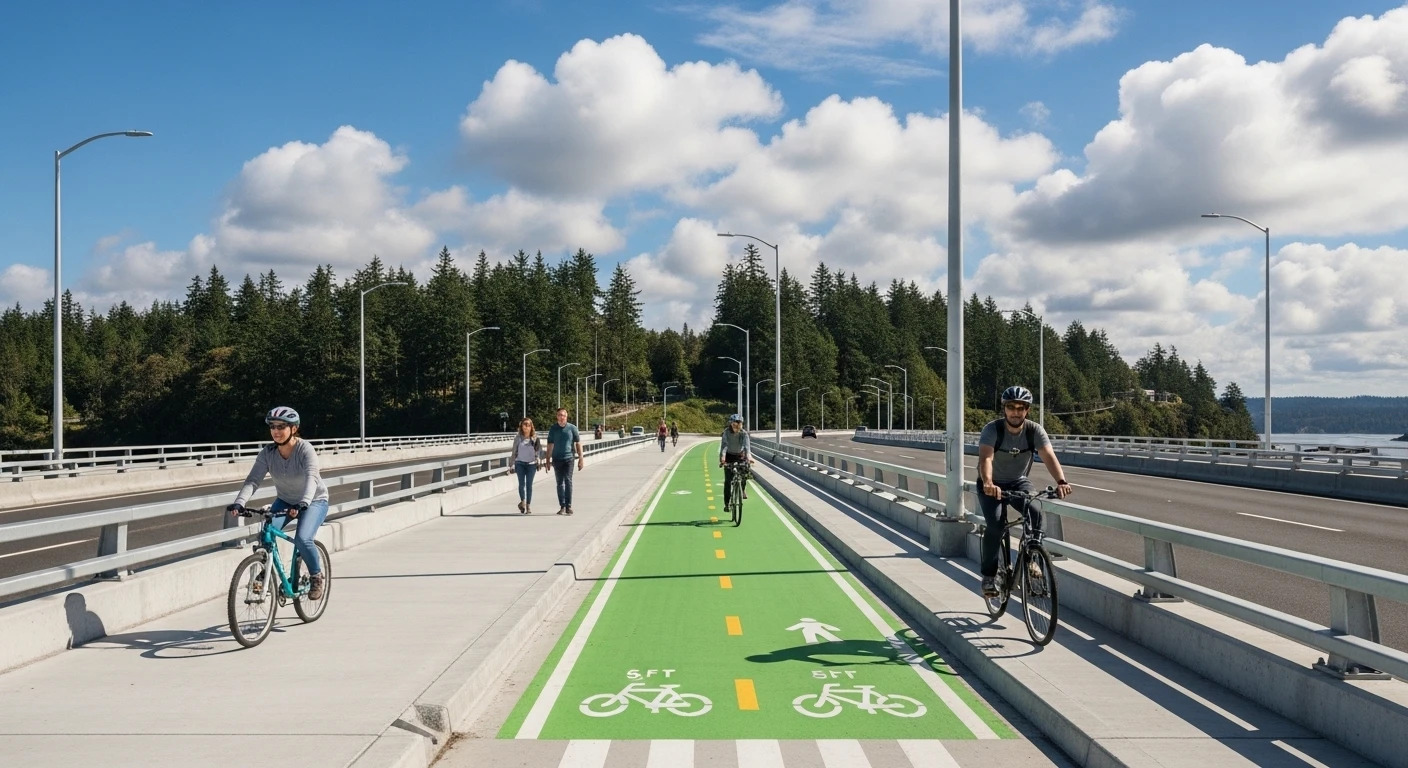
    • Wider sidewalks and bike lanes on both sides of the roadway — a significant improvement for pedestrians and cyclists who previously had more limited options on the original structure.
    • Modern seismic engineering — the new bridge is designed to perform better in an earthquake, addressing the structural concerns that made replacement necessary.
    • Longer designed service life — built to current standards, the bridge is intended to serve Everett and Mukilteo for decades.

    The bridge straddles the city boundary, welcoming travelers into both Everett and Mukilteo. Once the final finishing work is complete, pedestrians and cyclists will have dedicated, protected lanes on each side of the roadway.

    How the $34.9 Million Project Was Paid For

    The total project cost is $34.9 million. Of that, $28 million — roughly 80 percent — came from federal grant funding. The remaining portion was covered by city transportation funds.

    Mayor Cassie Franklin said she was “excited to see the brand-new Edgewater Bridge open again and serving our community,” acknowledging the disruption the closure caused. “Construction brought real impacts — especially to the neighbors who live close to the bridge — but I’m proud to deliver a more structurally sound bridge that’s built to last and ready for the future.”

    What to Expect at the April 27 Celebration

    The City of Everett is hosting a community event on Sunday, April 27 at 3:30 p.m. where residents from both Everett and Mukilteo can walk across the new bridge, meet members of the project team, and hear remarks from city officials.

    Important note: the bridge will not be open to vehicle traffic at the time of the celebration. You can approach from either side but will not be able to drive across. Vehicles will begin crossing on Tuesday, April 28.

    What’s Still Being Finished After Opening

    Even after vehicles start using the bridge on April 28, some work will continue. According to the City of Everett, permanent roadway striping, barriers, lighting, paint, and other finishing tasks may still be in progress. The new sidewalks and bike lanes will remain closed to pedestrian and cyclist use until that final phase of work is complete — so pedestrian access will follow the vehicle opening by a short period.

    Why This Reopening Matters for Everett and Mukilteo

    Mukilteo Boulevard is a primary east-west connector used daily by commuters heading toward Interstate 5, Paine Field, and local destinations in both cities. The 18-month closure forced drivers to reroute through already-congested surface streets — an impact felt by neighborhoods on both sides of the ravine. The reopening directly relieves that pressure.

    The new bike lanes and wider sidewalks also represent a real win for non-motorized transportation in a corridor that previously had limited options. Both Everett and Mukilteo have been working to improve walkability and bikeability, and this crossing is now part of that network in a meaningful way.

    Frequently Asked Questions About the Edgewater Bridge Opening

    When does the Edgewater Bridge open to vehicles?

    The bridge opens to vehicle traffic at the end of the workday on Tuesday, April 28, 2026.

    When is the community celebration for the new Edgewater Bridge?

    The City of Everett is hosting a community walk-across event on Sunday, April 27 at 3:30 p.m. The bridge will not be open to vehicle traffic at that time. Residents can approach from either the Everett or Mukilteo side.

    How much did the new Edgewater Bridge cost?

    The total project cost is $34.9 million, with $28 million funded by federal grants — about 80 percent of the project cost covered by federal dollars.

    Is the new bridge safer in an earthquake?

    Yes. The new bridge was built to modern seismic engineering standards and is significantly more earthquake-resistant than the 1946 original, which had known structural vulnerabilities.

    Why did the bridge closure last 18 months?

    The original construction schedule was extended twice — first due to underground obstructions from an older bridge structure buried beneath the site, and again after an atmospheric river weather event in December 2025 caused damage to portions of the project.

    Will there be bike lanes and sidewalks on the new Edgewater Bridge?

    Yes. The new bridge includes bike lanes and wider sidewalks on both sides. They will open to use once final finishing work on the project is complete, which is expected to happen shortly after the vehicle opening.

    What cities does the Edgewater Bridge connect?

    The Edgewater Bridge straddles the boundary between Everett and Mukilteo, connecting both cities along Mukilteo Boulevard.

  • Sound Transit Everett Link Extension: 2026 Status, Timeline and What the $500M Gap Means

    Sound Transit Everett Link Extension: 2026 Status, Timeline and What the $500M Gap Means

    Quick Definition: The Everett Link Extension is a planned 16-mile light rail segment connecting Lynnwood City Center to Everett Station with six new stations. Sound Transit targets a 2037 opening to SW Everett Industrial Center and 2041 full service to Everett Station, pending closure of a $500 million funding gap.

    We’ve been watching the Everett Link Extension timeline shift around for a few years now, and 2026 is shaping up to be one of the most consequential years for the project since voters approved ST3 back in 2016. This spring, Sound Transit is preparing to release its Draft Environmental Impact Statement — the document that narrows down exactly where the tracks, stations, and operations facility will go. This is what you need to know right now.

    Where the Project Stands in April 2026

    The Everett Link Extension remains in its Planning Phase, with the Draft Environmental Impact Statement (EIS) expected to be released for public review in 2026. The Draft EIS is a big deal — it’s the point where Sound Transit presents the preferred alignment, the six station locations, and the environmental and community impacts of building 16 miles of elevated light rail through Snohomish County.

    Once the Draft EIS is released, there will be a public comment period. Then Sound Transit prepares the Final EIS, currently expected around 2027. The Sound Transit Board formally votes on the route and station locations after the Final EIS — no shovels in the ground before that point.

    • 2026: Draft EIS release and public comment period
    • 2027: Final EIS and Board decision on preferred route and stations
    • 2030–2036: Construction phase
    • 2037: Target service opening to SW Everett Industrial Center
    • 2041: Projected full service to Everett Station

    The Six Planned Stations — What We Know

    The Everett Link Extension adds six new stations to the regional Link light rail network, connecting riders from the Lynnwood City Center terminus northward into Snohomish County. Here are the six stations currently planned:

    West Alderwood — Connects to the area between Lynnwood and southwest Snohomish County neighborhoods currently underserved by rail.

    Ash Way — Positioned near the Ash Way Park-and-Ride on I-5, already a major transit hub for express bus commuters heading to Seattle.

    Mariner — Serves the Mariner community in south Everett near the I-5 and Highway 526 interchange.

    SW Everett Industrial Center — Located near Boeing’s primary Everett manufacturing campus. This is the station that puts light rail walking distance from one of the region’s largest employment sites. Targeted as the first endpoint of service in 2037.

    SR 526/Evergreen — Near Everett’s southern approaches, serving Paine Field-area commuters.

    Everett Station — The northern terminus, connecting Link directly to Everett’s Amtrak Cascades and Sounder commuter rail hub downtown. Full service here is targeted for 2041.

    A seventh provisional station at SR 99 and Airport Road is also being studied, though it is not currently funded and would need additional financial support to be included.

    The $500 Million Funding Gap — What It Actually Means

    We’re not going to bury the hard part: Sound Transit has a $500 million affordability gap on this project. That’s a real number from Sound Transit’s own project documents — not a rounding error or a worst-case scenario.

    In practice, Sound Transit is pursuing increased local, state, and federal funding while simultaneously exploring cost-reduction options — different construction approaches, phasing strategies, or station design changes that could bring the price down without cutting service quality.

    The ST3 System Plan — the broader 25-year transit expansion voters approved in 2016 — is also up for a structural review by the Sound Transit Board in summer 2026. The board is evaluating “different approaches to updating the ST3 System Plan,” which could include new ways to build, phase, or sequence projects, including the Everett extension.

    What this means practically: if the board decides to phase the project and build to the SW Everett Industrial Center station by 2037 first, then complete the final stretch to Everett Station later, the shape of the project changes significantly. If new funding closes the gap, the 2037/2041 timeline firms up. We’ll be tracking whatever comes out of those board discussions as they develop.

    What the Draft EIS Will Tell Us

    When Sound Transit releases the Draft EIS this year, it will contain:

    • The preferred alignment — the exact route the tracks follow
    • Station designs and footprint maps for all six locations
    • Property acquisition requirements
    • Environmental impact analysis: noise, traffic, wetlands, neighborhood effects
    • Community benefit assessments
    • The preferred location for the Operations and Maintenance Facility North (OMF North), a critical piece of system infrastructure targeted for a 2034 opening

    The public comment period following the Draft EIS release is the moment for Snohomish County residents to officially weigh in. Station design concerns, community impacts, park-and-ride configurations — all of that input gets recorded in the official planning record during this window.

    Why This Matters for Everett’s Development Boom

    We’ve spent a lot of time covering Everett’s physical transformation — the waterfront, the stadium project, the housing surge. Light rail sits underneath all of it as a long-term infrastructure bet.

    When Everett Station connects to the regional Link network, the entire corridor from downtown Everett to Seattle becomes a roughly 45-minute commute without a car. That changes the math on living in Everett for people working Seattle-based jobs. It changes what downtown Everett can support in terms of retail, restaurants, and density.

    The Port of Everett’s Millwright District, the new downtown stadium, the apartments going up near the transit center — every one of these projects is betting on a future where Everett is a complete city, not a staging area for a Seattle commute. The $500M funding gap and the 2037-2041 window is the biggest variable in that long-term calculation.

    Frequently Asked Questions

    When will the Everett Link Extension open?
    Sound Transit is targeting 2037 for service to the SW Everett Industrial Center station and 2041 for full service to Everett Station. Both timelines are contingent on closing a $500 million funding gap.

    How many stations will the Everett Link Extension have?
    Six stations are planned: West Alderwood, Ash Way, Mariner, SW Everett Industrial Center, SR 526/Evergreen, and Everett Station. A seventh station at SR 99/Airport Road is being studied but is not currently funded.

    What is the Everett Link Extension Draft EIS?
    The Draft Environmental Impact Statement is expected to be released in 2026. It identifies the preferred route alignment, station locations, and environmental and community impacts. There will be a public comment period after its release.

    How long is the Everett Link Extension?
    Approximately 16 miles of new light rail, running from the Lynnwood City Center terminus north to Everett Station.

    What is the $500 million funding gap?
    Sound Transit has identified a $500 million shortfall between current projected revenues and the estimated cost of the Everett Link Extension. The agency is pursuing additional local, state, and federal funding as well as cost-reduction options.

    What is the ST3 System Plan review?
    The Sound Transit Board is evaluating different approaches to updating the ST3 System Plan in summer 2026. This could include new ways to build, phase, or sequence projects — potentially affecting the Everett extension timeline.

    Will there be park-and-ride access at Everett Link stations?
    Yes. The Ash Way station connects to an existing major Park-and-Ride facility. Specific configurations at each station will be detailed in the Draft EIS.

    How does this connect to existing Everett transit?
    The extension terminates at Everett Station, which serves Sounder commuter rail and Amtrak Cascades. It will also connect with Community Transit bus routes throughout the corridor.

  • Washington’s New E-Bike Rebate Program Is Open Now — Olympic Peninsula Residents Can Apply

    Washington’s New E-Bike Rebate Program Is Open Now — Olympic Peninsula Residents Can Apply

    Washington E-Bike Rebate: Washington state residents age 16 and older can apply for a $300 or $1,200 e-bike rebate. The program runs from March 30, 2026 through March 29, 2027. Monthly random selections began April 13, 2026. In Jefferson County, households earning at or below $59,238 qualify for the higher $1,200 rebate.

    Washington’s E-Bike Rebate Program Is Live — Here’s How to Apply

    If you’ve been thinking about getting an e-bike for exploring the Olympic Peninsula, Washington just made it a lot more affordable. The state’s new e-bike rebate program opened on March 30, 2026, and the first monthly drawing of applicants began today, April 13.

    Washington residents age 16 and older can apply for a $300 rebate toward the purchase of a qualifying e-bike. Lower-income households can receive a $1,200 rebate. Rebates are applied at participating bike shops at the time of purchase.

    How the Program Works

    You only need to submit one application to be considered for all monthly drawings through March 2027. Each month, the program randomly selects applicants from the pool. If selected, you receive a rebate to use at a participating bike shop toward a qualifying e-bike model.

    The rebates cover all three classes of e-bike and are designed to reduce — though not necessarily eliminate — the upfront cost. E-bikes typically range from around $1,000 to well over $5,000 depending on the model.

    Who Qualifies for the $1,200 Rebate?

    To qualify for the higher $1,200 rebate, your household income must be at or below 80 percent of the median income for your county. In Jefferson County, that threshold is $59,238. Income thresholds differ by county — check the program’s application for your specific county’s limit.

    For the standard $300 rebate, you just need to be a Washington resident age 16 or older with a working email address. No income verification required.

    Why E-Bikes Make Sense on the Olympic Peninsula

    The Olympic Peninsula has no shortage of bike-friendly roads and trails, and e-bikes extend how far and how comfortably you can ride — especially on hilly terrain or longer routes. Port Townsend, Sequim, and the Dungeness Spit area all have established cycling infrastructure. For local commuters, e-bikes are an increasingly practical option given gas prices in the region.

    How to Apply

    The application is available through Washington state. You only need to submit once to be entered in all monthly drawings. The program runs through March 29, 2027. For details and to apply, search “Washington e-bike rebate” at the Washington State Department of Commerce or Transportation website.

    Frequently Asked Questions: Washington E-Bike Rebate 2026

    How much is Washington’s e-bike rebate?

    $300 for most Washington residents age 16+. $1,200 for households at or below 80% of county median income. In Jefferson County, that income threshold is $59,238.

    How do I apply for the Washington e-bike rebate?

    Submit one application through the Washington state program — you’ll be entered in monthly random drawings through March 2027. Search “Washington e-bike rebate” at the state commerce or transportation website.

    When do the monthly drawings happen?

    Monthly selections began April 13, 2026. The program runs through March 29, 2027.

    What types of e-bikes qualify?

    All three classes of e-bike qualify. The rebate is applied at participating bike shops at the time of purchase.

  • Planning a Trip Around the Olympic Loop This Summer? Here’s What WSDOT Has on US 101

    Planning a Trip Around the Olympic Loop This Summer? Here’s What WSDOT Has on US 101

    2026 construction season: WSDOT has multiple active work zones on US 101 and connecting state routes around the Olympic Peninsula this year. Most are part of a long-running fish barrier removal program. Expect reduced speeds, shifted lanes, and occasional one-way alternating traffic at several locations. Plan extra travel time.

    Driving the Olympic Loop in 2026? Here’s What WSDOT Wants You to Know

    If your summer plans include a drive around the Olympic Loop — or a trip to the Hoh Rain Forest, the coast, or Hood Canal — you’ll be navigating some construction zones this season. WSDOT has multiple active projects on US 101 and connecting routes across Jefferson, Clallam, and Grays Harbor counties in 2026.

    The good news: WSDOT is keeping traffic moving through all work zones. The practical advice: leave early, check the WSDOT app before you go, and don’t count on maintaining highway speeds at every stretch.

    Active Work Zones on US 101 — What to Expect Where

    Near Port Angeles — Lees and Ennis Creeks

    On US 101 just outside Port Angeles, fish barrier removal work at Lees Creek and Ennis Creek is ongoing through summer 2026. The speed limit is reduced from 40 mph to 25 mph through both work zones. Travelers will see shifted lanes. No daytime lane reductions at these sites — nighttime lane closures happen between 7 PM and the early morning hours.

    Near Ruby Beach — Milepost 165

    One-way alternating traffic controlled by a signal is in place at milepost 165 near the Olympic National Park Ruby Beach entrance. This is an ongoing erosion repair on the highway shoulder following December 2025 winter storms. WSDOT is monitoring conditions and scheduling a permanent repair.

    South of Forks — Jefferson/Clallam County Line

    A fish passage work zone south of Forks at the Jefferson-Clallam county line remains in place through the end of 2026. This is part of the Coastal 29 fish barrier correction project that has been running on the peninsula since 2023.

    SR 116 — Chimacum Creek Closure Coming This Summer

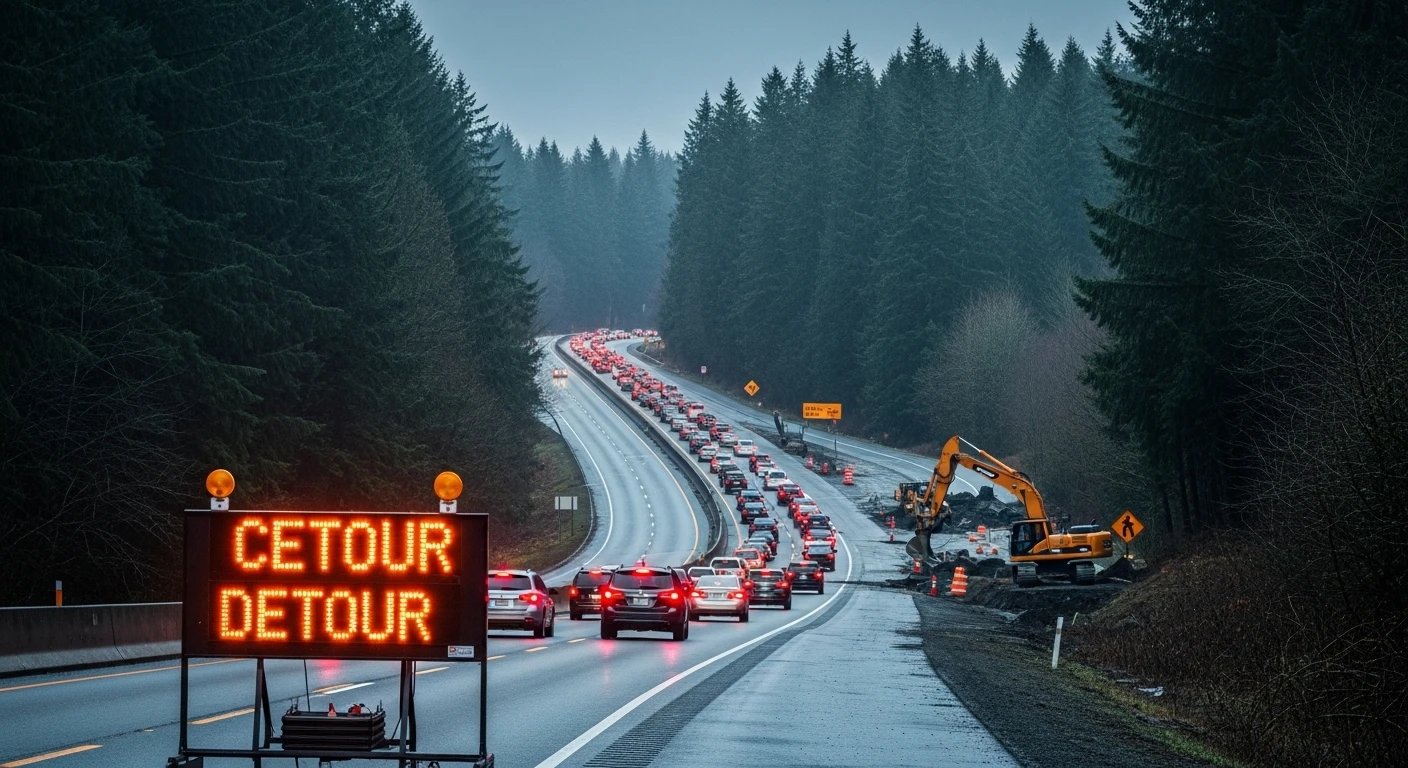
    On State Route 116, a culvert replacement at Chimacum Creek is scheduled to begin after the July 4 holiday weekend in summer 2026. This will include a longer-term road closure with a signed detour via State Route 19, Irondale Road, and Chimacum Road. Travelers heading to Port Hadlock and beyond should plan accordingly.

    Hood Canal Bridge — SR 104

    In late spring and summer 2026, travelers using the Hood Canal Bridge (SR 104) will see overnight closures from 11 PM to 4 AM as preservation work continues on the bridge’s shock absorbers and center lock system. Short maintenance openings lasting 30–40 minutes may occur during daytime hours. Check the Hood Canal Bridge status page at wsdot.wa.gov before crossing.

    Tips for Driving the Peninsula This Summer

    • Download the WSDOT app for real-time traffic, closures, and ferry updates
    • Check engage.wsdot.wa.gov/olympic-peninsula-construction for the full project map
    • Build in extra time at known work zones, especially on US 101 near Port Angeles and south of Forks
    • For ferry planning, make reservations early on the Port Townsend/Coupeville route

    Frequently Asked Questions: US 101 Olympic Peninsula Construction 2026

    Where are the main construction zones on US 101 on the Olympic Peninsula in 2026?

    Key areas: Lees and Ennis Creeks near Port Angeles (25 mph reduced speed, shifted lanes); milepost 165 near Ruby Beach (one-way alternating traffic); south of Forks near the Jefferson-Clallam county line (ongoing through end of 2026).

    Is the Hood Canal Bridge open in 2026?

    Yes, but expect overnight closures from 11 PM to 4 AM in late spring and summer 2026 for preservation work. Check wsdot.wa.gov for current status before crossing.

    Why is WSDOT doing so much construction on US 101?

    Most projects are part of a court-ordered statewide fish barrier removal program, replacing outdated culverts under highways that block salmon migration. The “Coastal 29” project has been correcting 29 barrier sites along US 101 and SR 109 since 2023.

    Where can I check current Olympic Peninsula road conditions?

    Use the WSDOT app, visit wsdot.wa.gov, or check engage.wsdot.wa.gov/olympic-peninsula-construction for the full project map.

  • Portland Is Back: Alaska Airlines Restores Daily Nonstop Flights from Paine Field This June

    Portland Is Back: Alaska Airlines Restores Daily Nonstop Flights from Paine Field This June

    Portland Is Back: Alaska Airlines Restores Daily Nonstop Service from Paine Field This June

    For Snohomish County residents, a trip to Portland has typically meant one of two things: drive three-plus hours down I-5, or battle the sprawl of Sea-Tac. This June, there’s a third option.

    Alaska Airlines will resume daily nonstop service between Seattle Paine Field International Airport (PAE) and Portland International Airport (PDX) beginning in June 2026, Propeller Airports and Alaska Airlines announced. The restoration of the Portland route is a significant win for Paine Field — and a practical upgrade for the hundreds of thousands of people in Snohomish County who prefer the airport’s convenience over Sea-Tac’s volume.

    A Route That Was Missed

    This isn’t a new route — it’s a comeback. Alaska offered Paine Field-Portland service previously, and the demand was real. Brett Smith, CEO of Propeller Airports, the company that operates Paine Field’s passenger terminal, made that clear in the announcement: “We’re thrilled that Alaska is bringing Portland service back to Paine Field. Guests have been asking for this route to return.”

    Joshua Marcy, Paine Field’s Airport Director, echoed the sentiment: “Restoring service to Portland reconnects Snohomish County with one of the Northwest’s key cities.” Portland is the Pacific Northwest’s second-largest metro area — a hub for business, healthcare, higher education, and culture that many Snohomish County residents visit regularly. A direct daily flight from Paine Field makes that connection significantly easier.

    What the Route Looks Like

    The reinstated service will operate as a daily nonstop flight between PAE and PDX. Tickets are available now at alaskaair.com.

    Importantly, the Portland route also functions as a connection gateway. Through Alaska’s broader network, Paine Field passengers making a quick stop in Portland gain access to onward service to Houston, Nashville, Orlando, Dallas, Bozeman, Spokane, Austin, and more than 140 total destinations across North America, Latin America, Asia, and the Pacific.

    That connectivity matters for both leisure and business travelers who may not need to go to Portland itself but need a connection hub that’s not Sea-Tac.

    Paine Field’s Expanding Route Network

    The Portland addition builds on a route network that Alaska Airlines has developed at Paine Field since the passenger terminal opened in 2019. Current Alaska destinations from PAE include Honolulu, Las Vegas, Los Angeles, Orange County, Palm Springs, Phoenix, San Diego, and San Francisco.

    The past year has seen some turbulence in that network. Frontier Airlines launched service from Paine Field in June 2025 — flying to Denver, Phoenix, and Las Vegas — only to pull out by January 2026 after seven months, citing low consumer demand. Frontier’s departure reminded the airport and its operators that not every carrier finds the Paine Field market large enough to sustain its model.

    Alaska’s situation is different. The airline has been at Paine Field since the terminal opened and has maintained its commitment to the airport through various market cycles. The decision to restore the Portland route — one that was specifically requested by passengers — signals confidence in the Snohomish County market going into 2026.

    Why This Matters for Everett and Snohomish County

    Paine Field is not just a convenient alternative to Sea-Tac — it’s an economic asset for the region. The airport campus hosts Boeing’s Everett factory, the Future of Flight Aviation Center, aircraft maintenance facilities, and the Propeller Airports terminal. When airlines add routes, it reinforces Paine Field’s viability as a commercial passenger hub, which in turn supports the broader ecosystem of businesses and jobs on the campus.

    For everyday travelers in Marysville, Mukilteo, Lynnwood, Bothell, and Everett itself, the Portland nonstop is a straightforward quality-of-life upgrade. No fighting the Lynnwood Link bottleneck to get to Sea-Tac. No two-hour buffer for security lines. Paine Field’s compact terminal is one of the genuine amenity advantages of living in Snohomish County — and each new route makes it more valuable.

    Paine Field itself has earned recognition for its passenger experience. In 2025, the airport ranked third in Newsweek’s Reader’s Choice Award for Best Small Airport in the U.S. and fifth overall in The Washington Post’s list of the 50 Best Airports in America.

    How to Book

    Flights are bookable now at alaskaair.com. Service begins in June 2026 and will operate daily. If you’re a Mileage Plan member, the PAE-PDX route earns miles like any Alaska segment.

    Frequently Asked Questions

    When does Alaska Airlines start Portland service from Paine Field?

    Alaska Airlines will begin daily nonstop service between Seattle Paine Field (PAE) and Portland International Airport (PDX) in June 2026.

    How long is the flight from Paine Field to Portland?

    The flight from PAE to PDX is typically 50–65 minutes nonstop.

    Is the Paine Field to Portland route new?

    No — it’s a restoration. Alaska Airlines offered PAE-PDX service previously. The route is being reinstated following strong passenger demand from Snohomish County travelers.

    What other destinations does Alaska Airlines serve from Paine Field?

    As of June 2026, Alaska Airlines destinations from PAE include Honolulu, Las Vegas, Los Angeles, Orange County, Palm Springs, Phoenix, Portland, San Diego, and San Francisco.

    Where do I park at Paine Field?

    Paine Field offers on-site parking at the passenger terminal. For current rates and reservations, visit painefield.com.

    Can I connect to other cities through Portland from Paine Field?

    Yes. Through Alaska’s network, Paine Field passengers connecting in Portland can reach Houston, Nashville, Orlando, Dallas, Bozeman, Spokane, Austin, and more than 140 total destinations worldwide.

  • Government & Civic: SR-3 Belfair Bypass Gets $48.3M, Commissioner Meetings & Transit Board Update — Mason County Minute

    Government & Civic: SR-3 Belfair Bypass Gets $48.3M, Commissioner Meetings & Transit Board Update — Mason County Minute

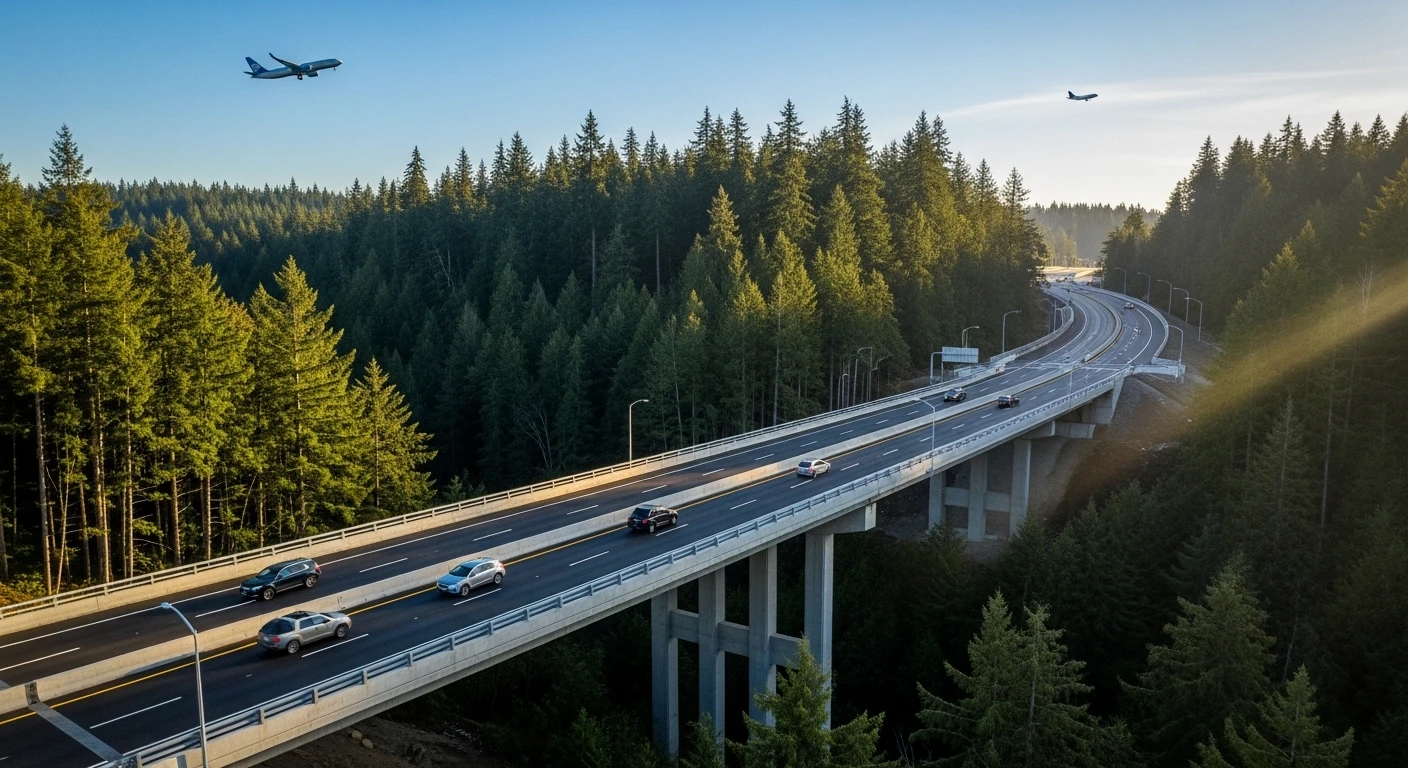
    Big news for North Mason: State legislators Drew MacEwen, Dan Griffey, and Travis Couture have secured $48.3 million in the 2026 supplemental transportation budget for the SR-3 Freight Corridor project — the long-awaited Belfair Bypass. The 6-mile new highway will route through-traffic around downtown Belfair, with construction currently scheduled for 2027–2029. Environmental review is complete and land acquisition is well underway. This is the single largest infrastructure investment in North Mason in a generation.

    On the local government calendar, the Mason County Board of Commissioners met Monday, April 6 with the Clean Water District on the agenda. Briefings are held at the Courthouse in Shelton (411 N. 5th St.) and are also available via Zoom — a good habit to check in on if you want to know what’s happening with county water quality initiatives.

    Shelton City Council holds its regular business meeting Tuesday, April 7 at 6 p.m. at the Civic Center (525 W. Cota St.). And looking ahead, Mason Transit Authority holds its April board meeting on Tuesday, April 21 at 1 p.m. — this month at the Hoodsport Regional Library (40 N. Schoolhouse Rd., Hoodsport). The public is welcome to attend all of these.

    Civic Calendar & Key Updates

    • SR-3 Freight Corridor / Belfair Bypass: $48.3M secured in 2026 WA supplemental transportation budget. 6-mile new alignment routing around downtown Belfair. Construction: 2027–2029. Environmental review complete, land acquisition underway.
    • Mason County Commissioners: Regular briefings at 411 N. 5th St., Shelton + Zoom. Clean Water District updates ongoing. Check masoncountywa.gov for agendas.
    • Shelton City Council: Regular business meetings at 525 W. Cota St., 6 PM. Check ci.shelton.wa.us for full agenda.
    • Mason Transit Authority Board: April 21 at 1 PM, Hoodsport Regional Library, 40 N. Schoolhouse Rd., Hoodsport. Public welcome.

    Sources: WSDOT SR-3 Freight Corridor project page, WA State Fiscal LEAP Transportation Document 2026-2, Mason County Journal, MasonWebTV.com, Shelton City Council agenda, MasonTransit.org