Tag: Local AI

  • Content Swarm: How One Brief Becomes 15 Articles Across 5 Personas

    Content Swarm: How One Brief Becomes 15 Articles Across 5 Personas

    The Machine Room · Under the Hood

    One Article Is a Missed Opportunity

    Here’s how most content marketing works: identify a keyword, write an article, publish it, move on. One keyword, one article, one audience. The entire content calendar is a list of keywords mapped to publication dates.

    This approach leaves enormous value on the table. Because the same topic matters to completely different people for completely different reasons, and a single article can only speak to one of them effectively.

    Take “water damage restoration cost.” A homeowner experiencing their first flood needs reassurance and a step-by-step guide. An insurance adjuster needs documentation requirements and estimate breakdowns. A property manager needs commercial-scale pricing and response time guarantees. A comparison shopper needs a “Company A vs. Company B” analysis. A prevention-focused homeowner needs “how to avoid water damage” content that links to restoration as a backup.

    One article cannot serve all five of these people. But one brief – one core research investment – can produce five articles that do. That’s what I call a content swarm.

    The Swarm Architecture

    A content swarm starts with a single content brief and produces multiple differentiated articles, each targeting a specific persona at a specific stage of the buyer’s journey. The architecture has four stages:

    Stage 1: Brief Creation. The content-brief-builder skill takes a target keyword, analyzes SERP competition, identifies search intent variations, and produces a structured brief with the core facts, statistics, and angles needed to write about the topic authoritatively. This brief is the shared knowledge foundation – researched once, used many times.

    Stage 2: Persona Detection. The persona-detection framework analyzes the brief and the target site’s existing content to identify which personas are underserved. For a restoration site, it might identify: first-time homeowner, insurance professional, property manager, emergency searcher, and prevention-focused homeowner. For a lending site: first-time a luxury asset lenderwer, high-net-worth client, bad-credit applicant, comparison shopper, and repeat a luxury asset lenderwer.

    Stage 3: Differentiation. This is where most content multiplication fails. Simply rewriting the same article five times with different introductions is not differentiation – it’s duplication. True differentiation requires changing the angle (what aspect of the topic this persona cares about), the depth (expert vs. beginner), the tone (urgent vs. educational vs. reassuring), the CTA (call now vs. learn more vs. compare options), and the structure (how-to guide vs. comparison vs. FAQ-heavy explainer).

    The adaptive-variant-pipeline handles this. It doesn’t produce a fixed number of variants. It analyzes the brief and determines how many genuinely distinct personas exist for this topic. Sometimes that’s 3. Sometimes it’s 7. The pipeline produces exactly as many variants as the topic demands – no more, no less.

    Stage 4: Publishing. Each variant gets full SEO/AEO/GEO treatment – optimized title, meta description, FAQ section, schema markup, internal links to existing site content, and proper taxonomy assignment. Then it’s published via the WordPress REST API through my proxy. One brief becomes a cluster of interlinked, persona-specific articles that collectively own the entire keyword space around that topic.

    Why Differentiation Is the Hard Part

    The Constancy Contract is the concept that makes this work. It’s a set of rules that governs what stays constant across all variants and what must change.

    Constant across all variants: Core facts, statistics, and technical accuracy. If the average water damage restoration cost is ,000-,000, every variant cites that range. No variant invents different numbers or contradicts another. The factual foundation is shared.

    Must change across variants: The opening hook, the angle of approach, the reading level, the CTA, the examples used, the section emphasis, and the FAQ questions. A variant for insurance adjusters opens with documentation requirements and uses industry terminology. A variant for first-time homeowners opens with “don’t panic” reassurance and uses plain language. Same topic, completely different experience.

    The differentiation mandate is enforced programmatically. Before a variant is finalized, it’s checked against all other variants in the swarm for similarity. If two variants share more than 30% of their sentence structures or phrasing, the second one gets rewritten. This prevents the lazy pattern of changing a few words and calling it a new article.

    The Math That Makes This Compelling

    Traditional content production: 1 keyword = 1 brief = 1 article. Cost: ~-400 for research and writing. Coverage: 1 persona, 1 search intent.

    Content swarm production: 1 keyword = 1 brief = 5 articles. Cost: ~-400 for the brief + -100 per variant (since the research is already done). Total: -900. Coverage: 5 personas, 5 search intents, 5 sets of long-tail keywords.

    The per-keyword cost roughly doubles. The coverage quintuples. The internal linking opportunities between variants create a topical cluster that signals authority to Google far more effectively than a single standalone article.

    Across a 12-month content campaign, the compound effect is massive. A traditional approach producing 4 articles per month gives you 48 articles covering 48 keywords. A swarm approach producing 1 brief per week with 5 variants gives you roughly 240 articles covering 48 core keywords but capturing hundreds of long-tail variations. Same research investment, 5x the content surface area.

    How This Works in Practice: A Real Example

    For a luxury lending client, the brief targeted “asset-based lending.” The swarm produced:

    Variant 1 – First-time a luxury asset lenderwer: “How Asset-Based Lending Works: A Complete Guide for First-Time a luxury asset lenderwers.” Plain language, step-by-step process, FAQ-heavy, CTA: “See if you qualify.”

    Variant 2 – High-net-worth client: “Asset-Based Lending for High-Value Collections: Fine Art, Jewelry, and Rare Assets.” Technical, detailed asset categories, valuation process, CTA: “Request a confidential appraisal.”

    Variant 3 – Comparison shopper: “Asset-Based Lending vs. Traditional Bank Loans: Which Is Right for Your Situation?” Side-by-side comparison, pros and cons, scenario-based recommendation, CTA: “Compare your options.”

    Variant 4 – Bad credit a luxury asset lenderwer: “Can You Get an Asset-Based Loan With Bad Credit? What Actually Matters.” Addresses the #1 objection directly, explains why credit score matters less in asset-based lending, CTA: “Your assets matter more than your score.”

    Variant 5 – Repeat a luxury asset lenderwer: “Returning a luxury asset lenderwers: How to Streamline Your Next Asset-Based Loan.” Shorter, more direct, assumes knowledge of the process, focuses on speed and convenience, CTA: “Start your repeat application.”

    Five articles, one research investment, five different people served, five different search intents captured, and all five internally linked to each other and to the main service page.

    Frequently Asked Questions

    Doesn’t publishing multiple articles on the same topic cause keyword cannibalization?

    Not if the variants are properly differentiated. Cannibalization happens when two pages target the same keyword with the same intent. In a content swarm, each variant targets different long-tail variations and different search intents. “Asset-based lending guide” and “asset-based lending with bad credit” are not competing – they’re complementary. Google is sophisticated enough to understand intent differentiation.

    How do you decide how many variants to produce?

    The adaptive pipeline decides based on how many genuinely distinct personas exist for the topic. A highly technical B2B topic might only support 2-3 meaningful variants. A consumer-facing topic with broad appeal might support 6-7. The rule is: if you can’t change the angle, tone, AND structure meaningfully, don’t create the variant. Quality over quantity.

    Can small businesses with one site use this approach?

    Absolutely – and arguably they benefit most. A small business competing against larger companies can’t outspend them on content volume. But they can out-target them by covering every persona in their niche while competitors publish one generic article per keyword. A local plumber with 5 persona-specific articles about “burst pipe repair” will outrank a national chain with one generic article, because the local plumber’s content matches more search intents.

    How long does the full swarm process take?

    Brief creation: 15-20 minutes. Persona detection: automated, under 2 minutes. Variant generation: 10-15 minutes per variant. Publishing with full optimization: 5 minutes per variant. Total for a 5-variant swarm: approximately 90 minutes from keyword to live content. Compare that to 3-4 hours for a single traditionally-produced article.

    The Future of Content Is Multiplied, Not Multiplied

    Content swarms aren’t about producing more content for the sake of volume. They’re about recognizing that every topic has multiple audiences, and each audience deserves content that speaks directly to their situation, language, and intent.

    The technology to do this at scale exists today. The frameworks are built. The workflows are proven. The only question is whether you continue writing one article per keyword and hoping it resonates with everyone, or whether you build the system that ensures every potential reader finds exactly the article they need.

    {
    “@context”: “https://schema.org”,
    “@type”: “Article”,
    “headline”: “Content Swarm: How One Brief Becomes 15 Articles Across 5 Personas”,
    “description”: “Most agencies write one article per keyword. I built a content swarm architecture that takes a single brief, identifies every persona who needs that information”,
    “datePublished”: “2026-03-21”,
    “dateModified”: “2026-04-03”,
    “author”: {
    “@type”: “Person”,
    “name”: “Will Tygart”,
    “url”: “https://tygartmedia.com/about”
    },
    “publisher”: {
    “@type”: “Organization”,
    “name”: “Tygart Media”,
    “url”: “https://tygartmedia.com”,
    “logo”: {
    “@type”: “ImageObject”,
    “url”: “https://tygartmedia.com/wp-content/uploads/tygart-media-logo.png”
    }
    },
    “mainEntityOfPage”: {
    “@type”: “WebPage”,
    “@id”: “https://tygartmedia.com/content-swarm-how-one-brief-becomes-15-articles-across-5-personas/”
    }
    }

  • MP-04: The Agent That Turns Every Meeting Into Action Items Before I Close the Tab

    MP-04: The Agent That Turns Every Meeting Into Action Items Before I Close the Tab

    The Machine Room · Under the Hood

    Meetings Produce Information. Most of It Evaporates.

    I sat in a client call last month where we agreed on three specific deliverables, a revised timeline, and a budget adjustment. Everyone nodded. Everyone agreed. Three days later, nobody could remember the exact numbers or who owned what. I had to dig through a transcript to reconstruct the meeting.

    This happens constantly. Meetings generate decisions, action items, and commitments at a rate that exceeds human note-taking capacity. Even when someone takes notes, the notes are incomplete, biased toward what the note-taker found interesting, and almost never get distributed in an actionable format. The transcript exists – most meetings are recorded now – but a 45-minute transcript is a 6,000-word wall of text that nobody will read.

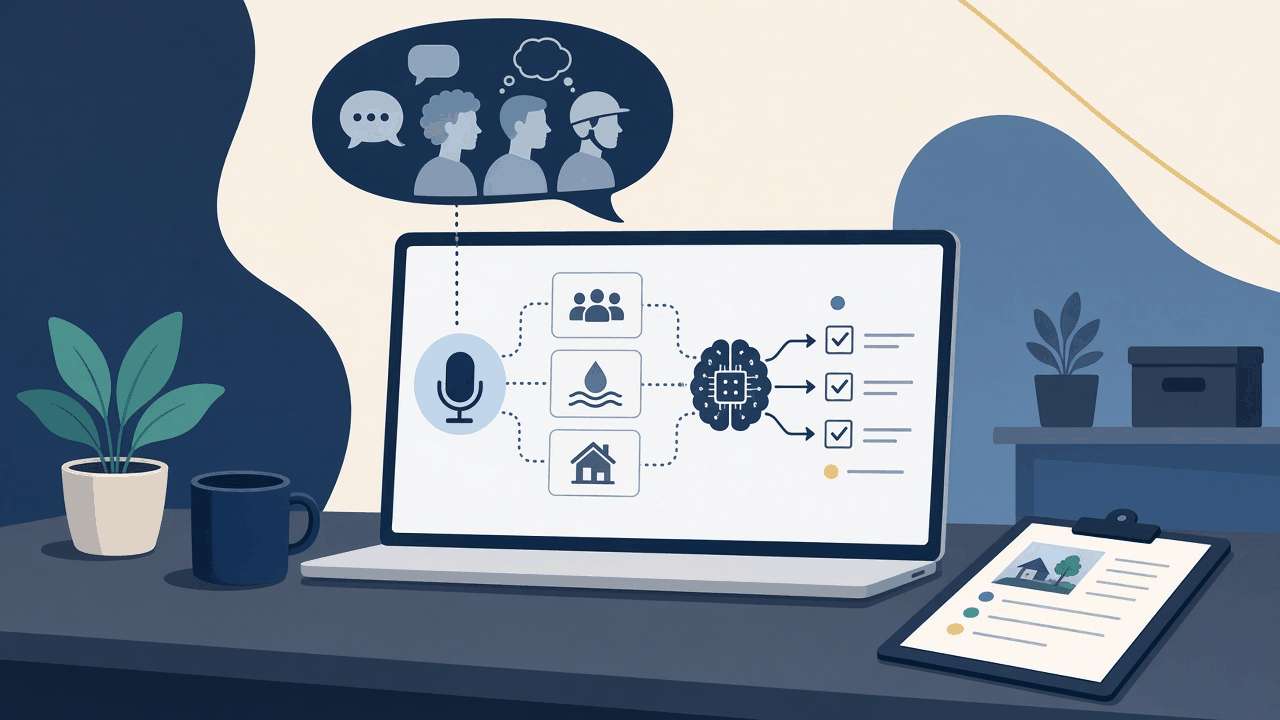
    MP-04 solves this. It’s the fourth agent in my autonomous fleet, and its job is simple: take any meeting transcript, extract everything actionable, and route it to the right systems before the meeting fades from memory.

    What MP-04 Extracts

    The agent processes meeting transcripts through Ollama’s Llama 3.2 model with a structured extraction prompt. It pulls five categories of information:

    Action items: Anything that someone committed to doing. “I’ll send the proposal by Friday” becomes an action item assigned to the speaker with a Friday deadline. “We need to update the website copy” becomes an action item with no assignee – flagged for me to assign. The model distinguishes between firm commitments (someone said “I will”) and vague suggestions (“we should probably”) and tags them accordingly.

    Decisions: Any point where the group reached agreement. “Let’s go with Option B” is a decision. “The budget is ,000” is a decision. These get logged as immutable records – what was decided, when, and by whom. Decisions are critical for accountability. When someone later says “we never agreed to that,” the decision log settles it.

    Client mentions: Names of clients, companies, or projects discussed. Each mention gets cross-referenced against my client database to attach the meeting context to the right client record. If a client was discussed in three meetings this month, their record shows all three with relevant excerpts.

    Deadlines and dates: Any temporal commitment. “The launch is March 15th.” “We need this by end of quarter.” “Let’s review next Tuesday.” These get extracted with enough context to create calendar-ready events or task due dates.

    Open questions: Things raised but not resolved. “What’s the pricing for the enterprise tier?” with no answer in the transcript becomes an open question flagged for follow-up. These are the items that silently disappear after meetings if nobody tracks them.

    The Routing Layer

    Extraction is useful. Routing is what makes it operational.

    After extracting the five categories, MP-04 routes each item to the appropriate system:

    Action items become Notion tasks in my Tasks Database. Each task is pre-populated with the company (inferred from client mentions), priority (inferred from deadline proximity and language urgency), source (the meeting date and title), and a link back to the full transcript. I don’t create these tasks manually. They appear in my task board, ready to be triaged in my next planning session.

    Decisions get logged to the Knowledge Database in Notion. This creates a searchable decision history. Three months from now, when I need to recall what was agreed about the Q2 content strategy, I search the decisions log instead of scrubbing through transcripts.

    Client mentions update the Client Database with a meeting note. The note includes a 2-3 sentence summary of what was discussed about that client, automatically generated from the relevant transcript sections.

    Deadlines get posted to Slack with a reminder. If the deadline is within 7 days, it goes to my priority channel. If it’s further out, it goes to the weekly planning channel.

    Open questions become follow-up tasks in Notion, tagged with a “needs-answer” status that keeps them visible until resolved.

    The Technical Reality

    MP-04 runs locally on my Windows machine. The input is a text transcript – either pasted directly or loaded from a file. Most meeting platforms (Zoom, Google Meet, Teams) now generate transcripts automatically, so the input is free.

    The Ollama call uses a detailed system prompt that defines the extraction schema with examples. The prompt is about 800 tokens of instructions that tell the model exactly how to format each extracted item – as JSON objects with specific fields for each category. This structured output means the routing script can parse the results programmatically without any ambiguity.

    Processing time for a 45-minute meeting transcript (approximately 6,000 words): about 15 seconds on Llama 3.2 3B running locally. The Notion API calls to create tasks, update client records, and log decisions add another 5-10 seconds. Total time from transcript to fully routed outputs: under 30 seconds.

    Compare that to the manual process: read the transcript (15 minutes), identify action items (10 minutes), create tasks in Notion (5 minutes), update client records (5 minutes), set reminders for deadlines (5 minutes). That’s 40 minutes of administrative work per meeting, reduced to 30 seconds.

    The Client Name Guardrail Problem

    One unexpected challenge: client names in transcripts are messy. People use first names, company names, project codenames, and abbreviations interchangeably. “The Beverly project” and “a luxury lending firm” and “Sarah’s account” might all refer to the same client.

    I built a name resolution layer that maps common references to canonical client records. It’s a JSON lookup table: “Beverly” maps to “a luxury lending firm Company,” “Sarah” maps to “Sarah [Client Last Name] at a luxury lending firm,” “BL” maps to “a luxury lending firm.” The table has about 150 entries covering all active clients and common reference patterns.

    When the extraction model identifies a client mention, the name resolver checks it against this table before routing. If there’s no match, it flags the mention as “unresolved client reference” for manual review rather than creating a misattributed record. The guardrail prevents the worst outcome – action items attached to the wrong client – at the cost of occasionally requiring a 10-second manual resolution.

    What Changed After 60 Days of Running MP-04

    The obvious win: I stopped losing action items. In the 60 days before MP-04, I estimate that about 20% of meeting commitments fell through the cracks – not from negligence, but from the gap between hearing a commitment and recording it in a system. In the 60 days after, that dropped to under 3% (the remaining 3% are items the model misclassifies or that I manually deprioritize).

    The less obvious win: meeting quality improved. When you know every commitment will be automatically extracted and tracked, you’re more careful about what you commit to. Meetings became more precise. Fewer vague “we should probably” statements, more specific “I will deliver X by Y.” The agent didn’t just capture accountability – it created it.

    The unexpected win: the decision log became a strategic asset. Having a searchable history of every decision across every client turned out to be invaluable for quarterly reviews, contract renewals, and scope discussions. “Based on the decisions log, we’ve expanded scope three times without adjusting the retainer” is a powerful conversation to have with data behind it.

    Frequently Asked Questions

    What meeting platforms does MP-04 work with?

    Any platform that produces a text transcript. Zoom, Google Meet, Microsoft Teams, Otter.ai, and Fireflies all export transcripts. MP-04 doesn’t integrate with these platforms directly – it processes the transcript file. This keeps it platform-agnostic and avoids the complexity of OAuth integrations with every meeting tool.

    How accurate is the action item extraction?

    On my test set of 40 meeting transcripts, the model correctly identified 91% of action items I had manually tagged. The 9% it missed were typically very implicit commitments – things like “I’ll take care of that” without specifying what “that” refers to. It also occasionally generates false positives from hypothetical statements – “if we were to do X, we would need Y” getting tagged as a commitment. The false positive rate is about 5%, easily caught in the triage step.

    Can this work for meetings I didn’t attend?

    Yes – and that’s one of the most useful applications. Team members can drop a transcript into the processing queue and I get a structured summary with action items without having attended the meeting. This is especially valuable for the meetings I delegate but still need to track outcomes from.

    What about sensitive meeting content?

    Everything runs locally. The transcript is processed by Ollama on my machine, routed to my private Notion workspace, and posted to my private Slack channels. No third-party service sees the meeting content. This is critical for client meetings that discuss financials, legal issues, or strategic plans.

    The Agent Philosophy

    MP-04 embodies the principle that runs through my entire agent fleet: don’t automate decisions – automate the administrative overhead around decisions. The agent doesn’t decide what to prioritize or how to respond to a client request. It extracts the raw information, structures it, and routes it to where I can make those decisions quickly and with full context. The human judgment stays human. The administrative busywork disappears.

    {
    “@context”: “https://schema.org”,
    “@type”: “Article”,
    “headline”: “MP-04: The Agent That Turns Every Meeting Into Action Items Before I Close the Tab”,
    “description”: “MP-04 processes meeting transcripts automatically – extracting action items, decisions, client mentions, and deadlines, then routing them to the right Not”,
    “datePublished”: “2026-03-21”,
    “dateModified”: “2026-04-03”,
    “author”: {
    “@type”: “Person”,
    “name”: “Will Tygart”,
    “url”: “https://tygartmedia.com/about”
    },
    “publisher”: {
    “@type”: “Organization”,
    “name”: “Tygart Media”,
    “url”: “https://tygartmedia.com”,
    “logo”: {
    “@type”: “ImageObject”,
    “url”: “https://tygartmedia.com/wp-content/uploads/tygart-media-logo.png”
    }
    },
    “mainEntityOfPage”: {
    “@type”: “WebPage”,
    “@id”: “https://tygartmedia.com/mp-04-the-agent-that-turns-every-meeting-into-action-items-before-i-close-the-tab/”
    }
    }

  • Plugins, Skills, and MCPs: The Three Layers That Make AI Actually Useful

    Plugins, Skills, and MCPs: The Three Layers That Make AI Actually Useful

    The Machine Room · Under the Hood

    Prompts Are Not a Strategy

    The entire AI productivity discourse is stuck on prompts. Write better prompts. Use this template. Here is my secret prompt. It is the equivalent of teaching someone to type faster when what they need is a computer.

    Prompts are inputs. A command is worthless without an operating system to execute it, tools to interact with, and persistent memory to build on. The gap between AI as a chatbot and AI as a business tool is not better prompts. It is infrastructure.

    After 387+ Cowork sessions of AI-powered operations, I have identified three infrastructure layers that transform AI from fancy autocomplete into a genuine operational partner.

    Layer 1: MCP Servers – The Connections

    MCP stands for Model Context Protocol. An MCP server is a bridge between AI and an external system. It gives AI the ability to read from and write to tools outside its conversation window.

    Without MCP servers, AI only works with what you paste into chat. With them, AI can query Notion databases, read Gmail, check Google Calendar, interact with Figma, pull analytics, and manage local files.

    I run MCP connections to Notion, Gmail, Google Calendar, Metricool, Figma, and Windows MCP for PowerShell execution. Each server exposes tools the AI can take as actions. MCP servers are connection infrastructure, not intelligence. They make AI more capable, not smarter.

    Layer 2: Skills – The Knowledge

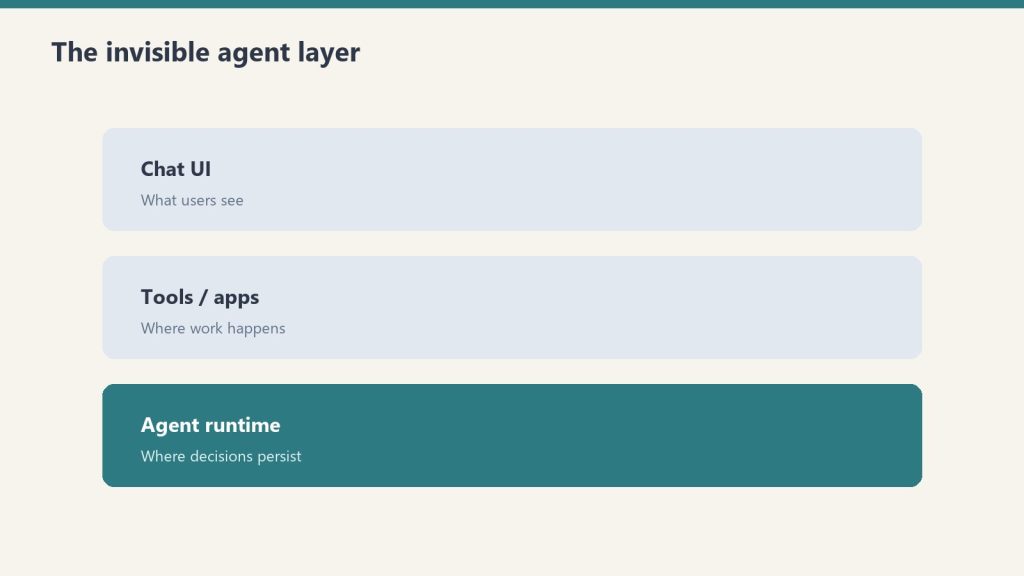
    If MCP servers are roads, skills are maps. A skill is a structured SKILL.md file that tells AI how to do something specific using available tools.

    Without skills, AI knows it can connect to WordPress but not your URL, credentials, content strategy, or publishing workflow. With skills, one sentence triggers a complete operation. I have 60+ skills covering WordPress connections, site auditing, SEO optimization, content generation, Notion operations, social media publishing, and more.

    Every hour spent writing skills saves 10+ hours of future session time.

    Layer 3: Plugins – The Packages

    Plugins bundle skills, MCP configurations, and tools into installable capability packages. A WordPress optimization plugin bundles 15+ skills with reference files and configurations.

    Plugins solve distribution. Building 60+ skills took months. A plugin lets someone install an entire workflow domain in minutes. The architecture enables composability – each plugin handles its domain and connects cleanly to others.

    How the Three Layers Work Together

    I say: Run the content intelligence audit on a luxury asset lender.com and generate 15 draft articles.

    Plugin layer: The wp-content-intelligence plugin activates with its audit and batch creator skills.

    Skill layer: The audit skill loads credentials from the site registry and understands the full methodology.

    MCP layer: Windows MCP executes PowerShell commands calling WordPress REST API through the proxy.

    Three layers, one sentence trigger. Remove any layer and the workflow breaks.

    The Maturity Model

    Level 1 – Prompts: Raw chat, no infrastructure. Where 95% of AI users are.

    Level 2 – MCP Connections: AI reads and writes to your systems. Dramatically more useful.

    Level 3 – Skills: Instruction files capture workflows and credentials. Operational AI begins.

    Level 4 – Plugins: Packaged capability bundles. Workflows become portable and composable.

    Level 5 – Autonomous Agents: Skills run on schedules without human triggers. AI becomes a colleague.

    Frequently Asked Questions

    Do I need to be a developer to build skills?

    No. Skills are markdown files. If you can write clear instructions for a task, you can write a skill. No code required.

    How do MCP servers handle authentication?

    Each has its own mechanism. Notion uses integration tokens. Gmail uses OAuth2. You authenticate once and the connection persists across sessions.

    Can skills call other skills?

    Yes. The wp-full-refresh skill calls wp-seo-refresh, wp-aeo-refresh, wp-geo-refresh, wp-schema-inject, and wp-interlink in sequence. Complex workflows from modular single-purpose skills.

    What is the difference between a skill and a prompt template?

    Scope and persistence. A prompt template is a text string. A skill is a persistent file with context, credentials, reference data, quality standards, and step-by-step procedures. The difference is between a recipe and a kitchen.

    Start Building Infrastructure, Not Prompts

    The next time you spend 10 minutes explaining context to AI, write a skill instead. The next time you manually copy data between platforms, set up an MCP connection. Prompts are disposable. Infrastructure compounds.

    {
    “@context”: “https://schema.org”,
    “@type”: “Article”,
    “headline”: “Plugins, Skills, and MCPs: The Three Layers That Make AI Actually Useful”,
    “description”: “Everyone talks about AI prompts. Nobody talks about the infrastructure that makes AI operational. I break down the three layers – plugins, skills, and MCP”,
    “datePublished”: “2026-03-21”,
    “dateModified”: “2026-04-03”,
    “author”: {
    “@type”: “Person”,
    “name”: “Will Tygart”,
    “url”: “https://tygartmedia.com/about”
    },
    “publisher”: {
    “@type”: “Organization”,
    “name”: “Tygart Media”,
    “url”: “https://tygartmedia.com”,
    “logo”: {
    “@type”: “ImageObject”,
    “url”: “https://tygartmedia.com/wp-content/uploads/tygart-media-logo.png”
    }
    },
    “mainEntityOfPage”: {
    “@type”: “WebPage”,
    “@id”: “https://tygartmedia.com/plugins-skills-and-mcps-the-three-layers-that-make-ai-actually-useful/”
    }
    }

  • The Client Name Guardrail: What Happens When AI Publishes Too Fast for Human Review

    The Client Name Guardrail: What Happens When AI Publishes Too Fast for Human Review

    The Machine Room · Under the Hood

    The Mistake That Created the Rule

    I published 12 articles to the agency blog in a single session. World-class content. Properly optimized. Well-structured. And scattered throughout them were real client names – actual companies we serve, mentioned by name in case studies, examples, and operational descriptions.

    This was not malicious. It was the natural output of an AI that had access to my full operational context – including which companies I work with, what industries they are in, and what we have built for them. When I asked for content drawn from real work, the AI delivered exactly that. Including the parts that should have stayed confidential.

    I caught it during review. Every article was scrubbed clean within the hour. But the incident exposed a fundamental gap in AI-assisted content publishing: when AI can publish at machine speed, human review becomes the bottleneck – and bottlenecks get skipped.

    So I built the client name guardrail. A systematic prevention layer that catches confidential references before they reach a publish command, no matter how fast the content is being produced.

    The Protected Entity List

    The foundation is a maintained list of every client, company, and entity name that must never appear in published content without explicit approval. The list currently contains 20+ entries covering all active clients across every business entity.

    But names are not simple strings. People reference the same company in multiple ways. “The restoration client in Colorado” is fine. “a restoration company” is not. “Our luxury lending partner” is fine. “a luxury lending firm Company” is not. The entity list includes not just official company names but common abbreviations, nicknames, and partial references that could identify a client.

    The Genericization Table

    Simply blocking client names would break the content. If the AI cannot reference specific work, the articles become generic and lose the authenticity that makes them valuable. The solution is a genericization table – a mapping of specific references to anonymous equivalents that preserve the insight without revealing the identity.

    “a cold storage facility” becomes “our cold storage client.” “a luxury lending firm” becomes “a luxury lending partner.” “a restoration company” becomes “a restoration company in the Mountain West.” Each mapping is specific enough to be useful but generic enough to protect confidentiality.

    The AI applies these substitutions automatically during content generation. It still draws from real operational experience. It still provides specific, authentic examples. But the identifying details are replaced before the content is written, not after.

    The Pre-Publish Scan

    The final layer is a regex-based scan that runs against every piece of content before a publish API call is made. The scan checks the title, body content, excerpt, and slug against the full protected entity list. If any match is found, the publish is blocked and the specific matches are surfaced for review.

    This scan catches edge cases the genericization table misses – a client name that slipped through in a quote, a URL that contains a company domain, or a reference the AI constructed from context rather than the entity list. The scan is the safety net that ensures nothing gets through even when the primary prevention layer fails.

    Why This Matters Beyond My Situation

    Every agency, consultancy, and service provider using AI for content creation faces this risk. AI models are trained to be helpful and specific. When given access to client context, they will use that context to produce better content. That is exactly what you want – until the specificity includes information your clients did not consent to having published.

    The risk scales with capability. A basic AI tool that generates generic blog posts will never mention your clients because it does not know about them. An AI system deeply integrated with your operations – reading your Notion databases, processing your email, accessing your WordPress sites – knows everything about your client relationships. That integration is what makes it powerful. It is also what makes it dangerous without guardrails.

    The pattern I built is transferable to any agency: maintain a protected entity list, build a genericization mapping, and scan before publishing. The implementation takes about 2 hours. The alternative – publishing client names and discovering it after the content is indexed by Google – takes much longer to fix and costs trust that cannot be rebuilt with a quick edit.

    Frequently Asked Questions

    Does the guardrail slow down content production?

    Negligibly. The genericization happens during content generation, adding zero time to the process. The pre-publish scan takes under 2 seconds per article. In a 15-article batch, that is 30 seconds of total overhead.

    What about client names in internal documents vs. published content?

    The guardrail only activates on publish workflows. Internal documents, Notion entries, and operational notes use real client names because they are not public-facing. The skill triggers specifically when content is being sent to a WordPress REST API endpoint or any other publishing channel.

    Can clients opt in to being named?

    Yes. The protected entity list supports an override flag. If a client explicitly approves being referenced by name – for a case study, testimonial, or co-marketing piece – their entry can be temporarily unflagged. The default is always protected. Opt-in is explicit.

    Has the guardrail caught anything since the initial incident?

    Yes – three times in the first week. All were subtle references the AI constructed from context rather than direct mentions. One was a geographic description specific enough to identify a client’s location. The scan caught it. Without the guardrail, all three would have been published.

    Speed Needs Guardrails

    The ability to publish 15 articles in a single session is a superpower. But superpowers without controls are liabilities. The client name guardrail is not about slowing down. It is about publishing at machine speed with human-grade judgment on confidentiality. The AI produces the content. The guardrail produces the trust.

    {
    “@context”: “https://schema.org”,
    “@type”: “Article”,
    “headline”: “The Client Name Guardrail: What Happens When AI Publishes Too Fast for Human Review”,
    “description”: “After publishing 12 articles that accidentally contained real client names, I built a guardrail system with a protected entity list, genericization table, and p”,
    “datePublished”: “2026-03-21”,
    “dateModified”: “2026-04-03”,
    “author”: {
    “@type”: “Person”,
    “name”: “Will Tygart”,
    “url”: “https://tygartmedia.com/about”
    },
    “publisher”: {
    “@type”: “Organization”,
    “name”: “Tygart Media”,
    “url”: “https://tygartmedia.com”,
    “logo”: {
    “@type”: “ImageObject”,
    “url”: “https://tygartmedia.com/wp-content/uploads/tygart-media-logo.png”
    }
    },
    “mainEntityOfPage”: {
    “@type”: “WebPage”,
    “@id”: “https://tygartmedia.com/the-client-name-guardrail-what-happens-when-ai-publishes-too-fast-for-human-review/”
    }
    }

  • I Reorganized My Entire Notion Workspace in One Session. Here Is the Architecture.

    I Reorganized My Entire Notion Workspace in One Session. Here Is the Architecture.

    The Machine Room · Under the Hood

    The Workspace Was Collapsing Under Its Own Weight

    My Notion workspace had grown organically for two years. Pages nested inside pages nested inside pages. Duplicate databases. Orphaned notes. Three different task lists that each tracked a subset of the same tasks. A page hierarchy so deep that finding anything required knowing the exact path – or giving up and using search.

    The workspace worked when I ran two businesses. At seven businesses with 18 managed websites, it was actively slowing me down. Every search returned duplicates. Every new entry required deciding which of three databases to put it in. The structure that was supposed to organize my work was generating more overhead than the work itself.

    So I burned it down and rebuilt it. One Cowork session. New architecture from the ground up. Six core databases, three operational layers, and a design philosophy that scales to 20 businesses without adding structural complexity.

    The Three-Layer Architecture

    Layer 1: Master Databases. Six databases that hold every record across every business: Master Actions (tasks), Content Calendar, Master Entities (clients and businesses), Knowledge Lab, Contact Profiles, and Agent Registry. These are the canonical data stores. Every record lives in exactly one place.

    Layer 2: Autonomous Engine. The automation layer – triage agent configuration, air-gap sync agent rules, scheduled task definitions, and agent monitoring dashboards. This layer reads from and writes to the master databases but operates independently. It is where the AI agents interface with the workspace.

    Layer 3: Command Centers. Focus rooms for each business entity – Tygart Media, Engage Simply, a restoration company, a restoration company, Restoration Golf League, BCESG, and Personal. Each focus room contains filtered views of the master databases showing only records tagged with that entity. Plus client portals accessed from this layer.

    The key principle: data lives in Layer 1, automation lives in Layer 2, and humans interact through Layer 3. No layer duplicates another. Every view is a window into the same underlying data, filtered by context.

    The Entity Tag System

    Every record in every database has an Entity property – a relation to the Master Entities database. This single property is what makes the entire architecture work. When I create a task, I tag it with an entity. When content is published, it is tagged with an entity. When an agent logs activity, it is tagged with an entity.

    The entity tag enables three capabilities: filtered views per business (Layer 3 focus rooms show only their entity’s records), air-gapped client portals (sync only records matching the client’s entity), and cross-business reporting (roll up all entities for portfolio-level metrics).

    Before the reorg, switching between businesses meant navigating to different sections of the workspace. After the reorg, switching is a single click – each focus room is a filtered lens on the same unified data.

    The Triage Agent

    New records entering the system need to be classified. The Triage Agent is a Notion automation that watches for new entries in Master Actions and auto-assigns entity, priority, and status based on content analysis. A task mentioning “golf” or “restoration golf” gets tagged to Restoration Golf League. A task referencing “engage” gets tagged to Engage Simply.

    The triage agent handles approximately 70% of record classification automatically. The remaining 30% are ambiguous entries that get flagged for manual entity assignment. This means most of my task creation workflow is: describe the task in one sentence, let the triage agent classify it, and move on.

    What the Reorg Eliminated

    Duplicate databases: from 14 to 6. Orphaned pages: 40+ archived or deleted. Average depth of page hierarchy: from 7 levels to 3. Time to find a specific record: from 2-3 minutes of searching to under 10 seconds via entity-filtered views. Weekly overhead maintaining the workspace: from approximately 3 hours to under 30 minutes.

    The reorg also eliminated the psychological overhead of a messy system. When your workspace is disorganized, every interaction carries a tiny cognitive tax – “where does this go? Did I already capture this somewhere else? Is this the current version?” Multiply that by hundreds of daily interactions and the cumulative drain is significant. A clean architecture removes the tax entirely.

    Frequently Asked Questions

    How long did the full reorganization take?

    One extended Cowork session, approximately 4 hours of active work. This included architecting the new structure, creating the six databases with proper schemas, migrating critical records from old databases, configuring the triage agent, setting up entity tags, and creating the Layer 3 focus rooms. The archive of old pages was done in a separate cleanup pass.

    Can this architecture work for a single business?

    Yes – and it is simpler. A single business needs the same six databases but without the entity tag complexity. The three-layer architecture still applies: data in master databases, automation in the engine layer, and human interaction through focused views. The architecture is the same regardless of scale.

    What tool did you use for the migration?

    Notion’s native relation properties and the Notion API via Cowork mode. The API allowed bulk operations – creating database entries, updating properties, moving pages – that would have taken days to do manually through the UI. The Cowork session treated the reorg as a technical migration, not a manual reorganization.

    Architecture Is Strategy

    Most people treat their workspace as a filing cabinet – a place to put things so they can find them later. That model breaks at scale. A workspace that manages seven businesses needs to be an operating system, not a filing cabinet. The three-layer architecture, entity tagging, and autonomous triage agent transform Notion from a note-taking app into a business operating system that scales horizontally without adding complexity. The architecture is the strategy. Everything else is just typing.

    {
    “@context”: “https://schema.org”,
    “@type”: “Article”,
    “headline”: “I Reorganized My Entire Notion Workspace in One Session. Here Is the Architecture.”,
    “description”: “Seven businesses, six databases, three operational layers, air-gapped client portals, and autonomous agent tracking – all unified in a single Notion works”,
    “datePublished”: “2026-03-21”,
    “dateModified”: “2026-04-03”,
    “author”: {
    “@type”: “Person”,
    “name”: “Will Tygart”,
    “url”: “https://tygartmedia.com/about”
    },
    “publisher”: {
    “@type”: “Organization”,
    “name”: “Tygart Media”,
    “url”: “https://tygartmedia.com”,
    “logo”: {
    “@type”: “ImageObject”,
    “url”: “https://tygartmedia.com/wp-content/uploads/tygart-media-logo.png”
    }
    },
    “mainEntityOfPage”: {
    “@type”: “WebPage”,
    “@id”: “https://tygartmedia.com/i-reorganized-my-entire-notion-workspace-in-one-session-here-is-the-architecture/”
    }
    }

  • The Monday Status Report: How a Weekly Operating Rhythm Keeps a Multi-Business Portfolio on Track

    The Monday Status Report: How a Weekly Operating Rhythm Keeps a Multi-Business Portfolio on Track

    The Machine Room · Under the Hood

    Monday Morning Is Not for Email

    Every Monday morning at 7 AM, before I open email, before I check Slack, before I look at a single notification, I read one document: the Weekly Executive Briefing. It is a synthesized status report that covers every business in the portfolio, every active project, every metric that matters, and every decision that needs my attention that week.

    I do not write this report. An AI agent writes it. It pulls data from Notion, cross-references project statuses, flags overdue tasks, summarizes completed work from the previous week, and identifies the three to five decisions that will have the most impact in the coming seven days.

    This single document replaced six separate status meetings, four different dashboards, and approximately ten hours per week of context-gathering that I used to do manually.

    What the Briefing Contains

    The briefing follows a rigid structure. First section: portfolio health. A one-line status for each business entity – green, yellow, or red – with a two-sentence explanation of why. If a restoration company had a record week in leads, that shows up as green with the number. If a client site had a technical issue, that shows up as yellow with the remediation status.

    Second section: completed work. Every task that was marked done in Notion during the previous week, grouped by business and project. This is not a vanity list. It is an accountability record. I can see exactly what the AI agents accomplished, what I accomplished, and what fell through the cracks.

    Third section: priority decisions. These are the items that require my judgment – not my labor. Should we publish the next content batch for this client? Should we escalate this technical issue? Should we accept this new project? The briefing presents the context and options. I make the call.

    Fourth section: metrics. Revenue, traffic, content output, optimization scores, and any anomalies in the data. The agent highlights anything that deviated more than 15 percent from the trailing four-week average in either direction.

    Why Structure Beats Hustle

    I spent years running businesses on adrenaline and reactive energy. Something would break, I would fix it. A client would call, I would drop everything. An opportunity would appear, I would chase it without evaluating whether it fit the strategy.

    The Monday briefing killed that pattern. When you start every week with a clear picture of where everything stands, you stop reacting and start deciding. The difference is enormous. Reactive operators work harder and accomplish less. Structured operators work fewer hours and accomplish more because every action is aligned with the highest-leverage opportunity.

    The Notion Architecture Behind It

    The briefing is powered by a six-database Notion architecture that tracks projects, tasks, contacts, content, metrics, and decisions across all seven business entities. Every database uses consistent properties – status, priority, entity tag, due date, owner – so the AI agent can query across the entire system with uniform logic.

    The agent runs a series of database queries every Sunday night. It pulls incomplete tasks, recently completed tasks, upcoming deadlines, and flagged items. It then synthesizes these into the briefing format and drops it into a dedicated Notion page that I read Monday morning.

    The key insight is that the Notion architecture was designed for machine readability from the start. Most people build Notion workspaces for human consumption – pretty pages, nested toggles, visual dashboards. I built mine for agent consumption. Clean properties, consistent naming, no nested complexity. The visual layer is secondary to the data layer.

    The Decision Log

    Every decision I make from the Monday briefing gets logged. Not in a meeting note. Not in an email. In a dedicated decision database with the date, the context, the options considered, and the rationale. Six months later, when I want to understand why we took a particular direction, the answer is there.

    This is institutional memory that does not depend on my memory. The AI agent can reference past decisions when generating future briefings. If I decided three months ago to pause content production on a particular site, the agent knows that and factors it into current recommendations.

    Replicating the Rhythm

    The Monday briefing is not a product. It is a pattern. Any operator managing multiple projects, businesses, or teams can build a version of this with Notion and an AI agent. The requirements are simple: structured data, consistent properties, and a synthesis prompt that knows how to prioritize.

    The hard part is not the technology. It is the discipline to read the briefing every Monday and actually make the decisions it surfaces. Most people would rather stay busy than be strategic. The briefing forces strategy by putting the right information in front of you at the right time.

    FAQ

    How long does it take to read the Monday briefing?
    Fifteen to twenty minutes. It is designed to be comprehensive but scannable. The priority decisions section is usually three to five items.

    What happens when the briefing flags something urgent?
    Urgent items get a red flag and move to the top of the priority decisions section. I address those first, before anything else that week.

    Can this work for a single business?
    Yes. The structure scales down. Even a single-business operator benefits from a weekly synthesis that separates signal from noise.

    {
    “@context”: “https://schema.org”,
    “@type”: “Article”,
    “headline”: “The Monday Status Report: How a Weekly Operating Rhythm Keeps a Multi-Business Portfolio on Track”,
    “description”: “Inside the weekly executive briefing that synthesizes operations across seven businesses into one actionable status report every Monday.”,
    “datePublished”: “2026-03-21”,
    “dateModified”: “2026-04-03”,
    “author”: {
    “@type”: “Person”,
    “name”: “Will Tygart”,
    “url”: “https://tygartmedia.com/about”
    },
    “publisher”: {
    “@type”: “Organization”,
    “name”: “Tygart Media”,
    “url”: “https://tygartmedia.com”,
    “logo”: {
    “@type”: “ImageObject”,
    “url”: “https://tygartmedia.com/wp-content/uploads/tygart-media-logo.png”
    }
    },
    “mainEntityOfPage”: {
    “@type”: “WebPage”,
    “@id”: “https://tygartmedia.com/the-monday-status-report-how-a-weekly-operating-rhythm-keeps-a-multi-business-portfolio-on-track/”
    }
    }

  • How We Built a Free AI Agent Army With Ollama and Claude

    How We Built a Free AI Agent Army With Ollama and Claude

    The Machine Room · Under the Hood

    The Zero-Cloud-Cost AI Stack

    Enterprise AI costs are spiraling. GPT-4 API calls at scale run hundreds or thousands per month. Cloud-hosted AI services charge per query, per token, per minute. For a marketing operation managing 23 WordPress sites, the conventional AI approach would cost more than the human team it’s supposed to augment.

    We took a different path. Our AI agent army runs primarily on local hardware – a standard Windows laptop running Ollama for model inference, with Claude API calls reserved for tasks that genuinely require frontier-model reasoning. Total monthly cloud AI cost: under $100. Total local cost: the electricity to keep the laptop running.

    What Each Agent Does

    The Content Analyst: Runs on Llama 3.1 locally. Scans WordPress sites, extracts post inventories, identifies content gaps, and generates topic prioritization lists. This agent handles the intelligence audit work that kicks off every content sprint.

    The Draft Generator: Uses Claude for initial article drafts because the reasoning quality difference matters for long-form content. Each article costs approximately $0.15-0.30 in API calls. For 50 articles per month, that’s under $15 total.

    The SEO Optimizer: Runs locally on Mistral. Analyzes each draft against SEO best practices, generates meta descriptions, suggests heading structures, and recommends internal link targets. The optimization pass adds zero cloud cost.

    The Schema Generator: Runs locally. Reads article content and generates appropriate JSON-LD schema markup – Article, FAQPage, HowTo, or Speakable as needed. Pure local compute.

    The Publisher: Orchestrates the final step – formatting content for WordPress, assigning taxonomy, setting featured images, and publishing via the REST API proxy. This agent is more automation than AI, but it closes the loop from ideation to live post.

    The Monitor: Runs scheduled checks on site health – broken links, missing meta data, orphan pages, and schema errors. Generates weekly reports for each site. Local execution on a schedule.

    Why Local Models Work for Marketing Operations

    The marketing AI use case is different from the general-purpose chatbot use case. We don’t need the model to be conversational, creative, or handle unexpected queries. We need it to follow a protocol consistently: analyze this data, apply these rules, generate this output format.

    Local models excel at protocol-driven tasks. Llama 3.1 at 8B parameters handles content analysis, keyword extraction, and gap identification with the same quality as cloud APIs. Mistral handles SEO rule application and meta generation flawlessly. The only tasks where we notice a quality drop with local models are nuanced long-form writing and complex strategic reasoning – which is exactly where Claude earns its API cost.

    The performance tradeoff is minimal. Local inference on a modern laptop takes 5-15 seconds for a typical analysis task. Cloud API calls take 3-8 seconds including network latency. For batch operations where we’re processing 50-100 items, the difference is negligible.

    The PowerShell Orchestration Layer

    The agents don’t run independently – they’re orchestrated through PowerShell scripts that manage the workflow sequence. A typical content sprint runs like this:

    1. Content Analyst scans target site and generates topic list. 2. Human reviews and approves topics. 3. Draft Generator creates articles from approved topics. 4. SEO Optimizer runs optimization pass on each draft. 5. Schema Generator adds structured data. 6. Publisher pushes to WordPress as drafts. 7. Human reviews drafts and approves for publication.

    The entire pipeline is triggered by a single PowerShell command. Human intervention happens at two checkpoints: topic approval and draft review. Everything else is automated.

    Frequently Asked Questions

    What hardware do you need to run local AI models?

    A laptop with 16GB RAM can run 7B-8B parameter models comfortably. For 13B+ models, 32GB RAM helps. No dedicated GPU is required for our use case – CPU inference is fast enough for batch processing where real-time responsiveness isn’t critical.

    How does Ollama compare to cloud APIs for content tasks?

    For structured tasks like SEO analysis, meta generation, and schema creation, Ollama with Llama or Mistral produces equivalent results to cloud APIs. For creative writing and complex reasoning, cloud models like Claude still have a meaningful edge.

    Can you run this on Mac or Linux?

    Ollama runs on Mac, Linux, and Windows. Our automation layer uses PowerShell (Windows), but the same logic works in Bash or Python on any platform. The WordPress API proxy runs on Google Cloud and is platform-independent.

    Is it difficult to set up?

    Ollama installs in one command. Downloading a model is one command. The complexity is in building the automation scripts that connect the agents to your WordPress workflow – that’s where the development investment goes. Once built, the system runs with minimal maintenance.

    Build Your Own Agent Army

    The cost barrier to AI-powered marketing operations is effectively zero. Local models handle the majority of tasks, cloud APIs fill the gaps for under $100/month, and the automation layer is built on free, open-source tools. The only real investment is time – learning the tools and building the workflows. The ROI makes it one of the best investments a marketing operation can make.

    {
    “@context”: “https://schema.org”,
    “@type”: “Article”,
    “headline”: “How We Built a Free AI Agent Army With Ollama and Claude”,
    “description”: “The Zero-Cloud-Cost AI StacknEnterprise AI costs are spiraling. GPT-4 API calls at scale run hundreds or thousands per month. Cloud-hosted AI services.”,
    “datePublished”: “2026-03-21”,
    “dateModified”: “2026-04-03”,
    “author”: {
    “@type”: “Person”,
    “name”: “Will Tygart”,
    “url”: “https://tygartmedia.com/about”
    },
    “publisher”: {
    “@type”: “Organization”,
    “name”: “Tygart Media”,
    “url”: “https://tygartmedia.com”,
    “logo”: {
    “@type”: “ImageObject”,
    “url”: “https://tygartmedia.com/wp-content/uploads/tygart-media-logo.png”
    }
    },
    “mainEntityOfPage”: {
    “@type”: “WebPage”,
    “@id”: “https://tygartmedia.com/how-we-built-a-free-ai-agent-army-with-ollama-and-claude/”
    }
    }

  • I Built 7 Autonomous AI Agents on a Windows Laptop. They Run While I Sleep.

    I Built 7 Autonomous AI Agents on a Windows Laptop. They Run While I Sleep.

    The Machine Room · Under the Hood

    The Night Shift That Never Calls In Sick

    Every night at 2 AM, while I’m asleep, seven AI agents wake up on my laptop and go to work. One generates content briefs. One indexes every file I created that day. One scans 23 websites for SEO changes. One processes meeting transcripts. One digests emails. One monitors site uptime. One writes news articles for seven industry verticals.

    By the time I open my laptop at 7 AM, the work is done. Briefs are written. Indexes are updated. Drift is detected. Transcripts are summarized. Total cloud cost: zero. Total API cost: zero. Everything runs on Ollama with local models.

    The Fleet

    I call them droids because that’s what they are – autonomous units with specific missions that execute without supervision. Each one is a PowerShell script scheduled as a Windows Task. No Docker. No Kubernetes. No cloud functions. Just scripts, a schedule, and a 16GB laptop running Ollama.

    SM-01: Site Monitor. Runs hourly. Pings all 18 managed WordPress sites, measures response time, logs to CSV. If a site goes down, a Windows balloon notification fires. Takes 30 seconds. I know about downtime before any client does.

    NB-02: Nightly Brief Generator. Runs at 2 AM. Reads a topic queue – 15 default topics across all client sites – and generates structured JSON content briefs using Llama 3.2 at 3 billion parameters. Processes 5 briefs per night. By Friday, the week’s content is planned.

    AI-03: Auto-Indexer. Runs at 3 AM. Scans every text file across my working directories. Generates 768-dimension vector embeddings using nomic-embed-text. Updates a local vector index. Currently tracking 468 files. Incremental runs take 2 minutes. Full reindex takes 15.

    MP-04: Meeting Processor. Runs at 6 AM. Scans for Gemini transcript files from the previous day. Extracts summary, key decisions, action items, follow-ups, and notable quotes via Ollama. I never re-read a transcript – the processor pulls out what matters.

    ED-05: Email Digest. Runs at 6:30 AM. Categorizes emails by priority and generates a morning digest. Flags anything that needs immediate attention. Pairs with Gmail MCP in Cowork for full coverage across 4 email accounts.

    SD-06: SEO Drift Detector. Runs at 7 AM. Checks all 23 WordPress sites for changes in title tags, meta descriptions, H1 tags, canonical URLs, and HTTP status codes. Compares against a saved baseline. If someone – a client, a plugin, a hacker – changes SEO-critical elements, I know within 24 hours.

    NR-07: News Reporter. Runs at 5 AM. Scans Google News RSS for 7 industry verticals – restoration, luxury lending, cold storage, comedy, automotive training, healthcare, ESG. Generates news beat articles via Ollama. 42 seconds per article, about 1,700 characters each. Raw material for client newsletters and social content.

    Why Local Beats Cloud for This

    The obvious question: why not run these in the cloud? Three reasons.

    Cost. Seven agents running daily on cloud infrastructure – even serverless – would cost -400/month in compute, storage, and API calls. On my laptop, the cost is the electricity to keep it plugged in overnight.

    Privacy. These agents process client data, email content, meeting transcripts, and SEO baselines. Running locally means none of that data leaves my machine. No third-party processing agreements. No data residency concerns. No breach surface.

    Speed of iteration. When I want to change how the brief generator works, I edit a PowerShell script and save it. No deployment pipeline. No CI/CD. No container builds. The change takes effect on the next scheduled run. I’ve iterated on these agents dozens of times in the past week – each iteration took under 60 seconds.

    The Compounding Effect

    The real power isn’t any single agent – it’s how they feed each other. The auto-indexer picks up briefs generated by the brief generator. The meeting processor extracts topics that feed into the brief queue. The SEO drift detector catches changes that trigger content refresh priorities. The news reporter surfaces industry developments that inform content strategy.

    After 30 days, the compound knowledge base is substantial. After 90 days, it’s a competitive advantage that no competitor can buy off the shelf.

    Frequently Asked Questions

    What specs does your laptop need?

    16GB RAM minimum for running Llama 3.2 at 3B parameters. I run on a standard Windows 11 machine – no GPU, no special hardware. The 8B parameter models work too but are slower. For the vector indexer, you need about 1GB of free disk per 1,000 indexed files.

    Why PowerShell instead of Python?

    Windows Task Scheduler runs PowerShell natively. No virtual environments, no dependency management, no conda headaches. PowerShell talks to COM objects (Outlook), REST APIs (WordPress), and the file system equally well. For a Windows-native automation stack, it’s the pragmatic choice.

    How reliable is Ollama for production tasks?

    For structured, protocol-driven tasks – very reliable. The models follow formatting instructions consistently when the prompt is specific. For creative or nuanced work, quality varies. I use local models for extraction and analysis, cloud models for creative generation. Match the model to the task.

    Can I replicate this setup?

    Every script is under 200 lines of PowerShell. The Ollama setup is one install command and one model pull. The Windows Task Scheduler configuration takes 5 minutes per task. Total setup time for all seven agents: under 2 hours if you know what you’re building.

    The Future Runs on Your Machine

    The narrative that AI requires cloud infrastructure and enterprise budgets is wrong. Seven autonomous agents. One laptop. Zero cloud cost. The work gets done while I sleep. If you’re paying monthly fees for automations that could run on hardware you already own, you’re subsidizing someone else’s margins.

    {
    “@context”: “https://schema.org”,
    “@type”: “Article”,
    “headline”: “I Built 7 Autonomous AI Agents on a Windows Laptop. They Run While I Sleep.”,
    “description”: “The Night Shift That Never Calls In SicknEvery night at 2 AM, while I’m asleep, seven AI agents wake up on my laptop and go to work. One generates.”,
    “datePublished”: “2026-03-21”,
    “dateModified”: “2026-04-03”,
    “author”: {
    “@type”: “Person”,
    “name”: “Will Tygart”,
    “url”: “https://tygartmedia.com/about”
    },
    “publisher”: {
    “@type”: “Organization”,
    “name”: “Tygart Media”,
    “url”: “https://tygartmedia.com”,
    “logo”: {
    “@type”: “ImageObject”,
    “url”: “https://tygartmedia.com/wp-content/uploads/tygart-media-logo.png”
    }
    },
    “mainEntityOfPage”: {
    “@type”: “WebPage”,
    “@id”: “https://tygartmedia.com/i-built-7-autonomous-ai-agents-on-a-windows-laptop-they-run-while-i-sleep/”
    }
    }

  • The VIP Email Monitor: How AI Watches My Inbox for the Signals That Matter

    The VIP Email Monitor: How AI Watches My Inbox for the Signals That Matter

    The Machine Room · Under the Hood

    The Problem With Email Is Not Volume — It’s Blindness

    Everyone talks about inbox zero. Nobody talks about inbox blindness — the moment a critical email from a key client sits buried under 47 newsletters and you don’t see it for six hours.

    I run operations across multiple businesses. Restoration companies, marketing clients, content platforms, SaaS builds. My inbox processes hundreds of messages a day. The important ones — a client escalation, a partner proposal, a payment confirmation — get lost in the noise. Not because I’m disorganized. Because email was never designed to prioritize by context.

    So I built something that does. A local AI agent that watches my inbox, reads every new message, scores it against a VIP list and urgency rubric, and pushes the ones that matter to a Slack channel — instantly. No cloud AI. No third-party service reading my mail. Just a Python script, the Gmail API, and a local Ollama model running on my laptop.

    How the VIP Email Monitor Actually Works

    The architecture is deliberately simple. Complexity is where personal automation goes to die.

    A Python script polls the Gmail API every 90 seconds. When it finds new messages, it extracts the sender, subject, first 500 characters of body, and any attachment metadata. That package gets sent to Llama 3.2 3B running locally via Ollama with a structured prompt that asks three questions:

    First: Is this sender on the VIP list? The list is a simple JSON file — client names, key partners, financial institutions, anyone whose email I cannot afford to miss. Second: What is the urgency score, 1 through 10? The model evaluates based on language signals — words like “urgent,” “deadline,” “payment,” “issue,” “immediately” push the score up. Third: What category does this fall into — client communication, financial, operational, or noise?

    If the urgency score hits 7 or above, or the sender is on the VIP list regardless of score, the agent fires a formatted Slack message to a dedicated channel. The message includes sender, subject, urgency score, category, and a direct link to open the email in Gmail.

    Why Local AI Instead of a Cloud Service

    I could use GPT-4 or Claude’s API for this. The quality of the scoring would be marginally better. But the tradeoffs kill it for email monitoring.

    Latency matters. A cloud API call adds 1-3 seconds per message. When you’re processing a batch of 15 new emails, that’s 15-45 seconds of waiting. Ollama on a decent machine returns in under 400 milliseconds per message. The entire batch processes before a cloud call finishes one.

    Cost matters at scale. Processing 200+ emails per day through GPT-4 would cost -30/month just for email triage. Ollama costs nothing beyond the electricity to run my laptop.

    Privacy is non-negotiable. These are client emails. Financial communications. Business-sensitive content. Sending that to a third-party API — even one with strong privacy policies — introduces a data handling dimension I don’t need. Running locally means the email content never leaves my machine.

    The VIP List Is the Secret Weapon

    The model scoring is useful. But the VIP list is what makes this system actually change my behavior.

    I maintain a JSON file with roughly 40 entries. Each entry has a name, email domain, priority tier (1-3), and a context note. Tier 1 is “interrupt me no matter what” — active clients with open projects, my accountant during tax season, key partners. Tier 2 is “surface within the hour” — prospects in active conversations, vendors with pending deliverables. Tier 3 is “batch at end of day” — industry contacts, networking follow-ups.

    The agent checks every incoming email against this list before it even hits the AI model. A Tier 1 match bypasses the scoring entirely and goes straight to Slack. This means even if the email says something benign like “sounds good, thanks” — if it’s from an active client, I see it immediately.

    I update the list weekly. Takes two minutes. The ROI on those two minutes is enormous.

    What I Learned After 30 Days of Running This

    The first week was noisy. The urgency scoring was too aggressive — flagging marketing emails with “limited time” language as high-urgency. I tuned the prompt to weight sender reputation more heavily than body language, and the false positive rate dropped from about 30% to under 5%.

    The real surprise was behavioral. I stopped checking email compulsively. When you know an AI agent is watching and will interrupt you for anything that matters, the anxiety of “what am I missing” disappears. I went from checking email 20+ times a day to checking it twice — morning and afternoon — and letting the agent handle the real-time layer.

    Over 30 days, the monitor processed approximately 4,200 emails. It flagged 340 as requiring attention (about 8%). Of those, roughly 290 were accurate flags. The 50 false positives were mostly automated system notifications from client platforms that used urgent-sounding language.

    The monitor caught three genuinely time-sensitive situations I would have missed — a client payment issue on a Friday evening, a partner changing meeting times with two hours notice, and a hosting provider sending a maintenance window warning that affected a live site.

    The Technical Stack in Plain English

    For anyone who wants to build something similar, here’s exactly what’s running:

    Gmail API with OAuth2 authentication and a service account. Polls every 90 seconds using the messages.list endpoint with a query filter for messages newer than the last check timestamp. This is free tier — Google gives you 1 billion API calls per day on Gmail.

    Ollama running Llama 3.2 3B locally. This model is small enough to run on a laptop with 8GB RAM but smart enough to understand email context, urgency language, and sender patterns. Response time averages 350ms per email.

    Slack Incoming Webhook for notifications. Dead simple — one POST request with a JSON payload. No bot framework, no Slack app approval process. Just a webhook URL pointed at a private channel.

    Python 3.11 with minimal dependencies — google-auth, google-api-python-client, requests, and the ollama Python package. The entire script is under 300 lines.

    The whole thing runs as a background process on my Windows laptop. If the laptop sleeps, it catches up on wake. No cloud server, no monthly bill, no infrastructure to maintain.

    Frequently Asked Questions

    Can this work with Outlook instead of Gmail?

    Yes, but the API integration is different. Microsoft Graph API replaces the Gmail API, and the authentication uses Azure AD app registration instead of Google OAuth. The AI scoring and Slack notification layers remain identical. The swap takes about 2 hours of development work.

    What happens when the laptop is off or sleeping?

    The agent tracks the last-processed message timestamp. When it wakes up, it pulls all messages since that timestamp and processes the backlog. Typically catches up within 30 seconds of waking. For true 24/7 coverage, you’d move this to a /month VPS, but I haven’t needed to.

    Does this replace email filters and labels?

    No — it layers on top of them. Gmail filters still handle the mechanical sorting (newsletters to a folder, receipts auto-labeled). The AI monitor handles the judgment calls that filters can’t make — “is this email from a new address actually important based on what it says?”

    How accurate is a 3B parameter model for this task?

    For email triage, surprisingly accurate — north of 94% after prompt tuning. Email is a constrained domain. The model doesn’t need to be creative or handle edge cases in reasoning. It needs to read short text, match patterns, and output a score. A 3B model handles that well within its capability.

    What’s the total setup time from zero?

    If you already have Ollama installed and a Gmail account, about 90 minutes to get the first version running. Another hour to tune the prompt and build your VIP list. Two and a half hours total to go from nothing to a working email monitor.

    The Bigger Picture

    This email monitor is one of seven autonomous agents I run locally. It’s the one people ask about most because email is universal pain. But the principle underneath it applies everywhere: don’t build AI that replaces your judgment — build AI that protects your attention.

    The VIP Email Monitor doesn’t decide what to do about important emails. It decides what deserves my eyes. That distinction is everything. The most expensive thing in my business isn’t software or tools or even time. It’s the six hours a critical email sat unread because it landed between a Costco receipt and a LinkedIn notification.

    That doesn’t happen anymore.

    {
    “@context”: “https://schema.org”,
    “@type”: “Article”,
    “headline”: “The VIP Email Monitor: How AI Watches My Inbox for the Signals That Matter”,
    “description”: “Most email automation filters by keywords. I built an AI agent that reads context, scores urgency, and routes VIP messages to Slack in real time – using.”,
    “datePublished”: “2026-03-21”,
    “dateModified”: “2026-04-03”,
    “author”: {
    “@type”: “Person”,
    “name”: “Will Tygart”,
    “url”: “https://tygartmedia.com/about”
    },
    “publisher”: {
    “@type”: “Organization”,
    “name”: “Tygart Media”,
    “url”: “https://tygartmedia.com”,
    “logo”: {
    “@type”: “ImageObject”,
    “url”: “https://tygartmedia.com/wp-content/uploads/tygart-media-logo.png”
    }
    },
    “mainEntityOfPage”: {
    “@type”: “WebPage”,
    “@id”: “https://tygartmedia.com/the-vip-email-monitor-how-ai-watches-my-inbox-for-the-signals-that-matter/”
    }
    }

  • Stop Building Dashboards. Build a Command Center.

    Stop Building Dashboards. Build a Command Center.

    The Machine Room · Under the Hood

    Dashboards Are Where Action Goes to Die

    Every business tool sells you a dashboard. Google Analytics has one. Ahrefs has one. Your CRM has one. Your project management tool has one. Before you know it, you have 12 tabs open across 8 platforms, each showing you a slice of reality that you have to mentally assemble into a coherent picture.

    That’s not a system. That’s a scavenger hunt.

    I spent two years building dashboards. Beautiful ones — custom Google Data Studio reports, Notion views with rollups and filters, Metricool analytics summaries. They looked professional. Clients loved them. And I almost never looked at them myself, because dashboards require you to go to the data. A command center brings the data to you.

    What a Command Center Actually Is

    A command center is not a prettier dashboard. It’s a fundamentally different architecture for how information flows through your business.

    A dashboard is a destination. You navigate to it, look at charts, interpret numbers, decide what to do, then go somewhere else to do it. The gap between seeing and doing is where things fall through the cracks.

    A command center is a routing layer. Information arrives, gets classified, and gets sent to the right place — either to you (if it requires human judgment) or directly to an automated action (if it doesn’t). You don’t go looking for signals. Signals come to you, pre-prioritized, with recommended actions attached.

    My command center has two layers: Notion as the persistent operating system, and a desktop HUD (heads-up display) as the real-time alert surface.

    The Notion Operating System

    I run seven businesses through a single Notion workspace organized around six core databases:

    Tasks Database: Every task across every business, with properties for company, priority, status, due date, assigned agent (human or AI), and source (where the task originated — email, meeting, audit, agent alert). This is not a simple to-do list. It’s a triage system. Tasks arrive from multiple sources — Slack alerts from my AI agents, manual entries from meetings, automated creation from content audits — and get routed by priority and company.

    Content Database: Every piece of content across all 18 WordPress sites. Published URL, status, SEO score, last refresh date, target keyword, assigned persona, and content type. When SD-06 flags a page for drift, the content database entry gets updated automatically. When a new batch of articles is published, entries are created automatically.

    Client Database: Air-gapped client portals. Each client sees only their data — their sites, their content, their SEO metrics, their task history. No cross-contamination between clients. The air-gapping is enforced through Notion’s relation and rollup architecture, not through permissions alone.

    Agent Database: Status and performance tracking for all seven autonomous AI agents. Last run time, success/failure rate, alert count, and operational notes. When an agent fails, this database is the first place I check for historical context.

    Project Database: Multi-step initiatives that span weeks — site launches, content campaigns, infrastructure builds. Each project links to relevant tasks, content entries, and client records. This is the strategic layer that sits above daily operations.

    Knowledge Database: Accumulated decisions, configurations, and institutional knowledge. When we solve a problem — like the SiteGround blocking issue or the WinError 206 fix — the resolution gets logged here so it’s findable the next time the problem surfaces.

    The Desktop HUD

    Notion is the operating system. But Notion is a web app — it requires opening a browser, navigating to a workspace, clicking into a database. For real-time operational awareness, that’s too much friction.

    The desktop HUD is a lightweight notification layer that surfaces critical information without requiring me to open anything. It pulls from three sources:

    Slack channels where my AI agents post alerts. The VIP Email Monitor, SEO Drift Detector, Site Monitor, and Nightly Brief Generator all post to dedicated channels. The HUD aggregates these into a single feed, color-coded by urgency — red for immediate action, yellow for review within the day, green for informational.

    Notion API queries that pull today’s priority tasks, overdue items, and any tasks auto-created by agents in the last 24 hours. This is a rolling snapshot of “what needs my attention right now” without opening Notion.

    System health checks — are all agents running? Is the WP proxy responding? Are the GCP VMs healthy? A quick glance tells me if any infrastructure needs attention.

    The HUD doesn’t replace Notion. It’s the triage layer that tells me when to open Notion and where to look when I do.

    Why This Architecture Works for Multi-Business Operations

    The key insight is separation of concerns applied to information flow.

    Real-time alerts go to Slack and the HUD. I see them immediately, assess urgency, and act or defer. This is the reactive layer — things that just happened and might need immediate response.

    Operational state lives in Notion. Task lists, content inventories, client records, agent status. This is the proactive layer — where I plan, prioritize, and track multi-day initiatives. I open Notion 2-3 times per day for focused work sessions.

    Historical knowledge lives in the vector database and the Notion Knowledge Database. This is the reference layer — answers to “how did we handle X?” and “what’s the configuration for Y?” Accessed on demand when I need to recall a decision or procedure.

    No single tool tries to do everything. Each layer handles one type of information flow, and they’re connected through APIs and automated updates. When an agent creates a Slack alert, it also creates a Notion task. When a Notion task is completed, the agent database updates. When a content refresh is published, the content database entry and the vector index both update.

    This is what I mean by command center vs. dashboard. A dashboard is a single pane of glass. A command center is an interconnected system where information flows to the right place at the right time, and every signal either triggers action or gets stored for future retrieval.

    The Cost of Not Having This

    Before the command center, I lost approximately 5-7 hours per week to what I call “information archaeology” — digging through tools to find context, manually checking platforms for updates, and reconstructing the state of projects from scattered sources. That’s 25-30 hours per month of pure overhead.

    After the command center, information archaeology dropped to under 2 hours per week. The system surfaces what I need, when I need it, in the format I need it. The 20+ hours per month I reclaimed went directly into building — more content, more automations, more client work.

    The setup cost was significant — roughly 40 hours over two weeks to build the Notion architecture, configure the API integrations, and set up the HUD. But the payback period was under 8 weeks, and the system compounds every month as more agents, more data, and more workflows feed into it.

    Frequently Asked Questions

    Can I build this with tools other than Notion?

    Yes. The architecture is tool-agnostic. The persistent OS could be Airtable, Coda, or even a PostgreSQL database with a custom frontend. The HUD could be built with Electron, a Chrome extension, or even a terminal dashboard using Python’s Rich library. The principle — separate real-time alerts, operational state, and historical knowledge into distinct layers — works regardless of tooling.

    How do you prevent information overload with all these alerts?

    Aggressive filtering. Not every agent output becomes an alert. The VIP Email Monitor only pings for urgency 7+ or VIP matches — about 8% of emails. The SEO Drift Detector sends red alerts only for 5+ position drops — maybe 2-3 per month across all sites. The system is designed to be quiet most of the time and loud only when it matters. If you’re getting more than 5-10 alerts per day, your thresholds are wrong.

    How long does it take to onboard a new business into the command center?

    About 4 hours. Create the company entry in the client database, set up the relevant Notion views, configure any site-specific agent monitoring, and connect the WordPress site to the content tracking system. The architecture scales horizontally — adding a new business doesn’t increase complexity for existing ones because of the air-gapped database design.

    What’s the most important database to set up first?

    Tasks. Everything else — content, clients, agents, projects — is useful but secondary. If you can only build one database, make it a task triage system that captures inputs from multiple sources and lets you prioritize across businesses in a single view. That alone eliminates the worst of the “scattered tools” problem.

    Build for Action, Not for Looking

    The difference between operators who scale and those who plateau is rarely talent or effort. It’s information architecture. The person drowning in 12 dashboard tabs and 6 notification channels is working just as hard as the person with a command center — they’re just spending their energy on finding information instead of acting on it.

    Stop building dashboards that look impressive in client presentations. Build command centers that make you faster every day. The clients will be more impressed by the results anyway.

    {
    “@context”: “https://schema.org”,
    “@type”: “Article”,
    “headline”: “Stop Building Dashboards. Build a Command Center.”,
    “description”: “Dashboards show you data. A command center lets you act on it. I replaced scattered analytics tabs with a unified Notion OS and a desktop HUD that routes.”,
    “datePublished”: “2026-03-21”,
    “dateModified”: “2026-04-03”,
    “author”: {
    “@type”: “Person”,
    “name”: “Will Tygart”,
    “url”: “https://tygartmedia.com/about”
    },
    “publisher”: {
    “@type”: “Organization”,
    “name”: “Tygart Media”,
    “url”: “https://tygartmedia.com”,
    “logo”: {
    “@type”: “ImageObject”,
    “url”: “https://tygartmedia.com/wp-content/uploads/tygart-media-logo.png”
    }
    },
    “mainEntityOfPage”: {
    “@type”: “WebPage”,
    “@id”: “https://tygartmedia.com/stop-building-dashboards-build-a-command-center/”
    }
    }