Tag: City of Everett

  • For South Everett Residents: What Brixton Capital’s Hub @ Everett Pivot to Self-Storage and Office Actually Means For Your Neighborhood

    For South Everett Residents: What Brixton Capital’s Hub @ Everett Pivot to Self-Storage and Office Actually Means For Your Neighborhood

    If you live in Twin Creeks, Westmont, Holly, or anywhere within walking distance of the old Everett Mall — now branded The Hub @ Everett — Brixton Capital’s May 19, 2026 pre-application meeting with the City of Everett is the most consequential signal you’ve gotten about what your neighborhood is actually going to become. Topgolf was the headline anchor. The pre-application now on file shows self-storage and a 60,000-square-foot office in the footprint where Topgolf was going to be built. Here’s what that means specifically if you live nearby.

    What the original Hub @ Everett vision was going to mean for your block

    The entertainment-led version of the Hub @ Everett — Topgolf, Chicken N Pickle, plus retail and restaurant follow-on — would have brought significant evening and weekend foot traffic to a corner of South Everett that has been quiet for years. The neighborhood-level effects would have included more restaurant demand, more nighttime activity, and more on-the-block jobs in the entertainment and food service categories. It would also have brought significant evening and weekend traffic patterns to Everett Mall Way and the I-5 interchange.

    What the new pre-application program would mean instead

    Self-storage and office produce a fundamentally different neighborhood pattern. Self-storage is low-traffic, weekday-tilted, and brings essentially no evening foot traffic. Office at 60,000 square feet — depending on tenant mix — produces weekday daytime traffic during commute hours and almost nothing on evenings and weekends. The aggregate footprint that would have been Topgolf becomes a much quieter use.

    For residents who were looking forward to a walkable evening destination, the pivot is a step backward. For residents who were dreading the traffic and noise that an entertainment anchor would have brought, the pivot is a step in a different direction. Both reactions are reasonable.

    What hasn’t changed for the neighborhood

    • Mall Station is still functional. The rebuilt and relocated transit stop opened on schedule and operates regardless of what happens with the Hub redevelopment program. Your Community Transit access is unaffected.
    • The Twin Creeks neighborhood identity is still intact. The neighborhood that took its name from the buried creeks beneath the mall renamed itself in 2026. That identity sits independently of the property’s eventual program.
    • The half-open mall corridors continue to operate. The partial-tenancy version of the Hub @ Everett that has been functioning during 2026 continues. The pre-application doesn’t immediately change what’s open today.
    • The Westmont-Holly Neighborhood Association still meets first Mondays at Horizon Elementary. The Hub program shift is the kind of issue worth bringing to neighborhood meetings — but the meetings themselves and the city’s neighborhood structure are unchanged.

    What you can actually do with this

    The pre-application is a planning conversation, not an approval. Several practical things are still on the table for residents:

    • Watch for the formal land use application. Pre-applications often lead to formal applications within months when the project is moving forward. The formal application is the public-comment moment.
    • Bring it to your neighborhood association meeting. The Westmont-Holly Neighborhood Association meets first Monday at Horizon Elementary. Twin Creeks and surrounding neighborhood groups have similar standing meeting cadences. Programmatic concerns about a major property like this are exactly what neighborhood meetings are for.
    • Talk to your council member. The Hub @ Everett property’s program decisions are private but the city’s permitting process is public. Council members hear from constituents about properties like this and can sometimes shape the conversation through staff direction or public statement.
    • Use the half-open period to actually visit. The Hub @ Everett’s existing partial-open corridors and tenants are still operating. The more those tenants succeed, the better the case for a more activated final program.

    The bigger question this raises

    South Everett has been waiting for the Hub @ Everett to define what kind of neighborhood the property would create. Self-storage and office is one answer — quieter, less foot-traffic-intensive, more daytime-only. The Topgolf-anchored vision was a different answer. Neither is finalized; the pre-application is the first signal of which direction the property owner is currently leaning.

    For residents, the practical work between now and the formal application is to decide what you actually want from this corner of your neighborhood — and to make that view known to the people who shape the city’s response.

    Frequently asked questions for South Everett residents

    Is Topgolf cancelled?

    Not officially. Neither Brixton Capital nor Topgolf has issued a public cancellation. The May 19, 2026 pre-application Brixton filed shows a 60,000-square-foot office where Topgolf was going to be — that’s a strong signal but not a formal end of the venue plan.

    What is replacing Topgolf at the Hub @ Everett?

    The pre-application shows a self-storage conversion of part of the existing enclosed mall structure plus a 60,000-square-foot proposed office sitting where the Topgolf venue was going to be built.

    Will this affect Mall Station?

    No. Mall Station opened on schedule and operates independently of the Hub redevelopment program.

    Will the Twin Creeks neighborhood identity change?

    No. The neighborhood that renamed itself after the buried creeks beneath the mall site has its own identity independent of what the property eventually becomes.

    How can residents have input?

    Watch for the formal land use application that typically follows a pre-application meeting. The formal application is the public-comment moment. The Westmont-Holly Neighborhood Association meets first Monday at Horizon Elementary; surrounding neighborhood groups have similar cadences.

    Are the existing tenants at the Hub @ Everett staying?

    The half-open corridors and tenants that have been operating in 2026 continue to operate. The pre-application is for changes to the larger building program, not an immediate displacement of current tenants.

    Related Exploring Everett coverage for South Everett residents

  • Everett Council Will Take Up an Ordinance Wednesday Changing How the City Pays Its Appointed Officials — Here’s What Chapter 2.74 Actually Covers

    Everett Council Will Take Up an Ordinance Wednesday Changing How the City Pays Its Appointed Officials — Here’s What Chapter 2.74 Actually Covers

    Everett Council Will Take Up an Ordinance Wednesday Changing How the City Pays Its Appointed Officials — Here’s What Chapter 2.74 Actually Covers

    Featured snippet:

    Q: What is Council Bill 2604-24, and when does the Everett City Council vote on it?
    A: CB 2604-24 amends Chapter 2.74 of the Everett Municipal Code, which governs compensation and fringe benefits for the city’s appointive officers, classified nonrepresented employees, and councilmembers themselves. First reading is at the May 6, 2026 council meeting. Third and final reading is scheduled for May 20, 2026.

    Wednesday night at City Hall, the Everett City Council will take up the first reading of an ordinance most residents will never read but every resident pays for.

    Council Bill 2604-24 is on the May 6 agenda as a Proposed Action Item — a 1st reading of an ordinance amending Chapter 2.74 of the Everett Municipal Code, which is the section of city code that governs how Everett pays its appointed department heads, its classified nonrepresented employees, and its own city councilmembers. The third and final reading is scheduled for May 20, 2026, at the next regular council meeting after Wednesday’s vote.

    The ordinance itself is short on the agenda — one line on a single page of consent and action items. But the chapter it amends is the section of code that decides how much the city pays the people running its departments and what benefits they get for that work. For a city facing a projected $14 million 2027 general fund gap (covered earlier in this desk’s run log on April 21), how the appointed leadership is compensated is not a side question.

    This article breaks down what Chapter 2.74 actually does, what’s likely to be inside CB 2604-24, the calendar between Wednesday and May 20, and how residents who want to weigh in can do so before the third reading.

    What Changes for Residents

    Three things to know up front:

    The vote is not final on Wednesday. Wednesday is the 1st reading. The final vote is May 20. That gives residents two weeks to read the ordinance bill, watch the May 6 deliberation, and submit public comment before the council acts.

    This is not a salary-setting vote for elected councilmembers in isolation. Chapter 2.74 covers three categories: appointive officers (the people the mayor appoints to run departments), classified nonrepresented employees (city staff who are not covered by a union contract), and the city council itself. Any change to one article of the chapter typically gets discussed alongside the others.

    You can read the actual bill before the meeting. The full PDF of CB 2604-24 is posted to the city’s Agenda Center under the May 6, 2026 agenda packet. The link to the document — including any staff memo explaining what the changes do — is published on everettwa.gov/AgendaCenter at least 72 hours before the meeting under state public-meeting rules.

    What Chapter 2.74 Actually Covers

    The Everett Municipal Code organizes Chapter 2.74 into three articles, each covering a different category of city personnel:

    Article I — Appointive Officers. These are the department heads and senior staff appointed by the mayor — the people who actually run departments like Public Works, Parks, the Police Department’s civilian leadership, the Fire Department’s civilian leadership, and similar roles. Under existing code, the mayor sets the workweek for appointive officers as needed for “efficient functioning of city government.” Appointive officers who are exempt from the federal Fair Labor Standards Act do not get premium pay for overtime, callbacks, or holidays, and no appointive officer gets longevity premium pay.

    The chapter also defines insurance benefits for these officers: basic and major medical, vision, and dental coverage for the officer and eligible dependents, with the full-time officer required to contribute ten percent of the cost of medical coverage.

    Article II — Classified Nonrepresented Employees. These are city employees who are not in a union bargaining unit. Their compensation and benefits are set through this chapter rather than through collective bargaining.

    Article III — City Council. This article covers how Everett pays its own councilmembers and council president, including any expense reimbursements and benefits.

    Chapter 2.74 is distinct from Chapter 2.72, which handles general employee compensation, and Chapter 2.70, which sets the broader Performance Management and Compensation Plan. The salary ordinance for represented employees lives elsewhere in the code.

    What’s Likely Inside CB 2604-24

    The agenda title for CB 2604-24 reads: “Adopt an Ordinance amending Chapter 2.74 of the Everett Municipal Code, which pertains to appointive employee compensation and fringe benefits.”

    The agenda doesn’t say specifically which sections of the chapter are being amended. That’s standard format for first-reading agenda titles — the substance is in the bill PDF in the agenda packet, not in the headline. Residents who want to know exactly what changes the ordinance proposes need to download the bill itself from the May 6 agenda packet at everettwa.gov/AgendaCenter.

    What is typical for ordinances of this type — based on how Chapter 2.74 has been amended in prior years — is one or more of the following: an adjustment to the cost-of-living formula, a change to the fringe-benefit contribution percentages, an update to the language defining which positions are “appointive” versus “classified,” a clarification of FLSA-exempt status for specific roles, or a reorganization of how the three articles interact.

    Residents reading the bill should look for: which sections are added, which are deleted, which are modified, and whether the changes are prospective (forward-looking only) or retroactive to a prior pay period.

    The Calendar Between Wednesday and May 20

    Everett ordinances generally get three readings before adoption:

    • 1st Reading: Wednesday, May 6, 2026, at 6:30 p.m. — Council Chambers, 3002 Wetmore Avenue. The bill is introduced, staff may offer a brief explanation, and councilmembers can ask questions. There is typically no full debate at first reading; the bill is “read” and held over.
    • 2nd Reading: would normally be May 13, 2026 — at the regular Wednesday meeting that week. The bill receives further consideration. Amendments are most commonly offered at second reading.
    • 3rd & Final Reading: Wednesday, May 20, 2026, at 6:30 p.m. — the agenda title for CB 2604-24 specifically lists “(3rd & Final Reading 5/20/26)” — meaning the final vote, in current city practice, is consolidated into a single agenda item on the third meeting in the cycle.

    If amendments are added between first and final reading, those amendments themselves can extend the process. Residents who want to follow the bill should set a reminder for May 20.

    How to Weigh In Before May 20

    Everett’s council meetings include a Public Comment period at the start of every regular meeting. Residents who want to comment on CB 2604-24 have several paths:

    In person at the meeting. Public Comment runs near the start of every regular Wednesday meeting. Residents arrive at Council Chambers, 3002 Wetmore Avenue, before 6:30 p.m. and sign up at the door. The standard time limit is three minutes per speaker.

    By Zoom. Register at everettwa.gov/speakerform no later than 30 minutes before the meeting starts. The city’s notice requires that you identify the topic you wish to address.

    By email. Send written comments to Council@everettwa.gov. The city notes that emailed comments submitted at least 24 hours before the meeting are distributed to all councilmembers and appropriate staff. Comments sent later may not reach councilmembers before the vote.

    By mail. 2930 Wetmore Avenue, Suite 9A, Everett, WA 98201. Allow time for delivery if you go this route.

    Comments on non-agenda items may be asked to be submitted in writing if the comment does not address an issue of “broad public interest,” per the city’s published guidance. CB 2604-24 is on the agenda for Wednesday and again on May 20, so it qualifies as an agenda item for both meetings.

    Watching the Meeting

    Wednesday’s meeting will be broadcast live and recorded. Two ways to follow along:

    Live and archived video: YouTube.com/EverettCity. The full archive of past meetings is searchable from there.

    Agenda and bill PDFs: everettwa.gov/citycouncil and the AgendaCenter for the May 6, 2026 packet.

    If you cannot watch Wednesday but want to be informed before May 20, the meeting recording typically posts within 24 hours and the official minutes — including the roll-call vote on first reading and any amendments offered — are added to the May 6 agenda page on the city website within a week.

    Why This Matters Inside Everett’s Bigger Budget Picture

    Earlier in this desk’s run log (April 21, 2026) we covered Everett’s projected $14 million 2027 general fund gap and the four levers the city is weighing to close it: the regional fire RFA, Sno-Isle library regionalization, another levy lid lift, and possible annexation. Three of those four require voter approval.

    How the city pays its appointive officers and classified nonrepresented employees is not the largest line in the general fund, but it is one of the lines the city has direct discretion over without going to voters. Any ordinance amending Chapter 2.74 in 2026 is happening inside that budget context whether the bill mentions the gap or not. Residents reading CB 2604-24 should look for whether the ordinance is structured to add cost, hold cost flat, or save cost — and whether the staff memo that accompanies the bill addresses the 2027 budget connection.

    That answer is in the agenda packet, not in the headline.

    What to Do Next

    Before Wednesday:

    • Download CB 2604-24 from the May 6, 2026 agenda packet at everettwa.gov/AgendaCenter.
    • Read the staff memo (if attached) for the city’s explanation of what changes and why.
    • If you want to speak at Wednesday’s meeting in person, plan to arrive at 3002 Wetmore Avenue before 6:30 p.m. Wednesday. To speak via Zoom, register at everettwa.gov/speakerform by 6 p.m.

    Between May 6 and May 20:

    • Watch the May 6 first-reading deliberation on YouTube.com/EverettCity to see which councilmembers engage and what they ask.
    • Submit written comment to Council@everettwa.gov at least 24 hours before May 20 to ensure councilmembers receive it before the final vote.
    • Track whether any amendments are filed between readings — those typically appear on the agenda for the second reading the week before final.

    On May 20:

    • The 3rd and final reading is scheduled for the Wednesday, May 20 meeting at 6:30 p.m.
    • Public comment is again accepted before the vote.
    • The roll call shows where each councilmember landed.

    Frequently Asked Questions

    What does Chapter 2.74 of the Everett Municipal Code govern?

    Chapter 2.74 covers compensation and fringe benefits for the City of Everett’s appointive officers (department heads appointed by the mayor), classified nonrepresented employees (city staff not covered by union contracts), and the city council itself.

    When is the first reading of CB 2604-24?

    Wednesday, May 6, 2026, at 6:30 p.m. in Council Chambers, 3002 Wetmore Avenue.

    When is the final vote?

    Wednesday, May 20, 2026, at 6:30 p.m. The agenda item for May 6 specifically lists “(3rd & Final Reading 5/20/26).”

    Where can I read the actual ordinance bill?

    The PDF of CB 2604-24 is in the May 6, 2026 agenda packet at everettwa.gov/AgendaCenter, along with any staff memo explaining the changes.

    How do I submit public comment?

    By email to Council@everettwa.gov (at least 24 hours before the meeting to ensure councilmembers receive it), in person at Council Chambers, by Zoom (register at everettwa.gov/speakerform no later than 30 minutes before the meeting), or by mail to 2930 Wetmore Avenue, Suite 9A, Everett, WA 98201.

    Does this ordinance set salaries for elected city councilmembers?

    Chapter 2.74 includes Article III on City Council compensation, but the agenda title for CB 2604-24 specifically references “appointive employee compensation and fringe benefits” — the appointed-officer side of the chapter. Residents who want to know which articles the bill modifies need to read the bill PDF.

    Is this connected to Everett’s 2027 budget gap?

    Everett is projecting a roughly $14 million 2027 general fund gap. How the city pays its appointive officers and classified nonrepresented employees is one of the discretionary lines in the general fund. The ordinance does not have to mention the gap to be relevant to it; residents should look at the staff memo for whether the city addresses the connection.

    Where do I watch the meeting?

    Live and archived at YouTube.com/EverettCity. The May 6 meeting starts at 6:30 p.m.

  • Westmont-Holly: The South Everett Neighborhood the City Counts as One — and Why That Quietly Makes Sense

    Westmont-Holly: The South Everett Neighborhood the City Counts as One — and Why That Quietly Makes Sense

    Quick answer: Westmont and Holly are two adjacent south Everett neighborhoods that share one neighborhood association, the Westmont-Holly Neighborhood Association (WHNA). The City of Everett’s official neighborhood association directory lists them jointly because that’s how residents organized themselves — meeting together since the early 2000s on the first Monday of each month at Horizon Elementary at 222 W Casino Road. Westmont skews younger, denser, and more apartment-heavy. Holly skews older, more single-family, and slightly higher-income. Together they form one of the most diverse, most multilingual, and most under-the-radar parts of Everett.

    There are 21 neighborhoods on this desk’s rotation list, but if you ask the City of Everett, there are really 19 — because Westmont and Holly meet together, organize together, and run a single neighborhood association. The city’s official directory at everettwa.gov/334 lists “Westmont-Holly” as one entry, not two. Both everettwa.gov/571/Westmont and everettwa.gov/429/Holly redirect to the same Westmont-Holly page. That’s not a bureaucratic accident — that’s how the people who actually live there decided to do it.

    If you’ve driven Casino Road, Evergreen Way, or 100th Street SW lately, you’ve been in Westmont-Holly. The two neighborhoods together form the densest, most diverse part of south Everett — the corridor where the city’s apartment complexes, immigrant-owned restaurants, and oldest 1960s ramblers all sit side by side. This is where a real chunk of Everett actually lives, and it almost never gets profiled.

    Here’s what’s worth knowing about the joint neighborhood the city counts as one.

    The neighborhood association is the core of the story

    The Westmont-Holly Neighborhood Association meets the first Monday of every month at 6 p.m. at Horizon Elementary School (222 W. Casino Road), with occasional schedule shifts noted on the city’s calendar at everettwa.gov/Calendar.aspx. The association maintains its own site at westmont-holly.com, where bylaws, meeting minutes, emergency preparedness resources, and a links/resources page are published.

    This is one of the longer-running joint neighborhood associations in Everett. The city’s Council of Neighborhoods at everettwa.gov/338 — the body that coordinates between the 19 official neighborhood associations and city government — has carried Westmont-Holly as a single representative for years. The association is volunteer-led and currently looking for residents to help with newsletter posting, fliers, and event coordination, per their site.

    What that means in practice: if you live in Westmont, Holly, or anywhere in between, the place to plug in is the WHNA. Not two separate associations. One.

    Where exactly are these neighborhoods?

    Westmont sits in south Everett, roughly south of Madison and west of Evergreen Way, with the south-end portion bordering 100th Street SW and Airport Road. Holly sits adjacent — generally just east of Westmont, with much of the neighborhood north of 100th Street SW. The City of Everett maintains a neighborhood map at everettwa.gov/2255/Neighborhood-Maps that shows all 19 official neighborhood boundaries, including the joint Westmont-Holly footprint.

    For driving orientation: if you’re on Casino Road heading west from I-5, you cross into Westmont-Holly territory before you reach Highway 99 / Evergreen Way. Kasch Park (which we covered yesterday) sits right at the south edge of the neighborhood. The Mukilteo School District boundary cuts through here — the western and southern parts of the joint neighborhood are Mukilteo SD, the eastern parts are Everett Public Schools, and Horizon Elementary, where the association meets, is a Mukilteo SD school.

    Westmont: dense, young, multilingual, and renter-majority

    Westmont’s character is shaped by housing stock. The neighborhood is heavy on garden-style apartment complexes, four-plexes, and 1970s and 1980s multifamily buildings, with single-family homes and condos scattered through it. According to Homes.com and NeighborhoodScout data, roughly 80% of the resident population in the broader Westmont area rents.

    Median age is about 33 — younger than the city overall. Westmont is also one of the most ethnically and linguistically diverse parts of Everett, with nearly half of households speaking a language other than English at home. The most commonly identified ancestry in the neighborhood is Mexican, at roughly 21% of residents, with significant Vietnamese, Filipino, and Russian/Ukrainian communities as well.

    Recent housing data from Homes.com puts the median sale price for Westmont homes at roughly $366,450 over the past 12 months — substantially below Everett’s overall median, reflecting the apartment-heavy housing mix. That price point makes Westmont one of the more accessible entry points into Everett homeownership for first-time buyers willing to consider condos and small single-family homes in a denser setting.

    The proximity to Paine Field and Boeing matters here. Westmont is roughly five miles south of downtown Everett and within easy commute distance of both Paine Field (the airport and Boeing’s commercial campus) and the Mukilteo ferry. For workers in aerospace and the trades — and there are a lot of them in this corridor — Westmont’s housing math has historically penciled out.

    Holly: older single-family stock and quietly stable

    Holly tells a different story than Westmont, even though they share the same association. Per Homes.com and Point2Homes data, Holly’s median sale price over the past 12 months is closer to $630,997 — up about 6% year-over-year — and the housing mix tilts more toward 1960s and 1970s single-family ramblers, condos, and townhouses. Detached homes are scattered throughout, and condos and townhouses cluster north of 100th Street SW.

    The income picture in Holly is closer to the regional average than Westmont’s, with average household income around $90,350 according to neighborhood-level estimates. White-collar workers make up roughly 70% of the working population. The renter share is lower than Westmont’s, but still substantial — most of the residential real estate skews renter-occupied, especially in the multifamily portion of the neighborhood north of 100th Street SW.

    Holly is more linguistically diverse than the Everett average but less so than Westmont. English is spoken by about 57% of households, with Spanish, Arabic, Vietnamese, and Tagalog all represented. The most commonly identified ancestry in Holly is Mexican at roughly 15% of residents.

    What it’s like to actually live here

    The everyday experience of Westmont-Holly is shaped by Casino Road and Evergreen Way. The corridor has the highest concentration of immigrant-owned restaurants in Everett — Vietnamese, Mexican, Salvadoran, Filipino, Cambodian, Russian, Ukrainian — and the food scene here is one of the genuine cultural assets of the city. We’ve covered Casino Road corridor work, Tabassum (the Uzbek food truck on Beverly Lane just west of the neighborhood), and the broader Casino Road corridor in earlier desk pieces.

    Kasch Park anchors the south end of the joint neighborhood with synthetic turf fields, a playground, and a popular community-event venue. Lions Park and Forest Park sit just to the north and east. The Interurban Trail runs along the eastern boundary, providing the same paved pedestrian/bike spine that connects Pinehurst-Beverly Park down toward Lynnwood.

    For families, the school question is real and worth understanding. Most of Westmont and parts of Holly are in Mukilteo School District (Horizon, Discovery, Mukilteo Elementary; Olympic View Middle; Mariner High). The eastern portions of Holly are in Everett Public Schools (Cascade High zone). Mukilteo’s 2026 bond — is directly relevant here because it funds capital projects at schools serving south Everett families.

    The transit picture is improving. Community Transit’s recent acquisition of the former Goodwill bins site at 11815 Highway 99 — sits just outside the joint neighborhood’s eastern edge. Casino Road is one of the most-used Community Transit corridors in the system. Sound Transit’s Everett Link extension, scheduled for 2041 service, will eventually bring light rail to the SW Everett station near Airport Road, with a station at I-5 and 112th SW just east of Westmont-Holly.

    Where the joint association fits in Everett’s bigger neighborhood story

    Westmont-Holly is part of a quietly shifting story about how south Everett organizes itself. For decades, the corridor was treated as a single undifferentiated chunk of “Casino Road” — usually framed in shorthand and not always favorably. The reality is that this part of Everett has 21 neighborhoods just like the historic core does, and the joint Westmont-Holly Neighborhood Association is one of the more durable examples of residents organizing themselves around the city’s official Council of Neighborhoods structure.

    The other south-Everett neighborhoods we’ve spotlighted — Twin Creeks, Cascade View, Boulevard Bluffs, Pinehurst-Beverly Park, Glacier View — each have their own associations and their own meeting cadences. Westmont-Holly’s choice to consolidate is itself a model: when two adjacent neighborhoods share schools, parks, transit corridors, and housing markets, doing the work together is more sustainable than splitting volunteer energy in half.

    If you live in either neighborhood and want to plug in, first Monday of the month, 6 p.m., Horizon Elementary, 222 W. Casino Road is the door. Bring a neighbor.

    Frequently Asked Questions

    Why does the City of Everett list Westmont and Holly together as one neighborhood association?
    Westmont and Holly are two distinct neighborhoods, but they share a single neighborhood association — the Westmont-Holly Neighborhood Association (WHNA) — because residents organized themselves jointly. The City of Everett’s Council of Neighborhoods at everettwa.gov/338 recognizes WHNA as one of 19 official neighborhood associations, and both everettwa.gov/571/Westmont and everettwa.gov/429/Holly redirect to the same Westmont-Holly page.

    When does the Westmont-Holly Neighborhood Association meet?
    The Westmont-Holly Neighborhood Association meets on the first Monday of each month at 6 p.m. at Horizon Elementary School, 222 W. Casino Road, Everett, WA 98204. Schedule changes are posted on the city’s calendar at everettwa.gov/Calendar.aspx and on the WHNA site at westmont-holly.com.

    Where exactly are the boundaries between Westmont and Holly?
    The City of Everett’s official neighborhood map at everettwa.gov/2255/Neighborhood-Maps shows the precise boundaries. In rough terms, Westmont covers the western and southern portion of the joint neighborhood — south of Madison, west of Evergreen Way, and bordering 100th Street SW and Airport Road. Holly sits adjacent, generally to the east, with much of the neighborhood north of 100th Street SW.

    What school district serves Westmont-Holly?
    Both districts. The western and southern portions are served by Mukilteo School District (Horizon Elementary, Discovery Elementary, Olympic View Middle, Mariner High). The eastern portions of Holly are served by Everett Public Schools (Cascade High zone). Families considering a move should verify the specific school assignment for their address through the district lookup tools at mukilteoschools.org and everettsd.org.

    How does Westmont compare to Holly on housing prices?
    Westmont’s housing stock is heavily multifamily — apartments, condos, and four-plexes — and the median sale price over the past 12 months is roughly $366,450 per Homes.com. Holly has more single-family ramblers from the 1960s–1970s and a higher median sale price closer to $630,997, up about 6% year-over-year. The neighborhoods share a single association but have meaningfully different housing markets.

    What’s the cultural and linguistic profile of Westmont-Holly?
    Both neighborhoods are among the most ethnically and linguistically diverse parts of Everett. In Westmont, nearly half of households speak a language other than English at home; the most commonly identified ancestry is Mexican (about 21%), with significant Vietnamese, Filipino, and Russian/Ukrainian communities. In Holly, English is spoken by about 57% of households, with Spanish, Arabic, Vietnamese, and Tagalog all represented; the most commonly identified ancestry is Mexican (about 15%).

    What parks and community spaces serve the neighborhood?
    Kasch Park, Everett’s largest athletic complex, sits at the south edge of the joint neighborhood at 8811 Airport Road. Lions Park and Forest Park sit just to the north and east. The Interurban Trail runs along the eastern boundary. We’ve covered Kasch Park in detail at the Kasch Park local’s guide.

    How do I get involved in the Westmont-Holly Neighborhood Association?
    The easiest way is to attend a monthly meeting (first Monday, 6 p.m., Horizon Elementary). The association’s website at westmont-holly.com has the bylaws, meeting minutes, and a contact page. WHNA is currently looking for volunteers to help with newsletter posting and event coordination.

  • Everett Mall’s Hub Vision Just Got Smaller: Brixton Capital Files for Self-Storage and Office Where Topgolf Was Going

    Everett Mall’s Hub Vision Just Got Smaller: Brixton Capital Files for Self-Storage and Office Where Topgolf Was Going

    What just changed at Everett Mall? Brixton Capital — the mall’s owner — has scheduled a May 19, 2026 pre-application meeting with the City of Everett to convert a portion of the existing enclosed mall into a self-storage facility, with a 60,000-square-foot proposed office sitting where Topgolf’s hitting bays were going to go. Topgolf was supposed to be the Hub @ Everett’s anchor tenant. Now it may not happen at all.

    For two years the story we got told about Everett Mall was the Hub. Brixton Capital — the San Diego-based real estate group that bought the property — and the City of Everett came out together in 2024 with renderings of an outdoor walkable destination, retail recolored from the inside out, and a 68,000-square-foot, three-level Topgolf as the anchor pulling everyone in. The permits were filed. The 11-acre site was mapped. The narrative held.

    That narrative is now bending.

    On the City of Everett’s permitting portal this week, Brixton Capital has scheduled a May 19, 2026 pre-application meeting for a project described as “the interior demolition of the existing enclosed mall structure and the conversion of a portion of the building into a self-storage facility. The scope also includes subdivision actions to place the proposed storage use on a separate legal parcel.”

    That alone would just be news that the demolition we’ve all been waiting for is finally getting paperwork moving. But the latest site plan that came in with the application tells a different story.

    What the new site plan shows

    Two things sit on the new Brixton site plan that were not on the Hub renderings.

    The first is a single-story building labeled “Everett Mall Self Storage.” It sits where a parking lot was going to be in the Hub vision — so it is not directly displacing Topgolf. But it is also not what anyone signed up for when this redevelopment started. There are already a dozen self-storage facilities within five miles of the mall. None of them are destinations. None of them generate the foot traffic that a mall reinvention needs to work.

    The second is more telling: a 60,000-square-foot building labeled “Proposed Office” that sits squarely on the footprint where the Topgolf hitting bays and outfield were going to go. The old LA Fitness building, which was supposed to come down to make room for Topgolf, now appears in the plan as something that will either be salvaged or replaced to provide that office space.

    Topgolf needs the area marked for the office. The office is in the area Topgolf needed.

    The two plans cannot both be true.

    Why this might be happening

    Topgolf’s parent company has been in restructuring mode since the same window the Everett permits were getting approved. Topgolf Callaway Brands announced a corporate split, then Topgolf CEO Artie Starrs left for Harley-Davidson in 2025. On January 1, 2026, private equity firm Leonard Green & Partners completed an acquisition of a 60 percent stake in Topgolf from Topgolf Callaway Brands for approximately $1.1 billion. Industry coverage has framed the entertainment chain’s recent decline as a problem of over-expansion — too many venues opened too fast, with the new ones cannibalizing the older ones.

    In other words: Topgolf is in pullback mode, not expansion mode. New venues that were promised but never officially confirmed by Topgolf corporate — like Everett — are exactly the kind of project that quietly disappears in a private-equity restructuring.

    Neither Brixton Capital nor Topgolf has officially said the Everett venue is dead. The City of Everett has not announced a change. But the new site plan does the talking.

    What we covered before — and what’s different now

    We wrote about The Hub @ Everett a week ago, on April 25, when the story was that Topgolf was stuck — permitted in January 2025, but on hold pending corporate restructuring. The construction never started. The 11-acre footprint sat untouched. At that point the question was whether Topgolf would eventually break ground or whether Brixton would have to find a new anchor.

    The May 19 pre-application meeting is the answer to that question. Brixton is not waiting on Topgolf anymore. Brixton is moving forward with a different building program for that footprint. Even if Brixton hopes Topgolf eventually shows up, the site plan being submitted to the City does not assume Topgolf shows up. That is the meaningful change.

    It is also a quiet downgrade of what The Hub was supposed to be. A self-storage building and a 60,000-square-foot office building are not the kind of tenants that bring people to a mall on a Saturday. Alderwood Mall down in Lynnwood is full on Saturdays. People circle the parking lot waiting for spots. That is what a working mall in 2026 looks like. A storage facility and a cubicle building is not in that category.

    What this means for the larger Everett Mall picture

    The Hub @ Everett sits on 11 acres in the Twin Creeks neighborhood and is the largest single retail-redevelopment project in South Everett. The mall as a whole is roughly 800,000 square feet of building on a much larger campus. Brixton’s original sales pitch for The Hub assumed Topgolf would draw the foot traffic, which would justify upgrades to the rest of the campus — Ulta Beauty and At Home are already moving into the former Sears box, and the relocated Mall Station opened in December 2025. The walkable outdoor reorientation only works if the anchor pulls.

    If the anchor turns out to be a storage building and an office, the rest of the upgrade math gets harder. Tenants pay rent based on the foot traffic they expect. Foot traffic projections that assumed a Topgolf are not the projections you get with self-storage.

    There is still room for another pivot. Brixton could find another entertainment anchor — a movie theater, a family entertainment center, a fitness destination — and the storage and office plans become the backup. The May 19 meeting is a pre-application discussion, not a building permit. Things can still change between now and the actual permit filing.

    But for right now, what the City of Everett’s permitting portal shows is a mall that planned to be a destination and is being re-planned around uses that nobody drives across town to visit.

    The May 19 pre-application meeting: what it is and what it isn’t

    A pre-application meeting in Everett is the very first formal step a developer takes with the city before submitting actual building permits. It’s a planning-staff conversation — the developer brings their concept, the city tells them what regulations will apply, what studies they’ll need, what review process the project will go through. It is not a public hearing. There is no vote. There is no decision.

    But it does signal seriousness. Pre-application meetings cost money to schedule and prepare for. Developers don’t book them for ideas they’re not pursuing. When a project shows up on the pre-app calendar, it means the developer has internal alignment to keep moving forward with that specific concept.

    So the May 19 meeting is the equivalent of Brixton telling the city: this is what we’re actually planning to build now. The Hub @ Everett brochure is no longer the operative document. The new site plan is.

    What we’ll be watching

    A few things to track in the coming weeks:

    • The actual building permit application. A pre-application meeting usually produces a building permit application within three to nine months. Whatever Brixton submits formally will tell us whether the storage-and-office concept holds or whether they pivot again.
    • Any official Topgolf statement. Leonard Green & Partners has been making public moves since taking control on January 1. A formal cancellation of Pacific Northwest expansion would clarify a lot.
    • Brixton’s leasing posture for the rest of The Hub. If self-storage and office are now in the program, the retail pitch to other tenants changes. Watch for tenant announcements that downshift from the original Hub vision.
    • City of Everett response. The original Hub deal involved zoning and permitting cooperation from the city. A meaningful program change at the site may trigger new city review — especially if the storage building requires the subdivision Brixton is also proposing.

    Frequently Asked Questions

    Is Topgolf coming to Everett Mall?

    As of May 2026, no construction has started, no Topgolf representative has confirmed the Everett location publicly, and Brixton Capital — the mall owner — has filed a pre-application with the City of Everett showing a 60,000-square-foot office building in the exact footprint Topgolf was going to occupy. The official permits from January 2025 are still on the books, but the new site plan does not assume Topgolf is happening.

    Who owns Everett Mall?

    Brixton Capital, a San Diego-based real estate firm, owns Everett Mall. Brixton acquired the property and announced The Hub @ Everett redevelopment plan in 2024.

    What is the Hub @ Everett?

    The Hub @ Everett is the marketing name Brixton Capital and the City of Everett gave to the planned redevelopment of the existing enclosed Everett Mall into a more walkable, outdoor-oriented retail and entertainment destination. The original anchor was supposed to be a 68,000-square-foot Topgolf venue.

    When is the Brixton pre-application meeting?

    May 19, 2026, with the City of Everett’s planning staff. This is a pre-application discussion, not a public hearing — there is no public comment period and no vote.

    What did Brixton apply to build?

    According to the City of Everett’s permitting portal, the May 19 application covers the interior demolition of the existing enclosed mall, conversion of a portion of the building into a self-storage facility, and subdivision of the storage use onto its own legal parcel. The accompanying site plan shows a 60,000-square-foot proposed office building in the area where Topgolf was going to be built.

    Is the rest of The Hub redevelopment still happening?

    Yes — Ulta Beauty and At Home are still moving into the former Sears box, the relocated Mall Station opened in December 2025, and other tenant work continues. The pre-application change appears specific to the Topgolf footprint and the previously-planned parking lot area where the storage facility would now sit.

    When would construction actually start?

    A pre-application meeting is the first step. A formal building permit application typically follows three to nine months later, and construction starts after the permit is issued. So even if the storage-and-office concept holds, ground-breaking is at minimum late 2026 and more likely 2027.

    Deeper coverage in the Hub @ Everett Pivot Cluster:

  • For Boeing and Paine Field Workers: What Community Transit’s Casino Road Acquisition Means for Your Commute

    For Boeing and Paine Field Workers: What Community Transit’s Casino Road Acquisition Means for Your Commute

    For Boeing and Paine Field workers: Community Transit just bought 7.55 acres on Casino Road for $25.35 million — the largest land acquisition in the agency’s history. Paired with the Everett Transit consolidation underway and two planned light rail stations on Casino Road, this deal reshapes the transit infrastructure you’ll use to get to and from the 737 North Line and Paine Field campuses. Here’s what it means for your commute over the next decade.

    Why This Casino Road Land Deal Matters for Paine Field Workers

    The Community Transit acquisition at 2208 W. Casino Road is an operational campus expansion — the agency needs more space to store and maintain vehicles as it absorbs Everett Transit’s routes and grows toward its 30-million-rider-per-year Journey 2050 target. For Boeing and Paine Field workers, the relevance is direct: Casino Road is a key corridor connecting south Everett residential neighborhoods to the industrial employment zone around Paine Field, and the transit infrastructure on that corridor is being rebuilt from the ground up.

    Community Transit’s Route 7 serves the Casino Road and SW Everett Industrial Center corridor — the same zone where Sound Transit is planning a light rail station as part of the Everett Link Extension. Boeing workers who live on or near Casino Road, or who park and ride from south Everett, will see direct effects as Community Transit expands its capacity out of the new campus.

    The Everett Transit Consolidation and Your Bus Routes

    Everett Transit is consolidating into Community Transit under SB 5801. The merger transfers 22 routes and 115,000 daily riders. For workers on the 737 North Line at Paine Field, several Everett Transit routes that currently serve the Paine Field gate area will transition to Community Transit operations. The Casino Road campus expansion gives Community Transit the physical infrastructure to run a larger, more integrated network — which is the precondition for better direct-service options between residential Everett and Paine Field’s industrial employment zone.

    The consolidation is also expected to address one of the biggest frustrations for Paine Field workers who use transit: the seam between Everett Transit and Community Transit where routes currently don’t connect cleanly. A unified system under Community Transit removes that operational seam and opens the possibility of through-routes that don’t require a transfer.

    Light Rail at the SW Everett Industrial Center: The Long Game

    The Sound Transit Everett Link Extension includes a planned station at the SW Everett Industrial Center — one of only a handful of light rail stations in the entire ST3 network explicitly designed to serve a major industrial employment cluster rather than a residential neighborhood or downtown. For the roughly 30,000+ workers employed in the Paine Field / SW Everett Industrial Center corridor, this station represents a potential game-changer in commute options, particularly for workers coming from Seattle, Lynnwood, Mountlake Terrace, and other points south on the spine.

    The June 30, 2026 Sound Transit board vote on the revised ST3 System Plan is the decision point that determines whether that station gets built on the original timeline. Everett City Council voted unanimously April 29 to formally demand full delivery of the Everett Link Extension. Community Transit’s Casino Road campus investment reflects the agency’s own bet that light rail comes — an agency doesn’t expand its operational footprint on a light-rail-adjacent corridor unless it expects to be running feeder bus service to light rail stations within the decade.

    What Boeing Workers Should Watch

    The near-term watch item is the Everett Transit consolidation public hearing process. Route 7 and the Paine Field area routes will be redesigned as part of the merged network. Boeing workers who depend on those routes should engage in the public comment process to ensure the new network maintains — or improves — coverage of the Paine Field gate area. Community Transit has historically been responsive to major employer input on route design, and Boeing represents tens of thousands of commuters in its service area.

    The longer-term watch item is the June 30 Sound Transit vote. If the SW Everett Industrial Center station is preserved in the revised plan, the commute calculus for Paine Field workers changes significantly post-2030. If the station is cut or delayed, workers will be relying on the bus network — which is exactly why the Community Transit campus expansion and the Everett Transit consolidation matter so much right now.

    Frequently Asked Questions for Boeing and Paine Field Workers

    How does the Community Transit Casino Road acquisition affect my Paine Field commute?

    The Campus expansion positions Community Transit to run more service on the Casino Road and SW Everett Industrial Center corridor as it absorbs Everett Transit routes. Near-term effect is minimal; the consolidation process will determine route-level changes. The longer-term effect is a more unified bus network feeding a planned light rail station at the SW Everett Industrial Center.

    Will there be light rail to Paine Field?

    The Sound Transit Everett Link Extension includes a station at the SW Everett Industrial Center, which serves the Paine Field employment cluster. The June 30, 2026 Sound Transit board vote on the revised ST3 plan will determine whether that station proceeds on the original timeline or is cut or delayed as part of the agency’s $34.5 billion budget shortfall response.

    What happens to Route 7 when Everett Transit merges with Community Transit?

    Route 7 serves the Casino Road and Paine Field corridor. Under the Everett Transit / Community Transit consolidation, routes will be redesigned as part of a unified network. Community Transit has committed to preserving service levels, but specific route alignments will be determined through the public planning process under SB 5801.

    When does the Everett Transit consolidation take effect?

    The SB 5801 framework is active. The consolidation is a multi-year process. Everett City Council is engaged in the planning and the Boeing and Paine Field worker communities will have opportunities to provide input on route design before the transition finalizes.

    Where is the Community Transit Casino Road campus?

    Community Transit’s Cascade Administration Building is on W. Casino Road in south Everett. The newly acquired Goodwill property at 2208 W. Casino Road is directly adjacent, expanding the campus footprint to include the former Goodwill outlet warehouse complex and its 7.55-acre parcel.

    Related: Complete Guide to the $25.35M Acquisition | Everett Transit Consolidation: Boeing Worker Guide | Everett Council Sound Transit Letter
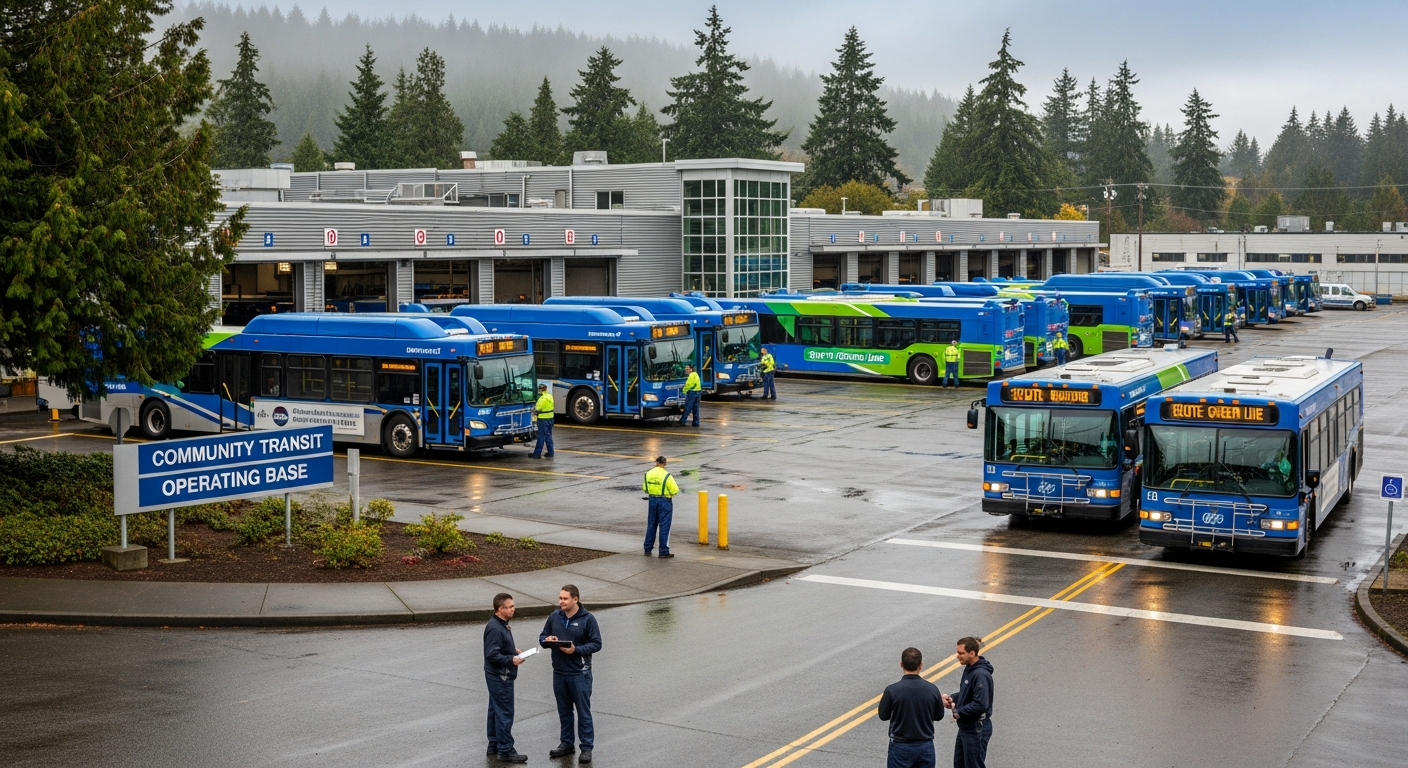
  • For Casino Road Residents: What Community Transit’s .35M Goodwill Purchase Means for Your Neighborhood

    For Casino Road Residents: What Community Transit’s .35M Goodwill Purchase Means for Your Neighborhood

    For you as a Casino Road resident: Community Transit’s $25.35 million purchase of the Goodwill outlet at 2208 W. Casino Road means a major public agency has locked in a 7.55-acre anchor in your neighborhood — before the light rail redevelopment pressure arrives. Here is what that means for your daily life, your housing stability, and your community’s future.

    Your Neighborhood Just Got a New Public Anchor

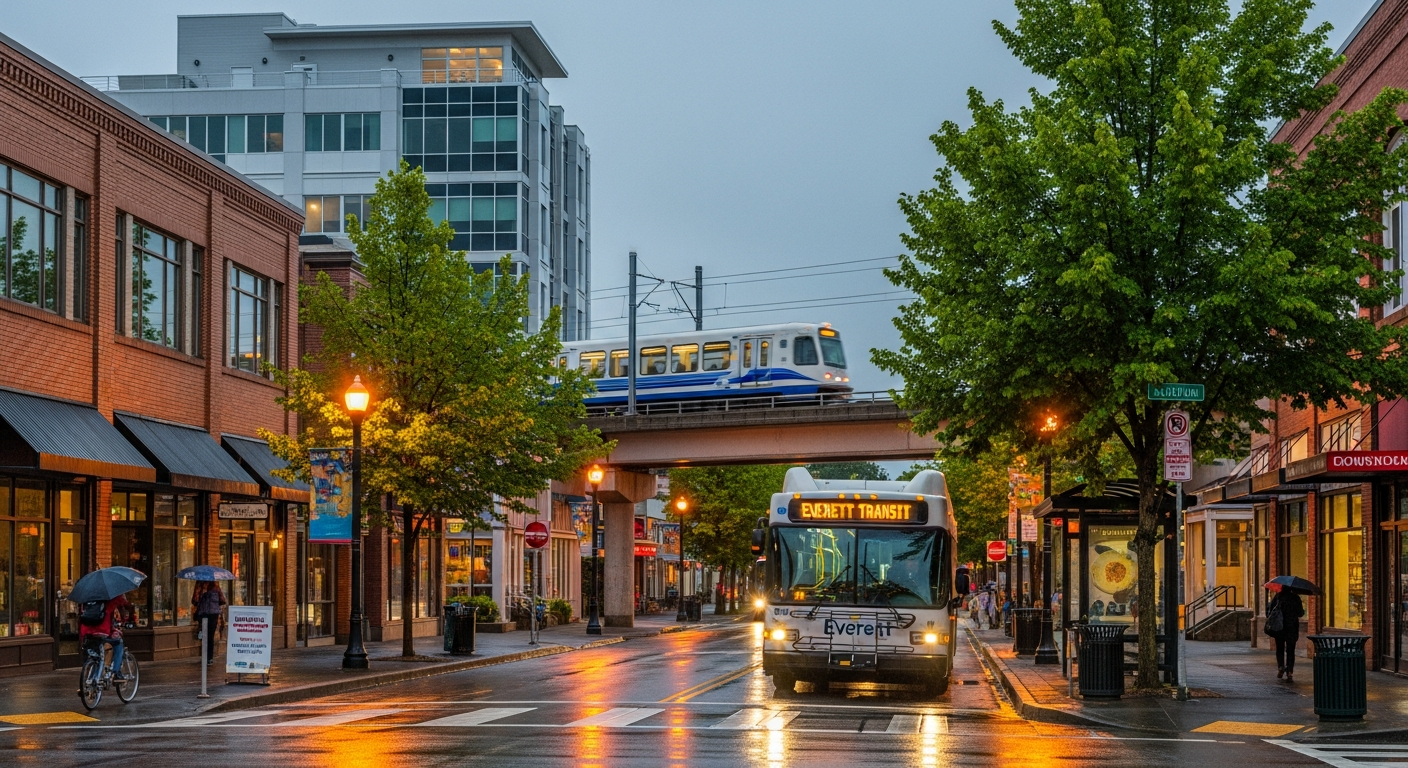
    For residents of Casino Road, Community Transit’s February 2026 acquisition is the most significant land transaction on the corridor in years. The 7.55 acres at 2208 W. Casino Road — the Goodwill Bins site — is now owned by a public agency, not a private developer. That distinction matters more than it might appear.

    Casino Road has two Sound Transit light rail stations planned as part of the Everett Link Extension. When light rail comes to a corridor, land values rise. In Seattle’s Rainier Valley and along the First Hill corridor, the combination of light rail investment and speculative land buying displaced thousands of residents and longtime businesses before communities could respond. Casino Road is watching those dynamics develop in slow motion — and Community Transit just placed 7.55 acres of the corridor in public hands before the speculative wave crests.

    The Goodwill Bins Stay Open — For Now

    The practical answer most Casino Road residents want first: the Bins are staying. Evergreen Goodwill signed a three-year leaseback with Community Transit, meaning the bulk-pricing outlet store at 2208 W. Casino Road continues operating through approximately early 2029. If you shop there regularly — or know someone who depends on it for affordable goods — no immediate change is required.

    After the leaseback ends, Community Transit will use the site for operational purposes: vehicle storage, maintenance, and administrative functions to support its growing bus network. What that means for foot traffic on that block will depend on how the agency designs its buildout. Residents near the site should watch for Community Transit public planning meetings as the leaseback end date approaches.

    How This Connects to the Everett Transit Merger

    Casino Road residents who rely on bus service should know that Everett Transit is being consolidated into Community Transit. The state legislature’s SB 5801 sets the framework; Everett City Council voted April 29 to approve a formal letter to Sound Transit demanding full delivery of the Everett Link Extension as a paired commitment. The merged transit system — combining Everett Transit’s 22 routes and 115,000 daily riders with Community Transit’s regional network — will use the expanded Casino Road campus as part of its operational foundation.

    For residents who depend on the Route 7 (Paine Field / Casino Road corridor) and other routes serving south Everett, the consolidation is designed to improve frequency and extend coverage. Community Transit’s Journey 2050 plan targets 30 million annual riders — more than triple current ridership — which requires both the Casino Road land and a fully funded light rail extension to work.

    What to Watch as a Casino Road Resident

    The three-year leaseback window (through roughly 2029) is the community engagement window. This is when Community Transit will be planning how it uses the property long-term. If community organizations, including Connect Casino Road, push for a mixed-use development that includes affordable housing or community space, that conversation needs to happen before the agency finalizes its operational buildout plans. Public agencies can — and sometimes do — include community benefit components in transit-adjacent development when community pressure is organized and early.

    The NR-MHC zoning effort — Everett’s proposal to protect seven mobile home parks in the Casino Road area from conversion to market-rate housing — is a parallel protection mechanism. The Community Transit acquisition and the NR-MHC zone together represent two distinct forms of displacement protection arriving in the corridor at the same time. Neither is sufficient alone; together they create meaningful stability in a neighborhood under significant long-term pressure.

    Frequently Asked Questions for Casino Road Residents

    Is the Goodwill Bins closing on Casino Road?

    No — not yet. Community Transit signed a three-year leaseback with Evergreen Goodwill, keeping the Bins open at 2208 W. Casino Road through approximately early 2029. After that, Community Transit will use the site for bus operations.

    Will my bus routes change because of this?

    Not immediately. The Casino Road campus acquisition is an operational expansion to support long-term ridership growth and the Everett Transit consolidation. Route changes will come through the consolidation planning process, not directly from this land purchase.

    Does this protect Casino Road from gentrification?

    It provides one form of protection: 7.55 acres of the corridor is now in public ownership and cannot be sold to a private developer without a public process. It does not, by itself, prevent rising rents or displacement pressure on the surrounding blocks. The NR-MHC zone and Connect Casino Road coalition are the primary community-led mechanisms addressing those pressures.

    How does this relate to the light rail stations planned for Casino Road?

    Two Sound Transit light rail stations are planned for the Casino Road corridor under the Everett Link Extension. Light rail typically accelerates land value increases and displacement pressure in station areas. Community Transit’s acquisition puts a large public parcel in the corridor before those dynamics peak — a meaningful protection even if it is not explicitly framed that way.

    Can I get involved in planning how Community Transit uses this site?

    Yes. Community Transit holds public board meetings and planning processes for major facility projects. Connect Casino Road and the associated neighborhood organizations are the most direct channel for organized community input. The three-year leaseback gives residents roughly a 2029 window before the site transitions to full operational use.

    Related Exploring Everett coverage: Community Transit Just Bought the Goodwill Bins on Casino Road | The Complete Guide to the .35M Acquisition | Everett Transit Consolidation Complete Guide

  • Community Transit Just Bought the Goodwill Bins on Casino Road: A Complete Guide to What the $25.35M Acquisition Means for Everett

    Community Transit Just Bought the Goodwill Bins on Casino Road: A Complete Guide to What the $25.35M Acquisition Means for Everett

    Quick Answer: Community Transit’s board unanimously approved the $25.35 million purchase of the 7.55-acre Goodwill outlet property at 2208 W. Casino Road in February 2026 — the largest single land acquisition in the agency’s 40-year history. The “Bins” stay open under a three-year leaseback. For Casino Road, a corridor already under pressure from two planned Sound Transit light rail stations and rising displacement risk, this deal is more than bus storage: it locks a major public agency into the neighborhood just as the redevelopment clock starts ticking.

    What Just Happened on Casino Road

    In February 2026, Community Transit’s board of directors voted unanimously to purchase the 108,000-square-foot Goodwill outlet complex at 2208 W. Casino Road — the one locals call “the Bins,” where goods are priced by the pound — for $25.35 million. The seller was Evergreen Goodwill of Northwest Washington. A three-year leaseback means the Bins stay open while Community Transit prepares the site for long-term operational use.

    The property sits directly adjacent to Community Transit’s existing Cascade administration building, making it a contiguous expansion of the agency’s south Everett operational campus. Community Transit’s Journey 2050 Long-Range Plan projects the agency will serve 30 million annual riders by 2050. Current vehicle storage and maintenance capacity will be exhausted well before that target. The Casino Road acquisition addresses the near-term capacity crunch.

    Why Casino Road — and Why Now

    The timing matters. Casino Road is one of the most consequential corridors in Everett’s near-future. Two Sound Transit light rail stations are planned along the corridor as part of the Everett Link Extension — a 16-mile project connecting downtown Everett Station to the regional light rail spine that Snohomish County voters approved in 2016. The planned stations at SW Everett Industrial Center and a second Casino Road-area station will bring transformative transit access to a corridor that today runs largely on surface streets and Community Transit bus routes.

    Light rail station areas historically trigger rapid land value appreciation and displacement pressure on existing residents and businesses. Casino Road’s demographics — a dense, multiethnic, working-class corridor with a high concentration of renters, small businesses, and community organizations — make it especially vulnerable to the kind of transit-driven displacement that has reshaped Rainier Valley and the Beacon Hill corridor in Seattle.

    Community Transit’s acquisition puts 7.55 acres of the corridor in public hands before the displacement dynamics fully accelerate. That’s not stated as the purchase rationale in agency documents — the stated rationale is operational capacity — but the community development implications are real and significant.

    The Property: What Community Transit Actually Bought

    The 108,000-square-foot complex at 2208 W. Casino Road includes a large-format warehouse retail footprint and associated operational space. The Goodwill outlet — distinct from standard Goodwill retail stores — operates as a bulk-pricing clearance operation where items are sorted onto tables and priced by weight. It draws a regional customer base and has operated at this Casino Road location for years.

    Under the three-year leaseback, Evergreen Goodwill continues operating the Bins. Community Transit takes legal ownership but receives lease income while planning its operational buildout. The $25.35 million purchase price reflects the property’s scale and its location in a corridor that is already beginning to command higher land values in anticipation of light rail.

    What This Means for the Casino Road Corridor

    Casino Road is home to roughly 13,000 residents, a dense network of immigrant-owned small businesses, and over two dozen community-serving organizations. The Connect Casino Road initiative — a community-led planning effort — has been working for years to ensure that the transit investment coming to the corridor lifts residents rather than displacing them.

    Community Transit’s land purchase adds a significant public anchor to the corridor. Public agency ownership is among the strongest protections against speculative displacement, since the land cannot be sold to a private developer without a public process. Whether Community Transit eventually co-develops the site with affordable housing, a transit-oriented community hub, or strictly operational facilities will depend on community engagement and agency planning decisions over the next several years.

    The acquisition also reinforces Community Transit’s long-term commitment to south Everett as its operational base — important context for residents and business owners watching the Everett Transit consolidation process unfold. As Everett Transit phases toward integration with Community Transit under SB 5801, the Casino Road campus becomes an even more critical node in the merged system’s service geography.

    The Everett Transit Consolidation Connection

    The Goodwill acquisition lands in the middle of a broader transit restructuring. Everett City Council is moving toward consolidating Everett Transit into Community Transit under state legislation, a process that would dissolve the city’s 100-year-old transit system and transfer 22 routes, 161 workers, and 115,000 riders to Community Transit. That consolidation was the subject of a major Everett Council action in April 2026.

    The Casino Road campus expansion positions Community Transit to absorb that additional operational footprint. More vehicles, more routes, and more maintenance capacity will require more land — and Community Transit just acquired it in the most strategically positioned location it could find: right next to what it already owns, in a corridor that will be transformed by light rail within the decade.

    What Residents and Businesses Should Watch

    The three-year Goodwill leaseback runs through approximately early 2029. That’s the window in which Community Transit will be finalizing plans for the site. Residents and community organizations invested in the future of Casino Road should engage with Community Transit’s public planning process as it develops. The Connect Casino Road coalition and associated organizations are the most direct channel for community voice on how this land ultimately gets used.

    For small businesses along Casino Road, the acquisition signals stability in one sense — a major public employer is investing heavily in the corridor — and uncertainty in another. If the site transitions from retail (the Bins) to operational bus storage and maintenance, the commercial traffic those retail operations generate will shift. Business owners near 2208 W. Casino Road should monitor the leaseback timeline.

    Frequently Asked Questions

    What did Community Transit buy on Casino Road in Everett?

    Community Transit purchased the 7.55-acre Goodwill outlet property at 2208 W. Casino Road for $25.35 million in February 2026. The 108,000-square-foot complex is the largest single acquisition in the agency’s 40-year history. The Goodwill “Bins” store stays open under a three-year leaseback agreement.

    Will the Goodwill Bins on Casino Road close?

    Not immediately. Evergreen Goodwill signed a three-year leaseback with Community Transit, meaning the Bins will continue operating at 2208 W. Casino Road through approximately early 2029. After the leaseback ends, Community Transit will use the site for operational purposes.

    Why did Community Transit buy land on Casino Road?

    Community Transit’s Journey 2050 plan projects the agency will serve 30 million annual riders by 2050 — up sharply from current ridership. Vehicle storage, maintenance, and administrative capacity at the existing Cascade campus will be exhausted before that target. The adjacent Goodwill property expands the campus and positions Community Transit for the Everett Transit consolidation.

    How does this relate to light rail on Casino Road?

    Two Sound Transit light rail stations are planned for the Casino Road corridor as part of the Everett Link Extension. Light rail station areas typically trigger land value increases and displacement pressure. Community Transit’s acquisition puts 7.55 acres in public ownership before those dynamics fully accelerate, providing a stable public anchor in the corridor.

    What is Connect Casino Road and what does this mean for them?

    Connect Casino Road is a community-led planning initiative working to ensure that light rail investment benefits existing Casino Road residents rather than displacing them. Community Transit’s land acquisition creates an opportunity for community engagement around how the site is ultimately developed, particularly if the agency ever considers mixed-use or affordable housing components on the parcel.

    How does the Goodwill acquisition relate to the Everett Transit merger?

    Everett is consolidating its transit system into Community Transit under SB 5801. That merger adds 22 routes, 161 workers, and 115,000 riders to Community Transit’s network. The Casino Road campus expansion gives Community Transit the physical space to absorb that additional operational footprint — more vehicles, more routes, and more maintenance demand.

  • Everett’s Utility Tax Proposal Is Coming Before the City Council in May — Here’s What It Costs, Who It Affects, and How to Weigh In Before the Vote

    Everett’s Utility Tax Proposal Is Coming Before the City Council in May — Here’s What It Costs, Who It Affects, and How to Weigh In Before the Vote

    What this means for you: The City of Everett is moving a proposal to replace its current 6% utility billing charge with a 12% utility tax to the City Council for a formal vote beginning in May 2026. For a typical Everett residential water customer, that’s an estimated increase of about $10.74 per month. The change would affect not just Everett residents, but customers across more than 75% of Snohomish County who rely on Everett’s water, sewer, and stormwater system. If approved, the new rate takes effect as early as July 1, 2026.
    This is the part of Everett’s budget conversation that doesn’t make the headlines the way a stadium vote or a light rail letter does — but it shows up on your water bill. The City of Everett is preparing to bring a utility tax proposal before the City Council this month, a move that would effectively double the charge applied to residents’ and businesses’ water, sewer, and stormwater bills. The proposal has been in development since at least March 2026, when the council received an informational briefing. Now, with legislation expected to go before the council beginning in May, the public comment window is officially open — and closes once the council acts.

    What’s Actually Being Proposed

    Since 1983, Everett has collected a 6% Payment in Lieu of Taxes — often called PILOT — on utility bills. A PILOT is essentially a transfer from a city-owned utility to the city’s general fund, a substitute for the property taxes a private utility would pay. It’s built into your water bill already; you’ve been paying it for decades, even if you didn’t know the line item’s name. What Everett is now considering is replacing that 6% PILOT with a 12% utility tax — doubling the rate. The change would generate approximately $7.5 million per year in additional revenue for the city’s general fund. The general fund pays for the city services residents use every day: parks, libraries, streets, and public safety. Everett, like most Washington cities, faces a structural constraint on how much its property tax revenue can grow under Initiative 747 — capped at 1% per year, regardless of inflation. That constraint is the underlying driver of the $14 million projected budget deficit the city is working to close by 2027.

    What It Costs

    For a typical residential customer, the estimated monthly increase is $10.74 per month, or roughly $129 per year. That’s the city’s own estimate from the March 2026 council briefing. The increase applies to water, sewer, and stormwater charges combined, since the utility tax rate is applied across all three services. Business customers and other large users of Everett’s water system would see increases scaled to their consumption. Everett provides water, sewer, and stormwater services not just to city residents but to customers across a wide regional footprint — more than 75% of Snohomish County. That means the financial impact extends well beyond Everett city limits. A family in parts of Mukilteo, Snohomish, or unincorporated Snohomish County who receives their water from Everett Utilities could see the same rate change reflected on their bill if the council approves it.

    Is This Unusual?

    The city’s own research says no — most neighboring cities already use a utility tax at comparable or higher rates. Everett’s current 6% PILOT has been in place since 1983, making it one of the lower rates in the region. The council briefing included a comparison of other jurisdictions’ utility tax rates that supports this framing. That said, calling it a “utility tax” instead of a “PILOT” is more than semantic. PILOTs are internal transfers; utility taxes are charges on the consumer. The shift changes how the revenue is classified — and potentially how it’s understood by the public.

    The $14 Million Context

    The utility tax proposal doesn’t exist in isolation. It’s one of four major revenue levers the city is exploring to close a projected $14 million general fund deficit by 2027:
    • Regional fire authority (RFA) — Merging Everett Fire with other agencies in a regional structure, moving fire costs off the city’s general fund.
    • Sno-Isle Library regionalization — Shifting library costs to a regional taxing district.
    • Another levy lid lift — Going back to voters to raise property taxes above the I-747 cap.
    • Mariner annexation — Bringing the roughly 21,000-resident Mariner neighborhood into Everett’s tax base, adding revenue without raising rates on existing residents.
    Three of those four require a public vote. The utility tax does not — it is a council decision. That makes it the most direct and immediate tool available to the city without going to the ballot, and it explains why it’s moving to a council vote this spring rather than waiting for an August or November election. That same August ballot already carries the EMS levy lid lift, which asks voters to restore the EMS property tax rate from $0.36 to $0.50 per $1,000 of assessed value to maintain roughly 78 firefighter-paramedic positions at Everett Fire Department.

    What the Council Process Looks Like

    The council has been briefed. The legislation is now being drafted for formal consideration. Once introduced, the typical council process includes a first reading, an opportunity for public comment, and a vote — which could happen within weeks of the bill’s formal introduction. The council meets on Wednesdays. Under its standard schedule, most meetings begin at 6:30 p.m. at Everett City Hall; the fourth and fifth Wednesdays of the month begin at 12:30 p.m. Public comment is accepted at all council meetings, either in person or virtually through the city’s online registration system. The city has also signaled it is considering expanding its utility assistance program for low-income residents to help offset the cost increase. Specific eligibility details have not been publicly released as of this writing.

    Frequently Asked Questions

    Does this affect residents outside Everett city limits?
    Yes. Everett provides water, sewer, and stormwater services to customers across more than 75% of Snohomish County. Any customer whose utility service is billed through Everett Utilities could see the rate change reflected on their bill. Why can’t the city just cut spending instead?
    Washington’s I-747 caps property tax growth at 1% per year regardless of inflation or service cost increases. That constraint — not spending choices alone — is the primary driver of the projected deficit. What is a PILOT, and how is it different from a utility tax?
    A Payment in Lieu of Taxes (PILOT) is an internal transfer from a city-owned utility to the general fund, functioning as a substitute for property taxes. A utility tax is a charge assessed on the consumer. Both produce revenue for the general fund, but the legal structure and how it appears on bills differ. Is 12% high compared to other cities?
    According to the city’s own comparison of nearby jurisdictions, most Washington cities use utility taxes at rates comparable to or higher than 12%. Everett’s current 6% PILOT is on the lower end of regional practice. What does the money pay for?
    The general fund covers parks, libraries, streets, and public safety — the core services Everett residents interact with daily. Will there be low-income assistance?
    The city has indicated it is considering expanding utility assistance for low-income households as part of the proposal, but specific eligibility details have not been announced. Can the council vote on this without a public vote?
    Yes. A utility tax is a council decision and does not require a ballot measure. This distinguishes it from three of the four other revenue options under consideration (levy lid lift, RFA formation, and library regionalization), all of which require voter approval.

    What To Do Next

    Comment now — before the vote: Once the council votes, the public comment window closes. Submit written comments by email to council@everettwa.gov or attend a city council meeting in person or virtually. The virtual public comment registration form is at everettwa.gov. Attend a council meeting: The Everett City Council meets Wednesdays at 6:30 p.m. (or 12:30 p.m. on the 4th and 5th Wednesdays) at Everett City Hall, 3002 Wetmore Ave. Public comment is taken at the start of each regular meeting. Review the March briefing materials: The council received a full briefing on March 18, 2026. The presentation PDF and video recording are available at everettwa.gov/council. The presentation includes the comparison of other jurisdictions’ rates and the utility service area map. Check your utility provider: If you live outside Everett city limits, verify whether your water service is provided by Everett Utilities — and therefore whether this rate change would affect your bill. Contact your council member: All nine Everett City Council members represent the city at large. Contact information is available at everettwa.gov/council.

    Related coverage: Everett’s $14 Million Budget Gap Is Back — and Regionalizing Fire and Libraries Is on the Table | Mayor Franklin’s 2026 State of the City: Five Priorities Now Shaping Everett | Everett EMS Levy Goes to August 2026 Ballot

  • Community Transit Just Bought the Goodwill Bins on Casino Road — Here’s What It Means for the Neighborhood

    Community Transit Just Bought the Goodwill Bins on Casino Road — Here’s What It Means for the Neighborhood

    What’s happening: Community Transit’s board voted unanimously in February 2026 to purchase the 7.55-acre Goodwill outlet property at 2208 W. Casino Road for $25.35 million — the largest single land acquisition in the agency’s history. The “Bins” will stay open under a three-year leaseback. But for the Casino Road corridor, where two Sound Transit light rail stations are planned and displacement pressure is already climbing, this deal is about more than bus storage.

    Community Transit Just Bought the Goodwill Bins on Casino Road — Here’s What It Means for the Neighborhood

    If you’ve ever dug through the bins at the Everett Goodwill outlet on Casino Road — the one where clothes and housewares are priced by the pound — you’ve stood in the middle of one of south Everett’s most consequential pieces of real estate. In February 2026, Community Transit’s board of directors voted unanimously to purchase that 7.55-acre property at 2208 W. Casino Road for $25.35 million, acquiring a 108,000-square-foot warehouse complex right next door to the agency’s existing Cascade administration building.

    For transit watchers, it’s a smart infrastructure play. For Casino Road residents, it’s one more piece of a much bigger puzzle about what this corridor is becoming — and who gets to stay in it.

    Why Community Transit Bought the Property

    The short answer: they’re running out of room. Community Transit’s internal analysis found that anticipated service growth will “consume” the agency’s current capacity for vehicle storage, maintenance, and administrative functions within the next few years. The Goodwill property sits directly adjacent to the agency’s existing Cascade administration building, making it the obvious acquisition for expansion.

    “Identifying and securing nearby land and facilities is a key strategy to sustaining operational growth, supporting service expansion, and maintaining flexibility for future development,” the agency’s memo to its board stated.

    The property itself is substantial: roughly 107,999 square feet of warehouse footprint, around 20,000 square feet of retail space, and a recycling center. Evergreen Goodwill, which purchased the site in 2011 for $10.9 million, will continue operating the outlet store and recycling center there under a three-year leaseback — paying Community Transit $120,000 per month in rent. So for at least the next three years, the bins stay open.

    There’s another factor in the long-term calculus: Sound Transit’s Link light rail extension to Everett includes a station close to the Paine Field area, not far from the Casino Road corridor. The agency flagged proximity to that infrastructure as part of the property’s strategic value.

    What This Means for Casino Road

    Casino Road is one of Everett’s most culturally dense corridors — home to a large Latino community, significant Cambodian, East African, and Pacific Islander populations, dozens of small immigrant-owned businesses, and community anchors like the Stations Unidos community development corporation, which was established specifically to fight displacement on this corridor.

    The Community Transit property acquisition isn’t a displacement threat in the direct sense — the transit agency isn’t building housing or retail that prices people out. But the deal is another signal of how much institutional attention and investment is concentrating along this corridor. Two planned light rail stations. A $25 million transit land grab. A new Boys and Girls Club facility at nearby Walter E. Hall Park, announced by Mayor Cassie Franklin in her 2026 State of the City address. Snohomish County housing funding flowing to the area. The $23 million housing award Everett received in 2027 that included Casino Road in its service area.

    When investment and infrastructure converge in a neighborhood, property values tend to follow. That’s exactly the dynamic Stations Unidos has been working to get ahead of since 2014, when Casino Road stakeholders first organized around the light rail threat. The CDC’s goal: ensure that the people who built this community get to remain part of it as it changes.

    The Boys and Girls Club Piece

    The existing Boys and Girls Clubs of Snohomish County location serving south Everett sits at 525 W. Casino Road — about a mile west of the Goodwill site. That club, which opened in 2000 after renovating a former bus barn, serves children and youth ages 5–18 with before and after-school childcare, summer camp, and teen programs.

    In her March 2026 State of the City address, Mayor Franklin announced that the City of Everett is collaborating with Boys and Girls Clubs of Snohomish County to support construction of a brand-new club location at Walter E. Hall Park, a flexible grass athletic complex at 1226 W. Casino Road. That park already serves as a hub for youth sports and hosts a skate park. Adding a Boys and Girls Club building there would be a significant community facility investment at the corridor’s geographic heart.

    Details on the new club’s timeline and design were not publicly available at press time, but the announcement signals city commitment to youth-serving infrastructure on Casino Road — not just transit infrastructure.

    What to Watch

    The three-year Goodwill leaseback runs out sometime around 2029. At that point, Community Transit will need to decide how to use the acquired warehouse space — whether for bus storage, maintenance bays, administrative expansion, or some combination. That decision will shape the Casino Road corridor at exactly the moment the light rail timeline is approaching.

    For residents of Cascade View and Twin Creeks — the two neighborhoods that flank Casino Road on its east side — the changes on this corridor are worth tracking. The road that most people think of as a thoroughfare rather than a destination has been quietly transforming for years. The institutions investing there in 2026 will set the shape of what comes next.

    Community Transit’s purchase doesn’t change daily life on Casino Road today. The bins are still open. The taquerias, the pho shops, the halal markets, the beauty supply stores — still there, still doing business. But the long arc of what this corridor becomes is being decided, piece by piece, in board rooms and city halls. Organizations like Stations Unidos exist precisely to make sure the community’s voice is part of that process, not added as an afterthought.

    Frequently Asked Questions

    Is the Goodwill outlet on Casino Road closing?

    No. Evergreen Goodwill signed a three-year leaseback agreement with Community Transit, so the outlet store and recycling center will continue operating at 2208 W. Casino Road at least through approximately 2029.

    Why did Community Transit pay $25.35 million for the Goodwill property?

    The property is adjacent to Community Transit’s existing Cascade administration building at 2312 W. Casino Road, and the agency projects its current facilities will be overwhelmed by service growth within a few years. The acquisition gives the agency land for vehicle storage, maintenance, and operational expansion.

    Will the Community Transit purchase displace Casino Road residents?

    The property at 2208 W. Casino Road is a commercial warehouse, not housing. The direct displacement risk is low. The broader concern is that concentrated investment on the corridor — transit, light rail, new facilities — can raise property values over time, creating indirect displacement pressure. That’s the issue Stations Unidos has been working on since 2014.

    What is the Boys and Girls Club building planned at Walter E. Hall Park?

    Mayor Cassie Franklin announced in her March 2026 State of the City address that the City of Everett is collaborating with Boys and Girls Clubs of Snohomish County to support construction of a new club location at Walter E. Hall Park, 1226 W. Casino Road. Specific construction timelines were not released publicly.

    Where is the existing Boys and Girls Club on Casino Road?

    The South Everett/Mukilteo Boys and Girls Club is located at 525 W. Casino Road, Everett, WA 98204, and serves children ages 5–18. Contact: (425) 355-6899 or bgcsc.org.

  • Cocoon House: The Complete 2026 Guide to Everett’s Only Nonprofit Dedicated to Ending Youth Homelessness

    Cocoon House: The Complete 2026 Guide to Everett’s Only Nonprofit Dedicated to Ending Youth Homelessness

    Quick facts: Cocoon House (2726 Cedar St, Everett) is Snohomish County’s only nonprofit dedicated exclusively to ending youth homelessness. Founded in 1991. Serves young people ages 12–24 through emergency shelter, drop-in services, transitional housing, and education and employment support. CEO Joseph Alonzo. The U-Turn Drop-In Center is free and open to any youth ages 13–24 — no eligibility requirements.

    When a teenager loses stable housing in Snohomish County, Cocoon House has been one of the consistent answers to that problem for more than three decades. In a region where housing costs keep rising and the youngest residents are often the most invisible, the organization’s consistency — running since 1991 with an expanding set of programs — matters more than most people realize. Here is the complete 2026 guide to what Cocoon House does, who it serves, and how to connect with it.

    What Cocoon House Is

    Cocoon House is the only nonprofit in Snohomish County focused exclusively on ending youth homelessness. It serves young people ages 12 to 24 through a continuum of programs designed to meet a young person exactly where they are — on the street, in an emergency, or in need of longer-term housing stability.

    The organization has expanded its shelter capacity by 350% since its early years. It now houses more than 230 young people annually through shelter programs and reaches over 1,000 youth, parents, and community members each year across Snohomish County through its full program network.

    The Programs

    Emergency Shelter — Ages 12–17

    The emergency shelter serves youth ages 12 to 17 who need immediate, safe housing. It is staffed, structured, and designed to feel as close to a real home as possible. Young people in the shelter have access to case management, basic needs support, and a plan for what comes next — not just a bed for the night.

    U-Turn Drop-In Center — Ages 13–24

    The U-Turn Drop-In Center is built for older youth who may not be ready for a shelter, don’t meet the age criteria for the emergency shelter, or need a lower-barrier entry point. There are no eligibility requirements beyond showing up. Walk in and you have access to hot meals, hygiene items, showers, laundry, clothing, transportation assistance, and case managers who can connect you to housing, healthcare, and referrals across the county’s service network.

    Outreach Center — Ages 12–20

    The Outreach Center extends the same core supports — meals, showers, clothing, drug and alcohol support, referrals, and case management — to youth ages 12 to 20. Outreach staff also work outside the building, meeting young people in the places where they actually are rather than waiting for them to come through a door.

    Young Adult Housing — Ages 18–24

    For youth who have aged out of the emergency shelter or who need more than drop-in services, Cocoon House provides transitional and permanent housing pathways. Director of Young Adult Housing Eric Jimenez and his team lead this work, connecting young adults to housing options and the support services that make housing sustainable.

    Education and Employment

    Director of Education and Employment Claire Petersen leads programs that help young people build the credentials and skills needed to stay housed long term. A safe place to sleep isn’t enough on its own — sustainable housing requires income, and income requires opportunity. This program works on both sides of that equation.

    The New Colby Avenue Youth Center

    Cocoon House has been developing a new youth center facility on Colby Avenue in Everett, expanding the physical capacity of its programs to serve more young people. The new center adds to the infrastructure available at the main Cedar Street location.

    Why Cocoon House’s Model Works

    The organization’s effectiveness comes from a tiered, no-barrier-to-entry model that serves youth across a wide age range without forcing them into a single pathway. A 14-year-old in an emergency is in a different situation than a 22-year-old who needs stable housing and employment support. Cocoon House’s programs address both ends of that spectrum and the points in between.

    The U-Turn Drop-In Center’s no-eligibility model is particularly important: it serves young people who might not qualify for or seek out formal shelter programs. Getting them through the door — with a meal, a shower, and access to a case manager — is often the first step toward a longer-term stability path.

    How Cocoon House Fits Into Everett’s Safety Net

    Cocoon House operates alongside other Everett-area service organizations as part of the broader safety net for vulnerable residents. Volunteers of America Western Washington provides services across multiple populations including adult housing and food access. The $23M Snohomish County housing and behavioral health award approved April 24 is funding three Everett projects including the Everett Gospel Mission and new affordable housing units on Broadway. Cocoon House is the youth-specific anchor in this network.

    Frequently Asked Questions

    What is Cocoon House in Everett?

    Cocoon House (2726 Cedar St, Everett, WA) is Snohomish County’s only nonprofit dedicated exclusively to ending youth homelessness. Founded in 1991, it serves young people ages 12–24 through emergency shelter, drop-in services, transitional housing, and education and employment programs.

    How does someone get help from Cocoon House?

    Youth ages 13–24 can walk into the U-Turn Drop-In Center at 2726 Cedar St with no eligibility requirements. Hot meals, hygiene, showers, laundry, transportation assistance, and case manager access are available to anyone who comes in. Emergency shelter (ages 12–17) has a separate intake process through case management.

    What age range does Cocoon House serve?

    Cocoon House serves young people ages 12 to 24 across its programs: emergency shelter (12–17), U-Turn Drop-In Center (13–24), Outreach Center (12–20), and Young Adult Housing (18–24).

    How many young people does Cocoon House serve each year?

    Cocoon House houses more than 230 young people annually through its shelter programs and reaches over 1,000 youth, parents, and community members each year through its full program network across Snohomish County.

    Who leads Cocoon House?

    CEO Joseph Alonzo leads the organization. Directors include Eric Jimenez (Young Adult Housing) and Claire Petersen (Education and Employment).

    How can people support Cocoon House?

    Cocoon House accepts donations, volunteers, and in-kind support including hygiene items, clothing, and non-perishable food. The organization also accepts referrals from schools, families, and community organizations. Visit cocoonhouse.org for current needs and volunteer opportunities.

    Is Cocoon House only in Everett?

    Cocoon House is based in Everett and is the county-wide resource for youth homelessness in Snohomish County, reaching communities across the region through its outreach programs. The main facility is at 2726 Cedar St, Everett.