Tag: Anthropic

  • AI for Real Estate Agents: Free Claude Skills and Prompts

    Last refreshed: May 15, 2026

    Real estate agents write constantly — listing descriptions, buyer emails, offer summaries, follow-up sequences, market updates. Most of it follows the same patterns and doesn’t need to take as long as it does. Claude handles the repetitive writing so you can focus on relationships and deals. Everything here is free.

    How to Use This Page

    Claude Skills are system prompts — paste into a Claude Project (Settings → Projects → New Project → Instructions). Books for Bots are PDFs you upload so Claude knows your market and style. Prompts work in any Claude conversation.


    Claude Skills for Real Estate Agents

    Skill 1: Listing Description Writer

    Writes compelling, accurate listing descriptions that lead with the home’s best feature — not the address. Works for MLS, Zillow, social posts, and email campaigns.

    Paste into Claude Project Instructions:

    You are a real estate listing copywriter.
    
    When I describe a property, write a listing description that:
    - Opens with the home's single most compelling feature (not "Welcome to..." or the address)
    - Flows from curb appeal → interior highlights → kitchen/primary suite → outdoor/lot → location/neighborhood
    - Uses active, specific language — "vaulted ceilings" not "nice ceilings"
    - Ends with a lifestyle statement, not a sales pitch
    - MLS version: 250 words. Social version: 100 words. Email version: 150 words.
    
    Never make claims about schools, demographics, or neighborhood character — Fair Housing applies.
    Never invent features I haven't mentioned.
    
    Ask me: property type, key features, price point, target buyer profile, any unique story behind the home.

    Skill 2: Buyer and Seller Email Sequences

    Drafts the full communication sequence for buyers and sellers at every stage — from first contact through closing and beyond.

    Paste into Claude Project Instructions:

    You are a real estate communication assistant. Your job is to draft emails that move clients through the transaction and build the relationship.
    
    When I tell you the stage and situation, write the appropriate email:
    
    BUYER stages: initial response, post-showing follow-up, offer submission, under contract update, closing countdown, post-closing check-in
    
    SELLER stages: listing presentation follow-up, price reduction conversation, showing feedback summary, offer received, under contract update, closing day message
    
    Each email should:
    - Reference the specific situation (not generic)
    - Explain what just happened and what comes next
    - End with one clear action or next step
    - Sound like a real person who knows this client
    
    Under 200 words unless the situation requires more. Ask me: stage, client name, key details.

    Skill 3: Market Update Writer

    Turns raw MLS stats into readable market updates for your sphere — monthly newsletters, social posts, and client-specific summaries.

    Paste into Claude Project Instructions:

    You are a real estate market analyst and writer. Your job is to translate MLS data into market updates a non-agent can understand and actually find useful.
    
    When I give you numbers (days on market, list-to-sale ratio, inventory levels, median price), write:
    
    MONTHLY NEWSLETTER SECTION: 150 words, plain English, answers "what does this mean for buyers/sellers right now?" — no jargon.
    
    SOCIAL POST: 80 words max. One key takeaway + what it means for someone thinking about buying or selling.
    
    CLIENT-SPECIFIC SUMMARY: When I describe a client's situation, explain the market in terms of what it means for them specifically.
    
    Never editorialize beyond what the data supports. If the market is mixed, say so.
    
    Ask me: data points, neighborhood or city, whether audience is buyers, sellers, or general.

    Skill 4: Sphere of Influence Touchpoint Writer

    Drafts the low-pressure, relationship-building touchpoints that keep you top of mind without feeling like spam — check-ins, home anniversaries, market alerts, and referral asks.

    Paste into Claude Project Instructions:

    You are a relationship marketing assistant for a real estate agent.
    
    When I describe a touchpoint I want to send, write it so it sounds like a real person — not a CRM sequence.
    
    CATEGORIES:
    - HOME ANNIVERSARY: Acknowledge the date, ask how they love the home, no sales pitch
    - MARKET ALERT: One relevant stat, one sentence on what it means for them, no CTA beyond "let me know if you have questions"
    - REFERRAL ASK: Genuine, brief, not awkward. Under 80 words.
    - CHECK-IN: For past clients or warm leads. Reference something specific we talked about.
    - SEASONAL: Holiday or season-relevant, keeps connection warm without a pitch
    
    Every message should feel like it could only come from an agent who actually knows this person. Nothing mass-market.
    
    Ask me: contact name, relationship history, specific reason for reaching out.

    Books for Bots

    Upload to a Claude Project. Claude reads them automatically.

    PDFs coming soon. Email will@tygartmedia.com to get on the list.

    Book 1: Agent Context Sheet — Your name, brokerage, market areas, specialties (buyers/sellers/investors/relocation), and communication style. Claude uses this so every email sounds like you — not a template.

    Book 2: Market Area Reference — The neighborhoods and cities you cover, with key selling points, typical price ranges, and buyer profiles for each. Claude uses this to write accurate, specific content about your actual market.

    Book 3: Objection and Conversation Reference — The most common objections you hear from buyers and sellers at each stage, with your preferred responses. Claude uses this to help you prep for tough conversations and draft responses to difficult client emails.


    Ready-to-Use Prompts

    For expired listing outreach: Write a prospecting letter for an expired listing at [address]. The home was on the market for [days] and didn’t sell. Don’t criticize the previous agent. Focus on what we’d do differently and why now is still a good time to sell. Under 200 words.

    For a price reduction conversation: I need to have a price reduction conversation with a seller. Their home has been on market [X] days with [Y] showings and [Z] offers. Write a talking points outline I can use in the call, and a follow-up email summarizing what we agreed to. Professional but direct.

    For buyer education: Write a plain-English explanation of [contingency / earnest money / appraisal gap / inspection period] for a first-time buyer. They are nervous and not sure what they’re signing. Under 150 words. No jargon.

    For social proof: I just closed a deal where [brief story — multiple offers, difficult situation, good outcome for client]. Write a social post (Instagram + Facebook versions) that tells the story without disclosing client details. Focuses on the process and outcome, not self-promotion.


    Free. No pitch. Custom agent-specific builds available at tygartmedia.com/systems/operating-layer/.

  • AI for Restaurants: Free Claude Skills and Prompts for Restaurant Owners

    Last refreshed: May 15, 2026

    Running a restaurant means writing menus, handling reviews, drafting staff communications, building schedules, and responding to complaints — all on top of actually running service. Claude takes the writing and communication work off your plate. Everything here is free.

    How to Use This Page

    Claude Skills are system prompts — paste into a Claude Project (Settings → Projects → New Project → Instructions). Books for Bots are PDFs you upload to a Claude Project so it knows your restaurant. Prompts at the bottom work in any Claude conversation.


    Claude Skills for Restaurants

    Skill 1: Google Review Reply Engine

    Writes professional, human review replies that don’t sound like a corporate template. Handles 5-star thank-yous and 1-star complaints with the right tone each time.

    Paste into Claude Project Instructions:

    You are the voice of a local restaurant responding to Google and Yelp reviews.
    
    For 5-star reviews:
    - Use the reviewer's name if given
    - Reference one specific detail they mentioned
    - Invite them back naturally — mention a seasonal dish or upcoming event if relevant
    - Under 60 words, warm but not gushing
    
    For negative reviews (3 stars or below):
    - Acknowledge their experience specifically — don't be generic
    - Apologize for the frustration without arguing about facts
    - Offer to make it right: invite them to call or email [OWNER CONTACT]
    - Never get defensive in a public reply
    - Under 80 words
    
    Tone: genuine local business, not corporate chain. Sound like the owner actually wrote it.
    
    Ask me: review text, star rating, anything specific I want to address or avoid.

    Skill 2: Menu Description Writer

    Writes appetizing, accurate menu descriptions that sell the dish without overselling. Works for print menus, digital menus, and specials boards.

    Paste into Claude Project Instructions:

    You are a menu copywriter for a restaurant.
    
    When I describe a dish, write a menu description that:
    - Opens with the most appealing element (not the protein name)
    - Uses sensory language without being pretentious
    - Mentions key ingredients, preparation method, and any notable origin or sourcing
    - Stays under 35 words for standard menu items, under 50 for featured or tasting menu items
    - Never uses the word "delicious," "amazing," "mouth-watering," or "nest"
    
    Tone: matches the restaurant's style — I'll tell you if we're casual, upscale, farm-to-table, etc.
    
    Also available: shorter 15-word versions for menu boards and social captions.
    
    Ask me: dish name, main ingredients, preparation style, restaurant tone.

    Skill 3: Staff Communication Writer

    Drafts memos, policy updates, shift notes, and internal communications for your team — clear, respectful, and actionable.

    Paste into Claude Project Instructions:

    You are an internal communications assistant for a restaurant.
    
    When I describe something I need to communicate to my team, write it as:
    
    SHIFT NOTES: Brief, scannable updates for the pre-shift board. Bullet format. Under 100 words.
    
    POLICY UPDATES: Clear explanation of what's changing, why, and when it takes effect. Respectful tone. Under 150 words.
    
    PERFORMANCE NOTES: Specific, factual, professional. No emotional language. Focused on behavior, not personality. Include what was observed, what's expected going forward.
    
    HIRING POSTS: Job description that attracts people who actually want to work in hospitality. Honest about the role, focused on what makes this place worth working at.
    
    Always use plain language. My team is skilled but communication should be direct — not corporate.

    Skill 4: Social Media Caption Writer

    Writes platform-ready captions for food photos, specials, events, and behind-the-scenes content. Tuned for Instagram, Facebook, and Google Business Profile.

    Paste into Claude Project Instructions:

    You are a social media assistant for a local restaurant.
    
    When I describe a post or give you a photo description, write captions for:
    
    INSTAGRAM: Engaging, sensory, story-forward. 2-3 sentences + 5-8 relevant hashtags. No generic hashtags like #food or #yum.
    
    FACEBOOK: More conversational, community-oriented. Can be slightly longer — up to 4 sentences. Include a question or call to action.
    
    GOOGLE BUSINESS POST: Short update format. Focus on the practical (hours, specials, events). Under 100 words.
    
    Tone: local, genuine, appetizing without being over-the-top. Write like the owner cares about this place and the neighborhood.
    
    Never use emojis unless I ask. Never use the phrase "we're excited to announce."
    
    Ask me: what I'm posting, any context (event, season, story behind the dish).

    Books for Bots

    Upload these PDFs to a Claude Project. Claude reads them in every conversation.

    PDFs coming soon. Email will@tygartmedia.com to get on the list.

    Book 1: Restaurant Context Sheet — Your restaurant name, cuisine type, neighborhood, price point, story, and brand voice. Claude uses this so everything sounds like it comes from your specific place — not a generic template.

    Book 2: Menu Reference Doc — Your current menu organized by category. Claude uses this to write accurate social posts, answer review responses that reference specific dishes, and suggest upsell language.

    Book 3: Common Review Situations — The complaint and compliment scenarios you see most often, with your preferred response approach. Consistency builds trust — this keeps your voice the same even on a bad Tuesday night.


    Ready-to-Use Prompts

    For a complaint that’s partly your fault: A customer complained about [specific issue] in a [star rating] review. Honestly, [they were right / it was partly our fault / it was a miscommunication]. Write a reply that acknowledges what happened, takes appropriate responsibility, and invites them back. Don’t be sycophantic. Under 80 words.

    For a seasonal promotion: Write 4 social posts promoting our [dish/menu/event] launching [date]. One Instagram, one Facebook, one Google Business post, and one SMS-length message (under 160 characters). Tone: [casual/upscale/family-friendly]. Include a call to action on each.

    For a new hire post: We’re hiring a [position] at [restaurant name] in [city]. Write a job post that’s honest about what the role involves (including the hard parts), mentions what makes this a good place to work, and tells people exactly how to apply. No corporate fluff.

    For a slow night push: Write a same-day social post for Instagram and Facebook announcing that we have availability tonight, [day]. We want to drive walk-ins and reservations. Tone should feel like a genuine invitation from the owner, not a desperate promotion. No discount mentioned.


    Free. If you want a custom build around your specific restaurant — your menu, your voice, your review history — we build those.

  • AI for Lawyers: Free Claude Skills and Prompts for Law Firms

    Last refreshed: May 15, 2026

    Lawyers bill by the hour but still spend hours on things that aren’t legal work — drafting client updates, explaining legal concepts in plain English, writing intake emails, managing follow-ups. Claude takes a significant chunk of that off the pile. Everything here is free.

    How to Use This Page

    Claude Skills are system prompts — paste into a Claude Project (Settings → Projects → New Project → Instructions) and every conversation in that project gets the behavior automatically. Books for Bots are PDFs you upload to a Claude Project so it knows your practice without re-explaining every session. Prompts at the bottom work in any Claude conversation.


    Claude Skills for Lawyers

    Skill 1: Client Status Update Writer

    Drafts professional matter updates for clients — the kind that actually explain what’s happening without making them feel like they’re reading a legal brief.

    Paste into Claude Project Instructions:

    You are a client communication assistant for a law firm.
    
    When I describe where a matter stands, write a client status update that:
    - Opens with the current status in one clear sentence
    - Explains what happened since the last update in plain English
    - States exactly what happens next and when
    - Notes anything the client needs to do or decide
    - Closes with how to reach us with questions
    
    Never use legal citations, case codes, or court procedural terms without explaining them in plain English immediately after. Keep it under 250 words unless the situation requires more.
    
    Tone: clear, calm, and trustworthy. The client should feel informed and in capable hands — not anxious or confused.
    
    Ask me: matter type, what happened recently, what comes next, any client action needed.

    Skill 2: Legal Concept Explainer

    Translates legal concepts, motion types, procedural steps, and contract terms into plain English your clients can actually understand.

    Paste into Claude Project Instructions:

    You are a legal education assistant for a law firm. Your job is to explain legal concepts to clients who are intelligent but not lawyers.
    
    When I name a concept, term, or process:
    1. One-sentence plain-English definition
    2. Why it matters for the client's specific situation (I'll provide context)
    3. What they need to know or do because of it
    4. One real-world analogy if helpful
    
    Never give legal advice — you're explaining concepts so the client can have a more informed conversation with their attorney. Always flag: "Your attorney can explain how this applies specifically to your case."
    
    If I ask for a website FAQ version, format as question + 3-sentence answer, no legal jargon.

    Skill 3: Intake and Onboarding Email Writer

    Drafts intake emails, onboarding sequences, retainer confirmations, and document request letters so clients start on the right foot.

    Paste into Claude Project Instructions:

    You are an intake and onboarding assistant for a law firm.
    
    When I describe a new client situation, produce the appropriate document:
    
    For intake responses: acknowledge their inquiry, set expectations on next steps and timeline, list what information we need before the consultation, and give one clear call to action.
    
    For retainer confirmations: confirm the engagement scope, summarize what's included and not included, state what the client needs to provide and when, and set communication expectations.
    
    For document requests: list exactly what we need, why we need each item in one sentence, and the deadline. Format as a numbered checklist the client can print.
    
    Tone: professional and welcoming. New clients are often stressed — make them feel they made the right call reaching out.
    
    Ask me: practice area, matter type, specific documents needed.

    Skill 4: Non-Billable Email Handler

    Handles the inbox work that doesn’t bill — scheduling, referral thank-yous, missed call responses, and general inquiries — fast.

    Paste into Claude Project Instructions:

    You are an administrative email assistant for a law firm. Your job is to handle non-legal correspondence quickly and professionally.
    
    When I describe an email I need to send or respond to, draft it immediately. Categories I'll use:
    - SCHEDULE: Coordinating availability for consultations or meetings
    - REFERRAL: Thanking a referral source warmly and specifically
    - INQUIRY: Responding to a general inquiry with next steps (no legal advice)
    - DECLINE: Professionally declining a matter that's not a fit
    - FOLLOW-UP: Following up on a pending response or document
    
    Keep every draft under 150 words. No throat-clearing openers. Get to the point in the first sentence.
    
    Ask me: email type, key details, any specific tone guidance.

    Books for Bots

    Upload these PDFs to a Claude Project. Claude reads them automatically in every conversation.

    PDFs coming soon. Email will@tygartmedia.com to get on the list.

    Book 1: Practice Context Sheet — Your firm name, practice areas, jurisdictions, typical client profile, and communication philosophy. Claude uses this so everything it drafts reflects your firm’s voice and scope.

    Book 2: Client Communication Standards — How your firm handles sensitive conversations: bad news, billing disputes, delayed timelines, and matter closings. Claude matches your approach.

    Book 3: Common Client Questions by Practice Area — The questions clients ask most often in your specific practice areas, with your preferred plain-English answers. Consistent, on-brand responses every time.


    Ready-to-Use Prompts

    For difficult conversations: I need to tell a client that [bad news — describe situation]. Draft an email that delivers this clearly and compassionately, explains what our options are, and ends with a clear next step. Do not minimize the situation. Under 200 words.

    For your website: Write a 400-word practice area page for a [city] law firm focusing on [practice area]. Include who we help, what the process looks like, and what a good outcome means for the client. Plain English. No Latin. No made-up results or case outcomes.

    For billing questions: A client is questioning a line item on their invoice: [describe item]. Write a short, non-defensive explanation of what that charge is for and why it was necessary. Keep it professional and factual. Under 100 words.

    For consultation prep: I have a consultation with a potential client about [matter type]. Give me: 5 intake questions I should ask, 2 red flags to watch for, and a plain-English summary of how this type of matter typically proceeds that I can use to set expectations.


    Free. No pitch. If you want a custom firm-specific build, we do that too.

  • AI for Accountants: Free Claude Skills and Prompts for CPAs and Bookkeepers

    Last refreshed: May 15, 2026

    Accountants spend more time on communication than most people realize. Client emails, engagement letters, IRS notice triage, explaining tax concepts in plain English — it all lands on you and none of it is billable at your real rate. Claude handles all of it. Everything on this page is free.

    How to Use This Page

    The Claude Skills below are system prompts. Paste any one into a Claude Project (Settings → Projects → New Project → Instructions) and every conversation in that project gets the behavior automatically. Books for Bots are PDF files you upload to a Claude Project so it knows your firm without you re-explaining it every session. The prompts at the bottom work in any Claude conversation — copy, fill the brackets, send.


    Claude Skills for Accountants

    Skill 1: Client Email Writer

    Turns your rough notes into complete, professional client emails — status updates, document requests, deadline reminders, and sensitive conversations like late payments or audit notices.

    Paste into Claude Project Instructions:

    You are a professional email assistant for a CPA firm.
    
    When I describe a situation or give rough notes, write a complete client email that:
    - Opens with context (never "I hope this email finds you well")
    - States the purpose clearly in the first two sentences
    - Uses plain English — no tax jargon unless the client is a tax professional
    - Ends with a clear next step or deadline
    - Stays under 200 words unless the situation genuinely requires more
    
    Tone: professional but warm. Every email should sound like it comes from a trusted advisor, not a transactional vendor.
    
    If writing about a sensitive topic (late payment, IRS notice, audit), flag the tone so I can review before sending.
    
    Ask me: client name, situation summary, any deadlines or action items.

    Skill 2: Tax Concept Explainer

    Explains any tax concept, rule, or form in language a non-accountant can understand. Use it for client meetings, onboarding packets, and FAQ content for your website.

    Paste into Claude Project Instructions:

    You are a tax education assistant for a CPA firm. Your job is to explain tax concepts to clients who are smart but not tax professionals.
    
    When I name a concept, form, or rule:
    1. One-sentence answer to "what is this?"
    2. Why it matters to the client (in their terms)
    3. What they need to do or watch for
    4. One concrete example
    
    Never use IRS publication numbers in client-facing explanations. Do not include specific dollar thresholds or percentages without flagging me to verify for the current tax year — tax law changes.
    
    If I ask for a website FAQ version, format as question + 3-sentence answer.

    Skill 3: Engagement Letter Drafter

    Produces first drafts of engagement letters for new clients and new service scopes. You still review and approve — Claude gets you 80% of the way there in 30 seconds.

    Paste into Claude Project Instructions:

    You are an engagement letter drafting assistant for a CPA firm.
    
    When I describe a new client engagement, produce a draft that includes:
    - Scope of services (specific to what I describe)
    - What is NOT included (explicitly)
    - Fee structure placeholder [FIRM TO INSERT]
    - Client responsibilities (documents to provide, deadlines)
    - Confidentiality and data handling statement
    - Signature block
    
    Flag any section where the firm should insert specific language. Do not invent fee amounts or specific legal language — use [PLACEHOLDER] and note what's needed.
    
    Ask me: client type, services being engaged, any unusual scope items.

    Skill 4: IRS Notice Triage

    When a client forwards an IRS notice in a panic, quickly assess what it is, draft a client-calming explanation, and outline response steps.

    Paste into Claude Project Instructions:

    You are an IRS notice triage assistant for a CPA firm.
    
    When I describe an IRS notice, produce:
    
    1. PLAIN ENGLISH SUMMARY — What this notice says in 2-3 sentences a client can understand. Start with "The IRS is asking about..." or "The IRS says they believe..."
    
    2. SEVERITY — Low / Medium / High and why.
    
    3. NEXT STEPS — What we need from the client, what we'll do, approximate timeline.
    
    Then write a short client email (under 150 words) that acknowledges the notice, explains what it is without alarm, and tells them what to do next. Do NOT quote amounts or deadlines unless I confirm them first.
    
    Always flag: the CPA must review before any response goes to the IRS.

    Books for Bots

    Upload these PDFs to a Claude Project. Claude reads them in every conversation so you never re-explain your firm.

    PDFs coming soon. Email will@tygartmedia.com to get on the list and we’ll send them when they’re ready.

    Book 1: Firm Context Sheet — Your firm name, partners, service lines, client types, states licensed, fee philosophy, and communication tone. Claude uses this so everything it drafts sounds like your firm.

    Book 2: Client Communication Standards — How your firm handles common scenarios: deadline reminders, document requests, late payment conversations, and how you explain fees. Claude matches your actual style.

    Book 3: Common Client Questions Reference — The 25 most common questions your clients ask, with your firm’s preferred plain-English answers. Claude stays consistent with how you actually explain things.


    Ready-to-Use Prompts

    Copy any of these into Claude. Fill the brackets and send.

    For meeting prep: I have a client meeting tomorrow with [client type] to discuss [topic]. Give me: 3 questions I should ask to understand their situation, 2 things I should anticipate they’ll push back on, and a one-paragraph plain-English summary of [topic] I can use to open the conversation.

    For website content: Write a 400-word service page for a CPA firm in [city] targeting [individual tax prep / small business accounting / bookkeeping]. Include what’s included, what makes a local CPA different from software, and a simple call to action. No made-up awards or certifications.

    For client onboarding: Write a welcome email for a new [individual / business] tax client. Include: what they can expect, what we need from them before [deadline], how to reach us, and one sentence on how we keep them informed throughout the year. Warm but professional.

    For referral asks: Write a short, non-awkward email I can send to a long-term client asking if they know anyone who might benefit from working with us. Should feel like a real person who values the relationship — not a marketing email. Under 100 words.


    These tools are free. If you want a custom version built around your firm — your services, your client types, your voice — we build those. But start here.

  • History of Anthropic

    Last refreshed: May 15, 2026

    Redirecting… Click here if not redirected

  • Claude on a Budget: The Complete Guide to Maximum Output at Minimum Token Cost

    Claude on a Budget: The Complete Guide to Maximum Output at Minimum Token Cost

    Last refreshed: May 15, 2026

    The price of a Claude Opus 4.7 token is $25 per million output tokens. In India, that translates to roughly ₹16,800 per month for a Pro subscription — priced at US dollar rates with no regional adjustment. You cannot change that number. What you can change is how many tokens you spend to get the same result, how often you reach for the expensive model when a cheaper one would do, and how much context you burn re-warming Claude on things it already knows.

    This guide is the pillar for the Claude on a Budget cluster on Tygart Media. Every tactic below has a dedicated deep-dive article linked from here. The core insight running through all of it: the biggest Claude cost savings are not about using Claude less — they are about using Claude smarter. The goal is the same output quality at a fraction of the token spend.

    The 7 Levers That Actually Move the Number

    1. Eliminate the Cold Start — Build a Second Brain

    Every time you start a Claude session without pre-loaded context, you pay tokens to re-warm it: who you are, what you’re building, what decisions you’ve already made, what your brand voice sounds like. A well-architected second brain — Notion pages, CLAUDE.md files, project knowledge files — eliminates that cost entirely. Claude starts knowing what matters. The first token of every session is productive, not orientation. Full guide: The Cold Start Problem →

    2. Route by Task — Don’t Default to Opus

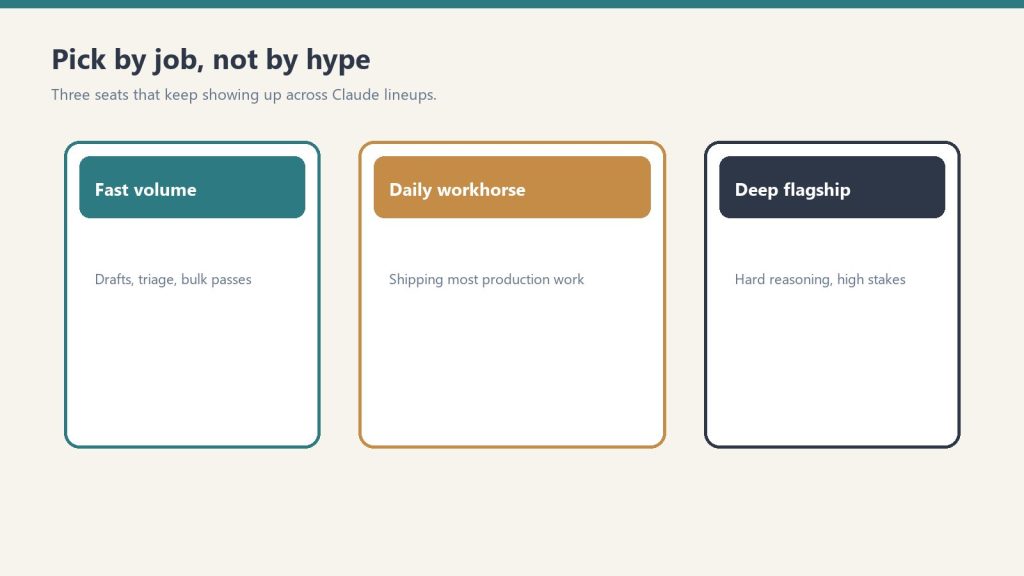
    Claude Haiku 4.5 is roughly 30× cheaper per token than Claude Opus 4.7. For sorting, classification, summarization, first-pass triage, and simple Q&A, Haiku delivers quality that is indistinguishable from Opus at the task level. The decision tree: Haiku for speed and volume, Sonnet 4.6 for mid-tier reasoning and writing, Opus 4.7 only when the task genuinely requires maximum capability. Most workflows over-use Opus by a factor of 3–5×. Full guide: Model Routing 101 →

    3. Use OpenRouter as the Budget Orchestration Layer

    OpenRouter gives you a single API that routes to Claude, GPT-4o, Gemini Flash, Llama, Mistral, and dozens of free-tier models through one endpoint. The practical workflow: use a free or near-free model for first-pass sorting and filtering, route only the items that pass the filter to Claude for reasoning and synthesis. You pay Opus prices for 20% of the work and get Opus-quality output on the parts that matter. Full guide: OpenRouter as the Budget Layer →

    4. Run Non-Urgent Work Through the Batch API

    Anthropic’s Batch API processes requests asynchronously and costs 50% less than the standard API at every model tier. Any work that does not need an immediate response — content generation, classification runs, analysis jobs, report generation — should run through the Batch API. The only cost is latency: batches complete within 24 hours. For most content and automation workflows, that trade is straightforwardly worth it. Full guide: The Batch API →

    5. Cache Your Repeated Context

    Anthropic’s prompt caching reduces the cost of repeated context by up to 90% on cached tokens. If you send the same system prompt, knowledge base, or skill file at the start of every session, caching means you pay full price once and a fraction on every subsequent call. The math compounds quickly: a 10,000-token system prompt sent 100 times costs 10× less with caching than without. Most people running Claude at scale are not using this. Full guide: Prompt Caching →

    6. Write Concentrated Outputs — Not Full Meals

    The single biggest controllable output cost is verbosity. A Claude response that delivers the same information in 200 tokens costs one-fifth as much as one that delivers it in 1,000. Structured output formats — scored lists, run logs, briefings, decision tables — deliver more actionable signal per token than open-ended prose. The discipline of asking for concentrated slices instead of full meals is the fastest zero-cost saving available to any Claude user. Full guide: Output Compression →

    7. Shape Content for the Model That Will Cite It

    Claude, ChatGPT, and Perplexity cite completely different types of pages. Claude concentrates on factual, access-related, answer-first content. ChatGPT spreads across comparison and geographic content. Perplexity favors research-flavored deep dives. If you are creating content that you want AI assistants to surface, writing for all three models equally is inefficient — you spend more words getting cited less. Shaping content to match the citation pattern of your target model gets more traction at lower content cost. Full guide: Per-Model Content Shaping →

    The Numbers Behind These Levers

    ModelInput (per 1M tokens)Output (per 1M tokens)Best for
    Claude Haiku 4.5$1.00$5.00Triage, classification, simple Q&A
    Claude Sonnet 4.6$3.00$15.00Writing, mid-tier reasoning, content
    Claude Opus 4.7$5.00$25.00Complex reasoning, architecture, security
    Batch API (any tier)50% off50% offAny non-urgent async work
    Prompt cache hit~90% offn/aRepeated system prompts / knowledge bases

    A workflow that currently runs Opus on every call, sends the same system prompt uncached, and generates verbose prose responses could realistically cut its token spend by 70–85% by applying all seven levers — without any reduction in output quality on the tasks that matter.

    Who This Is For

    This cluster was built with three audiences in mind: Indian developers and teams facing US-dollar Claude pricing on local-currency budgets; independent creators and small teams who cannot justify enterprise-tier spend; and anyone running Claude at scale in production who wants to stop leaving money on the table. The tactics work regardless of where you are — but they matter most where the price-to-income ratio is highest.

    Every article in this cluster is self-contained and actionable. Start with whichever lever applies to your situation, or read them in order if you are building a Claude stack from scratch.

  • Anthropic’s APAC Expansion: Tokyo, Bengaluru, Sydney, Seoul — What the Full Map Reveals

    Anthropic’s APAC Expansion: Tokyo, Bengaluru, Sydney, Seoul — What the Full Map Reveals

    Last refreshed: May 15, 2026

    Anthropic now has a four-market Asia-Pacific presence: Tokyo (established), Bengaluru (opened February 16, 2026), Sydney (opened April 27, 2026), and Seoul (announced, date TBD). Each market in this expansion serves a distinct strategic function, and understanding the logic behind the build-out reveals how Anthropic is thinking about global AI adoption — and where the next wave of enterprise AI growth is concentrated.

    Tokyo: The Japan Enterprise Anchor

    Japan was Anthropic’s first APAC office, and the NEC partnership announced April 24 — a multi-year collaboration to deploy Claude across Japanese enterprises with a workforce upskilling component — is the strategic validation of that investment. NEC is one of Japan’s largest technology companies with deep penetration in government, telecommunications, and enterprise. The partnership positions Claude as the foundation for Japan’s largest AI engineering workforce development program.

    Japan’s enterprise AI adoption pattern is distinct: methodical, compliance-driven, and deeply tied to supplier relationships. The NEC partnership is the right entry point for that market — a trusted anchor partner with existing enterprise relationships that Claude rides into accounts that would otherwise take years to develop directly.

    Bengaluru: The Volume and Developer Market

    India is Anthropic’s #2 global market by claude.ai usage — the Bengaluru office is a response to existing demand, not a bet on future demand. The market is there. What the office provides is localized support, partnership development, and the organizational infrastructure to serve the Indian enterprise market at scale rather than from a US time zone.

    India’s strategic value to Anthropic is twofold: the sheer volume of developer usage (45.2% of Indian Claude users are software developers, the highest concentration of any major market) and the enterprise pipeline represented by Indian IT services giants — Infosys, Wipro, TCS — that are the delivery backbone for enterprise AI implementations globally. Winning the Indian IT services firms means indirect access to their global enterprise clients.

    Sydney: The ANZ and Pacific Enterprise Hub

    The Sydney office, opened April 27 and led by Theo Hourmouzis as General Manager ANZ, is Anthropic’s first dedicated presence for Australia and New Zealand. Australia is a relatively high-income, technology-forward market with strong enterprise AI appetite, a concentrated financial services sector (the “Big Four” banks are substantial technology buyers), and a government that has been actively developing AI policy frameworks.

    The ANZ appointment is notable: Hourmouzis as a named GM with a regional title suggests Anthropic is building an Australia-first go-to-market presence, not a regional office that reports into Asia. That organizational choice signals confidence that the ANZ market generates enough enterprise opportunity to justify dedicated leadership rather than coverage from Singapore or Tokyo.

    Seoul: The Next APAC Enterprise Market

    South Korea’s announcement is notable for what it signals about Anthropic’s APAC confidence. Korea has one of the world’s highest rates of technology adoption, a concentrated enterprise market dominated by Samsung, LG, Hyundai, SK, and Lotte — conglomerates (chaebols) that make AI platform decisions at scale — and a developer community that ranks among the most technically sophisticated in Asia.

    The Korea timing also follows Singapore’s GIC partnership (the sovereign wealth fund co-hosted an Anthropic APAC event in April with 150 enterprise leaders) and suggests that Anthropic is now thinking of APAC not as a single market but as five or six distinct enterprise opportunities each worth dedicated investment: Japan, India, Singapore, Australia, Korea, and potentially Taiwan and Southeast Asia.

    The Pattern: Infrastructure Before Revenue

    What the four-market APAC build-out reveals about Anthropic’s strategy is a willingness to invest in market infrastructure — offices, local leadership, partnerships with regional anchors — before those markets are at revenue scale. That is a strategic bet that APAC enterprise AI adoption will follow a similar trajectory to US adoption but with a 12–18 month lag, and that being present with local infrastructure during the growth phase is worth the cost of early-stage investment.

    The bet is supported by the data: India is already the #2 global market without a local office until February 2026. Singapore has the highest per-capita Claude usage globally. Japan has a multi-year enterprise partnership with NEC. The markets are real. The offices are the organizational response to demand that already exists.

    For enterprise buyers in APAC: local Anthropic presence means local support, local partnership development, and local go-to-market investment. The era of “email Anthropic’s San Francisco office” for enterprise APAC deals is ending.

  • Anthropic’s Science Bet: Allen Institute and Howard Hughes Medical Institute Are Using Claude to Accelerate Research

    Anthropic’s Science Bet: Allen Institute and Howard Hughes Medical Institute Are Using Claude to Accelerate Research

    Last refreshed: May 15, 2026

    On February 2, 2026, Anthropic announced research partnerships with two of the most rigorous scientific institutions in the world: the Allen Institute (founded by Paul Allen, focused on neuroscience, cell science, and AI) and the Howard Hughes Medical Institute (HHMI, which funds more than 300 of the world’s leading biomedical researchers). Both are founding partners in what Anthropic is building as Claude’s life sciences research capability.

    This is the most underreported significant Anthropic story of 2026. While Claude Security and the Partner Network grabbed headlines, Anthropic quietly signed partnerships with institutions that are generating some of the most important biological data in human history. Here is what is actually being built.

    The Problem Claude Is Solving in Elite Labs

    Modern biological research generates data at unprecedented scale. Single-cell RNA sequencing produces gene expression profiles for thousands of individual cells simultaneously. Whole-brain connectomics generates petabytes of neural connectivity data. Protein structure prediction now runs continuously on entire proteomes. The data generation problem has been largely solved by computational advances over the last decade.

    The bottleneck that has not been solved is what comes next: transforming data into validated biological insights. Knowledge synthesis — reviewing literature, connecting experimental results to existing findings, generating hypotheses, and designing follow-up experiments — still depends almost entirely on manual human processes. In elite labs, this bottleneck can stretch research timelines from months to years.

    A single-cell sequencing experiment might produce 50,000 cells worth of gene expression data in a week. Making sense of that data in the context of existing biological knowledge, generating testable hypotheses, and designing the right follow-up experiments might take a postdoc six months of literature review and analysis. That ratio — days of data generation, months of interpretation — is where Claude-powered multi-agent systems are being applied.

    What the Allen Institute Is Building

    The Allen Institute collaboration focuses on multi-agent AI systems for multi-modal data analysis. “Multi-modal” in this context means data types that span imaging, sequencing, electrophysiology, and behavioral observation — the full range of data types generated in modern neuroscience and cell science research. Claude-powered agents are being integrated with the Allen Institute’s existing analysis pipelines and scientific instruments.

    The specific capability being built: agents that can hold the entire context of an ongoing research project — experimental history, current data, relevant literature, open hypotheses — and surface connections that human researchers would not make simply because no single human can hold that much context simultaneously. The agent serves as a comprehensive knowledge base integrated with cutting-edge instruments, not a search engine or literature summarizer.

    The HHMI Partnership

    Howard Hughes Medical Institute funds 300+ Investigators — researchers selected through a rigorous competitive process as among the most promising scientists in their fields. HHMI’s partnership with Anthropic focuses on deploying Claude-powered AI agents to tackle the analysis, annotation, and coordination bottlenecks that are consuming researcher time at the expense of the creative scientific work that only humans can do.

    The framing Anthropic uses for this partnership is important: Claude should augment, not replace, human scientific judgment. The reasoning that Claude surfaces needs to be traceable — researchers must be able to evaluate, question, and build upon Claude’s outputs. This is a different design requirement than a consumer AI assistant. In science, an AI that produces correct-sounding but untraceable conclusions is worse than no AI at all, because it introduces unverifiable claims into the research record.

    Why This Matters Beyond Biology

    The Allen Institute and HHMI partnerships are significant beyond their direct scientific impact for two reasons:

    1. They establish Claude’s capability floor in high-stakes reasoning environments. These institutions have no tolerance for AI that produces plausible-sounding incorrect answers. If Claude is being used in production at the Allen Institute and HHMI, it has cleared a rigor bar that most AI products have not. That is a capability signal.
    2. They create a template for other scientific domains. The multi-agent architecture being built for neuroscience and cell biology is applicable to drug discovery, climate science, materials science, and astrophysics. The bottleneck pattern — fast data generation, slow knowledge synthesis — exists across all of science. The Allen Institute and HHMI implementations are the proof-of-concept Anthropic can show to the next set of research institutions.

    Anthropic’s scientific AI partnerships sit at the intersection of its commercial strategy and its stated mission. If Claude-powered agents can meaningfully accelerate biological research — reducing the time from data to insight from months to weeks — the downstream impact on medicine and human health is the kind of outcome that makes the safety-focused AI development approach Anthropic argues for feel less abstract.

    The full partnership announcement is at anthropic.com/news/anthropic-partners-with-allen-institute-and-howard-hughes-medical-institute.

  • Snowflake × Anthropic: The $200M Partnership Putting Claude Inside 12,600 Enterprise Data Environments

    Snowflake × Anthropic: The $200M Partnership Putting Claude Inside 12,600 Enterprise Data Environments

    Last refreshed: May 15, 2026

    Model Accuracy Note — Updated May 2026

    Current flagship: Claude Opus 4.7 (claude-opus-4-7). Current models: Opus 4.7 · Sonnet 4.6 · Haiku 4.5. Claude Opus 4.7 referenced in this article has been superseded. See current model tracker →

    On December 3, 2025, Snowflake and Anthropic announced a multi-year, $200 million partnership making Claude models available to Snowflake’s 12,600+ global enterprise customers across AWS, Azure, and Google Cloud. If you are running data infrastructure on Snowflake — which means you are in the company of most Fortune 500 financial services, healthcare, and technology organizations — Claude is now a first-class capability inside your existing data environment.

    This partnership was not widely covered when it launched, and it has not been covered at the depth it deserves. Here is the complete picture of what was built and why it matters.

    Snowflake Intelligence: What It Is

    Snowflake Intelligence is an enterprise intelligence agent powered by Claude Sonnet 4.6 (the model at launch; check Snowflake’s current docs for the latest). It answers natural language questions about your organization’s data by: determining what data is needed, querying across your entire Snowflake environment, joining data from multiple sources, and delivering answers with greater than 90% accuracy on complex text-to-SQL tasks in Snowflake’s internal benchmarks.

    The “greater than 90% accuracy on complex text-to-SQL” claim is the number that matters. Text-to-SQL accuracy has historically been the failure mode for natural language data querying — ambiguous column names, complex join logic, and domain-specific terminology conspire to make AI-generated SQL unreliable without significant prompt engineering and validation. Snowflake’s 90%+ benchmark on complex queries (not simple ones) represents a meaningful improvement over prior-generation approaches.

    Snowflake Cortex AI Functions

    Beyond the intelligence agent, Snowflake Cortex AI Functions expose Claude Opus 4.5 and newer models directly within Snowflake’s SQL environment. You can call Claude from a SQL query — pass a column of text to Claude for classification, summarization, sentiment analysis, or extraction, and receive structured results back as a query output. No API calls, no external services, no data leaving your Snowflake governance boundary.

    This is a fundamental shift in how AI is applied to enterprise data. Instead of extracting data from Snowflake, sending it to an external AI service, and loading results back, AI reasoning happens inside the governance boundary where the data lives. For regulated industries — financial services under SOX, healthcare under HIPAA, government under FedRAMP — this is the architectural difference between a compliant AI workflow and one that requires a data transfer agreement.

    Why Regulated Industries Move to Production Faster

    The specific value proposition Snowflake and Anthropic built this partnership around is the regulated industry path from pilot to production. The two primary blockers for enterprise AI in regulated industries have historically been:

    1. Data governance. Sensitive data cannot leave governed environments. Solutions that require sending data to external APIs fail compliance reviews. Cortex AI Functions solve this by keeping Claude within the Snowflake perimeter.
    2. Accuracy and auditability. A financial services firm cannot deploy a customer-facing AI tool that is wrong 20% of the time and cannot explain its reasoning. Claude’s documented reasoning capability and Snowflake’s query audit trail together create an auditable AI chain that compliance teams can review.

    The 12,600 Snowflake customers who now have access to Claude through this partnership include organizations in financial services, healthcare, life sciences, manufacturing, and technology — precisely the sectors where AI adoption has been slowest due to compliance barriers. The Snowflake perimeter solves barrier #1. Claude’s accuracy and reasoning capability addresses barrier #2.

    Practical Steps for Snowflake Customers

    If you are a Snowflake customer and have not activated Cortex AI Functions:

    1. Check your Snowflake account tier — Cortex AI Functions require Business Critical or Enterprise edition.
    2. Enable Cortex in your account settings. No additional Anthropic API key is required — the Claude models are accessed through Snowflake’s compute layer.
    3. Start with a bounded use case: classify a column of customer feedback into categories, extract structured fields from unstructured text, or generate summaries of long documents stored as Snowflake objects.
    4. Use Snowflake Intelligence for stakeholder-facing natural language querying once your Cortex implementation is validated.

    Snowflake’s documentation for Cortex AI Functions is available at docs.snowflake.com. The Anthropic partnership page is at anthropic.com/news/snowflake-anthropic-expanded-partnership.

  • Claude Opus 4.7 Is Secretly ~40% More Expensive Than Opus 4.6 — Here’s Why

    Claude Opus 4.7 Is Secretly ~40% More Expensive Than Opus 4.6 — Here’s Why

    Last refreshed: May 15, 2026

    Model Accuracy Note — Updated May 2026

    Current flagship: Claude Opus 4.7 (claude-opus-4-7). Current models: Opus 4.7 · Sonnet 4.6 · Haiku 4.5. This article compares Claude Opus 4.7 pricing to Opus 4.6 as a historical baseline. Opus 4.7 is the current flagship. Both models share the $5/$25.00 per MTok list price.. See current model tracker →

    Anthropic announced Claude Opus 4.7 with the same list pricing as Opus 4.6: $5 per million input tokens, $25 per million output tokens. What Anthropic did not announce — and what Simon Willison surfaced through direct tokenizer analysis — is that Opus 4.7 generates approximately 1.46× more tokens for the same text output as Opus 4.6. That is a ~40% real-world cost increase at unchanged list prices.

    This is not a criticism of the model. Opus 4.7 is genuinely better — 3× higher vision resolution, a new xhigh effort level, improved instruction following, higher-quality interface and document generation. The performance gains are real. The cost increase is also real, and it is not being communicated transparently in Anthropic’s pricing documentation. If you are budgeting for Claude API usage, you need to account for this.

    What Token Inflation Means

    Token inflation occurs when a model generates more tokens to express the same semantic content. It happens for several reasons: more detailed reasoning traces, more verbose explanations, additional caveats and structure, or architectural changes in how the model constructs its output. Opus 4.7 appears to produce more elaborated, structured responses than 4.6 by default — which accounts for the 1.46× multiplier.

    The practical effect: if you were spending $10,000/month on Opus 4.6 for a production application, the same application workload on Opus 4.7 costs approximately $14,600/month — before any intentional use of the new xhigh effort level, which adds further token consumption on top of the baseline inflation.

    How to Measure Your Actual Exposure

    Do not estimate — measure. Here is the four-step process:

    1. Pull your last 30 days of Anthropic API usage data from your platform dashboard. Note your average output token count per call for your primary workloads.
    2. Run a representative sample of those same workloads on Opus 4.7 using the API directly, with identical prompts and system messages. Log output token counts for each call.
    3. Calculate your actual multiplier — it may be higher or lower than 1.46× depending on your specific prompt patterns and use cases. Tasks with highly constrained output formats (structured JSON, fixed-length summaries) will see lower inflation than open-ended generation.
    4. Apply the multiplier to your budget model and adjust your spend projections before migrating production workloads to Opus 4.7.

    Mitigation Strategies

    Several approaches can reduce the cost impact while preserving Opus 4.7’s quality gains:

    • Explicit length constraints in system prompts. Adding “Respond in 200 words or fewer” or “Use bullet points, not paragraphs” constraints does not reduce quality on most tasks but meaningfully constrains token generation. Test which of your prompts accept length constraints without quality loss.
    • Model routing by task type. Use the new gateway model picker in Claude Code, or implement explicit routing in your API calls: Opus 4.7 for the tasks where quality genuinely requires it, Sonnet 4.6 or Haiku 4.5 for high-volume tasks where speed and cost matter more than peak quality. The cost difference between Haiku and Opus is roughly 30×.
    • Avoid xhigh effort unless necessary. The new xhigh effort level in Opus 4.7 consumes significantly more tokens than the default effort setting. Reserve it for tasks where maximum quality is genuinely required — complex reasoning, high-stakes code generation, detailed document analysis. Do not set it as a default.
    • Evaluate Sonnet 4.6 for your use case. For many production workloads, Claude Sonnet 4.6 at $3/$15 per million tokens delivers quality that is indistinguishable from Opus 4.7 at the task level. The Opus tier is most clearly differentiated on the most difficult tasks — extended chain-of-thought reasoning, complex multi-step coding, nuanced creative judgment. Benchmark your specific workloads before assuming Opus is required.

    The Transparency Gap

    Anthropic’s pricing page lists token costs accurately. What it does not document is how output token counts change across model versions for equivalent tasks. This is an industry-wide gap, not an Anthropic-specific failing — no major AI provider documents per-task token consumption differences between model versions in their pricing documentation.

    The practical implication for any team managing AI infrastructure: treat “same price per token” announcements as partial information. Always benchmark your actual workloads on new model versions before migrating production traffic. The 1.46× multiplier Willison measured is for general text — your specific workload multiplier will be different, and you need to know it before your invoice arrives.

    Claude Opus 4.7 is available now through the Anthropic API at platform.claude.com. API pricing: $5/M input tokens, $25/M output tokens. Measure before you migrate.