Quick answer: Boeing still officially targets the first quarter of 2027 for Lufthansa’s first 777-9, but Lufthansa is not counting on it. On September 28, 2026, CEO Carsten Spohr said the airline’s summer 2027 schedule includes no 777-9s and that keeping more A340-300s flying is now its main plan, as certification delays for the GE9X engine slow the program’s final stretch (aero.de, in German). The production-standard 777-9 built for Lufthansa first flew from Paine Field on May 7, 2026 (Boeing).
The Boeing 777X timeline moved again, and this time the source isn’t Boeing — it’s the airline at the front of the line.
At Lufthansa’s annual press conference in Frankfurt in March, CEO Carsten Spohr confirmed that the German flag carrier now expects its first 777-9 delivery in the first quarter of 2027, slipping from a previously revised late-2026 target. Boeing’s own April 22 first-quarter 2026 earnings release landed on the same destination from a different angle: the company “anticipates first delivery in 2027” and said the program “continued to make progress” on certification.
Since then, the airline has hedged. Boeing’s first-quarter 2027 handover target still stands, but Lufthansa has built its summer 2027 flying without the airplane. For Everett, that means two timelines to plan around: the supply chain, the IAM 751 floor, and Snohomish County’s economic planners still have a date to work toward, but it is one to write in pencil, not pen.
What changed in August and September 2026
On Lufthansa Group’s second-quarter 2026 earnings call on August 4, Spohr said Boeing was still targeting entry into service in summer 2027, with first deliveries expected in the first quarter of 2027, according to ch-aviation (see also FlightGlobal). He said Lufthansa had prepared for two scenarios: the 777-9 entering service as planned, or further delays that would lead it to reactivate A340-300s it had kept for that purpose. Lufthansa’s published schedules, he added, already assumed the A340-300 would stay in service, because that was the more reliable planning assumption until Boeing’s delivery timetable firmed up.
By late September, the hedge had become the plan. Speaking to journalists in Frankfurt on September 28, Spohr said Boeing was still officially holding to a first-quarter 2027 delivery, but that certification delays for the GE9X engine were slowing the final stretch, and he pointed to big question marks over the 777-9 delivery schedule. As a precaution, Lufthansa’s Frankfurt summer 2027 schedule includes no 777-9s, and keeping a larger number of A340-300s active, which had been Plan B, is now Plan A (reported in German by aero.de and aeroTELEGRAPH; paraphrased in translation). That is a network-planning decision, not a cancellation: Lufthansa still has 20 777-9s on order.
What Spohr said in March
Lufthansa’s annual press conference is one of the few moments in the year when a launch customer speaks publicly about a delayed program in any specificity. Spohr’s remarks confirmed three things that had been swirling in the trade press for months:
- Lufthansa now expects its first 777-9 in the first quarter of 2027.
- The first flight of the production-conforming 777-9 — the very airframe Lufthansa will eventually take — was expected in April 2026. (It flew on May 7, 2026.)
- Lufthansa is comfortable with the new timing.
That last point matters. Launch customers can put real pressure on a delayed program by speaking to the press, demanding compensation, or quietly shifting orders to alternative airframes. Spohr’s tone was the opposite — patient, fact-based, and oriented around getting the airplane right. For an Everett factory floor that has lived through three certification regimes (the original timeline, the revised 2025 target, and the 2026 path), a calm launch customer is its own form of stability. That patience has limits: on the August call, Spohr said Lufthansa was seeking financial compensation from Boeing if it accepts early-production jets that need later modifications (ch-aviation).
Why the first production flight mattered for Everett
The headline said “delivery slip.” The factory-floor story was the first production flight.
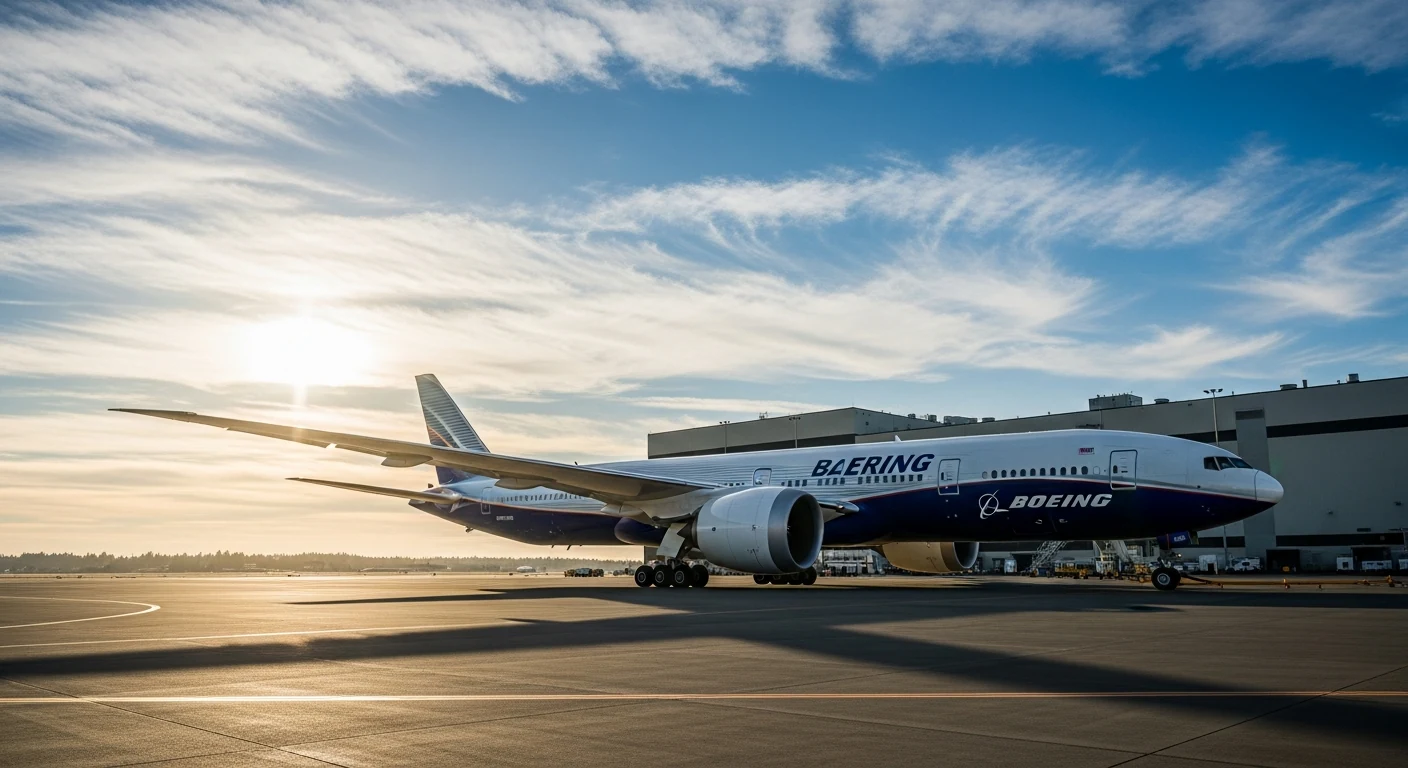
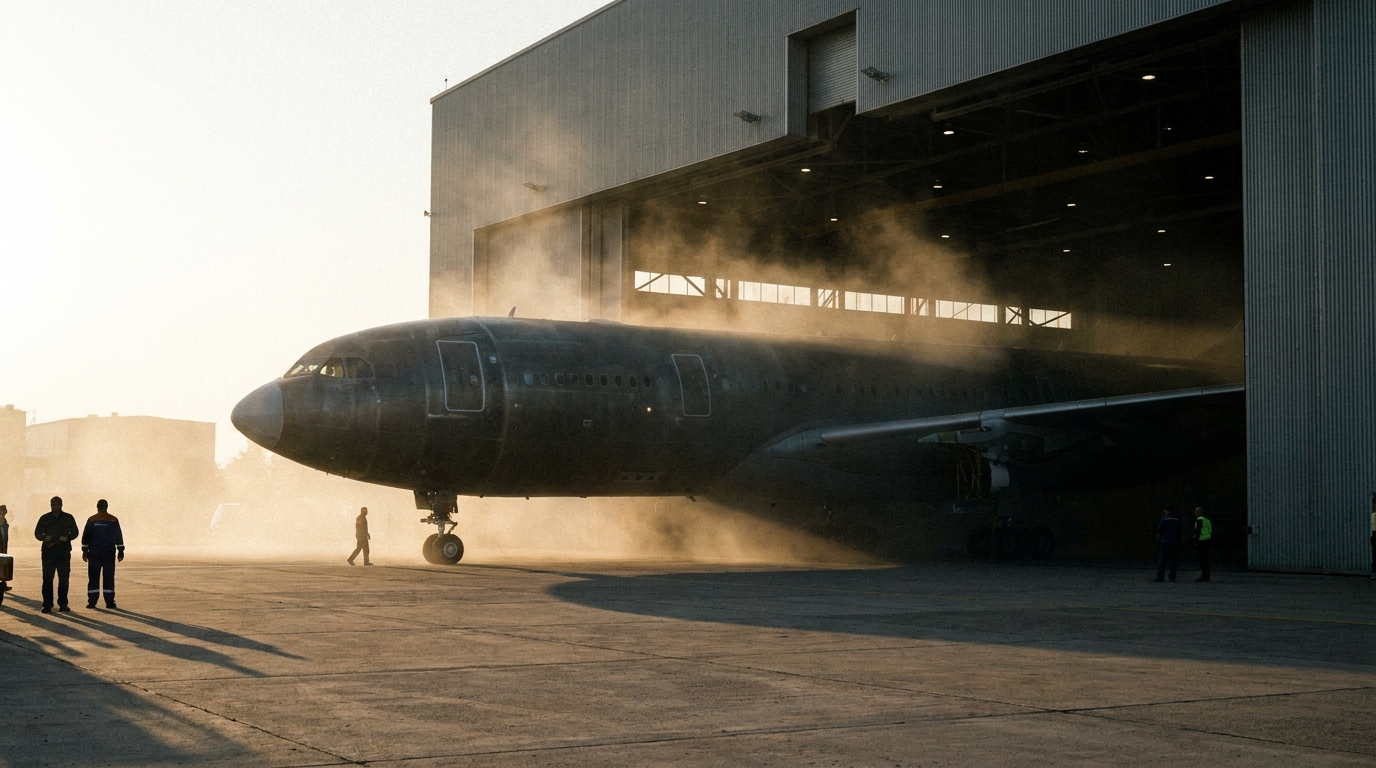
The 777-9 that took off from Paine Field on May 7, 2026, was not a flight-test airframe pulled from a hangar. It is the airplane Lufthansa will fly, and Boeing says it was the first 777-9 to fly with a customer interior (boeing.com). The four flight-test 777-9s that have been running the certification campaign are pre-production aircraft built before the design freeze. The airplane that flew in May is the first one built to the production standard — the same configuration every customer airframe will follow.
That is why the flight mattered for certification. Flight hours logged on a production-conforming 777-9 carry direct certification credit. Every test flight from May onward contributes data to the type certification package Boeing has been assembling since the program received its Phase 4A Type Inspection Authorization on March 17, 2026 (The Air Current; Simple Flying), a step Boeing’s first-quarter release describes as FAA approval to begin the TIA 4a phase. The TIA cleared the FAA to begin riding along on certification flights and counting those hours toward the final approval.
Put another way: the May flight was the moment the program shifted from “are we going to make it” to “how fast can we accumulate the flight hours we still need.” That was a more comfortable problem than the one Boeing was solving in 2024, though by September, GE9X engine certification had become the item setting the pace.
The Everett factory math through 2027
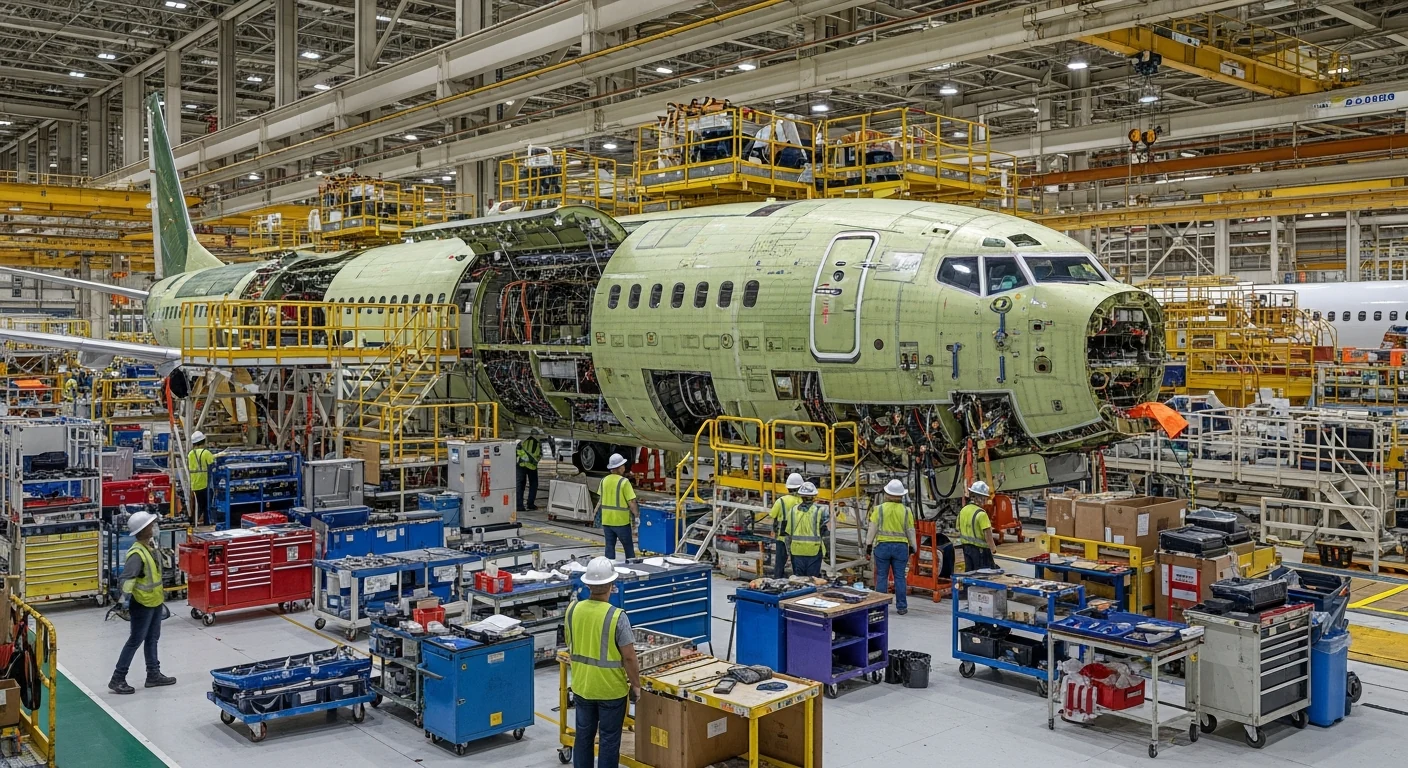
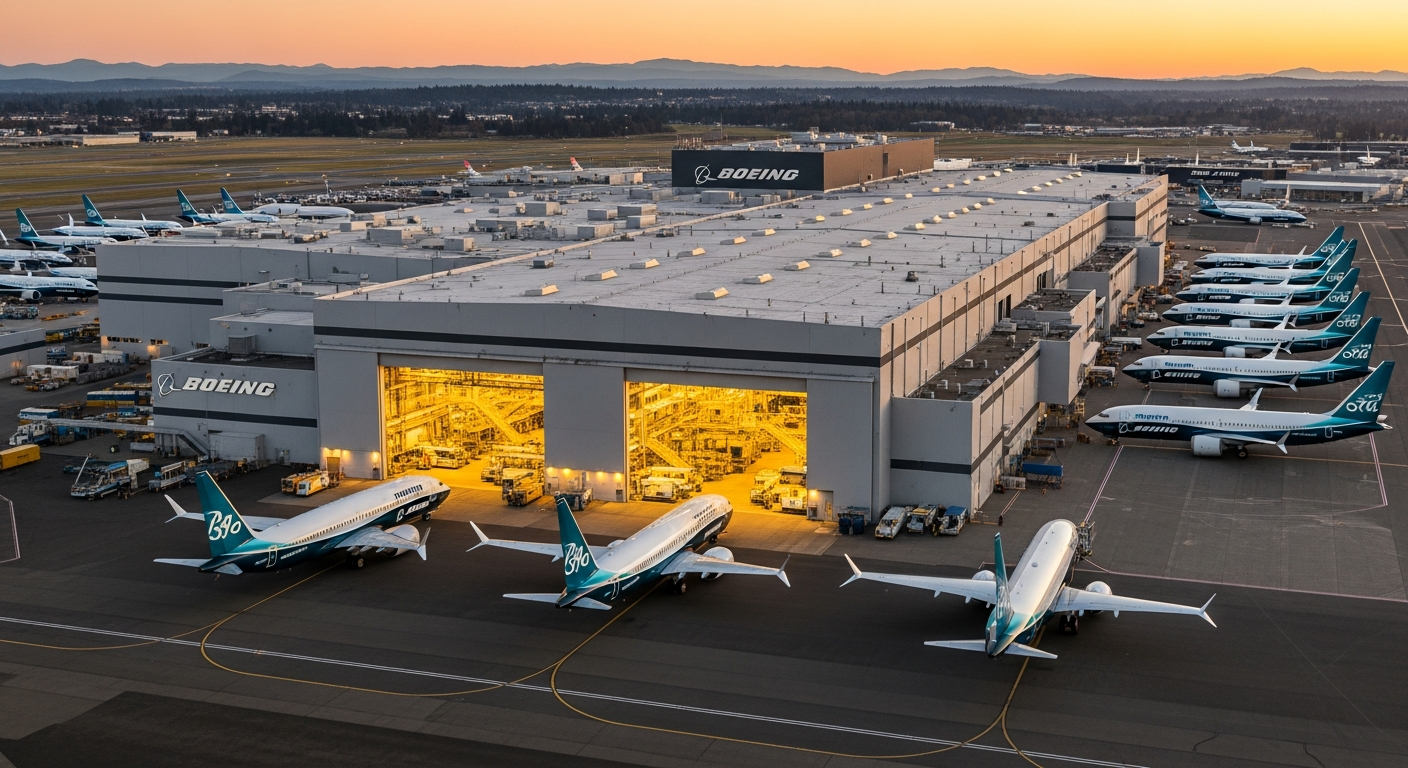
Roughly 30 completed 777-9s sit on the Paine Field ramp today, built before the latest engineering changes were folded into the production line. Boeing CEO Kelly Ortberg called the rework on those airplanes “pretty massive activity” on the April 22 earnings call. The newer airframes — built to the current standard — will deliver first; the parked-ramp jets will be reworked over multiple years.
That sequencing has direct workforce implications for Everett. The factory has to do two things at once for the next eighteen months:
- Build new 777-9s and 777-8Fs to the production standard at the cadence the order book demands.
- Cycle the stored airframes through change incorporation work that requires rework cells, parts kits, and qualified aerospace mechanics.
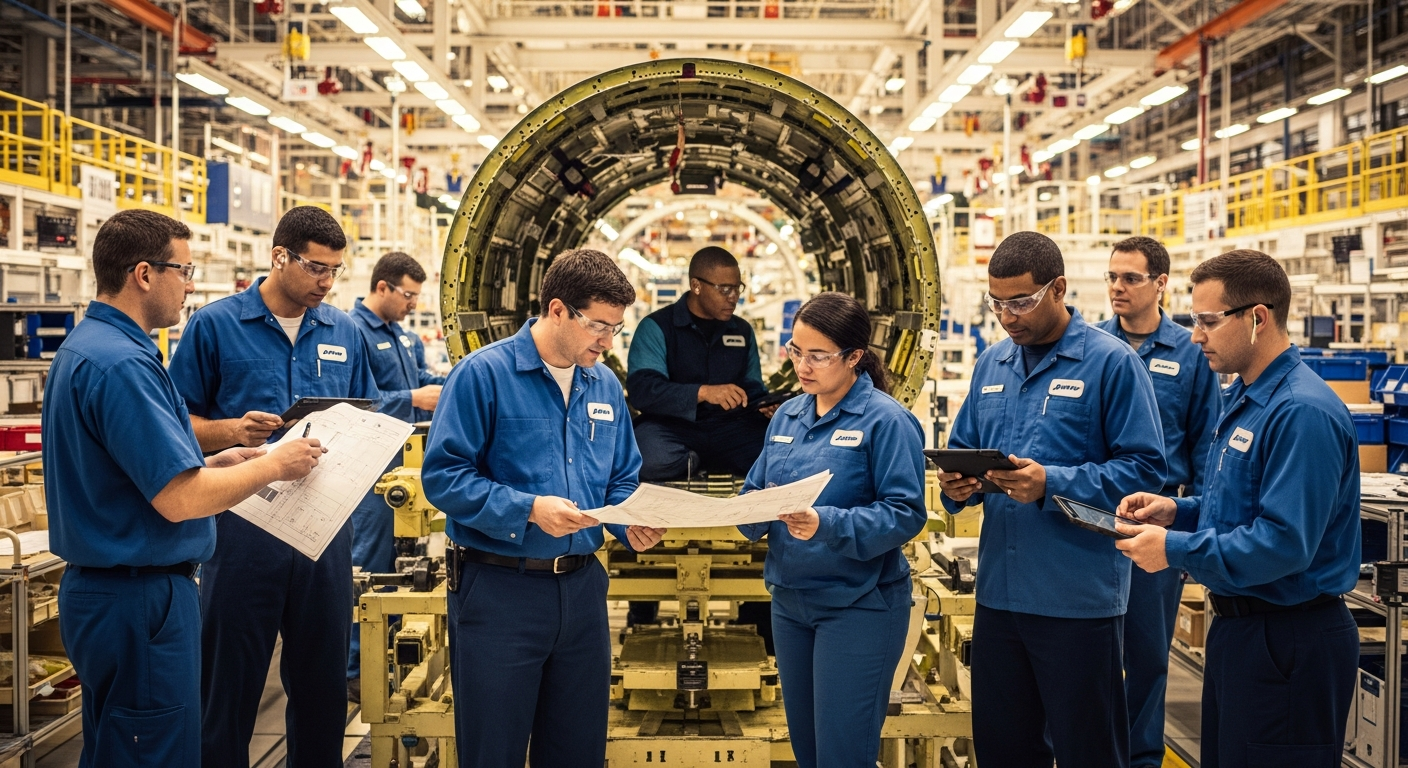
Both jobs are work for IAM 751 members and SPEEA engineers in Everett. Both jobs draw on the same supplier base in Snohomish County. Both jobs feed paychecks that move through Casino Road, Hewitt Avenue, and the school district’s enrollment numbers.
A Q1 2027 first delivery means the rework backlog isn’t a deadline pressure event the way late 2026 would have been. It becomes part of the steady-state Everett widebody operation through the end of the decade.
Why Lufthansa specifically matters
Lufthansa is not the only 777-9 launch customer — Emirates holds the largest order book at 35 firm 777-9s and 5 freighters — but Lufthansa is the lead-off airline because of how it has staged its widebody fleet. The German flag carrier ordered 20 777-9s in 2013, has been holding crew training slots open, has its long-haul network planned around the airplane, and has allocated ramp space at Frankfurt and Munich for the type. When Lufthansa says Q1 2027, it is moving slot allocations, simulator schedules, and crew training rotations.
That is also why Lufthansa’s September decision matters. The airline has the technical staff to evaluate the program independently, and its flight operations and engineering teams have visited Everett repeatedly. When that customer plans a summer without the airplane, Everett should read it as a signal about remaining certification risk, not just airline caution.
What Snohomish County’s aerospace ecosystem reads from this
For the 600-plus aerospace suppliers in Snohomish County, the signals are mixed. Boeing’s first-quarter 2027 delivery target still sets a firm-up window in late 2026 for the components that go on the first delivery airframe and the next handful behind it. But the launch customer has planned its summer 2027 flying around A340-300s instead, so suppliers are better served by running two tracks, one that follows Boeing’s target and one that allows for a further slip, than by treating Q1 2027 as locked.
The same is true for the Future of Flight Aviation Center, Mukilteo’s lodging operators, and the trade-show economy that ramps every time a new widebody enters service. If Boeing holds its target, a Q1 2027 first delivery means commemorative tour traffic — the European press, Lufthansa’s branded delivery ceremony, the analyst flights — concentrates in early 2027; further engine certification delays would push it later.
For the Edmonds College aerospace track and the Machinists Institute on Airport Road, the date confirms the workforce demand profile the schools have been planning around. The 777-9 ramp won’t compete head-to-head with the 737 North Line activation in mid-summer 2026. Instead, the two production curves stack: North Line standing up through late 2026, 777-9 deliveries targeted for early 2027, KC-46 deliveries running steady through both, and the 777-8F ramping behind the -9.
The certification work between here and Q1 2027
Three certification milestones still sit between Paine Field and the first Lufthansa delivery:
- Type certification — the FAA’s formal sign-off that the 777-9 design meets all applicable airworthiness requirements. As of late September 2026, certification delays for the GE9X engine were slowing this final stretch, according to aero.de.
- Production certificate amendment — the FAA’s approval of Boeing’s manufacturing system to build production 777-9s at the Everett factory. The May 7 first flight of the first production airplane began building the data package the FAA needs to close this out.
- Customer-specific delivery readiness — Lufthansa-specific configuration, livery, interior, and entry-into-service documentation. This is the step that actually transfers the airplane.
Boeing’s target is for step three to finish in Q1 2027. Steps one and two have to clear before that. The May production flight started the data-collection sprint that makes the back end of that calendar workable; the GE9X engine is now the item to watch.
The bigger Everett picture
The 777-9 program lives on the same factory floor as the 767 freighter, the KC-46 tanker, and — since this summer — the 737 MAX 10 North Line. Each of those programs has its own cadence. The 767 commercial line sundowns in 2027. The KC-46 line is the most stable production program at Paine Field. The North Line ramps from zero to a steady cadence over twelve to eighteen months. The 777-9 transitions from build-and-store to build-and-deliver.
Three of those four programs now have legible timelines pointing toward production-and-delivery cadence. The 777-9 is closer than it has been in years, but Lufthansa’s decision to plan summer 2027 without it is a reminder that it is still the program carrying the most schedule risk.
Frequently Asked Questions
When will Lufthansa receive its first 777-9?
Boeing still officially targets the first quarter of 2027 for Lufthansa’s first 777-9, and Spohr repeated that timing on Lufthansa’s August 4, 2026, earnings call. But on September 28, 2026, he said Lufthansa’s summer 2027 schedule includes no 777-9s, with more A340-300s kept in service instead, as GE9X engine certification delays weigh on the program. Boeing’s April 22 earnings release said it “anticipates first delivery in 2027.”
Has the production-standard 777-9 flown?
Yes. The first 777-9 built for Lufthansa, with a full customer interior, first flew from Paine Field on May 7, 2026, according to Boeing. It is the airframe destined for Lufthansa.
How does this affect Everett jobs?
Boeing’s Q1 2027 delivery target supports steady widebody work in Everett, though Lufthansa’s decision to plan summer 2027 without the 777-9 shows the timing is not locked. Roughly 30 stored 777-9s on the Paine Field ramp also need multi-year rework, which adds a second stream of work for IAM 751 mechanics and SPEEA engineers.
How many 777-9s does Lufthansa have on order?
Lufthansa ordered 20 777-9s in 2013 and has been the launch customer ever since.
Who has the largest 777X order?
Emirates holds the largest 777-9 order book at 35 firm aircraft, plus 5 777-8Fs.
What is a Type Inspection Authorization?
A Type Inspection Authorization (TIA) is the FAA milestone that allows agency pilots and engineers to ride along on certification flights and count those flight hours toward type certification. Boeing received Phase 4A TIA for the 777-9 on March 17, 2026.
Will the 777-9 ramp affect the 737 MAX 10 North Line?
No. The two programs run on different bays inside the Everett factory and have offset production curves. The North Line ramps through late 2026; Boeing targets the first 777-9 customer delivery for early 2027.
What does this mean for Snohomish County’s 600 aerospace suppliers?
Boeing’s Q1 2027 target gives suppliers a working date for the first delivery airframe and the ones right behind it, but with Lufthansa planning summer 2027 around A340-300s, it is safer to plan for a possible slip than to treat that date as firm.