Author: Will Tygart

  • Everett Community College: The Local’s Guide to EvCC in 2026

    Everett Community College: The Local’s Guide to EvCC in 2026

    Q: Where is Everett Community College?
    A: Everett Community College’s main campus is at 2000 Tower Street in Everett, Washington, on a 46-acre site in the Northwest Everett neighborhood near Legion Memorial Golf Course. EvCC serves more than 19,000 students a year across Snohomish County and offers degrees and certificates in 39 fields, including nursing, advanced manufacturing, and university transfer programs.

    Everett Community College: The Snohomish County Campus That Actually Punches Above Its Weight

    If you grew up in Everett, you probably have a cousin, a coworker, or a neighbor who went to EvCC. That’s not an accident. Everett Community College has been part of the city’s educational backbone since 1941 — back when it was Everett Junior College and opened that September with 128 students in a converted elementary school.

    Today it sits on 46 acres at 2000 Tower Street in Northwest Everett, just up the hill from Legion Memorial Park and a short walk from Grand Avenue Park. The college serves more than 19,000 students every year across multiple sites throughout Snohomish County, with most students and faculty based at the Tower Street main campus.

    For families choosing a path after high school, workers retraining for new careers, and adults finishing a degree they started years ago, EvCC is often the most cost-effective, geographically convenient, and academically flexible option in the region. This is the local’s guide to what’s actually going on there.

    A Short History — How EvCC Became EvCC

    The school opened as Everett Junior College in September 1941, with 128 students in a repurposed elementary school building. That’s the founding story every long-time Everett resident has heard a version of.

    The main campus moved to its current Tower Street location in 1958 — the site everyone thinks of today when they picture “EvCC.” In 1967, the name officially changed to Everett Community College to conform with the Washington State Community College Act that restructured the state’s two-year system.

    Since then the school has grown steadily. The student age range today is wide — from 12-year-olds in Running Start and early enrollment programs to adults in their 80s, with the biggest single block of students falling between 18 and 21.

    What EvCC Actually Offers

    EvCC is a comprehensive community college. That means degrees, certificates, basic education, workforce training, high school completion, and ESL all under one roof.

    Students can earn degrees and certificates in 39 different fields. The college offers associate’s degrees in Arts and Sciences, Science, Business, Applied Science, Technical Arts, Fine Arts, and General Studies, with certificates of completion in more than 30 technical and career fields. There are English as a Second Language programs, high school completion pathways, and General Education Development (GED) preparation.

    The biggest programs by enrollment are Liberal Arts and Sciences / Liberal Studies, Registered Nursing, and Business. But the niche programs are often what draw students from outside Snohomish County — photography, welding, composites, and fire science are all strong.

    The Nursing Program and the BSN Path

    Nursing is one of the programs EvCC is best known for regionally, and for good reason. The college offers multiple pathways for students who want to become registered nurses.

    The Associate in Applied Science – Transfer (AAS-T) degree in Nursing — often called the ADN — is a six-quarter nursing program that prepares students to sit for the NCLEX-RN licensure exam. Seats are competitive, and the program only admits a limited cohort each cycle.

    For students who want a bachelor’s degree before taking NCLEX, EvCC offers a Pre-Nursing Transfer degree that provides the prerequisite coursework for transferring to a four-year BSN program elsewhere. There’s also a First Year Entry partnership with University of Washington Bothell for students who want a direct-admit path from the start.

    The Nursing program sits in Liberty Hall on campus, alongside EvCC’s medical assisting, phlebotomy, and other health sciences training, plus criminal justice, fire science, and EMT programs.

    AMTEC: Everett’s Advanced Manufacturing Workforce, Built on Tower Street

    If you live in Everett and you hear someone talking about “the AMTEC building,” they mean this: the Advanced Manufacturing Training & Education Center, which opened in 2014 as the first EvCC building on the east side of Broadway.

    AMTEC expanded in 2015, adding 17,000 square feet to bring the center to 54,000 square feet total. It educates students in six programs — mechatronics, precision machining, welding and fabrication, engineering technician, composites, and pre-employment. The teaching model is interdisciplinary: students build unmanned aerial vehicles, rockets, robots, and paddle boards as they learn the manufacturing process end to end.

    That pipeline feeds directly into Snohomish County’s aerospace and advanced-manufacturing employers — which is exactly why Boeing, the IAM 751 Machinists Institute across the street, and dozens of regional aerospace suppliers pay attention to AMTEC.

    Gray Wolf Hall and the Campus Today

    EvCC’s Gray Wolf Hall opened in 2009 as a 77,000-square-foot building housing the humanities, social sciences, and communications programs. It’s one of the more distinctive buildings on the Tower Street campus and anchors the academic core.

    Other notable campus buildings include:

    • Liberty Hall — nursing, medical assisting, phlebotomy, criminal justice, fire science, and EMT programs
    • AMTEC — the six advanced manufacturing programs listed above
    • The Library / Learning Resource Center — with tutoring and academic support services
    • The Corporate & Continuing Education Center — non-credit professional training

    The campus is walkable end-to-end in about 10 minutes.

    Trojan Athletics

    EvCC’s mascot, the Trojan, was selected by students in 1941 — the year the college opened. Today the athletics department fields 11 athletic teams: baseball, softball, men’s and women’s basketball, men’s and women’s soccer, cross country, track and field, and volleyball.

    Trojan sports are NWAC (Northwest Athletic Conference) affiliated, and games are affordable, local, and genuinely competitive. If you’re looking for a community college sports experience without driving to Seattle or Bellingham, EvCC is it.

    The University Center of North Puget Sound

    Here’s the part a lot of Everett residents don’t know about: you can earn a bachelor’s or even a graduate degree without leaving the EvCC campus, through the University Center of North Puget Sound.

    The University Center brings multiple four-year and graduate institutions to the EvCC campus. The major disciplines available include Nursing, Business, Education, Environmental Science, Engineering, Social Science, and Human and Counseling Services.

    Here’s the striking stat: nearly 45% of University Center students had earned credits or a degree from Everett Community College before enrolling with a partner university. That’s how the pipeline is meant to work, and locally, it’s how it actually works.

    Why EvCC Matters for Everett

    You don’t have to be a student for EvCC to shape your life in Everett. The nursing program feeds Providence Regional Medical Center Everett and every other regional hospital. AMTEC feeds Boeing, the aerospace supply chain, and the fabrication shops that serve the Port of Everett’s marine economy. The University Center feeds teaching jobs at Everett Public Schools and engineering roles throughout the county.

    A meaningful share of the city’s licensed professionals, small business owners, and public employees either started at EvCC or completed something there on the way to where they are now. That’s what a working community college is supposed to do, and EvCC, 85 years in, still does it.

    Frequently Asked Questions

    Where is Everett Community College?
    The main campus is at 2000 Tower Street, Everett, WA, on 46 acres near Legion Memorial Golf Course in the Northwest Everett neighborhood.

    When was EvCC founded?
    The college opened as Everett Junior College in September 1941 with 128 students. The main campus moved to Tower Street in 1958, and the name changed to Everett Community College in 1967.

    How many students go to EvCC?
    EvCC serves more than 19,000 students each year across locations throughout Snohomish County, with the largest concentration at the Tower Street main campus.

    What programs is EvCC best known for?
    Nursing, advanced manufacturing (AMTEC), business, photography, fire science, and university transfer programs. The college offers degrees and certificates in 39 fields.

    Can I get a bachelor’s degree at EvCC?
    Through the University Center of North Puget Sound, you can earn bachelor’s and graduate degrees on the EvCC campus through partner universities. Major disciplines include Nursing, Business, Education, Environmental Science, Engineering, Social Science, and Human and Counseling Services.

    What is AMTEC at EvCC?
    The Advanced Manufacturing Training & Education Center, which opened in 2014 and expanded in 2015 to 54,000 square feet. It runs six programs: mechatronics, precision machining, welding and fabrication, engineering technician, composites, and pre-employment.

    What is EvCC’s mascot?
    The Trojan, selected by students in 1941. The athletic department fields 11 teams across baseball, softball, basketball, soccer, cross country, track and field, and volleyball.

    Does EvCC offer nursing?
    Yes. Options include the six-quarter Associate in Applied Science – Transfer (ADN), a Pre-Nursing Transfer degree for students aiming at a BSN elsewhere, and a First Year Entry partnership with University of Washington Bothell.

    Deeper Coverage in the Exploring Everett Series

    For a more comprehensive treatment of the issues raised in this article, see:

  • Living in Northwest Everett: Inside the Historic Heart Above Port Gardner

    Living in Northwest Everett: Inside the Historic Heart Above Port Gardner

    Q: Where is the Northwest Everett neighborhood?
    A: Northwest Everett is the neighborhood north of 19th Street and west of Broadway Avenue, wrapping the bluff above Port Gardner. It holds most of Everett’s oldest standing homes, Grand Avenue Park, American Legion Memorial Park, and the Everett Community College campus.

    Living in Northwest Everett: The Historic Heart Above Port Gardner

    Northwest Everett is the part of the city where you can stand on a sidewalk built before World War I, look out at Port Gardner Bay, and count four different architectural eras on a single block. It is Everett’s historic core — the neighborhood where the city’s founders built their mansions, where their mill workers built their bungalows, and where, more than a century later, people still live in both.

    The official boundaries are simple: north of 19th Street, west of Broadway Avenue. Everything from that line out to the bluff above the waterfront is Northwest Everett, sweeping up through the Rucker Hill Historic District, past Grand Avenue Park, across the Everett Community College campus, and all the way to the city’s northern edge near the Snohomish River.

    If you have been reading this desk’s Riverside, Delta, and Boulevard Bluffs guides, you already know how much each Everett neighborhood changes in a few blocks. Northwest Everett does it faster than any of them.

    How Northwest Everett Got Built — In Three Booms

    According to Historic Everett’s walking-tour materials, the homes on the bluff were built across three distinct waves.

    The first was the Rockefeller Boom of 1891–1899, when John D. Rockefeller’s money and a cohort of New York investors — Charles Colby and Colgate Hoyt among them — poured capital into the new mill town. Their names still live on the street grid: Rockefeller Avenue, Colby Avenue, Hoyt Avenue, Oakes Avenue. The first generation of mansions went up during this period, and many of them still stand.

    The second wave was the Hill Revival period, 1900–1915, after Great Northern Railway baron James J. Hill took over from Rockefeller as the city’s chief financier. This is when Rucker Hill filled in — with American Foursquare homes, California Bungalows, and the occasional Tudoresque showpiece. The Clough Mansion at 1010 Hoyt Avenue was finished in 1922, at the tail end of this era.

    The third wave was the twenties boom, 1916–1929, which added craftsman bungalows, early apartment blocks, and civic buildings like the old Everett General Hospital at 13th and Colby, built in 1924. Then the Depression hit, and Northwest Everett stopped growing for a generation.

    That’s why the neighborhood feels the way it does. The bones were already set by 1930.

    Rucker Hill, the Hartley Mansion, and the National Register

    Rucker Hill is the crown of Northwest Everett. It’s named for the Rucker brothers — founding investors in early Everett who, along with J.J. Hill, bought out Rockefeller’s interests and started the Everett Improvement Company.

    The Roland Hartley Mansion at 2320 Rucker Avenue is the district’s anchor. Built between 1910 and 1911, it was added to the National Register of Historic Places in 1986 in recognition of both its architectural significance and its connection to Roland Hill Hartley — lumber baron, Everett mayor (1910–1911), state legislator, and two-term governor of Washington (1925–1933).

    Historic Everett runs occasional walking tours of Rucker Hill led by historian Jack O’Donnell. If you want the stories behind the houses without knocking on anyone’s door, that tour is the right answer. (Please do not knock on anyone’s door. These are private homes.)

    The Streets You Actually Walk

    The easiest way to understand Northwest Everett is to walk the north-south streets in order from east to west.

    Broadway Avenue is the eastern boundary and also the commercial spine — EvCC students, commuters, and a steady flow of north Everett traffic. Wetmore, Rockefeller, and Oakes are the blocks where the old civic buildings live, including the original Washington School built in 1908, designed by architect James Stephen and constructed by George MacKenzie for $55,000. It sits in the block bounded by Rockefeller, Oakes, 17th, and 18th Streets.

    Colby Avenue is the one most people know, because Colby runs straight through the historic medical core — the old Everett General Hospital at 13th and Colby, the Dr. Frank Paddock house at 1228 Colby (1908) now anchoring the small Drew Nielson Neighborhood Park, and the Butterworth House at 1305 10th Street (1920) a block off. Colby is also how you get to Grand Avenue Park.

    Hoyt Avenue is where the Clough Mansion sits at 1010, alongside the Charles Bell House at 1316 Hoyt, built around 1903.

    Rucker Avenue is the western spine and takes you past the Hartley Mansion up to American Legion Memorial Park and Golf Course at 2nd and Alverson — the northern tip of the peninsula.

    Grand Avenue runs along the western bluff. Grand Avenue Park is the view everyone ends up photographing first, because it looks out at Port Gardner, Jetty Island, Hat Island, and on a clear day the Olympics.

    Everett Community College Anchors the Campus End

    The north end of Northwest Everett is dominated by Everett Community College’s main campus at 2000 Tower Street, which sits on 46 acres near the Legion Memorial Golf Course. EvCC moved to this site in 1958, and the college is one of the largest daily drivers of foot traffic in the neighborhood — nursing students, welding students, running-start high-schoolers, and University Center of North Puget Sound transfer students all coming and going.

    We’re publishing a separate full EvCC guide tonight, so this is just the quick version: if you live in Northwest Everett, campus is a short walk, and the AMTEC building on Tower Street next to the main campus is where Everett’s advanced-manufacturing workforce gets built.

    Parks, Trees, and the Quiet That Comes With Them

    Northwest Everett has three of the city’s most important parks within its boundaries:

    • Grand Avenue Park, the bluff viewpoint above Port Gardner — sunset central.
    • American Legion Memorial Park and Golf Course, a 40-acre park with a public 9-hole course at 2nd and Alverson, on the peninsula’s northern tip.
    • Drew Nielson Neighborhood Park at 1228 Colby, small but meaningful because it’s threaded through a historic block.

    The tree canopy here is real. If you drive in from the flat parts of Everett, you notice the shade first — mature maples, elms, and oaks planted a century ago that finally grew into the streets they were meant to.

    Who Lives Here Now

    Northwest Everett today is a mix. There are long-time owners who inherited or bought into these homes decades ago and quietly kept them going. There are renters filling the carriage houses and the early-20th-century apartment walk-ups that were built in the twenties boom. There are EvCC students two blocks from class. And there are newer buyers — typically people who wanted something older than what Silver Lake or View Ridge-Madison offered and were willing to take on the maintenance.

    The musician Carol Kaye, one of the most recorded bass players in music history (born 1935), has Northwest Everett ties through the early part of her family’s story — a small detail but one of several reminders that this neighborhood’s history isn’t only about lumber barons.

    What’s Changing

    Not much, intentionally. Northwest Everett’s historic fabric is protected enough that the shape of the neighborhood in 2026 is recognizably the shape of the neighborhood in 1926. Most recent change is about restoration — owners putting money back into century-old homes — and a slow uptick in accessory dwelling unit conversions on the larger lots.

    The biggest external change is on the edges. Broadway is busier than it used to be with EvCC growth, and the waterfront south of the neighborhood is in the middle of the Millwright District phase 2 expansion, which will pull more foot traffic up the bluff over time.

    Why You’d Want to Live Here

    If you want a craftsman with a porch, walking access to three parks, proximity to a community college, downtown five minutes south, and the waterfront ten minutes down the hill, Northwest Everett is the answer. Inventory is tight — historic homes don’t turn over often — and prices track higher than the city median because of the character premium. But for the right buyer, nothing else in Everett is really comparable.

    Frequently Asked Questions

    What are the boundaries of Northwest Everett?
    North of 19th Street and west of Broadway Avenue, running north to the Snohomish River and west to the bluff above Port Gardner Bay.

    Is Northwest Everett the same as the Rucker Hill Historic District?
    No. Rucker Hill is a historic district within Northwest Everett, centered on Rucker Avenue and its surrounding blocks. The Northwest Everett neighborhood is larger and includes Rucker Hill plus Grand Avenue, the EvCC campus, American Legion Memorial Park, and several other sub-areas.

    Can I tour the historic homes?
    Historic Everett (historiceverett.org) periodically runs guided walking tours of Rucker Hill and other parts of the neighborhood. The homes themselves are private residences, so please stick to the public sidewalk.

    Is Everett Community College in Northwest Everett?
    Yes. EvCC’s main campus at 2000 Tower Street is inside the neighborhood, along with the AMTEC advanced-manufacturing building that opened in 2014 and expanded in 2015.

    What’s the best park view in Northwest Everett?
    Grand Avenue Park for sunsets over Port Gardner Bay. American Legion Memorial Park for more open space and a public 9-hole golf course.

    How old are the homes in Northwest Everett?
    Most were built between 1891 and 1929 across three distinct booms — Rockefeller, Hill Revival, and the twenties. A few later homes exist in the neighborhood, but the historic housing stock defines it.

    Is the Hartley Mansion on the National Register?
    Yes. The Roland Hartley Mansion at 2320 Rucker Avenue was added to the National Register of Historic Places in 1986.

    Deeper Coverage in the Exploring Everett Series

    For a more comprehensive treatment of the issues raised in this article, see:

  • Schack Art Center Opens Its Biggest Art Week of the Spring on May 28 — Contemporary Northwest Artists Exhibition and Summer Auction Drop the Same Day

    Schack Art Center Opens Its Biggest Art Week of the Spring on May 28 — Contemporary Northwest Artists Exhibition and Summer Auction Drop the Same Day

    May 28 is the day Schack Art Center stops being a casual drop-in and becomes the best weeknight art plan in Snohomish County. Two of the biggest things the gallery does all year — the Contemporary Northwest Artists Exhibition and the Summer Auction — open on the exact same Thursday. One runs through August 22. The other runs for eleven days. If you’ve been meaning to spend more time inside 2921 Hoyt Avenue, this is the week it earns your calendar.

    Here’s what’s going on, why it matters, and why downtown Everett’s best free art experience just got a lot more interesting.

    Quick answer: Schack Art Center’s Contemporary Northwest Artists Exhibition opens Thursday, May 28, 2026, and runs through August 22. The Summer Auction — a benefit supporting Schack’s free exhibitions and arts education programs — also opens May 28 and runs through June 7. Both are at Schack Art Center, 2921 Hoyt Avenue in downtown Everett. Gallery hours are Tuesday–Saturday 10 AM–5 PM and Sunday 12 PM–5 PM, and admission to the gallery is always free.

    Contemporary Northwest Artists: A Regional Snapshot That Actually Feels Current

    Schack is calling the headline show Contemporary Northwest Artists, and the framing is direct. In the gallery’s own words, the exhibition “showcases contemporary work by Northwest artists across all mediums” and “brings together artists working today to offer a wide-ranging view of current creative practices in the region, highlighting the voices, ideas, and approaches shaping the Northwest art scene now.”

    Translate that out of gallery speak: this isn’t a retrospective. It isn’t an invitational of the same five names you already know. It’s a living, present-tense look at what people in the Pacific Northwest are actually making right now — painting, sculpture, glass, fiber, ceramics, mixed media, the whole range of mediums Schack normally cycles through.

    That matters for two reasons.

    First, the Northwest has a genuinely distinct art identity, and the case can be made that Everett sits closer to the center of it than most people assume. The Schack building has quietly grown into, in its own words, “the premier visual arts destination between Seattle and Vancouver, B.C.” When a venue at that level programs a broad Northwest-artists show, it becomes a reference point for what the region thinks of itself this year.

    Second, this show sets the tone for the whole summer at Schack. It opens May 28 and doesn’t close until August 22. That’s almost three months of anchor programming, which means every Art Walk, every weekend drop-in, every out-of-town guest you drag to Hoyt Avenue between Memorial Day and the start of school lands inside the same curated experience.

    If you can only make one trip to Schack this summer, make the trip after the show is fully installed — usually a week or two after opening — and plan to spend at least 45 minutes. This kind of multi-medium group show rewards slow viewing.

    The Summer Auction: 11 Days, Real Art, and Why the Benefit Side Actually Matters

    While the Contemporary Northwest Artists Exhibition is the long-running headline, the Summer Auction is the action. It runs Thursday, May 28 through Sunday, June 7 — so call it one long opening weekend, plus another weekend, plus the weekdays in between.

    Schack’s own description of the Summer Auction: guests are invited to “browse and bid on original artwork, unique experiences, and curated packages while supporting Schack’s free exhibitions and arts education programs.”

    A few things are worth pulling out of that sentence.

    “Original artwork” is doing heavy lifting. Schack sits inside a North American Reciprocal Museum network and has steadily built a reputation for actual working artists donating actual working pieces — not poster prints, not reproductions. If you’ve ever wanted to buy a piece of Northwest art from the kind of artist who normally only shows in gallery settings, auction week is the window where the price point drops into range for regular Everett households.

    “Unique experiences and curated packages” is the part that usually sneaks up on first-time bidders. Studio visits, classes at Schack, dinner packages with local partners, behind-the-scenes gallery experiences — the non-artwork lots tend to draw competitive bidding specifically because they can’t be bought anywhere else the rest of the year.

    “Supporting Schack’s free exhibitions and arts education programs” is the part that should make you care even if you’re not bidding. Schack runs a heavy education program — classes for kids, teens, and adults, plus partnerships with Everett schools — and the reason its gallery is free every day of the week is because events like the Summer Auction close the funding gap. Bidding isn’t just shopping; it’s the mechanism that keeps Everett’s biggest gallery an open-door space.

    Why This Week Is a Bigger Deal Than It Sounds

    A lot of towns the size of Everett don’t have a gallery like Schack. A lot of galleries Schack’s size don’t run free public exhibitions seven days a week. A lot of free galleries don’t simultaneously run a regional headline show and a funding-critical auction on the exact same opening week.

    The stacked calendar is the story. One building, two major events, both starting May 28, both running inside a walkable downtown district that is slowly but clearly becoming one of the best evening art experiences in Snohomish County.

    If you’ve been following the slow cultural momentum downtown — Artists’ Garage Sale waitlists hitting capacity earlier each year, APEX Everett filling Kings Hall on weekends, the Historic Everett Theatre booking touring acts, Tony V’s Garage drawing legitimate regional touring bands — this Schack week fits the same pattern. Everett’s cultural weight is moving from “cute for a small city” into “actual regional destination,” and May 28 is one of the weeks that makes the case.

    How to Plan Your Visit

    Address: Schack Art Center, 2921 Hoyt Avenue, Everett, WA 98201

    Gallery hours (free admission): Tuesday–Saturday 10 AM–5 PM, Sunday 12 PM–5 PM (closed Mondays)

    Phone: (425) 309-7723

    Contact: artsinfo@schack.org

    Parking: Everpark Garage a block away (hourly), plus street parking on Hoyt and Wetmore

    Best day to go: A Thursday or Friday evening when downtown Everett is already awake — you can pair the visit with dinner on Hewitt Avenue or a show at the Historic Everett Theatre

    Best way to approach the Summer Auction: Start at the gallery in person to see pieces in context before bidding — the lighting and scale on a wall tell you more about a piece than any catalog image

    Frequently Asked Questions

    When does the Contemporary Northwest Artists Exhibition open at Schack Art Center? Thursday, May 28, 2026. It runs through August 22, 2026 at Schack Art Center, 2921 Hoyt Avenue in downtown Everett.

    When is Schack Art Center’s 2026 Summer Auction? The Summer Auction runs from Thursday, May 28, 2026 through Sunday, June 7, 2026. Bidding supports Schack’s free exhibitions and arts education programs.

    How much does it cost to visit Schack Art Center? Gallery admission is free. The Summer Auction is an event you can browse without bidding; costs only apply if you place winning bids.

    What are Schack Art Center’s hours? Tuesday through Saturday from 10 AM to 5 PM, and Sunday from 12 PM to 5 PM. Schack is closed on Mondays.

    Where is Schack Art Center? 2921 Hoyt Avenue, Everett, WA 98201, in downtown Everett between Pacific Avenue and Hewitt Avenue.

    Can I buy original artwork at Schack’s Summer Auction if I’m not an art collector? Yes. The Summer Auction is designed for a broad community of bidders, not just established collectors. Lots include original artwork as well as unique experiences and curated packages at a range of price points.

    What’s coming up after the Contemporary Northwest Artists show? Schack’s instructor exhibition, Years in the Making, opens June 18, 2026 and also runs through August 22. It features work by the artists who teach at Schack Art Center.

    Is Schack Art Center good for families? Yes. Schack is a family-friendly gallery and runs extensive arts education programming including classes for kids and teens. The Summer Auction itself is not specifically a family event, but visiting the gallery during auction week is a normal daytime drop-in.

  • Skate America Returns to Everett November 13-15: All-Session Tickets On Sale Today

    Skate America Returns to Everett November 13-15: All-Session Tickets On Sale Today

    When is Skate America 2026 in Everett? November 13-15, 2026 at Angel of the Winds Arena in downtown Everett. All-session tickets went on public sale Thursday, April 23, 2026, with prices from $100 to $600. The event also includes an open practice day on Thursday, November 12 for all-session pass holders.

    Elite figure skating is coming back to Everett, and today is the day tickets got real.

    Skate America 2026 returns to Angel of the Winds Arena on November 13-15, marking the event’s return to Everett after previous stops in the city. All-session tickets went on public sale Thursday, April 23 — the same Thursday that has the Silvertips playing Western Conference Final Game 1 across town. Two major Everett sports moments on the same calendar day. That is what the downtown entertainment district has been building toward for years.

    What you get with an all-session ticket

    An all-session pass covers every competition session from Friday through Sunday, and it also grants access to the Thursday, November 12 practice day — which is not sold separately. That is a four-day figure skating experience with a single ticket, including every discipline: men’s, women’s, pairs, and ice dance, short programs and free skates both.

    Prices run from $100 on the low end to $600 for premium seats. The middle bands are where most Everett fans will land, and the $100 seats are the best value Skate America has ever offered at Angel of the Winds Arena for a full four-day event.

    The session-by-session schedule

    Thursday, November 12: Practice day, all-session pass holders only. Friday, November 13 (Session 1): Men’s Short Program and Pairs Short Program. Saturday, November 14 (Session 2): Women’s Short Program and Men’s Free Skate. Saturday, November 14 (Session 3): Rhythm Dance and Pairs Free Skate. Sunday, November 15 (Session 4): Free Dance and Women’s Free Skate.

    That is four competition sessions across three days, and each session features multiple disciplines. Saturday is a full day — two sessions, so bring snacks or plan dinner around the arena. Sunday’s Free Dance and Women’s Free Skate traditionally draw the biggest television audiences in the U.S. figure skating calendar.

    How to buy

    Tickets are available at the Les Schwab Box Office at Angel of the Winds Arena or online at angelofthewindsarena.com. The exclusive presale opened Wednesday, April 22 for eligible fans using the presale code FANS26. General public sale is open as of Thursday, April 23.

    History says the mid-tier ($200-$400) seats will sell first. The $600 premium seats and the $100 upper-bowl seats tend to hang on longest. If you are trying to go with a group, buy together and buy early — Skate America pulls figure skating fans from across the Pacific Northwest and from British Columbia, and the Everett event has historically filled the building.

    Why Skate America in Everett matters

    Skate America is one of the six ISU Grand Prix of Figure Skating events held each fall, and it is the only one on U.S. soil. Winning a Grand Prix event qualifies skaters for the Grand Prix Final in December. For Olympic-quality figure skating, this is the highest level of competition you will see in Washington state all year.

    Everett hosting the event speaks to how far the downtown arena has come since it opened. Angel of the Winds Arena is now a regular stop on the national figure skating circuit, and the combination of the 10,000-capacity venue, hotel density in downtown Everett, and the quick Sounder/light-rail access from Seattle has made Everett a preferred host city for U.S. Figure Skating.

    What else is happening that weekend

    November 13-15 is a Friday-through-Sunday that should make for a full downtown weekend. Hotels around the arena and along Broadway will book up fast — figure skating crowds tend to lock in lodging months in advance. If you are coming from Seattle, the Sounder train to Everett Station runs on weekends with limited service, and the light-rail extension to Everett is still in planning.

    If you are local, plan to park early and walk. The arena’s east lot fills first. The city garages on Wetmore and Rockefeller are usually the smartest play for weekend event traffic.

    Frequently Asked Questions

    When does Skate America 2026 take place?

    November 13-15, 2026, with a practice day on Thursday, November 12 for all-session pass holders. Four competition sessions across three days.

    Where is Skate America 2026?

    Angel of the Winds Arena at 2000 Hewitt Avenue in downtown Everett, Washington.

    When did Skate America 2026 tickets go on sale?

    Exclusive presale began Wednesday, April 22, 2026 with presale code FANS26. General public on-sale opened Thursday, April 23, 2026.

    How much are Skate America 2026 tickets?

    All-session tickets range from $100 to $600 depending on seating section.

    What does an all-session pass include?

    Entry to every competition session Friday November 13 through Sunday November 15, plus access to the Thursday November 12 practice day (not sold separately).

    Where do I buy Skate America tickets?

    Online at angelofthewindsarena.com or in person at the Les Schwab Box Office inside Angel of the Winds Arena.

    What disciplines are part of Skate America?

    Men’s, women’s, pairs, and ice dance — all four Olympic figure skating disciplines, with both short and free programs across the weekend.

  • AquaSox Ride Carlos Jimenez’s 6-RBI Night to an 11-3 Win Over Spokane — Three Straight at Funko Field

    AquaSox Ride Carlos Jimenez’s 6-RBI Night to an 11-3 Win Over Spokane — Three Straight at Funko Field

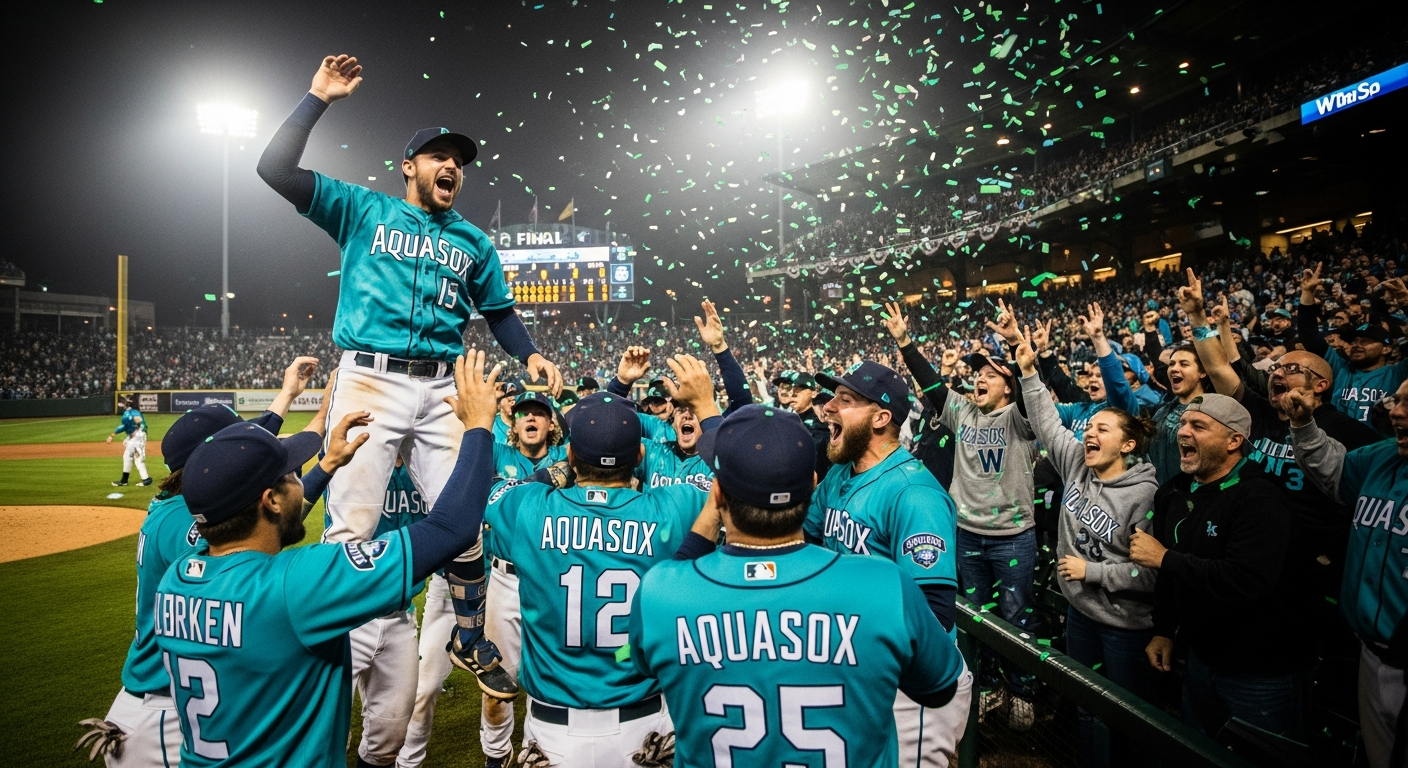
    What happened with the AquaSox Thursday night? Everett beat the Spokane Indians 11-3 at Funko Field on April 23, 2026, with Carlos Jimenez driving in six runs. It was the AquaSox’s third straight win in their six-game homestand, and it set up a Friday night start that Everett fans have been waiting for all season — Mariners right-hander Bryce Miller on the mound on a rehab assignment.

    The Everett AquaSox are putting together the kind of week that changes how a season feels. Three straight wins. Back-to-back-to-back multi-homer nights. And a Mariners rehab start arriving Friday at Funko Field with the weekend still to go.

    Thursday at the ballpark belonged to Carlos Jimenez. The AquaSox first baseman drove in six runs in an 11-3 beatdown of the Spokane Indians, a Northwest League game that turned into a highlight reel after the middle innings. Everett is now 6-4 on the young season with the series win secured and two more games left on the homestand.

    The Jimenez night

    Jimenez has been the story of the AquaSox offense through the first two weeks of the season, but Thursday was something else. Six RBIs in a single game is the kind of line that gets a player Northwest League Player of the Week consideration, and Everett fans who were at Funko Field on a Thursday night in April got to watch it happen in person. The AquaSox scored multiple runs in multiple innings and never let Spokane back into it after the middle of the game.

    This now makes three straight AquaSox wins after Brandon Eike and Josh Caron powered Wednesday’s 7-5 comeback with home runs — Eike’s a 418-foot game-tying two-run shot in the second inning, Caron’s the go-ahead solo shot that put the Frogs up 5-4. Tuesday’s series opener went to Everett 5-2 behind a stellar Taylor Dollard outing. Three nights, three wins, and the offense finally showing up behind the pitching that has carried the start of the year.

    Spokane’s four-game slide

    The Indians have now dropped four straight coming into Everett. This is not the same Spokane team that dominated the AquaSox in the season opener — it is a team getting beat up in the middle innings, with Everett’s bats finally breaking out against a pitching staff that was supposed to be the Northwest League’s best at the top of the rotation.

    Bryce Miller arrives Friday

    Friday night at Funko Field is circled. Mariners right-hander Bryce Miller makes his first rehab appearance with Everett at 7:05 p.m. PT, the second stop of a rehab assignment that started last Saturday with Triple-A Tacoma. Miller threw 1.2 innings for the Rainiers, touched 98 mph on his fastball, and is expected to stretch to roughly 45 pitches or three innings Friday against Spokane.

    Miller is working back from an oblique injury suffered in Spring Training. If he looks healthy Friday, he is one start away from a Mariners activation. If he doesn’t, Everett becomes a longer stop. Either way, AquaSox fans get to see one of Seattle’s most important starting pitchers throw a real game on a Friday night in Everett — and the Funko Field Friday Fireworks show comes after, which makes Friday’s ticket the best value of the homestand by a wide margin.

    Prospect watch

    The young Mariners bats are finally showing signs of life alongside the veteran presence. Felnin Celesten remains the highest-ceiling prospect in the lineup. Josh Caron is making the most noise at the plate after Wednesday’s go-ahead shot. Eike’s opposite-field power looks real. And Jimenez, who entered the week on nobody’s top-prospect radar, is now the hottest bat in the Northwest League.

    What’s next

    The Spokane series wraps with games Friday (7:05 p.m.), Saturday (7:05 p.m.), and Sunday (1:05 p.m.) at Funko Field. Friday’s Bryce Miller rehab start is the marquee. Saturday brings another prime-time atmosphere. Sunday wraps the homestand before the AquaSox go back on the road.

    Tickets are available at aquasox.com, the Funko Field box office, or at the gate. The Friday fireworks night is already the hottest single-game ticket of April. If you have been waiting for the right night to bring the family to a High-A game in Everett, Friday at 7:05 against Spokane with a Mariners starter on the mound is it.

    Frequently Asked Questions

    What was the AquaSox score Thursday?

    Everett beat the Spokane Indians 11-3 on April 23, 2026 at Funko Field. Carlos Jimenez drove in six runs.

    When does Bryce Miller pitch for the AquaSox?

    Friday, April 24 at 7:05 p.m. PT at Funko Field against Spokane. He is expected to throw around 45 pitches or three innings.

    Why is Bryce Miller pitching for the AquaSox?

    He is on a Major League rehab assignment from the Seattle Mariners, recovering from an oblique injury. This is the second stop of his rehab after Triple-A Tacoma.

    Are AquaSox tickets still available for this homestand?

    Yes for Saturday and Sunday. Friday’s Bryce Miller start with Funko Field Fireworks is selling quickly — check aquasox.com for availability.

    Where is Funko Field?

    Funko Field at Everett Memorial Stadium is at 3802 Broadway in north Everett, about five minutes from downtown.

    What is the AquaSox record?

    Everett is 6-4 on the season after three straight wins over Spokane, and the team is now second in the Northwest League standings.

  • Silvertips Open Western Conference Final at Home Tonight: Anders Miller Is Chasing a WHL Playoff Record

    Silvertips Open Western Conference Final at Home Tonight: Anders Miller Is Chasing a WHL Playoff Record

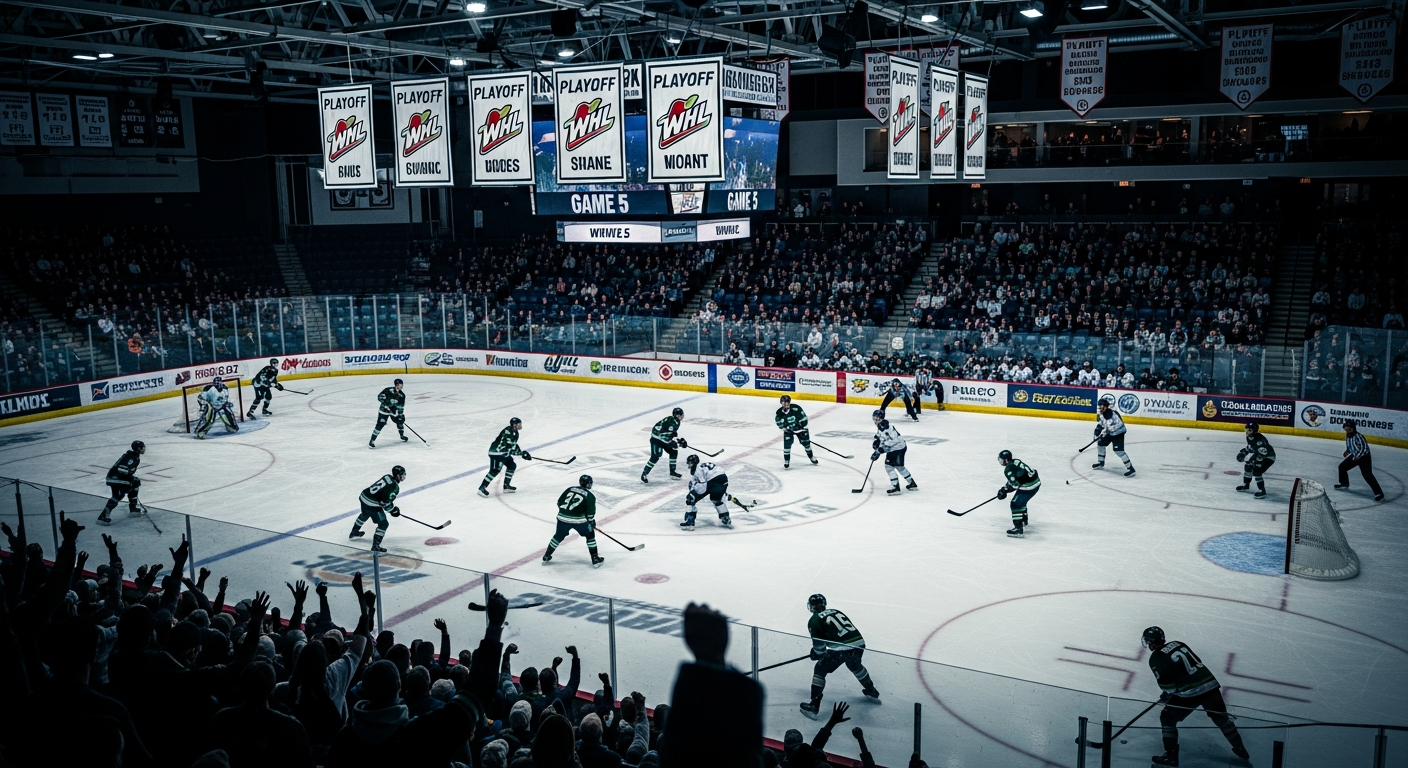
    When is Silvertips vs. Penticton Vees Game 1? Thursday, April 23, 2026 at 7:05 p.m. PT at Angel of the Winds Arena in downtown Everett. Game 2 goes Saturday, April 25 at 6:30 p.m. PT, also at home. It is the WHL Western Conference Final — one round from the Ed Chynoweth Cup.

    Tonight is the biggest game at Angel of the Winds Arena since the last time the Everett Silvertips played for a Western Conference title — and this is not the same roster that last got here. This roster is already carrying numbers the Western Hockey League has never seen.

    The Silvertips host the Penticton Vees at 7:05 p.m. PT in Game 1 of the WHL Western Conference Final. Game 2 follows Saturday night at 6:30 p.m. Both games are at Angel of the Winds Arena, and both are sellouts of the best kind — Everett fans have watched this team roll to a 7-0 playoff record and the best regular season in franchise history. Now they get to watch two home games against the team that earned the right to try to end the run.

    Anders Miller is writing a WHL record book

    The story tonight, for anyone watching closely, is Anders Miller in the Everett net. Miller has posted a .948 save percentage through two rounds of the playoffs. That is the highest mark by any WHL goaltender with nine or more playoff games in league history. He stopped 30 of 31 shots in the Game 5 overtime clincher against Kelowna. He made 37 saves the night before that. He does not look like a 19-year-old kid in a playoff run — he looks like the steadiest goalie in the WHL right now.

    If Miller keeps this up, Everett has a realistic shot at its third WHL championship. That is how much he has raised the team’s ceiling.

    DuPont, Bear, and an attack the Vees have not seen before

    Landon DuPont leads all WHL defensemen with 13 playoff points. His overtime winner 29 seconds into extra time in Game 5 against Kelowna is the kind of moment that gets replayed for a decade. Carter Bear has been just as important — his shorthanded goal broke open Game 5 in the third period, and he has been Everett’s most consistent two-way forward all spring. Matias Vanhanen, the Finnish import who was not supposed to be a top-line option this season, leads the team with 14 playoff points and has been the discovery of the playoffs.

    Everett has outscored opponents 40-9 across its seven playoff games. Nine goals against. Seven games. That is the math of a team that is not just winning, but suffocating.

    What the Vees bring

    Penticton is not a fluke. They finished second in the Western Conference and swept a competitive series to get here. Their lone NHL-drafted player, Kvasnicka, has 13 playoff points of his own. Regular season head-to-head, Everett took the series 3-1, but one of those Penticton wins was a 7-0 shutout of the Silvertips — proof that when the Vees get their game clicking, they can embarrass anyone. Penticton has publicly said they are “not intimidated” coming into the series. Good. Everett fans want the real thing.

    How to watch (and where to be)

    If you have tickets, doors at Angel of the Winds Arena open early and the building has been loud all playoffs — get there for warmups. If you don’t, the game airs on the WHL’s broadcast partners, and most Everett sports bars downtown and on Broadway will have it on. Saturday’s Game 2 is a better get-there-early window if tonight sells through.

    The full Western Conference Final schedule runs through early May if it goes seven games. Games 3 and 4 are in Penticton (April 28 and 29), and any Games 5, 6, or 7 return to Everett for the later dates.

    Why tonight matters beyond tonight

    This is the farthest Everett has been in the playoffs since 2018. The franchise has won two WHL titles — 2018 was the last run that carried this much weight — and the Ed Chynoweth Cup has not lived in Everett since 2018. Beat Penticton and Everett is four wins away from another one. Lose at home tonight and the road to the final gets a lot steeper.

    But with Miller playing the best hockey of his life, DuPont quarterbacking the back end, and Bear and Vanhanen driving the offense, there’s a real argument that this Silvertips team is the best Everett has iced in a decade. Tonight, we start to find out.

    Frequently Asked Questions

    What time is Silvertips vs. Penticton Vees Game 1?

    Puck drop is 7:05 p.m. PT on Thursday, April 23, 2026 at Angel of the Winds Arena in downtown Everett.

    When is Game 2?

    Game 2 is Saturday, April 25 at 6:30 p.m. PT, also at Angel of the Winds Arena.

    What is the Everett Silvertips’ playoff record so far?

    The Silvertips are 7-0 in the 2026 WHL Playoffs, having swept Seattle in Round 1 and beaten Kelowna 4-1 in Round 2. They have outscored opponents 40-9 across those seven games.

    Who is Anders Miller?

    Anders Miller is Everett’s starting goaltender. His .948 playoff save percentage through two rounds is the highest mark by any WHL goalie with nine or more playoff games in league history.

    Where is Angel of the Winds Arena?

    2000 Hewitt Ave. in downtown Everett, Washington — one block east of the future downtown stadium site.

    What happens if the Silvertips win the Western Conference Final?

    They advance to the WHL Championship — the Ed Chynoweth Cup Final — against the Eastern Conference champion. Everett’s last WHL title was 2018.

  • Month of the Military Child Turns 40: How Naval Station Everett Supports Navy Kids in 2026

    Month of the Military Child Turns 40: How Naval Station Everett Supports Navy Kids in 2026

    Q: What is Month of the Military Child, and how does Naval Station Everett mark it?
    A: Month of the Military Child is a national observance every April that recognizes the children of U.S. service members. Designated by Defense Secretary Caspar Weinberger in 1986, 2026 marks its 40th anniversary. At Naval Station Everett, the observance is anchored by the base’s Child and Youth Programs, the School Liaison Office, Fleet and Family Support Center, and community partners like the Lake Washington & Everett Council of the Navy League. Purple Up Day — when the Navy, Marine Corps, Army, Air Force, Coast Guard, and Space Force communities all wear purple to represent every service branch — fell on April 15 this year.

    Month of the Military Child Turns 40: How Naval Station Everett Supports Navy Kids in 2026

    April is Month of the Military Child, and in 2026 it is a milestone observance — 40 years since Defense Secretary Caspar Weinberger first designated April as a dedicated month to recognize the children of U.S. service members. For Naval Station Everett and the Navy families who live on base and throughout Snohomish County, that 40-year anniversary hits differently than a typical April.

    Navy kids move an average of six to nine times before they graduate from high school. They say goodbye to a parent for a deployment that often stretches past seven months. They change schools, lose friends, and start over — and then do it again. Month of the Military Child exists because somebody, four decades ago, recognized that the sacrifice inside a military household is not carried by the sailor alone.

    Here is what the observance looks like at the Naval Station Everett level in 2026, and where Navy kids and the parents who love them can plug into local support.

    Why April, and Why Purple

    The designation of April as Month of the Military Child goes back to 1986, when Caspar Weinberger — then Secretary of Defense under President Reagan — formalized the observance. The choice of the color purple came later and has stuck because purple combines the traditional colors of every military branch: Army green, Marine Corps red, Navy and Coast Guard blue, Air Force blue, and Space Force grey all blend into one. When everyone wears purple on Purple Up Day, it is a visual way of saying: the military child belongs to every service, not just one.

    Purple Up Day in 2026 landed on Wednesday, April 15. Schools across Snohomish County that serve military-connected students — the Mukilteo, Everett, and Marysville school districts in particular — mark the day with purple shirts, purple ribbons, and classroom activities that let military kids be seen for the specific thing they are.

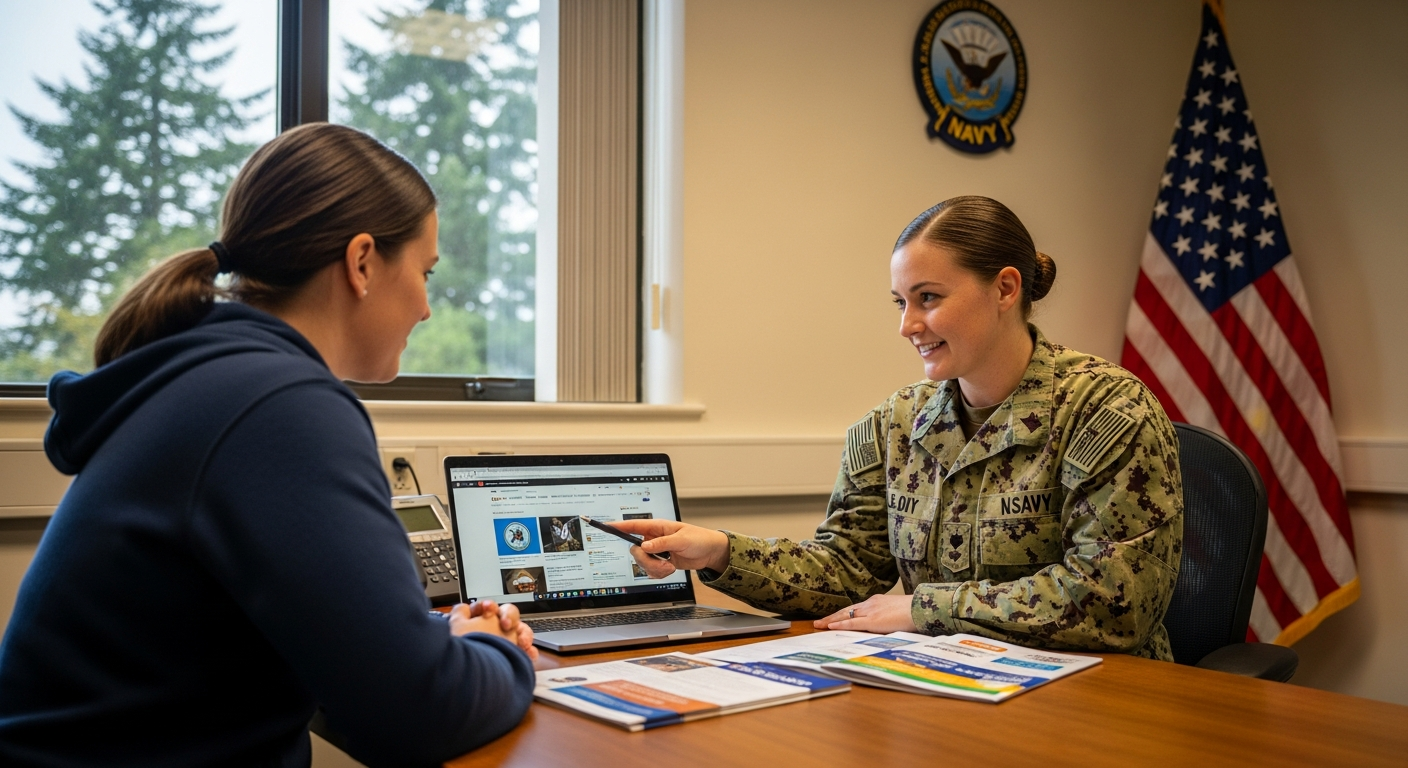
    Naval Station Everett Child and Youth Programs

    The hub of base-level support for Navy kids at NAVSTA Everett runs through the installation’s Child and Youth Programs office. Three pieces matter most to families:

    The Child Development Center

    The Everett Child Development Center provides center-based care for children ages six weeks through five years. The CDC is primarily structured around full-time care for working Navy families — a critical need when one parent is underway and the other is holding the line at home. Availability at CDCs across Navy Region Northwest has been tight for years, and Everett is no exception. Families relocating to the area are encouraged to put their names on the waitlist the moment they receive orders.

    Youth Programs

    For school-age kids, Youth Programs runs a monthly calendar that covers classes, 4-H, field trips, special events, sports clinics, and summer camp. During Month of the Military Child, youth programming typically leans into themes of resilience, connection, and celebration — giving Navy kids a space where everyone in the room understands what a duty station change or a deployment countdown actually feels like.

    The School Liaison Office

    Perhaps the most underused resource at NAVSTA Everett is the School Liaison Office. The School Liaison serves as the subject-matter expert on K-12 issues for the installation commander and, more importantly, for every Navy family that has to navigate a school transfer mid-year. The office helps with inbound and outbound school transfers, information on local school district boundaries, Individualized Education Program (IEP) continuity across state lines, and the Interstate Compact on Educational Opportunity for Military Children — the legal framework that protects military kids from losing credits or being forced to retake coursework when they move.

    The School Liaison office is open Monday through Friday, 8 a.m. to 4:30 p.m., by appointment. Families can follow @EverettFFR on Facebook and Instagram for updates.

    Fleet and Family Support Center: The Parent-Facing Half

    Month of the Military Child focuses on kids, but the reality is that military kids do well when the parent at home is supported too. The Fleet and Family Support Center (FFSC) at NAVSTA Everett carries that weight through programs that serve the whole household: Family Employment Readiness, deployment readiness, new-parent support, counseling, and relocation assistance.

    FFSC is reachable at 425-304-3735. For a spouse arriving in Everett for the first time with two kids in tow and a sailor about to go underway, that phone number is the single most useful thing in this article.

    The Community Side: Navy League, School Districts, and Local Partners

    Naval Station Everett is not an island. The Lake Washington and Everett Council of the Navy League of the United States is one of the most active community partners supporting sailors, Marines, Coast Guardsmen, merchant mariners, and their families across the region. The council’s advocacy and education work touches Month of the Military Child each year through ship sponsorships, school programs, and public events that connect the civilian side of Snohomish County to the Navy families who live here.

    Mukilteo School District, which serves the largest share of NAVSTA Everett’s school-age kids, is a Purple Star-designated district — a Washington State designation that recognizes schools going above and beyond to support military-connected students. Everett Public Schools and Marysville School District also serve significant populations of Navy families.

    What a Navy Kid Actually Deals With

    The statistics behind Month of the Military Child are worth sitting with. A military child’s school day is not the same as a civilian child’s. Deployments, duty-station moves, and the constant background hum of a parent’s underway schedule layer an extra weight on top of the normal stuff kids have to handle — friendships, grades, growing up.

    The upside is that Navy kids — military kids generally — grow up with a kind of resilience and worldliness that is hard to replicate. They know how to walk into a cafeteria full of strangers on day one. They know airports. They know how to make friends fast, because the alternative is to not have friends at all. But that resilience is not free; it is built on top of real loss, and it takes a village of programs, teachers, school liaisons, youth directors, and neighbors to make sure the weight does not become too much.

    Month of the Military Child, at its 40-year mark, is the moment each year when the country is invited to notice.

    How Everett Residents Can Show Up

    For civilian neighbors in Everett and broader Snohomish County who want to do something concrete this April, a few practical options:

    • Wear purple — even after Purple Up Day. Ribbons on mailboxes, purple porch lights, and purple-themed local business promotions are simple visible signals.
    • Support the Lake Washington and Everett Navy League Council — membership and volunteer work directly funds programs for military families.
    • Check in on a Navy family you know — especially one with a sailor currently underway. An offered meal, a ride for the kids, or a Saturday of childcare in April is worth more than a social media post.
    • Thank a teacher who serves military kids. School counselors, classroom teachers, and school liaison personnel carry a lot of this weight invisibly.

    The 40-Year Thread

    When Weinberger designated April as Month of the Military Child in 1986, the Cold War was not yet over, the Navy’s destroyer force looked nothing like it does today, and Naval Station Everett did not yet exist as a commissioned base. Forty years later, the fleet has changed, the missions have changed, and the ships homeported at Everett have rotated through generations of crews.

    What has not changed is the kid waiting at the pier with a hand-lettered sign. Or the teenager who transferred in mid-semester and has not figured out where to sit at lunch yet. Or the six-year-old drawing a picture of a destroyer to mail to a parent who is somewhere they cannot be named. Those are the kids this month belongs to.

    Forty years in, and the work is not finished.

    Frequently Asked Questions

    When is Purple Up Day in 2026?

    Purple Up Day for Month of the Military Child in 2026 was Wednesday, April 15. The designated day varies slightly year to year but consistently falls in mid-April.

    What is the School Liaison Office at Naval Station Everett, and how do I contact it?

    The School Liaison Office serves as NAVSTA Everett’s expert on K-12 school issues for military families. It helps with inbound and outbound school transfers, IEP continuity across state lines, and the Interstate Compact on Educational Opportunity for Military Children. The office is open Monday through Friday, 8 a.m. to 4:30 p.m., by appointment. Follow @EverettFFR on Facebook or Instagram for updates.

    How do I get on the Everett Child Development Center waitlist?

    Families should contact NAVSTA Everett Child and Youth Programs as soon as orders are received. The Child Development Center provides care for children six weeks through five years, and demand exceeds capacity across Navy Region Northwest, so early waitlist placement is important.

    What does the Fleet and Family Support Center do for military families in Everett?

    The FFSC at NAVSTA Everett runs programs covering spouse employment, deployment readiness, new-parent support, counseling, and relocation assistance. Contact: 425-304-3735.

    Why is the color purple used for Month of the Military Child?

    Purple combines the traditional branch colors — Army green, Marine Corps red, Navy and Coast Guard blue, Air Force blue, and Space Force grey — into one unified color that represents every service branch. It signals that military children belong to every branch of the armed forces, not just one.

    Which local school districts serve Naval Station Everett families?

    Mukilteo School District serves the largest share of NAVSTA Everett’s school-age children and is designated a Purple Star district by Washington State. Everett Public Schools and Marysville School District also serve significant populations of Navy families in Snohomish County.

    How can civilians in Everett support military children in April?

    Wear purple, support the Lake Washington and Everett Council of the Navy League, check in on neighboring Navy families (especially those with a sailor deployed), and thank teachers and school staff who support military-connected students.

    When was Month of the Military Child established?

    Defense Secretary Caspar Weinberger designated April as Month of the Military Child in 1986, making 2026 the 40th anniversary of the observance.

  • Boeing Is Hiring 100 to 140 New Factory Workers a Week in 2026 — Here’s What That Means for Everett

    Boeing Is Hiring 100 to 140 New Factory Workers a Week in 2026 — Here’s What That Means for Everett

    How fast is Boeing hiring right now? Boeing is pulling in 100 to 140 new factory employees per week across its production network in 2026, driven by a backlog of commercial and defense orders, a wave of experienced workers retiring, and the imminent activation of the 737 North Line in Everett. The company is also lifting apprenticeship intakes above prior caps to build a trained, unionized workforce for the 737 MAX line, the 777X, dedicated freighters, and growing space and defense orders.

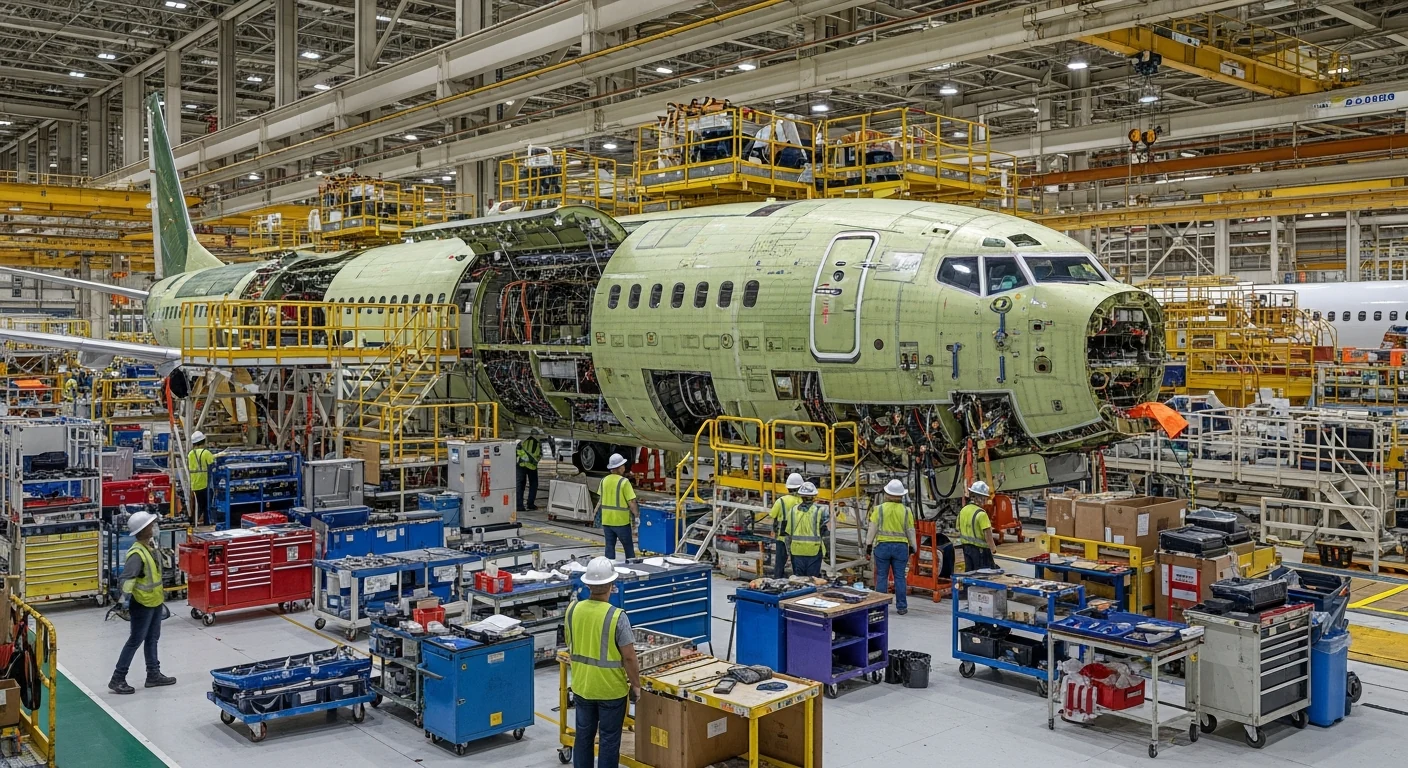
    If you’ve driven past the Boeing Everett factory parking lots at shift change lately, you may have noticed they’re filling back up. The eight-lane stretch of Airport Road that feeds the plant, the lots along Seaway Boulevard, the IAM 751 hall across the street — the density is back in a way it hasn’t been in a couple of years. That’s not a coincidence. Boeing is in the middle of one of the largest sustained hiring pushes in recent memory, and a meaningful share of it is happening right here.

    The pace is notable. Boeing is bringing in between 100 and 140 new factory employees every week across its production network, the company has said, and is lifting its apprenticeship intake above prior caps. That’s a hiring tempo designed to keep up with several things at once: a large commercial backlog that the company is racing to deliver, a wave of experienced workers heading into retirement, and the ramp-up of the 737 North Line in Everett, which needs a full workforce stood up before the first MAX rolls off its midsummer 2026 opening.

    The Hiring Pace in Context

    To put the numbers in perspective: at 100 to 140 new factory employees per week, Boeing is bringing on somewhere between 5,200 and 7,300 manufacturing workers a year just to hold its current trajectory. A lot of those hires go to the Renton 737 factory and the Charleston 787 facility, but Everett gets a meaningful share — particularly now, with the 737 North Line standing up, the 777X program heading toward certification, and the KC-46 tanker and 767 freighter programs both active.

    This is not the Boeing hiring environment of late 2024 and early 2025. During that period, the company was cutting roughly 10% of its workforce — about 17,000 jobs — and Everett absorbed a disproportionate share of the reductions. Two notices issued in January and February 2025 put more than 1,400 Everett-area workers on the layoff list between them. The cuts were felt across engineering and manufacturing, and they reshaped which teams had capacity for which programs.

    The current hiring wave is partly a correction to that retrenchment, partly a response to a commercial backlog that didn’t disappear during the difficult years, and partly a structural answer to a workforce that is genuinely getting older. Boeing, like most large legacy manufacturers, is seeing experienced employees reach retirement age in numbers. The apprenticeship expansion is the company’s response to that demographic reality: you can’t fill a retiring senior mechanic’s seat with a brand-new assembler, but you can build the pipeline now for the mechanics who will fill those seats three to five years from today.

    Why the 737 North Line Is Driving So Much of It

    The most visible demand signal for new workers in Everett is the 737 North Line, the new 737 MAX assembly line standing up in a reconfigured portion of the Everett factory with a midsummer 2026 opening target. Before the North Line can produce finished airplanes, it needs a complete workforce: assemblers, mechanics, sealers, flightline technicians, inspection personnel, and the support staff around all of them.

    Boeing has said the North Line team will be a mix of newly hired employees and existing teammates transferring from Renton, Everett, and Moses Lake. The “newly hired” portion of that mix is where a lot of the current Everett hiring pressure is coming from. Every week, new assemblers onboard for training programs designed to get them onto the production floor at a safe, reliable pace. The IAM 751 Machinists Institute across the street, which opened at 8729 Airport Road, is training a meaningful share of them.

    The reason the North Line matters beyond its own hiring number is capacity. Once integrated into the overall 737 MAX production flow, the Everett line will give Boeing the ability to produce above 47 airplanes per month — the cap the company has worked within under the current FAA production limit. Lifting that ceiling is the core commercial upside the North Line delivers, and it depends entirely on having a workforce in place that can hit the quality and cadence targets without incident.

    The Retirement Wave

    The less-discussed half of the hiring story is the retirement wave. Boeing’s Everett workforce, like the broader Puget Sound aerospace community, includes a significant cohort of workers who started in the 1980s and 1990s and are reaching retirement eligibility now. The company has to replace their roles — not one-for-one, but with enough trained replacement that the institutional knowledge doesn’t walk out the door all at once.

    That’s the apprenticeship story. Boeing has lifted intake caps above prior levels, expanded formal training partnerships, and leaned into the Machinists Institute as a workforce pipeline. The economic logic is straightforward. Hiring a new factory worker without a training pipeline produces an employee who may need years to reach the productivity of the retiring mechanic they’re replacing. Hiring into an apprenticeship program that the union, the company, and the community built together produces a worker on a shorter path to full productivity, with a credential and a career ladder that the old hiring model didn’t offer.

    For Everett specifically, the Machinists Institute’s placement pipeline has mattered. It’s across the street from the factory. Its graduates tend to live in Everett, Mukilteo, Lynnwood, Marysville, and the rest of Snohomish County. The training is built around IAM 751’s knowledge of what the factory actually needs. When the North Line’s first wave of assemblers walks onto the floor this summer, a meaningful portion of them will have come through that program.

    What the Hiring Surge Means for the Community

    A couple of things flow downstream from this pace of hiring. The first is straightforward: more paychecks circulating through Snohomish County. Boeing assembly and technician roles are family-wage jobs with benefits, and the economic multiplier of adding 100-plus manufacturing workers a week across the production network — with Everett taking a visible share — shows up in local businesses, housing absorption, school enrollment, and the everyday economy of the city.

    The second is execution risk. Hiring at this pace, especially into a production line that hasn’t opened yet, tests a company’s ability to train, supervise, and integrate new workers without slipping on quality. This is the exact point that aviation analysts have been watching since the hiring acceleration began. A 737 MAX line that ramps too fast with too many new hires is a line that introduces defects, creates rework, and potentially draws additional FAA scrutiny. A 737 MAX line that ramps slowly and carefully is a line that doesn’t deliver the capacity Boeing needs to keep pace with Airbus’s A320neo family production.

    Boeing knows the trade-off. That’s why the company is leaning on the apprenticeship pipeline instead of pure open-market hiring, why experienced teammates are transferring in from Renton and Moses Lake, and why the midsummer 2026 opening has been described publicly as “low-rate initial production” rather than immediate high-cadence output. The goal is to get the line standing up correctly before pushing it for rate.

    What Job-Seekers in Everett Should Know

    For Snohomish County residents considering a Boeing career, the current environment is as open as it’s been in a while. Boeing’s job site (jobs.boeing.com) lists hundreds of Everett-area positions at any given time, and the company is actively recruiting across assembly, mechanical, electrical, sealing, flightline, inspection, and support functions. The Machinists Institute at 8729 Airport Road offers training pathways specifically designed to place graduates into IAM 751-represented roles, which come with union wages, benefits, and the protections of the collective bargaining agreement.

    Boeing’s SPEEA-represented engineering and technical roles — a different pipeline, covered by a different union — are also actively hiring. The SPEEA contract expires October 6, 2026, which means the coming months will include the kind of visible contract negotiation that shapes hiring conversations and compensation expectations for those roles.

    For a city whose economy has always moved with Boeing’s rhythm, the current hiring wave is one of the more consequential workforce stories of the decade. It’s also a reminder of why Everett is Everett. More than 40,000 people across the region work either directly for Boeing or for the supply-chain companies that feed the factory. When the hiring accelerates, the whole city feels it.

    Frequently Asked Questions

    How many people is Boeing hiring right now?

    Boeing is bringing in between 100 and 140 new factory employees per week across its production network in 2026, with a significant portion going to Everett as the 737 North Line ramps up.

    What jobs is Boeing hiring for in Everett?

    Boeing is actively recruiting in Everett for assemblers, mechanics, sealers, flightline technicians, inspectors, and technical support roles on the 737 North Line, 777X, KC-46 tanker, and 767 freighter programs. Engineering and technical roles represented by SPEEA are also hiring across multiple programs.

    Where do I apply for a Boeing job in Everett?

    Boeing job postings are listed at jobs.boeing.com. Filter by Everett, Washington for positions at the factory. For unionized assembly roles, the IAM 751 Machinists Institute at 8729 Airport Road operates training pathways designed to place graduates into IAM-represented positions.

    What is the Machinists Institute?

    The Machinists Institute is an IAM 751-run training facility located at 8729 Airport Road in Everett, across the street from the Boeing factory. It provides skilled trades training that supports placement into Boeing’s unionized manufacturing workforce.

    Why is Boeing hiring so fast?

    The hiring surge is driven by a combination of factors: a large commercial and defense order backlog, the imminent opening of the 737 North Line in Everett, the need to replace experienced workers who are retiring, and the company’s recovery from the layoffs of late 2024 and early 2025.

    Does Boeing offer apprenticeships?

    Yes. Boeing has lifted apprenticeship intake above prior caps as part of its broader workforce-pipeline strategy. Apprenticeships combine paid on-the-job training with classroom instruction and provide a credentialed pathway into full-time Boeing roles.

    How does the 737 North Line affect Everett hiring?

    The 737 North Line is driving a significant portion of current Everett hiring. Before the line can produce finished 737 MAX aircraft, Boeing needs a complete workforce in place — assemblers, mechanics, inspection personnel, and support staff — and many of those roles are being filled now ahead of the line’s midsummer 2026 opening.

  • Boeing 777X Clears FAA Phase 4A: What Everett’s Biggest Certification Milestone in Years Actually Means

    Boeing 777X Clears FAA Phase 4A: What Everett’s Biggest Certification Milestone in Years Actually Means

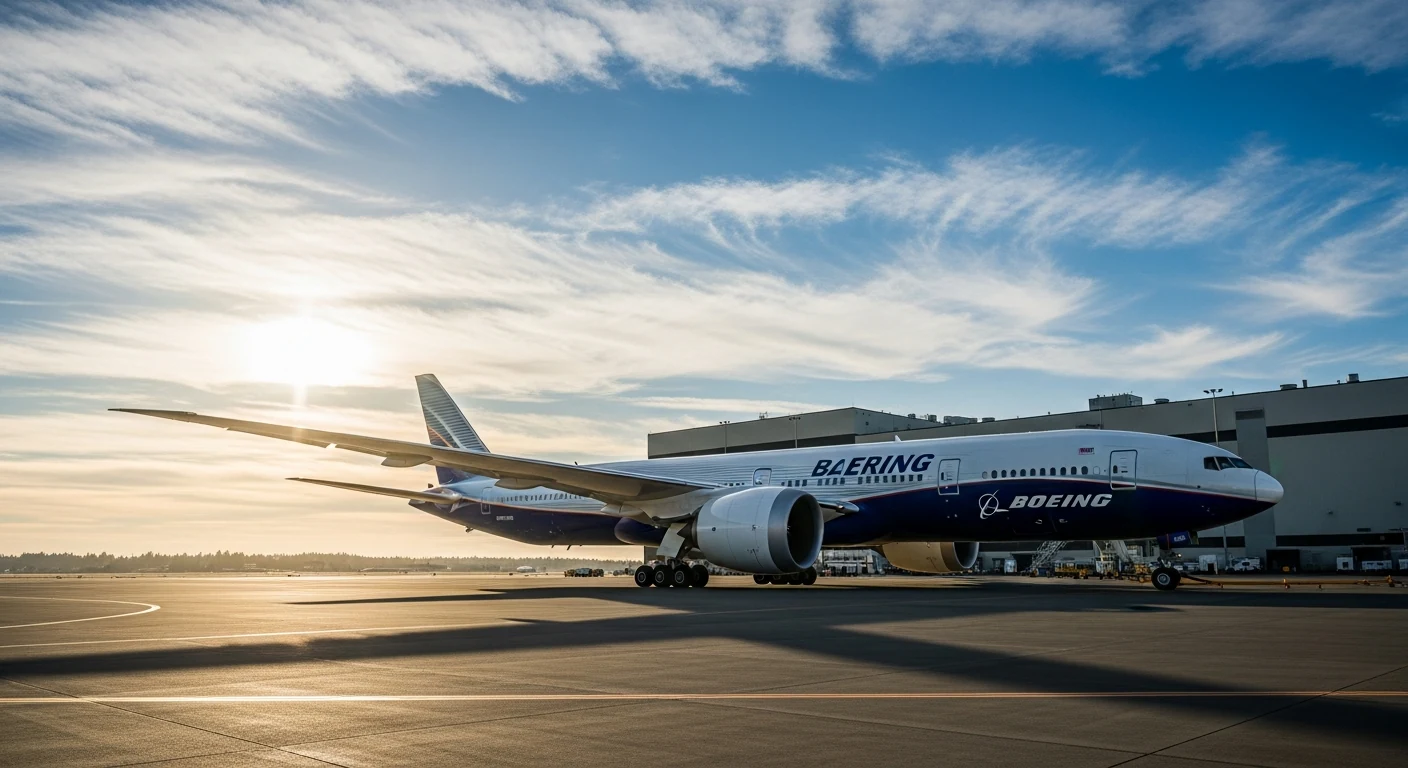
    What did the FAA just approve for the Boeing 777X? On March 17, 2026, the Federal Aviation Administration cleared the Boeing 777-9 to enter Phase 4A of Type Inspection Authorization testing, one of the last regulatory gates before the aircraft can be certified for commercial service. The decision lets FAA pilots participate directly in flight testing and puts the Everett-built widebody on track for certification later in 2026 and first delivery to Lufthansa in 2027.

    If you drive past the Boeing Everett factory on a weekday morning, you probably don’t notice the 777-9 test aircraft parked at Paine Field. It’s one of thousands of planes that have sat on that ramp since 1967. But one of those airframes — tail ending in a Lufthansa livery — just became the most important plane in North American commercial aviation for the next six months. And the reason is a regulatory milestone most Everett residents didn’t hear about.

    On March 17, 2026, the Federal Aviation Administration granted Boeing authorization to enter Phase 4A of the 777-9’s Type Inspection Authorization (TIA) process. It’s the most significant 777X certification milestone in years, and it’s the clearest signal yet that the program — roughly six years behind schedule and carrying more than $15 billion in accumulated development charges — is finally converging on entry into service.

    Here’s what that actually means for the factory across the street from our city, the workers who build these airplanes, and Everett’s broader aerospace economy.

    What Phase 4A Actually Is

    Type Inspection Authorization is the FAA’s formal permission for Boeing to begin the flight-testing phase that regulators themselves will sit in the cockpit for. Up until Phase 4A, the 777X flight test campaign has been conducted primarily by Boeing test pilots, with the agency observing from the ground and reviewing data afterward. Phase 4A is the point at which FAA pilots join the cockpit and participate in certification flights directly.

    This matters for two reasons.

    First, it’s a trust milestone. The FAA doesn’t grant TIA Phase 4A clearance unless it has confidence that the aircraft is stable enough in its current configuration to proceed into the most scrutinized phase of the certification process. For a program that has absorbed years of public skepticism — including questions about the GE9X engine, the folding wingtip system, and the broader post-MAX regulatory environment — the clearance is a meaningful public vote of confidence from the agency.

    Second, it’s the gate that opens the next gate. If Phase 4A flight testing goes well, Boeing expects the FAA to grant Type Inspection Authorization for the production-configured aircraft in the second half of 2026. That’s the permission needed to run the final certification flights on a delivery-configured jet. Those final flights are what lead to a Type Certificate, which is the document that makes commercial service legally possible.

    The Lufthansa Airframe at Paine Field

    The 777-9 that sits at the center of this milestone is destined for launch customer Lufthansa, the German flag carrier that was first to place a firm order for the widebody back in 2013. Industry observers at Paine Field have spotted the aircraft at the Boeing fuel docks undergoing systems checks in recent weeks, with engine testing of its two GE9X powerplants — the largest commercial aircraft engines ever built — expected to proceed ahead of the first production flight.

    Boeing has set a target of April 2026 for that first production-configured flight. If the aircraft lifts off on schedule from Paine Field, it will be the first 777-9 built to the exact configuration that paying customers will eventually receive. That’s different from the earlier flight test fleet, which has been flying since 2020 in development configurations not representative of the production standard.

    For Everett, the moment is more than symbolic. Paine Field is where every 777X in the program — test fleet, production aircraft, and eventually delivery flights to Lufthansa, Emirates, Qatar Airways, Cathay Pacific, and others — will depart from. The runway beyond the Future of Flight Aviation Center is the only place in the world that a 777-9 can take off from, because the only place in the world that a 777-9 is assembled is the Boeing Everett factory at 3003 West Casino Road.

    Why This Matters for Everett’s Aerospace Economy

    The 777X program is one of the three production lines that define the Boeing Everett factory’s future. Alongside the 767 (which is winding down its commercial freighter variant by 2027) and the KC-46 tanker (which continues delivering to the Air Force), the 777X is the widebody program that carries the factory’s long-term commercial workload.

    Every month of delay in the 777X program has had a real effect on Everett. It’s kept hundreds of aircraft in storage on the factory ramp — jets that were built, then held as the program worked through engineering changes and regulatory scrutiny. It’s delayed the moment when Boeing can deliver those aircraft and recognize the revenue, which in turn affects the financial pace at which the company can invest in the Everett site.

    It has also weighed on workers. Machinists, engineers, and technical staff assigned to 777X production have built jets that couldn’t be delivered, watched airframes get modified in response to design changes, and worked through years of uncertainty about when the program would actually reach certification. The Phase 4A clearance doesn’t erase any of that, but it changes the outlook. The runway is shorter now. Certification is no longer an abstract future — it’s a set of specific test flights that begin from Paine Field in the coming weeks.

    What Happens Next

    The near-term path is straightforward on paper and complex in practice. Boeing needs to fly the production-configured 777-9 from Paine Field. FAA pilots need to conduct the Phase 4A test points. The data needs to be reviewed and accepted. Then Boeing needs to obtain the second TIA — the one for the production configuration — which is currently expected in the second half of 2026.

    If that all lands, Type Certificate issuance becomes realistic in late 2026 or early 2027. First delivery to Lufthansa is currently targeted for 2027, subject to airline readiness and the pace of the final regulatory steps. From there, the rest of the 777X backlog — more than 500 firm orders across Emirates, Qatar, Cathay, Singapore Airlines, British Airways, and other carriers — begins to work its way through the Everett final assembly line over the balance of the decade.

    There’s a reasonable amount of distance between a Phase 4A clearance in March 2026 and revenue service in 2027. Schedules in this program have slipped before. But the clearance is a real and specific regulatory milestone. It is not a press release. It is not a projection. It is a decision the FAA actually made.

    What Everett Residents Should Watch For

    The visible signals over the next several weeks will include more 777-9 activity at Paine Field: engine runs on the fuel docks, taxi tests on the ramp, and ultimately the first flight of the Lufthansa-destined airframe. Aviation enthusiasts who follow Paine Field flight activity will see the tail numbers cycling through the test pattern. Local residents near the airport will continue to hear GE9X engine runs, which are distinctive — the engines are 134 inches in fan diameter, larger than the fuselage of a regional jet.

    For the broader community, the Phase 4A milestone is a reminder that Everett remains the only city in the world where the 777X exists. Every certification flight that happens over the next six months happens from the runway here. Every production-configured aircraft that eventually makes its way into airline service was built, flown, and delivered from a facility whose workers live in Everett, Mukilteo, Lynnwood, Marysville, and the rest of Snohomish County.

    The factory has had a difficult few years. Boeing’s turbulence since 2024 — the Alaska Airlines door plug incident, the Machinists strike, the broader leadership and safety conversations — has been felt heavily in Everett. The Phase 4A clearance doesn’t resolve any of that. But it does move one of the factory’s most important programs visibly forward, and for the workers who build it and the community that houses them, visible forward motion is worth something.

    Frequently Asked Questions

    When did the FAA approve Phase 4A for the Boeing 777X?

    The FAA granted Boeing authorization to enter Phase 4A of the 777-9’s Type Inspection Authorization process on March 17, 2026.

    What does Phase 4A allow Boeing to do?

    Phase 4A allows FAA pilots to participate directly in flight testing of the 777-9, which is a required step before the aircraft can be granted final Type Inspection Authorization for a production-configured airframe and ultimately certified for commercial service.

    Where is the 777X being tested?

    The 777X is assembled at the Boeing Everett factory and test-flown from Paine Field in Everett, Washington. The Lufthansa-destined production aircraft is currently completing systems checks at Paine Field ahead of its first flight.

    When will the first 777X be delivered?

    Boeing is targeting 2027 for first delivery to launch customer Lufthansa, subject to successful completion of Phase 4A testing, subsequent FAA approvals, and airline readiness.

    Why has the 777X program taken so long?

    The 777X program is approximately six years behind its original schedule and has accumulated more than $15 billion in development charges. The delays are tied to a combination of engineering challenges, the GE9X engine development timeline, broader post-737 MAX regulatory scrutiny, and pandemic-era disruption to the certification process.

    How many 777X orders does Boeing have?

    Boeing has more than 500 firm orders for the 777X across launch customer Lufthansa plus Emirates, Qatar Airways, Cathay Pacific, Singapore Airlines, British Airways, and other major international carriers.

    What does the 777X mean for Everett’s economy?

    The 777X is one of three Boeing programs assembled in Everett, alongside the 767 and KC-46 tanker. The factory’s long-term widebody commercial workload depends on the 777X reaching certification, delivery cadence, and steady production, all of which directly support thousands of Boeing manufacturing and engineering jobs in Snohomish County.

    Deeper Coverage in the Exploring Everett Series

    For a more comprehensive treatment of the issues raised in this article, see:

  • The Beverly Food Truck Park Is Quietly the Best Weeknight Dinner Play in Central Everett

    The Beverly Food Truck Park Is Quietly the Best Weeknight Dinner Play in Central Everett

    Q: What is the Beverly Food Truck Park in Everett?
    A: Beverly Food Truck Park is a rotating food truck lot at 6731 Beverly Boulevard, across from Fire Station 5 in central Everett, open Monday through Saturday from 4 p.m. to 7 p.m. Two to four trucks rotate nightly — current regulars include Mexicuban (Mexican-Cuban fusion), Tabassum (Central Asian street food), and Zaytoona (Mediterranean). Rated 4.8 stars. Cash-friendly, casual, kid-friendly.

    The Beverly Food Truck Park Is Quietly the Best Weeknight Dinner Play in Central Everett

    Here is an Everett food fact that is not nearly well-known enough outside the immediate neighborhood: there is a permanent food truck lot at 6731 Beverly Boulevard, it runs Monday through Saturday from 4 p.m. to 7 p.m., and on any given weeknight it is serving some of the most interesting food in the city — at food-truck prices, from a rotating lineup of two to four trucks, in a gravel lot across from Fire Station 5.

    This is the Beverly Food Truck Park. Locals have been on it since it opened. If you have not been, this is your reminder that it exists and that weeknight dinner in Everett does not have to mean the same three delivery options.

    Where it is and how it works

    The address is 6731 Beverly Boulevard, Everett, WA 98203. The lot is central Everett — not the waterfront, not Casino Road, not downtown — in the stretch of Beverly that runs through residential neighborhoods near Forest Park. What used to be an unused city lot across from Fire Station 5 got converted into a proper food truck park with room for multiple rigs, some picnic tables, and enough parking that you will not circle the block.

    Operating hours are Monday through Saturday, 4 p.m. to 7 p.m. Closed Sundays. The truck lineup rotates day by day, which is the both-feet-of-the-model: you are not getting the same two trucks every Tuesday. If you want to know who is parked tonight, StreetFoodFinder tracks the park’s schedule.

    Two to four trucks rotate through the lot on any given night. The rotation leans toward independent, owner-operated trucks, and it has attracted a lineup that is arguably more diverse than any sit-down restaurant row in the city.

    Who is actually cooking at Beverly

    The trucks on rotation change, but these are three of the regulars worth learning by name:

    Mexicuban

    Mexican and Cuban fusion — the only truck in the Puget Sound region running that specific lane. If you have never had a Cubano made by people who also make al pastor, this is the entry point. The medianoche sandwich is a standing order. Prices run the usual food-truck range: sandwich and a side under $15.

    Tabassum

    This is the find. Tabassum brings authentic Central Asian street food to the Pacific Northwest — the only truck doing it, per their own billing, and the track record at Beverly backs that up. The specialty is samsa, a flaky hand pie with seasoned meat filling, baked, not fried. Central Asian comfort food that Everett does not otherwise have a source for.

    Zaytoona

    Mediterranean — operating since 2015, one of the longer-running trucks in the Puget Sound rotation. Lamb and beef gyro salad, Arabic shawarma sandwich, falafel done well. This is the truck to hit if someone in your group is gluten-free or vegetarian and needs options that are not afterthoughts.

    Why Beverly works where other food truck spots do not

    Everett’s food truck scene exists in pieces. Friday lunches at the Port of Everett. Occasional meetups at Boxcar Park. Brewery takeovers at Scuttlebutt and At Large. Each of those is good. None of them are a reliable weeknight-dinner answer, because they are intermittent — one-off events or limited lunch windows.

    Beverly is the permanent piece. Six nights a week. Same location. Rotating lineup. The schedule is consistent enough that you can tell out-of-towners “meet me at the food truck park at 5:30” and know it will be there. That is rare in a food truck economy built on pop-ups and event rotations.

    The second thing Beverly does right: it sits in a residential pocket. Neighbors walk over. Kids come. Fire Station 5’s crew walks across the street when they are between calls. The park has the feel of a neighborhood dinner that happens to involve four kitchens on wheels, not a food truck festival. That is the difference between a spot that lasts and a spot that fades after a summer.

    What to expect on your first visit

    • Parking is easy — the lot holds customer cars and the trucks. No struggle.
    • Seating is picnic tables. Bring a jacket; central Everett evenings are cool even in summer.
    • Payment varies by truck. Most take cards. Bring a little cash as a backup.
    • Dietary options depend on who is parked. Zaytoona is the reliable vegetarian and gluten-free bet. Mexicuban and Tabassum both have options but fewer.
    • Kid-friendly yes. Bring them. It is an outdoor eat-with-your-hands situation, which is the best kind with kids.
    • Dog-friendly leashed dogs are the standard at outdoor food truck spots. Check with the individual truck if unsure.

    The Beverly move, scheduled

    If you are trying to actually incorporate Beverly into your week, here is the play:

    Monday or Tuesday: Low-key dinner after the gym. The 4 p.m. open means you can eat early and be home before 6. No wait.

    Wednesday or Thursday: Bring a friend who has never been. Split two trucks so you get to try both.

    Friday: Hit Beverly at 4:30 before the sun drops. Grab dinner. Then go to a brewery for a post-dinner beer at Scuttlebutt or At Large. This is the best compact weeknight routine in central Everett.

    Saturday: Late afternoon is the social window. More foot traffic, more energy, and the 7 p.m. close means you are not stuck in a dinner situation that runs into your evening.

    What Beverly is not

    It is not a sit-down restaurant. It is not open past 7 p.m. It is not open Sundays. If you want table service, a server, or a dinner that runs two hours, go somewhere else. If you want some of the most interesting, cheapest, most diverse food in Everett on a Tuesday night, in a gravel lot with picnic tables, this is the spot.

    The verdict

    The Beverly Food Truck Park is the kind of neighborhood amenity that makes central Everett feel like a place that takes care of its weeknights. Three hours a night, six nights a week, two to four independent trucks, the only Mexican-Cuban truck in the region, the only Central Asian street food truck in the region, the most reliable gyro in south-central Everett — all at one address. Go tonight if it is before 7 p.m. Go this week if it is not. The 4.8-star rating is not by accident.

    Frequently Asked Questions

    Where is the Beverly Food Truck Park?

    6731 Beverly Boulevard, Everett, WA 98203, across from Fire Station 5 in central Everett.

    What are the hours?

    Monday through Saturday, 4 p.m. to 7 p.m. Closed Sundays.

    How many trucks are usually there?

    Two to four trucks rotate through the park nightly. The lineup changes day by day.

    Which trucks are regulars?

    Mexicuban (Mexican-Cuban fusion), Tabassum (Central Asian street food, specializing in samsa), and Zaytoona (Mediterranean — lamb and beef gyro salad, shawarma, falafel) are three of the most consistent regulars.

    Is there parking and seating?

    Yes. The lot has customer parking alongside the trucks, and picnic tables for outdoor seating.

    Is it kid-friendly?

    Yes. Outdoor seating, casual atmosphere, and enough truck variety that picky eaters have options.

    How do I know which trucks are there tonight?

    Check StreetFoodFinder’s Beverly Park page or the park’s social media for the nightly lineup.

    Is there Wi-Fi or indoor seating?

    No. Beverly is outdoor only. Bring a jacket; central Everett evenings run cool.

    Does Beverly do private events?

    The park is a public food truck lot. For private events or truck bookings, contact the trucks directly through their own channels.