Author: will_tygart

  • Radon in Rental Properties: Landlord Obligations and Tenant Rights

    Renters face a distinctive challenge with radon: they live in the property, they breathe the air, and they bear the health consequences — but they typically cannot install a mitigation system, modify the foundation, or drill through the slab without the property owner’s authorization. The tenant’s primary tool is disclosure, advocacy, and — in states with specific protections — legal recourse. Landlords who understand their obligations avoid liability; tenants who understand their rights avoid years of unknown elevated exposure.

    The Landlord’s Obligation Framework

    Radon obligations for landlords operate at three levels: federal, state, and the implied warranty of habitability in common law. None of these is perfectly clear or uniformly applied, which is why radon in rental properties remains a complex area of law and public health practice.

    Federal Level: HUD and Federally Assisted Housing

    The clearest federal radon obligations apply to housing receiving federal financial assistance. The Department of Housing and Urban Development (HUD) has established radon requirements for federally assisted multifamily housing that include:

    • Testing for radon in properties located in EPA Zone 1 counties that receive certain HUD assistance (including Section 8 project-based assistance, FHA multifamily loans, and HOME program funding)
    • Mitigation requirements when radon is found above the EPA action level of 4.0 pCi/L
    • Disclosure to tenants of radon test results and mitigation actions
    • New HUD-assisted construction in Zone 1 must incorporate RRNC features

    Tenants in HUD-assisted housing have specific rights to radon information and can contact HUD’s Office of Lead Hazard Control and Healthy Homes (OLHCHH) if their property management is not complying with radon requirements. HUD’s contact for radon inquiries is available at hud.gov/program_offices/healthy_homes/healthyhomes/radon.

    State Level: Specific Radon Landlord Laws

    A smaller number of states have enacted specific radon disclosure or testing requirements for rental properties. These vary significantly:

    • Illinois: Illinois’s comprehensive radon program includes provisions addressing radon disclosure in certain residential rental situations. Landlords may be required to disclose known radon test results to tenants.
    • New Jersey: New Jersey’s radon disclosure requirements include some rental contexts, particularly in multi-family buildings. The specific applicability depends on the building type and the nature of the tenancy.
    • Maine: Maine’s radon disclosure requirements extend to certain rental contexts. The Maine CDC Radon Program provides guidance on landlord obligations.
    • Other states: Requirements are evolving — check your state health department’s radon program for current landlord-specific requirements.

    For current state-specific landlord radon obligations, the most reliable source is your state’s radon program (typically administered by the state health or environment department). State requirements change — information from more than two years ago may be outdated.

    The Implied Warranty of Habitability

    In most U.S. states, the implied warranty of habitability requires landlords to maintain rental property in a condition fit for human habitation. The specific conditions that trigger this warranty vary by state, but generally include: safe structural conditions, working utilities, freedom from health hazards, and compliance with building codes and housing standards.

    Whether elevated radon constitutes a habitability defect depends on state law and, in the absence of clear statute, on how courts in that state have interpreted the habitability warranty. In states without specific radon statutes, tenants have in some cases successfully argued that elevated radon — particularly at very high levels — constitutes a habitability defect. However, this is not a well-established precedent across all states, and the outcome of any specific habitability claim is unpredictable without specific legal advice.

    The key factor in habitability claims is usually notice: a landlord who has been formally notified in writing of elevated radon and has refused to investigate or remediate is in a far more vulnerable legal position than one who simply never tested. This is why the written notice process described below is important for tenants.

    What Tenants Can Do: A Step-by-Step Approach

    Step 1: Test Your Unit

    Tenants can conduct their own radon tests using standard DIY charcoal canister kits ($15–$30 from hardware stores or online certified labs). Place the device in the lowest level of your unit where you spend time — typically the main living floor — following EPA placement protocol (20 inches above floor, 12 inches from walls, away from drafts). Run the 48-hour test under as-close-to-closed-house conditions as is practical in an occupied rental.

    Note: some leases restrict alterations — a canister placed on a shelf is not an alteration. A continuous electronic monitor plugged into an outlet may be arguable depending on lease terms. Check your lease language before conducting any testing.

    Step 2: Document the Results

    Keep the lab report from any radon test. Document the date the test was conducted, where in the unit it was placed, and any relevant conditions (floors below tested, windows open/closed, etc.). For elevated results, consider having a certified professional retest to produce results with unambiguous chain-of-custody documentation — particularly if you anticipate needing to use the results in a legal or regulatory context.

    Step 3: Notify the Landlord in Writing

    Send written notice to your landlord — certified mail with return receipt requested, or email with read receipt — providing the radon test results and requesting that the landlord investigate and remediate elevated radon. Include:

    • The test result (pCi/L) and the date the test was conducted
    • The lab report as an attachment
    • A request that the landlord arrange for professional testing and — if confirmed elevated — installation of a mitigation system
    • Reference to any applicable state radon statute or the implied warranty of habitability
    • A reasonable response deadline (typically 30 days)

    The written notice creates a record that the landlord was informed. A landlord who ignores written notice of elevated radon and takes no action is building a record of indifference to tenant health that strengthens any subsequent legal claim.

    Step 4: Escalate if Necessary

    If the landlord does not respond or refuses to act within the specified timeframe:

    • Contact your state radon program: State programs can sometimes provide guidance to landlords on their obligations, and in states with specific requirements, may have enforcement authority.
    • Contact local housing authorities: In municipalities with active housing inspection programs, housing inspectors may have the authority to cite radon as a housing code violation in some jurisdictions.
    • Consult a tenant’s rights organization or attorney: A brief consultation clarifies what legal remedies are available in your state. Remedies may include rent withholding, repair-and-deduct, lease termination for habitability failure, or civil action for damages — depending heavily on state law.
    • Contact HUD if applicable: For federally assisted housing, HUD has complaint mechanisms that can compel compliance with radon requirements.

    Interim Protective Measures While Advocating

    While pursuing landlord cooperation, tenants can take some steps to reduce exposure — though none substitute for professional mitigation:

    • Increase ventilation: Opening windows when weather permits dilutes indoor radon. This is not a long-term solution but reduces concentration during the period before mitigation is arranged.
    • Spend less time on the lowest floor: If elevated radon is in the basement and you have upper-floor sleeping options, reduce time at the lowest level while working toward mitigation.
    • HEPA air purifier with activated carbon: Reduces the fraction of unattached radon decay products (which are more carcinogenic per unit of radon than attached decay products) without reducing the radon gas concentration itself. A modest supplemental measure, not a solution.
    • Avoid smoking indoors: The multiplicative radon-tobacco interaction means that eliminating smoking indoors in a high-radon unit reduces the combined lung cancer risk substantially, even without radon mitigation.

    Frequently Asked Questions

    Is my landlord required to fix a radon problem?

    It depends on your state. In states with specific radon landlord statutes, yes — within the scope of those statutes. In states without specific radon laws, the implied warranty of habitability may apply if radon levels are sufficiently elevated, but this requires legal action to enforce and the outcome varies by jurisdiction and fact. For HUD-assisted housing in Zone 1 counties, federal requirements apply. Contact your state radon program and a tenant’s rights organization for state-specific guidance.

    Can I test my rental unit for radon without the landlord’s permission?

    Placing a charcoal canister radon test device on a shelf in your own unit is not a modification or alteration — it is equivalent to using an air quality monitor. Most leases do not prohibit this. However, drilling any holes or installing equipment would require landlord permission. Review your lease before conducting any testing and consult a tenant’s rights organization if you have concerns about lease terms.

    What radon level should I be concerned about in my rental?

    Any result at or above EPA’s action level of 4.0 pCi/L warrants notification to your landlord and a request for professional testing and mitigation. The WHO reference level of 2.7 pCi/L is a more conservative benchmark that some tenant advocates recommend. Results between 2.0 and 4.0 pCi/L are elevated above EPA’s “consider mitigating” threshold and warrant at minimum a conversation with your landlord and consideration of whether to pursue professional testing.

    Can I break my lease because of elevated radon?

    Lease termination for habitability reasons is a remedy available in some states when a landlord fails to address a known habitability defect after written notice. Whether elevated radon qualifies as a habitability defect allowing lease termination depends on your state’s landlord-tenant law, the radon concentration, the landlord’s response to notification, and other factors specific to your situation. Consult a tenant’s rights attorney before terminating a lease — early termination without proper legal basis can result in financial penalties.

  • Radon Inspection Checklist for Homebuyers: 12 Things to Verify

    Most homebuyers approach radon as a single event — the inspection test — rather than as a multi-stage evaluation that starts before the offer and continues through closing. A buyer who only thinks about radon when the 48-hour charcoal canister comes back at 6.0 pCi/L is already in reactive mode. A buyer who works through the following 12-point checklist from the start controls the process and avoids the most common radon-related transaction failures.

    Before Making an Offer

    1. Check the EPA Radon Zone for the County

    Before making any offer on a home with a ground-contact foundation, know the EPA radon zone designation for the county. Zone 1 means the county has the highest predicted radon potential (predicted average above 4.0 pCi/L); Zone 2 is moderate; Zone 3 is lowest. Zone designation does not predict your specific home’s level — every home must be tested — but it calibrates expectations and informs how aggressively to negotiate contingency terms. The EPA radon zone map is searchable at epa.gov/radon by state and county.

    2. Ask the Seller for Prior Radon Test Results

    In states with radon disclosure requirements, sellers are obligated to provide known test results. In all states, you can request them. Useful questions to ask before or at offer time: Has the property ever been tested for radon? When was the most recent test, and what were the results? Is a radon mitigation system installed? Have results ever exceeded 4.0 pCi/L?

    A seller who cannot or will not answer these questions is not necessarily hiding something — many sellers genuinely do not know. But a seller who provides documentation of a recent clean test (below 2.0 pCi/L within the last two years) has removed a significant uncertainty from your due diligence.

    3. Include a Radon Contingency in Your Offer

    A radon contingency must be in the initial offer — you typically cannot add it after the fact once the contract is signed. The contingency should specify the action level threshold (typically 4.0 pCi/L), the testing protocol (certified professional, 48-hour short-term test, closed-house conditions), the available remedies if elevated (seller installs, seller credits, buyer terminates), and post-mitigation testing requirements. See our full radon contingency guide for complete language.

    During the Inspection Period

    4. Schedule Radon Testing with a Certified Professional

    Order a radon test immediately when the inspection period begins — do not wait until other inspection results are in. Radon testing takes 48 hours minimum and results take 3–7 business days to return from the lab (or 48–96 hours for on-site professional continuous monitors). In a 7–10 day inspection period, there is no time to spare. Use an NRPP- or NRSB-certified measurement professional, or a state-licensed professional in states with licensing requirements. In some states, real estate radon tests must be conducted by certified professionals.

    5. Confirm Closed-House Conditions

    Closed-house conditions must be maintained for 12 hours before and throughout the radon test — all windows and exterior doors closed, no whole-house fans. Coordinate with the seller’s agent to ensure the home will be in closed-house conditions when the test device is placed. A test conducted without closed-house conditions may produce artificially low results. Note whether the seller cooperated with closed-house requirements — a seller who opens windows during the test period has compromised the result.

    6. Inspect Any Existing Mitigation System

    If a mitigation system is already present, inspect it during the home inspection. Items to check:

    • U-tube manometer: The liquid column should be displaced (one side higher), indicating the fan is creating negative pressure. A level liquid column means the fan is off or failed.
    • Fan location: Fan should be in unconditioned space — attic, exterior, or garage. A fan located in finished living space may violate AARST standards.
    • Pipe integrity: Visible PVC pipe should be uncracked, all joints cemented (not dry-fitted). Pipe should be clearly labeled as a radon reduction system.
    • Required labeling: The pipe should have a label identifying it as a radon reduction system with the installer’s credentials and installation date.
    • Discharge location: Confirm the discharge terminates above the roofline and not near windows or doors.

    7. Request Mitigation Documentation

    For homes with existing mitigation systems, request the complete documentation package: installer’s name, license number, and certification; installation date; system specifications (fan model, suction point location); pre-mitigation radon level; post-mitigation test result; and any warranty documents. This documentation is your evidence that the system was properly installed and that the radon problem was confirmed and addressed — not just that a pipe was installed without a documented result.

    After Receiving Test Results

    8. Interpret Results Correctly

    Understand what your result means before responding to the seller. A result below 2.0 pCi/L: no action needed, retest in 2 years. Between 2.0 and 3.9 pCi/L: consider mitigation — especially with young children or smokers. At or above 4.0 pCi/L: EPA recommends mitigation; exercise your contingency. At or above 8.0 pCi/L: mitigate without waiting for confirmatory testing. A single short-term test in the 4.0–8.0 pCi/L range can be confirmed with a second test if timeline allows, but it is not required before proceeding.

    9. Get a Mitigation Quote Before Submitting Your Response

    Before notifying the seller that results are elevated, contact a certified local mitigator and obtain a written quote. This takes 24–48 hours in most markets and grounds your remedy request in real numbers. A buyer who requests a $3,500 credit for a job that costs $1,200 is not negotiating in good faith and may damage the transaction. A buyer who provides the seller with the actual mitigation quote and requests that amount as a credit — or asks for seller-installed mitigation at that cost — is negotiating transparently and efficiently.

    10. Negotiate the Right Remedy for Your Situation

    Choose between seller-installed mitigation and a closing cost credit based on your priorities:

    • Seller-installed: Best when closing timeline allows (10+ days for installation and post-mitigation testing) and you want confirmed post-mitigation results before you own the home. Requires specifying that closing is contingent on post-mitigation results below threshold.
    • Closing cost credit: Best when closing timeline is tight or you prefer to control contractor selection. You receive the credit and arrange mitigation after closing. Risk: you own the home during the mitigation process and results are not confirmed before closing.

    Before Closing

    11. Verify Post-Mitigation Test Results Before Closing

    If the seller installed a mitigation system, confirm that post-mitigation test results are in hand and below the contract threshold before closing. Do not close on a promise that results will be below threshold — results must be confirmed. The post-mitigation test should be conducted by a certified professional independent of the installing contractor, and results should be provided to you at least 2–3 business days before closing to allow for review.

    12. Obtain Complete Mitigation Documentation Before Closing

    Before signing closing documents, confirm receipt of: the contractor’s license number and certification credentials; the installation date and system specifications; the pre-mitigation radon level; the post-mitigation test result and the certified professional’s report; and any manufacturer warranty documentation for the fan. This documentation packet serves two purposes: it confirms the problem was properly addressed, and it provides the disclosure documentation you will need when you eventually sell the home. A buyer who closes without this documentation may face difficulty proving the radon issue was resolved when they become the seller.

    Frequently Asked Questions

    Do I need a radon inspection for every home I buy?

    For any home with a ground-contact foundation — basement, crawl space, or slab-on-grade — yes. This covers virtually all single-family homes and ground-floor condominiums. Upper-floor condominium units above the second floor have lower radon risk and testing is optional, though not unreasonable. There is no home type where radon testing carries a downside — the cost is minimal and the information is material.

    What if I forget to include a radon contingency in my offer?

    You may be able to add one through an amendment if the seller agrees, but sellers are under no obligation to accept an amendment adding a contingency after the contract is signed. If you discover elevated radon during inspection and have no contingency, your options are limited: negotiate informally with the seller (who has no contractual obligation to remediate), or walk away and forfeit your earnest money. Prevention — including the contingency in the initial offer — is far preferable.

    What should I look for when checking an existing radon mitigation system?

    Check six things: (1) U-tube manometer shows displaced liquid (fan is running); (2) fan is in unconditioned space (attic, exterior, or garage); (3) pipe is labeled as a radon reduction system; (4) visible pipe and joints are intact and cemented; (5) discharge terminates above the roofline; (6) complete documentation — installer credentials, installation date, pre- and post-mitigation test results — is available. A system that passes all six checks is operating correctly and has a documented history.

    Should I still test if the home already has a mitigation system?

    Yes, always. A system installed 5–10 years ago may have a declining fan, new entry pathways from foundation settling, or incomplete coverage from design changes made to the home (finished basement, addition). Request post-mitigation documentation from the seller and conduct an independent current test during the inspection period. The test confirms the system is currently performing — not just that it was installed at some point in the past.

  • Buying a New Construction Home with Radon: What to Ask the Builder

    Buying a new construction home feels like a clean slate — everything is brand new, under warranty, and presumably built to current standards. But new construction does not mean radon-free. A home built today in Iowa, Pennsylvania, Colorado, or any other high-radon state is exposed to the same uranium-bearing geology as a 50-year-old home on the same lot. What distinguishes a well-built new home from a poorly-built one for radon purposes is whether the builder included radon-resistant new construction (RRNC) features — and in most of the United States, the answer is that builders are not required to include them.

    The New Construction Radon Assumption Problem

    Many buyers of new construction homes assume that a newly built home has been designed with radon in mind — that “up to code” means “radon-resistant.” This assumption is frequently wrong. In most U.S. jurisdictions, radon-resistant new construction features are not required by building code. The International Residential Code includes RRNC provisions in an optional appendix (Appendix F) that most states and localities have not adopted. A brand-new home built in 2026 in most American counties contains no RRNC infrastructure unless the buyer specifically negotiated it or the builder voluntarily included it.

    The practical consequence: buyers who take possession of a new home, test for radon, and find 8.0 pCi/L face the same post-construction mitigation cost as a buyer of a 30-year-old home — $800–$2,500 — when a $350–$700 upgrade during construction would have provided the same protection and made future fan activation a $200–$500 job rather than a full installation.

    What RRNC Actually Includes

    Radon-Resistant New Construction, per AARST-ANSI RRNC-2022 and EPA guidance, consists of four components installed during construction:

    • Gas-permeable layer: A 4-inch layer of clean 3/4-inch gravel (or approved alternative) beneath the slab, allowing soil gas to move laterally to the suction point rather than being forced directly through the concrete. This aggregate layer serves both drainage and radon functions and is often included in standard construction anyway — the marginal cost is near zero in homes already specifying gravel sub-base.
    • Vapor barrier: A minimum 6-mil polyethylene sheeting (professionals install 10–20 mil) placed over the aggregate, beneath the concrete slab, and lapped up all foundation walls. Seams are overlapped at least 12 inches and taped; all penetrations are sealed. The vapor barrier reduces both radon and moisture intrusion — dual-purpose construction element.
    • Vent pipe: A 3-inch or 4-inch PVC Schedule 40 pipe installed during framing, running from the sub-slab aggregate layer up through the home’s interior to terminate above the roofline. This is the most visible RRNC component — typically routed through an interior wall cavity or utility chase to the attic, then out through the roof or gable. During passive operation (no fan), the pipe allows thermal draft to pull soil gas upward and discharge it. When a fan is added (active mode), the pipe becomes the primary radon removal pathway.
    • Electrical outlet: A dedicated electrical outlet or junction box installed in the attic at the point where the vent pipe terminates, in anticipation of future fan installation. This is the element most commonly omitted by builders unfamiliar with RRNC — and the one that costs the most to add post-construction (an electrician must run a new circuit).

    Questions to Ask Your Builder Before Signing

    The time to negotiate RRNC inclusion is before signing the purchase contract, not after the foundation is poured. The specific questions:

    • “Does this home include radon-resistant new construction features per AARST-ANSI RRNC-2022 or IRC Appendix F?” — A builder familiar with RRNC will answer directly. A builder who is unfamiliar with the standard may need explanation, which is itself informative.
    • “Is a passive radon vent pipe included in the construction plans? Can I see where it terminates?” — The pipe should be visible in framing drawings or mentioned in the specifications.
    • “Is there a dedicated electrical outlet in the attic for a future radon fan?” — This is frequently omitted. If not included, negotiate it in now — the electrician can install it for $100–$200 during rough-in.
    • “What is the local building code requirement for radon-resistant features?” — The answer tells you whether RRNC is required or voluntary in this jurisdiction, which establishes the baseline.
    • “Will the home be tested for radon before or after occupancy? Who pays for that test?” — Some builders in high-radon areas proactively test; most do not. Negotiate post-occupancy testing as a builder obligation if you can.

    Negotiating RRNC Into a New Construction Contract

    If RRNC is not standard in the builder’s plans, it can typically be added as a contract upgrade. The incremental cost during construction:

    • Aggregate sub-base: often $0 marginal cost if gravel is already specified; $100–$300 if it must be added
    • Vapor barrier: $150–$400 depending on home size (material cost plus labor)
    • Vent pipe installation and routing: $200–$400 depending on routing complexity and home size
    • Electrical outlet in attic: $100–$200 during rough-in
    • Total RRNC upgrade: $350–$700 in most cases

    This compares to $800–$2,500 for post-construction ASD installation. The economic case is straightforward: for $350–$700 now, you get infrastructure that makes future mitigation a $200–$500 fan installation rather than a full project. The RRNC upgrade also adds resale value — a documented RRNC home with passive vent infrastructure is more marketable than one requiring full post-construction mitigation.

    Post-Occupancy Testing: What to Do After Moving In

    Whether or not your new home includes RRNC features, EPA and AARST recommend testing for radon after at least 60 days of occupancy under normal living conditions (not closed-house protocol — 60 days of normal occupancy averages seasonal variations adequately for new construction testing).

    The 60-day waiting period is important: radon levels in a newly constructed home may be temporarily elevated by construction materials offgassing, and foundation settling can change pressure dynamics in the first weeks of occupancy. Testing too early may not represent steady-state conditions.

    If results are at or above 4.0 pCi/L:

    • If RRNC pipe is installed: Fan activation — a 1–2 hour job — is typically all that is needed. A certified mitigator installs the fan in the attic pipe run, connects it to the pre-installed electrical outlet, and adds a manometer. Cost: $200–$500 for the fan plus $100–$300 labor.
    • If no RRNC pipe is installed: Full post-construction ASD installation is required — drilling through the slab, routing pipe through walls to the attic, installing the fan. Cost: $800–$2,500.

    Builder Warranty and Radon

    Standard new construction builder warranties typically cover structural defects, systems defects, and workmanship for defined periods (1-year workmanship, 2-year systems, 10-year structural under most state warranties). Radon is generally not covered as a warranted condition — it is a geological fact about the site, not a construction defect. If the builder expressly warranted RRNC features and they were not properly installed, a workmanship warranty claim is possible; but elevated radon itself is typically not a warranty item.

    Some premium builders in high-radon markets — particularly Zone 1 states — include post-occupancy radon testing and mitigation as part of their warranty package as a competitive differentiator. Ask whether this is offered before signing with any builder in a Zone 1 area.

    Frequently Asked Questions

    Do new construction homes have radon?

    Yes. New construction homes are built on the same uranium-bearing geology as older homes and face the same radon entry pathways through the foundation. A brand-new home without RRNC features can have radon levels just as high as a 50-year-old home on the same lot. Testing after at least 60 days of occupancy is recommended for all new construction regardless of builder claims about radon resistance.

    Is RRNC required by building code in my state?

    In most U.S. states, RRNC is not required — it is recommended by EPA but not mandated by most building codes. Some states with Zone 1 designations (portions of Iowa, Colorado, Minnesota, Maryland, and others) have enacted RRNC mandates for new construction in high-risk counties. Ask your builder and local building department about current requirements in your specific location.

    How much does it cost to add RRNC to a new construction home?

    Typically $350–$700 as a builder upgrade during construction. This includes the aggregate sub-base, vapor barrier, vent pipe installation, and electrical outlet in the attic. Compare to $800–$2,500 for post-construction mitigation if the home tests elevated after occupancy — RRNC is among the most cost-effective upgrades available in new home construction for Zone 1 buyers.

    When should I test a new construction home for radon?

    Test after at least 60 days of occupancy under normal living conditions. This allows foundation settling and construction offgassing to stabilize. Closed-house protocol is not required for new construction baseline testing — normal occupancy for 60+ days provides adequate averaging. If results are at or above 4.0 pCi/L, mitigate: either activate the existing RRNC fan infrastructure (if present) or install a full system.

  • Still in the Wood (Trip-Hop Take 1) — Original Recording

    Still in the Wood (Trip-Hop Take 1) — Original Recording

    Original Recording

    Still in the Wood

    Trip-Hop / Take 1

    Will Tygart  ·  2026

    Still in the Wood — dark forest grain, blood in the ground, a pale watching light

    Listen

    Still in the Wood (Trip-Hop Take 1)  ·  Lossless MP3

    Lyrics

    table is set / they are all here / heavy in the chairs
    blood in the grain / watching you breathe / (watching you) (always)
    say what you will / nothing moves now
    old iron mouth / iron in the dirt / holding us down / (holding us) (down)
    
    still in the wood (still in the wood)
    still in the wood (blood on the latch)
    still in the wood (names on the tongue)
    still in the wood (stay here)
    stay still in the heavy wood (still) (still)

    About This Track

    A trip-hop take on something that’s been sitting in the wood a long time. The table is set. Everyone is heavy in their chairs. Something has seeped into the grain that doesn’t wash out.

    Old iron. Old names. The kind of holding-down that doesn’t announce itself — it just keeps you still.

    Take 1.


    Filed under The Studio  ·  Independent release  ·  2026

  • Real Estate Agent’s Guide to Radon: What Every Agent Needs to Know

    Real estate agents who understand radon protect their clients better, close more transactions, and significantly reduce their own post-closing liability exposure. Radon is the second leading cause of lung cancer in the United States — a material fact that must be handled competently in any residential transaction involving a ground-contact foundation. This guide covers everything a working agent needs to know: what radon is, how to advise buyers and sellers at each stage, how to structure contingency language, and what happens when transactions go sideways because of radon.

    What Every Agent Must Know About Radon

    You do not need to be a radon expert. You need to know enough to advise your clients correctly and recognize when professional testing and mitigation expertise is needed. The core facts:

    • Radon is a naturally occurring radioactive gas produced by uranium decay in soil and rock — it enters homes through foundation cracks, joints, and penetrations under pressure differential
    • EPA’s action level is 4.0 pCi/L — at or above this level, EPA recommends mitigation; between 2.0 and 4.0 pCi/L, EPA recommends considering mitigation
    • Approximately 1 in 15 U.S. homes has radon above 4.0 pCi/L nationally; in Zone 1 states, that rate may be 1 in 3 or higher
    • A properly installed active mitigation system reduces radon by 85–99% and costs $800–$2,500 — it solves the problem completely and does not prevent the home from selling
    • Elevated radon that is mitigated does not materially affect home value; unmitigated elevated radon may create a price discount that typically exceeds mitigation cost

    Disclosure Obligations: The Agent’s Duty

    Real estate agents have disclosure obligations that extend to known material facts — and radon is a material fact. The specific obligation varies by state and by which party the agent represents:

    Listing Agent Obligations

    A listing agent who learns that a home has elevated radon — from the seller, from a prior test report, from a neighbor, or any other reliable source — has a duty to ensure this information is disclosed to buyers in jurisdictions with material defect disclosure requirements. The appropriate action:

    • Advise the seller of their disclosure obligation and the consequences of non-disclosure
    • Recommend the seller test if no current test results exist, and document this recommendation
    • Recommend pre-listing mitigation if results are elevated, explaining the pricing and deal-certainty advantages
    • Ensure that completed mitigation and test results are documented and available for buyer review during due diligence
    • Never advise a seller to conceal or minimize known radon test results — this creates agent liability in addition to seller liability

    Buyer’s Agent Obligations

    A buyer’s agent working in any market where ground-contact foundations are common has a professional obligation to advise their client about radon risk and the value of radon testing. This includes:

    • Recommending radon testing as part of the inspection process for any home with a basement, crawl space, or slab-on-grade foundation
    • Including a radon contingency in the initial offer for any home in a Zone 1 or Zone 2 area (or any area where the agent’s experience suggests elevated radon is common)
    • Helping the buyer understand test results and the mitigation process so decisions are made from an informed position
    • Advising on the appropriate remedy request (seller installs mitigation, credit, or termination) based on the specific result and market context

    Agent Liability for Non-Disclosure

    Post-closing radon disputes are a growing source of real estate litigation. Buyers who discover elevated radon after closing — in homes where the agent or seller knew or should have known about elevated levels — have pursued claims against both sellers and their agents in multiple states. Agent liability theories include failure to disclose a material fact, fraudulent concealment, and negligent misrepresentation. Professional errors and omissions insurance typically covers these claims, but a covered claim still affects premiums and professional reputation.

    The best liability protection for any agent is a clear, documented process: recommend testing, advise on contingency language, document all disclosures, and never suppress information the client has a right to know.

    Advising Sellers: The Pre-Listing Conversation

    The most valuable thing a listing agent can do regarding radon is have the pre-listing conversation. At the listing appointment or immediately after:

    • Ask whether the home has ever been tested and what the results were — document the answer
    • If never tested: recommend testing before listing in any Zone 1 county or in any state where radon is common. A $20 DIY charcoal canister test takes 48 hours and costs almost nothing relative to a failed transaction.
    • If elevated results exist: explain the advantages of pre-listing mitigation (pricing control, deal certainty, negotiation leverage) vs. waiting for buyer discovery (reactive positioning, timeline pressure, deal risk)
    • If a mitigation system is already installed: ensure complete documentation exists — the installer’s license number, installation date, system specs, and post-mitigation test result. This documentation is what distinguishes a “solved problem” from an “unknown ongoing condition” in a buyer’s mind.

    Advising Buyers: Testing and Contingency Guidance

    When representing buyers, the radon conversation should happen at or before the offer stage — not after the inspection reveals a problem that the contract doesn’t protect against. Recommended approach:

    • Inform the buyer about radon risk in the specific county and foundation type of the home being considered
    • Recommend including a radon contingency in the initial offer — explain that adding it after the fact is typically not possible and that waiving it introduces real health and financial risk
    • Advise the buyer to hire a certified radon measurement professional (NRPP or NRSB, or state-licensed where required) rather than attempting DIY testing in a transaction context — certified testing produces results that are unambiguous in a negotiation
    • When results come back elevated, help the buyer frame the response: what remedy to request, in what timeline, with what documentation requirements

    Handling Elevated Radon Mid-Transaction

    When a buyer’s radon test returns elevated results, the transaction enters a defined negotiation phase. As the agent — for either party — your job is to keep the transaction on track while ensuring your client’s interests are protected:

    When Representing the Buyer

    • Obtain a mitigation quote from a local certified contractor — this grounds the remedy request in real numbers and demonstrates buyer good faith
    • Prepare a written contingency response specifying the preferred remedy (seller installs, seller credits, or buyer terminates)
    • If seller installs: specify that closing is contingent on post-mitigation test results below the contract threshold, with test conducted by a certified professional independent of the installing contractor
    • If seller credits: specify the credit amount (typically 1.0–1.5x the mitigation quote) and confirm the buyer is comfortable handling post-closing mitigation

    When Representing the Seller

    • Counsel the seller not to view elevated radon as a deal-killer — a properly installed system resolves the issue completely and is typically the path of least resistance for preserving the transaction
    • Help the seller obtain mitigation quotes immediately — a quick response signals good faith and keeps the transaction moving
    • Advise the seller on timeline: if installation and post-mitigation testing must be completed before closing, work backward from the closing date to ensure feasibility
    • Ensure all mitigation documentation is provided to the buyer’s agent before closing — incomplete documentation at closing creates a final-day obstacle

    Frequently Asked Questions

    Do real estate agents have to disclose radon?

    Agents who know or have reasonable cause to know about elevated radon in a property have a duty to disclose this information to buyers in most states, under either radon-specific disclosure statutes or general material defect disclosure obligations. Agents should never suppress or minimize known radon information — the liability exposure from non-disclosure far exceeds the cost of addressing the issue transparently.

    Should I recommend radon testing for every buyer?

    Yes, for any home with a ground-contact foundation — basement, crawl space, or slab-on-grade. This includes virtually all single-family homes and many condominiums on ground-level or below-grade units. The testing cost ($15–$30 DIY, $100–$400 professional) is negligible relative to the cost of not knowing — and the agent’s exposure to post-closing liability for failure to recommend testing is real.

    Can elevated radon kill a real estate deal?

    Elevated radon can terminate a transaction if: (1) the buyer has a radon contingency and the seller declines to remediate; or (2) the buyer loses confidence in the property when elevated radon is discovered mid-inspection. The best protection against deal termination is pre-listing mitigation by the seller, which eliminates radon as a negotiating issue entirely. When discovered mid-transaction, prompt professional mitigation with post-mitigation testing almost always preserves the deal at minimal cost relative to the purchase price.

    What should I tell my clients about existing mitigation systems?

    An existing mitigation system is a positive feature — it signals the previous owner identified and addressed the issue. Buyers should verify: (1) the system is operational (check the U-tube manometer — liquid should be displaced); (2) post-mitigation test documentation confirms results below 4.0 pCi/L; (3) the system was installed by a certified contractor (documentation should include license number and installation date); and (4) a current radon test confirms the system is still performing — fan performance degrades over time and new entry pathways can develop.

  • Radon and Home Value: How Elevated Radon Affects Price and Negotiation

    Elevated radon found during a home inspection creates a negotiation event. The buyer now holds information the seller may not have had at listing time, and what the parties do with that information — the remedies proposed, the credits offered, the timelines agreed upon — determines whether the transaction proceeds and at what adjusted economics. Buyers who understand the true cost of mitigation and the real impact on home value negotiate from an informed position. Sellers who understand the options avoid costly missteps that can kill deals or lead to discounts larger than mitigation would have cost.

    The True Cost of Radon: What’s Actually on the Table

    Before negotiating, both parties need accurate cost information. Radon mitigation for a standard single-family home costs:

    • Single-suction-point ASD system, slab or basement: $800–$1,500 in most markets, $1,000–$2,000 in high-cost-of-living areas
    • Crawl space sub-membrane system: $1,500–$3,500 depending on crawl space size and membrane requirements
    • Multiple suction points (complex foundations): Add $150–$400 per additional suction point
    • Block-wall depressurization add-on: Add $300–$600
    • Combination foundation (basement + crawl space): $2,000–$5,000

    These costs are concrete and verifiable — both parties can obtain quotes from certified local mitigators within 24–48 hours. Negotiations grounded in actual quotes are more efficient than negotiations based on guesses about mitigation cost.

    How Radon Affects Home Value: The Research

    The research on radon’s effect on home prices is limited but instructive. Studies examining home sales in high-radon areas have found:

    • Homes with known elevated radon and no mitigation system typically sell at a discount that exceeds the cost of mitigation — buyers price in risk, uncertainty, and the perceived disruption of mitigation work
    • Homes with an installed, documented mitigation system often sell at prices comparable to homes with no radon history — buyers treat a properly installed system as a complete solution rather than an ongoing liability
    • The discount for known elevated unmitgated radon tends to be larger in high-radon states where buyers are better educated about the issue and more likely to include radon contingencies in offers

    A 2012 study in the Journal of Real Estate Research (Dotzour) found that homes with radon levels above 4 pCi/L that had not been mitigated sold at discounts of 2–3% relative to comparable homes — equivalent to $6,000–$9,000 on a $300,000 home. A mitigated home showed no statistically significant price discount relative to homes with no radon history. The implication is clear: pre-listing mitigation essentially eliminates the price discount that elevated radon otherwise creates.

    The Seller’s Decision: Mitigate Before Listing or Negotiate After

    The Case for Pre-Listing Mitigation

    Sellers who test before listing and mitigate if needed gain several advantages:

    • Pricing power: A mitigated home with documented results can be listed at full market value without a radon discount embedded in the price. An unmitigated home in a high-radon market may need to be priced below comparables or will face pressure to reduce price during negotiation.
    • Negotiation control: The seller chooses the mitigator, manages the installation timeline, and selects the post-mitigation test window — none of which are in the seller’s control once the buyer’s test reveals the issue mid-transaction.
    • Deal certainty: Pre-listing mitigation eliminates radon as a deal-killer. A buyer who discovers elevated radon during inspection may terminate even if mitigation is offered — the discovery creates doubt, generates questions about what else might be wrong, and can cause buyers to walk regardless of remedies offered.
    • Cost efficiency: A seller who controls the mitigation process can obtain competitive quotes, choose a certified contractor they trust, and avoid the compressed timeline that leads to above-market pricing when mitigation must be completed in 7–10 days to meet a contract deadline.

    When Negotiating After Is Appropriate

    Pre-listing mitigation makes the most sense when the seller has reasonable cause to believe elevated radon is present (high-radon zone, older home with basement, adjacent homes with known radon). For sellers in lower-radon areas, or in newer homes in Zone 2 or Zone 3 counties, testing first without pre-emptive mitigation is reasonable — if the test comes back clean, the seller has documentation to share with buyers. If elevated, they have a decision to make.

    For sellers who discover elevated radon after the buyer’s inspection rather than pre-listing, the options are narrower but manageable:

    • Offer seller-installed mitigation: The most common resolution. Seller arranges and pays for mitigation before or at closing, with post-mitigation testing required. This adds 1–3 weeks to the timeline but typically preserves the transaction at original price.
    • Offer a closing cost credit: Seller provides a credit (typically $1,000–$2,500) and buyer handles mitigation after closing. Faster to execute, but less satisfying to buyers who prefer confirmed post-mitigation results before closing.
    • Negotiate a price reduction: Less common than a credit because a price reduction affects mortgage loan-to-value calculations and may complicate appraisal. A closing cost credit is typically cleaner.

    The Buyer’s Negotiation: Sizing the Ask

    Buyers who discover elevated radon should approach the negotiation with concrete information rather than generalized concern. The appropriate ask is proportional to actual mitigation cost — not a punitive demand that prices in perceived risk beyond the remediation value.

    Effective buyer negotiation approach:

    • Obtain an actual mitigation quote from a certified local contractor before submitting the radon contingency response to the seller — this grounds the request in real numbers
    • Request seller-installed mitigation as the primary ask (this is typically more valuable to the buyer than a credit because it provides confirmed post-mitigation results)
    • If requesting a credit instead, set the credit at 1.2–1.5x the mitigation quote to account for the buyer’s time and coordination burden
    • Avoid framing the radon issue as a health crisis requiring massive concessions — a professionally installed system solves the problem completely, and experienced agents and sellers know this
    • Include a post-mitigation testing requirement in the seller-installs scenario, specifying that closing is contingent on confirmed results below the contract threshold

    Radon and Appraisal

    Elevated radon that is disclosed but not mitigated can affect appraisal in some circumstances. Fannie Mae and Freddie Mac guidelines address environmental hazards: appraisers are required to note known environmental conditions that affect value, and known unmitigated radon above EPA action level may be noted as an adverse condition requiring comment. However, a properly installed mitigation system typically resolves the appraisal concern — the installed system is noted as the mitigation and no further adjustment is applied in most cases.

    For FHA and VA loans, radon is addressed through HUD guidelines for Zone 1 properties. Testing may be required as a condition of the loan, and mitigation is required before loan completion if results exceed the action level. Buyers using government-backed financing in high-radon areas should discuss this with their lender early in the process.

    Frequently Asked Questions

    How much does radon reduce home value?

    Research suggests unmitigated elevated radon creates a price discount of approximately 2–3% in markets where buyers are radon-aware — equivalent to $6,000–$9,000 on a $300,000 home. Homes with a properly installed and documented mitigation system typically show no statistically significant price discount relative to homes with no radon history. Pre-listing mitigation essentially pays for itself by eliminating the unmitigated radon discount.

    Should a seller mitigate radon before listing or wait for the buyer to discover it?

    Pre-listing mitigation is almost always the better strategy for sellers in high-radon areas. It provides pricing control, negotiation leverage, deal certainty, and the ability to obtain competitive mitigation quotes without timeline pressure. Sellers who wait for buyer discovery lose control of the timeline, contractor selection, and pricing negotiation — and risk deal termination even when remedies are offered.

    Can a buyer get their earnest money back if radon is found?

    Only if the purchase contract includes a radon contingency that allows termination and return of earnest money when elevated radon is found and the seller declines to remediate. Without a radon contingency, the buyer has no automatic right to return of earnest money based on radon findings — backing out would typically constitute breach of contract.

    How long does radon mitigation take in a real estate transaction?

    Installation of a standard ASD system takes 3–8 hours. Post-mitigation testing requires a 48-hour test placed at least 24 hours after system activation — so results are available approximately 3–4 days after installation. Scheduling a certified contractor can add 3–7 days in busy markets. Total timeline from decision to post-mitigation results: typically 7–14 days in most markets, meaning mitigation should be initiated immediately upon seller acceptance of the radon contingency remedy.

  • Radon Contingency in Real Estate Contracts: How to Write It and What It Covers

    A radon contingency in a real estate purchase contract is one of the most valuable — and most poorly understood — protections a buyer can include. When written correctly, it gives the buyer the right to test for radon during the inspection period, specifies what happens if elevated levels are found, and establishes who pays for mitigation. When written vaguely, it creates ambiguity that can trap buyers who discover elevated radon without a clear remedy. This guide covers exactly what a radon contingency should contain, how to negotiate it, and what happens at each stage of the process.

    What a Radon Contingency Is and Why It Matters

    A contingency is a contractual condition that must be satisfied for the purchase to proceed. A radon contingency makes the buyer’s obligation to purchase conditional on radon levels being at or below a specified threshold — or on the seller taking specified corrective action if they are not. Without a radon contingency, a buyer who discovers elevated radon during an inspection has no contractual remedy: they cannot compel the seller to mitigate or reduce the price, and backing out of the contract may forfeit their earnest money.

    In high-radon states (Iowa, Pennsylvania, Ohio, Minnesota, Colorado, North Dakota, South Dakota, and others), radon contingencies are standard practice and expected by both buyers and sellers. In lower-radon states or markets where radon awareness is lower, buyers may need to affirmatively request the contingency — but the right to include it exists in all states and should be exercised in any transaction involving a home with a ground-contact foundation.

    The Five Essential Elements of a Radon Contingency

    1. The Action Level Threshold

    The contingency must specify the radon concentration threshold that triggers the contingency. Most contracts use EPA’s action level of 4.0 pCi/L. However, buyers are free to specify any threshold — some use 2.7 pCi/L (the WHO reference level), particularly in households with young children or smokers. Whatever threshold is specified, it should be expressed in pCi/L and should be unambiguous.

    Example language: “If the radon test results show a radon level at or above 4.0 pCi/L (picocuries per liter), Buyer may exercise the following remedies…”

    Some agents suggest averaging multiple test results — if two short-term tests are placed simultaneously, averaging them provides a more stable estimate than either alone. If the contract specifies averaging, both test results should be documented and the average calculation method spelled out.

    2. Testing Protocol Requirements

    The contingency should specify who conducts the test, what type of test is acceptable, and under what conditions. Poorly specified contingencies leave room for disputes over whether the test was conducted properly.

    Recommended specifications:

    • Who tests: “Test to be conducted by an NRPP- or NRSB-certified radon measurement professional” — or, in states with licensing requirements, “by a [state]-licensed radon measurement contractor”
    • Test type: “Short-term radon test, minimum 48 hours duration, under closed-house conditions per EPA protocol”
    • Cost: “Testing cost to be paid by Buyer” (standard) or “by Seller” (negotiable)
    • Timeline: “Test to be completed within the inspection period” — or a specified number of days if separate from the general inspection contingency

    3. Available Remedies if Elevated

    This is the most critical section. The contract must specify what happens if the test exceeds the threshold. Buyers typically have three options to negotiate, and the contingency should list them:

    • Seller installs mitigation: Seller agrees to install a radon mitigation system by a specified deadline (at or before closing, or within X days of test results), at Seller’s expense, performed by an NRPP/NRSB-certified mitigator, with post-mitigation testing confirming results below the threshold before closing
    • Seller provides credit: Seller provides a price reduction or closing cost credit in a specified amount (typically $1,000–$2,500) and Buyer handles mitigation after closing
    • Buyer may terminate: If Seller declines to mitigate or provide a credit, Buyer may terminate the contract and receive return of earnest money

    The contract should specify which remedies apply in which order — for example, Buyer first requests Seller mitigation; if Seller declines, Buyer may accept a credit; if no credit is offered, Buyer may terminate. Without this sequencing, disputes arise over whether a seller can simply offer a nominal credit to avoid a termination right.

    4. Post-Mitigation Testing Requirement

    If the contract provides for Seller-installed mitigation, it must also require post-mitigation testing before closing. Without this requirement, a seller could install a system the day before closing with no confirmation that it is working. Post-mitigation testing should specify:

    • Minimum 48-hour test placed at least 24 hours after system activation
    • Test conducted by an independent certified professional (not the installing contractor or the seller)
    • Results must confirm levels below the contract threshold before closing obligation resumes
    • What happens if post-mitigation results still exceed the threshold (typically: Buyer may terminate or Seller must take further remedial action)

    5. Certification and Documentation Requirements

    The contingency should require that the seller provide complete documentation of any mitigation work performed, including the installing contractor’s license number and certification, the system specifications, the pre-mitigation radon level, and the post-mitigation radon test result. This documentation is valuable for future disclosure obligations when the buyer eventually sells the home.

    Sample Radon Contingency Language

    The following is representative contingency language — consult a real estate attorney in your state to ensure compliance with local requirements and standard contract forms:

    RADON CONTINGENCY: This Agreement is contingent upon a radon test of the Property resulting in a radon level below 4.0 pCi/L. Buyer shall arrange and pay for a short-term radon test of minimum 48 hours duration, conducted by an NRPP- or NRSB-certified radon measurement professional, under closed-house conditions, within the Inspection Period. If test results show radon at or above 4.0 pCi/L, Buyer shall notify Seller in writing within [3] business days of receiving results. Seller shall then have [5] business days to elect one of the following: (a) install a radon mitigation system, at Seller’s expense, by a certified mitigator, with post-mitigation testing confirming results below 4.0 pCi/L before Closing, with Seller providing complete system documentation; or (b) provide Buyer a closing cost credit of $[amount]. If Seller elects neither option within the specified period, Buyer may terminate this Agreement and receive return of all earnest money. Post-mitigation testing shall be conducted by a certified professional independent of the installing contractor, with results provided to Buyer at least [3] days before Closing.

    Negotiating the Radon Contingency

    Seller Resistance and How to Address It

    Sellers occasionally resist radon contingencies, either because they are unfamiliar with radon or because they are concerned about what a test might reveal. Common seller objections and buyer responses:

    • “The home has never had radon issues”: Radon levels fluctuate and are affected by the specific testing conditions. Previous owners may never have tested, or may have tested at a different time of year. The only reliable measure is a current test under proper conditions.
    • “We don’t want to pay for mitigation”: Frame the credit option — a $1,500 credit is less expensive for the seller than a failed sale. In most markets, a buyer who discovers elevated radon without a contractual remedy will simply terminate and the seller faces the same issue with the next buyer.
    • “This will delay closing”: A 48-hour radon test adds minimal time — it can be run simultaneously with the general home inspection. Post-mitigation testing requires 48 hours but can be planned to fit closing timelines if installation is prompt.

    Hot Markets: Protecting Yourself Without Losing the Offer

    In competitive markets where buyers are waiving inspection contingencies, waiving the radon contingency as well introduces meaningful health risk. Some approaches that maintain some protection:

    • Request pre-listing radon test results from the seller — if they have tested recently, you may be able to evaluate risk before making an offer
    • Include a radon contingency but shorten the testing and notification windows to demonstrate buyer speed
    • Include the radon contingency but specify a higher threshold (6.0 or 8.0 pCi/L rather than 4.0) — reducing the probability of triggering it while maintaining some protection against extreme levels
    • If you must waive the contingency, budget for post-closing mitigation if needed and consider it a known potential cost of the home purchase

    Frequently Asked Questions

    What should a radon contingency include?

    A complete radon contingency should specify: (1) the radon threshold that triggers it (typically 4.0 pCi/L); (2) who conducts the test and what protocol applies; (3) the available remedies if elevated — seller installs mitigation, seller provides credit, or buyer may terminate; (4) post-mitigation testing requirements if the seller installs a system; and (5) documentation requirements for any mitigation work performed.

    Can I negotiate a lower radon threshold in my purchase contract?

    Yes. The threshold in a radon contingency is a negotiated term. Buyers with young children or smokers in the household may specify 2.7 pCi/L (the WHO reference level) rather than EPA’s 4.0 pCi/L. Sellers have the right to reject or counter-propose a higher threshold. The final threshold is whatever the parties agree to in writing.

    Who pays for radon testing in a real estate transaction?

    By convention in most markets, the buyer pays for the initial radon test as part of their due diligence costs, similar to the general home inspection. If the test reveals elevated levels and the seller agrees to mitigate, the seller bears the mitigation cost. Post-mitigation testing cost is sometimes included in the mitigation quote or split between parties — the contract should specify this.

    Can I back out of a home purchase because of radon?

    Only if your purchase contract includes a radon contingency that allows termination upon elevated results and the seller declines to remediate. Without a radon contingency, backing out due to radon would constitute breach of contract and could forfeit your earnest money. This is precisely why the radon contingency must be included in the initial offer, not added after the fact.


    Related Radon Resources

  • Clawing Through (v2) — Original Recording

    Clawing Through (v2) — Original Recording

    Original Recording

    Clawing Through

    v2

    Will Tygart  ·  2026

    Clawing Through — abstract jagged shards and bruised violet field

    Listen

    Clawing Through (v2)  ·  Lossless MP3

    About This Track

    Female vocals delivered with desperate intensity — strained, unpolished, singing from somewhere deep and uncomfortable. Heavy distorted guitars with a jagged edge. Drums that drive hard but feel like they could collapse at any moment. Dark atmospheric texture underneath it all.

    No stadium-rock gloss. Just 145 BPM of something that sounds like it actually costs something to perform.

    This is v2.


    Filed under The Studio  ·  Independent release  ·  2026

  • The Claude Prompt Library: 20+ Prompts That Work (2026)

    Prompting Claude well is a skill. The difference between a generic output and a genuinely useful one is almost always in how the request was framed — the specificity, the constraints, the context given, and the format requested. This library collects prompts that consistently produce strong results across the use cases that matter most: writing, SEO, research, analysis, coding, and business strategy.

    How to use this library: Copy the prompt, fill in the bracketed sections with your specifics, and run it. Each prompt is written for Claude specifically — the phrasing and structure take advantage of how Claude handles instructions. Many will also work with other models but are optimized here for Claude Sonnet or Opus — see the Claude model comparison if you’re deciding which model to use.

    What Makes a Claude Prompt Different

    Claude responds particularly well to a few techniques that differ from how you might prompt GPT models:

    • XML tags for structure — wrapping context in tags like <context> or <document> helps Claude process them as distinct inputs rather than running prose
    • Explicit output format instructions — telling Claude exactly what format you want (headers, bullets, table, prose) at the end of a prompt reliably shapes the output
    • Negative constraints — “do not use bullet points,” “avoid hedging language,” “no preamble” are respected consistently
    • Asking Claude to reason before answering — adding “think through this step by step before responding” improves output quality on complex tasks
    • Role assignment — “You are a senior editor…” or “Act as a B2B marketing strategist…” frames Claude’s perspective and tends to produce more targeted outputs

    Writing and Editing Prompts

    EDIT FOR VOICE

    You are editing a piece of writing to match a specific voice. The target voice is: [describe voice — direct, conversational, no jargon, uses short sentences, never sounds like marketing copy].
    
    Here is the draft:
    <draft>
    [paste draft]
    </draft>
    
    Edit the draft to match the target voice. Do not change the meaning or structure — only the language. Return the edited version only, no commentary.
    HEADLINE VARIANTS

    Write 10 headline variants for this article. The article is about: [topic in one sentence].
    
    Target audience: [who will read this]
    Tone: [direct / curious / urgent / informational]
    Primary keyword to include in at least 3 variants: [keyword]
    
    Format: numbered list, headlines only, no explanations.
    MAKE IT SHORTER

    Reduce this to [target word count] words without losing any key information. Cut filler, redundancy, and anything that doesn't add to the argument. Do not add new ideas. Return only the shortened version.
    
    <text>
    [paste text]
    </text>

    SEO and Content Prompts

    META DESCRIPTION BATCH

    Write meta descriptions for the following pages. Each must be 150-160 characters, include the primary keyword naturally, describe what the visitor gets, and end with a soft call to action.
    
    Pages:
    1. [Page title] | Keyword: [keyword]
    2. [Page title] | Keyword: [keyword]
    3. [Page title] | Keyword: [keyword]
    
    Format: numbered list matching the pages above. Return descriptions only.
    FAQ SCHEMA GENERATOR

    Generate 5 FAQ questions and answers optimized for Google's FAQ rich results. The topic is: [topic].
    
    Rules:
    - Questions must match how someone would actually search (conversational phrasing)
    - Answers must be 40-60 words, direct, and answer the question in the first sentence
    - Include the primary keyword [keyword] in at least 2 of the questions
    - Do not start any answer with "Yes" or "No" — lead with the substance
    
    Format: Q: / A: pairs, no additional text.
    CONTENT BRIEF FROM URL

    I want to write a better version of this article: [URL or paste content]
    
    Analyze it and produce a content brief for an improved version. Include:
    1. Gaps — what important questions does this article not answer?
    2. Structure — suggested H2/H3 outline for the improved version
    3. Differentiation — one angle or section that would make this article clearly better than the original
    4. Target keyword and 3-5 supporting keywords to weave in naturally
    
    Be specific. Generic advice is not useful.

    Research and Analysis Prompts

    DOCUMENT SUMMARY WITH DECISIONS

    Read this document and produce a structured summary for an executive who has 3 minutes.
    
    <document>
    [paste document]
    </document>
    
    Format your response as:
    - WHAT IT IS (1 sentence)
    - KEY FINDINGS (3-5 bullets, most important first)
    - DECISIONS REQUIRED (if any — be specific about who needs to decide what)
    - WHAT HAPPENS IF WE DO NOTHING (1-2 sentences)
    
    No preamble. Start directly with WHAT IT IS.
    STEELMAN THE OPPOSITION

    I am going to share my position on [topic]. Your job is to steelman the strongest possible counterargument — not a strawman, but the most rigorous case against my position that a smart, informed person could make.
    
    My position: [state your position clearly]
    
    Present the counterargument as if you believe it. Do not include any caveats about why my position might still be right. Make the opposing case as strong as possible.

    Coding Prompts

    CODE REVIEW

    Review this code for: (1) bugs, (2) security issues, (3) performance problems, (4) readability. Be direct — flag real issues only, not style preferences unless they're genuinely problematic.
    
    Language: [Python / JavaScript / etc.]
    Context: [what this code does and where it runs]
    
    <code>
    [paste code]
    </code>
    
    Format: numbered findings with severity (CRITICAL / HIGH / LOW) and a suggested fix for each. No preamble.
    WRITE THE FUNCTION

    Write a [language] function that does the following:
    
    Input: [describe input — type, format, examples]
    Output: [describe output — type, format, examples]
    Constraints: [edge cases to handle, things to avoid, libraries not to use]
    Context: [where this runs — browser, server, CLI, etc.]
    
    Include inline comments for any non-obvious logic. Return only the function and any necessary imports. No test code unless I ask for it.

    Business Strategy Prompts

    COMPETITIVE DIFFERENTIATION

    I run [describe your business in 2-3 sentences]. My main competitors are [list 2-3 competitors and what they're known for].
    
    Identify 3 genuine differentiation angles I could own — not marketing spin, but actual strategic positions that would be hard for competitors to copy given their current positioning. For each, explain: (1) what the position is, (2) why competitors can't easily take it, (3) what I'd need to do to own it credibly.
    
    Be specific to my situation. Generic "focus on service quality" advice is not useful.
    EMAIL THAT GETS READ

    Write an email that accomplishes this goal: [state what you need the recipient to do or understand].
    
    Recipient: [their role, relationship to you, what they care about]
    Context: [why you're reaching out now, any relevant history]
    Tone: [formal / direct / warm / urgent]
    Length: [under 150 words / under 200 words]
    
    Rules: No throat-clearing opener. First sentence must contain the point of the email. End with one clear ask, not multiple options. No "I hope this email finds you well."

    Restoration Industry Prompts

    JOB SCOPE SUMMARY

    Convert these restoration job notes into a professional scope-of-work summary for an adjuster or property manager.
    
    Job type: [water / fire / mold / etc.]
    Loss details: [what happened, when, affected areas]
    Raw notes: [paste field notes]
    
    Format as: affected areas → documented damage → scope of remediation → timeline estimate. Use professional restoration terminology. Write in third person. One paragraph per area affected. No bullet points.

    Tips for Getting Better Results from Any Prompt

    • Specify what “good” looks like. “Write a good summary” is vague. “Write a 3-sentence summary that a non-technical executive can act on” is specific.
    • Tell Claude what to leave out. Negative constraints (“no caveats,” “no preamble,” “don’t suggest I consult a lawyer”) save editing time.
    • Give examples when format matters. Paste one example of output you want before asking for more.
    • Use the word “only.” “Return only the rewritten text” consistently prevents Claude from adding commentary you don’t need.
    • Iterate fast. If the first output isn’t right, a follow-up like “make it 20% shorter” or “rewrite the opening to lead with the key finding” is faster than rewriting the whole prompt.

    Frequently Asked Questions

    What makes a good Claude prompt?

    Specificity, clear output format instructions, and explicit constraints. Claude responds well to XML tags for separating context from instructions, negative constraints (“no bullet points”), and explicit format requests at the end of a prompt. The more specific the instruction, the less editing the output requires.

    Does Claude have a prompt library?

    Anthropic publishes an official prompt library at console.anthropic.com with curated examples. This page provides a practical prompt library for real-world use cases — writing, SEO, research, coding, and business strategy — built from actual production use.

    How is prompting Claude different from prompting ChatGPT?

    Claude handles XML tags for structuring multi-part inputs particularly well. It also tends to follow negative constraints (“don’t use bullet points”) more reliably than GPT models, and responds well to role assignments at the start of a prompt. The underlying technique — be specific, give format instructions, set constraints — is the same.


    Need this set up for your team?
    Talk to Will →
  • Claude Models Explained: Haiku vs Sonnet vs Opus (April 2026)

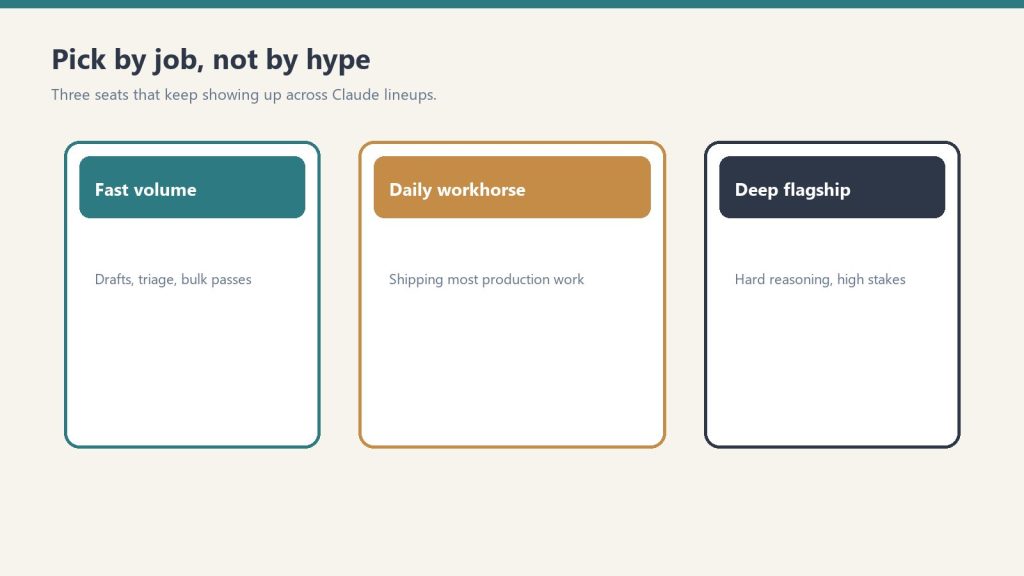
    Anthropic’s model lineup is organized around three tiers — Haiku, Sonnet, and Opus — each representing a different point on the speed-versus-intelligence spectrum. Understanding which model to use, and which API string to call it with, saves both time and money. This is the complete April 2026 reference.

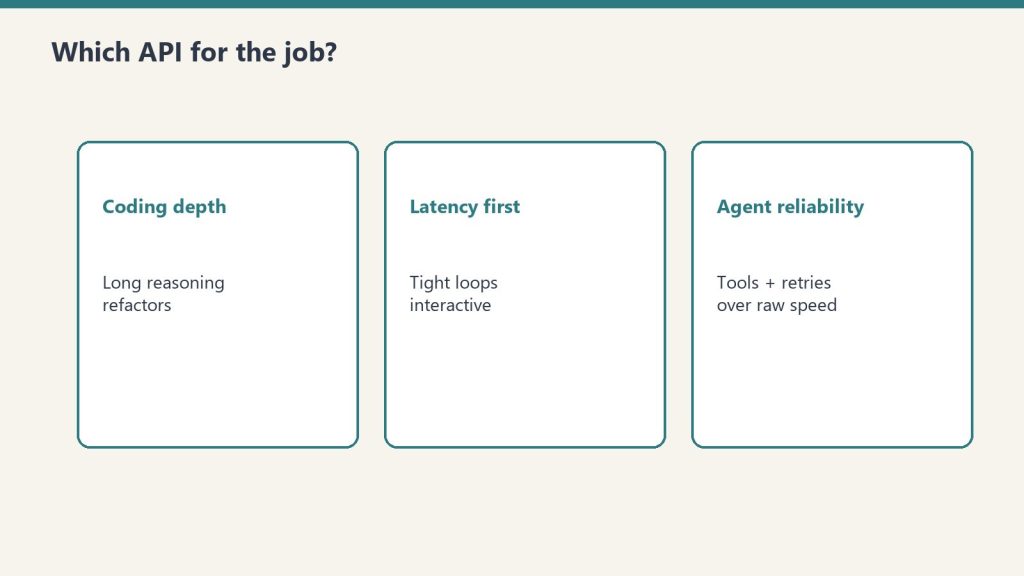
    Quick answer: Haiku = fastest and cheapest, best for high-volume simple tasks. Sonnet = the balanced workhorse, right for most things. Opus = the heavyweight, use when quality is the only metric. For the API, always use the full model string — never just “claude-sonnet” without the version number.

    The Three-Tier Model Architecture

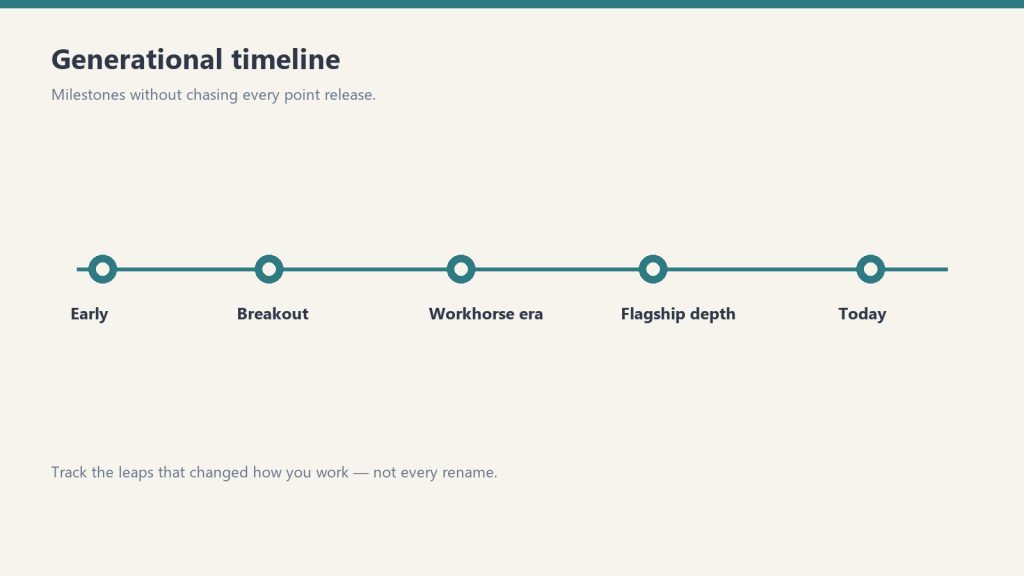
    Anthropic structures its models around a consistent naming pattern: a Greek letter indicating capability tier (Haiku → Sonnet → Opus, low to high) and a version number indicating the generation. The current generation is the 4.x series.

    Model API String Context Window Best for
    Claude Haiku 4.5 claude-haiku-4-5-20251001 200K tokens Classification, tagging, high-volume pipelines
    Claude Sonnet 4.6 claude-sonnet-4-6 200K tokens Most production work, writing, analysis, coding
    Claude Opus 4.6 claude-opus-4-6 1M tokens Complex reasoning, research, quality-critical

    Claude Haiku: Speed and Cost Efficiency

    Haiku is Anthropic’s fastest and least expensive model. It’s built for tasks where throughput and cost matter more than maximum reasoning depth — think classification pipelines, metadata generation, content tagging, simple Q&A at volume, or any workload where you’re making thousands of API calls and can’t afford Sonnet pricing at scale.

    Don’t mistake “cheapest” for “bad.” Haiku handles everyday language tasks competently. What it can’t do as well as Sonnet or Opus is maintain coherence across very long context, handle subtle nuance in complex instructions, or produce writing that reads like a human crafted it. For structured outputs and clear-cut tasks, it’s excellent.

    When to use Haiku: batch content generation, automated tagging and classification, chatbot applications where responses are short and structured, high-volume data processing, anywhere you’re cost-sensitive at scale.

    Claude Sonnet: The Production Workhorse

    Sonnet is the model most developers and knowledge workers should default to. It sits at the sweet spot of the capability-cost curve — significantly more capable than Haiku at complex tasks, significantly cheaper than Opus, and fast enough for interactive use cases.

    Sonnet handles long-document analysis well, produces writing that requires minimal editing, follows complex multi-part instructions without drift, and codes competently across most languages and frameworks. For the overwhelming majority of real-world tasks, Sonnet is the right choice.

    When to use Sonnet: article writing, code generation and review, document analysis, customer-facing AI features, research summarization, agentic workflows that need a balance of quality and cost.

    Claude Opus: Maximum Capability

    Opus is Anthropic’s most powerful model — and its most expensive. It’s built for tasks where you need maximum reasoning depth: complex strategic analysis, intricate multi-step problem solving, long-horizon planning, nuanced evaluation work, or any scenario where you’d rather pay more per call than accept a lower-quality output.

    Opus is not the right default. The cost premium is real and meaningful at scale. The right question to ask before routing to Opus is: “Will a human reviewer actually tell the difference between Sonnet and Opus output on this task?” If the answer is no, use Sonnet.

    When to use Opus: high-stakes strategic documents, complex legal or financial analysis, research that requires synthesizing across many sources with genuine insight, tasks where the output gets published or presented to executives without further editing.

    Claude Opus vs Sonnet: The Practical Decision

    Task Type Use Sonnet Use Opus
    Article writing ✅ Usually Long-form flagship only
    Code generation ✅ Most tasks Complex architecture
    Document analysis ✅ Standard docs High-stakes, nuanced
    Strategic planning Good enough ✅ When stakes are high
    High-volume pipelines ✅ Or Haiku ❌ Too expensive
    Interactive chat ✅ Best fit Overkill for most

    Claude Sonnet 5: What’s Coming

    Anthropic follows a consistent release cadence — major model generations are announced publicly and the naming convention stays stable. Claude Sonnet 5 and Opus 5 are the next generation in the pipeline. As of April 2026, Sonnet 4.6 and Opus 4.6 are the current production models.

    When new models release, Anthropic typically maintains the previous generation in the API for a transition period. Production applications should always pin to a specific model version string rather than using a generic alias, so new model releases don’t silently change your application’s behavior.

    How to Use Model Names in the API

    Always use the full versioned model string in API calls. Generic strings like claude-sonnet without a version may resolve to different models over time as Anthropic updates defaults.

    # Current production model strings (April 2026)
    claude-haiku-4-5-20251001   # Fast, cheap
    claude-sonnet-4-6            # Balanced default
    claude-opus-4-6              # Maximum capability

    Frequently Asked Questions

    What is the best Claude model?

    Claude Opus 4.6 is the most capable model, but Claude Sonnet 4.6 is the best choice for most use cases — it offers the best balance of capability, speed, and cost. Use Opus only when the task genuinely requires maximum reasoning depth. Use Haiku for high-volume, cost-sensitive workloads.

    What is the difference between Claude Sonnet and Claude Opus?

    Sonnet is the balanced mid-tier model — faster, cheaper, and suitable for most production tasks. Opus is the highest-capability model, significantly more expensive, and best reserved for complex reasoning tasks where quality is the primary consideration. For most writing, coding, and analysis tasks, Sonnet’s output is indistinguishable from Opus at a fraction of the cost.

    What are the current Claude model API strings?

    As of April 2026: claude-haiku-4-5-20251001 (Haiku), claude-sonnet-4-6 (Sonnet), claude-opus-4-6 (Opus). Always use the full versioned string in production code to avoid silent behavior changes when Anthropic updates model defaults.

    Is Claude Sonnet 5 available?

    As of April 2026, Claude Sonnet 4.6 and Opus 4.6 are the current production models. Claude Sonnet 5 is the next generation in Anthropic’s pipeline but has not been released yet. Check Anthropic’s official announcements for release timing.


    Need this set up for your team?
    Talk to Will →