If you own a restoration company in 2026, your marketing budget is being eaten alive by three channels fighting for the same lead: Google Local Services Ads, Google Search Ads, and SEO. The owners I talk to are spending six figures a year and still can’t tell me, with a straight face, which channel is actually paying them. So let’s settle this with the numbers vendors don’t put in their pitch decks.
The water damage CPC is the most expensive in home services
Reported cost-per-click for top water damage restoration keywords has climbed as high as the $200–$250 range in competitive metros, with industry sources citing top-of-page bids reaching around $250 per click for terms like “water damage restoration [city].” Average emergency restoration keywords more commonly land in the $40–$100 CPC range depending on geography and time of day. That is not a typo. A single click — not a lead, not a job — can cost more than most contractors charge for a furnace tune-up.
The reason owners keep paying it is simple. A water mitigation job typically prices in the $3,000–$15,000+ range depending on category and scope. At those ticket sizes, a $300 cost-per-lead and a 25% close rate still pencils out. But “pencils out” is doing a lot of heavy lifting in that sentence — and that’s where most owners stop running the math.
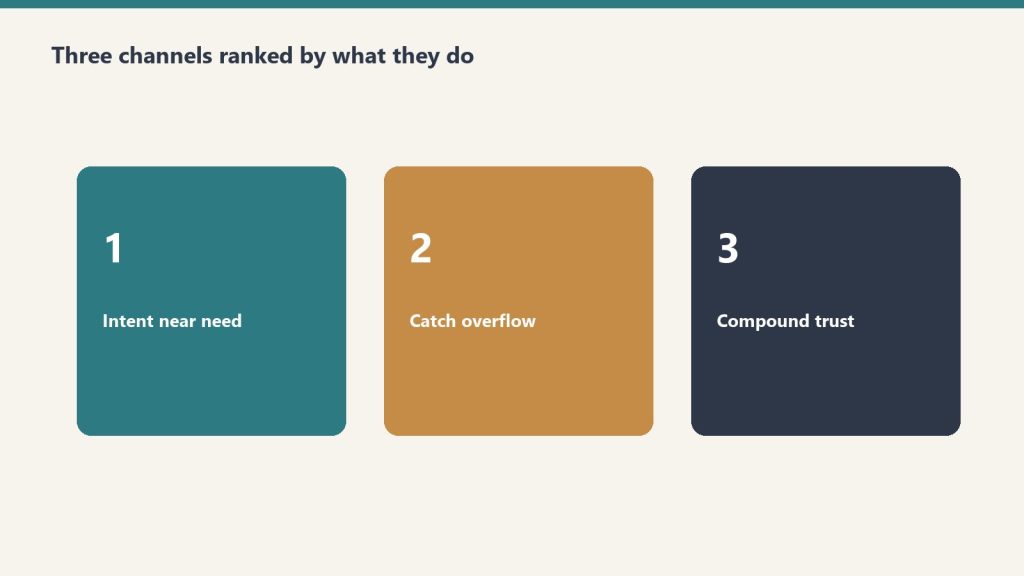
The three channels, ranked by what they actually do
Google Local Services Ads (LSA): the most consistent ROI lever right now
LSA cost-per-lead in restoration is widely reported in the $80–$180 range for water damage, with mold remediation reported between roughly $60 and $250 depending on market. Conversion rates from lead to booked job tend to be reported around the 10–15% range — higher than standard Google Search Ads — because Google charges per qualified phone call or message, not per click.
The bottom line on LSAs: if you do not have Google Guaranteed status set up and your service area dialed in, this is the first thing you fix this quarter. The catch nobody mentions: Google ended the credit policy for “job type not serviced” and “geo not serviced” disputes in 2025, meaning junk leads now come out of your pocket with no refund pathway. You have to dispute aggressively on the categories Google still credits, or your effective CPL drifts 15–25% higher than the platform number says it is.
Google Search Ads (PPC): the channel you run when you have no other choice
Average reported cost-per-lead for Google Search Ads in restoration falls in the $150–$400+ range, with the high end concentrated in metros with two or more national franchise advertisers bidding against you. Conversion from click to lead in well-managed accounts typically lands in the 5–10% range — half of what LSAs deliver.
PPC has one thing LSAs don’t: control. You set the keywords, you set the geo, you set the ad copy, you decide whether you want commercial water damage leads or residential mold leads or fire restoration leads. If you are running a multi-location shop or chasing commercial work specifically, you cannot live on LSAs alone — the lead types are too restricted. But if you are a single-location residential operator, every dollar in PPC should be earning its keep against the LSA dollar, and most of the time it isn’t.
SEO: the long-term asset everyone wants to own and almost nobody finishes building
Cost-per-lead from established organic rankings is commonly reported in the $75–$150 range — roughly half the cost of paid channels at maturity. The trade-off is time. Restoration SEO in competitive metros typically takes 12–18 months of consistent investment before it produces meaningful lead flow, with initial signal in 3–6 months for low-competition local terms.
The honest read: most restoration owners start SEO, get impatient at month four when paid channels are still doing all the work, and either fire the agency or stop publishing content. Then they restart 18 months later with a different vendor and the same outcome. SEO works. It works exactly the way the calendar says it will work. The companies that win with it are the ones who treat it like a 24-month commitment, not a 90-day experiment.
What the channel mix should actually look like
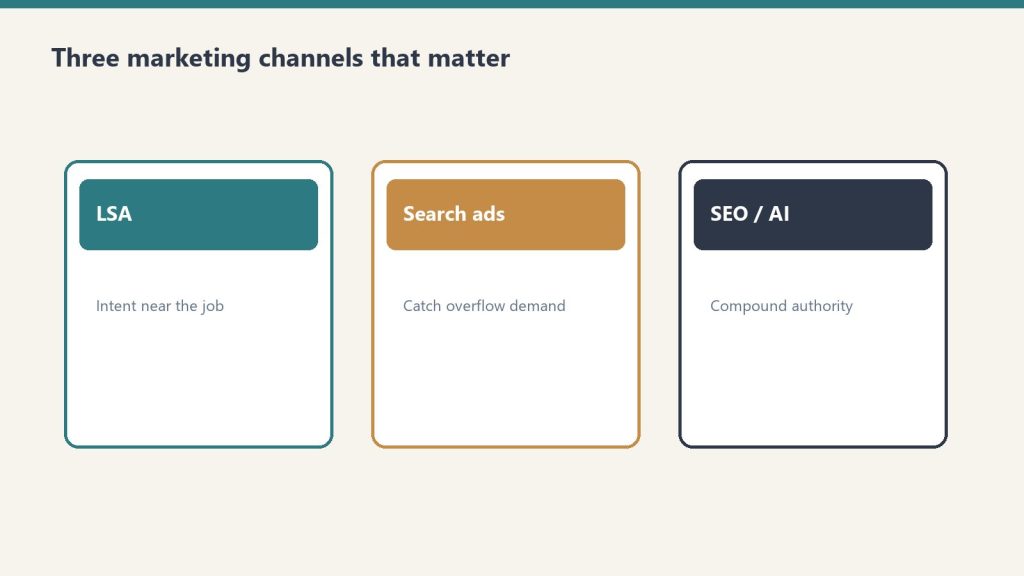
For a residential-focused restoration company doing $1M–$5M in revenue, a defensible channel mix in 2026 looks something like this:
- LSA: 35–45% of paid budget. Highest reported ROI of any paid channel in restoration. Cap is the daily lead volume Google will give you, not the budget.
- Google Search Ads: 25–35% of paid budget. Covers the lead types LSAs cannot serve — commercial work, specific service lines, and overflow when LSAs hit daily caps. Required for any multi-location shop.
- SEO and content: 20–30% of total marketing budget. Treat as 18–24 month asset build. Tracked separately from paid CPL because the unit economics only stabilize at month 12+.
- Referrals and direct outreach: ongoing, no fixed budget. Reported industry-wide as the lowest-CAC channel and the one with the shortest break-even window. Build a plumber/agent/property manager referral program before you spend another dollar on paid ads.
The split that gets restoration owners in trouble is putting 80% into paid and 20% into “we’ll get to it” SEO. Two years later they are completely dependent on Google’s auction prices, and the auction prices have gone up every year of the last five.
The metric that actually matters
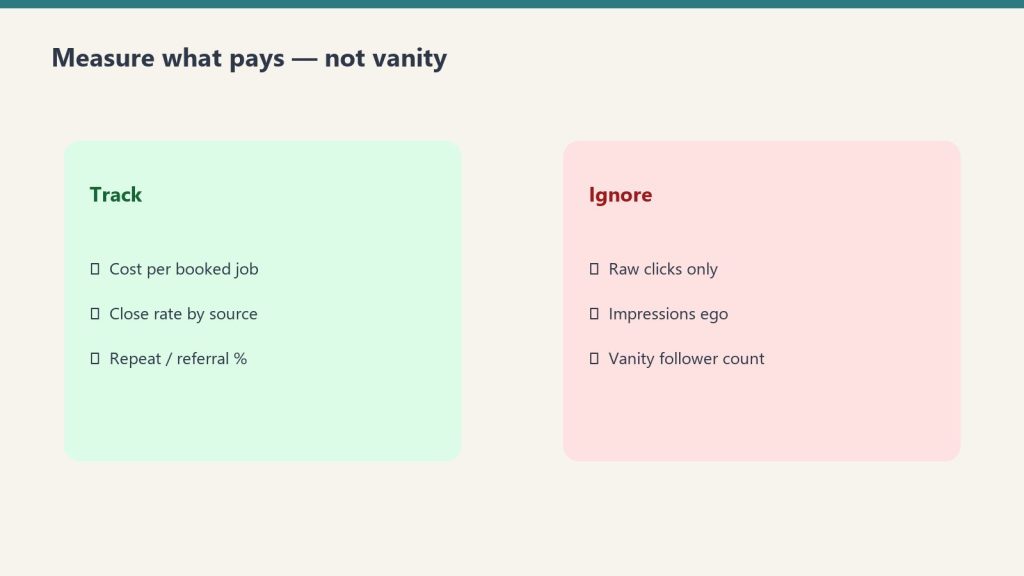
Cost-per-lead is the metric every vendor reports. It is the wrong number to optimize for. The number that matters is fully-loaded cost-per-acquired-job, which is CPL divided by your channel-specific close rate, plus the labor cost of the CSR who fielded the call, plus the credit card processing on whatever portion of the job is paid out-of-pocket, minus the franchise or TPA fee if applicable.
Most restoration owners do not have this number for any of their channels. They have CPL from the platform dashboards, they have revenue from the job management software, and the two systems have never talked to each other. Fix that before you change a single bid. The owner who knows their fully-loaded acquired-job cost by channel makes better decisions in five minutes than the owner who doesn’t makes in a quarter.
The bottom line
LSAs are the highest-ROI paid channel in restoration in 2026 and should be the first lever you optimize. Google Search Ads are required for any operator chasing commercial work or running multiple locations, but they should never be your largest line item. SEO is the long-term insurance policy against rising auction prices, and the only restoration owners who get the payoff are the ones who treat it like a 24-month commitment and refuse to flinch at month six.
If you are spending more than $5,000 a month on Google Search Ads and you do not yet have LSAs set up, you are leaving the most profitable channel in restoration on the table. Start there.
Related on Tygart Media: Starlink on a water job · S500 in the van · local SEO for restoration.
Frequently Asked Questions
What is the average cost per lead for water damage restoration in 2026?
Reported cost-per-lead for water damage restoration in 2026 ranges from roughly $80–$180 on Google Local Services Ads, $150–$400+ on Google Search Ads, and $75–$150 from mature organic SEO. Actual costs vary significantly by metro, competition, and lead-type mix.
Are Google Local Services Ads better than Google Ads for restoration?
For most residential restoration operators, LSAs deliver a lower cost-per-lead and a higher reported lead-to-job conversion rate than standard Google Search Ads. LSAs charge per qualified call rather than per click, which is why the ROI tends to be more consistent. Multi-location shops and commercial-focused operators still need Google Search Ads to cover lead types LSAs do not serve.
How long does SEO take to work for a restoration company?
Restoration SEO in competitive metros typically takes 12–18 months of consistent investment before it produces meaningful lead flow. Initial ranking signal often appears in 3–6 months for low-competition local terms, but the cost-per-lead advantage versus paid channels only stabilizes after month 12.
What percentage of a restoration marketing budget should go to paid ads?
A common defensible split for a residential restoration company in 2026 is roughly 60–70% of total marketing budget on paid channels (LSA + Google Search Ads) and 20–30% on SEO and content, with referral programs running in parallel at minimal incremental cost. Going above 80% paid concentrates risk in the Google auction.
Leave a Reply