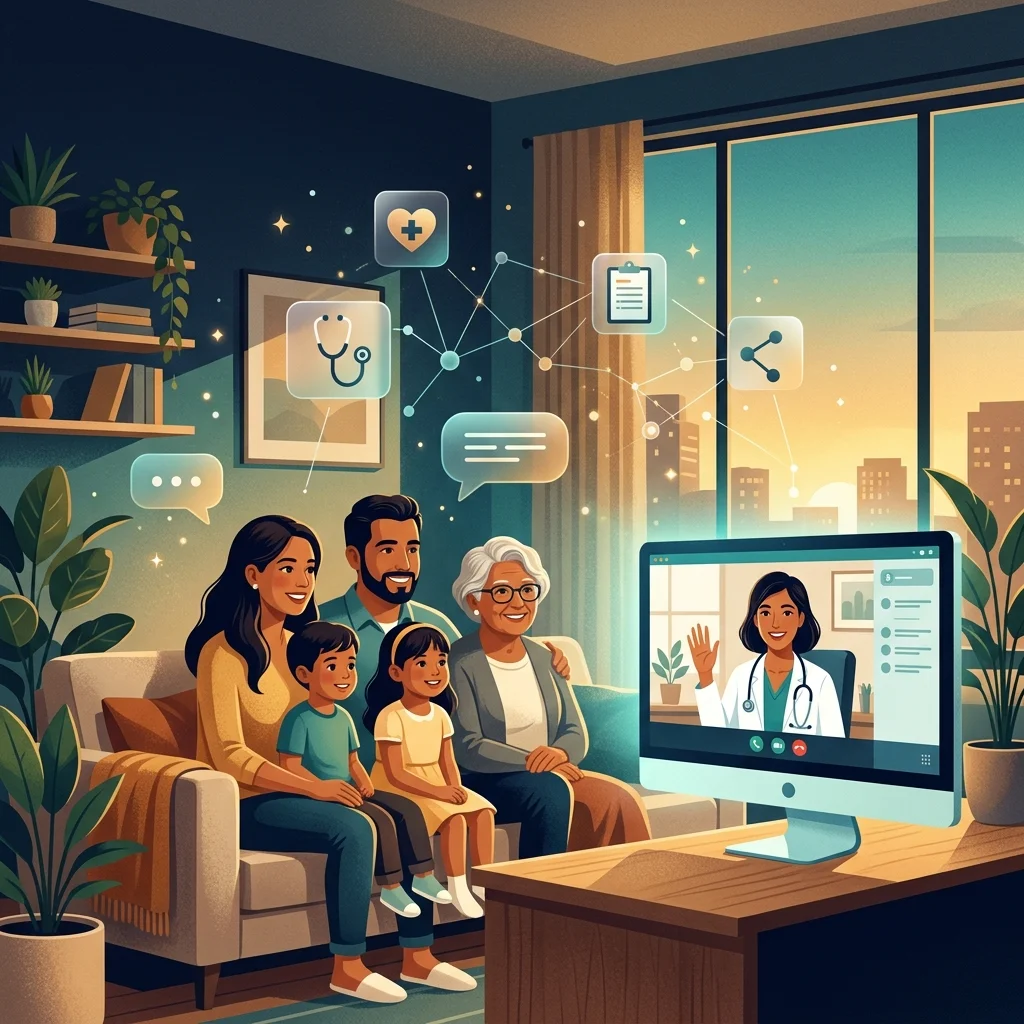
Quick answer: The Latino Educational Training Institute (LETI) in Everett has launched a new telehealth space stocked with 25 Wi-Fi-enabled computers, blood pressure monitors, and infrared thermometers — all donated by UnitedHealthcare Community Plan of Washington. The hub is free for anyone in Snohomish County who needs to take a doctor’s video visit but doesn’t have the device, the connection, or the private space to do it from home.
If you have ever tried to take a video appointment from a kitchen table while two kids did homework on either side of you, you already know why this matters.
Latino Educational Training Institute — most people just call it LETI — has spent twenty-eight years building the kind of community center that does more than fit one purpose. Computer classes. GED prep. Microentrepreneurship training for landscapers and house cleaners who want to formalize their businesses. Vocational coursework. A space where families could come, in Spanish, in English, and ask the question that had been worrying them all week. The roof above all of that, since 2026, now also covers a telehealth hub — and that hub is one of the cleanest pieces of community-organization infrastructure to land in south Everett in a long time.
Here is what is inside, who built it, and why families in the Casino Road corridor and across Snohomish County should know it exists.
Last refreshed: October 20, 2026 (Pacific).
What the Telehealth Hub Actually Is
The space is exactly what the name suggests: a room at LETI’s Everett training center stocked with everything you need to take a telehealth appointment.
Get The Signal
What we actually ran, what it measured, and what it means for a restoration shop — every week, including the flops.
UnitedHealthcare Community Plan of Washington donated 25 Wi-Fi-enabled computers to the room. They also donated the kind of medical equipment that makes a video visit useful instead of theatrical — blood pressure monitors, infrared thermometers, and the basic tools a clinician on the other side of the screen can actually ask you to use during the appointment so they have a real reading to work with.
The point is that residents can use the donated equipment for both physical and behavioral health telehealth appointments. The computers are free for everyone — not means-tested, not credentialed, not gated by membership.
That last detail is the one that matters most. Free for everyone is a different rule than free for clients. It means a grandmother who walked over from her apartment can come in. It means a working mom on her lunch break can come in. It means a teenager who needs a behavioral health visit and doesn’t want to take it in the room they share with two siblings can come in.
Why LETI Is the Right Place For This
LETI was founded in 1998 to provide general educational enrichment, skills development, and community service to the growing Hispanic community of Snohomish County. Twenty-eight years later, that mission has stretched into roughly every direction a community center can stretch.
Founder and CEO Rosario Reyes framed the telehealth space this way: “This new telehealth space helps remove barriers that too often stand between people and the care they need.” That is a CEO talking about her own organization, in her own public role, in a quote distributed to local press — and it lands cleaner than most institutional statements because the barrier she is describing is specific. It is not philosophical. It is the wall that goes up when your phone is old, your internet is unreliable, and the appointment your insurance offers you is by video.
LETI has been a trusted community partner in Snohomish County for years. The organization runs vocational classes — office assistance, bookkeeping, professional licensing — that have helped families turn informal work into licensed independent businesses. A landscaper who has been taking cash work for a decade can use the classes to formalize, get an EIN, and put a real business name on the side of a truck. That is the same population for whom a free telehealth room is not a luxury but a missing piece of infrastructure.
The New 15,000-Square-Foot Facility — Context for Why This Matters Right Now
The telehealth hub didn’t appear in isolation. LETI received a $3.8 million state allocation in 2024 to build out a new 15,000-square-foot facility in south Everett — a project that has been progressing toward a fully operational building with a commercial kitchen, several classrooms, a child care center, and a large multipurpose space for events like quinceañeras.
The 2026 facility plan reads like a long list of needs the Casino Road and Pinehurst-Beverly Park families had been telling the city for years. A commercial kitchen so the food-truck entrepreneurs in the area have a licensed prep space. Classrooms for adult education that runs in the evening when shifts end. A child care center for parents in those classes. An event space large enough for the celebrations that hold the community together — quinceañeras, weddings, graduations — without forcing families to rent at hotel-banquet prices.
The telehealth room slotted into that build as one more piece of the puzzle. The 2026 State of the City address by Mayor Cassie Franklin specifically called out LETI as one of the immigrant-community-serving organizations the city plans to strengthen ties with over the next year. Read that one way, and it is standard mayoral-speech language. Read it another way, and it is the city signaling that LETI is now part of how south Everett delivers services that the city itself cannot run alone.
What This Means For The Latino Community On Casino Road
Casino Road is the spine of the most diverse part of Everett. Latino families, Cambodian families, Filipino families, families from across East Africa, and longtime English-speaking families share this corridor — and the health-equity gap that runs through it is the kind of gap that telehealth was specifically designed to close, if anybody actually made the technology accessible.
The catch is that telehealth was sold to America as a 2020 innovation that would democratize care, and then it quietly stratified along the same lines as every other piece of digital infrastructure. If you had broadband, a recent laptop, and a quiet room, telehealth was a gift. If you didn’t have one of those three, telehealth was just another appointment your insurance had moved farther out of reach.
LETI’s hub is the answer to that stratification. Twenty-five computers. Donated, working, available, free. Equipment to make the visit clinically meaningful. A space that already feels familiar to the families who would benefit most from it. The combination is what makes it real instead of symbolic.
How To Use The Hub
If you live in south Everett and want to use LETI’s telehealth space, here is what you need to know.
LETI’s Everett Training Center — at 9930 Evergreen Way, Suite Y, in south Everett — is reachable at 425-775-2688. The organization’s website is letiwa.org, where the about page lays out the founding history, the program list, and current locations. Walk-in availability for the telehealth space is being managed at the center itself — call ahead if you want to confirm a specific computer slot for an appointment you already have scheduled, particularly if you need the blood pressure cuff or thermometer during your visit.
If you do not yet have a telehealth appointment but want to set one up, UnitedHealthcare Community Plan of Washington members can call their plan’s member services line to get started; other insurance plans have their own telehealth scheduling rules.
Frequently Asked Questions
Is LETI’s telehealth hub only for UnitedHealthcare members?
No. UnitedHealthcare Community Plan of Washington donated the equipment, but the computers are free for everyone to use. The hub is not means-tested or restricted to specific insurance plans.
Can I use the hub for behavioral health visits?
Yes. The space is set up for both physical and behavioral health telehealth appointments. A private computer station can be used for therapy or counseling visits.
Where is LETI located in Everett?
LETI’s Training Center is at 9930 Evergreen Way, Suite Y, in south Everett (opened in 2025); its main office is in Lynnwood. The main contact number is 425-775-2688.
Do I need to speak Spanish to use LETI’s services?
No. LETI serves the Latino community as its founding mission, but services are open to anyone. Bilingual staff support is available.
What other services does LETI offer beyond telehealth?
Vocational training (office assistance, bookkeeping, microentrepreneurship), GED preparation, professional licensing pathways, and microloan information for small business owners.
Is there a cost for using the computers or equipment?
No. The 25 computers and the donated medical equipment are free to use.
Related Reading From Exploring Everett
LETI’s telehealth hub sits inside a much larger story about how south Everett’s institutions are being rebuilt around the families who actually live there. The Casino Road neighborhood guide on Exploring Everett lays out the full corridor; the Stations Unidos profile covers the anti-displacement community development corporation working in the same geography; and the Volunteers of America Western Washington guide covers the wraparound services many LETI clients also rely on.
This is the part of Everett where the community organizations are the institutions. LETI is one of them, and the telehealth hub is one of the reasons why.
Get The Signal
What we actually ran, what it measured, and what it means for a restoration shop — every week, including the flops.
Leave a Reply