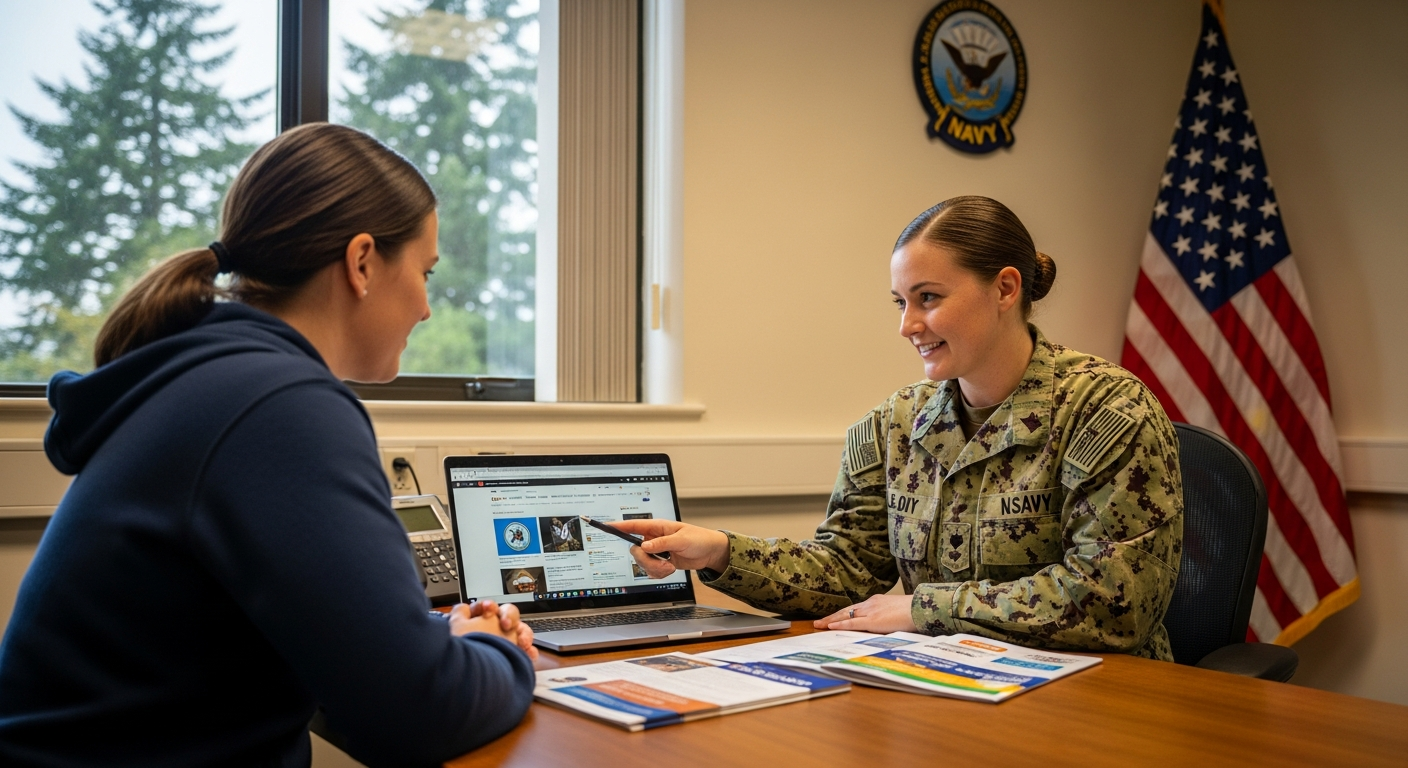
Quick Answer: Naval Station Everett’s Sexual Assault Prevention and Response (SAPR) program offers 24/7 confidential advocacy, unrestricted and restricted reporting options, and free legal counsel for any service member, military family member, or DoD civilian affected by sexual assault. The primary contact is the NAVSTA Everett SAPR Victim Advocate Response Line: 425-754-5977, staffed around the clock.
April is Sexual Assault Awareness and Prevention Month — a time the U.S. Navy and every installation, including Naval Station Everett, uses to reinforce a commitment that doesn’t pause when the calendar turns to May. For Navy families at NAVSTA Everett, SAPR resources are available 365 days a year, and understanding how they work before a crisis is one of the most important things a sailor, spouse, or family member can do.
This guide covers what NAVSTA Everett’s SAPR program offers, how the reporting system works, what legal and medical protections are in place, and where to turn whether you’re on-base, at the Smokey Point housing complex in Marysville, or anywhere in the greater Snohomish County area.
What April’s Awareness Month Actually Means for NAVSTA Everett
Sexual Assault Awareness and Prevention Month has been observed by the military every April since 2001. The theme for 2026 is “Protecting Our People Protects Our Mission” — a phrase that reflects how seriously the Navy views sexual assault as both a personal harm and a readiness issue.
At Naval Station Everett, April typically involves base-wide events, command-level training refreshers, and increased visibility for SAPR advocates. But the advocates themselves, the hotlines, and the legal protections don’t change when the month ends. Everything available in April is available in June, October, and February.
For Navy families — especially spouses and children, who make up a substantial portion of those affected — knowing the system before you need it matters. The learning curve for navigating military bureaucracy in the middle of a crisis is steep. This guide is designed to flatten that curve.
The Two Reporting Options: What They Mean for You
The most important thing to understand about NAVSTA Everett’s SAPR system is that reporting is not binary between “tell everything to your commander” and “stay silent.” There are two distinct paths, and you choose which one to take.
Restricted Reporting
Restricted reporting allows a survivor to receive medical care, counseling, and advocacy services without triggering an official investigation. Your command, the installation commander, and law enforcement are not notified unless you choose to authorize it. This option exists specifically for survivors who need support but aren’t ready — or don’t want — to initiate a formal investigation.
Who can use restricted reporting:
- Active duty service members
- Adult dependents (with some limitations)
- DoD civilians in certain circumstances
A Sexual Assault Response Coordinator (SARC) or Victim Advocate (VA) can walk you through exactly what’s protected and what isn’t in your specific situation before you disclose anything.
Unrestricted Reporting
Unrestricted reporting initiates a formal investigation by military law enforcement. This path is appropriate for survivors who want the chain of command and investigators involved, and who want their case to move through the military justice system.
Choosing unrestricted reporting does not affect your access to advocacy or legal support — you still have full access to a Victim Advocate, a Special Victims’ Counsel (attorney), and medical care.
You can convert a restricted report to an unrestricted report at any time. You cannot go the other direction. This is worth understanding before making a decision under stress.
NAVSTA Everett SAPR Contacts and Resources
24/7 SAPR Victim Advocate Response Line
Phone: 425-754-5977
This is the primary SAPR contact at Naval Station Everett, available around the clock. When you call, you’ll reach a trained advocate who can provide confidential guidance, explain your options, and connect you with next steps — whether that’s a medical referral, legal counsel, or simply someone to talk to.
Fleet and Family Support Center (FFSC) — Everett
Phone: 425-304-3735
Location: Naval Station Everett
The Fleet and Family Support Center at NAVSTA Everett is the main hub for wraparound support services for military families. FFSC works closely with SAPR advocates and provides:
- Individual counseling
- Crisis intervention
- Referrals to community resources
- Support for family members not directly on base
The FFSC also operates a satellite office at Smokey Point, serving Navy families in the Marysville area — critical for the roughly 150+ family housing units located at NFSC Smokey Point, 11 miles north of the main installation.
Safe Helpline — DoD-Wide 24/7 Resource
Phone: 1-877-995-5247 (1-877-99-SAFE)
Online chat and text: safehelpline.org
The DoD Safe Helpline is a confidential, anonymous resource available to the entire military community worldwide. It operates independently of any installation and is staffed by trained responders. It’s particularly useful for family members who aren’t sure whether they fall under military SAPR jurisdiction, or for anyone who wants to talk before deciding whether to contact on-base resources.
Special Victims’ Counsel (SVC)
Service members who report a sexual assault — restricted or unrestricted — have the right to request a Special Victims’ Counsel, a military attorney who represents the survivor’s interests (not the Navy’s interests, and not the accused’s interests) throughout the legal process. This is a free service. A SARC or VA can make the referral.
For Military Spouses and Family Members
Military spouses and adult family members of active duty personnel can access many SAPR services, but there are important distinctions.
Adult family members (18+) may use restricted reporting and access SAPR advocacy through the FFSC and VA system. However, their restricted reporting protections are more limited than those of active duty members — a SARC will explain the specifics.
Minor dependents (under 18) are handled through a different system that involves mandatory reporting to civilian child protective services and law enforcement. The SAPR advocate can explain this clearly before a parent decides how to proceed.
Civilian neighbors and community members do not access SAPR through the base system, but the Snohomish County Volunteers of America Sexual Assault Center (SASI) at 425-252-2873 provides community-based services and is experienced with military family situations.
PCS Season and SAPR: A Critical Intersection
For NAVSTA Everett, late spring and early summer mark the heart of Permanent Change of Station (PCS) season — the same time USS Gridley and other homeported ships begin returning from deployments, and new families arrive to take their place.
PCS transitions are a recognized high-risk period in the research on military family safety. New installations, unfamiliar surroundings, social isolation, and changes in household dynamics all increase vulnerability. Families arriving to Everett this summer — whether from the fleet’s east coast operations, from bases across the Pacific, or from civilian life — may not know where to turn.
The message from NAVSTA Everett’s SAPR program is the same regardless of when you arrive: resources are available from day one. You don’t need to wait until you’re connected to a command, enrolled in housing, or have a sponsor. The SAPR Victim Advocate Response Line (425-754-5977) and the Safe Helpline (1-877-995-5247) have no eligibility requirements.
The Broader NAVSTA Everett Support Ecosystem
SAPR does not operate in isolation. At NAVSTA Everett, the broader support network includes:
Chaplain Services — Installation chaplains provide confidential counseling and are protected by clergy privilege, not SAPR restricted reporting rules. For service members who prefer a faith-based or non-advocacy-framed first conversation, the Chaplain’s office is another entry point.
Military OneSource — The DoD-wide support service at militaryonesource.mil or 1-800-342-9647 provides non-medical counseling, referrals, and assistance navigating services. It’s available to active duty service members and their families, including those within 365 days of separation.
Behavioral Health at Puget Sound Military Health System — Medical and behavioral health services at Naval Hospital Bremerton and NAVSTA Everett clinics include licensed therapists who work with SAPR advocates on cases that need both clinical and advocacy support.
What Happens After April
Sexual Assault Awareness and Prevention Month ends April 30. What doesn’t end: the 425-754-5977 line. The Fleet and Family Support Center at 425-304-3735. The Safe Helpline at 1-877-995-5247.
For Navy families at NAVSTA Everett, the most practical thing this awareness month produced is this: you now have the numbers. Save them. Share them. And know that if you or someone you care about ever needs to make that call, the system at NAVSTA Everett is built to respond — regardless of the month, the duty status, or how uncertain everything feels.
Frequently Asked Questions
Q: Does calling the SAPR hotline at NAVSTA Everett automatically report an incident to my command?
A: No. The 24/7 SAPR Victim Advocate Response Line (425-754-5977) is confidential. Calling it does not trigger an official report or investigation unless you choose to make an unrestricted report. The advocate will explain all options before anything is documented.
Q: Can military spouses use NAVSTA Everett’s SAPR program?
A: Adult military spouses and dependents (18+) can access SAPR advocacy and Fleet and Family Support Center services at NAVSTA Everett. Restricted reporting protections for dependents are more limited than for active duty members — a SARC can explain your specific situation. Call 425-754-5977 or 425-304-3735.
Q: What is a Special Victims’ Counsel?
A: A Special Victims’ Counsel is a free military attorney who represents the survivor’s interests throughout the investigation and any legal proceedings. Unlike military defense or prosecution attorneys, the SVC works exclusively for the person who was assaulted. Any service member who reports a sexual assault has the right to request an SVC.
Q: What if I’m stationed at Smokey Point, not on the main base?
A: The Fleet and Family Support Center at NAVSTA Everett (425-304-3735) operates a satellite office that serves families at the Smokey Point Navy Support Complex in Marysville. You can also call the main SAPR line at 425-754-5977 or the DoD Safe Helpline at 1-877-995-5247 from anywhere.
Q: Can I convert a restricted report to an unrestricted report later?
A: Yes. You can convert a restricted report to an unrestricted report at any time. Once converted, you cannot return to restricted status. An advocate can help you understand what converting would mean for your specific case before you make that decision.
Q: What resources are available for civilian family members or people not connected to the military?
A: Snohomish County civilians and community members can contact the Volunteers of America Sexual Assault Center (SASI) at 425-252-2873. SASI is experienced working with military-connected families and operates independently of the installation.
Q: Is the DoD Safe Helpline completely anonymous?
A: Yes. The Safe Helpline at 1-877-995-5247 and safehelpline.org is confidential and can be used anonymously. It is not connected to any specific installation and does not report to military command.
Q: What happens to SAPR services during a deployment?
A: SAPR services at NAVSTA Everett remain fully available during deployments — for both deployed sailors through their shipboard or forward-deployed resources, and for family members back in Everett. The FFSC and SAPR line at 425-304-3735 and 425-754-5977 do not reduce capacity during deployment seasons.
Leave a Reply